
Top 9 Hidden Roof Problems After a Kansas City Thunderstorm

A Kansas City thunderstorm can leave a roof looking intact while wind, hail, and heavy rain create damage that is difficult to see from the ground. Missing shingles are easy to spot, but loosened seals, bruised asphalt, shifted flashing, and moisture beneath the surface can stay hidden until the next storm. For homeowners evaluating Kansas City roofing after severe weather, expert roof inspection services should focus on how the storm affected the roof’s water-shedding system, not just whether anything blew off. The earlier these problems are documented, the easier it is to separate fresh storm damage from normal aging.
1. Shingles That Lifted and Settled Back Down
Strong thunderstorm winds can lift a shingle without tearing it completely from the roof. Once the gust passes, the shingle may settle back into place and look normal even though its adhesive seal has been weakened or broken. On Kansas City roofing systems, these loose tabs can become vulnerable during the next round of wind-driven rain because water can move underneath an edge that no longer seals properly. Look for slightly raised corners, uneven rows, creases, or shingles that appear shifted compared with neighboring material. A few affected tabs may be repairable, but similar lifting across several slopes can point to broader wind damage.
2. Hail Bruising Beneath the Shingle Surface
Hail does not need to punch a hole through a shingle to cause functional damage. An impact can knock away granules, bruise the asphalt layer, or fracture the fiberglass mat underneath while leaving the surface mostly intact. For Kansas City roofing homeowners, fresh dark impact spots, concentrated granule loss, or dents in nearby metal vents can provide clues about where hail hit hardest. A close inspection should determine whether the marks are cosmetic or whether the material itself has been weakened. Bruised shingles may continue shedding water initially but deteriorate faster under sun, heat, and future storms.
3. Ridge Caps Loosened by Wind and Impact
Ridge caps sit at the highest and most exposed parts of the roof, so they can take direct wind pressure and hail impact from several directions. They may crack, loosen around fasteners, or lift slightly without falling off. Kansas City roofing inspections should include the full ridge line rather than focusing only on broad roof slopes. Raised corners, missing granules, cracks, or sections that no longer align can create weak points near the roof peak. Because ridge caps also protect roof transitions and may interact with ridge ventilation, damage in this area can be more important than its small size suggests.
4. Flashing That Shifted During the Storm
Flashing protects areas where the roof meets walls, chimneys, vents, and other penetrations. Strong wind can loosen an edge or fastener, while hail can dent exposed metal and damage adjacent roofing material. On Kansas City roofing systems, a small flashing gap may stay dry during ordinary rain but leak when another storm pushes water sideways against the same transition. New moisture near an exterior wall, chimney, or plumbing vent should therefore lead to a flashing inspection rather than an assumption that the shingles directly above the stain are failing. Repeatedly adding sealant over shifted flashing rarely addresses the underlying water path.
5. Valley Damage Hidden by Debris
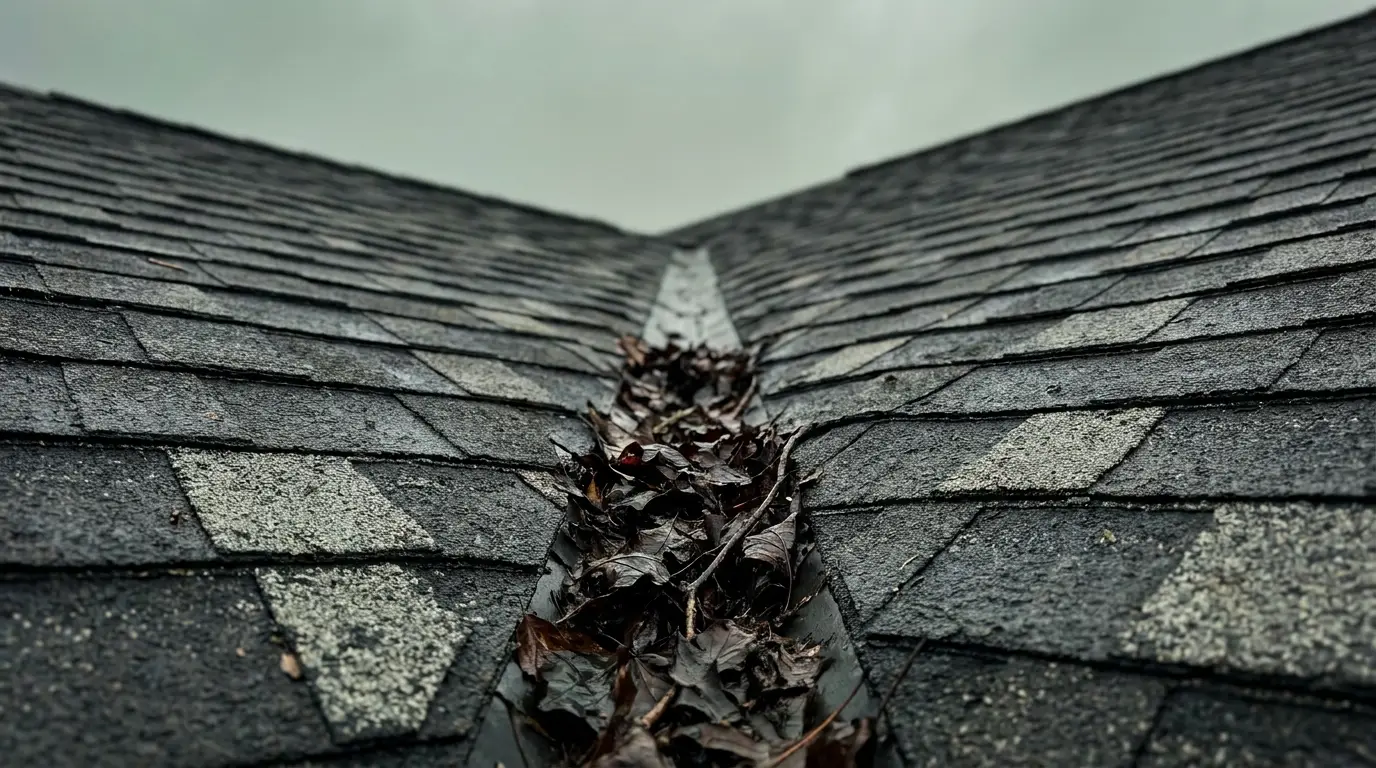
Roof valleys collect runoff from two slopes, so thunderstorms can send large amounts of water, leaves, branches, and other debris through them quickly. Debris may hide cracked shingles, damaged valley material, or areas where hail removed granules. For Kansas City roofing homes, a valley that remains clogged or wet after the rest of the roof dries deserves attention because trapped material can slow drainage and keep damaged areas wet longer. Once debris is safely removed, the inspection should check whether water is still following the intended path and whether the valley has any fresh impact marks, exposed material, or signs of previous leakage.
6. Roof Edges and Starter Shingles Beginning to Lift
Roof edges and corners experience strong uplift forces during high winds. Damage here may begin with one starter strip or lower shingle course pulling slightly away from the deck rather than an obvious missing section. On Kansas City roofing systems, this matters because once wind gains access beneath an exposed edge, future gusts can lift material farther up the slope. After a thunderstorm, check visible eaves and rakes for uneven edges, loose material, or shingles that no longer sit flat. Catching edge damage while it is limited can prevent a small wind-related weakness from spreading during the next severe weather event.
7. Water That Entered but Has Not Reached the Ceiling Yet
A storm-related leak does not always produce an immediate ceiling stain. Underlayment, insulation, and framing can temporarily absorb or redirect small amounts of water before anything appears inside the living space. Kansas City roofing homeowners with safe attic access should look for fresh dark tracks on decking, damp insulation, moisture near penetrations, or water trails running along rafters after heavy rain. Follow the trail uphill when possible because the visible moisture may be several feet from the actual entry point. Finding attic evidence early can prevent repeated wetting from damaging decking or interior finishes before the homeowner realizes there is a leak.
8. Previous Repairs That Were Reopened by the Storm
Older repair areas deserve extra attention after severe weather because they combine materials of different ages and may contain sealants, replacement shingles, or flashing that react differently under wind and impact. On Kansas City roofing systems, look for cracked sealant, lifted replacement shingles, exposed fasteners, or new attic staining beneath known repair locations. If the same section fails after more than one storm, another patch may not be the best answer. The underlying problem could involve weak decking, failing flashing, or surrounding shingles that have become too brittle to support another localized repair.
9. Damage Concentrated on Only One Roof Slope
Wind-driven hail and rain rarely hit every side of a house equally. One slope may take repeated impacts or stronger wind pressure while another remains largely unaffected. A Kansas City roofing inspection should therefore compare all major slopes, ridges, edges, valleys, and penetrations instead of using one accessible area to represent the whole roof. Concentrated damage on one side can also help distinguish storm effects from general aging. If one slope shows fresh granule loss, loosened seals, and dented metal while the others do not, the pattern provides useful evidence about the storm’s direction and severity.
Check the Damage Pattern Before Deciding What Comes Next
Hidden storm damage does not automatically mean replacement. Kansas City roofing repair can still make sense when the problem is localized, surrounding shingles remain flexible, flashing can be restored, and the decking is dry. The decision changes when broken seals, hail bruising, ridge damage, flashing problems, and moisture are spread across several areas.
For Kansas City roofing homeowners, the strongest next step is to document what changed after the storm and evaluate the roof as one complete system. Ask where damage was found, how widespread it is, and how much healthy Kansas City roofing material remains around each affected area. When Kansas City roofing problems are identified before the next thunderstorm, homeowners usually have more options to make targeted repairs before small weaknesses become larger water-intrusion problems.