
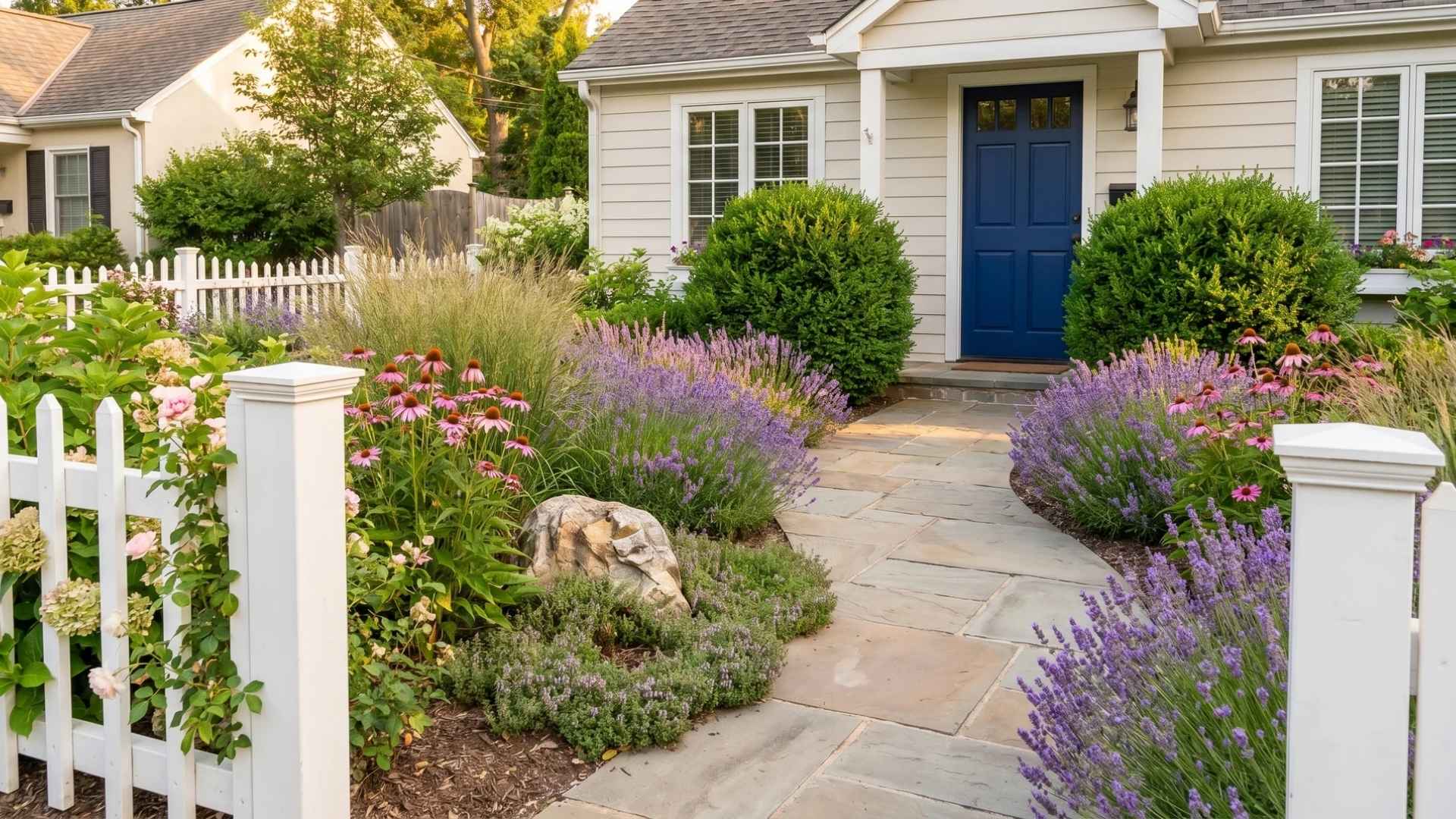
14 Front Yard Landscaping Ideas for Small Space

Most people assume a compact entry is a design limitation. In practice, the opposite is true. Designing with constraints forces intentionality, and intentionality produces lasting beauty.
A small yard means less maintenance, lower water bills, and reduced upkeep costs without sacrificing visual impact. The right plan transforms even the narrowest strip into a welcoming, personality-filled space.
Whether you are starting from bare soil or refreshing a tired entry, these small front yard landscaping ideas are built on real design principles and sustainable practice, giving you clear, actionable steps at every budget level.
Every idea here has been selected for real-world impact, not just visual appeal.
Before You Start: A Quick Planning Checklist
Assess your yard’s sunlight exposure because it dictates every plant choice. Measure the space, set a firm budget, and check HOA restrictions.
Identify one focal point before anything else. Every strong landscape anchors around a single hero element, whether that is a bold front door, a specimen tree, or a statement planter grouping, and builds outward from there.
Small Front Yard Landscaping Ideas
No matter the size of your entry, the right idea, applied consistently, will elevate the overall look of your home.
These front yard landscaping ideas cover every style, budget, and skill level, so you can find exactly what fits your space.
1. Go Vertical with Climbing Vines

When horizontal ground runs out, build upward. Climbing roses, clematis, and star jasmine trained along a trellis or fence wall add lush greenery without consuming precious square footage.
A sturdy trellis costs $30 to $80, making this one of the highest-impact, lowest-cost moves available for compact entries.
It works especially well on narrow townhome facades where a traditional border bed will not fit.
2. Replace Grass with Grass No-Lawn Design
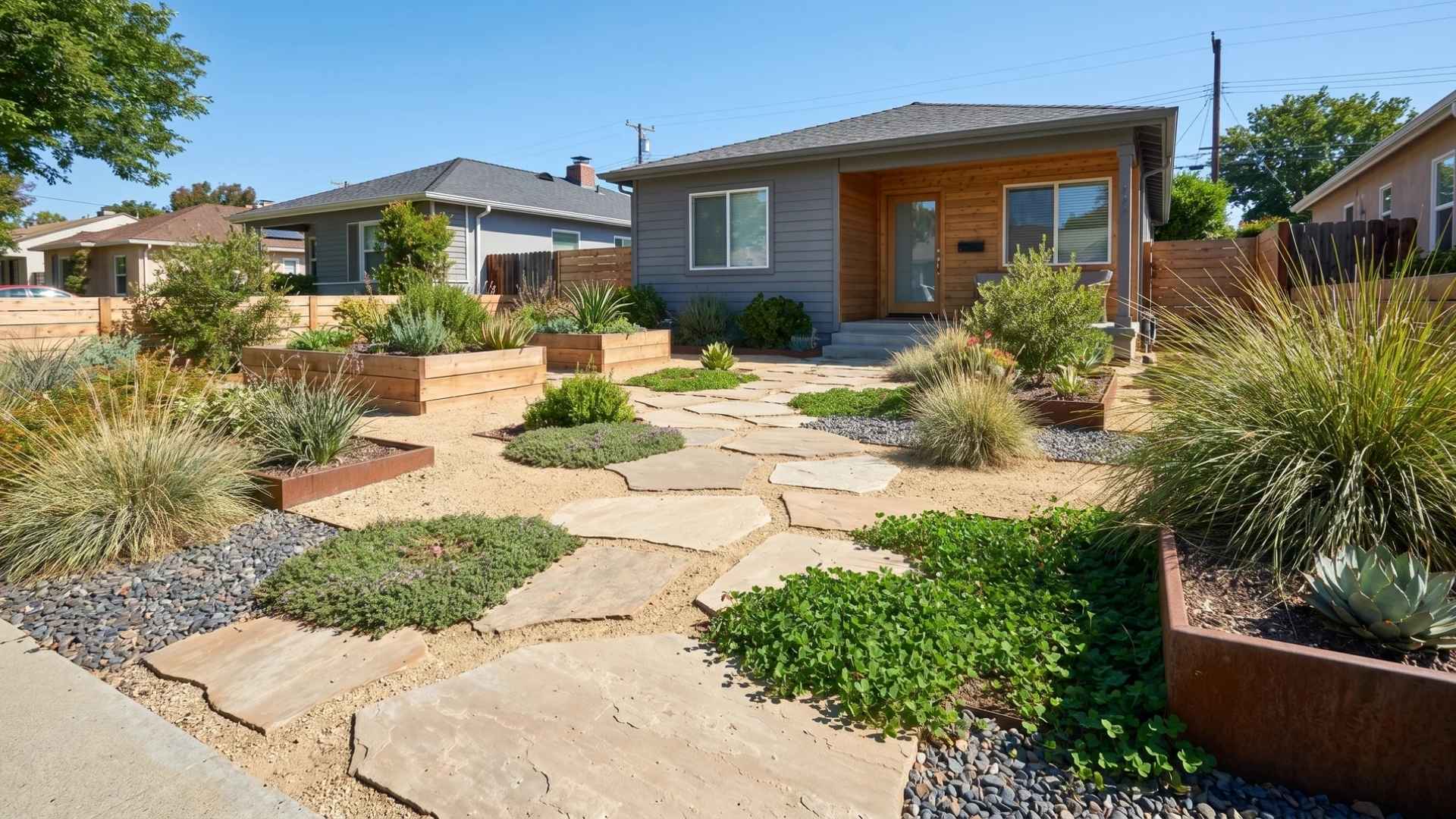
Grass-free front yards have moved from trend to mainstream. Gravel, decomposed granite, creeping thyme, and clover replace traditional turf while significantly reducing water consumption.
In many states, municipalities offer cash rebates for lawn removal. Begin by sheet-mulching with cardboard to smother the existing grass. Grasslayer your chosen ground material on top.
The result is a low-maintenance, visually modern front yard that holds up during drought.
3. Layer Plants by Height
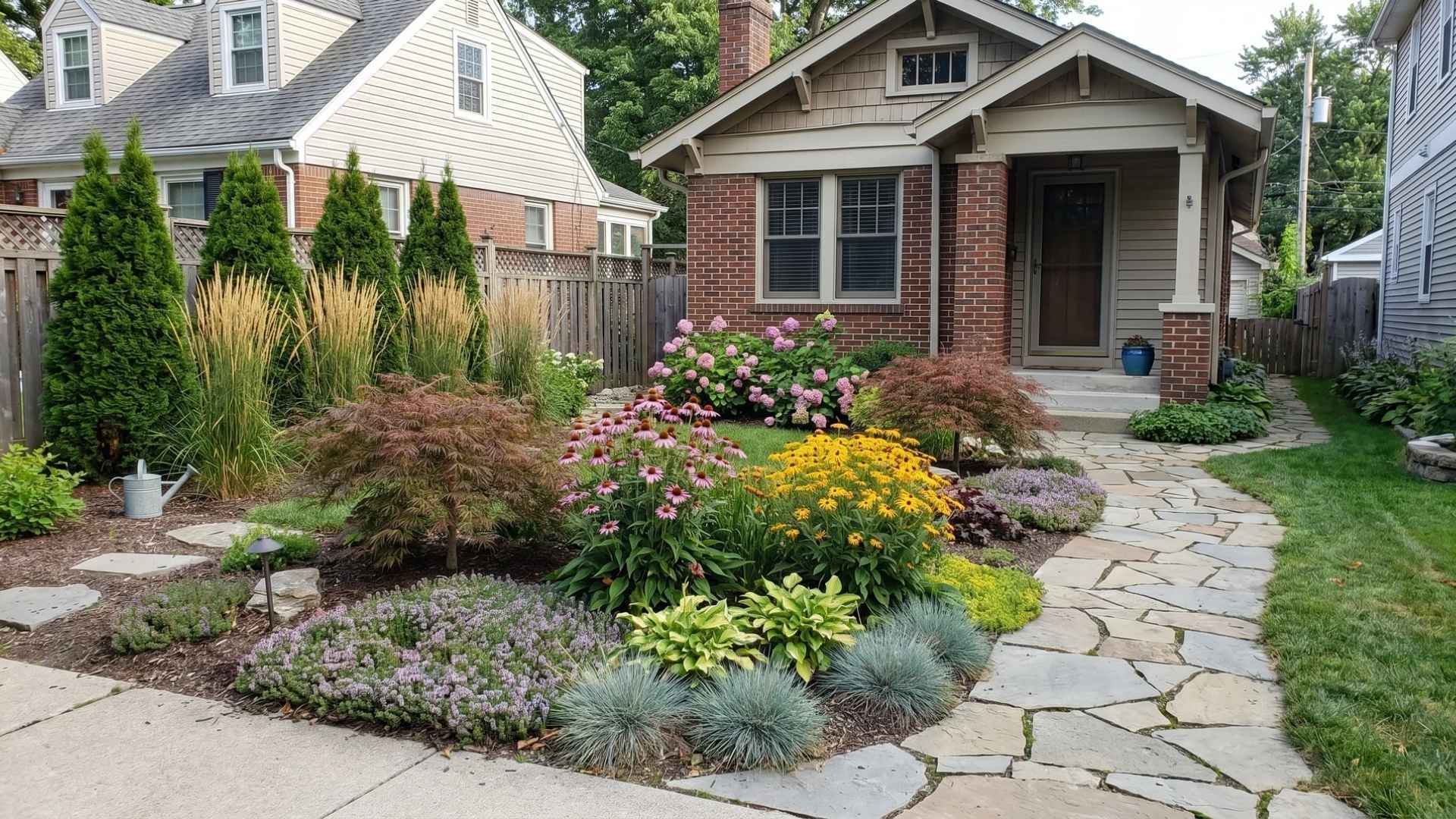
Layering is one of the most reliable principles in front-yard landscaping. Tall ornamental trees or large shrubs anchor the rear of a bed.
Mid-height perennials fill the middle zone. Low ground covers and compact flowering plants hug the front edge.
This graduated structure makes a small space feel significantly larger and ensures seasonal interest throughout the year.
4. Install a Defined Pathway
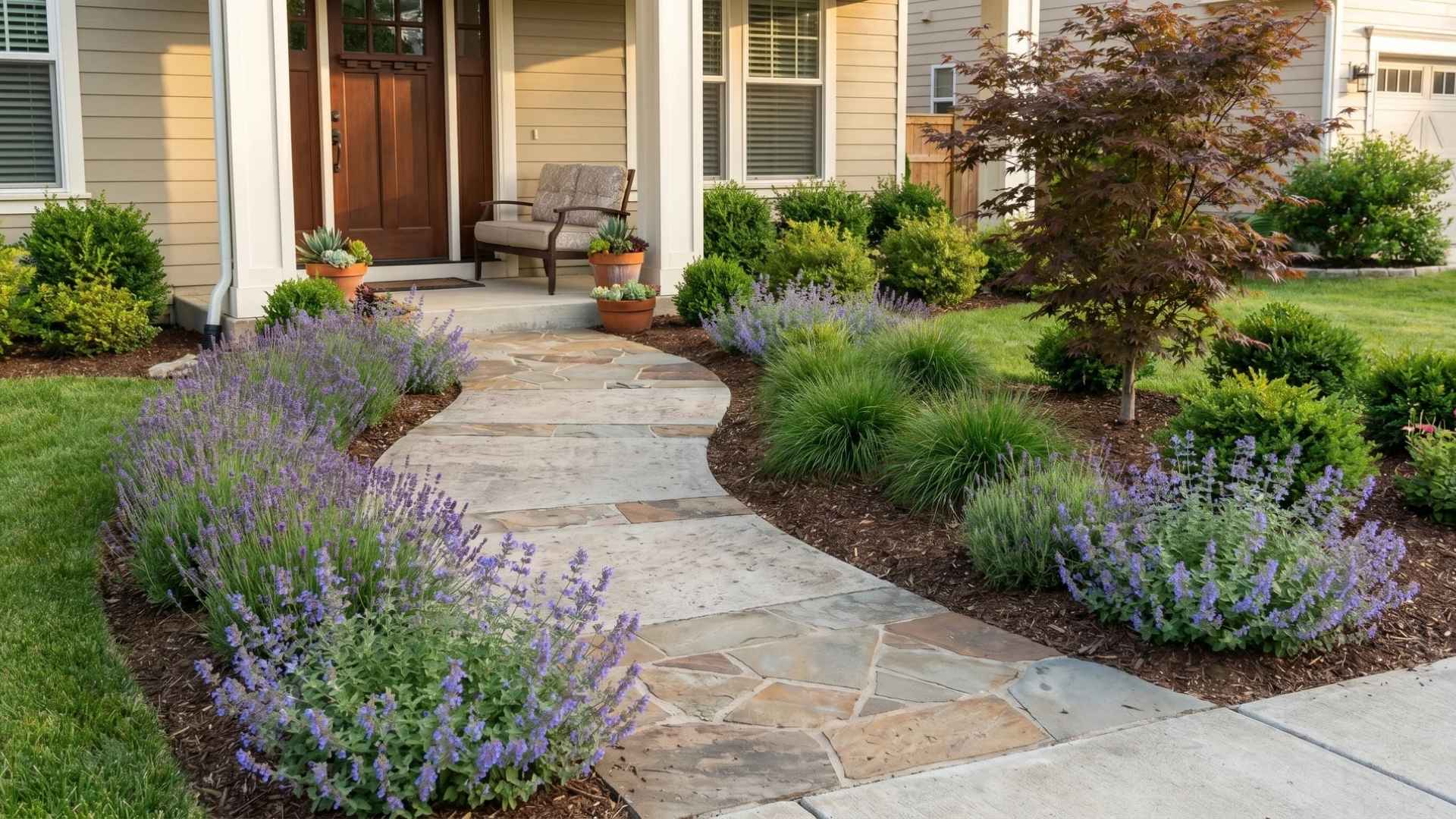
A well-placed path guides visitors and creates a strong visual structure. Curved routes feel more generous than straight ones because they slow the eye.
Budget options include pea gravel ($100 to $200), flagstone ($300 to $600), and concrete pavers ($200 to $500).
Bordering the path with catmint or low lavender ties the hardscape into the planting and completes the design without extra cost.
5. Use Symmetrical Foundation Planting

Mirroring plants on either side of the front door, two matching boxwood spheres, a pair of dwarf hollies, or flanking ornamental grasses, deliver immediate polish with minimal effort.
Symmetry signals care and intention, even in the smallest front-yard landscaping context. It also gives you a clean baseline to build on over time as your budget and confidence grow.
6. Add Landscape Lighting
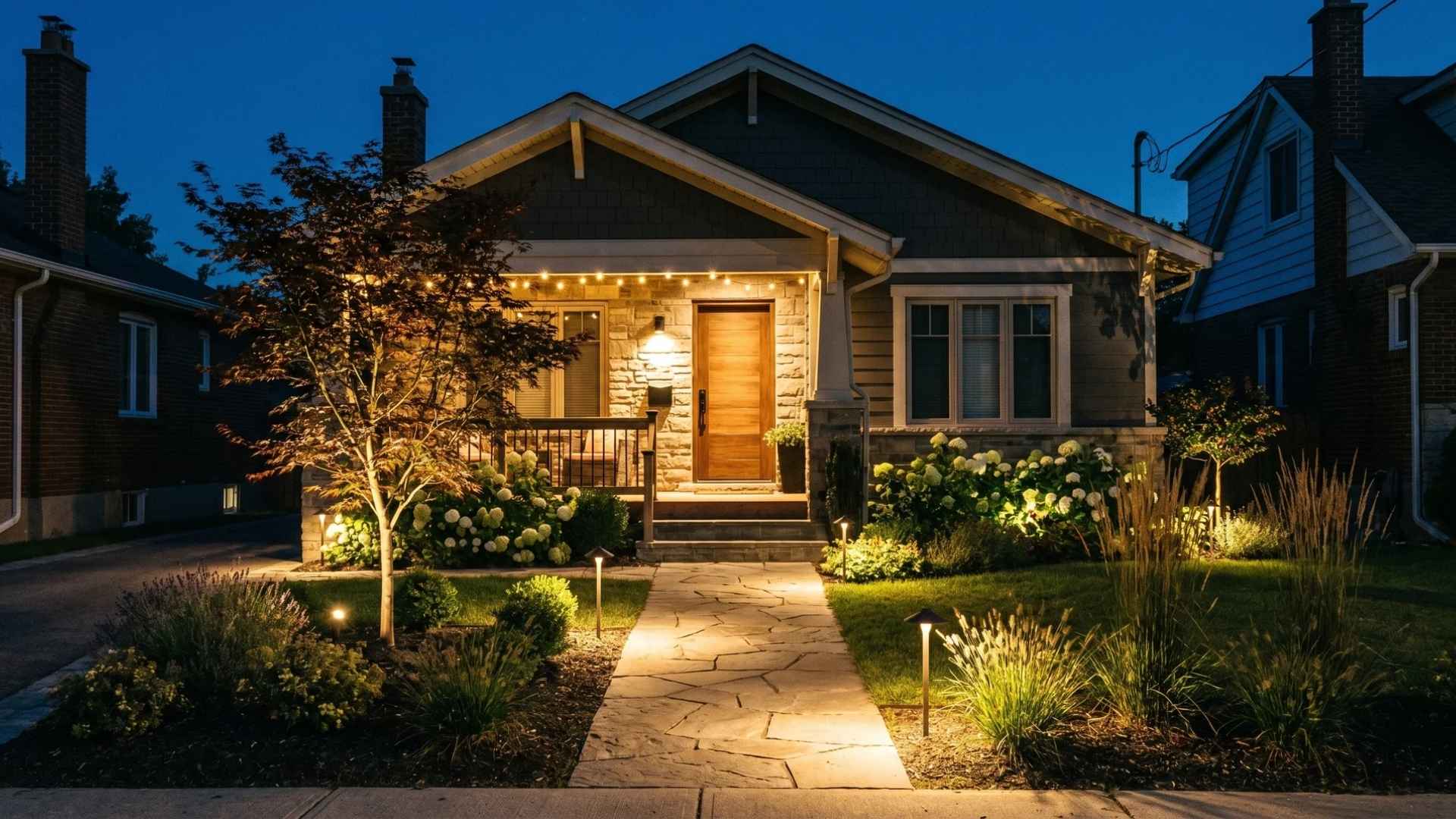
Evening curb appeal is the most overlooked aspect of front-yard design. Solar path lights ($30 to $80 for a set), subtle uplighting beneath a specimen tree, and a spotlight on the front door create warmth and dimension after dark.
Lighting also makes a small yard feel larger by drawing the eye outward into planted space rather than back toward the house wall.
This single addition changes how the entire exterior reads at night.
7. Plant a Native Pollinator Garden
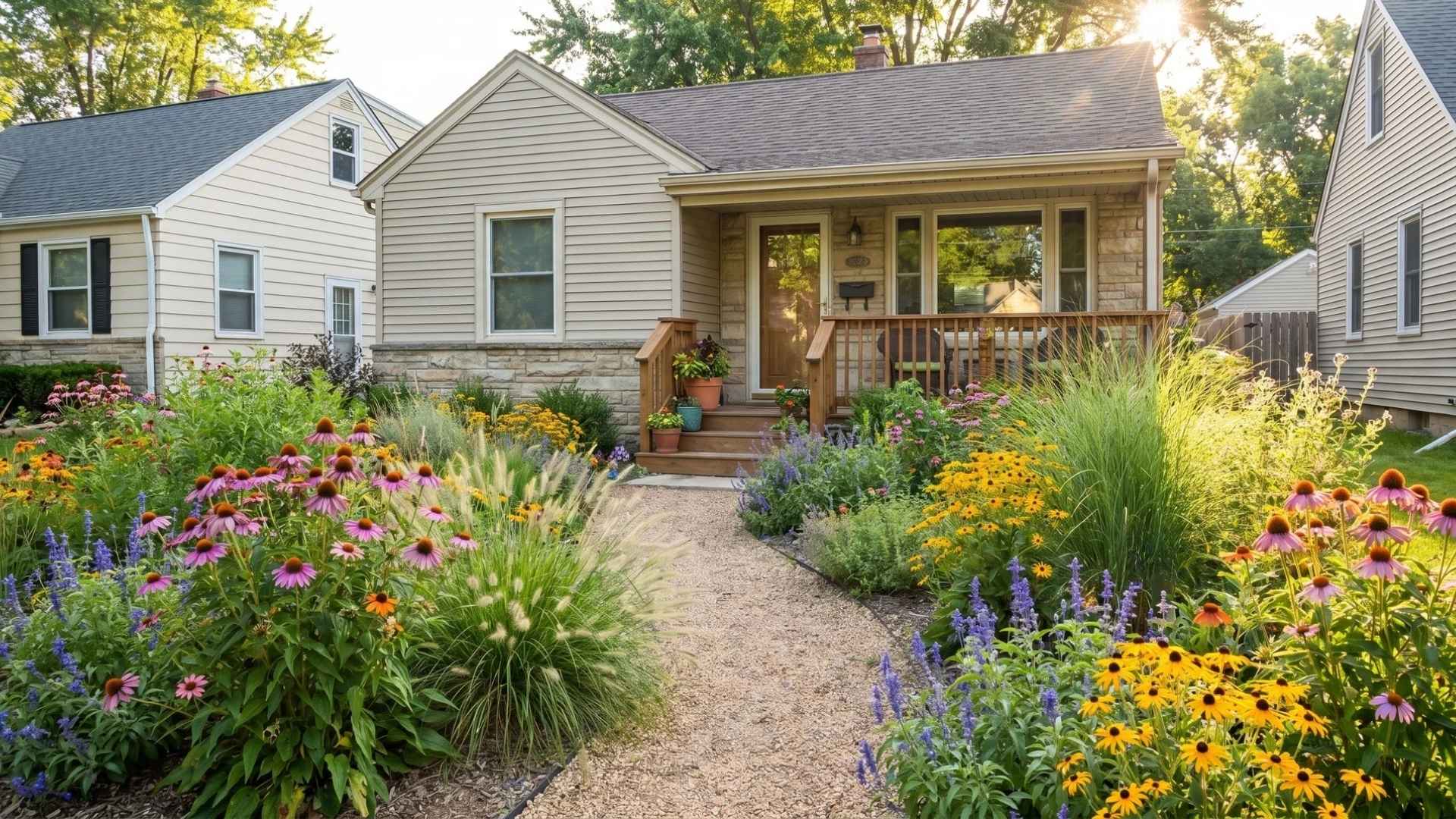
Native plants evolved alongside local soils and rainfall, so they demand far less supplemental water and fertilizer once established.
Coneflower, black-eyed Susan, salvia, and native grasses perform consistently across most U.S. hardiness zones.
Beyond their low input requirements, pollinator gardens attract bees, butterflies, and hummingbirds, bringing movement and life to a small space in a way that purely ornamental plantings cannot.
8. Use Container Gardens for Flexibility

Containers give renters and cautious homeowners a way into front yard landscaping without a permanent commitment.
Group three pots of varied heights, using a tall grass, a mid-level bloomer, and a trailing plant at the base, to create a complete layered composition on a step or porch corner.
Swap plants seasonally to maintain year-round freshness without replanting entire beds.
9. Refresh Beds with Clean Edging and Mulch
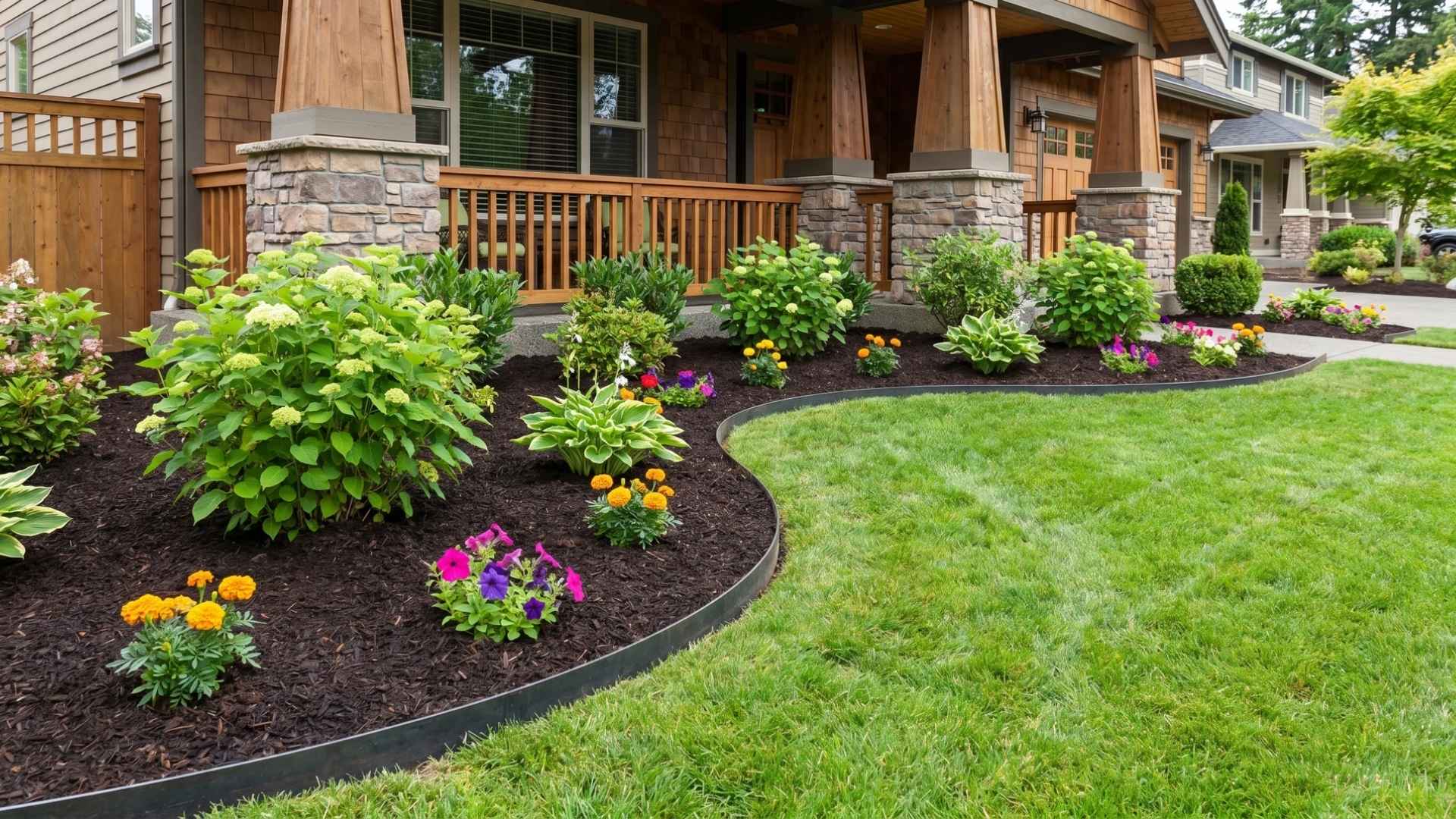
This is the highest-return weekend project in residential landscaping. A crisp edge between the lawn and the planting bed, created with a half-moon edger or a metal edging strip, makes any yard look intentional.
Follow immediately with two to three inches of fresh bark mulch. Mulch suppresses weeds, retains soil moisture throughout the summer, and provides a unified backdrop that makes plants stand out clearly.
Budget for most small yards: $50-$150.
10. Carve Out a Small Seating Nook
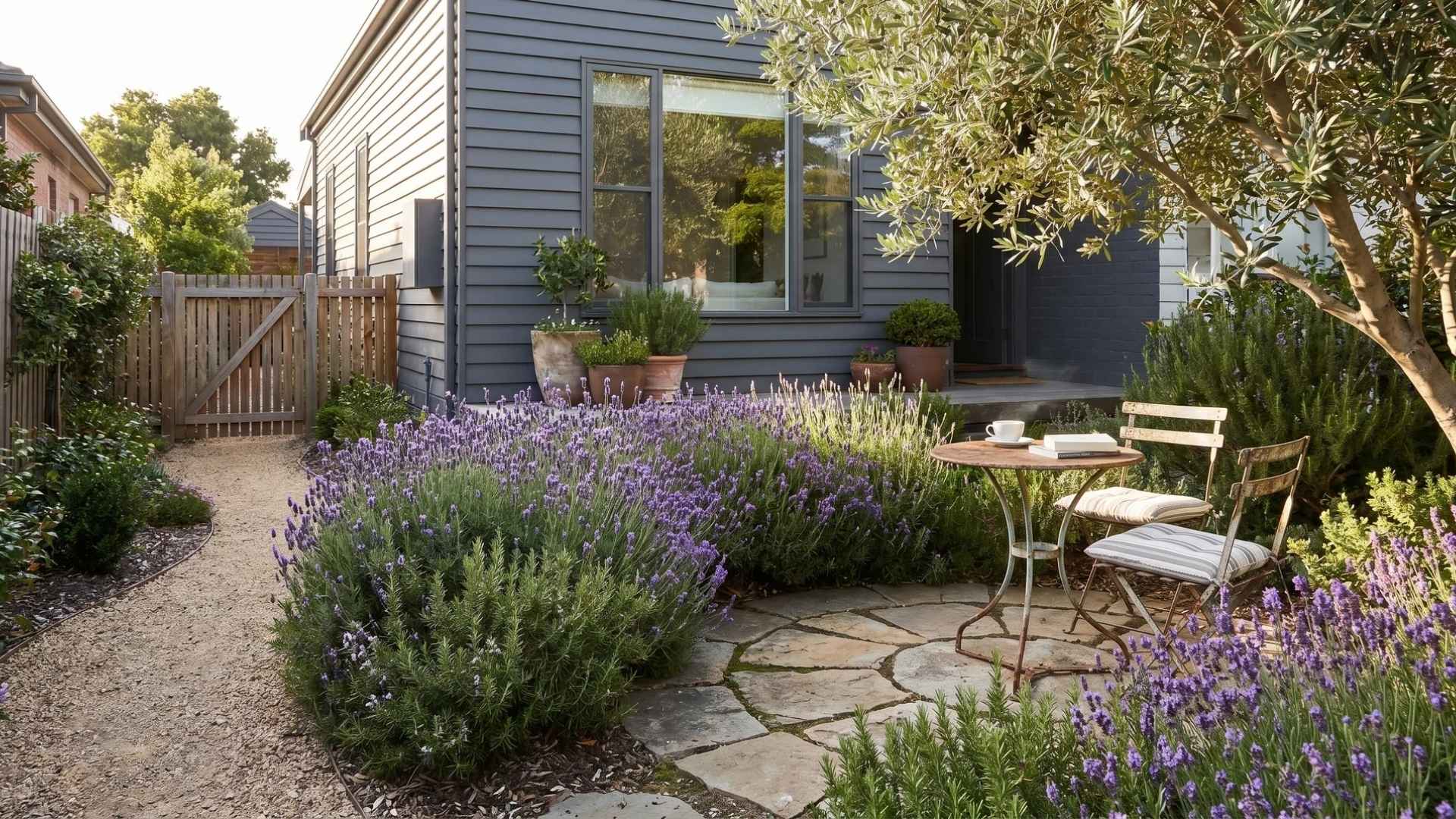
Front yards are consistently underused as functional outdoor spaces. A small bistro set, a base of pavers or compacted gravel, and a border of fragrant rosemary or lavender transform an unused corner into a genuine outdoor retreat.
For urban homes where backyard space is also limited, this front yard seating nook becomes genuinely valuable daily-use space rather than a purely visual feature.
11. Define the Boundary with a Fence or Low Wall
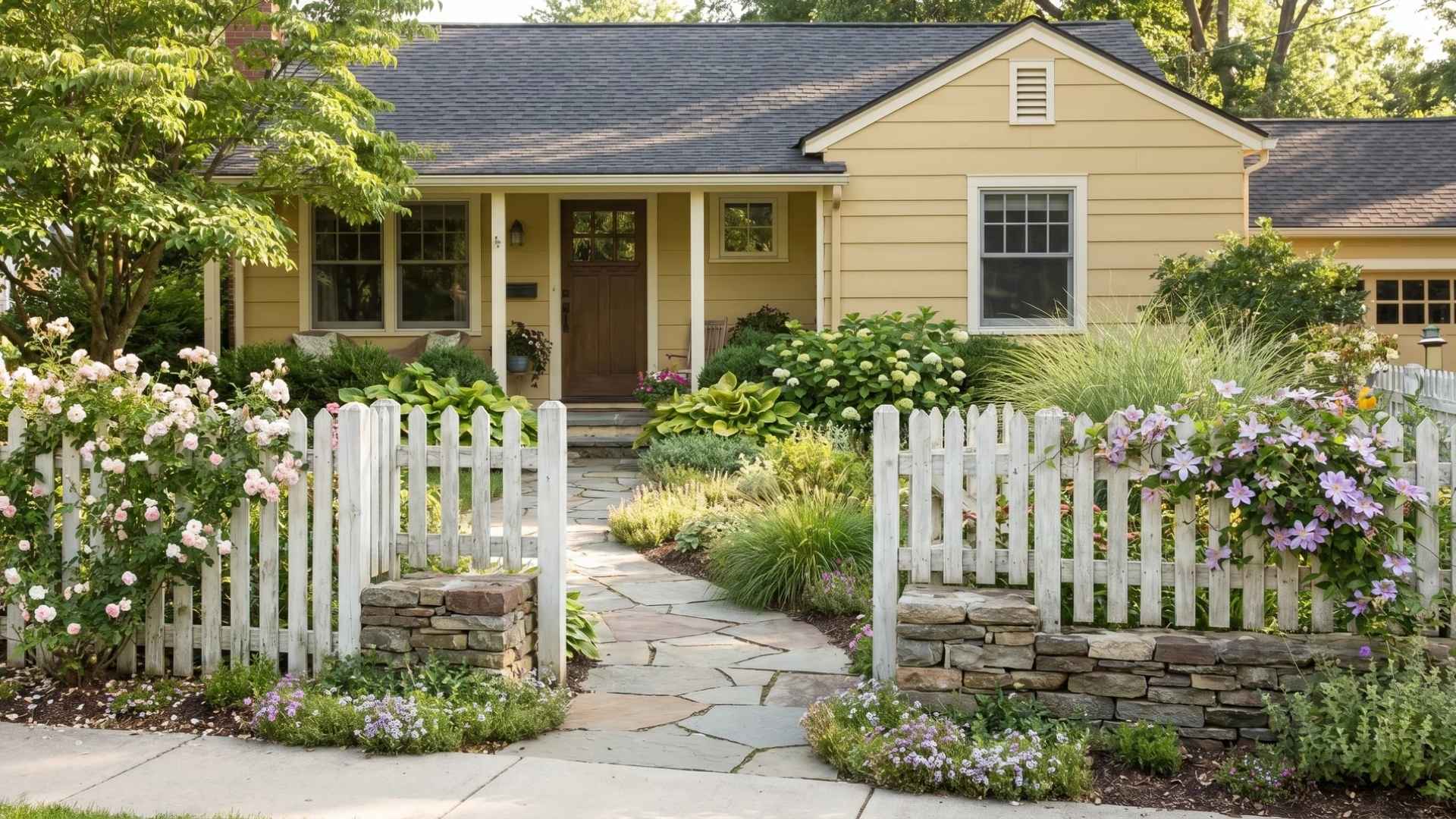
A boundary gives a small front yard a clear identity. White picket fences complement cottage and farmhouse styles.
Dry-stack stone walls suit craftsman homes. Wrought iron works with historic architecture.
Keep the height modest at the front so the design feels welcoming rather than closed off, and pair fence posts with climbing plants for a layered, finished effect that increases perceived depth.
12. Make the Front Door a Focal Point

The front door is the natural anchor of any home exterior and the cheapest element to transform.
A bold paint color, navy, forest green, terracotta, or matte black, combined with matching planter hardware and two flanking pots filled with seasonal blooms, creates a cohesive design moment for well under $200.
Choose a color that works with the roof and siding tones to ensure the result feels designed, not accidental.
13. Plant a Cottage-Style Perennial Bed
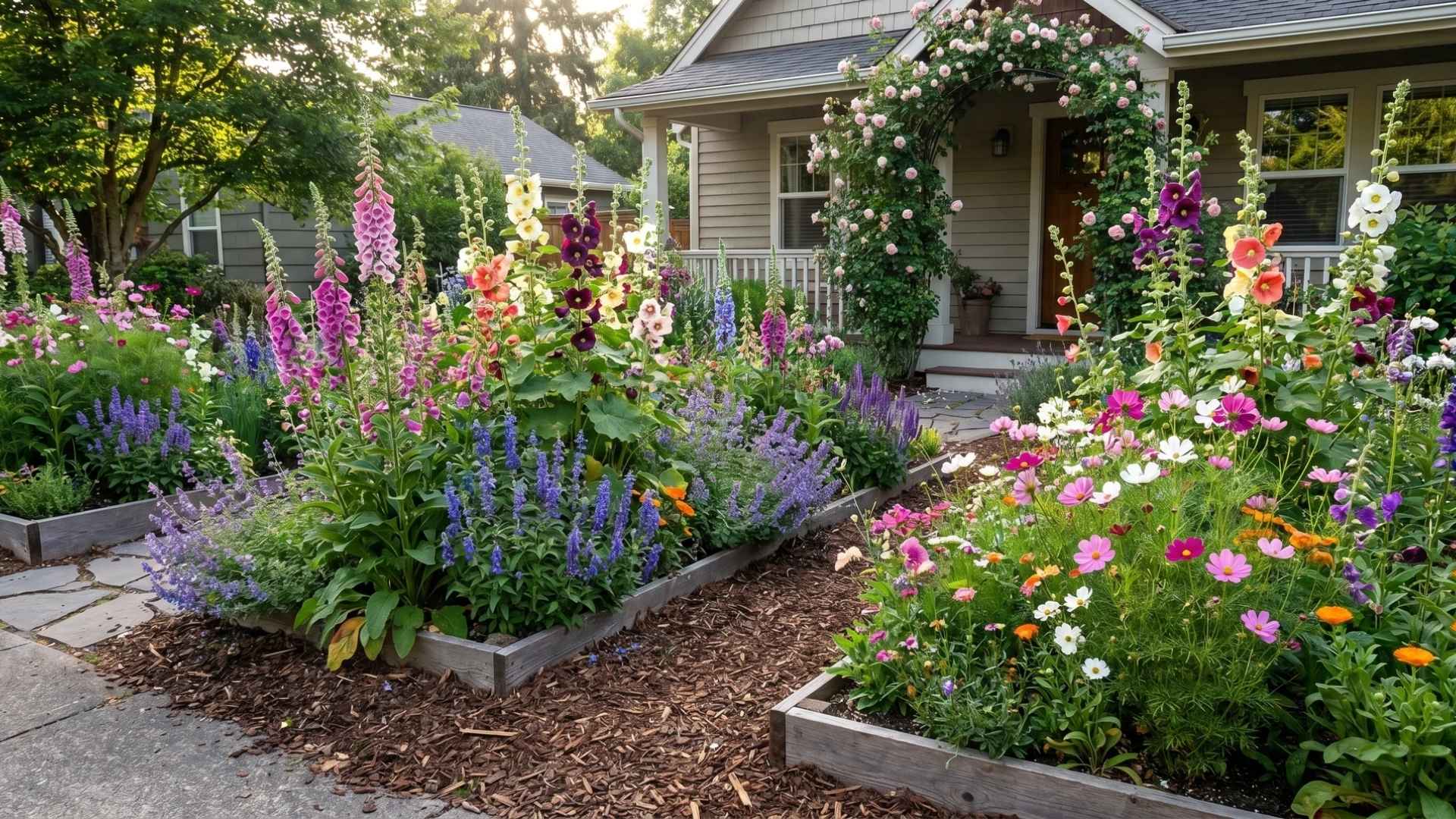
Dense, layered cottage planting looks effortlessly full, which is exactly what a small space needs.
Foxglove, hollyhocks, salvia, and cosmos planted closely together create a romantic, abundant effect that returns season after season with minimal intervention.
Prepare rich, well-draining soil before planting since cottage perennials compete in close quarters. Occasional deadheading during summer is all the ongoing maintenance this style demands.
14. Try Xeriscaping for a Water-Wise Yard
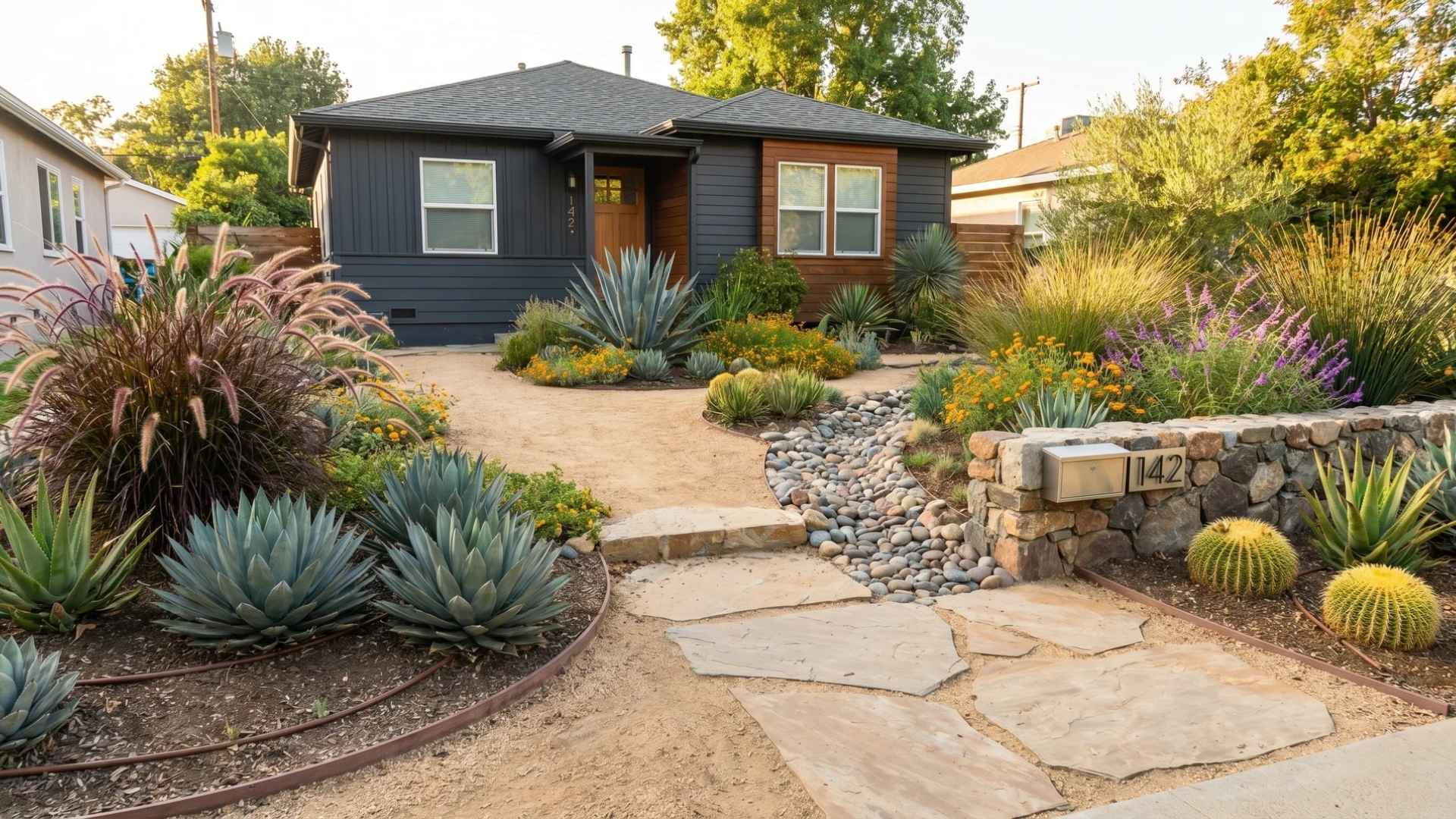
Xeriscaping replaces thirsty turf with drought-tolerant species, decorative gravel, and hardscape arranged for both function and beauty.
Succulents, agave, native wildflowers, and ornamental grasses create vibrant, textural compositions that thrive on minimal irrigation.
This approach is most relevant in the Southwest and West, but rising water costs have made it a practical choice across the country. Many utility providers offer rebates for converting a lawn to xeriscape.
Mistakes to Avoid in Small Front Yard Landscaping
Even the best small front yard landscaping ideas fall flat when a few key missteps go unchecked. Avoiding these common errors will save you time, money, and a lot of replanting.
1. Choosing plants too small for the scale of the house: The planting should nestle the home into its surroundings, not leave it sitting above a row of undersized shrubs. Always consider the mature size of a plant, not just how it looks in the nursery pot.
2. Overcrowding with too many species: More variety does not mean more beauty. Limit your selections to three to five plant varieties and repeat them throughout the bed for a cohesive, intentional look.
3. Ignoring seasonal interest: A yard that looks spectacular in May and bare in January is a half-finished design. Choose at least one plant per layer that offers winter structure, fall color, or early spring bloom.
4. Skipping a focal point: Without an anchor, a small front yard feels unresolved and forgettable. Every successful front yard landscaping design guides the eye to a specific focal point, whether that is the front door, a specimen plant, or a standout planter.
5. Letting clutter take over: Bins, bikes, and decorations that never come down quietly destroy curb appeal, regardless of how well the rest of the yard is planted. Build in a simple storage solution from the start so the space always reads as clean and cared for.
Budget Reference
Planning saves surprises. Here is a realistic cost range for the most popular small front yard landscaping projects when done as DIY.
| Project | DIY Cost |
|---|---|
| Mulch and edging | $50 to $150 |
| Gravel pathway | $100 to $300 |
| Container garden | $75 to $200 |
| Solar landscape lighting | $30 to $150 |
| Native plant bed | $100 to $300 |
| Fence or low wall | $200 to $800 |
Conclusion
Small front yard landscaping is not about working around a limitation. It is about designing with purpose.
Every idea in this list scales to a tight budget and a compact footprint, because real curb appeal has never depended on square footage.
It depends on thoughtful plant selection, a clear focal point, honest maintenance expectations, and sustainable choices that hold up year after year.
Pick one idea that fits your lifestyle, your climate, and your space. Execute it well and build from there. With the right approach, even the most modest entry can carry genuine warmth and character.
A small yard, designed with intention, consistently becomes the most inviting spot on the street.


