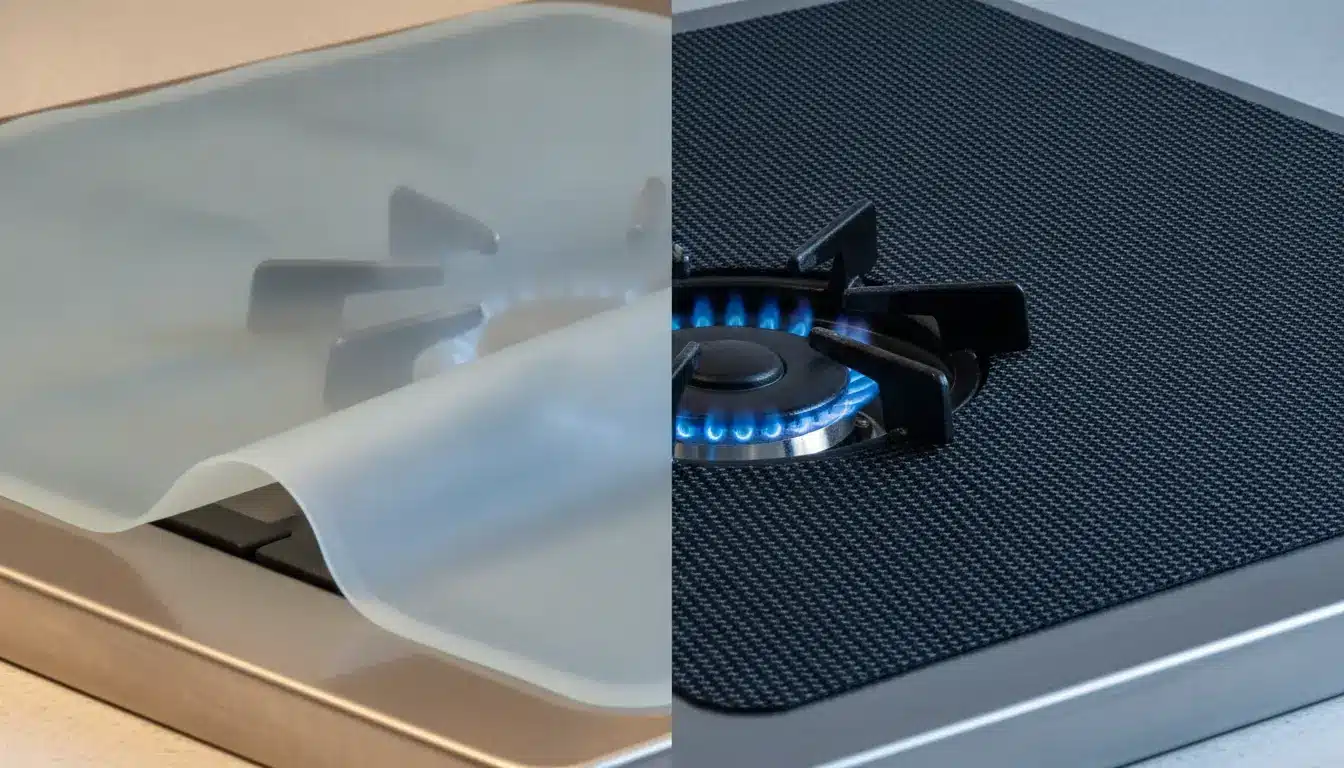
Silicone vs PTFE Stove Protectors: The Difference That Matters

If you have shopped for a protector, you have seen the same mat sold as “heat-resistant” in two very different materials. Knowing which one you are actually buying is what keeps a convenience product from becoming a hazard. Here is how the two compare where it counts.
What’s the Core Difference Between Silicone and PTFE Protectors?
The two materials behave differently under heat and over time. PTFE-coated fiberglass is a woven glass mat with a non-stick coating; it is rigid, lies flat, and resists oil and high heat.
Silicone is a softer, rubber-like sheet that flexes and grips well, which makes it easy to handle and store. That flexibility is its selling point and also its weakness, because it softens and degrades at a lower temperature than coated fiberglass.
The short version: coated fiberglass is built for heat, silicone is built for flexibility. Which trait you need depends entirely on your cooktop.
Which Material Handles Heat Better?
PTFE-coated fiberglass wins on sustained heat by a clear margin. According to engineering guidance, PTFE-coated fiberglass mats withstand continuous temperatures up to about 500°F (260°C), while silicone mats sit lower, roughly 450°F to 500°F (232°C to 260°C), and have a lower melting point overall.
That gap matters more than it looks on paper. A gas flame burns far hotter than either rating at the cone, so the protector’s job is to sit clear of the flame, and the material with more headroom is more forgiving when a pan overhangs or a boil-over runs hot.
Push either material past its ceiling and it warps, melts, or releases fumes. The higher the rating, the more margin you have before that happens.
Is Silicone Safe on a Gas Stove?
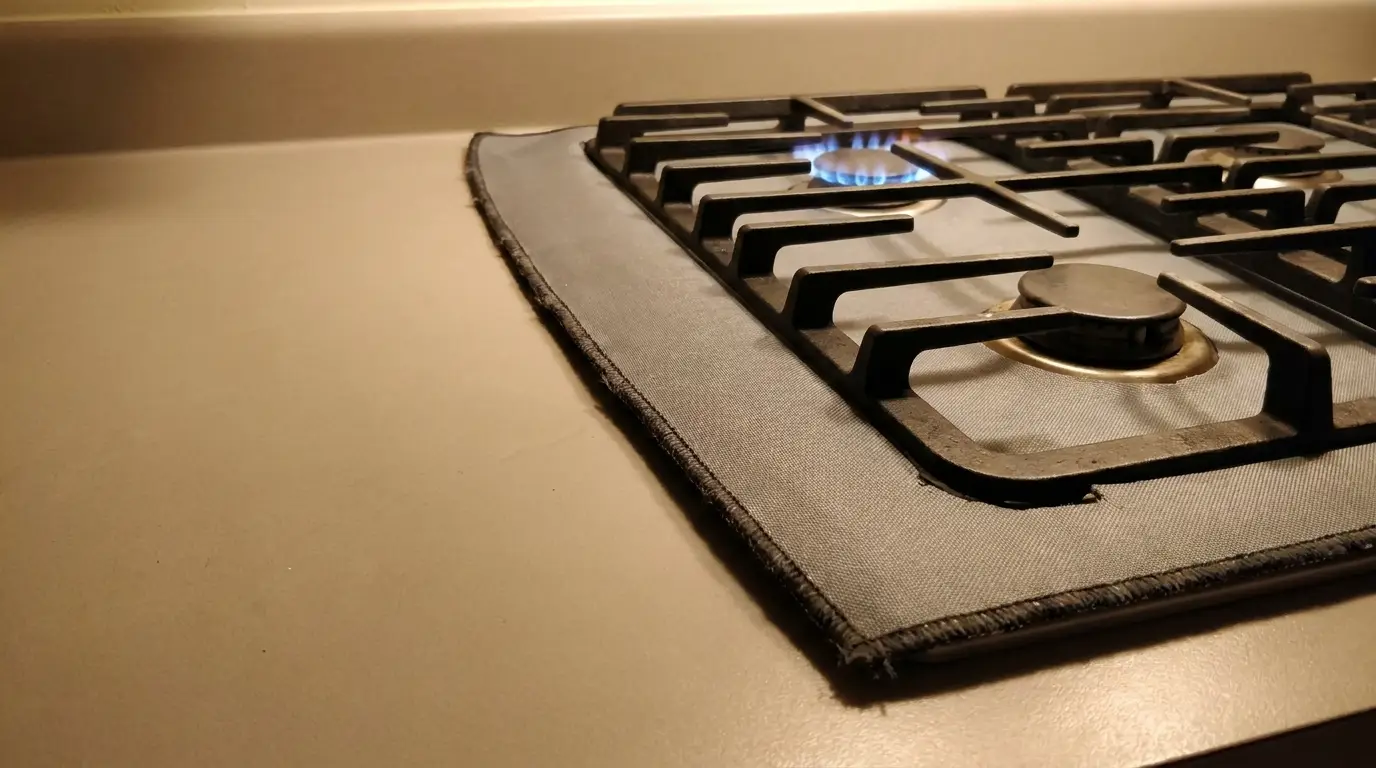
This is where the honest answer matters. Silicone can work for surface protection on a cool cooktop, but on an active gas burner it is the riskier choice.
Product material guides note public customer reports of heat-related issues, including melting and fire concerns, when silicone protectors are used on open gas flame. Manufacturer materials data from 2026 also flags that silicone can show heat damage within the first month of gas use, whereas coated fiberglass holds up far longer.
For gas, that tips the recommendation toward PTFE-coated fiberglass cut for your model. Silicone is better kept to low-heat or off-burner duty.
Does Thickness Change the Comparison?
Thickness helps within a material, but it does not rescue the wrong one. A 0.5mm silicone mat is not the same product as a 0.5mm PTFE-coated fiberglass mat, even though the number on the label is identical.
The useful rule is that material sets the ceiling and thickness extends the life beneath it. For a deeper breakdown of how flexible materials compare with firmer covers, Stove Shield lays out the trade-offs side by side.
So compare material first, then use thickness to choose between two mats of the same material.
Which Should You Use on Each Cooktop Type?
Match the material to the surface, not the marketing. On a gas range, PTFE-coated fiberglass cut for your model is the standard pick because of the heat headroom and flat fit around the burners.
On a smooth glass or radiant electric top, a thin mat protects against scratches from sliding cookware, and either material can work when the surface is cool. According to buyer guidance, the key is matching size and layout to your stove regardless of material.
Induction is the exception: any mat must be thin enough not to interfere with the magnetic field, so many induction owners skip a full mat during cooking entirely.
How Long Does Each Material Last?
Lifespan tracks with both material and thickness. Manufacturer data from 2026 puts PTFE-coated fiberglass mats around 0.5 to 0.6mm at roughly two to three years of normal home cooking, while budget coated mats near 0.15 to 0.2mm last closer to six to twelve months.
Silicone’s lifespan is harder to pin down because heat exposure shortens it fast on gas. On a cool surface used gently, it can last a while; near a flame, it can degrade in weeks.
The takeaway is consistent: pick the material your cooktop needs, then buy the thickness that fits your cooking volume.
Frequently Asked Questions
Is PTFE or Silicone Better for a Gas Stove?
PTFE-coated fiberglass, in most cases. It handles higher sustained heat (about 500°F) and has more margin near a flame, while silicone sits lower and has public reports of heat issues on open gas burners.
Is Silicone Safe to Use on a Stovetop?
For low-heat or off-burner surface protection on a cool cooktop, generally yes. On an active gas flame it is the riskier choice, since it degrades at a lower temperature and has reported melting and fire concerns.
Does a Thicker Protector Mean a Safer One?
Not on its own. Thickness extends life within a material but does not raise its heat ceiling, so a thick silicone mat is still limited by silicone’s lower temperature tolerance.
How Long Does a PTFE-Coated Fiberglass Protector Last?
Manufacturer data from 2026 puts a 0.5 to 0.6mm mat at about two to three years of normal home cooking. Thin budget versions around 0.15 to 0.2mm tend to last six to twelve months.
Written by Theo Lindqvist, a kitchen-gear writer who has reviewed cookware and cooktop accessories for over nine years. Connect on [AUTHOR BIO LINK: LinkedIn — USER FILLS].