Master Video Skills With a Videography Course

Have you ever watched a beautifully filmed video and wondered how the creator captured every moment so perfectly? From cinematic travel footage to engaging business promotions, great videos combine technical knowledge, creative vision and thoughtful storytelling. The good news is that these skills can be developed with the right guidance and consistent practice.
A videography course can help aspiring filmmakers, content creators and photography enthusiasts understand the fundamentals of video production. Whether you want to create videos for social media, document special occasions or explore professional opportunities, structured learning can give you the confidence to turn your ideas into compelling visual stories.
Video production is also relevant across many industries, including education, entertainment, marketing and communications. According to the Australian Government’s Labour Market Insights website, employment trends and occupational information can help Australians understand career opportunities and workforce requirements. Exploring this information alongside practical training can help you make informed decisions about developing your creative skills.
1. Understand the Fundamentals of Video Production
Creating an effective video involves more than pressing the record button. You need to understand how images, movement, lighting, sound and composition work together to communicate a message.
A good starting point is learning the fundamental principles of video production, including frame rates, resolution, aspect ratios and exposure. These concepts influence how your footage looks and how it performs on different platforms.
For example, a video intended for a widescreen television or YouTube channel may use a different aspect ratio from a vertical video designed for Instagram Reels or TikTok. Understanding these differences allows you to choose the appropriate settings before filming.
You should also learn how shutter speed, aperture and ISO affect your footage. These settings influence motion, brightness and image quality, helping you make informed adjustments when filming in different environments.
Building a solid foundation makes it easier to experiment creatively without relying entirely on automatic camera settings.
2. Learn to Use Your Camera Effectively
You do not necessarily need the most expensive camera to create engaging videos. Many modern cameras and smartphones offer features that are suitable for learning the basics of videography.
What matters most is understanding how to use your equipment effectively.
Start by exploring your camera’s recording modes, focus settings, white balance and exposure controls. Practise switching between manual and automatic settings to understand how each option affects the final result.
Pay particular attention to focus. A subject that appears sharp and clear can hold a viewer’s attention, while unintended focus changes may distract from the story.
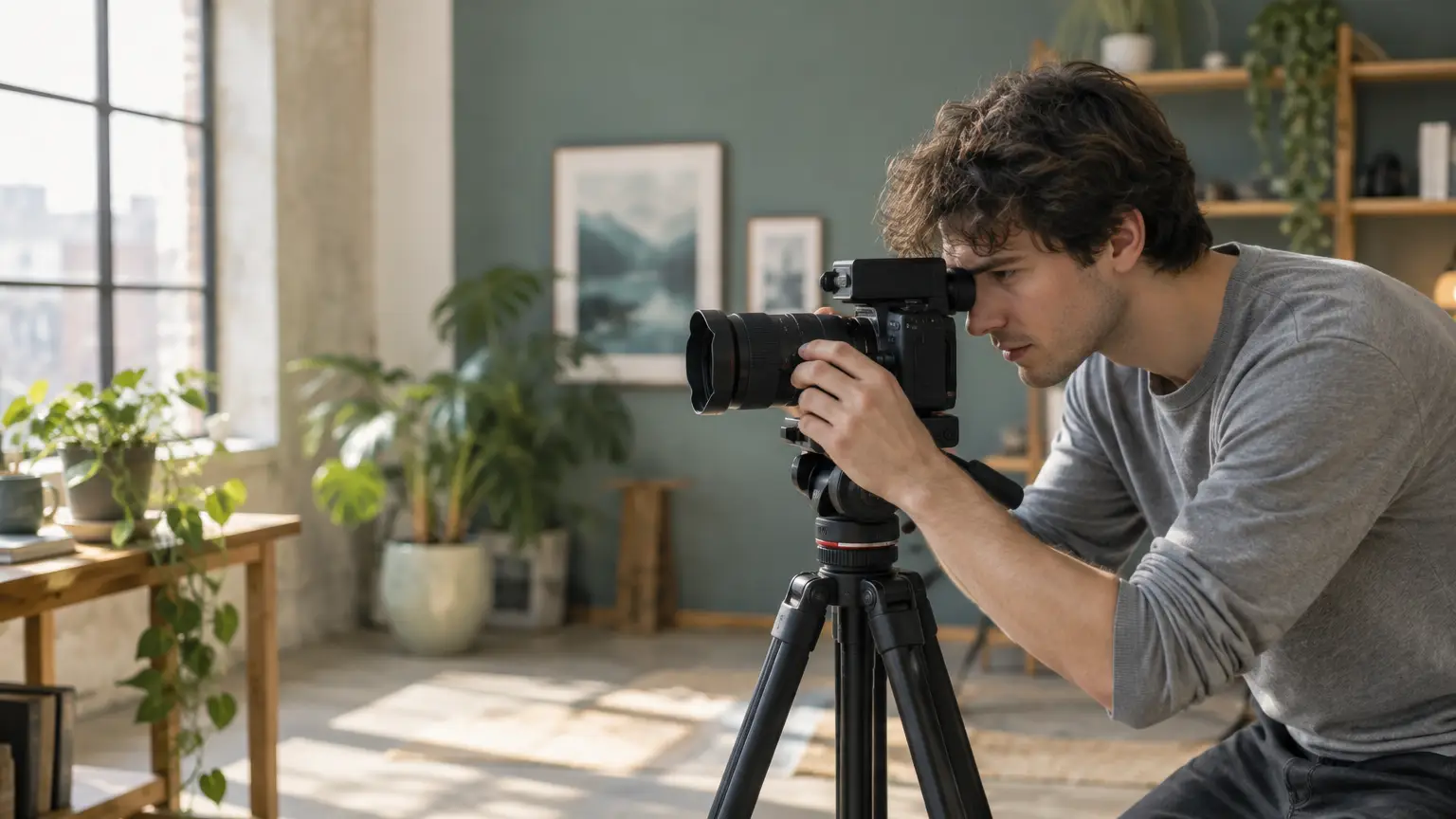
It is also worth learning how to stabilise your camera. Tripods, monopods and gimbals can help produce smoother footage, depending on the type of shot you want to capture.
Before purchasing additional equipment, identify the techniques you want to improve. Learning to use your existing camera well is often more valuable than buying new gear without understanding its purpose.
3. Explore Lighting and Composition
Lighting and composition can dramatically influence the mood and quality of a video.
Natural light is an excellent starting point for beginners. Try filming near a window, outdoors during softer daylight or in a shaded area to see how different lighting conditions affect your subject.
Avoid assuming that brighter lighting always produces better results. The direction, intensity and colour of light can be just as important as its brightness.
Composition is equally important. Techniques such as the rule of thirds, leading lines, framing and the use of negative space can help guide the viewer’s attention.
For example, when filming an interview, positioning the subject slightly to one side can create a more balanced composition. Leaving space in the direction the subject is looking can also make the shot feel more natural.
Experiment with wide, medium and close-up shots to add variety. Wide shots establish the setting, medium shots show interactions, and close-ups reveal important details or emotions.
Learning to combine lighting and composition gives your videos a more intentional and professional appearance.
4. Develop Strong Storytelling Skills
Technical skills help you record footage, but storytelling gives viewers a reason to keep watching.
Every effective video should have a clear purpose. Before filming, consider what you want your audience to understand, feel or do after watching.
For a travel video, you might want to communicate the atmosphere of a destination. For a product demonstration, your goal may be to show how a product solves a particular problem. For an interview, the focus could be sharing a person’s experiences or expertise.
Planning your story before recording can save time during filming and editing.
Create a simple outline that identifies the opening, main message and conclusion. You can then list the shots needed to communicate each part of the story.
Think about pacing, transitions and emotional progression as well. A sequence of beautiful shots may look impressive, but the footage becomes more meaningful when each scene contributes to a larger narrative.
Studying storytelling techniques is particularly useful for anyone interested in filmmaking, documentary production, event coverage or commercial videography.
5. Practise Recording Clear, High-Quality Audio

Audio is sometimes overlooked by beginners, yet poor sound can make an otherwise attractive video difficult to watch.
Background noise, wind, echo and inconsistent volume can distract viewers from your message. Clear audio, on the other hand, makes dialogue easier to understand and creates a more polished viewing experience.
Start by choosing a quiet recording environment whenever possible. Listen for air conditioners, traffic, machinery and other sounds that might interfere with your recording.
If you regularly film interviews or presentations, consider using an external microphone. A lavalier microphone is useful for recording dialogue, while a shotgun microphone can help capture sound from a more focused direction when used appropriately.
Headphones are also helpful because they allow you to monitor the recording and identify problems before finishing a shoot.
Remember that sound includes more than speech. Ambient sounds, music and carefully selected sound effects can help establish a setting and reinforce the mood of a scene.
Practise recording the same subject in different environments to understand how location and microphone placement affect audio quality.
6. Master the Basics of Video Editing
Editing is where individual clips become a coherent story. Even excellent footage may feel disjointed without thoughtful sequencing and pacing.
Begin by learning how to import and organise files, select the strongest takes, trim clips and arrange them on a timeline. These basic skills form the foundation of most editing workflows.
Next, explore transitions, colour correction, audio balancing, titles and captions. Use these tools to improve clarity rather than adding effects simply because they are available.
For example, a straightforward cut often works better than an elaborate transition when moving between two interview shots. Consistent colour and exposure can also make footage recorded at different times feel more unified.
Popular editing applications offer different features and learning curves, so choose software that matches your goals and equipment.
You can also supplement your learning with online tutorials. This YouTube search for beginner video editing tutorials provides a starting point for exploring editing techniques, software demonstrations and practical examples.
The more you edit your own footage, the easier it becomes to recognise what works during filming and what needs improvement.
7. Build a Portfolio Through Practical Projects
One of the best ways to develop your skills is to create videos regularly. Practical projects allow you to apply what you learn, discover your strengths and identify areas that need improvement.
You do not need a paying client or a large production budget to get started.
Consider creating a short video about a local attraction, filming a family event, producing a simple product demonstration or documenting a hobby. Each project presents different challenges involving lighting, movement, audio and storytelling.
Set a clear objective for every project. For instance, you could focus on smooth camera movement in one video and clear dialogue in the next.
After completing each project, review the footage critically. Ask yourself whether the story is easy to follow, the sound is clear and the visuals support the intended message.
Keep your strongest work in a portfolio that demonstrates your progress. A collection of well-planned, completed projects can be more useful than a large collection of unfinished experiments.
As your experience grows, you can explore more complex productions and develop a style that reflects your interests and creative strengths.
8. Understand the Different Career Opportunities
Videography skills can be applied to a wide range of creative and commercial activities. The opportunities available to you will depend on your interests, experience, portfolio and local market.
Some people focus on wedding and event videography, capturing important occasions and preserving memorable experiences. Others work on promotional videos, interviews, property tours, educational content or social media campaigns.
Film and documentary production may appeal to those interested in longer-form storytelling, while product videography can suit creators who enjoy presenting objects, services and brands visually.
Businesses also use video for internal communications, training materials, customer education and marketing. This creates opportunities for people who understand both video production and the needs of an intended audience.
However, completing training does not automatically guarantee employment or clients. Professional work also requires reliability, communication, project planning, file management and the ability to meet deadlines.
Research the types of projects you would like to undertake, study examples from established creators and identify the skills commonly required in your chosen area.
You may discover that a combination of technical ability and a specialised niche offers a more practical starting point than trying to produce every type of video.
9. Learn to Plan and Manage Video Projects
Successful video production often begins long before the camera is switched on.
Planning helps you understand the project’s purpose, prepare equipment, organise people and locations, and avoid unnecessary delays.
Start with a brief that explains the video’s objective, intended audience, key message and expected deliverables. For larger projects, develop a storyboard or shot list to outline the scenes you need.
A shot list is especially useful when working with limited time. It helps you remember essential footage and reduces the likelihood of discovering missing shots during editing.
You should also consider practical requirements such as permissions, lighting conditions, travel time, backup equipment and data storage.
After filming, organise your files into clearly labelled folders and maintain backups of important footage. Good file management becomes increasingly valuable as projects grow in size and complexity.
If you work with clients, agree on deadlines, revision limits and delivery formats before starting. Clear expectations help prevent misunderstandings and make the production process more efficient.
These organisational skills are useful whether you work independently, collaborate with a creative team or produce videos for your own business.
10. Choose Training That Matches Your Goals
With so many online tutorials and learning resources available, beginners may find it difficult to decide where to start.
Free videos can be helpful for exploring individual techniques, but learning independently often requires you to identify gaps in your knowledge and organise your own practice.
Structured training can provide a more organised learning pathway by introducing concepts progressively and helping you connect technical skills with practical applications.
Before enrolling, consider what you want to achieve. Are you interested in creating better social media videos, improving your photography skills, exploring filmmaking or preparing for commercial work?
Look for training that covers the areas most relevant to those goals, such as camera operation, lighting, composition, sound, storytelling and editing.
Also consider the course format, learning materials, practical exercises and level of support available. Choose an option that fits your schedule and gives you opportunities to practise what you learn.
The Australian Photography School videography course is one option to explore if you want to develop your video production knowledge. Review its current curriculum, delivery format and enrolment details to determine whether it aligns with your needs.
The best learning choice is one that supports your goals and encourages you to put new skills into practice rather than simply collecting information.
Conclusion: Start Creating Better Videos Today
Becoming a confident videographer is a process of learning, experimenting and refining your approach. You do not need to master every technique immediately. Start with the fundamentals, practise with the equipment you have and gradually take on more challenging projects.
A well-chosen training programme can help you develop a stronger foundation, while personal projects allow you to turn that knowledge into practical experience. Over time, you can build a portfolio that reflects your progress and helps you explore creative or professional opportunities.
What kind of video would you love to create first? Whether you want to film travel adventures, capture meaningful events or produce engaging content for businesses, your next step is to start learning and put your ideas into action.