How to Get Rid of Flies: Fast Methods, Traps, and Prevention

Flies multiply fast. A single open garbage bag left out overnight can start a cycle that becomes a full infestation within days.
They also carry bacteria like Salmonella and E. coli, which makes getting rid of them more than just a comfort issue.
This post covers the fastest ways to kill flies on contact and homemade traps that take less than five minutes to set up. It also covers natural repellents and the daily habits that stop flies from coming back.
Why Do Flies Come Into Your Home?
Flies come inside because your home gives them everything they need: food, water, and warm spots to breed. Rotting fruit, uncovered garbage, and pet waste all give off odors that pull flies in from outside.
Dirty dishes, food crumbs on counters, and sticky residue in recycling bins are easy food sources. Standing water in clogged gutters, drain pans, or bird baths gives flies a place to lay eggs. Warm, humid weather speeds up the whole process.
Fly eggs hatch into larvae within about a day. Those larvae feed and grow for roughly a week before becoming adult flies.
According to pest researchers, a single female housefly can produce up to 500 eggs in under 25 days. That short cycle explains how a small problem turns into a swarm before you notice it.
Common Types of House Flies (and Why It Matters)
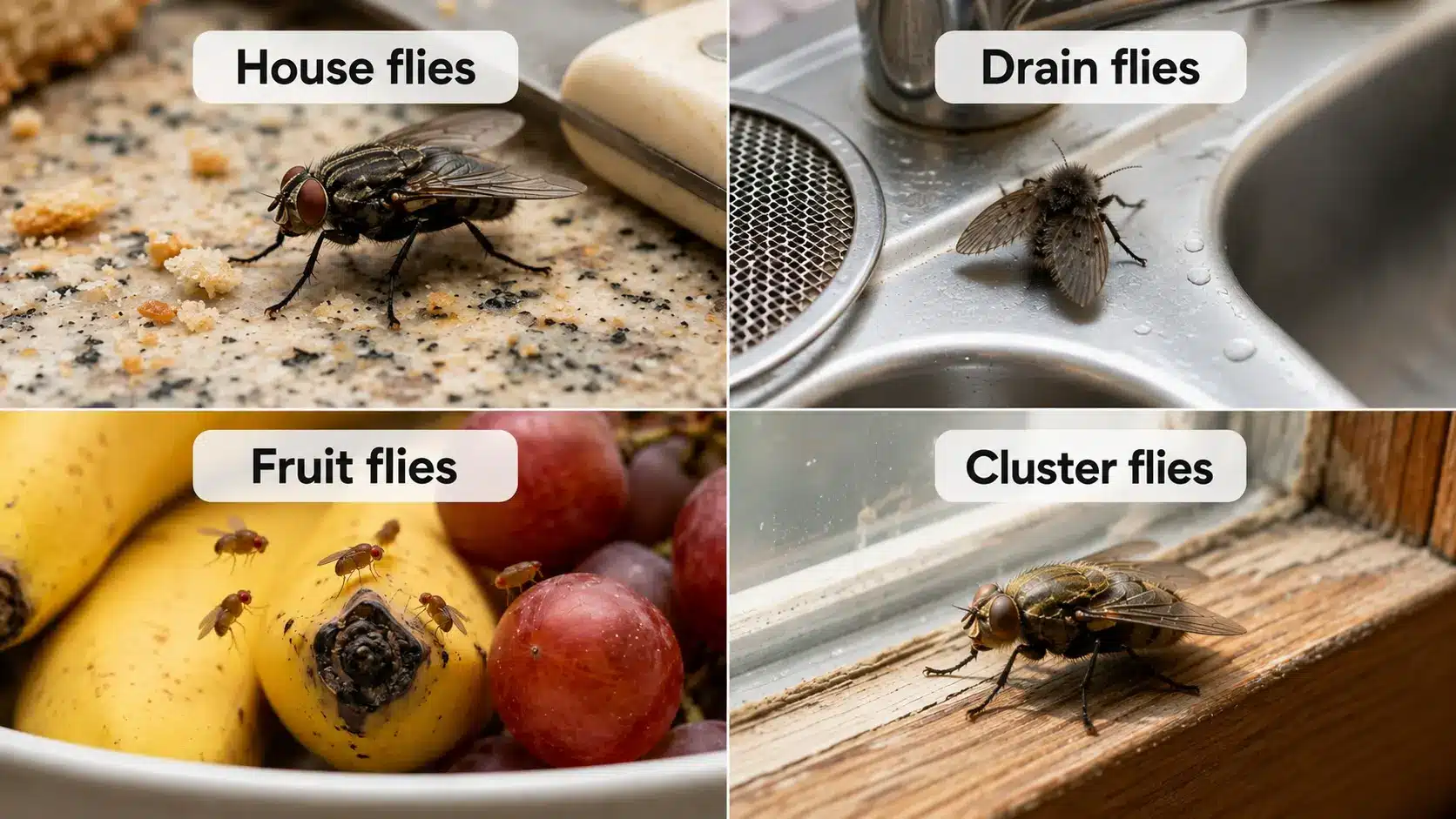
Not every fly problem calls for the same fix. Different species prefer different environments, so matching the type to the right method saves time and effort.
- House flies are gray or black, about a quarter inch long, and drawn to garbage and pet waste.
- Fruit flies are tiny and tan-colored. They gather around ripe produce, empty bottles, and recycling bins.
- Drain flies are fuzzy and small. They breed in the slime that builds up inside sink and shower drains.
- Cluster flies are larger and slower than house flies. They gather near windows and light fixtures, especially in fall, looking for a warm place to spend winter.
A vinegar trap works well on fruit flies but does nothing for drain flies hiding inside your pipes. Scrubbing the drain with a stiff brush handles those, since the food source is slime below the surface. Cluster flies often need sealed entry points more than traps, since they are looking for warmth, not food.
Keeping your home protected from pests overall is easier when you understand what draws each species in.
Fast Ways to Get Rid of Flies Right Now
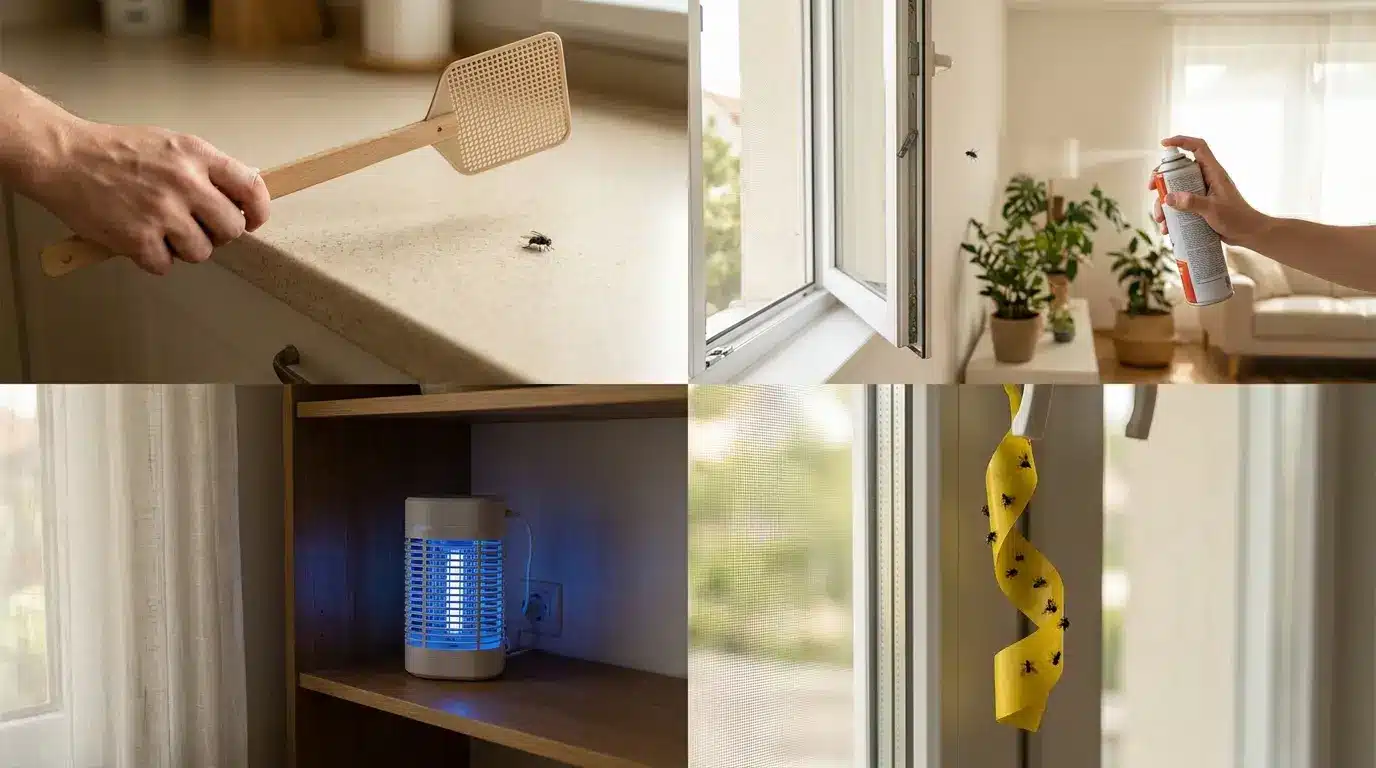
If flies are already in your kitchen or around a porch, start with these direct methods before setting up traps or cleaning up sources.
1. Use a Fly Swatter
A fly swatter is still the fastest and cheapest fix for flies you can see. Aim just ahead of where the fly is resting. Flies jump backward before taking off, so aiming slightly forward improves your hit rate. No setup, no chemicals, instant results.
2. Spray a Contact Insecticide
Contact sprays labeled for flies kill on direct contact within seconds. Spray directly onto the fly rather than into the air, since most products only work on contact. Pick one labeled for indoor use if treating rooms inside your home.
Note: Ventilate the room afterward and keep pets and children away from sprayed surfaces until they dry completely.
3. Set Up a Plug-In Light Trap
Light traps use UV light to draw flies away from areas where you spend time. Plug one in near a window or a dim corner, away from competing daylight. That placement helps it catch flies that slip past during the day. These work well in kitchens and basements where flies tend to linger.
4. Hang Sticky Traps
Sticky traps are coated paper strips that hang near windows, light fixtures, or anywhere flies gather. They need no power and no chemicals. Replace them once they fill up, since a saturated strip stops catching new flies.
Homemade Fly Traps That Actually Work
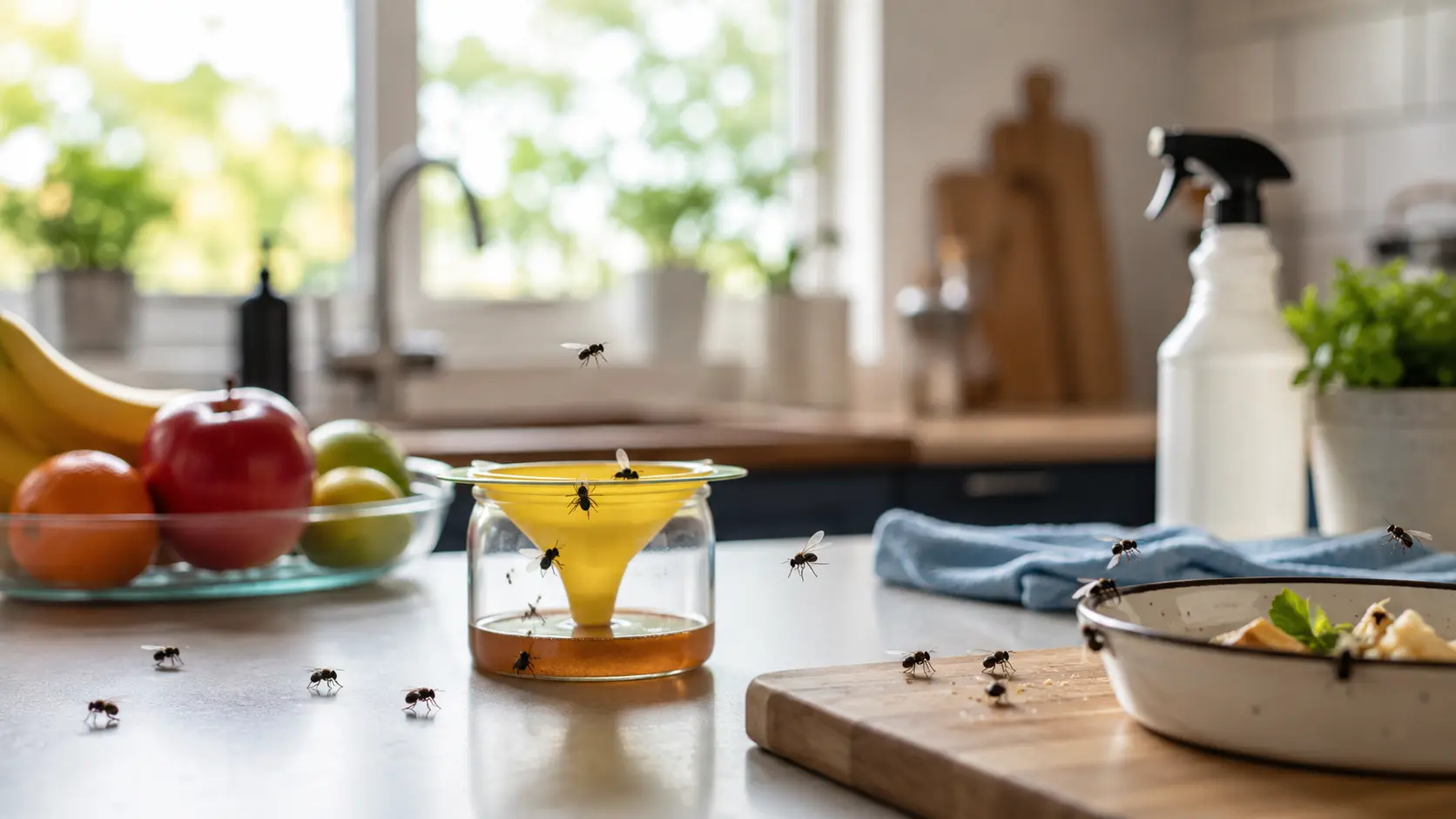
These traps use scent and a liquid surface to lure flies in and keep them there. Each one takes less than five minutes to set up with items already in your kitchen.
1. Apple Cider Vinegar Trap
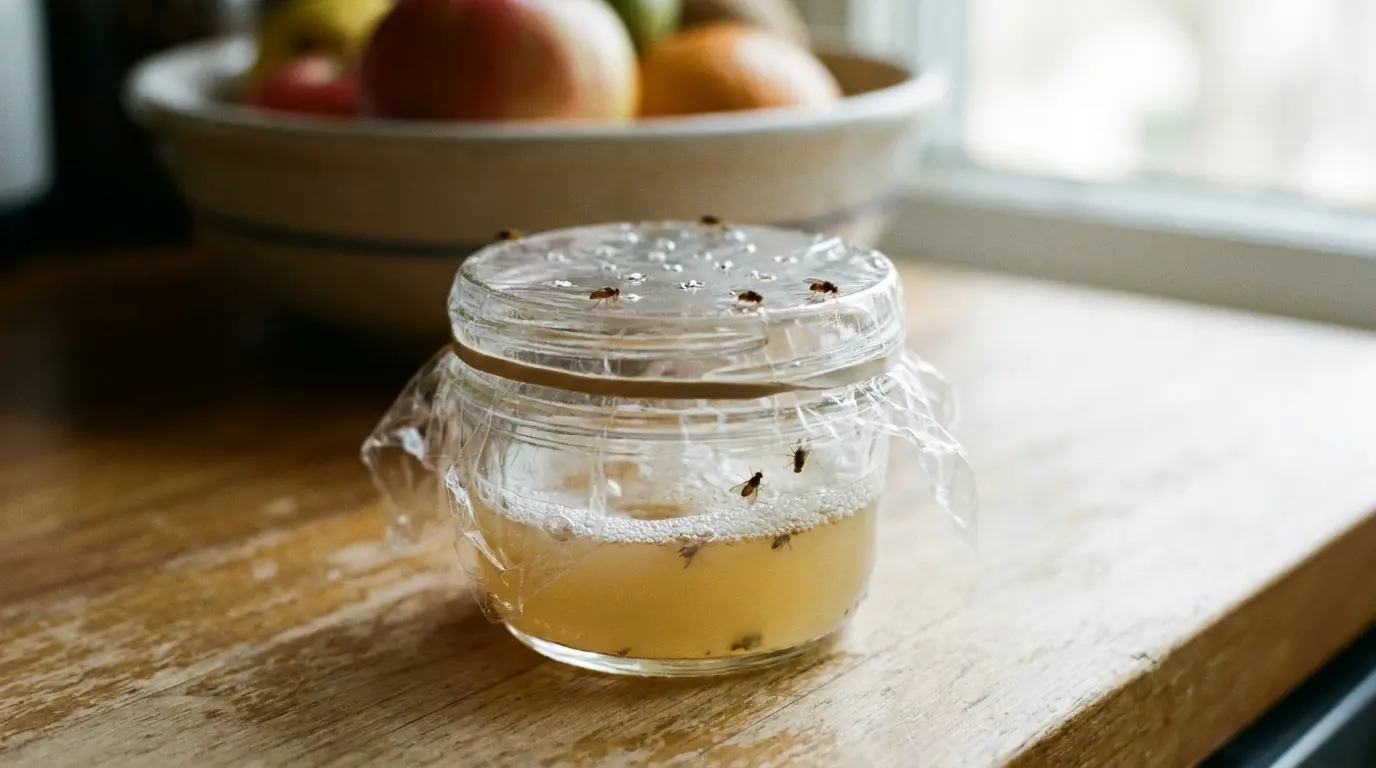
Fill a jar with apple cider vinegar and add a few drops of dish soap. Cover the top with plastic wrap and poke small holes in it. Fruit flies crawl through the holes to reach the scent but cannot climb back out.
The dish soap breaks the surface tension, so flies sink when they land. Set the jar near your fruit bowl or trash can for best results.
2. Sugar Water Trap
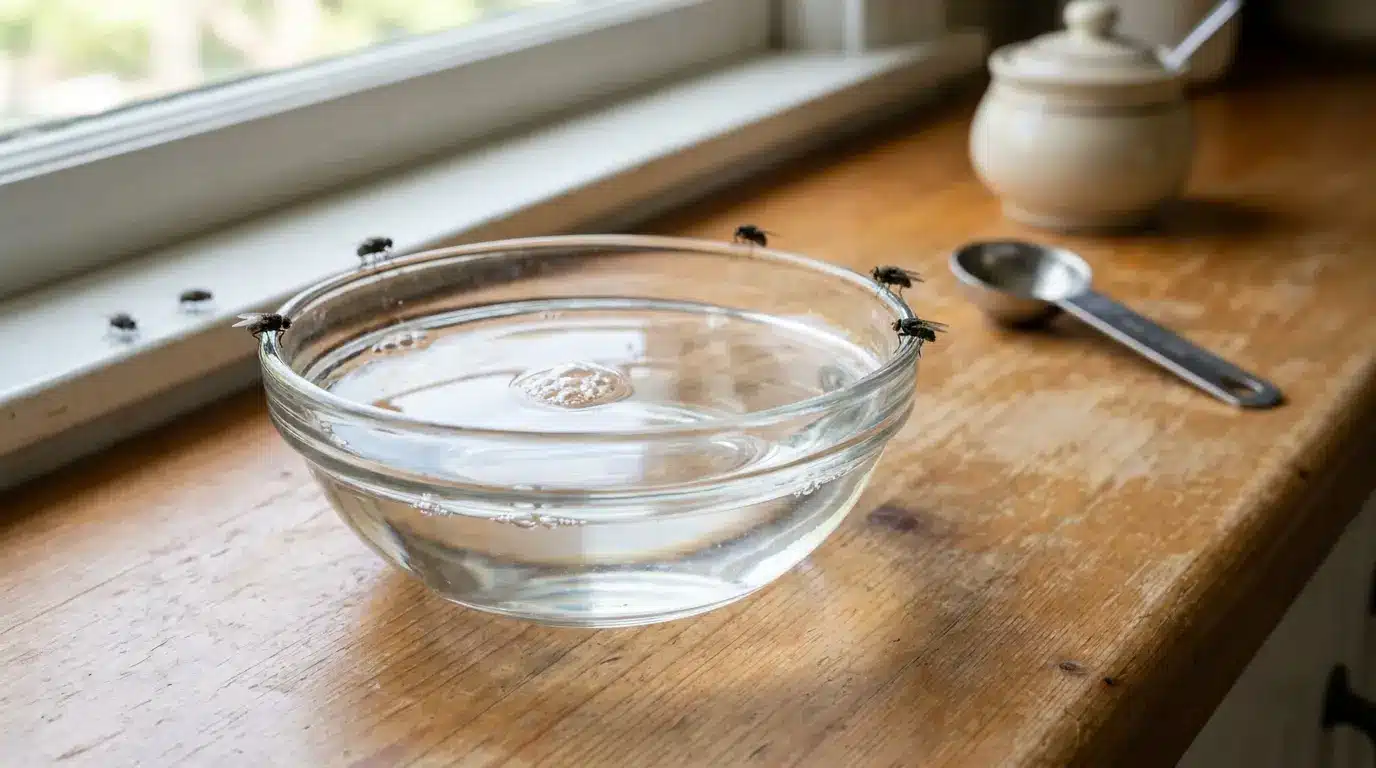
Mix one cup of water with a tablespoon of sugar, then add a few drops of dish soap. Pour the mixture into a bowl and place it on a counter or windowsill where flies tend to gather. The sugar draws flies in while the soap prevents them from escaping.
3. Wine Trap
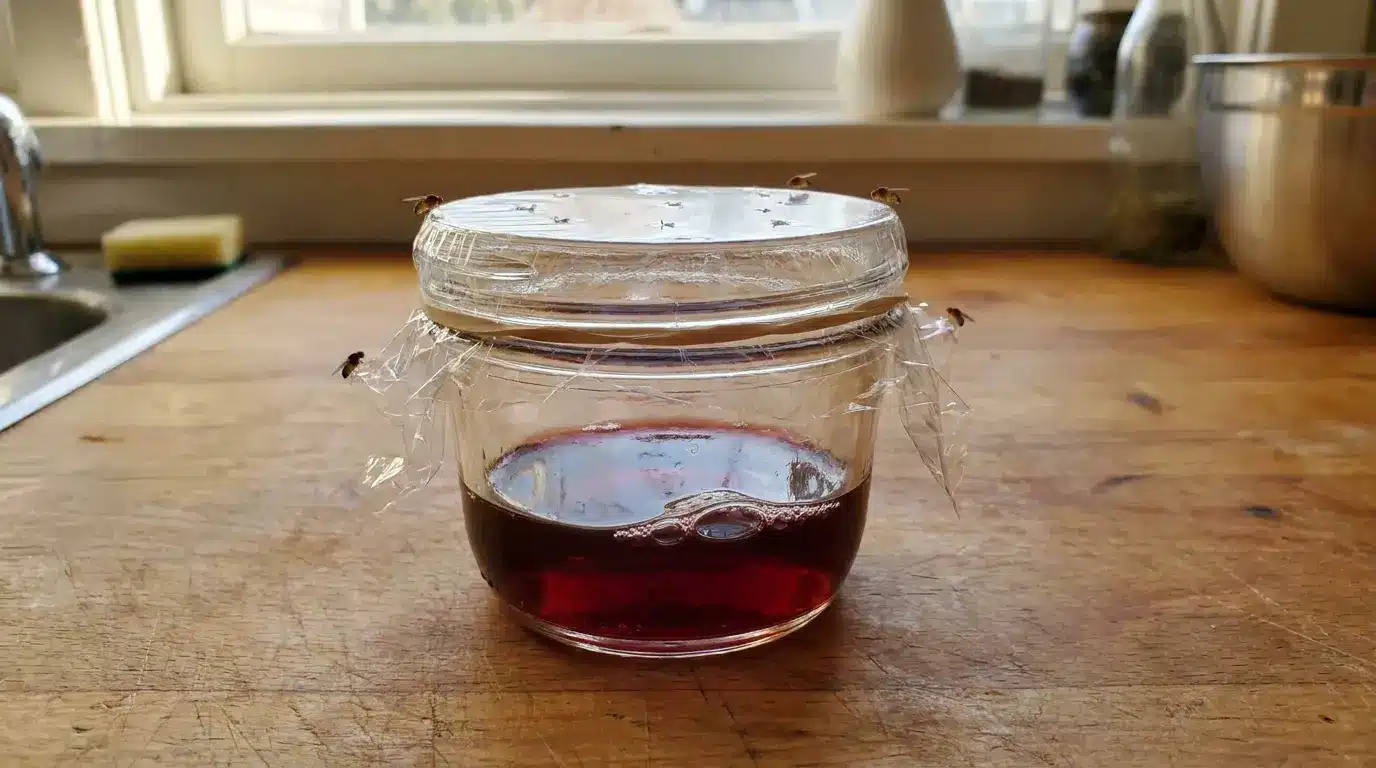
Pour leftover red or white wine into a container and add a few drops of dish soap. Cover with plastic wrap and poke small holes the same way as the vinegar trap. The fermented scent works especially well on fruit flies and gnats. This is a good option if you already have a bottle that has turned.
Natural Repellents That Keep Flies Away
Certain scents push flies away rather than lure them in, which makes them useful for prevention. These options work best when combined with the kill methods above, not used instead of them.
1. Repelling Herbs and Flowers
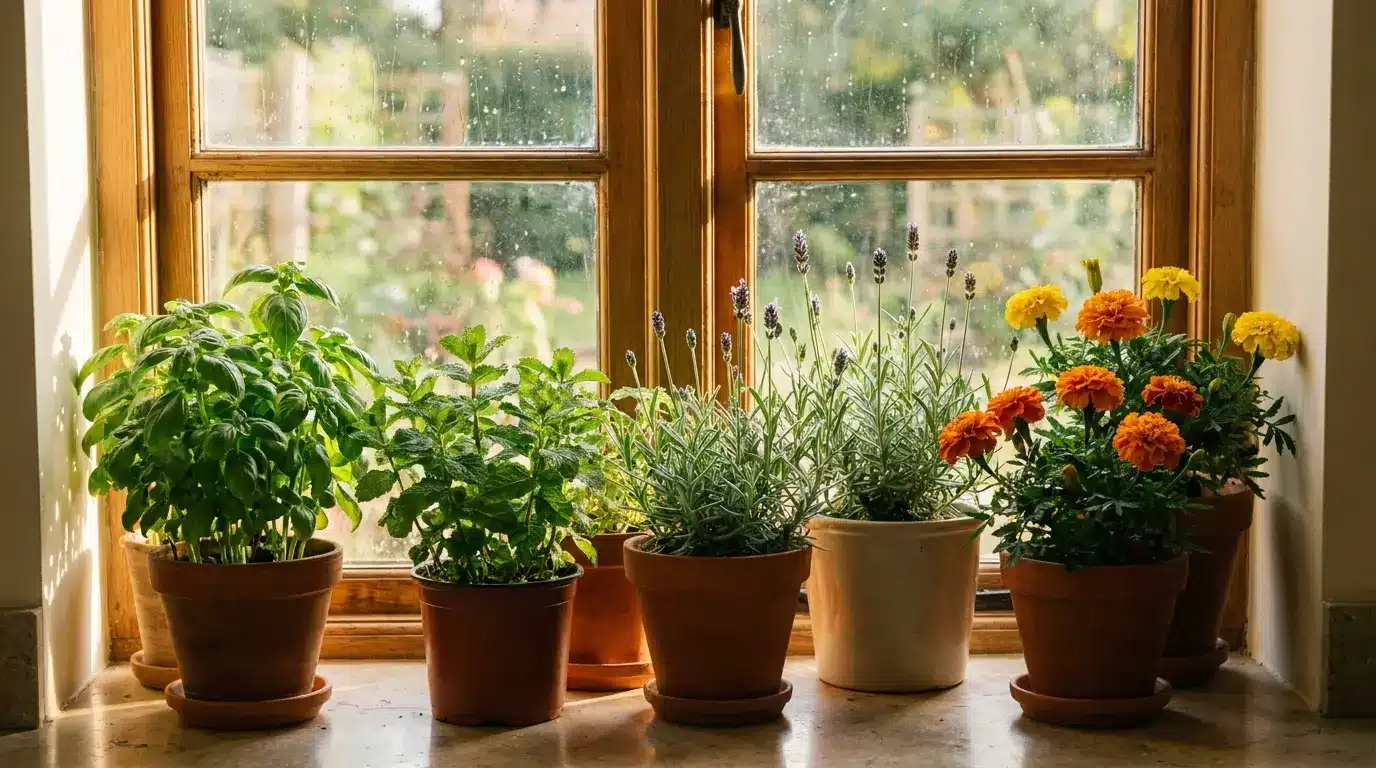
Basil, mint, lavender, rue, bay leaf, and marigold all give off scents that flies find unpleasant. Plant them near doors, windows, or garden beds where flies tend to enter.
A few pots on a windowsill work just as well as a full garden bed. Replace or refresh them as the leaves fade, since the scent weakens as the plants do.
2. Mix an Essential Oil Spray
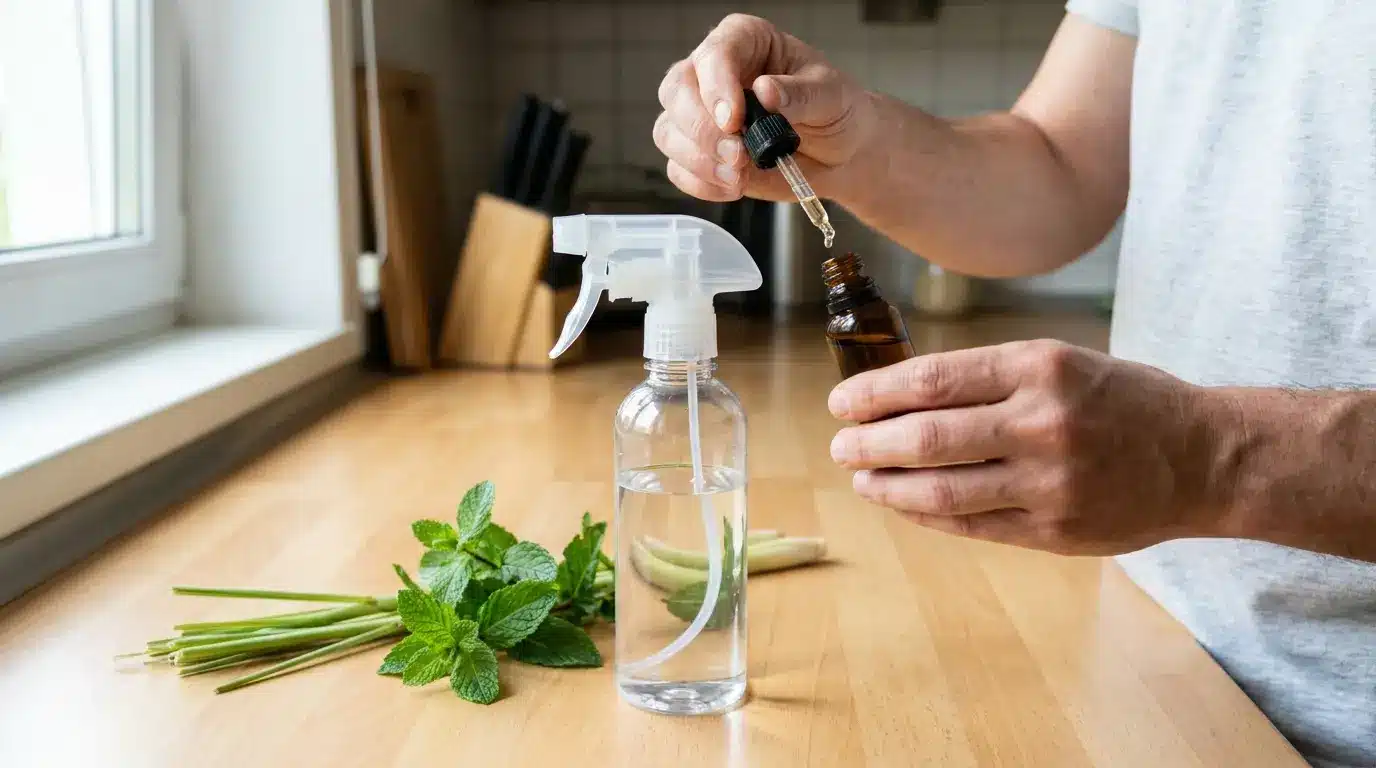
Peppermint, eucalyptus, and lemongrass oil all repel flies without harsh chemicals. Mix a few drops of any of these oils with water in a spray bottle and shake well before each use.
Spray around doorways, windowsills, and spots where flies tend to enter. Reapply every few days since the scent fades faster than planted herbs.
3. Light Citronella Candles
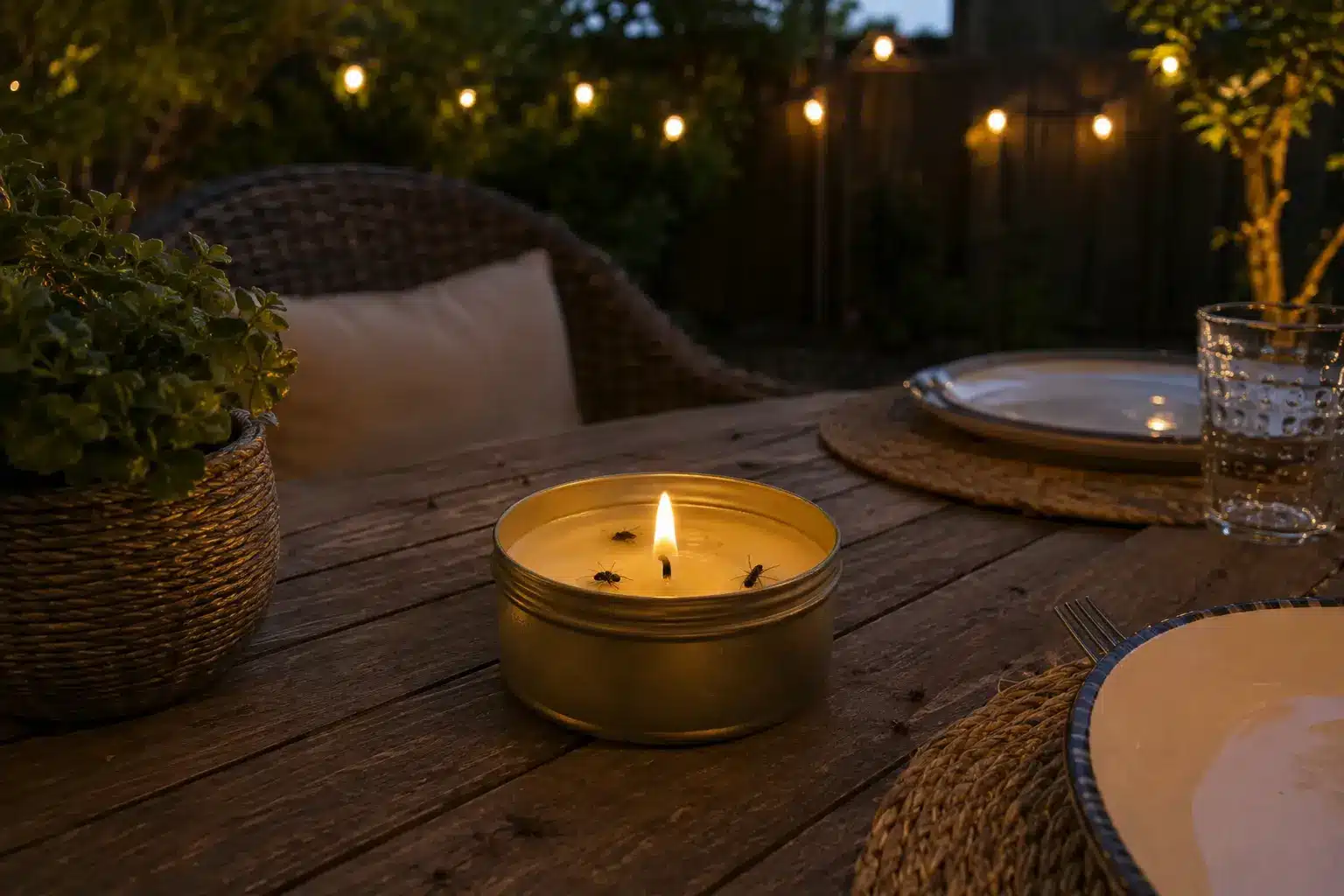
Citronella candles release a scent that keeps flies and other flying insects at a distance. Light one on a porch or patio table before sitting outside. The effect works best in a contained space rather than an open yard. Pair a candle with a fan for stronger results on breezy evenings.
4. Point a Fan at Your Seating Area
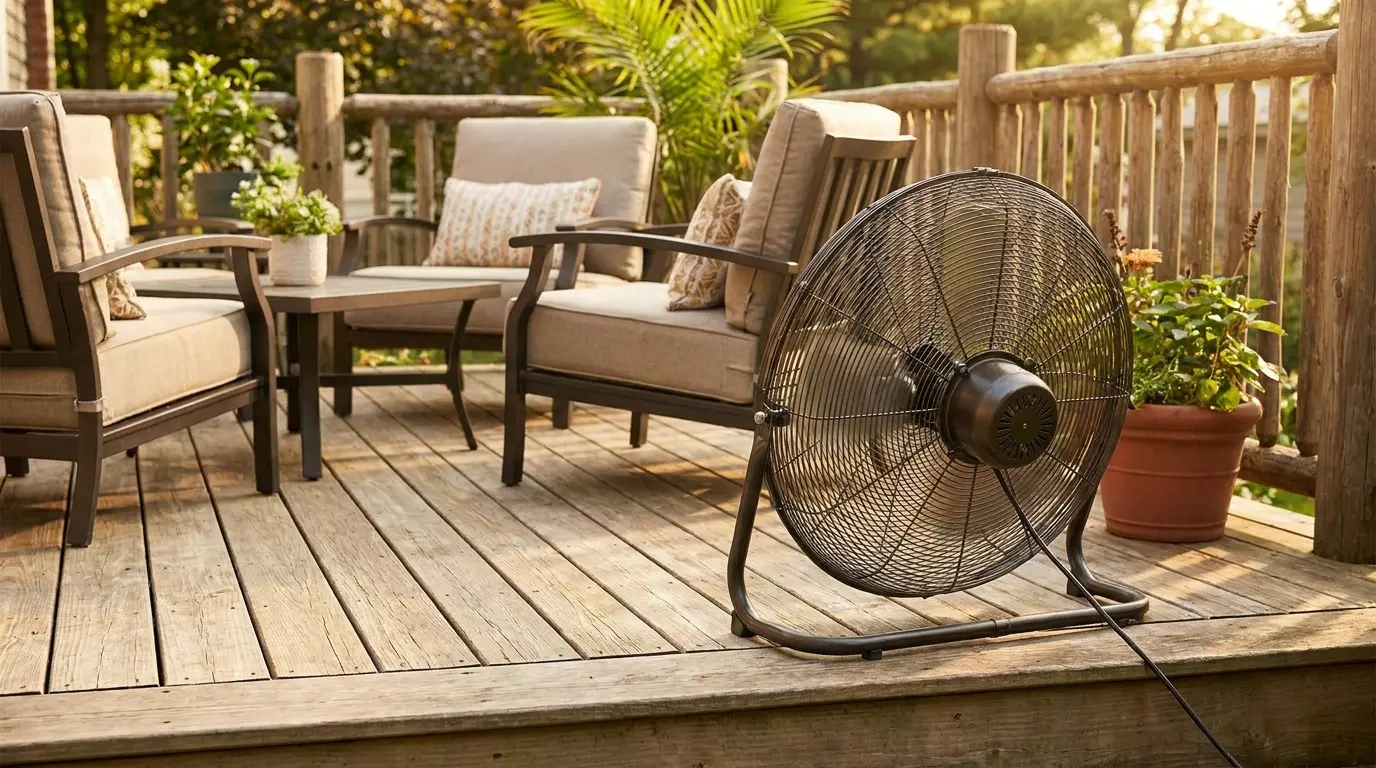
Flies struggle to fly in moving air, so a fan alone can clear a space quickly. Point it toward your outdoor seating area. This works especially well on a porch or deck during meals. Combine it with citronella or essential oil spray for a stronger barrier.
Choosing the Right Method for Your Fly Problem
Each method fits a different situation. Pick based on your space and how bad the problem is before spending money or effort on the wrong fix.
| Method | Best For | Indoor / Outdoor |
|---|---|---|
| DIY vinegar or sugar jar | Fruit flies, light infestations | Both |
| Sticky traps | Ongoing light infestations | Both |
| Light traps | Larger indoor spaces | Indoor |
| Contact sprays | Immediate, visible flies | Both |
| Foggers | Heavy indoor infestations | Indoor |
If you are dealing with a few flies, start with a DIY jar or sticky trap. Save sprays and foggers for infestations that keep growing despite cleanup efforts.
When To Use Insecticides for Flies
Insecticides work fast, but they are best saved for infestations that traps alone cannot handle. Pyrethrin-based products are common for fly control and act quickly on contact. Pick one labeled for indoor use if treating rooms in your home. Open a window and ventilate the room well afterward.
Insecticides lose effectiveness over time because flies breed fast and can build resistance. Treat them as a short-term fix, not a lasting solution. Always read the label before spraying near food prep areas, pet bowls, or children’s play spaces. Store any leftover product in its original container, out of reach of children and pets.
If a heavy infestation keeps coming back despite regular spraying, it is a sign the breeding source hasn’t been treated. A stronger product is not the fix.
When To Call a Pest Control Professional
Some fly problems need more than home remedies to fully clear up. Recurring infestations often point to a breeding site you have not found yet. It could be a gap behind a wall, a drain you rarely check, or moisture building up in a hidden area.
Call a licensed pest control professional if flies keep showing up despite regular cleaning, if you spot maggots near trash or drains, or if the problem keeps returning after treatment.
A professional can trace flies back to their breeding source and treat it directly. That is usually faster and less costly than months spent on sprays and traps that only handle what you can see.
The same way that general pest control strategies for a healthy home environment address root causes rather than just symptoms.
How to Keep Flies From Coming Back
Long-term fly control comes down to a few simple habits repeated consistently. Done together every day, they remove almost every reason a fly would want to come inside.
- Seal cracks around doors and windows, and repair or replace torn screens
- Use garbage cans with tight-fitting lids and take out full bags right away
- Store food in airtight containers and wipe down counters after every meal
- Clean up pet waste as soon as you notice it
- Turn off outdoor lights at night when possible, since flies are drawn to light
- Rinse recycling before it goes in the bin. Sticky residue still attracts flies even when the bottle is empty
- Fix dripping faucets and remove standing water in drain pans, gutters, or plant trays
The Fastest Way to Get Rid of Flies Starts With the Source
Getting rid of flies works best when you pair a quick kill method with steady prevention. Clean up food and moisture sources first. Set out a trap that matches your fly type.
Seal off the entry points they use to get inside. Keep those habits up, and flies have very little reason to keep returning.
Have a method that has worked particularly well for you? Share it in the comments below.
Frequently Asked Questions
Does a penny in a bag of water keep flies away?
No reliable evidence supports the idea that a penny in a bag of water keeps flies away. It may appear to work briefly, but it is not a proven or consistent fly control method.
What kills flies instantly at home?
A contact insecticide sprayed directly onto a fly kills it within seconds. A fly swatter works just as fast on visible flies. Both are immediate. No waiting or setup needed.
Does aluminum foil keep flies away?
Aluminum foil may briefly bother flies because the reflective surface creates glare and visual movement. It is not a reliable long-term solution and should not replace traps or cleaning.
What can you put in a garbage can to keep flies out?
Keep the bin clean and dry, use a tight-fitting lid, and sprinkle a small amount of baking soda at the bottom to help control the odors that attract flies in the first place.
Does Dawn dish soap repel flies?
Dawn dish soap does not repel flies on its own. Adding a few drops to a vinegar or sugar trap helps catch them by breaking the liquid’s surface tension so flies sink when they land.
Why do flies keep coming back even after I clean?
If flies return after cleaning, you likely have an untreated breeding source. Check floor drains, spaces under appliances, and any spot with standing moisture. Flies do not need much to breed. A damp mop or a thin layer of organic residue inside a drain is enough to sustain a small population.
How long does it take to get rid of a fly infestation?
A mild infestation clears up within a few days once you remove the food or moisture source and set out traps. Heavier infestations tied to a hidden breeding site can take one to two weeks, especially if the source is inside a drain or wall cavity.
Final thoughts
Getting rid of flies works best when you pair a fast kill method with steady prevention habits. Clean up food and moisture sources first.
Then set out a trap that matches your fly type. Seal off the entry points they use to get inside. Keep these habits up, and your home stays fly-free through every season. Small daily habits do more over time than any single spray or trap.