How to Clean Outdoor Carpet on Concrete (Step-by-Step)

Outdoor carpet takes a beating. Between rain, dirt, leaves, muddy shoes, and everyday use, that once-clean patio surface can start looking faded, stained, and neglected.
But cleaning it does not have to turn into a big project. In most cases, you can refresh your outdoor carpet with basic supplies you already have at home, without renting expensive equipment or using harsh chemicals.
Here’s how to clean outdoor carpet on concrete, remove common stains, prevent moisture problems underneath, and keep it looking better for longer.
Can You Clean Outdoor Carpet Without Removing It from the concrete?
Yes. Cleaning outdoor carpet in place is the standard approach for patio carpets and fixed outdoor flooring. You do not need to pull it up unless there is a serious problem underneath.
That said, concrete creates one real challenge. It holds moisture under the carpet after cleaning or heavy rain.
Trapped moisture leads to:
- Musty odors that return quickly
- Mold and mildew growth on the carpet backing
- Adhesive failure on glued-down carpets
- Stains from dirt that builds up on the concrete surface
Before you start, lift the edges and check underneath. If the carpet is glued to the concrete, use less water than you normally would and skip any high-pressure rinsing. Wet adhesive loses its grip.
If there is already visible mold under the carpet, or if a strong odor returns within a few days of cleaning, removal may be the better option. A professional carpet cleaner using low-moisture methods is worth considering in that situation.
Types of Outdoor Carpets and Their Cleaning Needs
The type of carpet you have changes how you should clean it. Using the wrong method on the wrong material causes fading, fiber damage, or backing failure.
| Carpet Type | Material | Cleaning Notes |
|---|---|---|
| Polypropylene / Olefin | Synthetic | Easiest to clean; moisture-resistant; may hold oily stains |
| Nylon outdoor carpet | Synthetic | Durable; benefits from gentler scrubbing |
| Turf-style carpet | Synthetic | Brush against the fiber direction first to lift dirt, then with the grain |
| Indoor/outdoor rugs | Synthetic blend | Easy to clean but traps deep dirt; vacuum before washing |
| Natural fiber (sisal, jute) | Natural | Absorbs moisture quickly; use minimal water and dry fast |
Always check your carpet’s care label before using any product. Colored carpets and natural fiber types can react badly to acidic or bleach-based solutions.
Step-by-Step: How to Clean Outdoor Carpet on Concrete
Follow these simple steps to get your outdoor carpet looking fresh and clean again. Each step builds on the previous one, so don’t skip any part of the process.
Tools and Materials You’ll Need
Gather these before you start. Having everything ready means you will not need to stop mid-clean.
| Item | Purpose |
|---|---|
| Stiff-bristled brush | Scrub dirt and stains from fibers |
| Large bucket | Mix and hold the cleaning solution |
| Mild dish soap | Safe, effective cleaner for most carpet types |
| Garden hose with spray nozzle | Rinse without high pressure |
| Wet/dry vacuum | Pull excess water out and speed up drying |
| Leaf blower or stiff broom | Clear debris before washing |
| Baking soda | Absorb odors and treat tough stains |
| White vinegar | Fight mild odors and mildew when diluted |
|
Oxygen-based cleaner (optional) |
Treat mildew stains on synthetic fibers |
With the right tools in hand, you’re already halfway to success. So let’s move on to the exact steps you’ll follow to thoroughly and safely clean your carpet.
Step 1:Step 1: Remove Furniture and Loose Debris

Clear everything from the carpet. This includes furniture, plant pots, leaves, twigs, and any loose material sitting on the surface.
Use a leaf blower for the fastest results, or sweep with a stiff broom. Work on a calm day so debris does not blow back onto the surface.
Pro Tip: Check corners and edges carefully. Debris collects there and turns into stains when mixed with water.
Step 2: Prepare the Cleaning Solution

Mix 1 gallon of warm water with 2 tablespoons of mild dish soap in your bucket. Stir gently to keep suds controlled.
For odor problems or mild mildew, add diluted white vinegar. A mix of one part vinegar to three parts water works well. Always test on a hidden patch first since some carpet materials react to acidic cleaners.
Pro Tip: Start with less soap than you think you need. Extra soap leaves a sticky residue that pulls in new dirt.
Step 3: Test the Cleaning Solution

Apply the solution to a small, hidden corner. Wait 10 to 15 minutes, then check for color fading, changes in texture, or any damage.
This prevents a small test patch from turning into a full-carpet problem.
Pro Tip: Test in a corner normally covered by furniture so any slight discoloration stays hidden.
Step 4: Apply the Solution and Let It Work

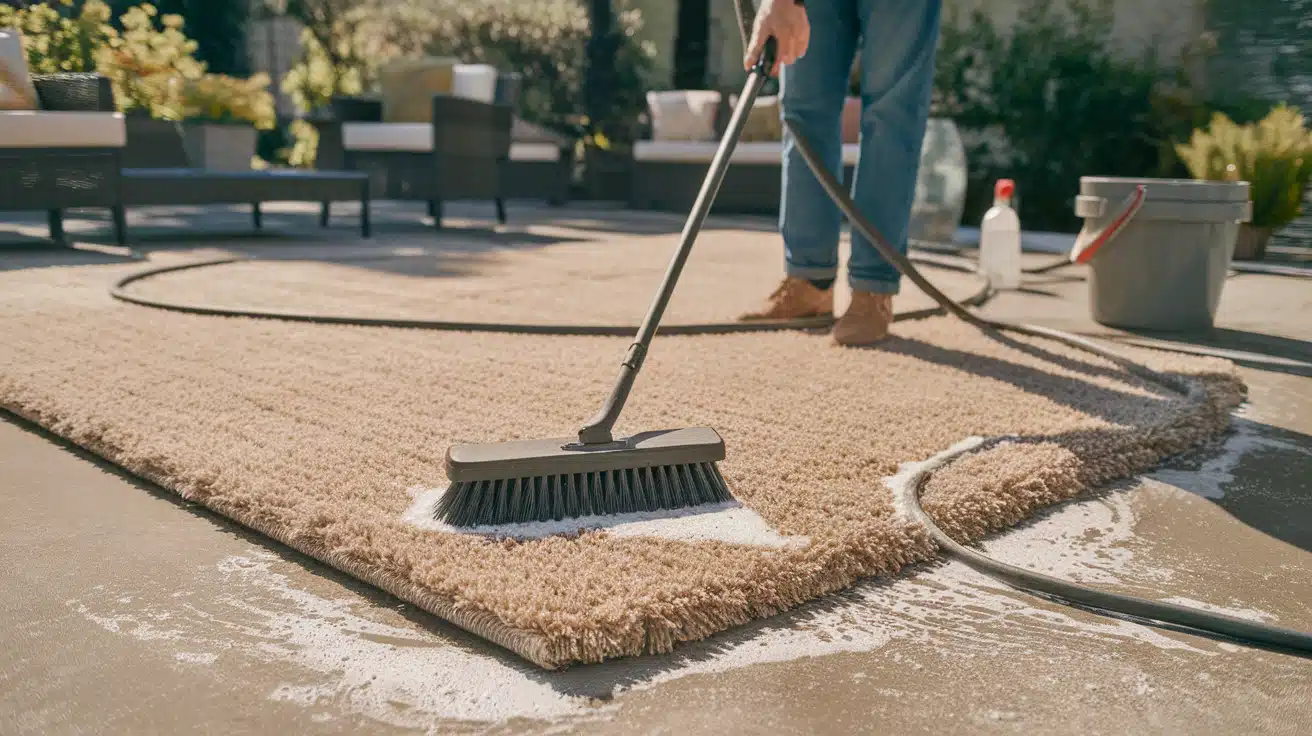
Pour the cleaning solution evenly across the surface of your carpet. Don’t oversoak; keep it damp but not dripping.
Let the solution sit for 10-15 minutes so it can penetrate and break down embedded dirt.
Reapply to any areas that start to dry out. This waiting time is when the real cleaning happens as the solution loosens stubborn grime.
Pro Tip: Work in sections on large carpets to ensure the solution doesn’t dry out before you can scrub it.
Step 5: Scrub Thoroughly

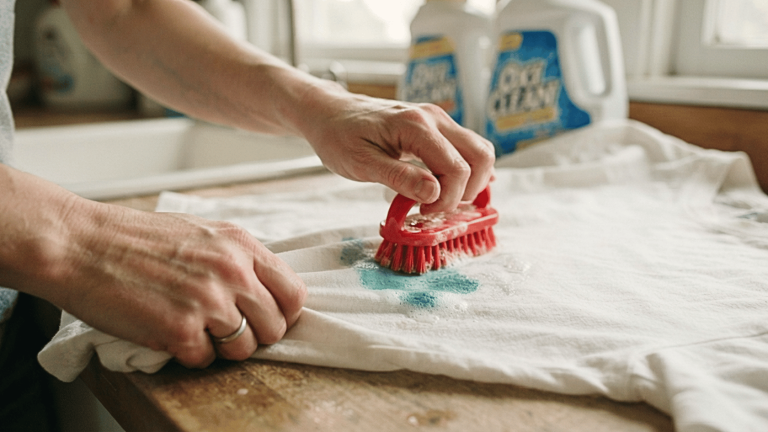
Use your stiff-bristled brush to work the solution into the carpet fibers. Scrub in small sections using firm, circular motions.
Pay extra attention to stained areas, high-traffic zones, and corners where dirt collects.
Don’t scrub too hard to avoid damaging the carpet. The combination of cleaning solution and scrubbing action removes even the toughest embedded dirt.
Pro Tip: Change your scrubbing pattern occasionally – use both circular motions and back-and-forth strokes for better dirt removal.
Step 6: Remove Excess Water and Dry

Speed up drying to prevent mold and mildew. Use a wet/dry vacuum to remove as much water as possible, or squeeze out the excess water.
Allow 4-8 hours for complete drying on sunny, breezy days.
Don’t replace furniture until the carpet is completely dry. Fast drying prevents musty odors and keeps your carpet fresh longer.
Pro Tip: Lift corners of the carpet periodically to check for trapped moisture underneath – this is where mold problems usually start.
The best way to clean outdoor carpet on concrete takes patience, but following these steps gives you professional-quality results at home.
Video Tutorial
I’d like to give credit to Hey Insights for their informative video, which served as a reference for this guide.
How to Remove Common Outdoor Carpet Stains
Regular cleaning handles general dirt well. Specific stains need a slightly different approach.
1. Mud and Dirt Stains
- Let the wet mud dry completely before touching it
- Vacuum or brush away the dried particles
- Apply a mild soap solution and scrub gently
- Rinse well
Cleaning wet mud immediately pushes it deeper into the fibers. Letting it dry first saves time and effort.
2. Mold and Mildew Stains
Mold usually develops because moisture stays trapped between the carpet and the concrete. Cleaning the visible mold matters, but fixing the airflow problem matters more so it does not return.
- Remove surface debris
- Mix one part white vinegar with three parts water
- Apply to the affected area and leave for 10 minutes
- Scrub gently with a stiff brush
- Rinse completely and dry with maximum airflow
Disclaimer: If mold covers a large area, keeps returning after cleaning, or carries a very strong smell, contact a professional carpet cleaner. Extensive mold growth can affect air quality and may point to a drainage or concrete sealing issue that needs separate attention.
3. Oil and Grease Stains
These come from grills, BBQ drippings, or spills in the garage. Act fast before the oil sets into the fibers.
- Blot excess oil with a clean cloth. Do not rub.
- Apply a small amount of undiluted dish soap directly to the stain
- Leave it for 5 minutes
- Scrub gently and rinse well
4. Pet Stains and Odors
- Remove solid waste first
- Blot liquid stains with an absorbent cloth
- Apply an enzyme-based cleaner, which breaks down pet-specific bacteria
- Leave it per the product instructions
- Rinse and dry completely
Odors often stay when moisture and bacteria remain trapped underneath the carpet. Thorough drying is as important as the cleaner itself.
For stubborn stains on outdoor surfaces, the same principle applies as with natural versus chemical grout cleaning solutions: milder products applied correctly beat harsh chemicals applied in a hurry.
Can You Use a Pressure Washer on Outdoor Carpet on Concrete?
Pressure washing can work on some outdoor carpets, but it is not always the safest option. It may help with heavy dirt buildup, large outdoor carpets, and durable synthetic materials.
A pressure washer works on some outdoor carpets, but it is not the right first choice for most situations. High pressure forces water beneath the carpet, increasing the risk of mold. On glued-down carpet, it can also separate the backing from the concrete.
If you do use a pressure washer:
- Stay under 1,600 PSI
- Use a wide spray pattern, not a pinpoint nozzle
- Hold the nozzle at least 12 inches from the carpet surface
- Work from one end to the other in steady, even passes
- Make sure water drains away from the carpet rather than pooling underneath
| Cleaning Method | Best For | Main Risk |
|---|---|---|
| Hand scrubbing | Regular maintenance on all carpet types | More physical effort |
| Wet/dry vacuum extraction | Deep clean with controlled moisture | Needs equipment |
| Pressure washer | Heavy buildup on durable synthetic carpets | Forces water underneath; can loosen glued backing |
For regular cleaning, hand scrubbing with the correct solution and a thorough rinse gives results that are just as good and much safer for the carpet backing and the concrete underneath.
Outdoor Carpet Cleaning Checklist
Run through this before finishing each cleaning session:
☐ Furniture and debris cleared from the surface
☐ Carpet vacuumed or swept dry before washing
☐ Cleaning solution tested on a hidden patch
☐ Mild cleaner applied in sections and allowed to sit
☐ All stained areas scrubbed with a stiff brush
☐ Carpet rinsed until the water runs clear
☐ Excess water removed with a wet/dry vacuum
☐ Carpet left to dry fully before furniture returns
☐ Underside of carpet and concrete surface checked for trapped moisture
How Often Should You Clean Outdoor Carpet on Concrete?
A simple maintenance schedule prevents dirt from becoming embedded and reduces the need for aggressive cleaning.
| Frequency | Task |
|---|---|
| Every week | Sweep or blow off leaves, dirt, and surface debris |
| Every month | Spot clean stains and scrub high-traffic areas |
| Every season | Full wash using the steps above |
| After heavy rain | Lift the edges and check for moisture trapped underneath |
| Before winter | Deep clean, dry fully, then roll up and store if possible |
Common Outdoor Carpet Cleaning Mistakes to Avoid
Even with the right cleaning method, a few common mistakes can undo your hard work and shorten the life of your outdoor carpet. Avoid these simple errors to keep the fibers protected and prevent moisture problems underneath.
- Using too much soap: Extra cleaner leaves a sticky residue. Dirt clings to it faster than to a clean surface.
- Skipping the rinse: Cleaner left in the fibers breaks them down over time, accelerating re-soiling.
- Cleaning before rain: Wet weather slows drying and increases the risk of mold. Pick a dry, breezy day.
- Using bleach on colored carpet: Bleach fades colors and weakens fibers on most carpet types. Some synthetic rugs tolerate diluted bleach only on a small patch. Always test first and rinse immediately.
- Putting furniture back too soon: Furniture on damp carpet traps moisture for hours. Wait until both the carpet and the concrete underneath feel dry.
- Scrubbing too hard: Aggressive scrubbing pulls fibers loose, especially on looped or tufted types.
Conclusion
Cleaning outdoor carpet on concrete comes down to a few basics: clear dry debris first, apply a mild soap solution, scrub gently, rinse until the water runs completely clear, and let the carpet dry before anything goes back on it.
The most common reason carpets stay dirty or develop mold is moisture left between the carpet and the concrete. Checking underneath, improving airflow, and not rushing the drying step solve that problem most of the time.
A weekly sweep and a seasonal deep clean are all it takes to keep your patio carpet in solid shape year after year. Start this weekend, and your outdoor space will look noticeably better in a single afternoon.