How to Clean a Glass Stovetop Without Scratching It

Your glass stovetop can look spotless after cooking. But the wrong cleaning habit, even once, can leave behind micro-scratches, cloudy patches, and stains that never fully come off.
Glass cooktops are made of ceramic glass, a material that conducts heat well but scratches easily when scratched. Heat-bonded food, grease, and grit act like sandpaper when you wipe them incorrectly.
The problem is rarely the cooking. It is almost always the cleaning.
This guide walks you through safe daily routines, a deep-clean method, specific stain fixes, and aftercare tips so your stovetop stays clear and scratch-free for years.
Why Does a Glass Stovetop Need Special Care?
Glass stovetops are made from ceramic glass, a material engineered to handle high heat. Both electric and induction cooktops use the same surface type, so the cleaning method is identical.
The surface looks solid, but it has tiny pores. When food or grease gets hot, it can sink into those pores and bond with the glass. A rough sponge will not break that bond. It will only scratch the surface and push debris deeper.
- Abrasive tools create micro-scratches that scatter light and make the surface look dull
- Burnt sugar can permanently pit the glass if left too long
- Sliding cookware over the surface drags tiny debris like sandpaper
- Harsh chemical cleaners leave residue that bakes on the next time you cook
Before you clean anything, check your appliance’s owner’s manual. Some manufacturers recommend against razor scrapers on specific models. Always confirm what your manual allows before following any cleaning method.
Everything You’ll Need Before You Start Cleaning

Using the wrong tools causes more damage than dirty pans do. Here is what works and what to skip entirely.
Safe tools to use
- Two microfiber cloths per session (one to clean, one to dry)
- A non-abrasive sponge for light scrubbing
- A cooktop scraper with a razor blade and handle (under $10 at hardware stores)
- White distilled vinegar and baking soda for natural cleaning
- Mild dish soap
- A spray bottle
- Commercial cooktop cleaner cream such as Weiman Cooktop Cleaner or Cerama Bryte ($7–$8 at Walmart or Target) for monthly polishing
- Bar Keepers Friend Cooktop Cleaner, a non-scratch cream formula that handles grease and burnt residue without dulling the glass
Tools to avoid completely
- Steel wool and Scotch-Brite pads
- Magic Erasers (safe for rare use only, not regular cleaning)
- Powder cleansers like Comet
- Bleach, ammonia, or ammonia-based glass cleaners like Windex (these dull the glass and leave streaks)
- Oven cleaner spray
- Paper towels for scrubbing (lint and fiber residue can scratch)
Your cookware matters too. Bare cast-iron, rough-bottomed baking dishes and pans with nicked bases scratch the glass surface. Always lift pots and pans off the cooktop. Never slide them.
How Do You Clean a Glass Stovetop After Every Use?

This three-minute routine prevents most stains from ever forming.
Step 1: Let it cool fully. Cleaning a warm stovetop smears grease into the glass instead of lifting it. Wait until the surface is cool to the touch.
Step 2: Remove dry debris first. Wipe loose crumbs off with a dry microfiber cloth. Do not start with a wet cloth. Wet crumbs scratch glass when dragged across it.
Step 3: Apply a vinegar solution. Mix equal parts white vinegar and water in a spray bottle. Spray the whole surface and let it sit for 30 seconds. The mild acidity cuts through grease without damaging the glass.
Step 4: Wipe in straight strokes. Use a clean microfiber cloth and wipe in long, straight lines from one side to the other.
Step 5: Dry right away. Buff immediately with a second dry cloth. Skipping this step leaves white water spots once the surface dries.
One extra note: if you cooked anything with sugar, sauce, or a glaze that day, wipe the stovetop as soon as it cools. Do not wait until after dinner. Sugar hardens fast and becomes much harder to remove once it sets.
The Deep Clean Method for a Glass Stovetop

Do this once a week for regular cooks, or any time the daily wipe is no longer enough. The full process takes about 25 minutes, most of which is waiting.
Step 1: Make sure the surface is completely cool.
Step 2: Sprinkle baking soda evenly across the whole stovetop. Use enough to coat it fully.
Step 3: Soak a large towel or a few cloths in very hot tap water. Wring them out so they are wet but not dripping. Lay them flat over the baking soda to cover the whole surface.
Step 4: Leave it for 15 to 20 minutes. The steam from the cloth gets under baked-on food and loosens it. This is what does the work, not scrubbing.
Step 5: Remove the towel. Wipe the surface with a non-abrasive sponge in small circles. For anything still stuck, hold your cooktop scraper at a very low, flat angle and apply light pressure to slide it under the residue. Do not press down hard. Do not use the corners of the blade, as these can scratch the glass.
Step 6: Spray with the vinegar-and-water solution from your daily routine. Wipe in long strokes with a clean microfiber cloth. Dry completely right after.
How Do You Remove Specific Stains from a Glass Stovetop?
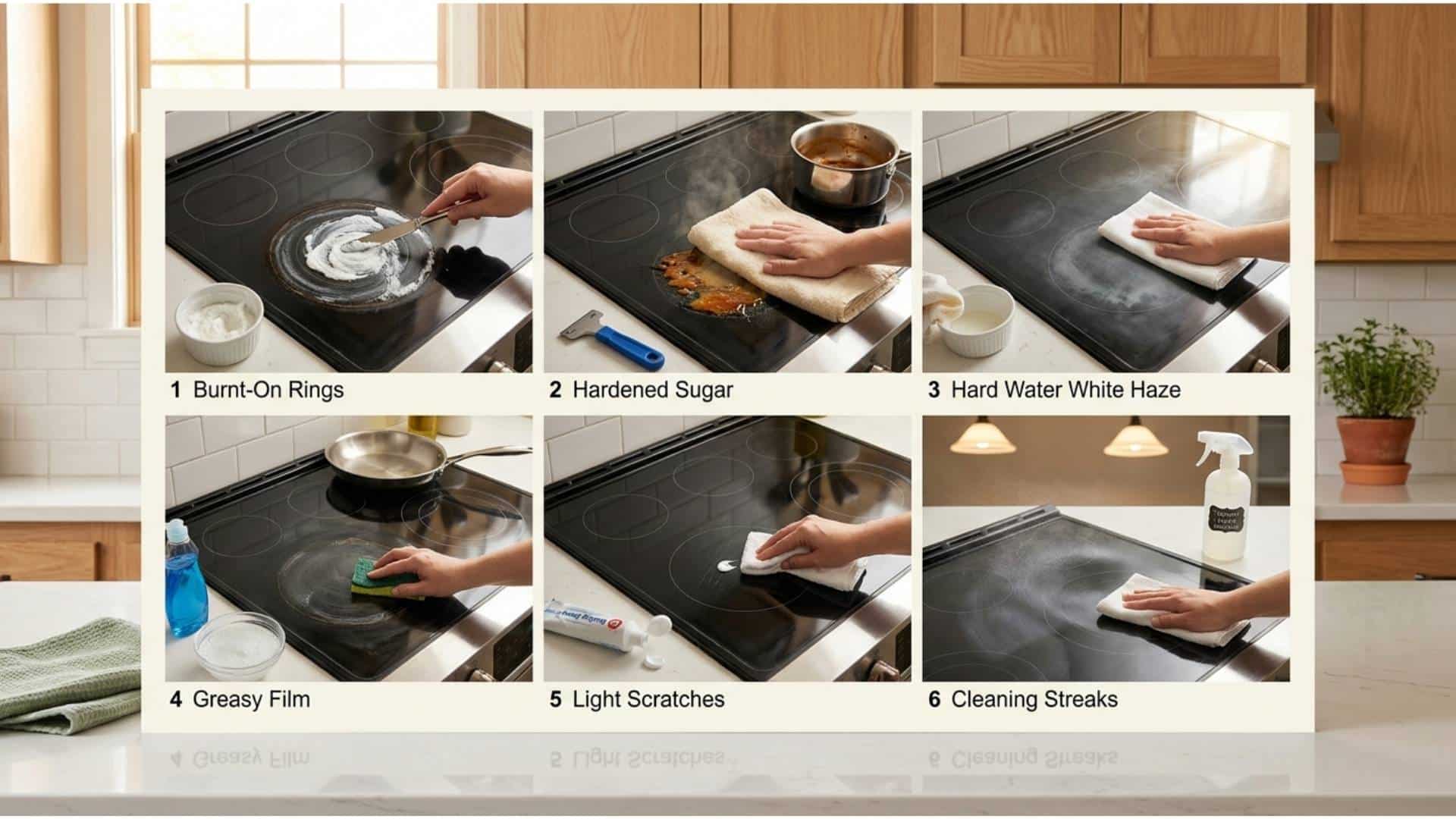

Different stains need different fixes. Use the right approach for each type.
1. Brown Burnt-On Rings
Mix baking soda and a few drops of dish soap with just enough water to make a thick paste. Spread it over the stain, cover with a warm damp cloth for 15 minutes, then scrape off with your cooktop scraper at a low angle. Wipe clean with a microfiber cloth.
2. Hardened Sugar or Caramelized Sauce
Do not scrape while it is warm. Once the surface is cold, lay a hot wet cloth directly over the sugar for 20 minutes to soften it. Then scrape in short, flat strokes with your razor scraper.
Repeat soaking and scraping until it comes off. Do not rush this with extra force. Forced scraping on sugar spills can permanently pit the glass.
3. White Haze or Cloudy Film from Hard Water
Soak a cloth in undiluted white vinegar and lay it over the cloudy area for 10 to 15 minutes. Wipe in circles. Repeat on two or three consecutive nights for heavy buildup. Do not use Lime-A-Way or similar descaling products. They etch the glass, causing permanent damage.
4. Greasy Film
Dish soap and warm water on a non-abrasive sponge handle light grease. For thicker buildup, use the baking soda and dish soap paste from above. Apply, wait 10 minutes, then wipe off.
You can also try a natural degreaser made with vinegar, a drop of dish soap, and warm water for everyday grease that has not yet baked on.
5. Light Scratches
Apply a small amount of white non-gel toothpaste with baking soda to the scratch. Buff with a microfiber cloth in gentle circles. The toothpaste fills the micro-scratch, reducing its visibility. Wipe off fully and clean as normal. This works on surface-level marks only. It will not fix deep gouges.
6. Streaks After Cleaning
Streaks are almost always leftover cleaner that was not fully buffed off. Spray a light mist of white vinegar onto the streaky area, then wipe with a completely dry microfiber cloth in circular motions until the surface is clear.
What Should You Do During an Emergency Spill?
Sugar spills from sauces, glazes, or sweetened foods need fast action. If sugar bonds to the glass while it is still hot, it can permanently pit the surface. That kind of damage cannot be scrubbed away.
- Turn off the heat immediately
- Do not wipe while the glass is hot
- Once cool, cover the spill with a hot damp cloth for 20 minutes to soften it
- Gently scrape in flat strokes and repeat soaking as needed
If a spill from a heavy pot or pan chips or cracks the glass, stop using the cooktop immediately. A cracked glass cooktop is a safety risk. Contact the manufacturer or a licensed appliance technician before using it again.
What to Do After Cleaning Your Glass Stovetop
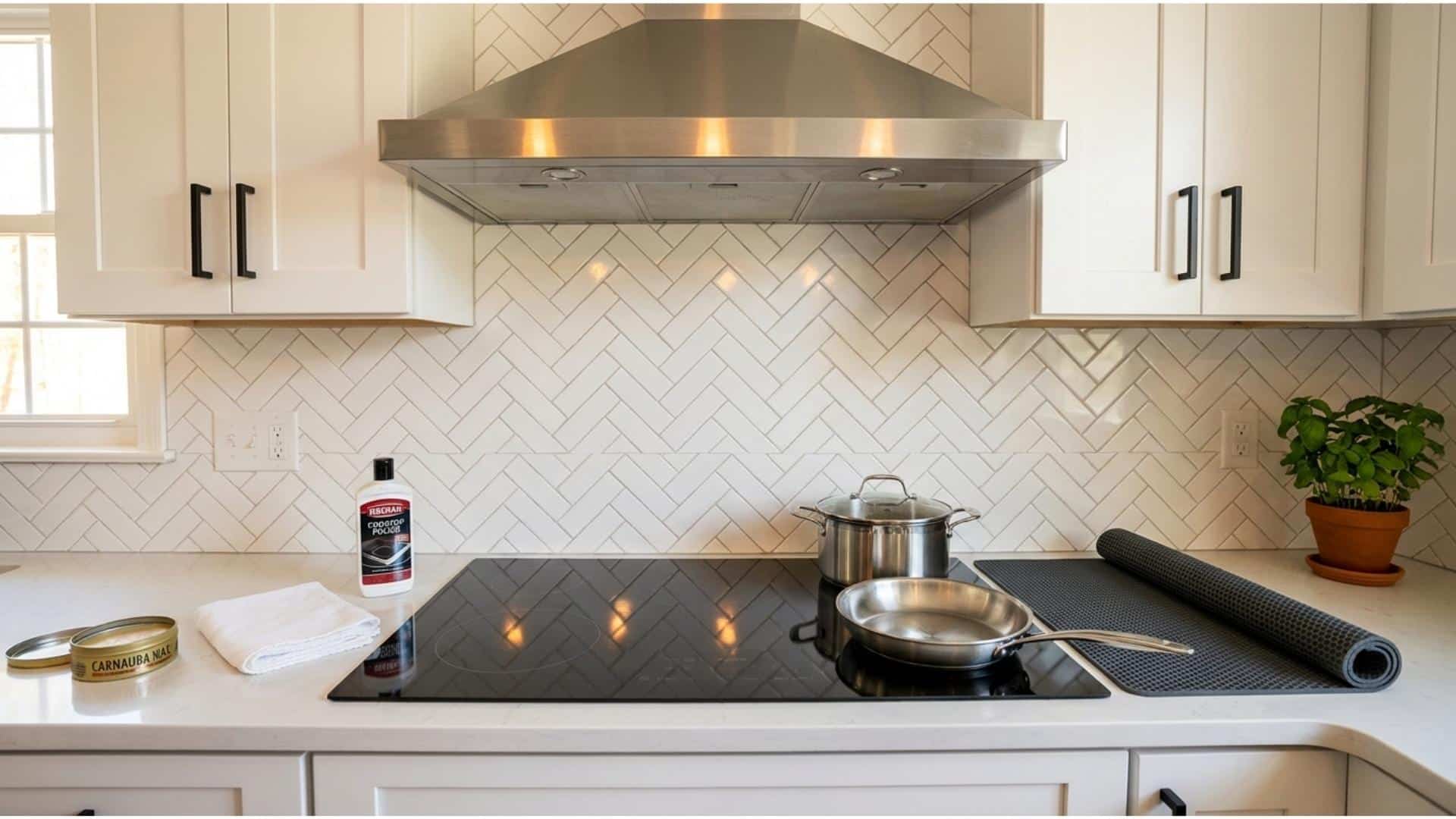

After a deep clean, apply a thin layer of cooktop polish once the glass is completely dry. Weiman makes one for around $8. It fills the micro-pores in the ceramic glass so spills do not bond as easily next time.
If you do not have it, a small amount of carnauba car wax buffed in and then wiped completely off gives a similar result.
Cooktop protector mats are also worth considering. These silicone or fiberglass pads sit on the burner zones when the stove is not in use. They cost between $15 and $25 and significantly reduce contact scratches from cookware.
For everyday cooking, smooth-bottomed stainless steel and enameled cast iron are the safest cookware options for a glass stovetop. Always lift, never slide.
Natural Cleaners vs Commercial Products: Which Works Better?
Both work. The right choice depends on what you are dealing with.
| Cleaner | Best For | Notes |
|---|---|---|
| Vinegar + water spray | Daily cleaning, streaks, light grease | Safe, cheap, streak-free finish |
| Baking soda paste | Burnt-on stains, deep grime | Non-toxic, needs 15–20 min dwell time |
| Bar Keepers Friend Cooktop Cleaner | Greasy residue, light discoloration | Non-scratch cream formula, no special scraper needed for light use |
| Weiman or Cerama Bryte cream | Monthly polish, shine, and maintenance | Fills micro-pores, protects against future bonding |
Use natural cleaners for daily and weekly maintenance. Use a commercial cooktop cream once a month to polish and protect the surface.
What Is the Right Maintenance Schedule?
Consistency matters more than any single cleaning session. Here is a simple schedule that keeps the surface in good condition over the long term.
- After every use: Wipe with the vinegar-and-water spray and a dry microfiber cloth once cool
- Weekly: Full deep clean with baking soda and hot towel method
- Monthly: Apply cooktop polish cream to protect and restore shine
- As needed: Use the targeted stain methods above for specific residue types
Conclusion
Keeping your glass stovetop clean is less about effort and more about knowing what not to do.
Once you stop using harsh pads and random sprays, the surface stays clearer for much longer. Small habits after cooking matter more than heavy cleaning sessions.
A quick wipe while the stove cools a proper deep clean once in a while and avoiding scratches from cookware all add up. Over time, these simple steps keep the glass smooth, shiny, and easy to maintain.
You do not need expensive products or complicated routines, just consistency and care that protect the surface daily, every time.
Frequently Asked Questions
How Do I Clean Burnt-On Food?
Use a baking soda-water paste or a glass cooktop cleaner. Let it sit for 10–15 minutes, then wipe with a non-scratch sponge. For tough buildup, gently use a razor scraper at a 45° angle.
Can I Use White Vinegar?
Yes. Vinegar removes grease and gives a streak-free shine. Spray, wipe with a microfiber cloth, and buff dry.
What Tools Should I Avoid?
Avoid steel wool, abrasive pads, bleach, ammonia, and dragging rough cookware, such as cast iron, across the glass surface.