Foundation Cracks: What’s Normal and What’s Not

You spot a crack in your foundation. Your stomach drops. Is it serious? Will the walls shift?
That feeling is real, and you are not alone. Millions of homeowners notice cracks every year and ask the same question: Are foundation cracks normal?
Some are. Some are not. The difference comes down to size, direction, and whether the crack is growing.
This guide walks you through everything in plain terms. You will learn what causes these cracks, which types to watch closely, and when a phone call to a professional cannot wait.
By the end, you will have clear answers. No guessing. No panic. Just the facts you need to protect your home.
Are Foundation Cracks Normal?
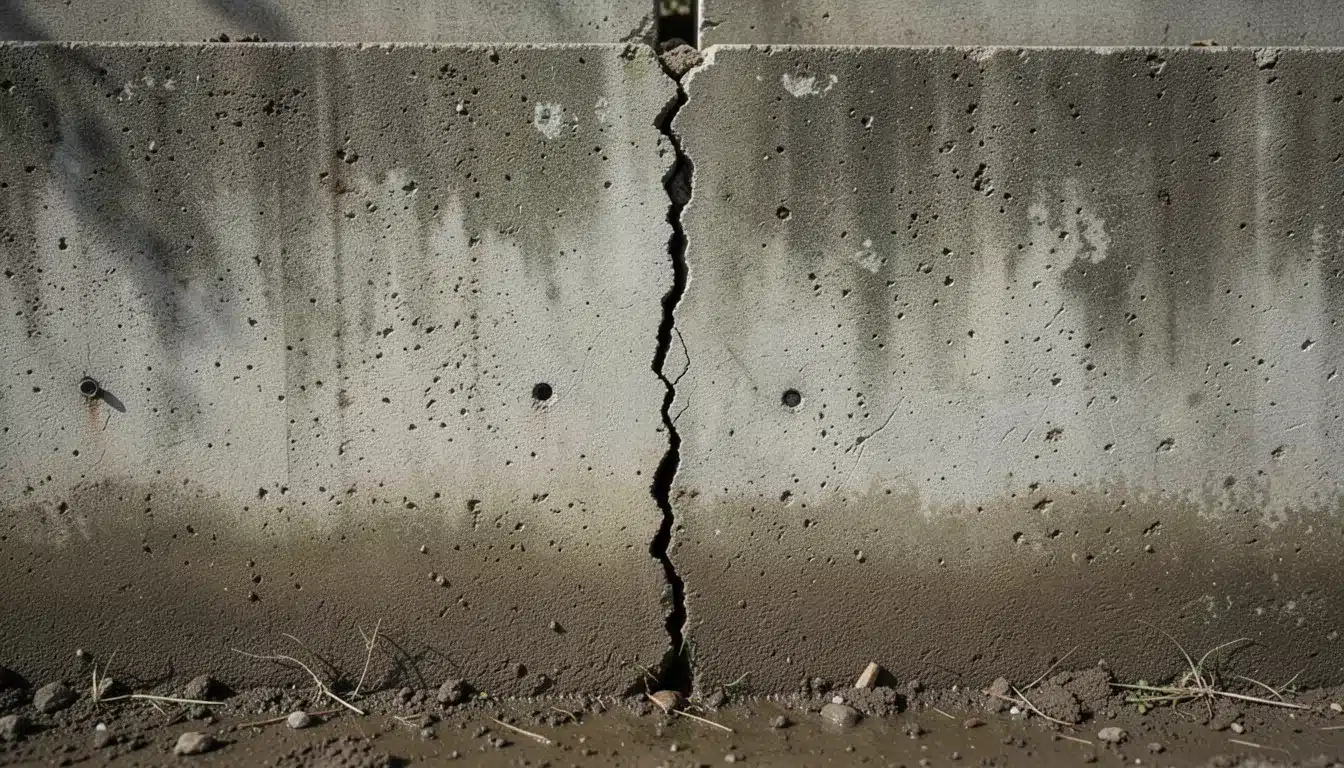
Some foundation cracks are a normal part of a home’s aging. Hairline cracks under 1/8 inch wide often form as concrete cures and shrinks, or as the home slowly settles into the ground.
They are common and, in most cases, harmless. But that does not mean you should ignore them. A crack that grows wider, lets in water, or runs horizontally across your wall is no longer in the “normal” category.
Size, direction, and growth rate are the three factors that distinguish a minor cosmetic crack from a serious structural concern.
What Causes Foundation Cracks?
Cracks do not just appear out of nowhere. There is almost always a reason behind them, and knowing that reason helps you figure out what to do next.
- Concrete Curing: Fresh concrete shrinks as it dries. Small cracks under 1/16 inch are a natural result of this process.
- Soil Movement: Soil expands when wet and shrinks when dry. Clay-rich soil puts the most pressure on foundation walls.
- Natural Settling: Most homes slowly settle into the ground beneath them over time.
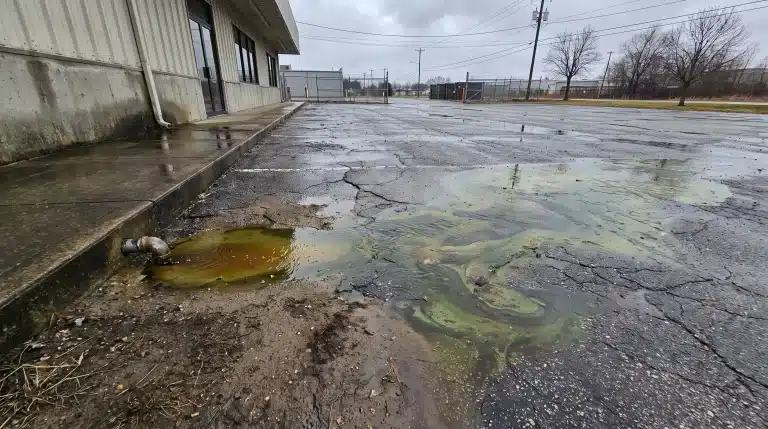
- Poor Drainage: Water pooling near the foundation softens the soil and increases pressure against the walls.
- Freeze-Thaw Cycles: In cold regions, soil expands when it freezes and contracts when it thaws, repeatedly stressing the foundation.
- Plumbing Leaks: A slow leak under the slab can wash away soil, causing the foundation to shift.
- Tree Roots: Large roots growing close to the home push against the foundation walls over time.
Types of Foundation Cracks and What They Mean
Not every crack tells the same story. Where the crack runs, how wide it is, and what shape it takes can all point to very different causes and very different levels of concern.
1. Vertical Foundation Cracks
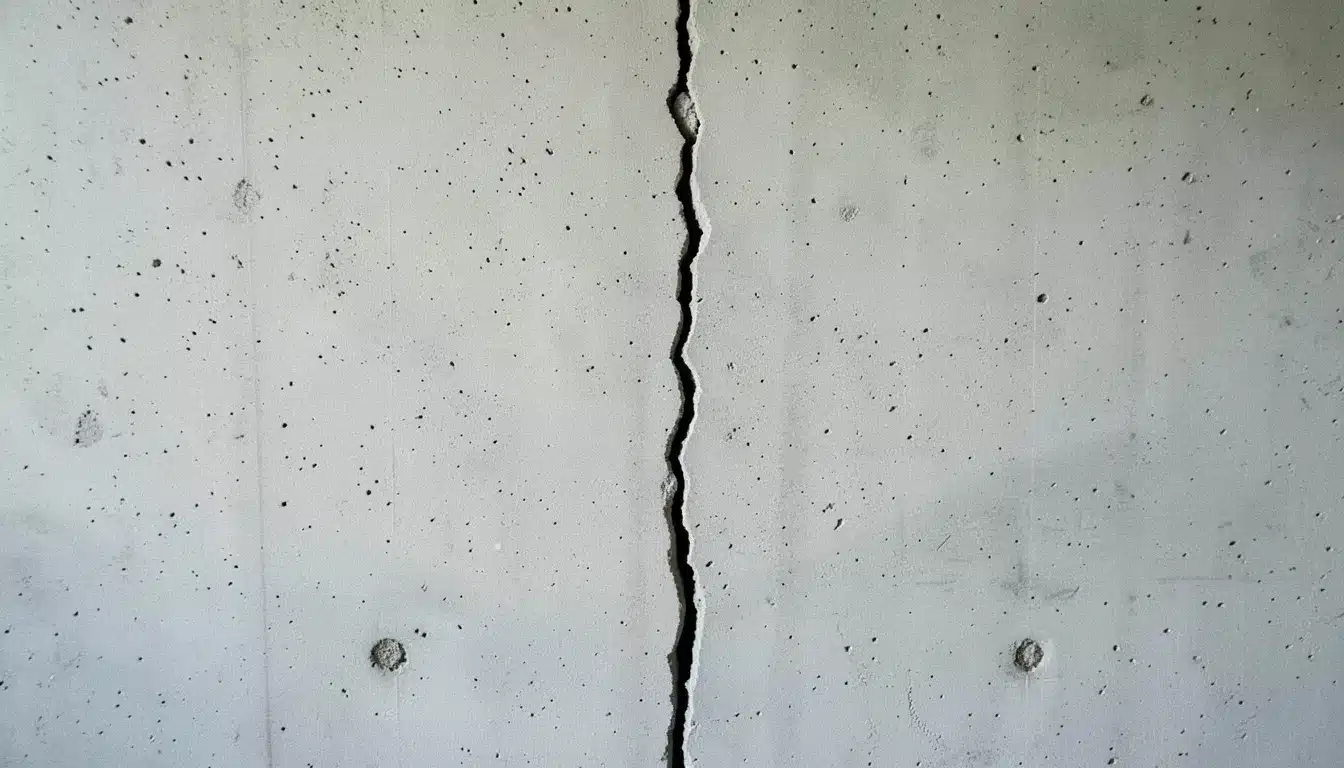
Vertical cracks run straight up and down along the wall. They are the most common type and usually appear in the first few years of a home’s life as the foundation settles. Most are of low concern unless they are growing wider or letting in water.
2. Horizontal Foundation Cracks
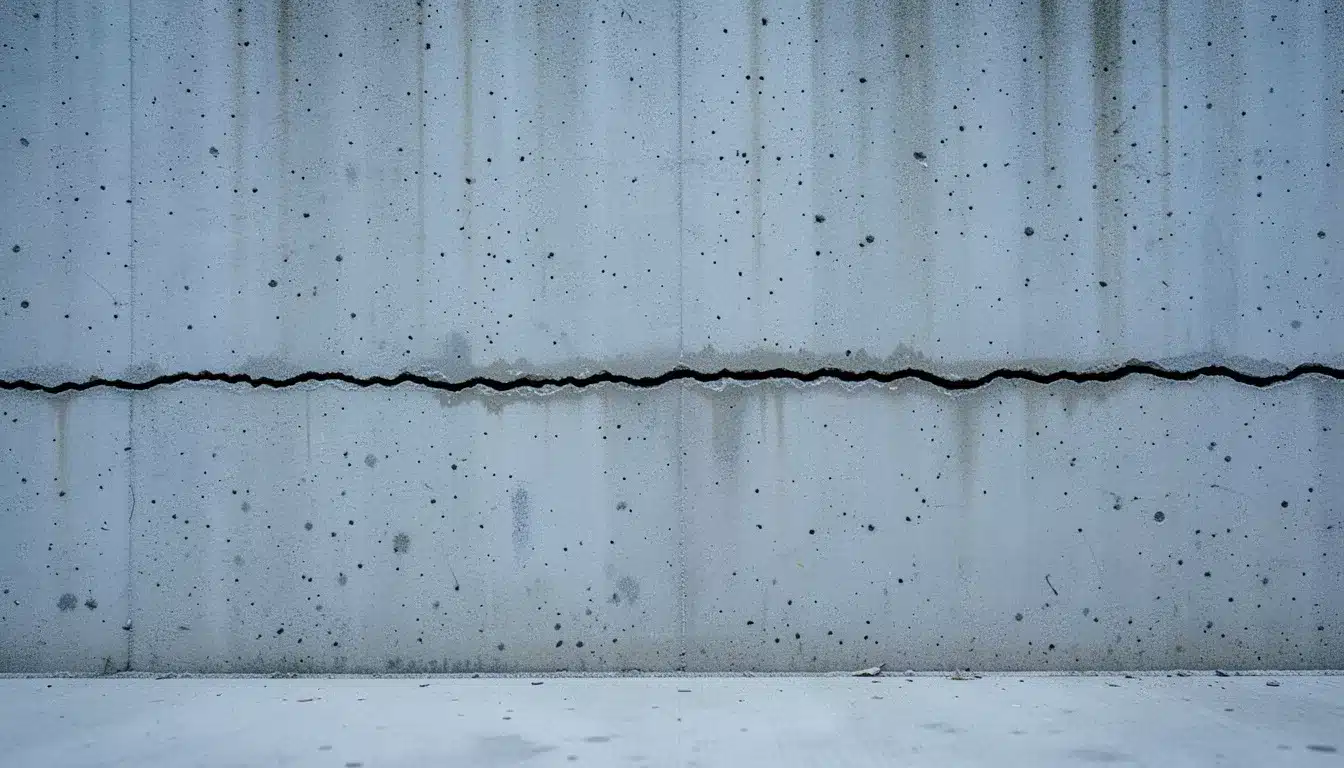
Horizontal cracks run across the wall, often in the middle, parallel to the floor. They form when saturated soil exerts pressure against the exterior of the wall. These are among the most serious types and can cause a wall to bow inward if left alone.
3. Diagonal Foundation Cracks
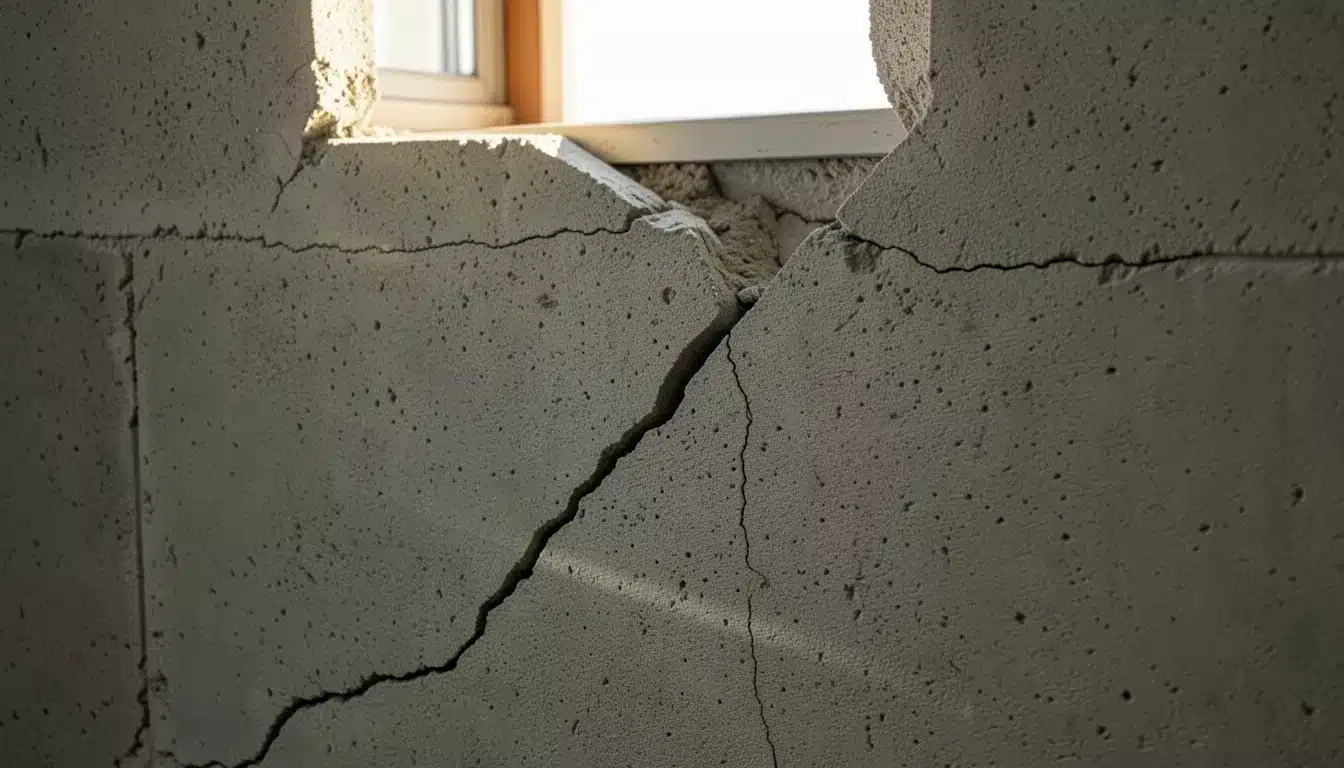
Diagonal cracks appear at angles of 30-75 degrees. They often start at the corners of windows or doors. They typically signal that one section of the foundation is settling faster than the rest.
4. Stair-Step Foundation Cracks
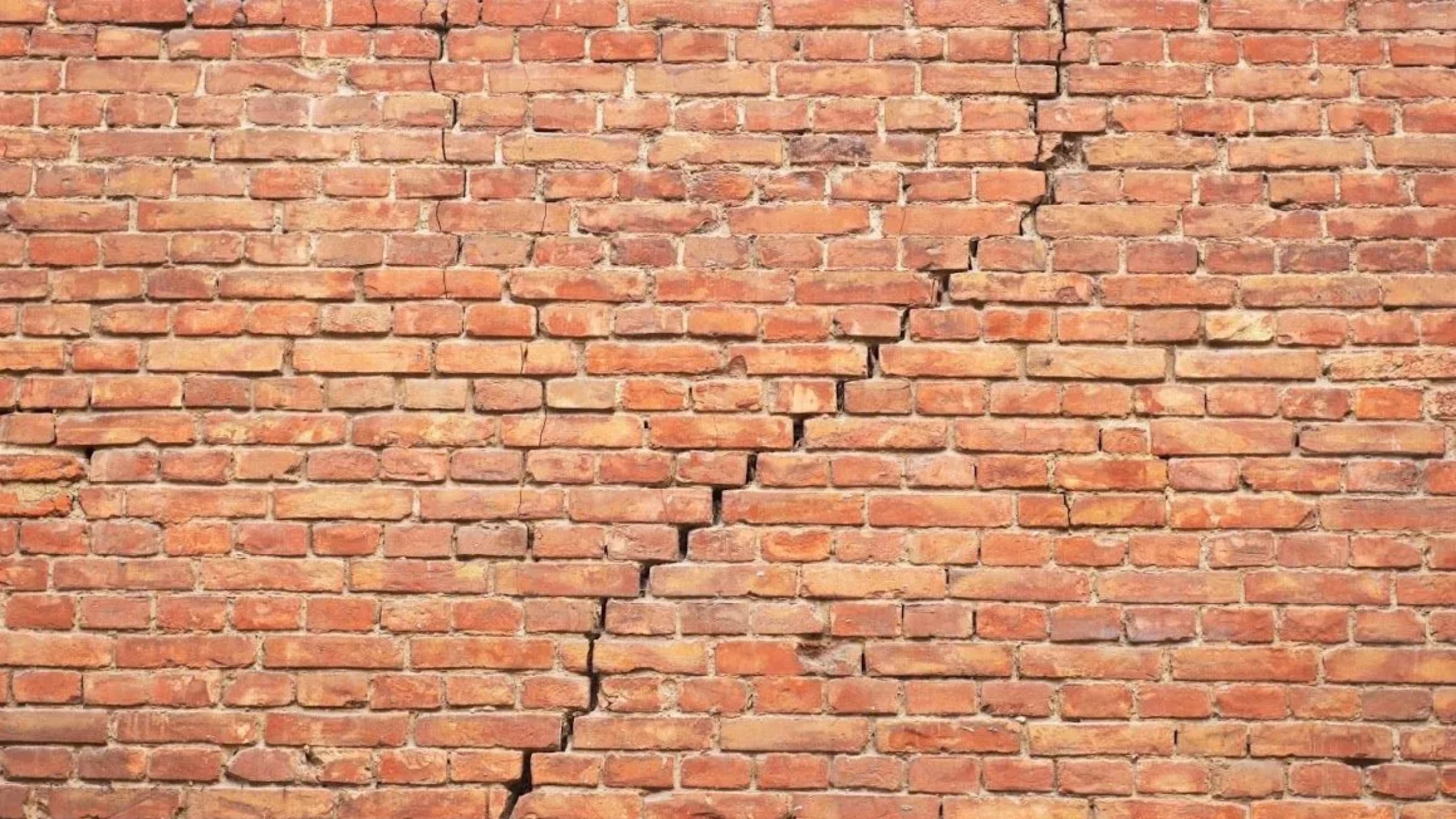
These cracks follow the mortar joints in a step-like pattern, most often seen in brick or block walls. They are a common sign of uneven settling or lateral soil pressure. Any bulging around the crack or a gap wider than 1/8 inch is a clear red flag.
5. Hairline Foundation Cracks
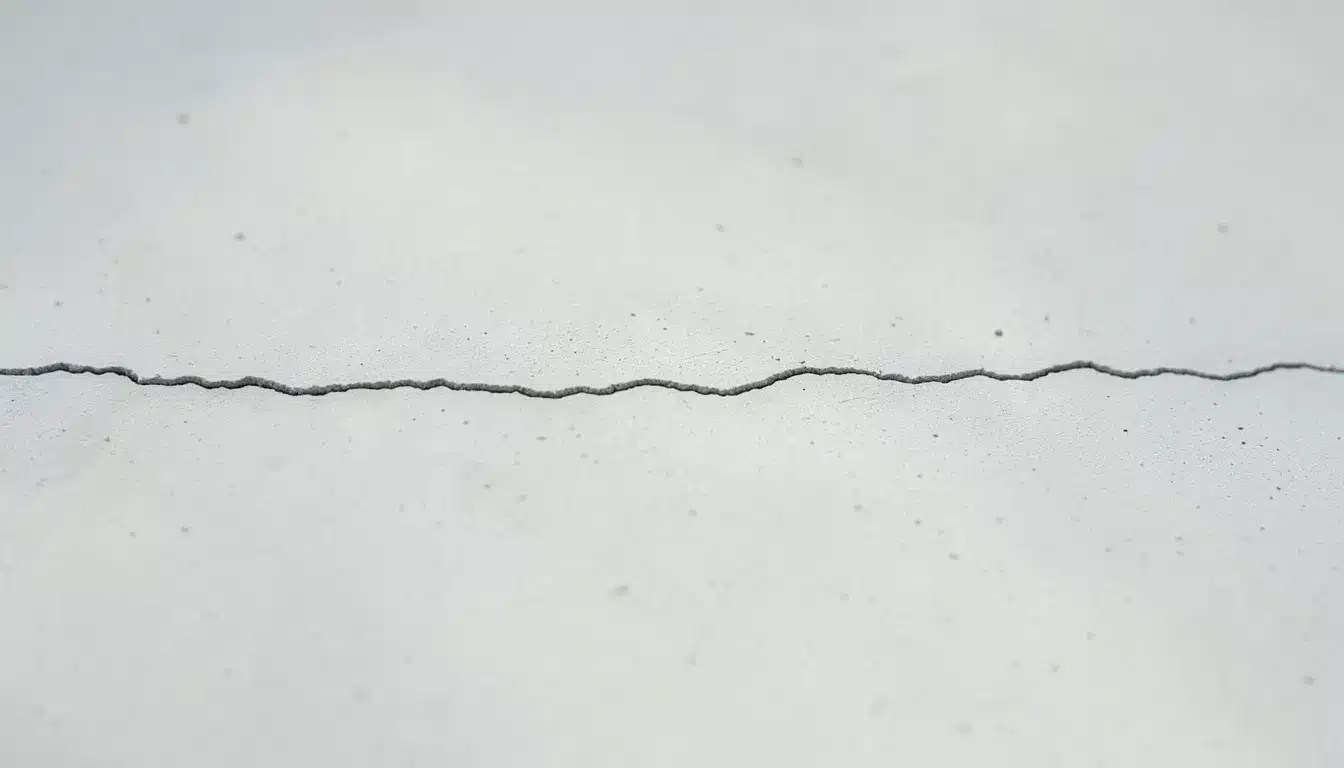
Hairline cracks are very thin and easy to miss at first glance. They usually form as concrete cures and shrink after they are first poured. On their own, they are low risk, but they should be checked every few months to confirm they are not getting bigger.
How to Tell If a Foundation Crack Is Serious?
A crack becomes serious when it is wider than 1/4 inch, keeps growing over time, or lets water seep through.
A wall that is bowing inward, a crack where one side sits higher than the other, or several cracks appearing at once across your walls are all signs you need professional help.
Hairline cracks that stay the same size over months are generally fine to monitor. But any crack that changes, even slightly, should be looked at by a qualified expert without delay.
Other Warning Signs You Should Not Ignore
A foundation problem does not always start with a visible crack. Your home often gives you other signals first, and catching them early can save you from a much bigger repair bill down the road.
| Warning Sign | What It Could Mean |
|---|---|
| Doors or windows that stick | The foundation movement is shifting the frame out of alignment |
| Uneven or sloping floors | One section of the foundation has settled more than another |
| Gaps between walls and ceiling | The structure is pulling apart under stress |
| Cracks in interior drywall | Foundation movement is pushing stress into the upper walls |
| Exterior brick or stucco cracks | Settling or pressure is affecting the outer shell of the home |
| Garage door alignment issues | The frame has shifted away from its original position |
Foundation Crack Repair Methods
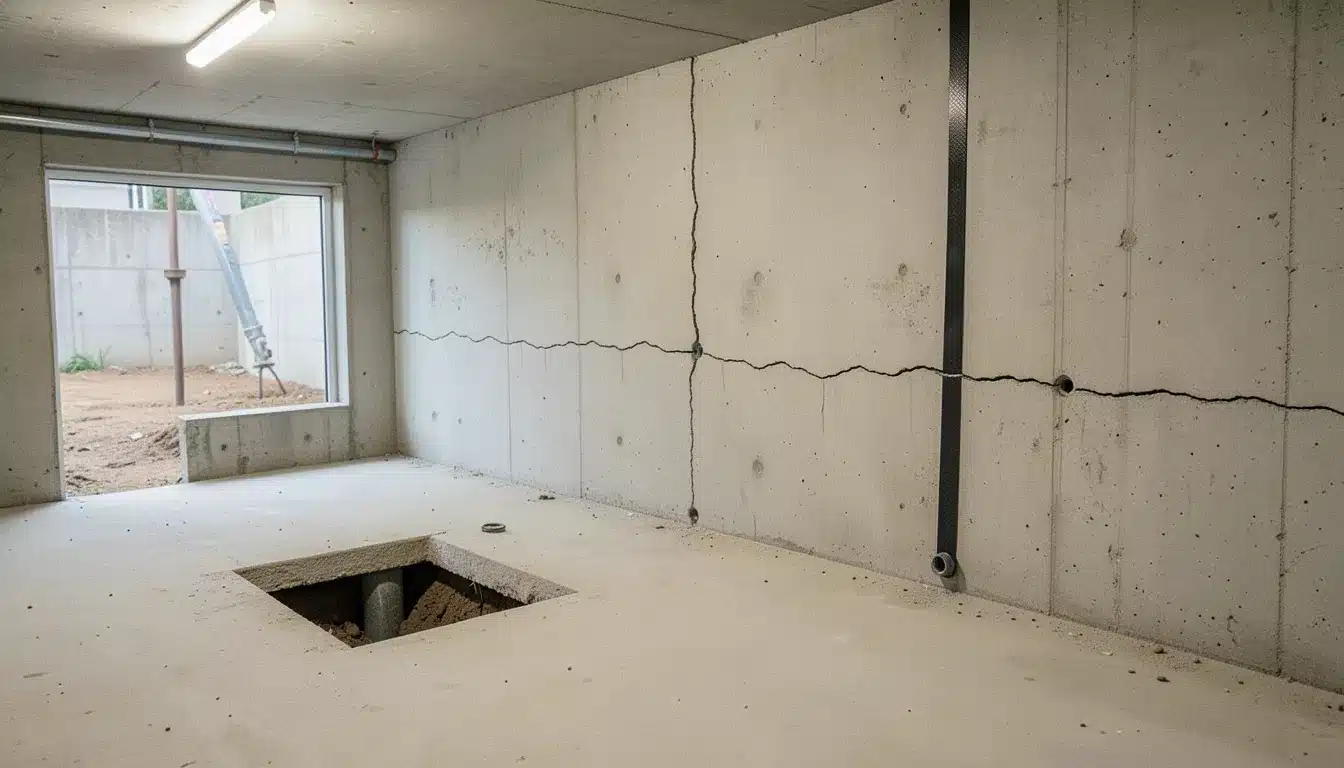
The right fix depends on the type and severity of the crack. A solution that holds for a hairline crack will not work for a bowing wall. Here is a clear look at the most common methods professionals use.
1. Epoxy Injection
Epoxy is injected directly into the crack to restore the strength of the concrete and block moisture from getting through. It works best on narrow, non-structural cracks that are not actively leaking water.
2. Hydraulic Cement
This material is used when water is actively coming through a crack. It expands as it sets, forming a tight seal fast. It stops leaks well, but is not a standalone long-term structural solution.
3. Carbon Fiber Reinforcement
Carbon fiber straps are attached to walls that are bowing or showing significant movement. They stop the wall from moving further, but do not push it back to its original position.
4. Push Piers
Steel piers are driven deep into stable soil beneath the foundation. They help stabilize the structure and can potentially lift a settled section back toward its original level.
5. Helical Piers
These are screwed into the ground and work best for lighter structures, such as porches, chimneys, or sunken slabs. They provide long-term stability and can lift the structure slightly.
6. Slab Piers
Installed directly into the concrete slab, these piers are used to stabilize and lift sunken slab foundations. They are a common solution for homes built on shifting soil.
|
When to Call a Professional If the crack is wider than 1/4 inch, running horizontally, letting in water, or the wall around it is bowing, call a structural engineer or foundation repair specialist right away. Foundation damage does not get better on its own. The longer you wait, the more the repair tends to cost. |
How to Prevent Foundation Cracks in the Future
The best way to avoid serious foundation cracks is to control water and soil movement around your home.
Keep gutters and downspouts clear so water drains away from the base of your walls; make sure the soil slopes away from the foundation; fix plumbing leaks quickly; and avoid planting large trees close to the house.
A quick check of your foundation twice a year, especially after heavy rain or a cold winter, helps you catch small problems before they become big ones.
Wrapping It Up
Foundation cracks are something most homeowners will face at some point. Some are part of normal concrete behavior. Others are signs of real structural stress that need fast attention.
The key is knowing the difference. A hairline crack from concrete curing is not the same as a horizontal crack caused by soil pressure. Size, direction, and growth rate tell the whole story.
If you spot a crack, mark it, date it, and keep an eye on it. If it grows, call a professional. Do not let a small crack turn into a costly problem simply because you waited too long.
Your foundation holds everything up. Taking care of it now is the smartest move you can make.