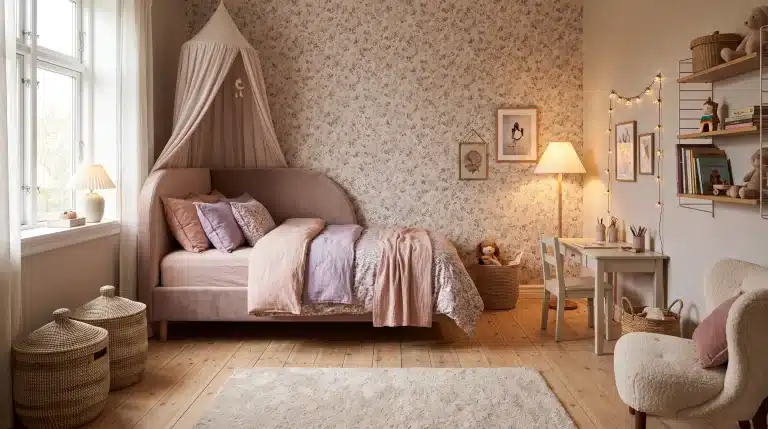
Feng Shui Interior Design for a Balanced Home

A peaceful home often begins with the way a space feels, not just how it looks.
Feng shui interior design blends layout, color, furniture placement, and natural elements to encourage comfort, harmony, and better energy flow indoors.
From entryways and bedrooms to lighting and decor choices, every detail can shape the atmosphere of a room.
This blog explores core feng shui decorating principles, room-by-room styling ideas, color meanings, common layout mistakes, and practical tips for modern living spaces.
You will also learn how to combine timeless feng shui concepts with current interiors without making the home feel overly traditional or crowded.
Small adjustments can often create a calmer and more welcoming environment.
What Feng Shui Means in Interior Styling
The words “feng shui” translate literally from Chinese as “wind and water.”
At its core, it is a practice rooted in ancient Chinese philosophy that examines how the arrangement of a living space interacts with the natural energy, called Chi or Qi, that moves through it.
As feng shui master Joey Yap puts it, the discipline is about “being in the right place at the right time” and tapping into the natural energies of the environment to support everyday life.
What separates feng shui interior design from standard decorating is its underlying intent. Western design tends to prioritize visual appeal, proportion, color harmony, and style.
Feng shui asks a different question: Does this space support the people living in it?
That means considering furniture placement not just for aesthetics but for how it makes a person feel secure, focused, rested, or energized, depending on the room’s purpose.
Room by Room Feng Shui Interior Design Ideas
Each room carries a different purpose, and feng shui decorating adjusts layouts to support those activities naturally.
The following room-by-room breakdown draws on guidance from feng shui practitioners, interior designers, and published expert sources.
1. Living Room Layout

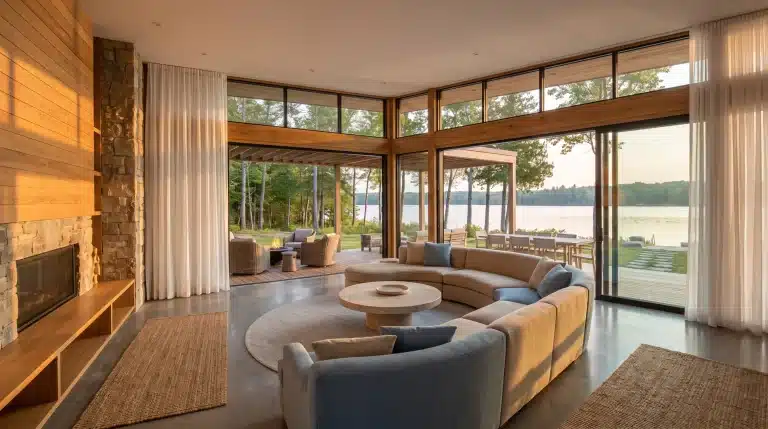
The living room is the social center of a home, a space meant for connection, conversation, and relaxed gathering.
In feng shui interior design, its layout should reflect that openness.
Seating should be arranged so people face each other naturally, encouraging conversation rather than parallel viewing of a screen.
Sofas and chairs ideally sit against walls or at angles that define a clear gathering area.
Avoid pushing furniture flush against every wall, which can make a room feel like a waiting room.
Natural light should be maximized where possible.
2. Feng Shui Bedroom Arrangement Ideas

The bedroom has one job in feng shui: support deep rest and personal renewal.
Every design choice in this room should serve that purpose.
Bed placement follows the command position, diagonal from the door, headboard against a solid wall, with a clear sightline to the entrance.
Color choices lean toward earth tones and soft neutrals.
Yellows, warm browns, and tans are recommended for anyone who struggles with sleep, as they carry the grounding stability of the earth element.
Soft blues and greens work well for those who need emotional calm rather than physical grounding.
Electronics, exercise equipment, and work-related items have no place in a well-arranged feng shui bedroom.
3. Kitchen Placement and Energy Balance

The kitchen represents nourishment, health, and abundance in feng shui interior design.
The stove, as the primary cooking surface, is treated as one of the most important command-position items.
Ideally, the person cooking should be able to see the kitchen entrance while standing at the stove.
If the layout places the stove against a wall with the cook’s back to the room, a small mirror positioned above or beside the stove can simulate the command position and resolve the issue without any structural changes.
Cleanliness carries significant weight in feng shui kitchen design.
A stove with unused burners, accumulated grease, or broken components is considered inauspicious; it represents missed nourishment and blocked abundance.
4. Home Office Feng Shui Setup

Focus, productivity, and career clarity are the energy goals of a well-designed feng shui home office.
The desk is the command position item to prioritize here.
Position the desk to face the room’s entrance, with a solid wall behind the seated position for support.
If this is not possible, a mirror reflecting the door achieves a similar result.
Lighting matters significantly in a workspace.
Natural light from a window to the side of the desk (rather than directly behind, which creates glare) supports focus and reduces eye fatigue.
Clutter on a desk represents blocked thinking in feng shui decorating. Keep only what is actively in use visible, and store everything else.
5. Bathroom Feng Shui Decorating Tips

Bathrooms present a particular challenge in feng shui interior design because they are naturally associated with water drainage.
Which symbolically means energy can leave the home through them.
Beyond those basics, the design goal is to make the bathroom feel grounded and contained rather than airy and dispersed.
The reasoning is that blues reinforce the water element that is already heavily present.
Potentially amplifying the draining quality of the space.
Keeping surfaces organized and products stored out of sight reduces the visual noise that makes small bathrooms feel more stressful than they need to be.
The Five Elements in Feng Shui Decorating
One of the most practical frameworks in feng shui decorating is the five-element system.
The goal is not to flood a room with one element but to achieve a workable balance among all five.
| Element | Energy | Colors & shapes | How to add it | Best rooms |
|---|---|---|---|---|
| Wood | Growth, creativity, expansion | Green, blue; vertical shapes | Plants, timber furniture, botanical prints, rattan | Living room, office, entryway |
| Fire | Passion, energy, warmth | Red, orange, triangular shapes | Candles, warm lighting, red accents, sunlight | Living room, dining room, office |
| Earth | Stability, grounding, security | Beige, terracotta, sandy yellow; square shapes | Stone objects, ceramic decor, tile, and clay pots | Bedroom, kitchen, living room |
| Metal | Clarity, focus, precision | White, grey, metallic; circular shapes | Metal lamps, polished stone, clean lines, arched frames | Home office, bathroom |
| Water | Calm, reflection, fluidity | Dark blue, black; wavy shapes | Mirrors, water features, glass surfaces, dark artwork | Reading nook, meditation space, bathroom |
Simple Feng Shui Decorating Tips for Beginners
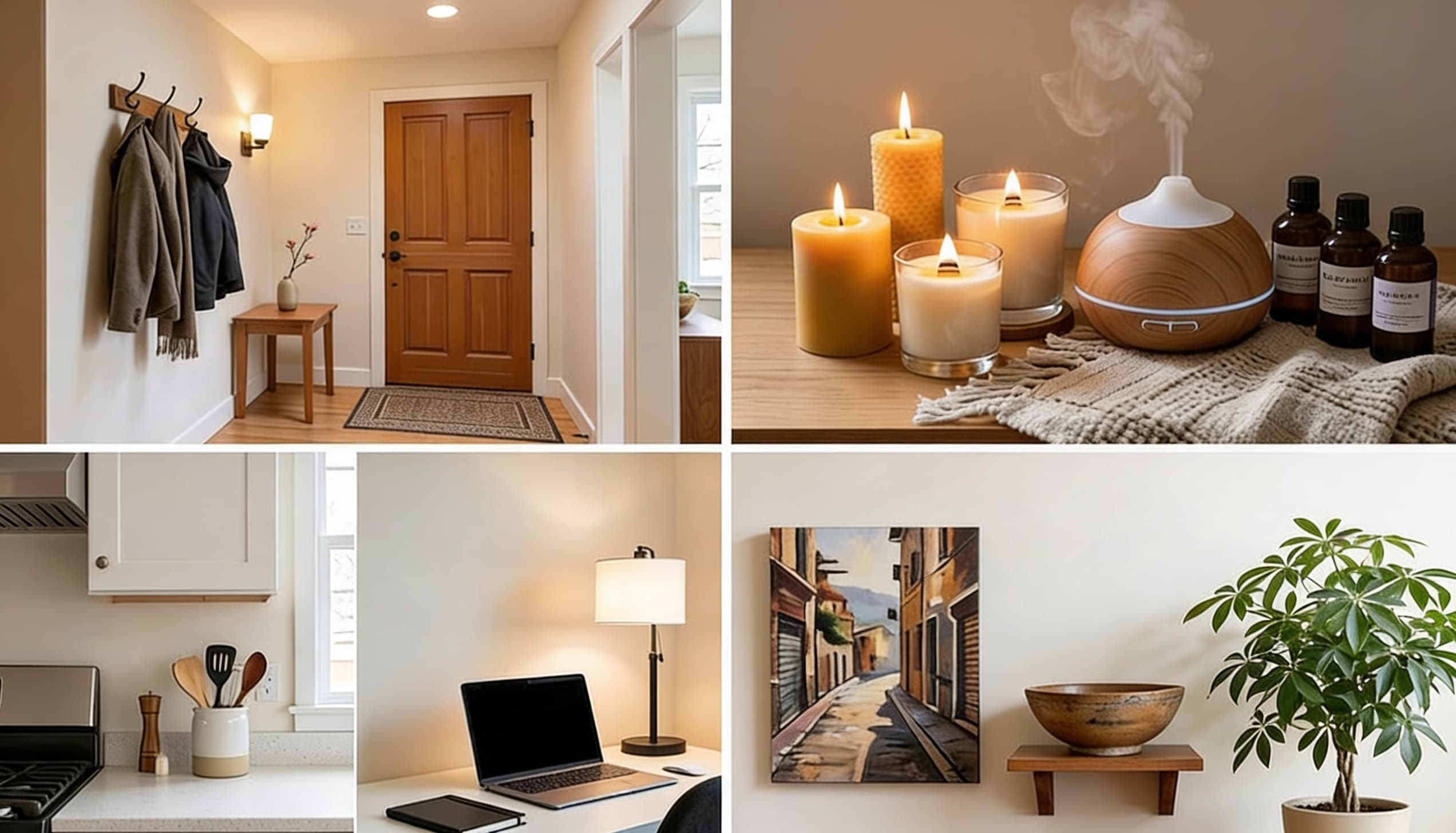
Small updates often make a noticeable difference when improving flow and comfort within a living environment.
These are the starting points most feng shui practitioners recommend for anyone new to the practice.
1. Start With the Entryway
- The entryway is the primary point through which energy enters a home
- Keep it clean, well-lit, and free of obstacles
- A doormat, a coat hook, one meaningful object, and a working light fixture are enough
2. Add Natural Scents and Soft Textures
- Natural candles, beeswax, soy, or wood-wick, warm a room both visually and sensually
- Essential oil diffusers with sandalwood, cedarwood, or lavender support the emotional atmosphere of a space
- Soft textures like linen throws, wool rugs, and cotton curtains introduce yin energy into rooms that feel too sharp
3. Keep Frequently Used Areas Organized
- Kitchen counters, bathroom sinks, entryway tables, and desks need the most consistent attention
- These are the spaces people encounter most often, so their condition shapes how the whole home feels
- Simple habits, such as clearing counters before bed, ending the workday with a tidy desk, make a real difference
4. Choose Meaningful Decor Pieces
- Objects carry energy tied to their origins, art that moves you, an inherited item, a plant you have tended, all add something that a store purchase cannot
- Every item does not need a deep personal history; the goal is simply to be selective
- If something was bought only to fill space, it is worth reconsidering whether it belongs
Balancing Yin and Yang at Home
Yin and Yang are the two opposing forces at the heart of Chinese philosophy and in feng shui decorating, their balance determines whether a room feels dead or alive, harsh or gentle, restless or overly passive.
Yin energy is receptive, soft, and still. It shows up through dark or muted colors, soft textiles, curved shapes, low lighting, and quiet corners.
Yang energy is active, bright, and expansive.
It appears through bold colors, hard surfaces, angular furniture, strong lighting, and open layouts.
Every room needs both in proportions suited to its purpose. A bedroom should lean yin soft fabrics, dim lighting, gentle tones because rest is its function.
A kitchen or home office needs more yang energy to support activity and alertness.
Balancing the two does not require major changes. Adding a soft throw, a warm-toned lamp, or a single plant to a harsh room introduces yin.
Opening blinds, swapping dark cushions for lighter ones, or removing excess furniture adds yang.
Feng Shui Decorating Mistakes that Affect Balance
1. Blocking Natural Pathways Furniture crowding doorways and narrow hallways interrupts Chi flow. Move one piece, shrink the coffee table, or reroute tight walkways.
2. Overusing Mirrors Incorrectly Mirrors facing the bed, reflecting clutter, or facing each other create restless energy. Place them to reflect light, plants, or an open view instead.
3. Ignoring Natural Light Sources: Heavy curtains and furniture blocking windows drain yang energy. Swap thick drapes for linen panels, reposition furniture, or add a mirror to bounce light deeper into the room.
4. Using Too Many Decorative Elements Crowded surfaces and walls create energetic noise — keep only what is functional or personally meaningful and edit everything else out.
Conclusion
Feng shui interior design is more than arranging furniture or choosing calming colors.
It encourages thoughtful living through balance, comfort, and intentional styling choices that support everyday wellbeing.
From decluttering and lighting to room layouts and natural elements, even small adjustments can change how a home feels emotionally and visually.
Feng shui decorating does not require a complete makeover because simple updates often create noticeable improvements in flow and atmosphere.
The key is creating interiors that feel welcoming, functional, and personally meaningful.
Which feng shui idea would you try first in your own space? Share your favorite decorating change and explore new ways to naturally bring harmony and positive energy into every room.
Frequently Asked Questions
What Is the Basis of Feng Shui Interior Design?
Feng shui interior design focuses on arranging your space to promote the flow of chi (life energy), creating balance, harmony, and well-being.
What Colors Should Be Avoided in Feng Shui?
In feng shui, colors are meant to balance the five elements (Wood, Fire, Earth, Metal, and Water).
What is the luckiest thing to have in your home?
Fresh Flowers. According to Feng Shui, having a fresh bunch of any flowers in your home brings positive energy.