DIY Weed Killer: Homemade Recipes That Actually Work

Most DIY weed killers don’t kill roots. Cornell Cooperative Extension found that vinegar’s acetic acid only damages the plant parts it touches, not the roots underground.
That means weeds like dandelions and bindweed often grow back within 10 to 14 days.
Still, homemade weed killers can work well when used correctly. They’re effective for young weeds, driveway cracks, garden edges, and quick spot treatments without harsh chemicals.
The key is using the right recipe for the right weed type. This guide shares tried-and-tested homemade weed killer recipes, exact ingredient ratios, step-by-step instructions, and tips to help you get better results naturally.
How a Homemade Weed Killer Works?
Before mixing anything, it helps to understand the mechanism, because this directly affects what recipe you should reach for.
Most DIY weed killers work as contact herbicides, meaning they only damage the parts of the weed they touch. They work best on young weeds with shallow roots and are less effective on deep-rooted perennials.
Dish soap helps the mixture stick to waxy leaves rather than slide off, improving results.
It’s also important to remember that “natural” doesn’t always mean harmless. Strong vinegar can burn skin and damage eyes, while too much salt can harm soil and nearby plants.
Weed Killer Ingredients Explained
- Vinegar (acetic acid): Dries out and damages weed leaves on contact. Household vinegar works on young weeds, while stronger horticultural vinegar is more effective but requires safety gear.
- Salt: Draws moisture from weeds, dehydrating them. Overuse can damage soil and nearby plants.
- Dish soap: Helps the spray stick to weed leaves for better coverage. Dawn or Castile soap both work.
- Boiling water: Instantly damages plant cells and works well for weeds in cracks and paved areas.
- Baking soda: Dehydrates weeds and changes soil pH. Best for driveways and pavement joints.
- Lemon juice/citrus oil: Adds extra acidity and works best on light weed growth or mixed garden areas.
- Corn gluten meal: Prevents weed seeds from sprouting. Works as a pre-emergent, not for killing existing weeds.
Tools and Materials Required
- 1 gallon of white vinegar
- 1/2 cup salt
- 2 teaspoons dish soap
- Spray bottle or garden sprayer
- Mixing container or bucket
- Funnel (optional for easy pouring)
- Measuring cups and spoons
- Rubber gloves
- Protective eyewear (recommended)
- Long sleeves and closed-toe shoes for safety
How to Use 3-Ingredient Weed Killer: Easy Steps

This homemade weed killer uses simple household ingredients to dry out and weaken unwanted weeds naturally.
The vinegar damages the leaves, the salt helps dehydrate the plant, and the dish soap helps the mixture stick better for improved results.
It works best on young weeds growing in driveways, pathways, cracks, and garden edges.
Step 1: Mix the Weed Killer
Pour 1/2 cup of salt and 2 teaspoons of dish soap into 1 gallon of white vinegar.
Shake or stir the mixture well until everything is combined.
Step 2: Transfer to a Spray Bottle
Pour the mixture into a clean spray bottle. An old spray bottle can work, but wash it several times first.
Step 3: Choose the Right Day
Spray on a hot, windless day.
Make sure there is no rain expected for at least 24 hours. The weeds should be dry before spraying.
Step 4: Spray the Weeds
Spray the solution directly onto the weed leaves until they are wet and dripping.
Avoid spraying nearby plants you want to keep, since this mixture can damage any green foliage it touches.
Step 5: Leave It Alone
Do not water the area for 24 hours.
The vinegar helps dry out the plant, the dish soap helps the solution stick to the leaves, and the salt makes the mixture stronger.
Step 6: Check the Results
After 24 hours, the weeds should start withering.
After another day, they should be mostly dead and easier to pull out.
Important Tips
- Wear gloves while mixing and spraying.
- Do not spray on windy days.
- Keep the spray away from flowers, vegetables, grass, and garden plants.
- Best for weeds growing alone, near steps, paths, cracks, or open spots.
Video Tutorial
I’d like to give credit to 2 Minute Gardener for their informative video, which served as a reference for this guide.
How to Get the Best Results from Your DIY Weed Killer
A few practical notes from real-world use:
Timing matters. Apply on warm, dry days when temperatures are above 75-80°F. The heat helps the vinegar’s drying effect. Rain within 24 hours after application washes the solution off before it can work.
Target young weeds. Weeds at the 2-4 leaf stage are far easier to kill than established plants. A habit of spraying every 10 days during the active growing season prevents small problems from becoming large ones.
Use a precision nozzle. A spray bottle with an adjustable nozzle lets you target individual weeds without overspray onto nearby grass or plants.
Don’t skip the reapplication. Most DIY recipes require 2-3 applications for reliable results on anything other than the youngest, smallest weeds. Set a reminder.
Apply in the morning. Weeds are fully open and exposed to sun. Afternoon heat can cause the solution to evaporate too quickly before it penetrates.
Which DIY Weed Killer Should You Use?
Not every homemade weed killer works the same way. Some recipes are better for driveway cracks and gravel paths, while others are safer around garden beds and flowers.
The best option depends on the type of weeds you’re dealing with, how fast you want results, and whether you want to protect nearby plants and soil.
| Your Situation | Best Recipe |
|---|---|
| Annual weeds in garden beds | Classic 3-ingredient |
| Young weeds, simplest approach | Straight vinegar |
| Weeds in the driveway or patio cracks | Boiling water |
| Gravel paths, long-term weed prevention | Salt water |
| Mixed borders, near plants you care about | Vinegar + lemon |
| Tight pavement cracks, precision work | Baking soda |
| Spring prevention before weeds appear | Corn gluten meal |
Truth About Homemade Weed Killers
Penn State Extension is fairly direct about this: DIY vinegar-based weed killers are contact herbicides, which means they only harm what they physically touch.
They don’t translocate to roots. For annual weeds that germinate from seed each year and have small, shallow root systems, this is completely fine. One or two applications kill them cleanly.
For perennials with deep storage roots, you’re essentially mowing the tops. That’s not a reason to avoid DIY recipes. It’s just context that helps you use them correctly.
A few other things worth knowing:
- Vinegar kills weeds and nearby plants alike; avoid spraying on windy days.
- Salt can damage soil in the long term; avoid using it in garden beds.
- Dish soap may pollute water; keep it away from ponds and drains.
- Strong horticultural vinegar can burn skin and damage eyes; always handle carefully.
Common Weed Killer Dos and Dont’s
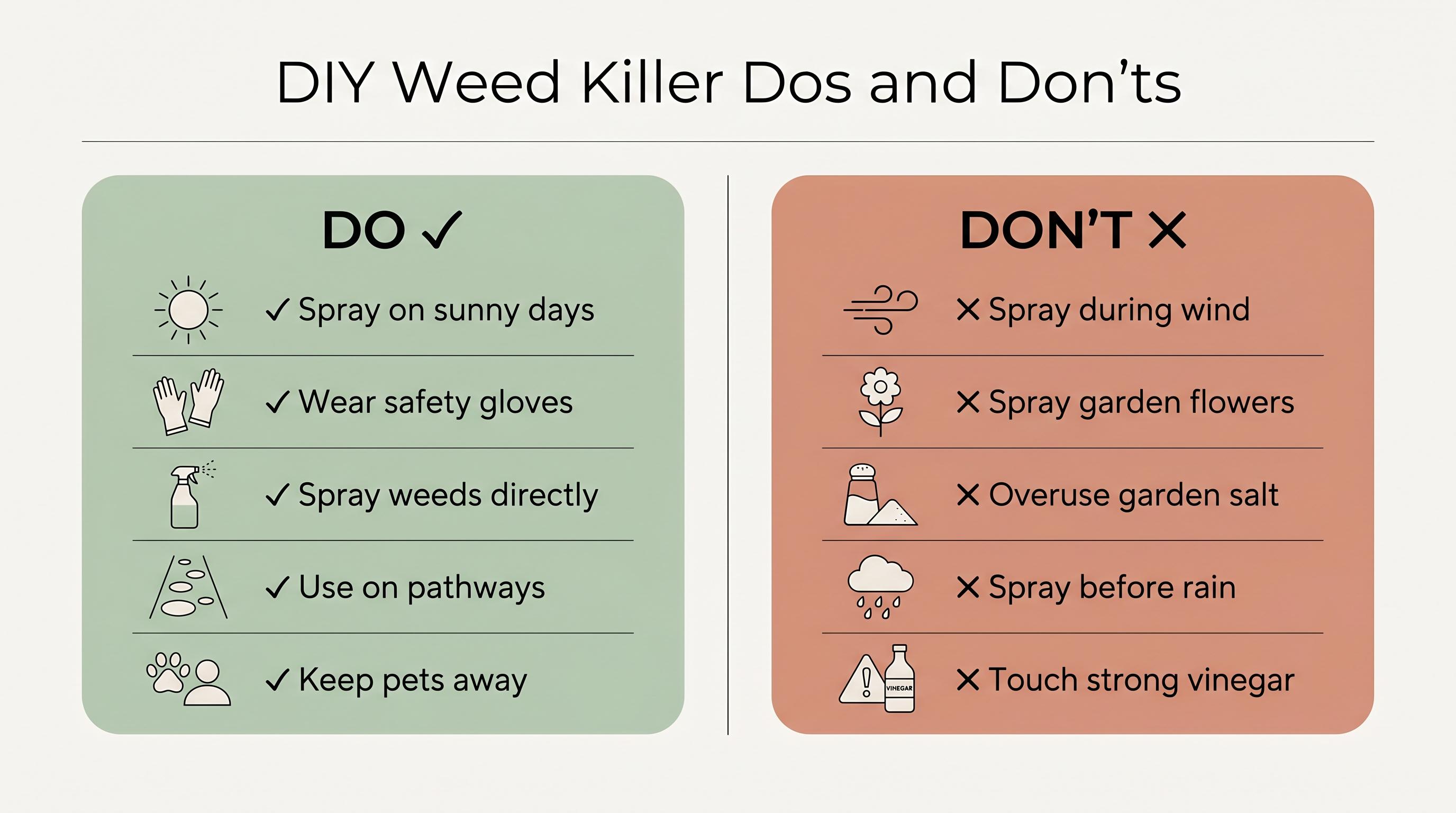
Homemade weed killers can work well, but using them the wrong way can damage healthy plants, harm soil quality, or reduce results.
A few simple precautions can help you kill weeds more effectively while keeping your garden, pets, and surrounding plants safe.
Conclusion
Weeds are not a problem you solve once. They come back, and the gardeners who stay ahead of them are the ones who treat it as an ongoing habit rather than a one-time fix.
DIY weed killers give you a real, affordable way to manage the most common weeds without reaching for a bottle of glyphosate.
Vinegar for young growth in garden beds. Boiling water for driveway cracks. Salt solution for gravel paths where nothing should grow. Corn gluten meal in early spring, before anything germinates.
Pick the right tool for the spot, apply consistently, and pair it with mulching and hand-pulling. That combination does more than any single spray ever will.
Start simple. The straight vinegar spray costs almost nothing and works faster than most people expect. Go from there.
Frequently Asked Questions
What Weed Killer Can I Use on Zoysia?
For zoysia grass, use a weed killer labeled as safe for zoysia lawns. Atrazine is effective against broadleaf weeds and some grassy weeds, while quinclorac is commonly used for crabgrass control.
What Kills Weeds Permanently without Killing Grass?
Selective weed killers made for lawns can kill weeds without harming grass when used correctly. For a natural option, spot-treat weeds carefully and keep your lawn thick and healthy to prevent regrowth.
How Do You Make Super Strong Weed Killer?
A super-strong homemade weed killer usually combines white vinegar, salt, and dish soap. Stronger horticultural vinegar works faster, but it can also damage soil, grass, and nearby plants if overused.