How to Clean a Shower Curtain: A Simple Material Guide

Most people wait until a shower curtain looks visibly dirty before cleaning it. By then, mold and soap scum have already settled deep into the material.
Knowing how to clean a shower curtain correctly starts with identifying the material. Using the wrong method can cause warping, shrinking, or damage that cannot be undone.
The cleaning approach that works for fabric will not always work for plastic or vinyl. Each material has specific requirements that affect water temperature, cleaning agents, and drying methods.
Here you’ll find cleaning methods for every curtain type, practical ways to remove mold, and simple habits that keep curtains fresher between deep cleaning sessions.
Check Your Shower Curtain Material Before Cleaning
Before cleaning your shower curtain, it helps to know what material it is made of. Using the wrong method on the wrong material can cause shrinking, warping, or permanent damage.
| Material | What It Looks Like |
|---|---|
| Fabric | Soft, cloth-like, often cotton or a polyester blend |
| Plastic | Thin, flexible, and commonly used as a liner |
| Vinyl | Thicker and heavier than plastic, more durable |
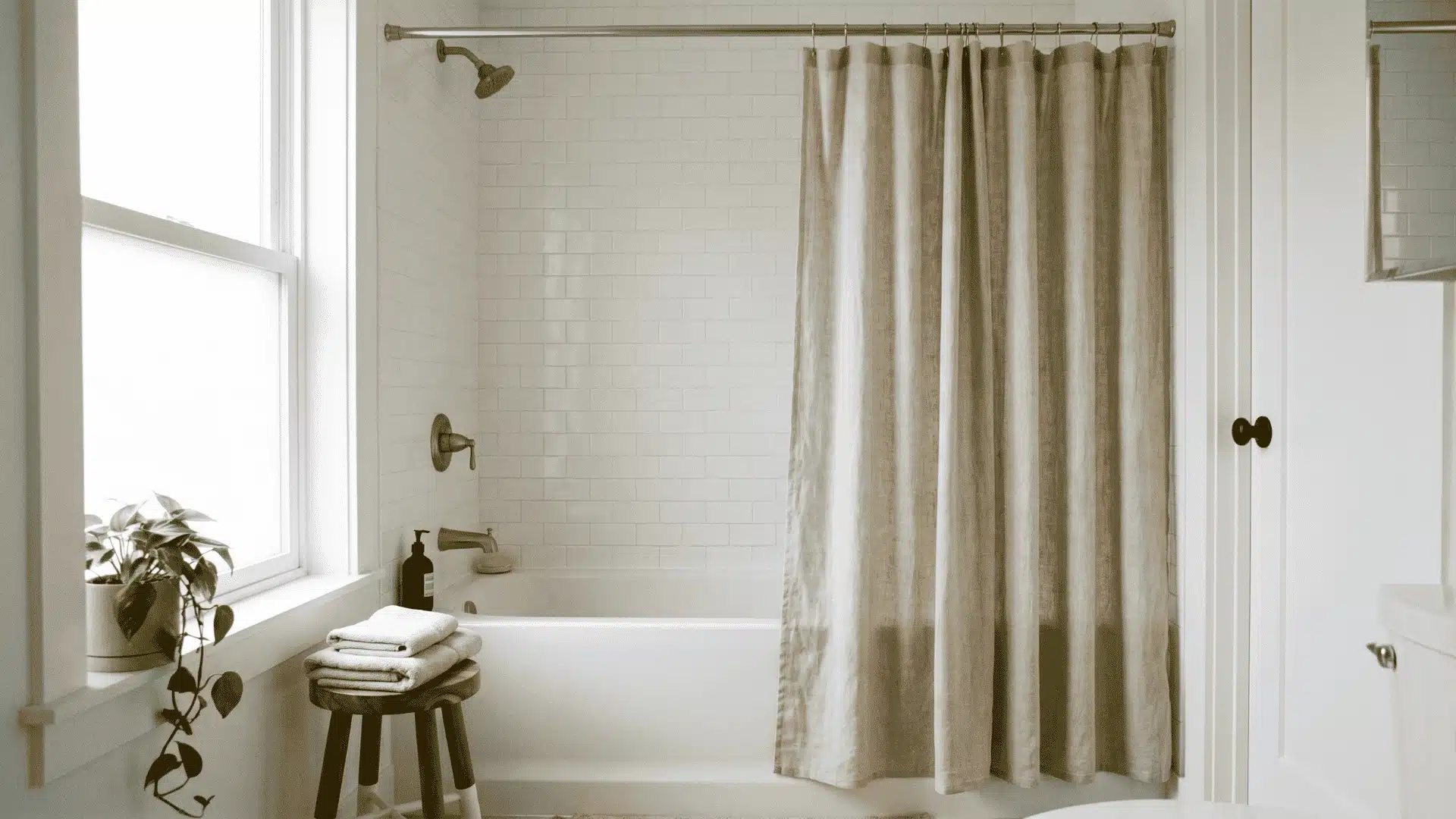
Check the care label first. Fabric shower curtains can be machine washed on gentle cycles, but plastic and vinyl need cool water only and must always air dry.
Common Mistake: Using Dryer Heat on Plastic or Vinyl. Even a short drying cycle can melt or warp the material. Always hang these curtains to air dry instead.
How to Clean Shower Curtains?
Different curtain materials need different cleaning methods. Using the right approach for each type protects the material and gets the best cleaning results.
1. Fabric Shower Curtains
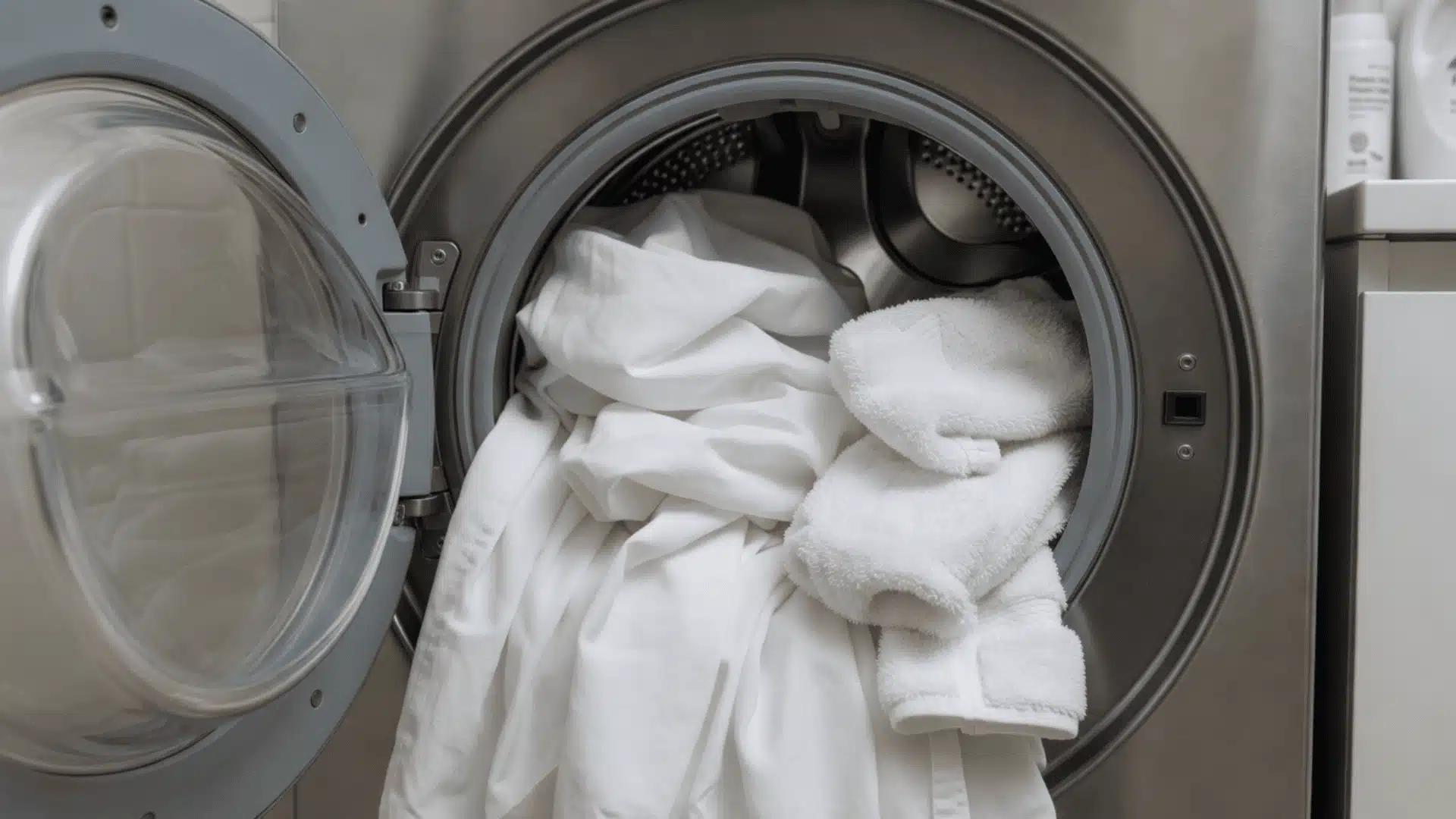
Fabric shower curtains are easy to clean at home. Most of them are machine washable, and a simple wash cycle is enough to remove soap scum, odors, and light stains.
How to Machine-Wash a Fabric Shower Curtain?
Machine washing a fabric curtain is simple. Follow these steps to get the best clean without damaging the material:
- Remove the curtain from the hooks and shake off loose debris
- Place it in the washer with two to three towels
- Add your preferred cleaning agent
- Set the machine to a gentle cycle with warm water
- Start the wash and let it complete fully
- Hang the curtain on the rod after washing and always air dry to prevent shrinkage.
Towels act as scrubbers against the curtain surface to loosen soap scum, and they balance the load so the washer runs smoothly throughout the cycle.
Best Cleaning Agents for Fabric Curtains
The cleaning agent used makes a big difference in how well the curtain gets cleaned. Here is a quick breakdown of what works best for each situation:
| Cleaning Agent | Best Used For |
|---|---|
| Regular detergent | Everyday dirt and odors |
| White vinegar | Mildew smell and mineral buildup |
| Baking soda | Stain removal and deodorizing |
| Oxygen bleach | Deep stains on white or light fabric |
For visible mildew stains, apply a mixture of baking soda and water directly onto the spot before washing. Let it sit for 15 to 20 minutes, then place the curtain in the washer.
2. Plastic or Vinyl Shower Curtains
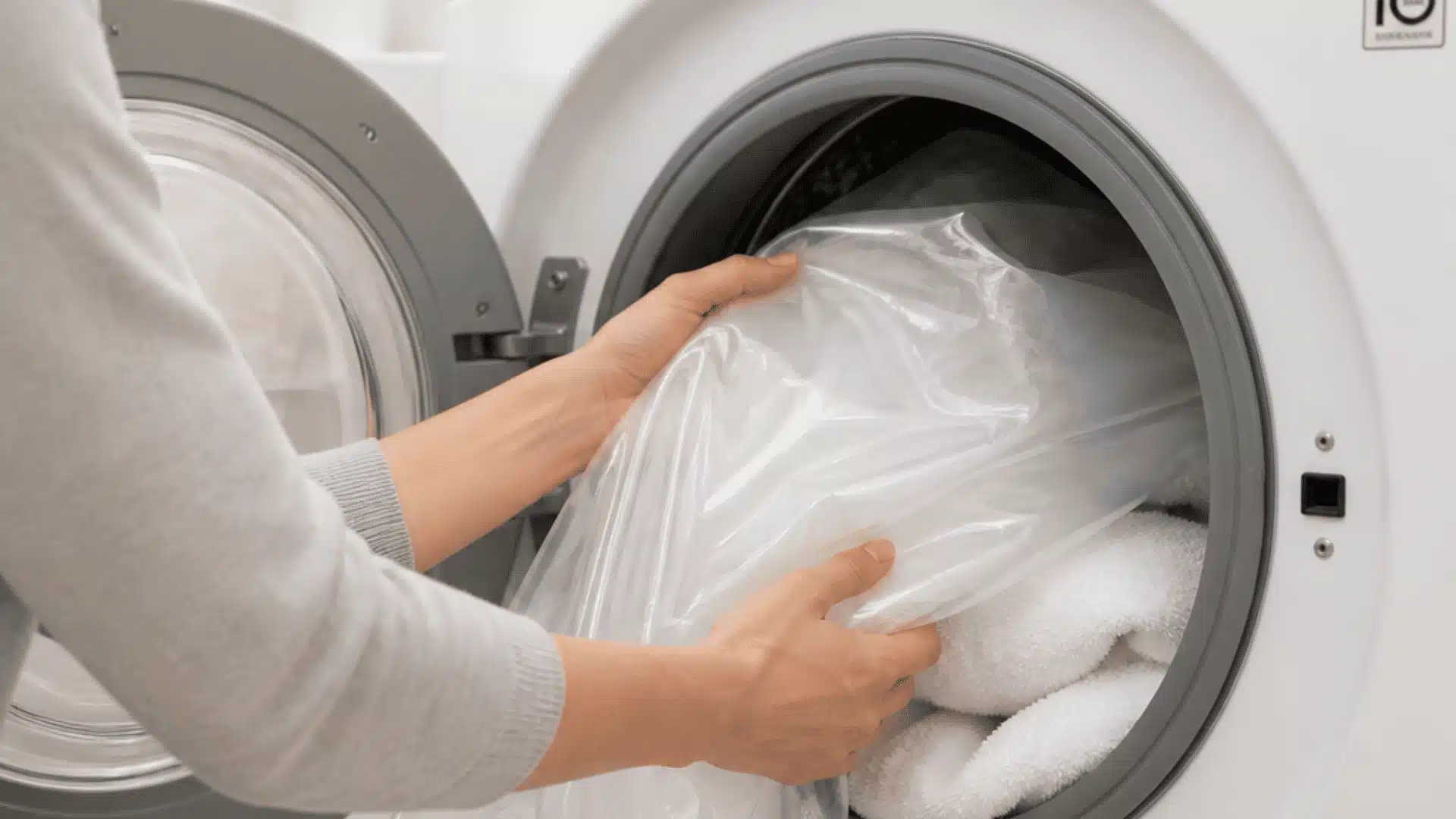
Plastic and vinyl shower curtains can be machine washed, but they need more care than fabric ones. The wrong water temperature or drying method can cause serious damage.
Machine Washing Plastic and Vinyl Curtains
Plastic and vinyl curtains can go in the washer, but the settings matter. Follow these steps to clean them safely:
- Remove the curtain and check for any tears before washing
- Place it in the washer with two to three towels
- Add a small amount of detergent and a cup of bleach
- Set the machine to a gentle cycle with cool or warm water
- Never use hot water settings on plastic or vinyl
Bleach works well here because plastic and vinyl are non-porous, making mildew removal quicker and more effective.
Hand Washing a Plastic Shower Curtain
Hand washing is a better option when the curtain has heavy soap scum buildup or feels too fragile for the washer.
- Fill a tub or bucket with warm water and add detergent or white vinegar
- Submerge the curtain fully and soak for 15 to 20 minutes
- Use a soft cloth or non-abrasive sponge to scrub the surface gently
- Avoid rough scrubbers as they leave scratches on the liner
Soap scum sticks heavily to plastic because of its slightly textured finish. Soaking first makes scrubbing much easier and reduces the effort needed to clean it.
How to Remove Mold and Mildew From Shower Curtains?
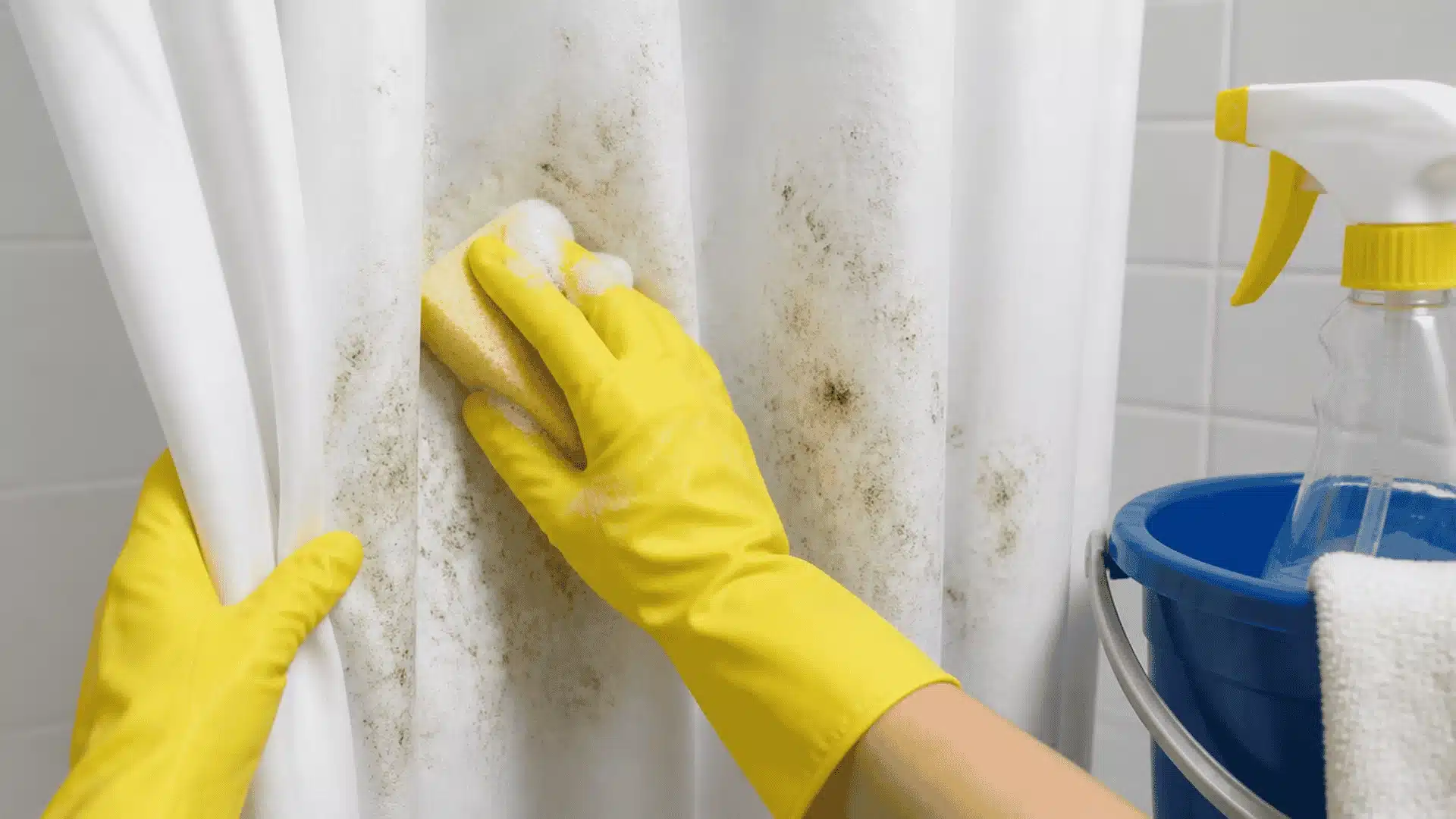
Mold and mildew are common on shower curtains, but they are not the same thing. Knowing what type of buildup is present helps choose the right cleaning approach.
Mold vs Mildew vs Soap Scum vs Hard Water Stains
These four types of buildup look similar but have different causes and need different cleaning approaches.
| Type | What It Looks Like | What Causes It |
|---|---|---|
| Mold | Black, green, or fuzzy patches | Trapped moisture and lack of airflow |
| Mildew | Flat, grey, or white powdery coating | Surface moisture sitting too long |
| Soap scum | Cloudy white or yellowish film | Soap and mineral residue buildup |
| Hard water stains | Chalky white spots or streaks | Mineral deposits from tap water |
Shower curtains collect mold quickly because they stay damp for long periods. Folds in the fabric or liner trap moisture and create the perfect condition for mold to grow.
Choosing the Right Cleaner: Vinegar vs Bleach
Both cleaning agents serve a unique purpose. Using the right one for the right situation makes removal faster and safer.
| Cleaner | Best Used For | When to Avoid |
|---|---|---|
| White vinegar | Light mildew, odors, mineral buildup | Heavy mold infestations |
| Bleach | Deep mold, stubborn stains, disinfecting | Colored fabric curtains |
Warning: Never Mix Bleach and Vinegar. It creates toxic chlorine gas. Always use one or the other, and rinse the curtain thoroughly before switching between the two.
How to Spot Treat Stubborn Stains
Now that the right cleaning agent has been identified, use this method to treat stubborn stains directly.
- Apply undiluted white vinegar or a diluted bleach solution directly onto the stain
- Let it sit for 10 to 15 minutes before scrubbing
- Use a soft brush or sponge to work the cleaner into the stain
- Rinse thoroughly with cool water after scrubbing
Cleaning removes visible mold but not the root cause. Mold spores return if moisture persists, and curtains with tears, black patches, or persistent odor should be replaced.
Safe Alternatives to Bleach
Bleach is not always the right choice, especially for colored fabric or households with children and pets. These alternatives work well for regular mold and mildew removal.
| Alternative | How to Use | Best For |
|---|---|---|
| Baking soda | Make a paste with water, apply, scrub, rinse | Light stains and deodorizing |
| Hydrogen peroxide | Spray directly, leave 10 minutes, rinse | Surface mold and mildew |
| Oxygen bleach | Mix with water per instructions, soak or spray | Deep stains on fabric curtains |
Natural cleaners work well for early-stage mold and regular maintenance cleaning. For heavy mold growth or deeply stained curtains, a stronger disinfecting method like bleach or oxygen bleach is necessary.
Cleaning a Shower Curtain Without Removing It
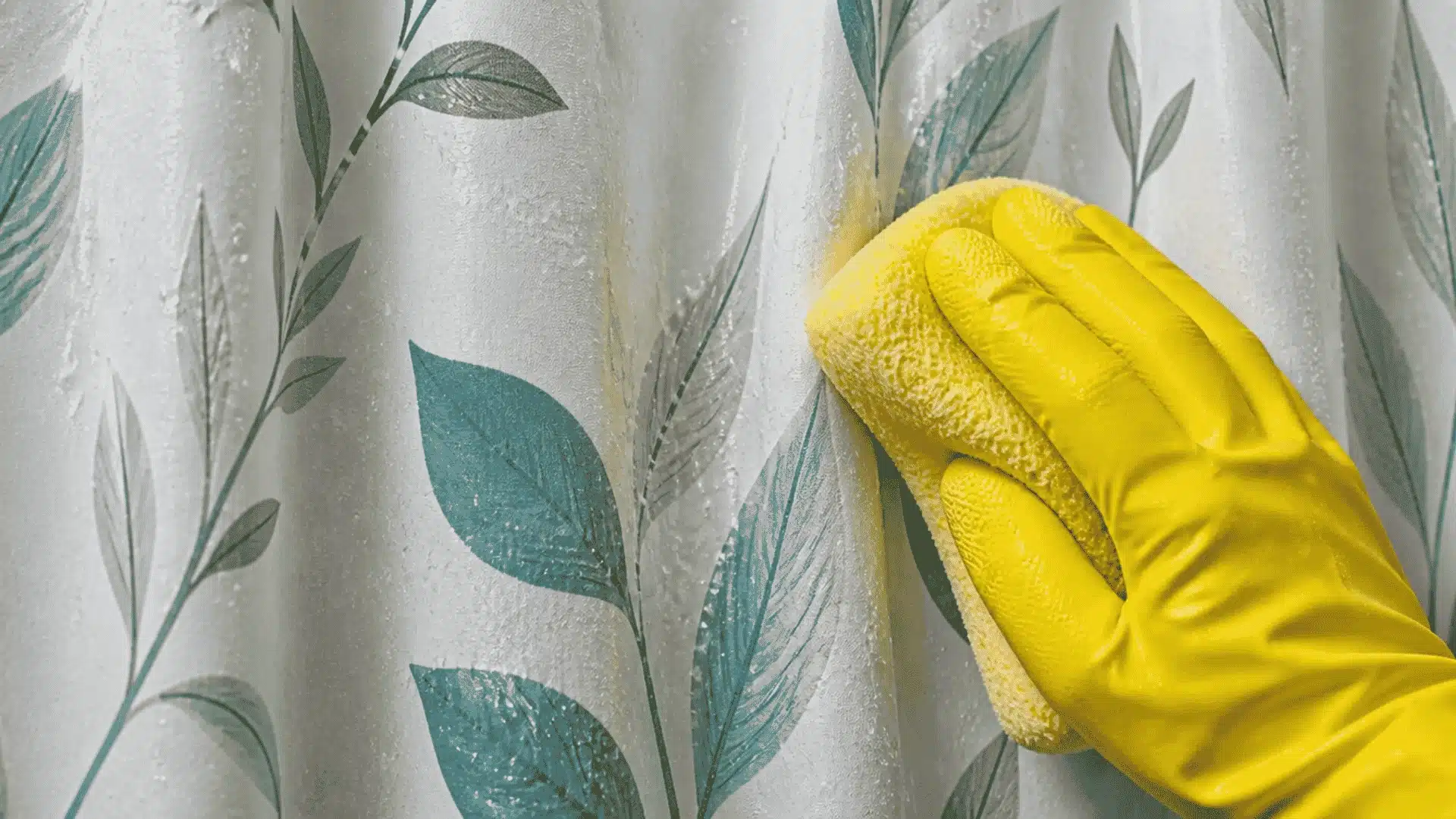
Taking down a shower curtain every time it needs cleaning is not always practical. A few simple methods can freshen it up while it stays right on the rod.
1. Spray Cleaning Method
A vinegar spray is the quickest way to clean the curtain in place. It needs no special equipment and works well for light mildew and odors.
- Mix equal parts white vinegar and water in a spray bottle
- Spray the solution directly onto the curtain surface
- Let it sit for 10 to 15 minutes to break down mildew and odors
- Wipe down with a soft cloth or non-abrasive sponge
- Rinse by running the shower over the curtain briefly
2. Baking Soda Scrub Method
Baking soda works well for visible stains that vinegar alone cannot fully lift. It is gentle enough to use on most curtain materials without causing scratches.
- Make a loose paste using baking soda and warm water
- Apply it directly onto visible stains or mildew spots
- Scrub gently with a soft sponge without taking the curtain down
- Rinse thoroughly with the showerhead after scrubbing
This approach works best for light maintenance cleaning between full washes. For deep mold, heavy soap scum, or persistent odors, taking the curtain down and machine washing it is still better.
Keep Shower Curtains Clean for Longer
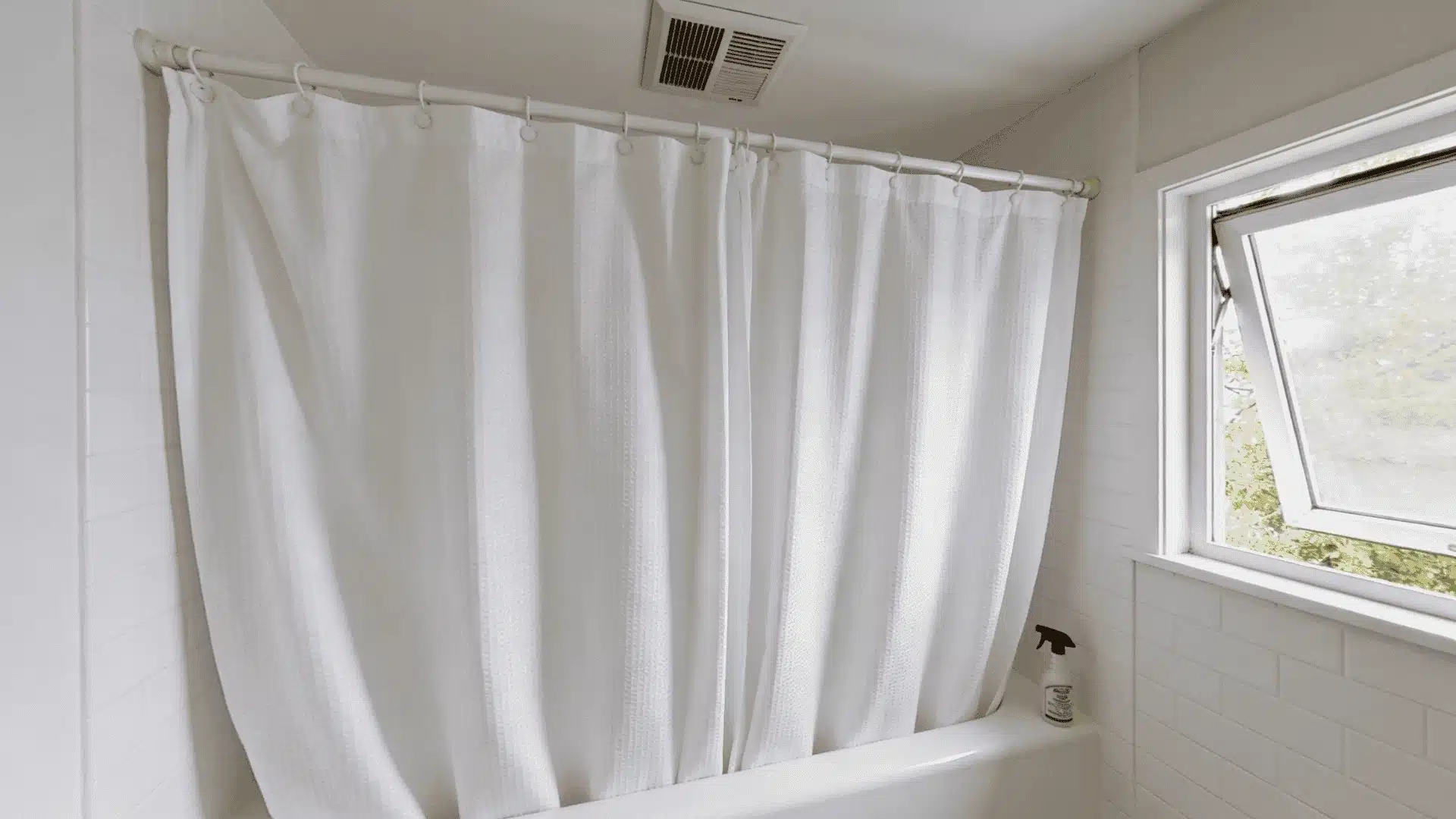
Keeping a shower curtain clean does not require deep cleaning every week. A few simple habits after each shower can slow down mold, mildew, and soap scum buildup significantly.
Spread the Curtain Open After Every Shower
Moisture trapped in the folds of a bunched-up curtain is the main reason mildew grows so fast. Spreading the curtain fully across the rod after each shower allows air to reach every part of it.
Good ventilation makes just as much difference. Running the exhaust fan or opening a window after showering removes excess moisture from the air and slows mold growth on all surfaces.
Pro Tip: Mix equal parts white vinegar and water, spray it onto the curtain after showering, and let it air dry without rinsing to keep it fresh between washes.
How Often to Clean Curtains and Liners?
Cleaning frequency depends on the curtain type and how often the shower gets used.
| Curtain Type | Recommended Cleaning Frequency |
|---|---|
| Fabric curtains | Once a month |
| Plastic or vinyl liners | Every two to three weeks |
| Both during heavy use | Every two weeks |
Sticking to a regular cleaning schedule prevents heavy buildup and keeps the curtain lasting longer.
Wrapping Up
Catching these signs early makes cleaning much easier. The longer buildup is left untreated, the harder it becomes to fully remove without replacing the curtain.
Knowing how to clean a shower curtain correctly comes down to matching the method to the material and not waiting until buildup becomes too difficult to remove.
A well-maintained curtain lasts longer, resists mold more effectively, and keeps the bathroom cleaner with far less effort between deep cleaning sessions.
Now you know the right cleaning method for each material type, how to handle mold safely, and what early warning signs of buildup to watch for.
Have a cleaning method that works well, or a tip picked up along the way? Drop it in the comments below and help others keep their curtains cleaner for longer.
Frequently Asked Questions
How Do Hotels Clean Shower Curtains?
Hotels typically remove fabric curtains and machine wash them with commercial detergent and hot water. Plastic liners are usually replaced rather than cleaned between guests.
How to Get a Shower Curtain White Again?
Soak the curtain in a warm water and oxygen bleach mixture for 30 minutes, then machine-wash on a gentle cycle to restore whiteness.
Can You Put a Shower Curtain and Liner in The Washer Together?
Yes, a shower curtain and liner can be washed together on a gentle cycle with cold water. Add two towels to help scrub both surfaces clean during the wash.