Why Sacramento Summers Age Balconies Faster Than Winters: A Decks & Balcony Field View

Ask why a balcony coating failed and most people say rain. It is the intuitive answer. Water leaks, so water must have broken the surface. In the Sacramento region that answer is half right. It is also the less useful half.
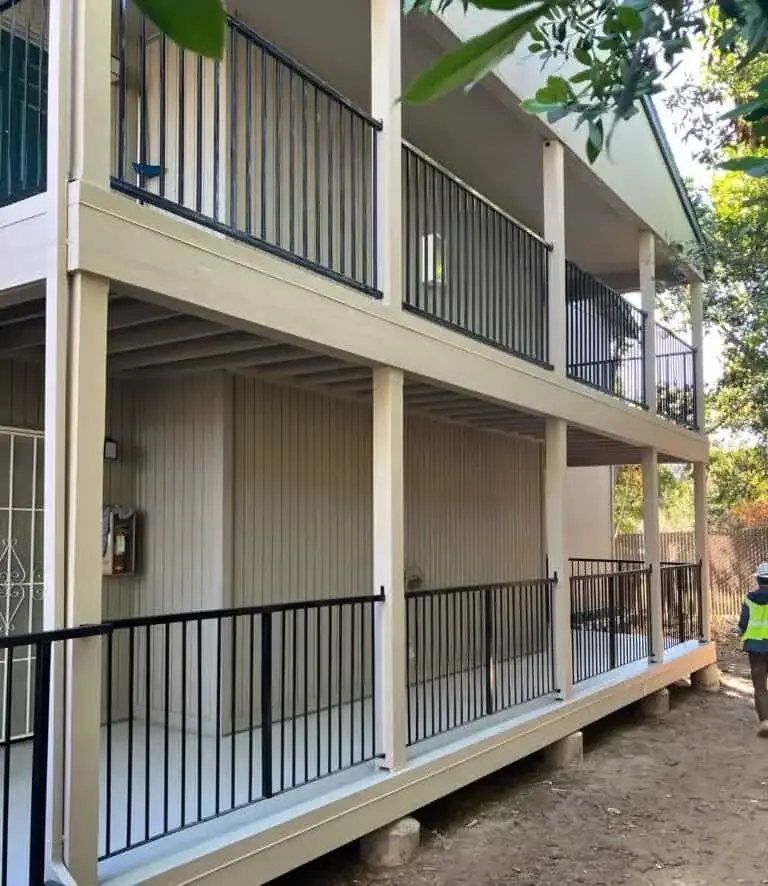
Rain finds the damage. Heat creates it. The Central Valley runs a long, dry, punishing summer. Then it delivers a short wet season that tests everything the summer loosened. The sequence repeats every year across Sacramento, Elk Grove, Roseville and the surrounding communities. D&B works throughout that region, and the local scope sits at https://www.decksandbalcony.com/california/sacramento/ . The failure happens in July. The phone call happens in December.
The Sun Does the Work
Air temperature is not the number that matters. Surface temperature is. A dark waterproof coating in full afternoon sun runs far hotter than the air above it. Sacramento afternoons pass 100°F routinely through July and August. The surface itself goes well beyond that.
Then the sun goes down. Valley nights cool sharply, which is pleasant for residents and hard on materials. The surface expands all afternoon and contracts all night. That cycle repeats for roughly four months without a break.
South and west elevations take the worst of it. The difference is usually visible on a single building. North-facing balconies hold up better than the ones facing the afternoon sun, even with the same coating applied on the same day.
What a Heat Cycle Actually Does
Thermal movement is slow and cumulative. Nothing fails on a single hot day. Over several seasons the effects stack up.
- Coatings lose flexibility under prolonged ultraviolet exposure.
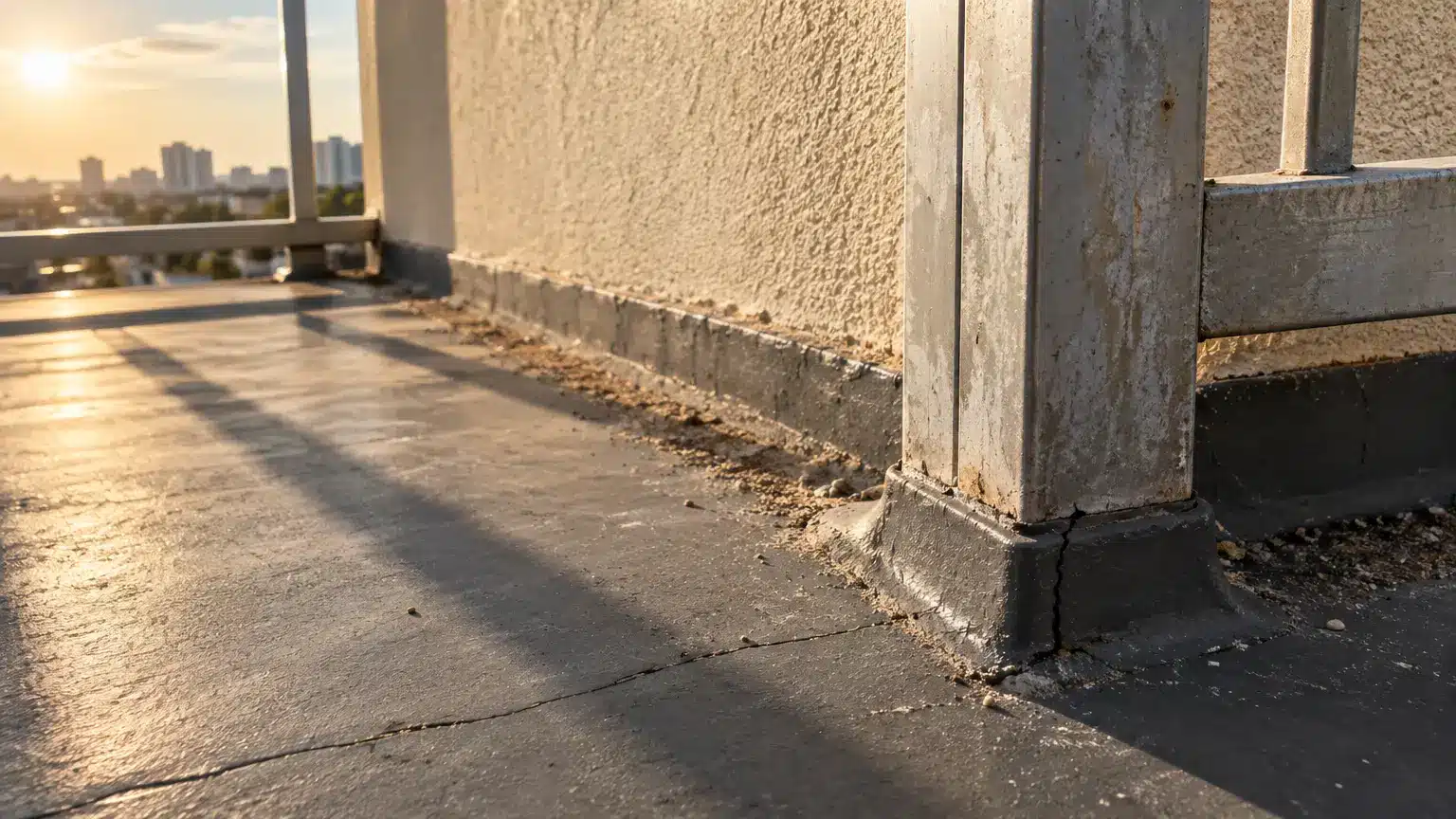
- Hairline cracks open at corners and changes of plane, where movement concentrates.
- Sealant at door thresholds and wall junctions hardens and pulls away from one side.
- Fasteners work loose as the material around them expands and contracts.
- Adhesion weakens at the edges first, because edges heat and cool fastest.
- Color fades unevenly, which is cosmetic but marks the areas taking the most exposure.
Wood Moves Twice a Year
Framing behaves the same way on a longer clock. Valley summers dry timber out thoroughly. Boards shrink, gaps open between them, and connections lose a little of their grip.
The wet season reverses it. Moisture returns, the wood swells, and everything closes up again. One cycle causes nothing. Repeated over many seasons, the swing leaves loose fasteners, opened seams and a railing that moves under a hand.
That annual swing also explains a common complaint. Owners recoat a balcony in August, on beautifully dry timber. The finish then fails in March. The substrate was dry because the season was dry, not because the structure was sound. A moisture meter in August tells you less here than it does on the coast.
Metal Moves on Its Own Schedule
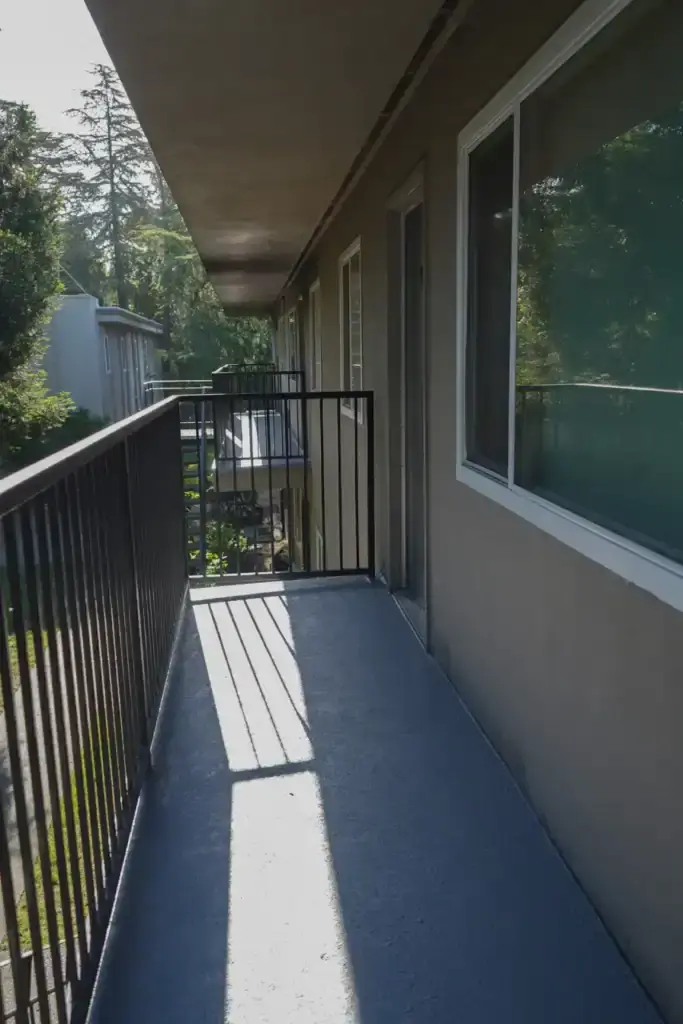
Railings complicate the picture. Aluminum and steel expand more than wood does over the same temperature swing, and they respond faster. A metal post therefore works against its base every single day of the summer.
The base is the problem. Every post is a deliberate hole through the waterproofing, sealed at installation and expected to stay sealed. Daily movement grinds at that seal. Post bases are among the first places a Sacramento balcony starts letting water in, and they are easy to overlook because the coating around them still looks intact.
What Stays Wet Through a Dry Summer
A dry climate does not mean dry balconies. Several things keep water on a surface long after the last rain.
Irrigation is the first. Spray heads aimed at landscaping reach ground-floor decks and stair stringers daily. This runs all summer, exactly when nobody is thinking about water. Overspray is easy to miss because it dries within the hour. Air conditioning condensate is the second. Line-set drips land in the same spot for months. Planters are the third. They are also the most common finding on any balcony survey. A container with a saucer holds water against the coating permanently.
Debris ties them together. Valley summers are dusty, and dust arrives with no rain to wash it off. Leaves and grit collect along the wall line and at the low edge, then sit there for months. That band holds moisture. It also shades the coating, so the material underneath ages differently from the field. And it hides the early cracking completely.
Why December Exposes July
The first serious rain of the season is a test, not an event. It arrives after four months of thermal cycling and finds every crack the summer opened.
Water enters through hairline separations that were invisible in August. Nobody caused them in December. It reaches sheathing and joists within hours. Within a few weeks a stain appears indoors. The property logs its first leak of the year. By then the mechanism is months old.
This sequence explains a scheduling error that costs Sacramento properties real money. Repairs get budgeted in winter, when leaks are visible. They get executed in spring, when the season allows. The work therefore runs a full summer behind the damage.
Working With the Valley Calendar
Regional weather gives a clear window and an obvious sequence.
- Survey balconies and walkways in late summer, while summer damage is at its most visible.
- Take moisture readings before the wet season, so results reflect the structure and not recent rain.
- Schedule membrane work for spring or early autumn, avoiding both peak surface heat and the rain.
- Watch cure temperatures. Many products have an upper limit as well as a lower one.
- Clear debris and adjust irrigation before the work, not after.
- Book the following year’s inspection while the current scope is still fresh in everyone’s mind.
The Compliance Clock Runs on the Same Calendar
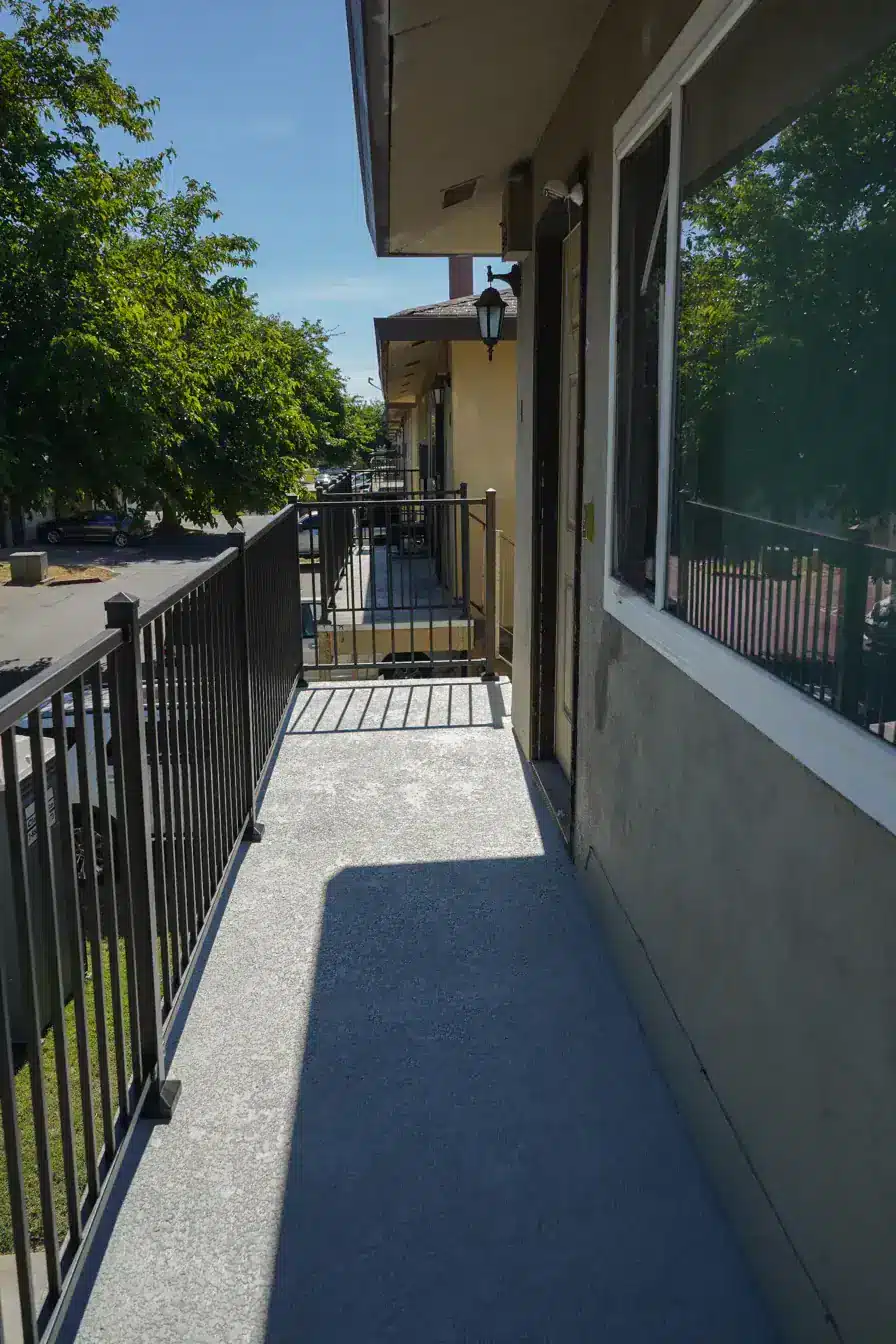
California inspects balconies, walkways and stair landings as exterior elevated elements. Rental properties of three or more units fall under SB 721 on a six-year cycle. Association-managed condominiums fall under SB 326 on a nine-year cycle. Both first deadlines have passed, and SB 721 penalties reach $500 per day per building.
Six summers pass between SB 721 inspections. In this climate that means six full seasons of daily expansion and contraction on every square foot of coating. Treat the report as a one-off event and the next inspection arrives with the building in worse shape. Clear debris, fix drainage and renew sealant each year, and it does not.
Plan Around the Season, Not Around the Leak
Sacramento gives building owners something the coast does not. The dry stretch is long, and it is predictable. Using it means deciding in summer rather than reacting in winter.
D&B Construction offers a free on-site assessment across the Sacramento region, with no obligation. It covers the balcony surface, the flashing and the drainage, and includes moisture readings. A detailed written estimate follows within five business days. Booking it before the first storm is considerably cheaper than booking it after. Summer is when the evidence is easiest to read.