What Everyone Should Consider When Selecting Roofing Materials for Long-Lasting Performance

Roofing contractors consider dozens of details on every project, but what to consider when selecting roofing materials ultimately comes down to climate, budget, building structure, and expected lifespan.
The roof is the single most exposed surface on any structure. It absorbs sun, wind, rain, and temperature swings year after year. Choosing correctly the first time saves callbacks, protects the contractor’s reputation, and keeps homeowners satisfied for decades.
This guide breaks down the practical considerations that separate a roof built to last from one that fails prematurely.
Climate and Regional Weather Patterns
Before any material gets ordered, a contractor has to study the climate where the structure sits. Coastal regions bring salt air and high humidity that accelerate corrosion on metal fasteners and flashing components.
Northern climates demand materials that can resist ice damming and repeated freeze-thaw cycles without cracking. In the desert Southwest, UV exposure breaks down lesser-quality products within a handful of years, while hurricane-prone areas require wind ratings that meet strict local codes.
Roofing professionals often start by checking the wind uplift rating and impact resistance class of any product under consideration. A shingle rated for a mild inland climate will not perform the same way on a coastal home facing sustained gusts.
Matching the material to the region isn’t optional; it’s the basis every other decision builds on.
Material Lifespan and Durability Expectations
Homeowners rarely ask how long a roof will last until something goes wrong. Contractors should set that expectation from the start.
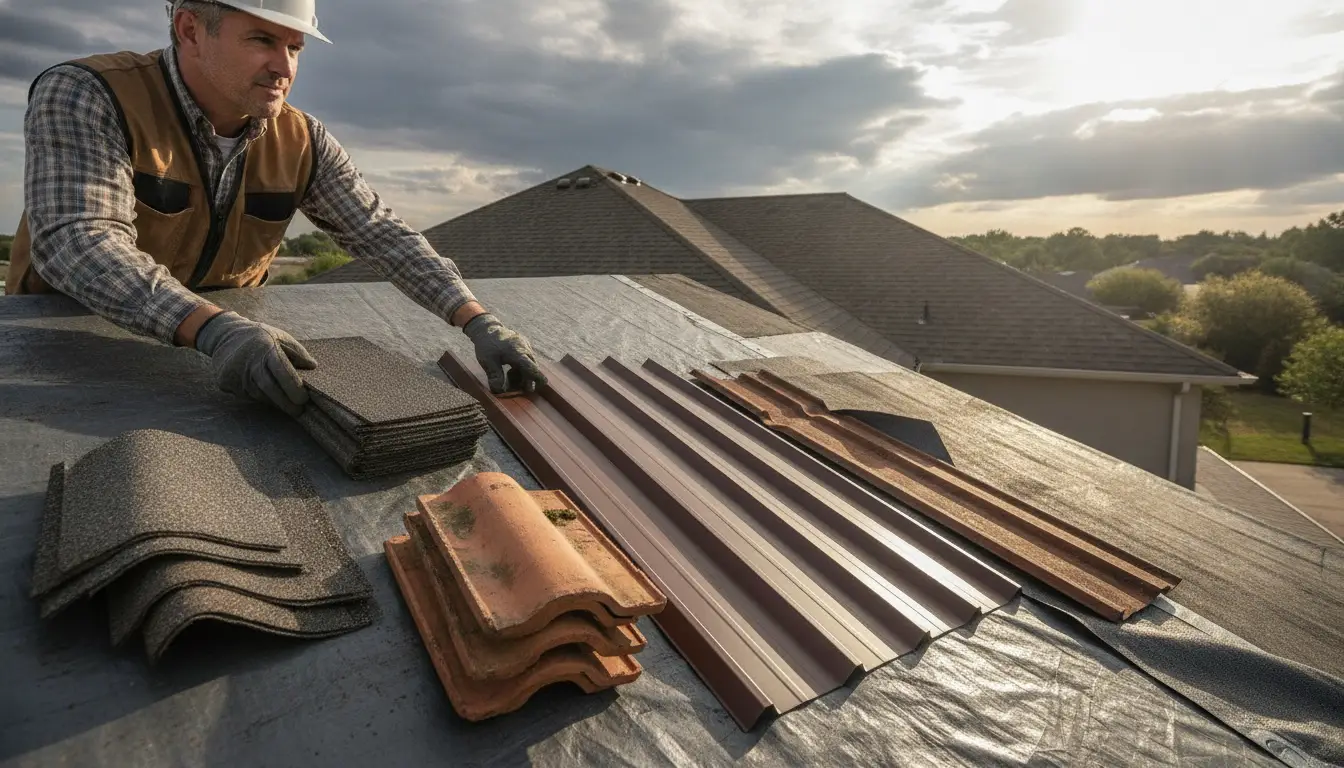
Asphalt shingles remain the most common choice for residential work because they balance cost, availability, and a service life that typically runs between 20 and 30 years depending on quality and installation.
Metal roofing can stretch past 50 years with minimal maintenance, making it a strong option for clients planning to stay in a home long term.
Tile and slate offer even longer lifespans but come with added structural weight that has to be accounted for during framing review.
Lifespan also depends heavily on what goes underneath the visible surface. Underlayment, ventilation, and proper flashing all determine whether a material reaches its full rated life or fails years ahead of schedule.
A premium shingle installed over poor ventilation will still trap heat and moisture, shortening its usable years regardless of the manufacturer’s warranty claims.
Roof Slope, Pitch, and Structural Compatibility
Not every material works on every roof shape. Low-slope and flat roofs usually call for rolled products or membrane systems designed to shed water across a gentler grade, since standard shingles rely on steeper pitches to drain properly.
Steep-slope residential roofs open up more options, from traditional shingles to standing-seam metal panels and architectural tile.
Contractors also need to check the existing structural framework before committing to a heavier material. Older homes built for lightweight asphalt may need reinforcement before a switch to slate or clay tile can make sense.
Skipping this step creates safety concerns down the line and can void manufacturer warranties tied to proper installation specifications.
Flashing, Sealants, and Water Management Details
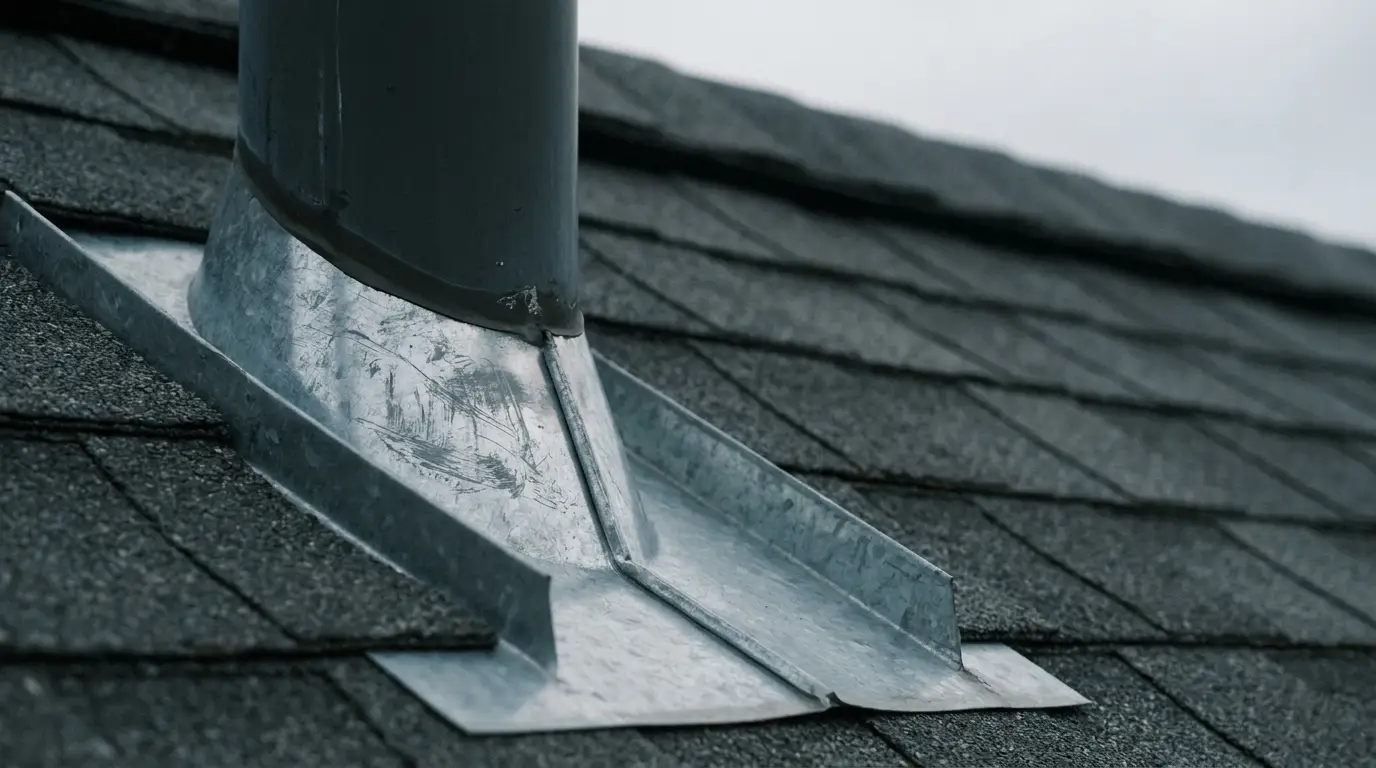
Materials chosen for the roof’s main surface only tell part of the story. Water intrusion most commonly starts at transitions: chimneys, vent pipes, valleys, and skylights.
Properly installed roof flashing directs water away from these vulnerable points and prevents it from working underneath the primary roofing layer.
Contractors who cut corners on flashing tend to see leaks resurface within the first heavy storm season, regardless of how strong the shingles or panels above them are rated.
Sealing details deserve the same attention as the visible surface. Quality coating and sealants applied at seams, fastener penetrations, and edge details close gaps that would otherwise let moisture creep in over time.
On low-slope and metal roofing systems especially, the right sealant product extends service life by protecting joints that experience the most thermal movement throughout the year.
Ventilation and Attic Airflow
A roof’s performance depends on what happens beneath it as much as what sits on top. Poor attic ventilation traps heat in summer, forcing shingles to age faster from the underside, and traps moisture in winter, leading to mold growth and wood rot in the decking.
Ridge vents, soffit vents, and proper insulation placement work together to keep air moving and temperatures stable across seasons.
Contractors evaluating a full reroof should always inspect existing ventilation before installation begins. Adding new material over an outdated or blocked ventilation system sets the project up for early failure, no matter how durable the surface product is on its own.
Budget, Labor, and Long-Term Value
Upfront cost matters to every client, but the cheapest material rarely delivers the best long-term value. Contractors serve their clients well by presenting a straightforward comparison of material cost against expected lifespan and maintenance needs.
A metal roof costs more initially than asphalt shingles but can outlast two or three shingle replacements over the life of a home, changing the math considerably for homeowners planning to stay put.
Labor complexity also affects the total project cost. Standing-seam metal and clay tile require specialized installation skills and longer timelines than standard shingles.
Building that labor consideration into the estimate upfront avoids budget surprises mid-project and keeps the client relationship on solid footing.
Local Building Codes and Warranty Requirements
Every region enforces its own building codes covering fire rating, wind resistance, and material specifications.
Contractors need to confirm local code requirements before finalizing material selection, since a product that performs well in one jurisdiction may not meet minimum standards in another.
Manufacturer warranties add another layer to check, as most require specific installation methods and approved accessory products to remain valid. Straying from those specifications, even with a comparable substitute, can void coverage the homeowner is counting on.
Selecting Materials That Perform for the Long Haul
Selecting the right roofing material takes more than picking a color or matching a budget number. Climate, structural compatibility, ventilation, flashing details, and long-term value all shape a decision that will affect a home for decades.
Contractors who walk through each of these considerations methodically deliver roofs that perform as promised and have satisfied clients who call them back for their next project.