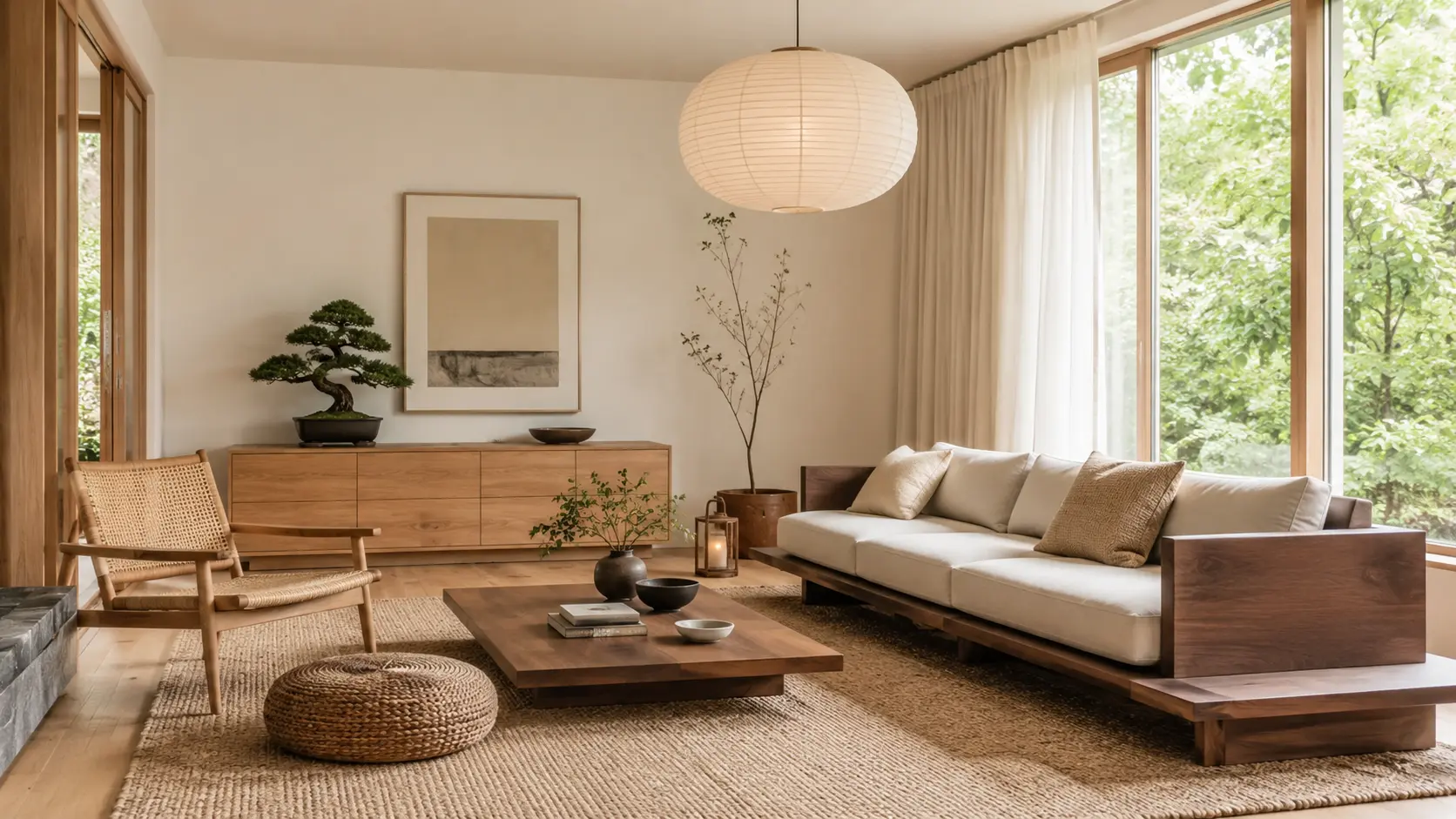
Japanese Interior Design: Principles, Elements and the Japandi Style

A cluttered room pulls at your attention all day. You move things around, and it still feels heavy. Japanese interior design solves this, not through a full remodel, but through a different way of deciding what stays.
This post covers the core principles behind the style, the materials and colors that define it, how to apply it room by room, and exactly how it pairs with Scandinavian design to create the warmer Japandi look.
You’ll also find common mistakes that undo even well-planned spaces, and budget-friendly ways to shift your home toward this style without replacing everything.
What Is Japanese Interior Design?
Japanese interior design is a style built on simplicity, natural materials, and quiet functionality. Every object has a purpose, and every room has breathing room.
It grew from centuries-old principles like wabi-sabi, the appreciation of imperfect and aged beauty, and ma, the intentional use of empty space.
Traditional homes used natural wood, paper screens, and tatami mats instead of heavy furniture. This style works well in small spaces and fits most budgets. It also offers a clear alternative to rooms that feel busy or trend-driven.
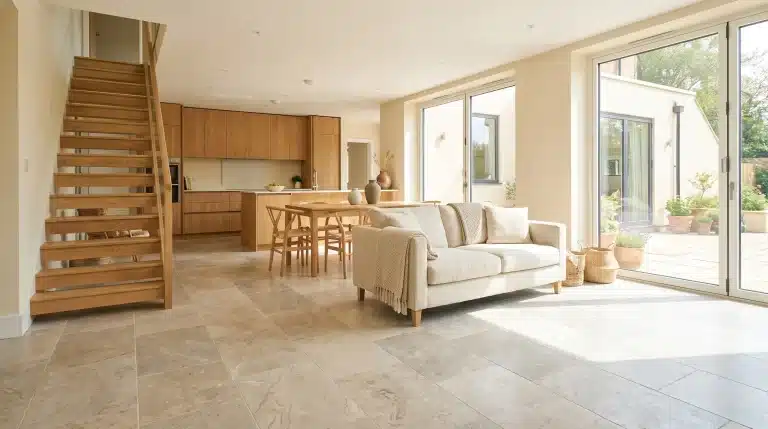
Japandi combines this minimalism with Scandinavian warmth. Scandinavian style alone can feel cold, while Japanese style alone can feel too spare for Western homes, so the two balance each other out.
The Core Principles of Japanese Interior Design
These five principles shape nearly every decision in a Japanese-style room, from furniture choice to color.
- Minimalism with Purpose: Japanese minimalism isn’t about having an empty house. It’s about keeping only what earns its place. A room with three well-chosen pieces feels more finished than one with ten random ones.
- Wabi-Sabi (Beauty in Imperfection): Wabi-sabi celebrates natural wear, uneven textures, and aged materials instead of hiding them. A cracked ceramic bowl or a weathered wood table fits right into this philosophy, since perfection was never the goal.
- Ma (The Beauty of Empty Space): Ma refers to the deliberate use of empty space between and around objects. It gives a room room to breathe and lets the eye rest instead of jumping from one object to the next.
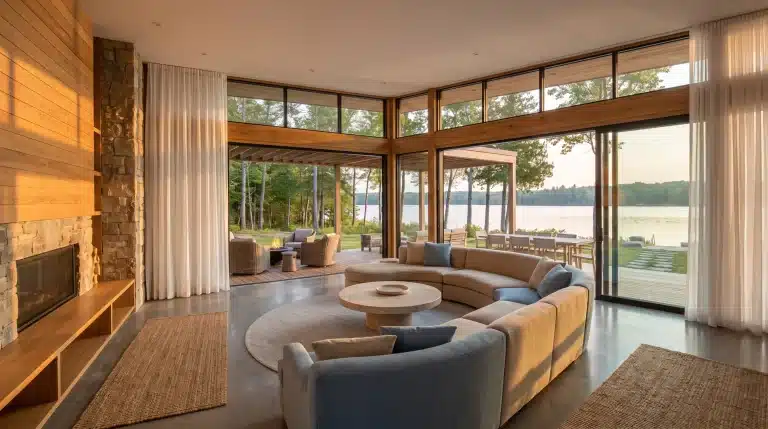
- Connection with Nature: Japanese interiors bring the outdoors in through natural materials, indoor plants, and large windows. Wood, stone, and paper are chosen because they age and change the way natural materials do.
- Functional Living Over Decoration: Every item, from a storage chest to a floor cushion, is chosen first for how it’s used. Decoration comes second, and only if it doesn’t get in the way of daily life.
Essential Elements of Japanese Interior Design
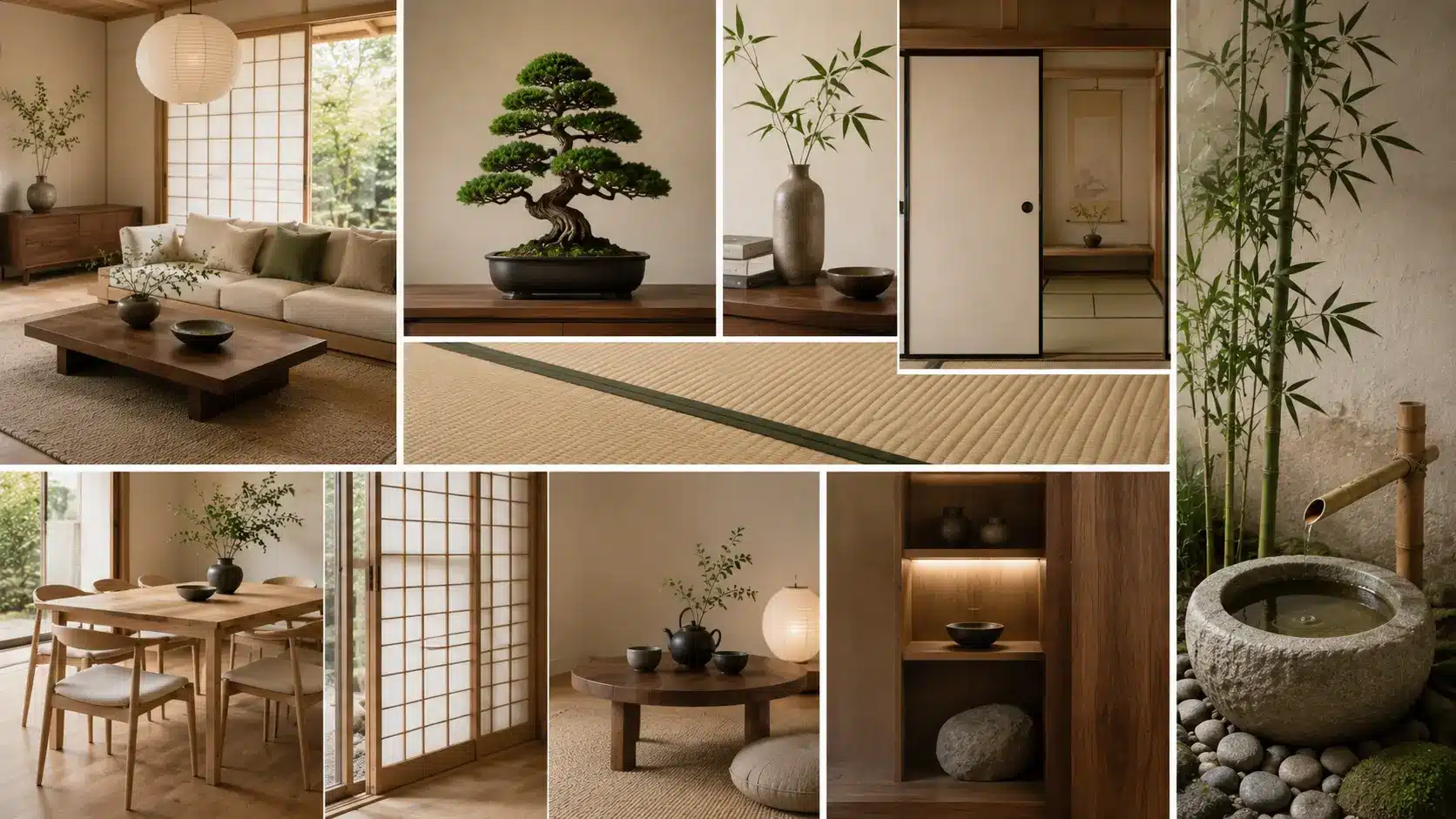
These are the materials and features that recur in Japanese-style rooms.
1. Natural Wood
Wood shows up in flooring, furniture, and ceiling beams, usually left in its natural tone rather than painted or heavily stained.
Over time, the wood darkens and develops a patina, which fits right into the wabi-sabi appreciation for materials that age visibly.
2. Tatami Mats
These woven straw mats define traditional floor space and set a soft, grounded feel underfoot.
They also help regulate humidity and give off a faint, grassy scent that many associate with traditional Japanese rooms.
3. Shoji Screens
Paper-paneled screens divide rooms while still letting light pass through, keeping spaces flexible without permanent walls.
They can slide open fully to combine two rooms or close for privacy, which makes them especially useful in smaller homes.
4. Sliding Doors
Sliding doors save space and allow rooms to open into each other or close off completely, depending on the need.
Unlike hinged doors, they don’t require clearance to swing open, so they work well in tight hallways and compact layouts.
5. Low Furniture
Furniture sits close to the floor, from platform beds to low tables, which keeps rooms feeling open and grounded.
This lower sightline also makes ceilings feel higher, and rooms feel more spacious than they actually are.
6. Neutral Earth-Tone Colors
Beige, taupe, warm white, and soft brown dominate Japanese interiors, creating a calm backdrop for natural materials.
These tones rarely go out of style, which is part of why the look holds up for years without feeling dated.
7. Indoor Plants
A single well-placed plant, like a bonsai or a peace lily, adds life to a room without disrupting its simplicity. Choosing one plant with intention says more than scattering several smaller ones around a space.
8. Natural Lighting
Large windows and paper screens soften and spread daylight throughout the day, rather than relying on artificial light. As the light shifts from morning to evening, it changes the mood of the room without any extra effort.
9. Stone and Bamboo Accents
Small stone elements and bamboo detailing add texture and an outdoor feel without overwhelming the space. Both materials are durable and low-maintenance, which makes them practical as well as decorative.
10. Noren Fabric Dividers
A noren is a fabric panel hung between rooms or in doorways. It serves as a soft room divider while still allowing movement between spaces.
Unlike shoji screens, noren panels are lightweight and easy to swap out seasonally, which makes them a low-cost way to bring an authentic Japanese detail into any home.
Traditional Japanese Interior Design vs Modern Japanese House Interior
The core philosophy hasn’t changed, but the materials and finishes have shifted noticeably over time.
A modern Japanese house interior retains the values of simplicity and natural materials while replacing traditional elements like tatami mats with polished concrete floors or engineered wood.
| Feature | Traditional | Modern |
|---|---|---|
| Furniture | Very low, floor-based, minimal pieces | Low to mid-height, mixes in modern materials |
| Flooring | Tatami mats over wood subfloor | Hardwood, polished concrete, or tatami accents |
| Materials | Rice paper, bamboo, raw wood | Engineered wood, glass, matte metals |
| Colors | Muted earth tones and natural wood | Earth tones with added charcoal or black |
| Decor | Minimal, seasonal, often handmade | Minimal with select modern art or lighting |
How to Bring Japanese Interior Design Into Your Home
Here’s how the style translates into specific rooms, whether you’re working with a full house or a small apartment.
1. Living Room
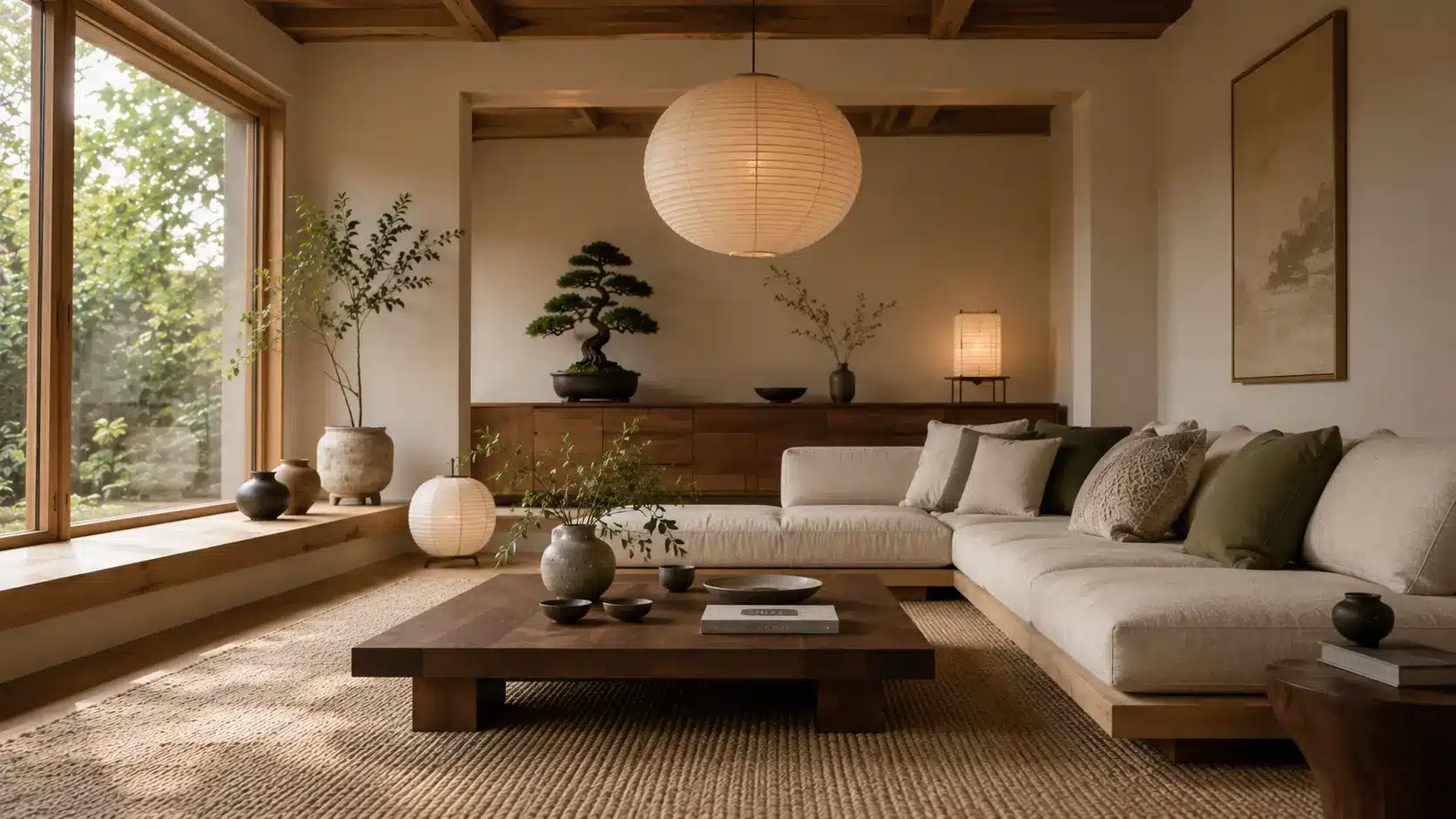
Use a low sofa or floor seating, a natural wood coffee table, and one statement plant. Keep wall décor to a single piece rather than a full gallery wall.
A woven rug in a neutral tone can anchor the seating area without competing with the furniture for attention.
For a warmer take on this layout, Japandi living rooms follow the same material rules with slightly softer textile layering.
2. Bedroom
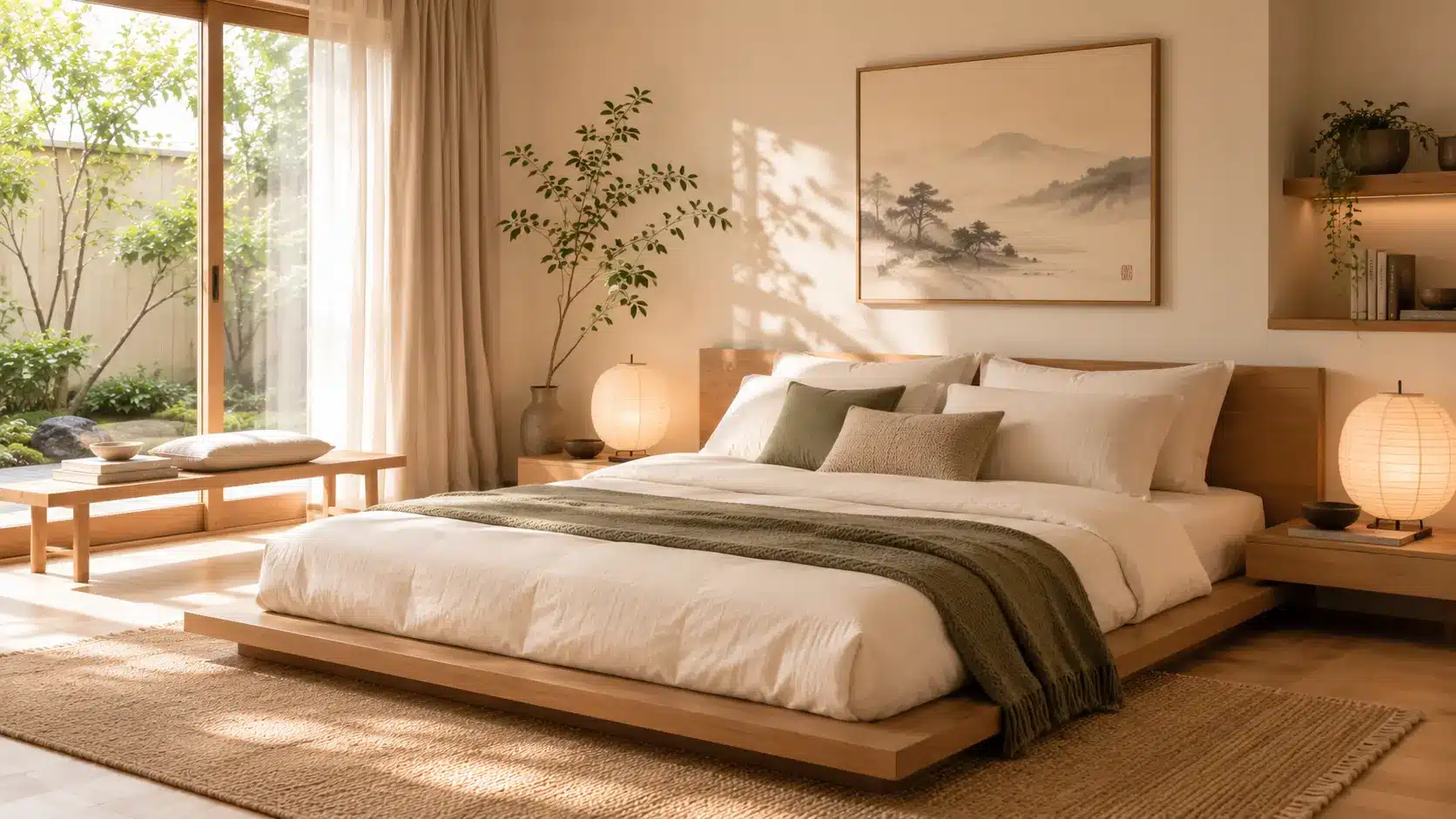
A platform bed with linen or cotton bedding creates the calm, grounded look this style is known for. Skip a tall headboard in favor of a low wood frame or none at all.
Keep nightstands to one or two small pieces, and store extra linens or clothing out of sight to preserve the room’s sense of calm.
3. Kitchen
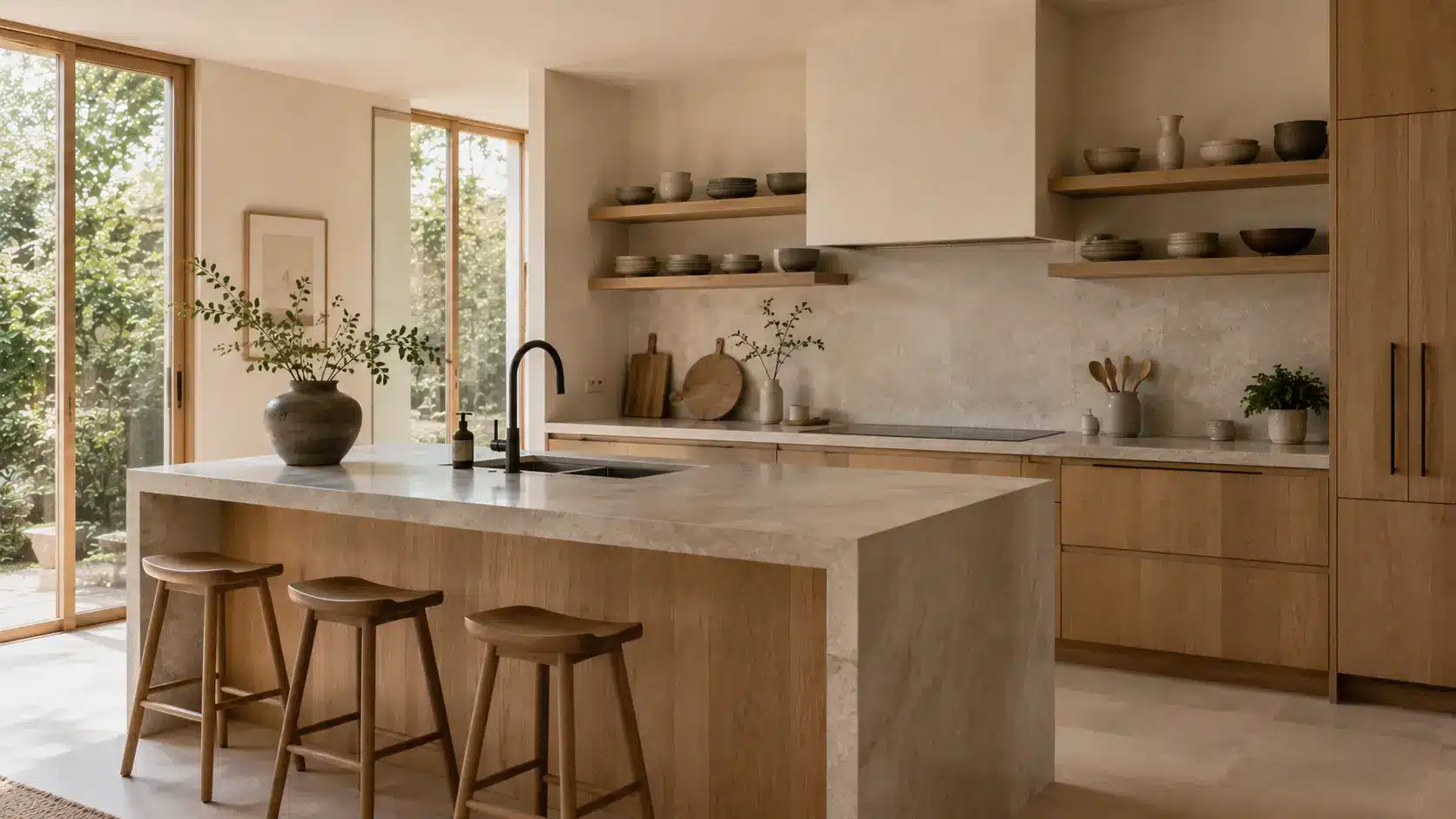
Open wood shelving and matte hardware keep the kitchen functional without feeling cluttered. Store small appliances out of sight to keep counters clear.
A single ceramic bowl or a small potted herb on the counter adds warmth without breaking the minimal look.
For a full walkthrough of this approach, a calm Japanese kitchen covers specific material and storage choices in detail.
4. Bathroom
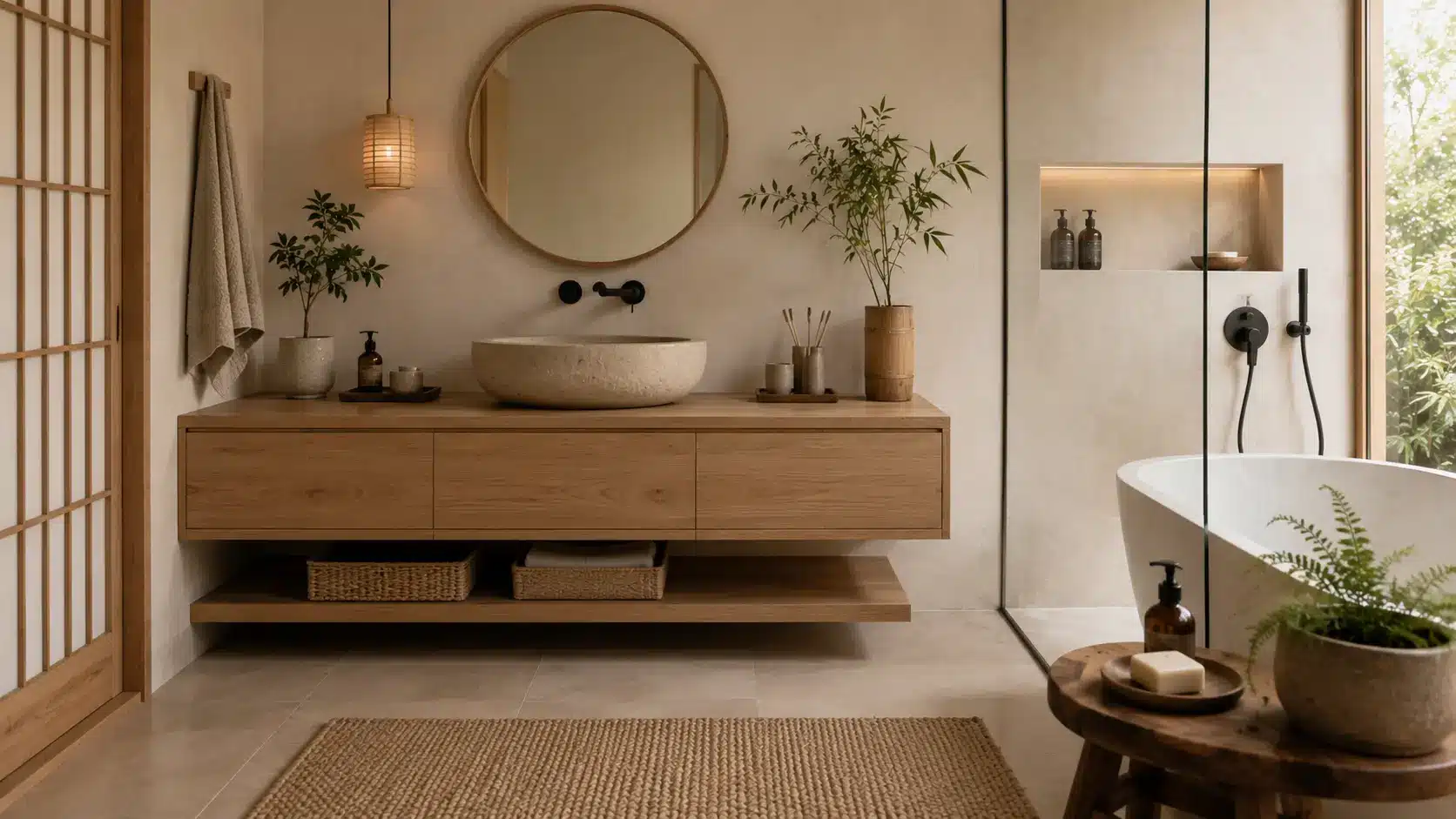
Stone tile, a wood vanity, and woven baskets bring a spa-like calm to the bathroom. Keep bottles and products tucked into closed storage.
A simple bamboo mat by the tub or shower adds texture underfoot while staying true to the style’s natural materials.
5. Entryway
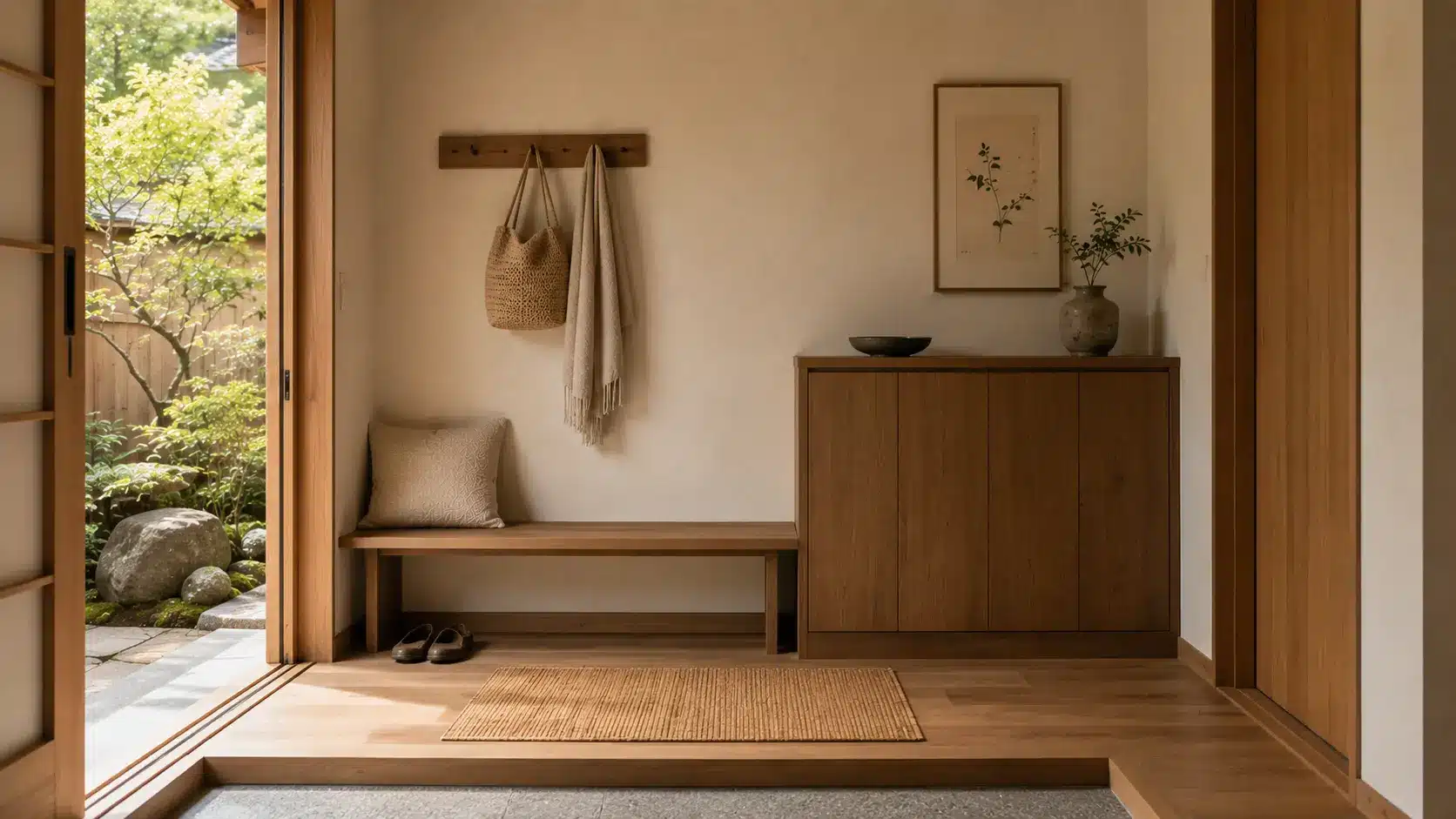
A low wood bench and hidden shoe storage keep the entry functional. A single hook rail or small tray for keys is all the decoration this space needs.
Keep the floor as clear as possible so the entry feels open the moment someone walks in.
6. Small Apartment
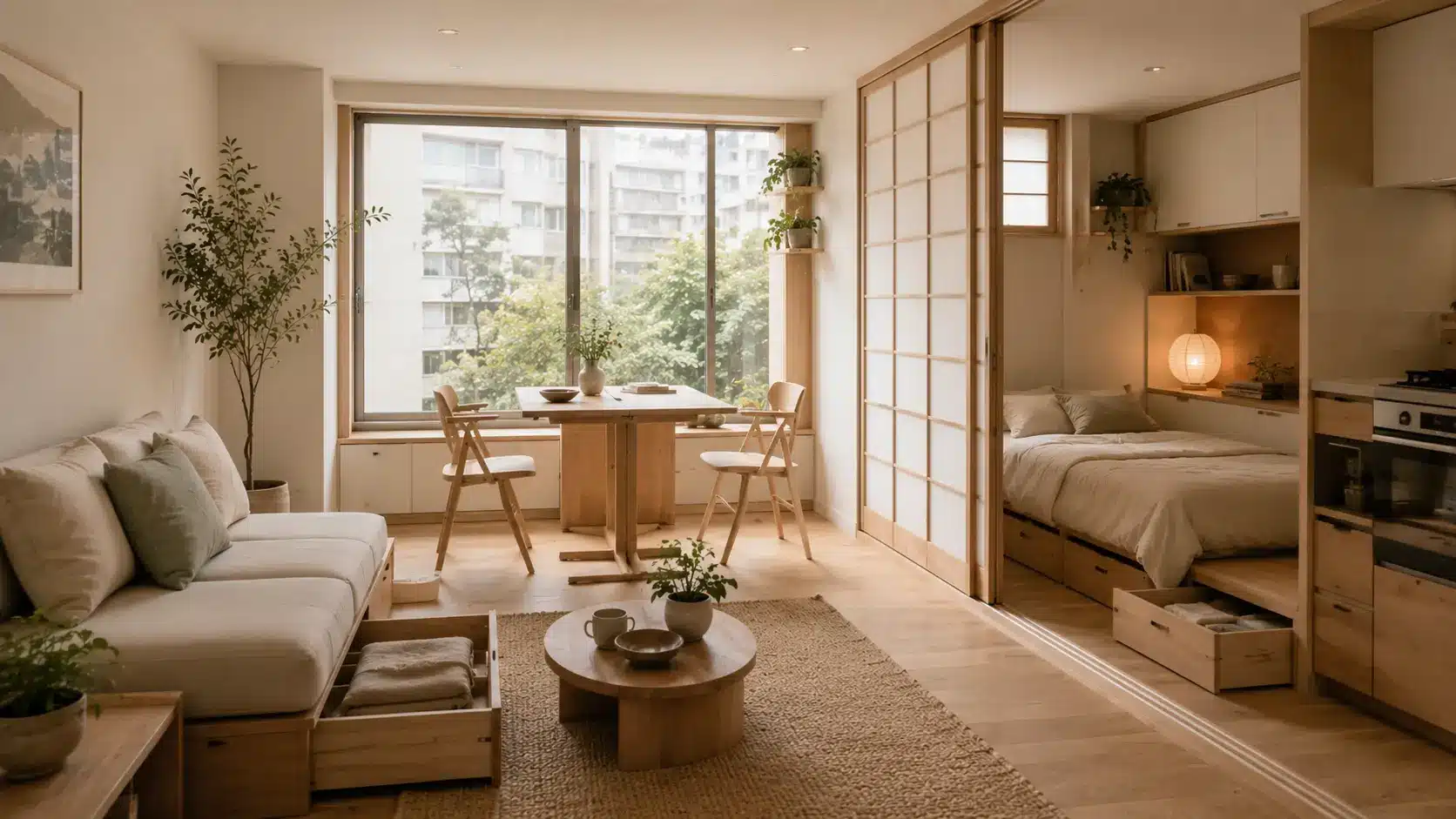
Low furniture, sliding or folding screens, and multi-purpose pieces make Japanese design especially useful in small spaces.
A daybed that doubles as seating, or a table that folds flat, can save significant floor space.
Choosing furniture that serves two purposes matters more here than in a larger home, since every piece takes up space that could otherwise stay open.
Best Color Palette for Japanese Interior Design
| Color | Creates |
|---|---|
| Beige | A warm, neutral base that works in every room |
| Warm White | Brightness without the coldness of pure white |
| Taupe | A grounded, soft neutral for walls or furniture |
| Sand | A light, natural tone tied to the outdoors |
| Olive Green | A muted, earthy accent inspired by nature |
| Charcoal | Depth and contrast without feeling harsh |
| Walnut Brown | Warmth and richness through wood tones |
Stick to two or three tones per room. Going beyond that tends to break the calm this style depends on. Neutral doesn’t mean flat; charcoal against warm white creates contrast without needing color.
Materials That Define Japanese Interior Design
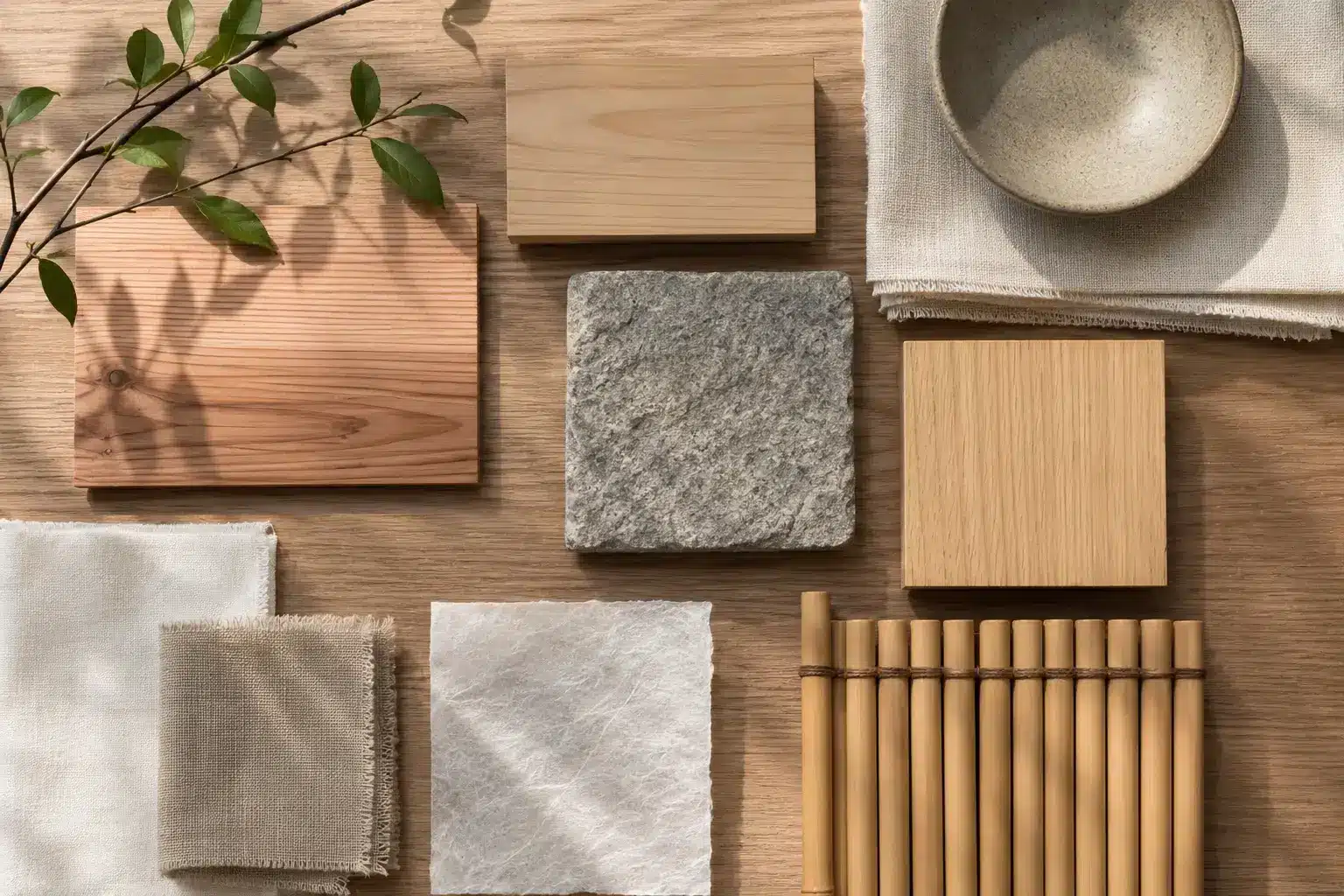
- Cedar: Best used in flooring and ceiling beams. It ages well and has a natural, calming scent.
- Oak: Works well in furniture and cabinetry. It’s durable and pairs with almost any neutral palette.
- Bamboo: Suited to blinds, screens, and small furniture. It’s lightweight, renewable, and visually soft.
- Stone: Fits best in the bathroom or entryway. It adds texture and a grounded, natural feel.
- Linen: Ideal for curtains and bedding. It’s breathable and ages with a soft, worn look.
- Cotton: Common in bedding and cushions. It’s simple, natural, and easy to maintain.
- Rice Paper: Used in screens and lighting. It diffuses light for a soft, warm glow.
- Clay and Ceramic: Used in bowls, vessels, and tiles. Slight variations in finish and shape add character without competing with the room’s neutral palette.
Japanese Interior Design Mistakes to Avoid
These are the slip-ups that break the calm this style depends on, even in an otherwise well-planned room.
1. Overdecorating the Room
Adding too many objects, even small ones, breaks the calm this style depends on. If a shelf looks busy, it’s already too full.
2. Using Glossy Finishes Everywhere
High-gloss surfaces clash with the natural, matte materials central to Japanese design. Stick to raw or lightly finished wood and stone.
3. Ignoring Natural Light
Heavy curtains and blocked windows work against a style built around daylight. Keep window treatments light and easy to open fully.
4. Mixing Too Many Colors
Sticking to a tight neutral palette matters more in this style than in most others. Two or three tones per room is usually the limit.
5. Buying Decor Instead of Functional Pieces
Purely decorative objects with no daily use run counter to the function-first philosophy behind Japanese design. Choose pieces that do something, not just pieces that look good.
6. Treating It as an All-or-Nothing Style
You don’t need to replace every piece of furniture at once. Start with one room, or even one shelf. Remove what isn’t earning its place. Then evaluate how the room feels before adding anything new.
Budget-Friendly Japanese Interior Design Ideas
You don’t need a full remodel to get this look. These small changes go a long way for very little money.
- DIY Shoji Divider: A simple wood frame with rice paper panels can section off a space for a fraction of retail cost.
- Floor Cushions Instead of Sofas: Floor seating costs less than a sofa and instantly shifts a room toward this style.
- Bamboo Blinds: An affordable swap for heavy curtains that still filters light softly.
- Neutral Bedding: Swapping in beige, taupe, or white bedding changes a room’s whole mood for very little money.
- Indoor Plants: A single plant adds life to a room at a lower cost than most décor.
- Wooden Storage: A simple wood crate or chest hides clutter while adding to the natural material palette.
- Noren Panel: A fabric noren hung in a doorway costs very little and brings an authentic Japanese detail into any room without structural changes.
How Japanese and Scandinavian Styles Blend Together
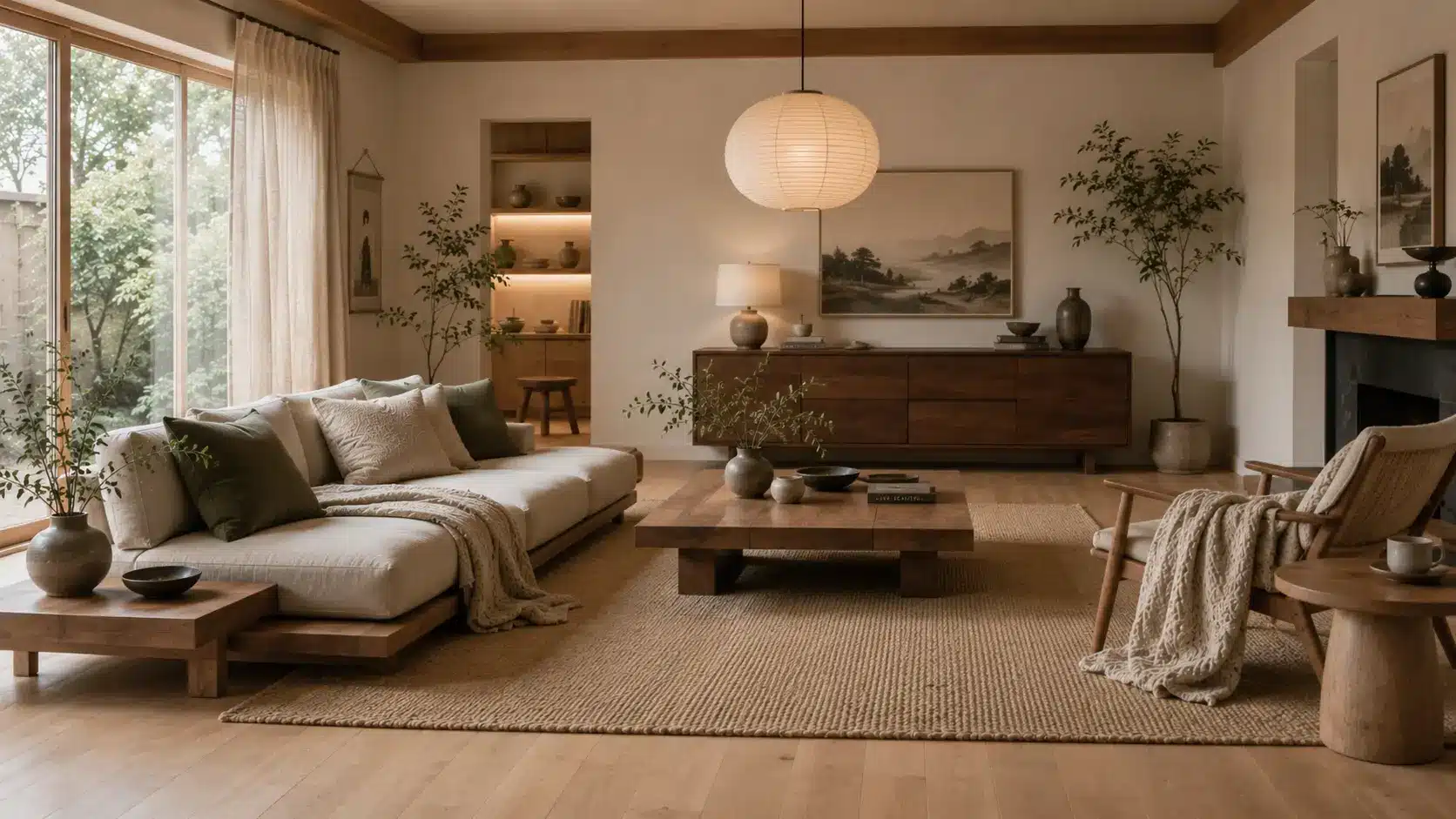
Japandi didn’t happen by accident. Here’s what each style brings to the mix and why the pairing works so well.
1. Shared Design Values
Both styles avoid clutter, favor natural materials, and treat furniture as functional first.
That overlap is what makes blending them so seamless, since you’re never forcing two opposing philosophies into the same space.
2. What Scandinavian Design Adds
Scandinavian design brings in softer textiles, brighter color accents, and a general sense of coziness that can be missing from strict Japanese minimalism.
It softens the formality without adding visual clutter.
3. What Japanese Design Contributes
Japanese design brings discipline. It keeps a room from tipping into clutter, even when warm textiles and layered lighting are added, thanks to its focus on empty space and purposeful furniture.
4. Why Japandi Works So Well
Japandi works because it takes the calm of Japanese design and pairs it with the livability of Scandinavian design.
Each style balances what the other lacks, which is why the pairing feels natural rather than like a compromise.
5. Is Japandi Better Than Pure Japanese Design?
Neither style is objectively better. Pure Japanese design suits homeowners who want a formal, deeply minimal space.
Japandi suits those who want that same calm with more cushioning and warmth. The right choice depends on how the space needs to function, not on which style trends higher.
Do’s and Don’ts of Japanese Interior Design
Here’s a quick side-by-side of the habits that keep this style working and the ones that quietly undo it.
| Do’s | Don’t |
|---|---|
| Choose furniture with a clear, daily purpose | Fill shelves and surfaces with decorative clutter |
| Keep the color palette to two or three neutral tones | Mix in bright, competing colors |
| Let natural light move freely through the room | Block windows with heavy curtains or blinds |
| Use raw or lightly finished natural materials | Rely on glossy, synthetic finishes |
| Leave visible empty space around furniture | Push furniture against every wall to save space |
Bringing It All Together
Japanese interior design works because it’s built on a clear rule: every object earns its place, or it leaves. That single idea, applied room by room, produces the calm and order this style is known for.
The principles behind it- wabi-sabi, ma, natural materials, and function first- don’t require a remodel or a big budget. A cleared shelf, a bamboo blind, or one plant placed with intention moves a room closer to this style faster than replacing all the furniture.
If you want the same calm with more warmth, the Japandi approach pairs Japanese discipline with Scandinavian softness. Start with one room, the one that feels the most cluttered right now, and let that space guide the rest of the process.
Frequently Asked Questions
What is the 3-5-7 rule in interior design?
The 3-5-7 rule suggests grouping décor in odd numbers, three, five, or seven items, to create a more balanced, natural look.
What are the 5 Japanese principles?
The five Japanese principles areKanso, Fukinsei, Shizen, Shibumi, and Yugen, focusing on simplicity, balance, natural beauty, and understated elegance in interior design.
What is the 80% rule in Japan?
The 80% rule encourages using only what is necessary and avoiding excess, helping create clean, functional, and uncluttered interiors inspired by Japanese living.
Can I use Japanese interior design in a small apartment?
Yes. Low furniture, multi-purpose pieces, and sliding screens make Japanese design especially well-suited to small spaces. The style’s focus on open floor space actually helps a small room feel larger, not smaller.
What is the difference between Japanese interior design and Japandi?
Pure Japanese design is more formal and spare. Japandi adds Scandinavian warmth through softer textiles, slightly lighter wood tones, and a cozier feel. Both use natural materials and minimal furniture, but Japandi is generally more comfortable for everyday Western living.
Do I need to buy all new furniture to achieve this look?
No. Start by removing what doesn’t serve a daily purpose. Then add one or two natural-material pieces if needed. A bamboo blind, a neutral linen throw, or a single plant can shift the feel of a room before any furniture changes.