How to Remove Pilling from Clothes Safely

Those small fuzzy balls on your favorite sweater have a name: pills. They form when fabric fibers rub together during wear and washing.
Knowing how to remove pilling from clothes correctly means matching the right tool to the right fabric. The wrong approach can thin or stretch the material instead of fixing it.
This article covers the best tools, step-by-step techniques, fabric-specific advice, and washing habits that slow pilling down for good.
Why Do Clothes Start Pilling?
Pilling happens when fibers on the fabric surface rub together and tangle into small clumps. It is a normal result of friction and everyday wear, not a sign that a garment is poorly made.
Friction-prone areas of clothing include:
- Underarms
- Sides of sweaters that rub against bags or coats
- Waistbands
- Areas under backpack straps
Several factors make pilling more likely:
- Synthetic fibers like polyester and acrylic pill more often. The fibers are strong and stay attached rather than breaking off.
- Short or loose fibers work their way to the surface faster during normal wear.
- Frequent washing adds repeated friction with every cycle.
- Rough wash cycles agitate fabric more than gentle settings.
- Rough fabric combinations, like a stiff jacket worn over a soft sweater, speed up pilling in specific spots.
What Tools Do You Need to Remove Pilling from Clothes?
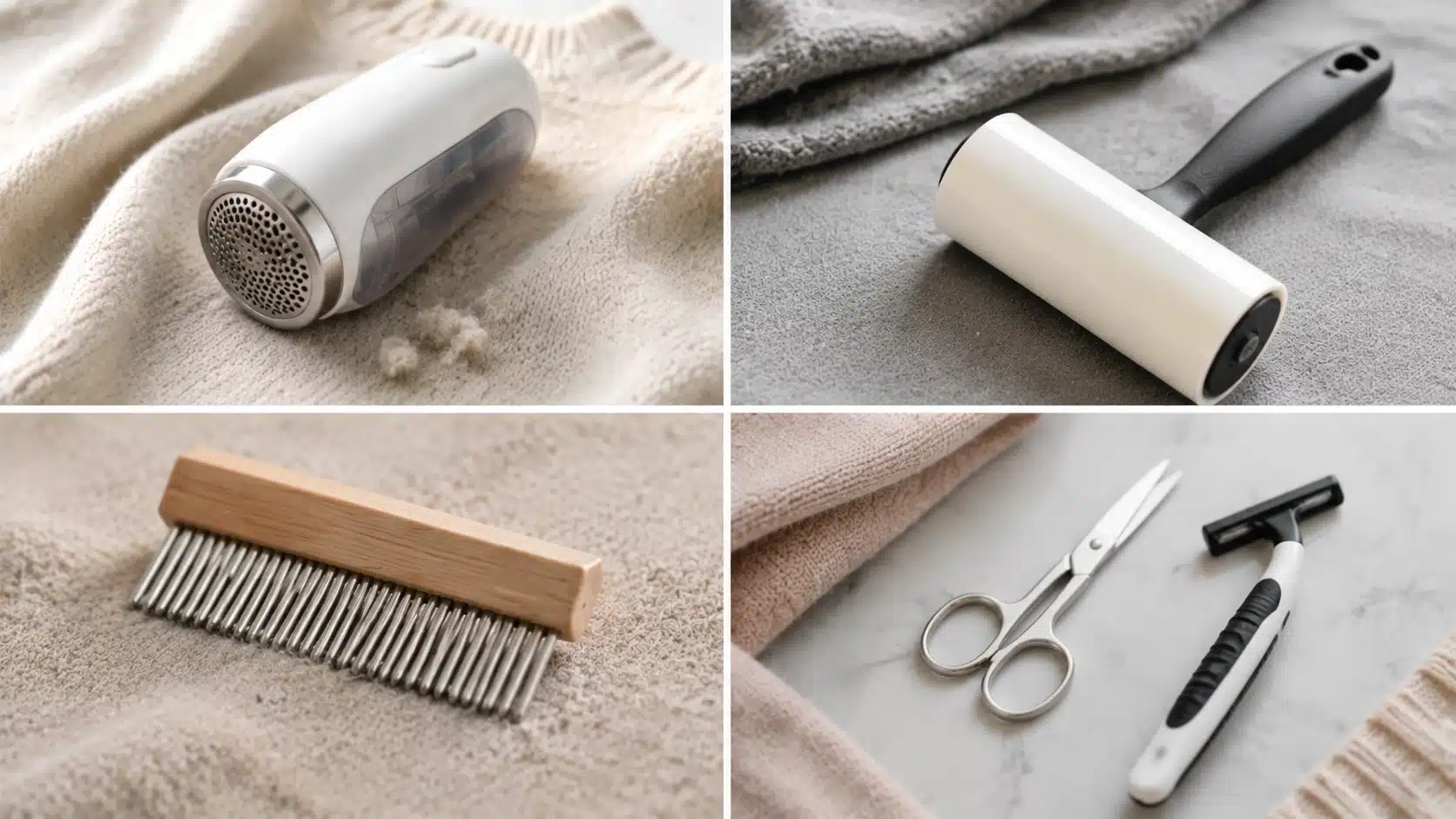
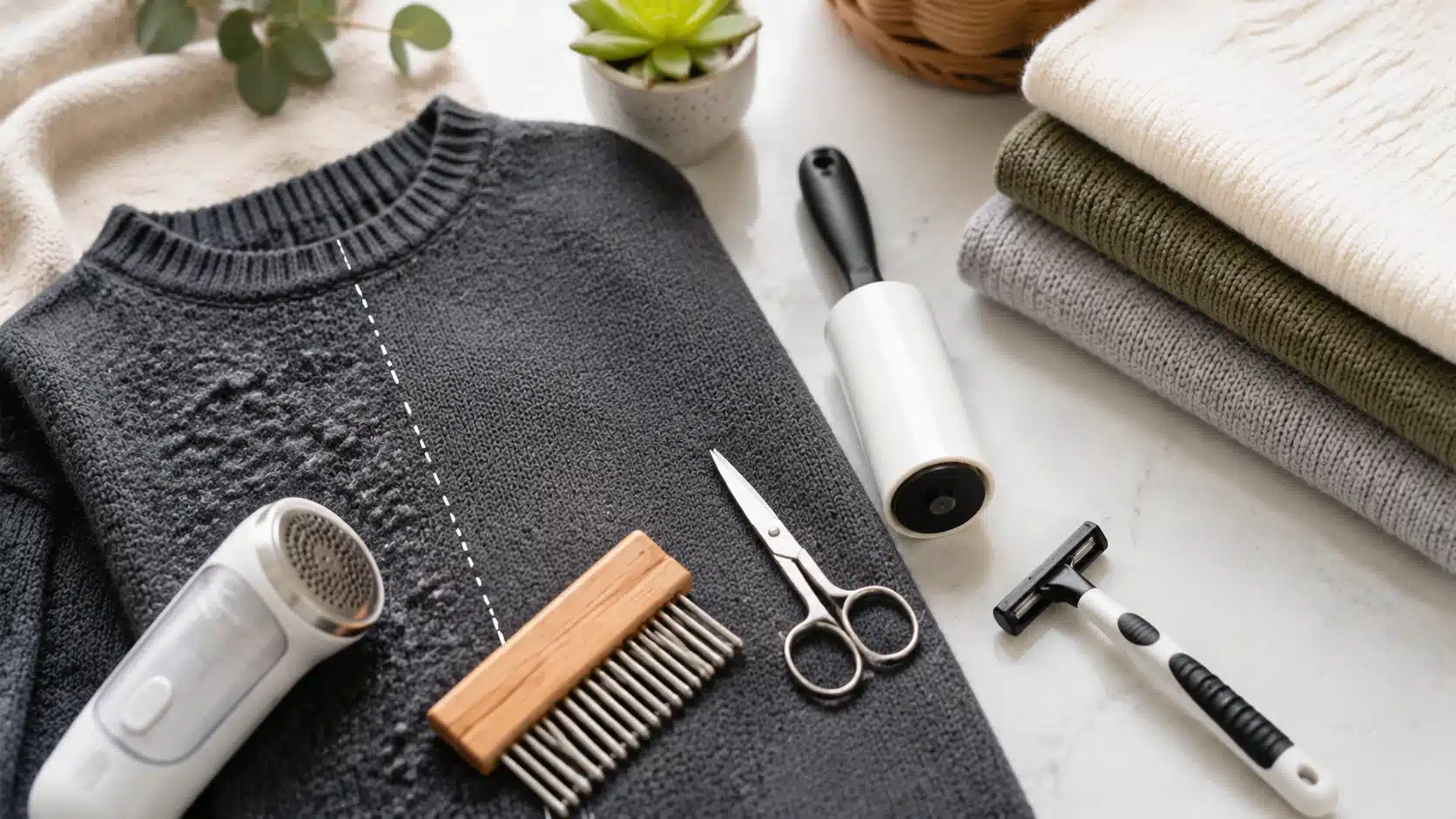
Different tools work better on different fabrics. Using the wrong one can stretch, snag, or thin the material. It helps to know what each tool is meant for before you reach for it.
| Tool | Best For | Safety Level |
|---|---|---|
| Fabric shaver | Sweaters, fleece, cotton blends | High |
| Lint roller | Loose surface fuzz | Very High |
| Fabric comb | Wool and knits | Medium |
| Razor | Emergency removal | Requires care |
| Scissors | Small isolated pills | High |
A fabric shaver is the safest all-around choice for larger areas. A comb is the better option on fine knits where a shaver would be too rough.
Pro tip: Keep two tools on hand. Use a fabric shaver for everyday sweaters and a comb for fine knits.
How to Remove Pilling from Clothes Step by Step
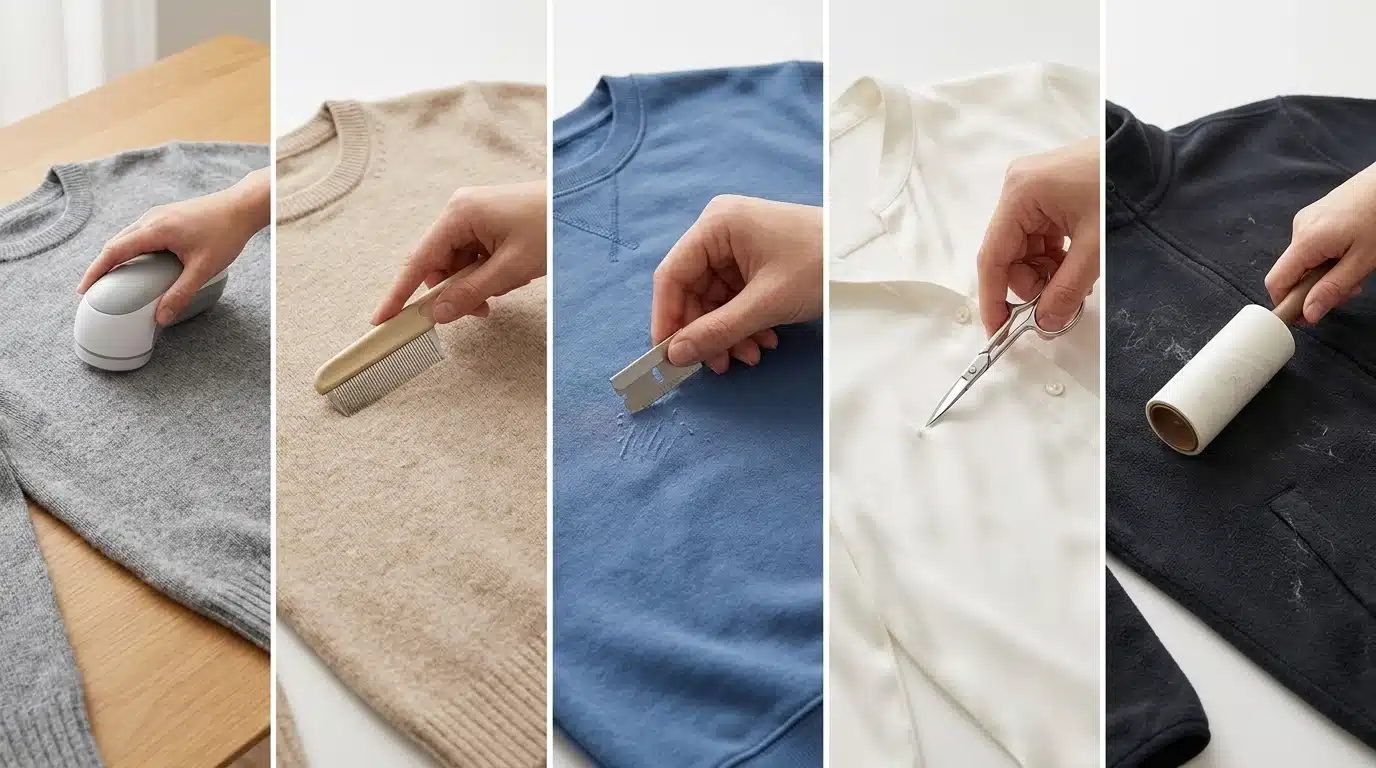
Once you have the right tool, follow these steps to lift pills away without stretching or damaging the fabric.
Step 1: Use a Fabric Shaver for Large Areas
Lay the garment flat on a clean, hard surface. Gently stretch the fabric with one hand. Move the shaver slowly in light, even passes. Do not press down hard, as this can thin the fabric over time. Empty the collection chamber regularly to keep the shaver cutting well.
This method works best on sweaters, sweatshirts, fleece, and cotton blends.
Step 2: Use a Fabric Comb on Wool and Knits
Hold the fabric tight with one hand. Brush the comb gently in a single direction. Avoid scraping hard, as this pulls at the knit structure instead of lifting pills.
Fabric combs work well on wool sweaters, cashmere blends, and other knitwear that a shaver might roughen.
Step 3: Use a Razor Carefully for Small Areas
A clean, sharp razor can work in a pinch. It needs more care than other tools. Lay the garment flat and use very light strokes. Stop right away if you feel any resistance. A dull blade snags fibers instead of cutting them cleanly.
Avoid this method on silk or lace. One slip can cut right through the material.
Step 4: Cut Individual Pills with Scissors
For expensive or fragile clothing, cutting pills off one at a time gives the most control. Snip only the pill itself. Stay clear of the fabric underneath. Small embroidery scissors work well here. The narrow tip can isolate a single pill.
Step 5: Finish with A Lint Roller
After shaving, combing, or trimming, run a lint roller over the garment. It picks up leftover fuzz and loose fibers. This simple final step leaves the garment looking clean and finished.
How to Remove Pilling Based on Fabric Type
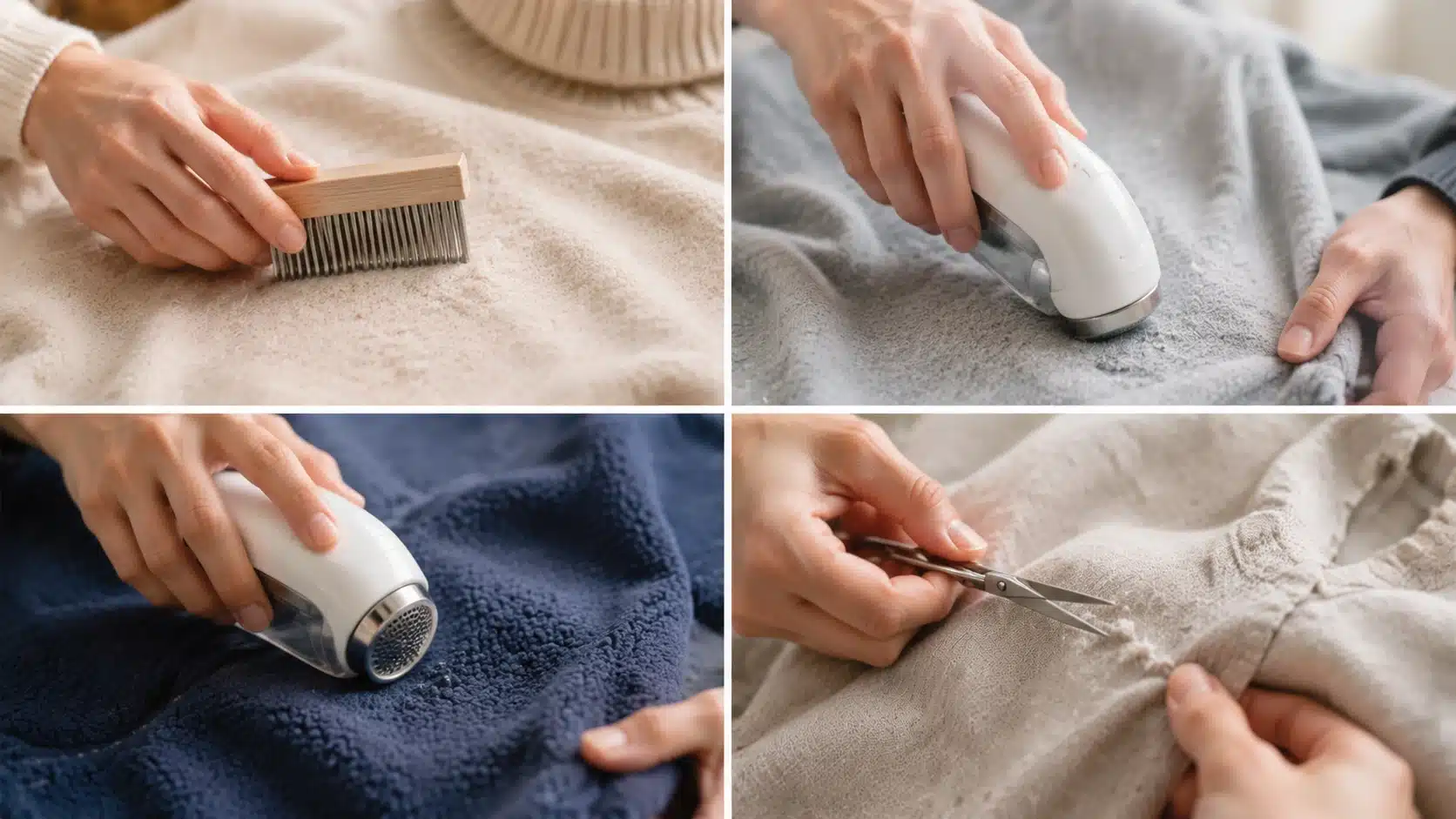
Not every fabric responds the same way. Matching the method to the material helps avoid accidental damage.
- Wool and cashmere: Use a fabric comb rather than a shaver. A shaver can be too rough on fine knit fibers.
- Cotton: Fabric shavers work well on cotton. Check for thin or worn spots before running the shaver over the whole garment.
- Polyester and synthetic fabrics: These fabrics pill more often. The strong fibers stay attached rather than breaking away naturally. A fabric shaver in short, careful passes works best. The same fiber behavior shows up in synthetic sheet materials too. Fabric density shapes how well the surface holds up over time.
- Fleece: Shave gently. Pressing too hard can flatten the soft, brushed surface that gives fleece its warmth.
- Linen and silk: Avoid aggressive tools on these fabrics. Remove pills by hand, one at a time, for the safest result.
Pro tip: When in doubt about a fabric blend, treat it like the most fragile fiber in the mix.
Can You Remove Pilling Without Damaging Clothes?
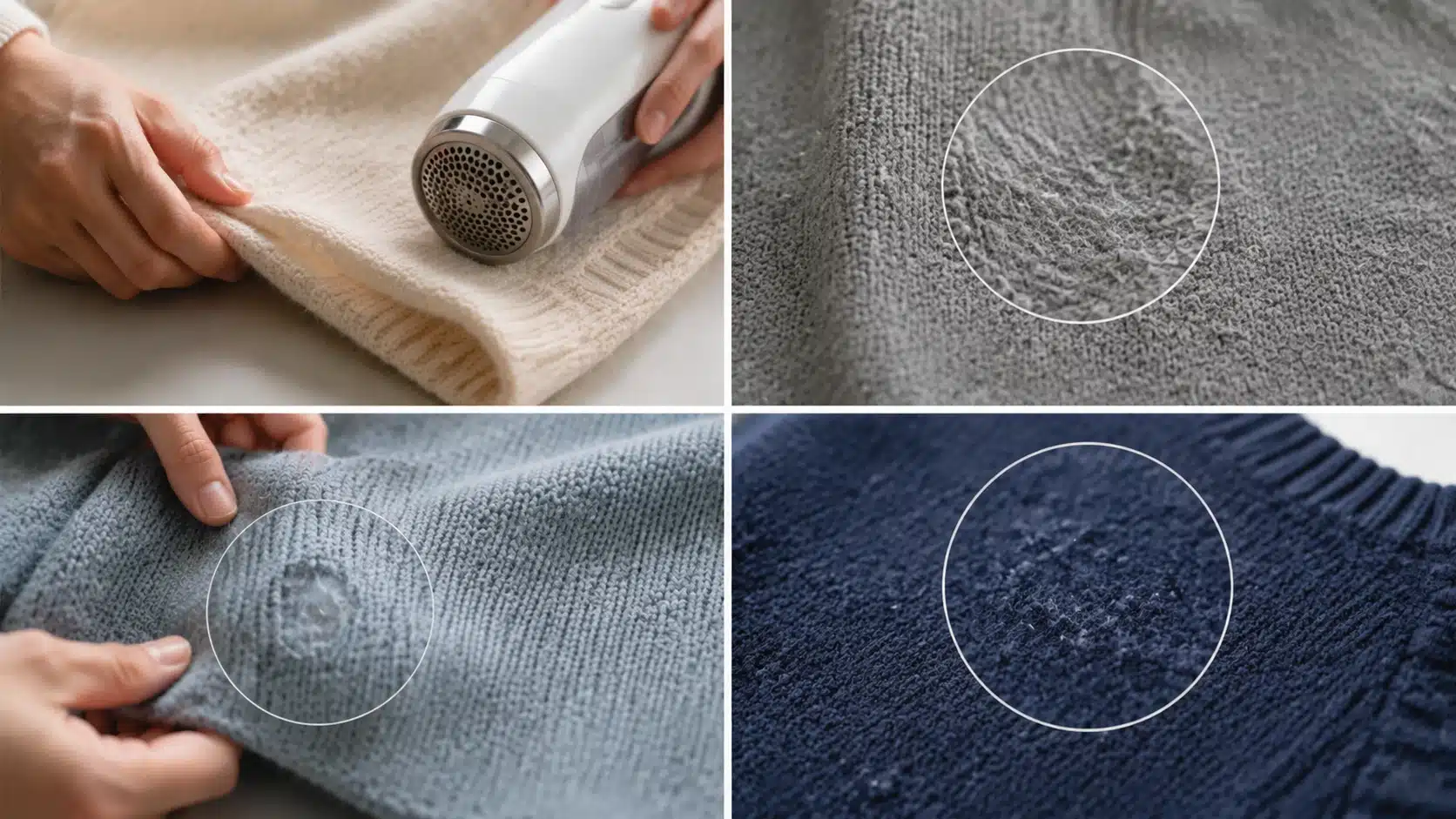
Yes. Removing pills does not damage clothing when done correctly. The risk comes from over-shaving the same spot too many times. That thins the fabric and shortens the garment’s life.
Tips for safe removal:
- Test the tool on an inside seam first to check how the fabric reacts.
- Start with the least aggressive method and move up only if needed.
- Stop if the fabric starts to look thin or see-through in spots.
- Work in short sessions rather than trying to remove every pill at once.
- Let the garment rest between treatments instead of going over the same spot repeatedly.
| Sign | What It Means |
|---|---|
| Fabric feels the same after treatment | Safe to continue as needed |
| Small thin patches appear | Stop and switch to a gentler tool |
| Fabric looks see-through in spots | Stop treatment on that area |
| Pills return quickly after removal | Reduce friction sources instead of treating more often |
How to Prevent Clothes From Pilling Again

Small changes to how you wash and store clothes reduce the friction that causes pilling in the first place. These habits will not stop pilling entirely, but they slow it down noticeably.
- Wash inside out: Turning garments inside out before washing reduces the friction the outer surface experiences during each cycle.
- Use gentle wash cycles: Low-agitation or gentle cycles agitate clothing less than regular or heavy-duty settings.
- Choose cold water: Cold water is gentler on fibers than hot water, which weakens and loosens them faster.
- Avoid overloading the washer: Give clothes room to move freely in the drum. A packed machine increases rubbing between garments. Reducing unnecessary contact between fabrics applies to upholstered fabrics as well. Gentle handling affects how long any material holds up.
- Fold knitwear instead of hanging it: Hangers stretch shoulders and create pressure points that speed up wear.
- Reduce fabric friction: Avoid letting rough bags or straps rub directly against sweaters. Layer softer fabrics underneath when possible.
Does Pilling Mean Clothes Are Low Quality?
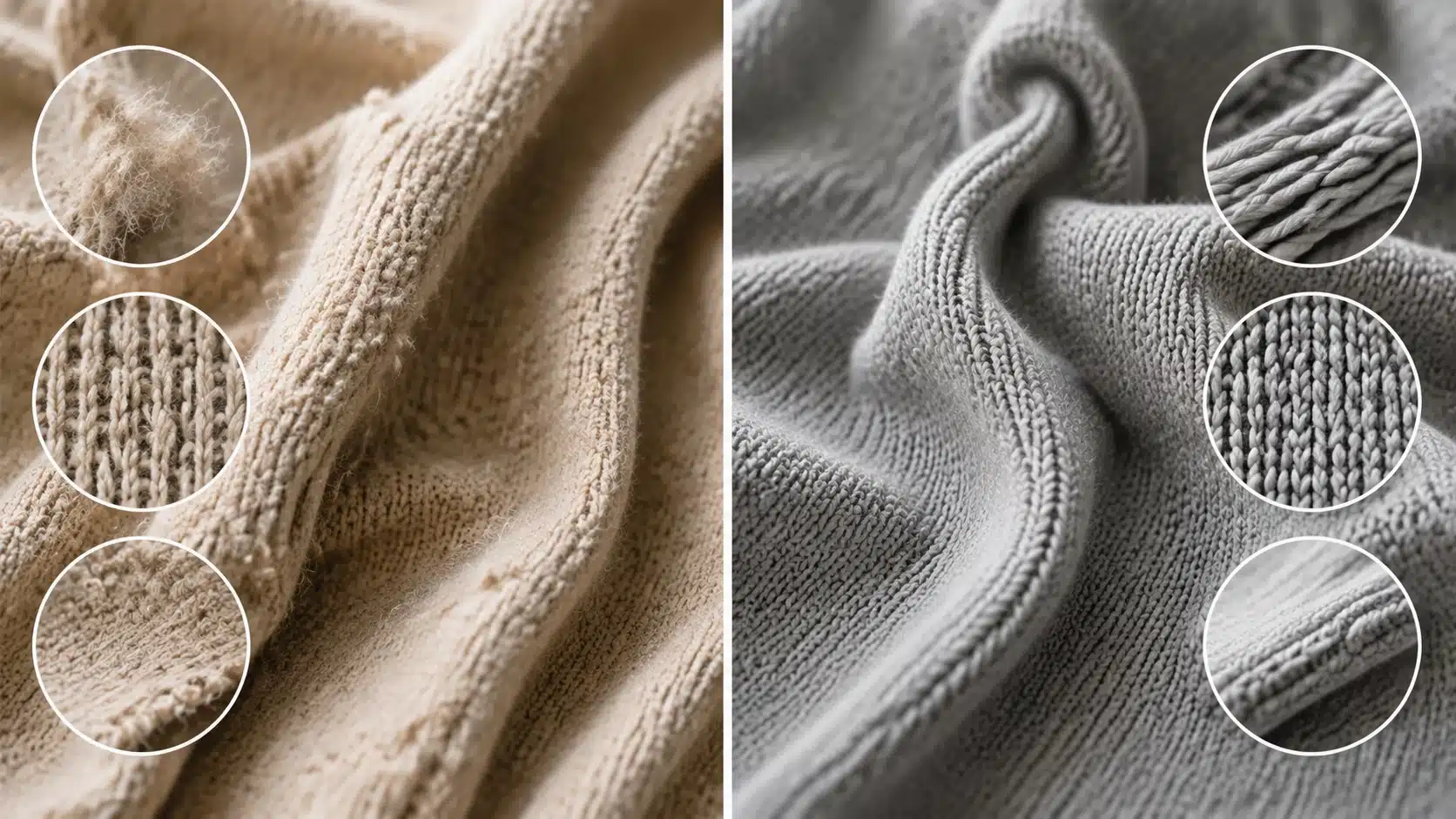
No. Pilling can happen on both inexpensive and expensive clothing. Fiber type and fabric construction matter far more than price alone.
Shorter fibers escape the fabric structure more easily and pill faster. Tightly constructed fabrics resist pilling better, regardless of cost. A well-made garment from a pilling-prone fiber can still pill. A budget-friendly piece with a tight construction can hold up for years.
Signs of low-quality fiber:
- Short, loose fibers that shed easily
- Loose fabric construction with visible gaps
- Fabric that feels thin right out of the package
Signs of high-quality fiber:
- Long, continuous fibers locked into the fabric structure
- Dense, tight construction with little give
- Fabric that holds its shape after repeated washing
Pilling Removal Mistakes to Avoid
Even the right tool can cause damage if used the wrong way. Here are the most common errors to watch for.
| Mistake | Why It Causes Problems |
|---|---|
| Pulling pills off by hand | Can stretch fabric fibers and widen the fabric structure |
| Using a dull razor | Snags fibers instead of cutting them cleanly |
| Pressing too hard with a shaver | Thins the fabric over repeated use |
| Washing without checking care labels | Wrong settings can worsen pilling fast |
| Using harsh brushes on fine or fragile fabrics | Damages fine fibers and loosens the fabric structure |
| Skipping a test spot first | Risks damage across the whole garment |
Slowing down and using the right tool for each fabric type goes a long way toward avoiding these errors. A little patience protects the garment far more than rushing to remove every pill at once.
How Often Should You Remove Pilling?
There is no fixed schedule for removing pilling. Check garments after every few wears, especially in high-friction areas like underarms and sides.
Once pills are visible and start to bother you, that is the right time to treat them.
Waiting too long can make removal harder, but treating too often, going over the same spot repeatedly, thins the fabric faster than the pilling itself would.
Frequently Asked Questions
How do you remove pilling from clothes naturally?
Use a fabric comb or trim pills off one at a time with small scissors. This lifts them gently without chemical treatments and reduces friction damage to the surrounding fibers.
Does washing clothes inside out stop pilling?
It reduces friction on the outer surface during each wash cycle. It does not completely prevent pilling over time, but it slows it down.
Can a washing machine cause clothes to pill?
Yes. Heat, agitation, and contact with rougher fabrics inside the drum speed up fiber wear. That makes clothes more prone to pilling over repeated washes.
Is it safe to use a razor to remove pilling?
It works reasonably well on sturdier fabrics like cotton and denim. It should be avoided on silk, lace, and other thin, fragile materials that tear or snag easily.
Can fabric pilling be permanent?
Severe pilling can signal significant fiber breakdown. In advanced cases, the fabric may not return fully to its original smooth texture.
What fabrics pill the most?
Polyester, acrylic, and other synthetic fabrics pill the most often. Their strong fibers stay attached to the fabric surface rather than breaking away, so pills build up faster.
Keep Your Clothes Pill-Free Longer
Pilling is a normal part of owning clothes, not a sign something has gone wrong. Even well-made garments develop those small fuzzy balls once fibers rub together during wear and washing.
Knowing how to remove pilling from clothes correctly means choosing the right tool for each fabric. That keeps garments looking smooth without causing damage.
Pair that with cold washes, gentle cycles, and folded storage. Your sweaters and everyday basics will stay in good shape for many more seasons.