Condo vs Apartment: Key Differences to Know Before You Move

Finding a place to live is never simple. You want the right space at the right price, with the right amount of control over your home. A condo and an apartment can look identical from the outside. But living in each one feels very different.
This post breaks down every major difference between a condo vs apartment, covering ownership, costs, maintenance, rules, and more. By the end, you will know exactly which option fits your life right now.
What is a Condo?
A condo, short for condominium, is a residential unit owned by one person. It usually sits inside a larger building or community with other privately owned units.
As the owner, you hold full rights to the inside of your unit. You can live in it, rent it out, or sell it later.
Shared spaces work differently. Hallways, elevators, gyms, and pools belong to everyone in the building. A homeowners association, known as the HOA, manages these common areas.
The HOA also sets rules for the community. These often cover noise limits, pet policies, and renovation guidelines.
Condo owners pay a monthly HOA fee. This fee covers upkeep of shared spaces and sometimes services like landscaping or security.
Buying a condo works much like buying a house. You need financing, a down payment, and lender approval. Many first-time buyers choose condos as an entry point into homeownership.
What is an Apartment?
An apartment is a rental unit inside a larger building or complex. A single owner, often a property management company or investor, owns the entire building.
You do not buy an apartment. Instead, you sign a lease and pay rent for a set period, usually six months to a year.
The landlord or property manager handles most repairs and maintenance. If something breaks inside your unit, you contact them instead of fixing it yourself.
Apartments often come with shared amenities too. Pools, fitness centers, and parking are common and usually included in your rent.
Rules in an apartment come from the landlord or management company. These cover things like guest policies, pet restrictions, and lease terms.
Since you do not own the unit, you build no equity while renting. Your monthly payment covers the right to live there, not ownership of the property.
Condo vs Apartment: 7 Major Differences

Condos and apartments differ in more ways than just ownership. From monthly costs to long-term value, each factor shapes your daily life. Here are the seven biggest differences to consider before you decide.
1. Ownership and Control
Ownership is the biggest difference between the two. A condo unit belongs to one person. An apartment building belongs to a company or landlord.
Condo owners have a say in building decisions. Most communities hold HOA meetings where owners vote on budgets, repairs, and rule changes.
Apartment renters have no ownership stake. All decisions about the building rest with the property manager or owner.
2. Monthly Costs and Fees
Apartment rent usually covers your unit and most shared amenities. You pay one monthly amount with few surprises.
Condo costs work differently. Owners pay a mortgage plus a separate HOA fee. That fee can rise over time.
HOA fees often cover:
- Building insurance and landscaping
- Trash and pest control
- Amenity upkeep like pools or gyms
- Reserve funds for major repairs
Condo buyers should also budget for property taxes and closing costs upfront. Renters skip these expenses entirely.
3. Maintenance Responsibilities
Apartment maintenance is simple. You call the property manager, and they send someone to fix the issue.
Condo maintenance splits into two parts. Owners handle repairs inside their own unit. The HOA manages shared spaces and building systems.
A leaking faucet inside your unit is your responsibility as a condo owner. A broken elevator falls under HOA responsibility.
4. Customization and Renovations
Apartment renters have limited freedom to change their space. Most leases require landlord approval for paint colors, fixtures, or flooring changes.
Condo owners have more room to personalize. You can renovate your kitchen, repaint walls, or update flooring without asking a landlord.
That freedom still has limits. Most HOAs require approval for major renovations, especially ones that affect plumbing, wiring, or the building exterior.
5. Amenities and Community Rules
Both condos and apartments often include amenities like pools, gyms, and parking. The difference lies in how those amenities affect your costs.
Apartment amenities are usually built into your rent. You get access without paying extra monthly fees.
Condo amenities are funded through HOA dues. More amenities can mean higher monthly fees for owners.
Rules also differ in strictness. HOA boards can enforce detailed policies on pets, noise, parking, and even holiday decorations.
6. Flexibility and Moving Options
Apartments offer more flexibility for short-term living. Most leases run six months to a year, making it easier to relocate.
Condos work better for longer stays. Selling a unit takes time, effort, and often a real estate agent.
Renters can walk away at the end of a lease with little hassle. Condo owners must sell or rent out their unit before moving on.
7. Investment Potential
Apartments offer no path to building equity. Your rent payment covers housing costs, not ownership.
Condos work as a financial asset. Every mortgage payment builds equity, and the unit can gain value over time.
Condo owners can also rent out their unit for income. This turns a condo into a potential investment property. Apartment renters cannot do this.
Market conditions still matter. Condo values can drop, and HOA fees can reduce potential profits.
Pros and Cons of Living in a Condo
Condo living appeals to buyers who want ownership without full house maintenance. But it comes with tradeoffs worth knowing upfront.
Pros:
- Builds equity with every mortgage payment you make
- More customization freedom inside your own unit
- Shared amenities like pools and gyms, often at a lower cost than owning a house
- Community structure with an HOA handling exterior upkeep
- Investment potential through resale or renting the unit out
Cons:
- HOA fees add extra monthly cost on top of your mortgage
- Less control over building-wide decisions, even with a vote
- Rules can be strict, covering pets, noise, and renovations
- Harder to sell quickly compared to walking away from a lease
- Special assessments can hit owners with sudden extra charges for major repairs
Pros and Cons of Living in an Apartment
Apartment living works well for renters who value flexibility and simplicity. Still, it has its own set of limits.
Pros:
- Lower upfront costs, with no down payment or closing costs
- Hands-off maintenance, since the landlord handles most repairs
- Flexible lease terms, making it easier to relocate
- Predictable monthly costs, since rent usually covers most amenities
- No long-term commitment, ideal for short-term living plans
Cons:
- No equity building, since rent payments do not build ownership
- Limited customization, with most changes needing landlord approval
- Rent can increase at each lease renewal
- Less control over building rules and policies
- No investment return, since you never own the property
Is It Better to Rent a Condo or an Apartment?
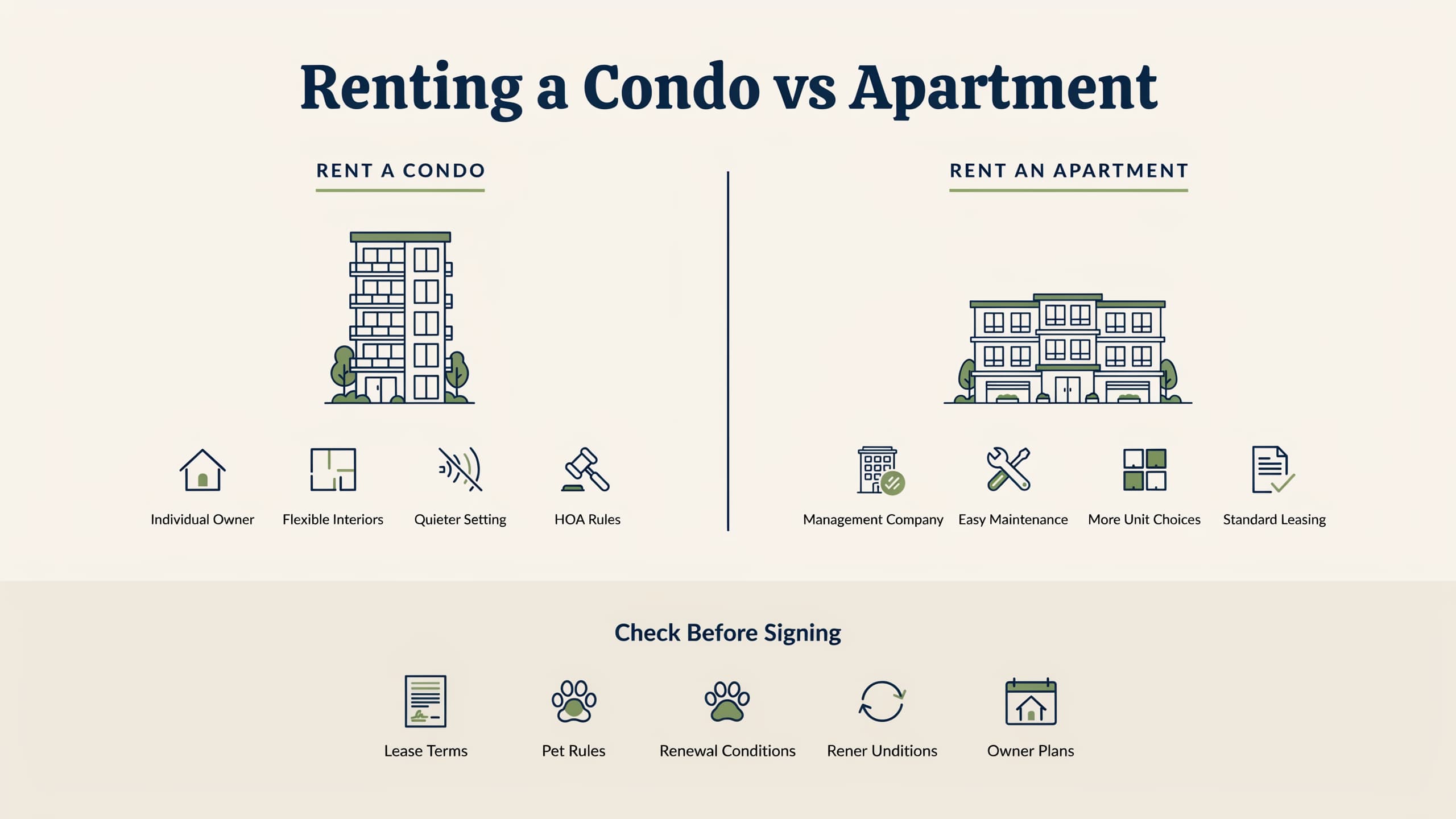
Renting a condo or an apartment comes down to what you value most.
When you rent a condo, your landlord is the individual unit owner. That owner sets the lease terms, though the HOA still enforces community rules like guest policies or pet limits.
When you rent an apartment, your landlord is usually a property management company. This often means more standardized policies and a dedicated maintenance team on call.
| Renting a Condo May Suit You If… | Renting an Apartment May Suit You If… |
|---|---|
| You want nicer finishes or upgraded features | You want a standardized leasing process |
| You prefer a quieter building with fewer units | You prefer an on-site management team for repairs |
| You do not mind dealing with an individual landlord | You want more unit options in one location |
One key thing to watch with rented condos: your lease depends on the owner’s plans. If the owner decides to sell or move back in, your lease may not renew.
Buying a Condo vs Buying an Apartment
Buyers often assume only condos are for sale. That is mostly true. Some apartment buildings do sell individual units, but this is far less common than condo sales.
Buying a condo works much like buying a house. You need a down payment, mortgage approval, and money for closing costs.
You also take on ongoing HOA fees once you own the unit. These fees cover shared spaces and often rise over time.
A few things worth checking before you buy:
- Ask about the HOA’s financial health and reserve funds
- Review rules on renting out the unit later, in case your plans change
- Compare monthly fees against similar properties in the area
- Get a clear breakdown of what the HOA fee actually covers
When you move into a condo, making the most of your space from day one matters. A well-planned drop zone near the entry keeps smaller homes and condos organized without taking up extra room.
Frequently Asked Questions
Is a Condo a Good First Home?
A condo can be a practical first home because it often requires less exterior maintenance than a standalone house. However, buyers should consider HOA fees, rules, and future resale potential before purchasing.
Can a Landlord Raise Rent on a Condo?
Yes, a condo owner who rents out their unit can usually increase rent according to local rental laws and the terms of the lease agreement.
Do Condos Have Stricter Rules Than Apartments?
Condos may have additional HOA rules covering renovations, pets, noise, rentals, and shared spaces. Apartments usually follow rules created by the property management company and lease agreement.
Which Is Easier to Sell: A Condo or an Apartment?
A condo can be sold because it is individually owned real estate. An apartment is typically owned by a landlord or company and is not sold to individual renters.
Do Condos Appreciate in Value Like Houses?
Condos can appreciate in value like other real estate, but factors such as location, market conditions, HOA management, building condition, and demand affect their resale value.
Condo vs Apartment: Which One Is Right for You?
The condo vs apartment decision comes down to ownership, cost, and how much control you want over your home.
Condos suit buyers who are ready to build equity and take on some maintenance responsibility. Apartments suit renters who want flexibility and fewer long-term commitments.
Your budget plays a big role too. Condos bring HOA fees and upfront costs. Apartments offer simpler, more predictable monthly payments.
Think about your timeline as well. Short-term plans favor apartments. Longer-term financial goals often favor condos and the equity they build over time.
The best choice depends on your finances, your lifestyle, and how settled you feel right now. There is no single right answer. The best fit depends on your current situation.