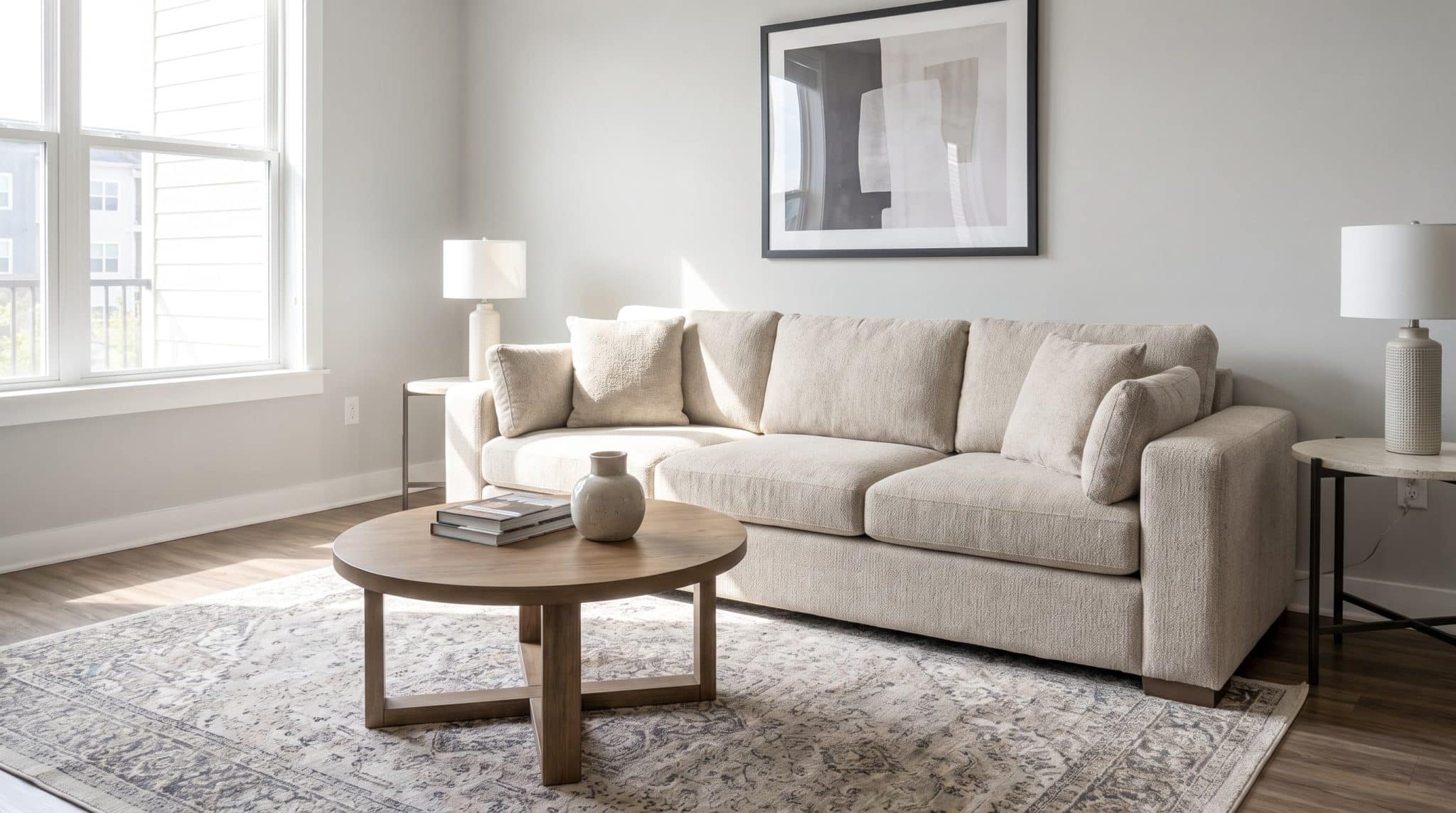
Standard Couch Length: Sofa Sizes by Type and Room

You found the perfect couch online. It looks great. The price is right. You order it, then it arrives, and it doesn’t fit.
This happens more often than you’d think. The fix is simple: check the standard couch length before buying. A sofa that’s even 10 inches too long can throw off your entire room layout.
Here’s a quick look at standard couch lengths by type:
| Sofa Type | Standard Length | Best For |
|---|---|---|
| Loveseat | 48–72 inches | Small rooms, offices, bedrooms |
| Apartment Sofa | 70–80 inches | Rooms under 12 feet wide |
| Three-Seater | 72–96 inches | Standard living rooms |
| Sectional (L-shape) | 95–130 inches | Medium to large living rooms |
| Sectional (U-shape) | 130–160+ inches | Open-plan or large rooms |
This guide breaks down every sofa type with real measurements. You’ll also learn how to measure your space and match the right size to your room before you order.
What Factors Affect Couch Length?
Couch length depends on more than just how many people it can seat. The design, arm style, cushion depth, and overall shape all affect the amount of space a sofa occupies.
A sofa with wide arms and deep cushions may need more room than a slimmer design with the same seating capacity. Sectionals also vary widely because their size depends on the number of sections, chaise placement, and configuration.
Before choosing a couch, consider these factors:
- Room size: A larger sofa can overwhelm a small space, while a compact one may look lost in a large room.
- Seating needs: Homes that host guests often need longer sofas or sectionals.
- Layout: Walkways, coffee tables, and nearby furniture need enough clearance around the couch.
- Style: Modern low-profile sofas often have different proportions than traditional designs.
Checking these details helps you choose a couch that fits both your space and your daily needs.
Average Couch Length by Sofa Type
Not all couches are built the same way. Each sofa type has its own standard size range. Knowing these ranges helps you shop with confidence.
1. Standard Three-Seater Couch Length
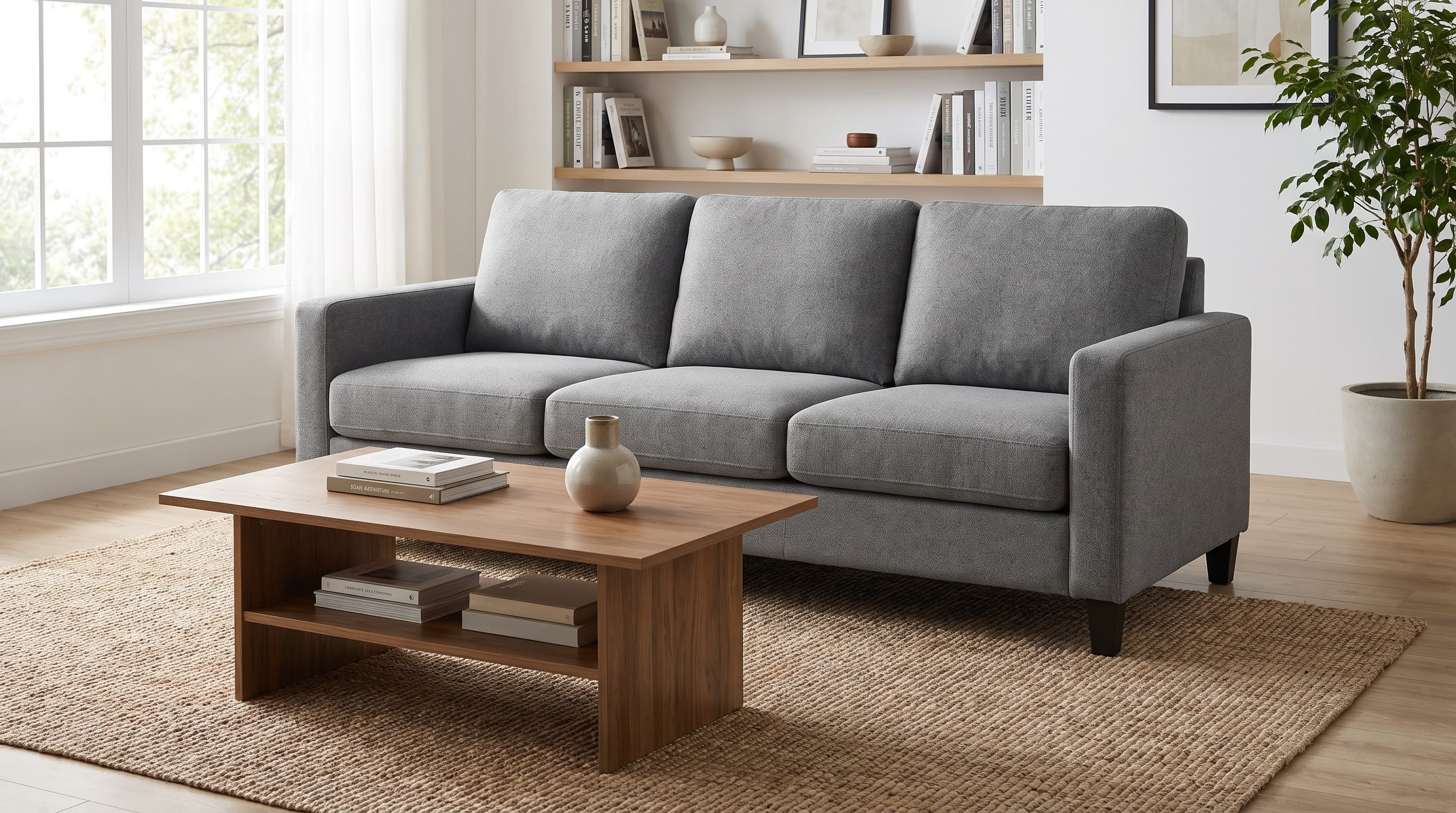
A standard three-seater couch is 84 to 90 inches long (7 to 7.5 feet). This is the most common sofa size you’ll find in living rooms across the country.
Some three-seaters go as small as 72 inches. Others stretch to 96 inches, especially in chunky or deep-seated styles.
Here’s a quick breakdown:
- Compact three-seater: 72–78 inches
- Standard three-seater: 84–90 inches
- Large three-seater: 92–96 inches
An 84-inch sofa works well in most medium-sized living rooms. If your room is tight, go with a 7278-inch option.
2. Loveseat and Two-Seater Couch Length
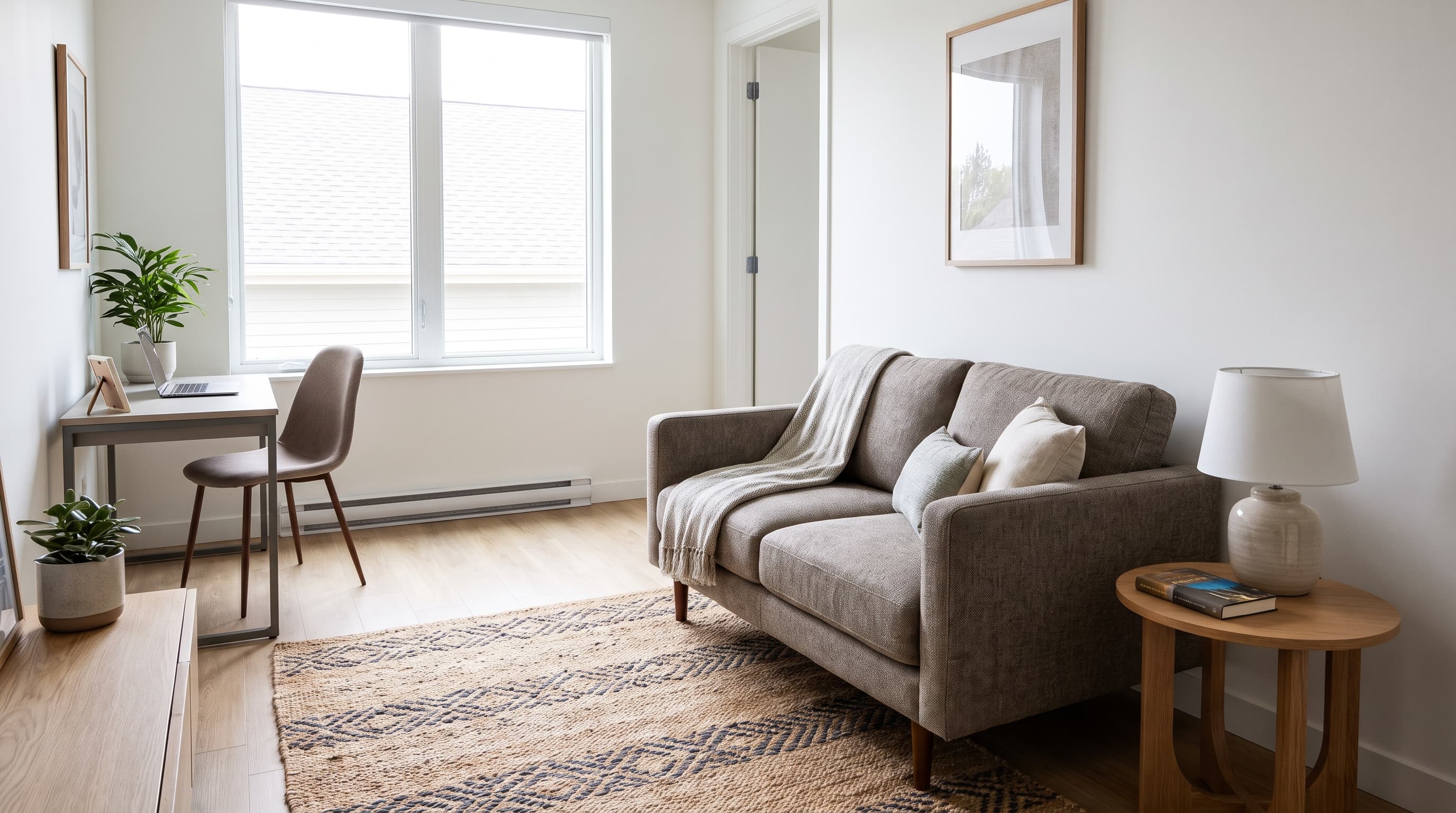
A loveseat or two-seater sofa is 48 to 72 inches long. Most standard loveseats sit right around 58 to 64 inches.
Loveseats work well in:
- Home offices
- Bedroom sitting areas
- Small apartments
- As a second seating piece beside a larger sofa
If you want two seats but your space is limited, a loveseat gives you full comfort without taking up too much floor space.
3. Apartment Sofa Length for Small Spaces
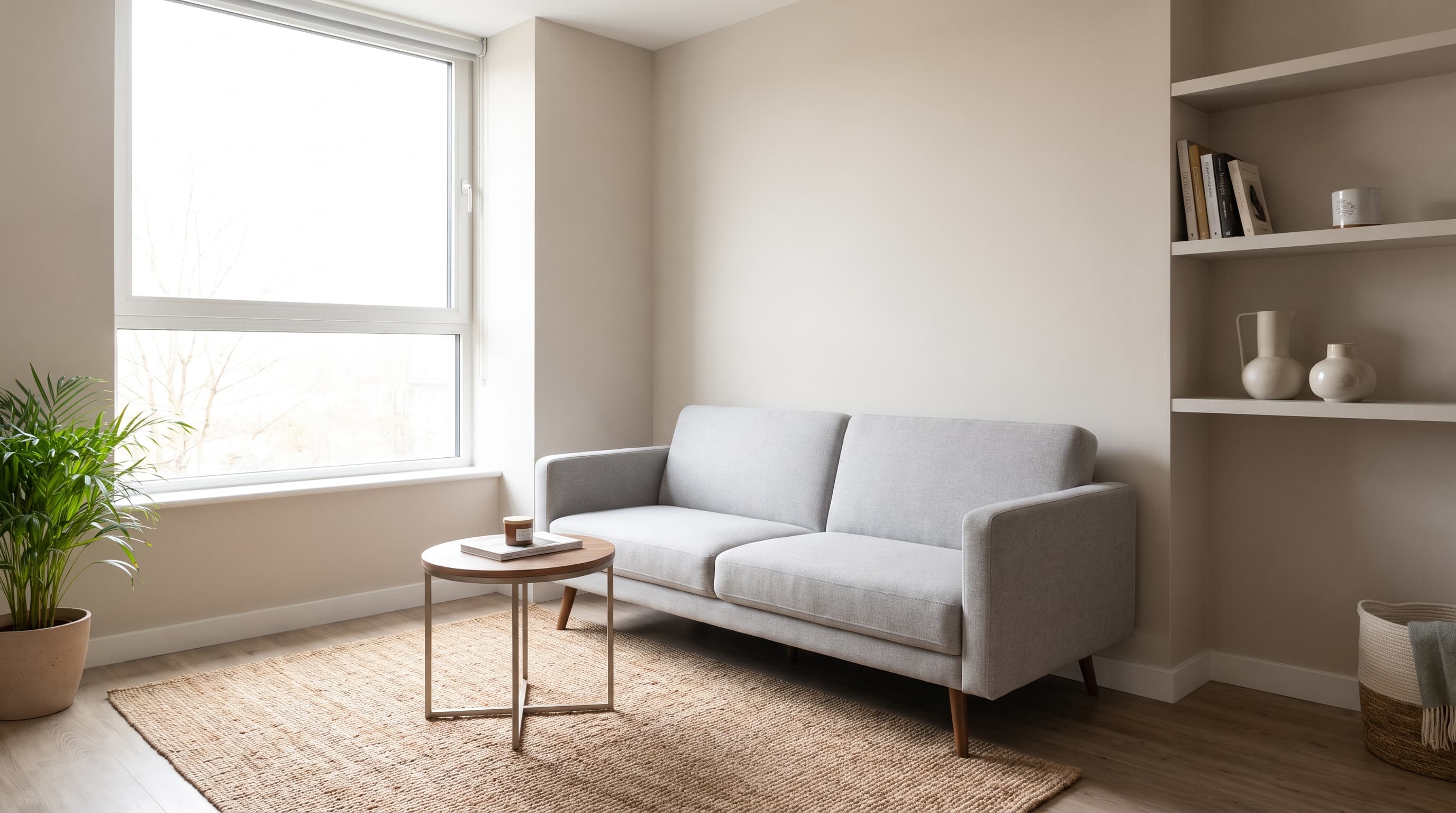
Apartment sofas are built specifically for tight spaces. They usually measure 70 to 80 inches long, slightly shorter than a standard three-seater.
The key difference isn’t just length. Apartment sofas also tend to have:
- Shallower depth (28–32 inches instead of 36–40 inches)
- Straighter arms that don’t add extra width
- Exposed legs that make the room feel more open
If your living room is under 12 feet wide, an apartment-style sofa is usually the smarter choice.
4. Sectional Sofa Length and Dimensions
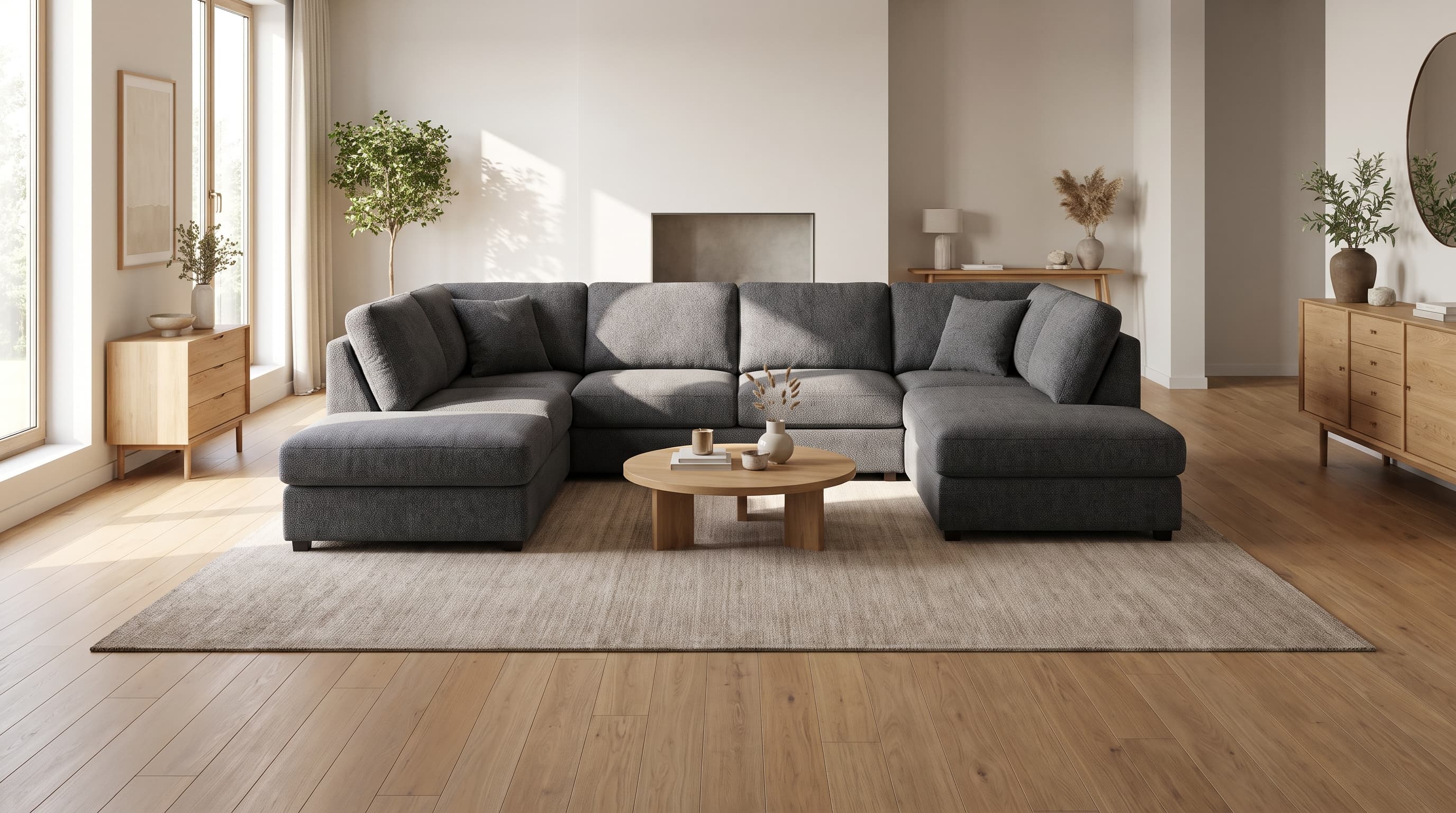
Sectional sofas are the largest option. They come in L-shapes, U-shapes, and modular configurations.
Here are typical sectional sizes:
- Small L-shaped sectional: 95–110 inches on the long side
- Standard L-shaped sectional: 110–130 inches on the long side
- Large U-shaped sectional: 130–160+ inches across
Most sectionals also include a chaise (an extended lounging section) that adds 60–65 inches. Always measure both sides of the L independently before buying.
Standard Couch Dimensions Beyond Length
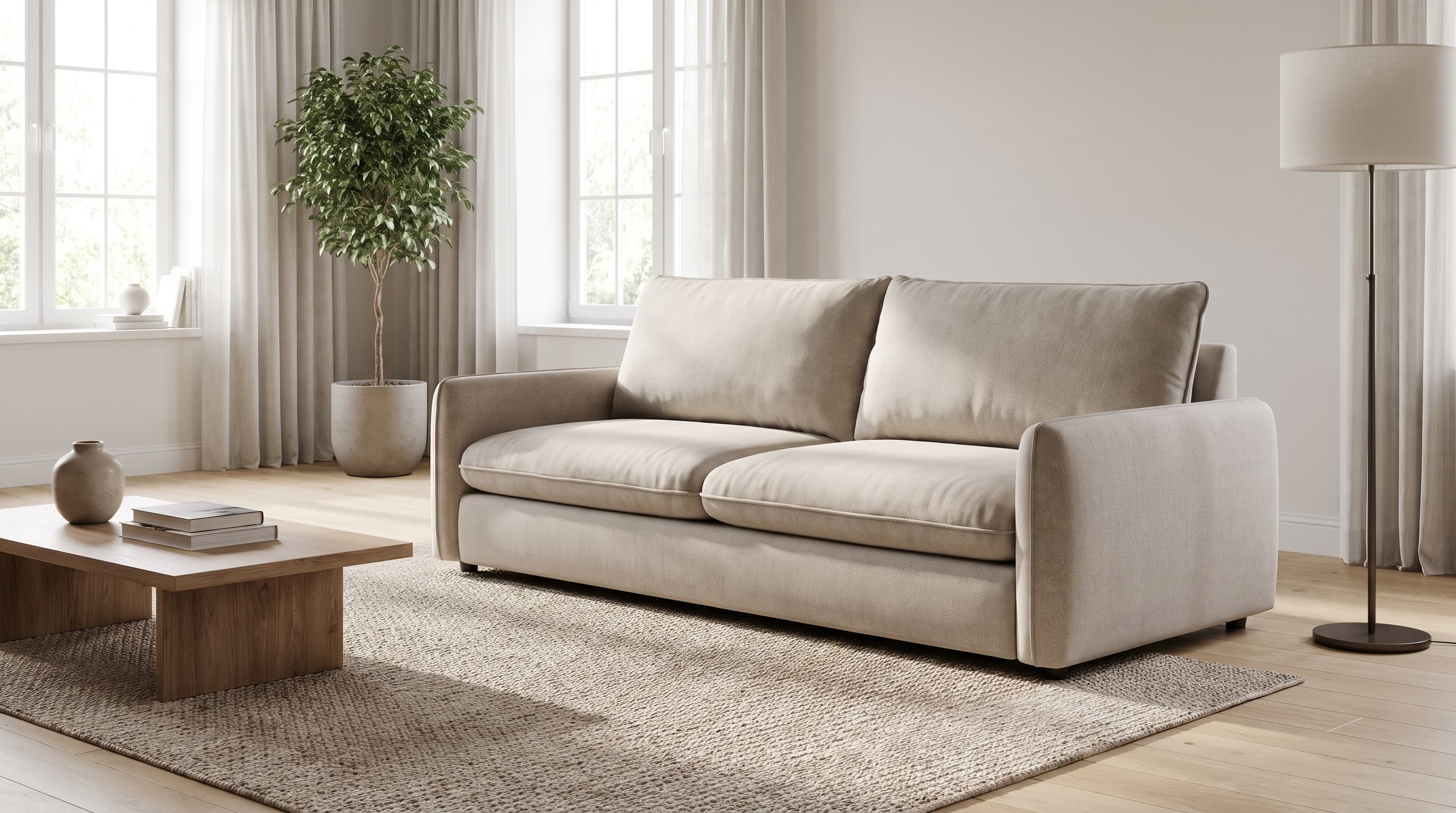
Length is only one measurement. Two other dimensions affect comfort and fit just as much.
Average Sofa Depth
Sofa depth is the measurement from the front of the cushion to the back of the frame. Most standard sofas measure 32 to 40 inches deep.
Here’s how depth affects your experience:
- Shallow (28–32 inches): Better for petite users or tight spaces
- Standard (33–38 inches): Fits most adults comfortably
- Deep (38–42+ inches): Great for lounging, but takes up more floor space
If you have a smaller room, choose a sofa on the shallower end. Deep sofas feel great, but they eat up space fast.
Typical Sofa Height and Seat Height
Sofa height is measured from the floor to the top of the back cushion. Most sofas stand 30 to 36 inches tall.
Seat height, the distance from the floor to the top of the seat cushion, matters for comfort and accessibility. The average seat height is 17 to 19 inches.
- Lower seat height (15–17 inches): More casual, loungy feel
- Standard seat height (17–19 inches): Easy to sit and stand up
- Higher seat height (19–22 inches): Better for people with joint or mobility concerns
Couch Length by Number of Seats
Use this quick-reference table to compare sofa sizes by seat count. Always confirm exact measurements with the retailer before placing your order.
| Sofa Type | Typical Length | Typical Depth | Typical Height |
|---|---|---|---|
| 1-Seater (Chair) | 30–40 inches | 30–35 inches | 30–35 inches |
| 2-Seater (Loveseat) | 48–72 inches | 30–38 inches | 30–36 inches |
| 3-Seater (Standard) | 72–96 inches | 32–40 inches | 30–36 inches |
| 4-Seater (Large Sofa) | 90–110 inches | 34–42 inches | 30–38 inches |
| Sectional | 100–160+ inches | 34–42 inches | 30–38 inches |
Use this table as your starting point. Always confirm exact measurements with the retailer before placing your order.
How to Choose the Right Couch Length for Your Room
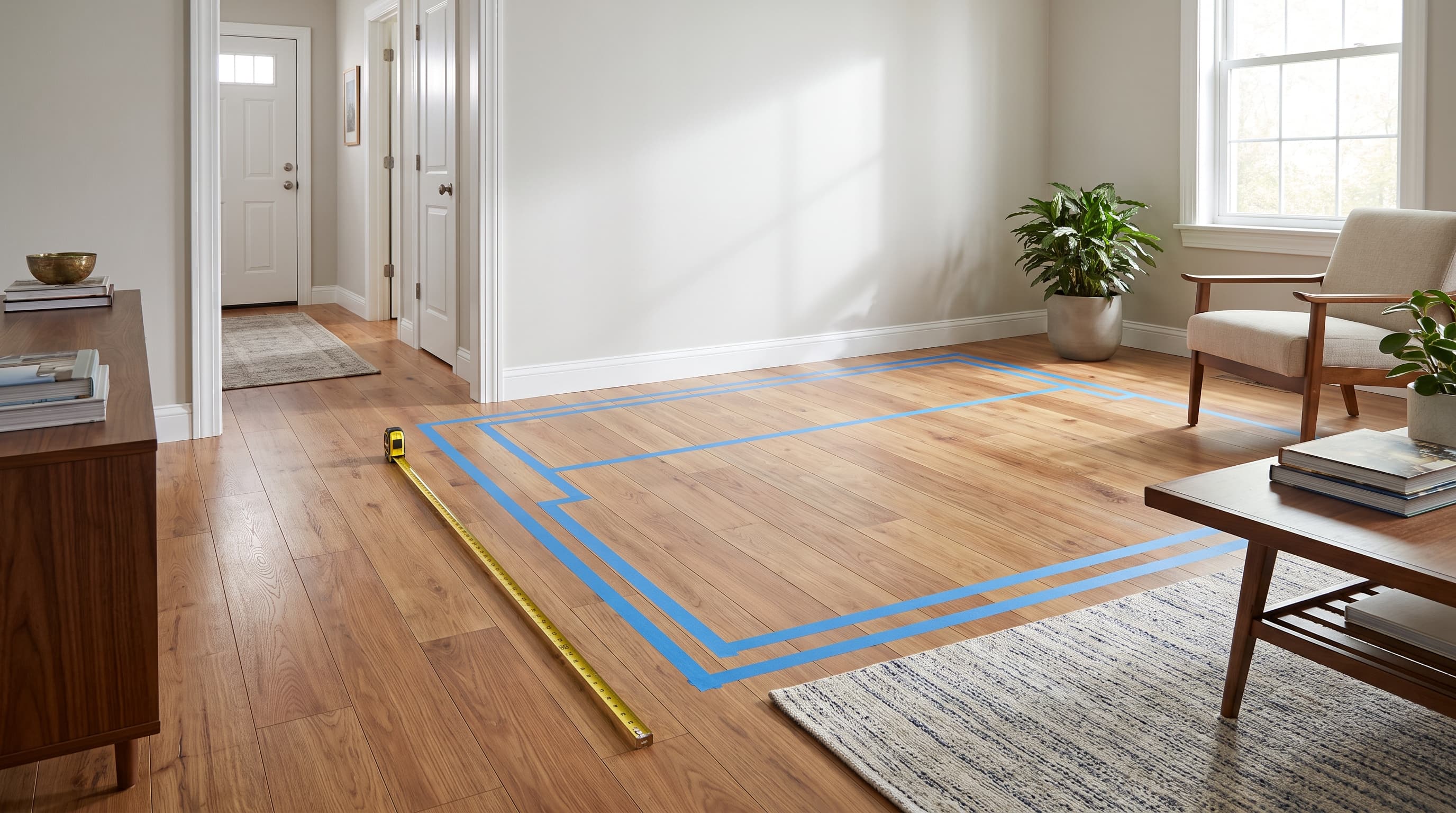
Getting the right couch length isn’t just about the sofa. It’s about how the sofa fits inside your space.
1. Measure Available Space Before Buying
Start with your room, not the sofa.
Use a tape measure to find the exact width of the wall where the sofa will go. Mark out the sofa’s length on the floor using painter’s tape. This shows you how the sofa will actually sit in the room before it arrives.
Key measurements to take:
- Wall width where the sofa will sit
- Distance from the sofa wall to the opposite wall
- Space needed for other furniture (coffee table, TV stand, etc.)
A general rule: leave at least 12 to 18 inches between your sofa and the coffee table. Leave 30 to 36 inches of walkway on either side or behind it.
2. Leave Proper Walking Clearance
Clearance is just as important as sofa size. A sofa that fits the wall but blocks the walkway will make your room feel like an obstacle course.
Follow these clearance guidelines:
- Main walkways: At least 36 inches wide
- Secondary walkways: At least 24 inches wide
- Between sofa and coffee table: 12–18 inches
- Between sofa and TV: At least 8–10 feet (for a comfortable viewing distance)
If you can’t maintain these clearances, the sofa is too large for your room.
3. Check Doorways and Delivery Access
This step is easy to forget and very expensive to ignore.
Before your sofa arrives, measure every doorway, staircase, and hallway it needs to pass through. Most standard interior doors are 80 inches tall and 32–36 inches wide.
A sofa that’s 90 inches long often needs to be tilted on its side or carried diagonally through doors. Measure the diagonal height of the sofa (from one top corner to the opposite bottom corner). This number tells you if the couch can fit through a doorway when tilted.
Pro Tip: Ask your retailer for the sofa’s diagonal measurement before delivery day.
Best Couch Length for Different Room Sizes
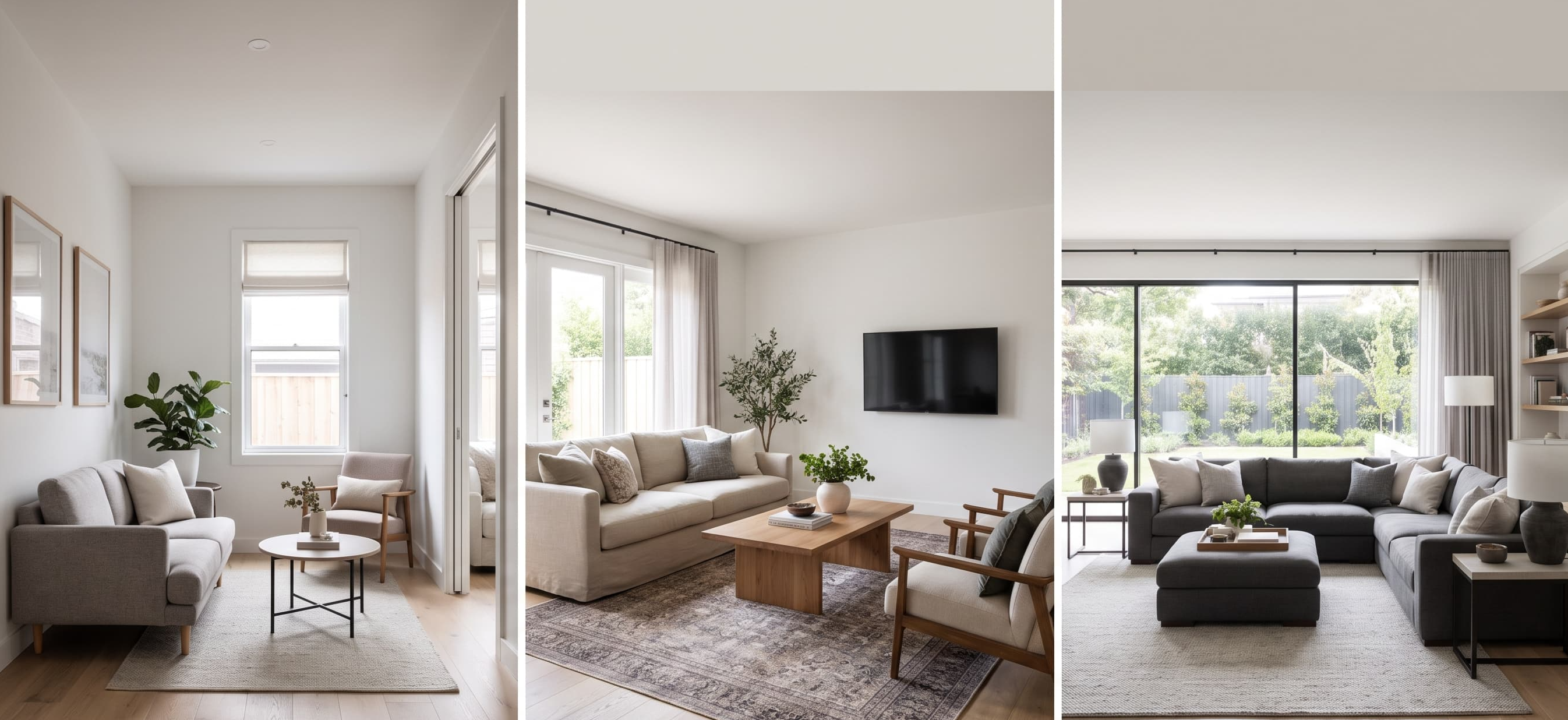
Room size should drive your sofa decision. Here’s a practical guide by room size.
1. Small Living Rooms
Small living rooms are typically under 12 × 15 feet.
Best sofa choices:
- Loveseat: 48–64 inches leaves room to move freely
- Apartment sofa: 70–80 inches fits without crowding
- Chaise sectional: Only if the room is wide enough for proper clearance
Avoid: Full-size three-seaters over 84 inches. They will overwhelm a small room.
Keep your sofa length under two-thirds of the wall it sits against. This visual balance makes the room feel open rather than cramped.
2. Medium Living Rooms
Medium living rooms run roughly 12 × 18 to 15 × 20 feet.
Best sofa choices:
- Standard three-seater: 84–90 inches is the sweet spot for this room size
- Small L-shaped sectional: Works well if traffic flow allows
- Two sofas facing each other: A great layout for medium rooms with high ceilings
Most households with a medium-sized living room will be happy with an 84-inch sofa. It seats three adults comfortably and leaves room for a coffee table and TV stand.
3. Large Living Rooms
Large living rooms are over 15 × 20 feet.
Best sofa choices:
- Large three-seater or four-seater: 90–110 inches
- L-shaped or U-shaped sectional: 110–160 inches
- Two sofas plus armchairs: Great for an open floor plan
In a large room, going too small is actually a bigger mistake than going too large. A tiny sofa in a large room looks out of place and feels uncomfortable. Aim for a sofa that anchors the seating area without leaving too much space around it.
How to Measure a Couch Correctly
If you already have a sofa and want to know its exact size, here’s how to measure it right.
Step 1: Measure Overall Length and Width
Use a metal tape measure. Fabric tape stretches and gives inaccurate readings.
- Length: Measure from the outer edge of one arm to the outer edge of the other, along a straight horizontal line.
- Width (depth): Measure from the very front of the seat cushion to the back of the sofa frame.
Always measure at the widest points. Arms and cushions may extend beyond the frame.
Step 2: Measure Depth and Height
- Seat depth: Measure from the front edge of the seat cushion to the back cushion.
- Total height: Measure from the floor to the highest point of the back cushion.
- Seat height: Measure from the floor to the top of the seat cushion (without pushing down).
Write all three measurements down. You’ll need them when comparing sofas or planning your room layout.
A well-planned layout makes every dimension work together. If you’re rethinking your full living space, a room layout blueprint can help you map furniture placement before you buy anything new.
Step 3: Check Diagonal Measurements for Moving
This is the measurement most people forget until moving day.
To get the diagonal measurement:
- Measure the sofa’s height (front to back, standing upright)
- Measure the sofa’s depth (front to back, lying flat)
This number tells you the minimum opening size needed to tilt the sofa through a doorway. If your door opening is smaller than this number, the sofa won’t fit.
When in doubt, ask your delivery team for help before the scheduled delivery date.
Common Couch Size Mistakes to Avoid
These are the mistakes that cost people the most money and cause the most frustration.
1. Ignoring Sofa Depth and Height
Most people focus only on length. Then the sofa arrives and feels too deep or too tall for the room.
A deep sofa in a narrow room will push into walkways. A very tall sofa back can block windows or make low-ceilinged rooms feel smaller.
Always check all three measurements, length, depth, and height, before you buy.
2. Buying Without Measuring Entry Space
This is the most costly mistake of all. Imagine paying for a sofa, booking delivery, and then watching the movers say it won’t fit through your door.
Measure every entry point: front door, hallway width, staircase width, any turns, and the room doorway. Do this before you order, after.
3. Choosing a Couch That Overcrowds the Room
A sofa that fills 90% of a wall looks wrong. It blocks natural traffic flow. It makes the room feel like a furniture showroom, not a home.
The sofa should take up no more than two-thirds of the wall it sits against. This leaves visual breathing room and keeps the space feeling balanced.
If you keep falling in love with sofas that are too large, try a different layout. Place the sofa in the center of the room facing the TV, rather than against the wall. This often makes a large sofa work in a space where it otherwise wouldn’t.
Before You Buy: What to Keep in Mind
Getting the standard couch length right changes how your whole room feels. Most three-seaters measure 84 to 90 inches, loveseats sit between 48 and 72 inches, and sectionals stretch past 100 inches.
But length alone won’t save you. Depth, height, and doorway clearance matter just as much.
Measure before you order. A sofa that fits right is one you’ll enjoy every day.
Which type of sofa are you shopping for? Drop your room size in the comments, and we’ll help you find the right fit.
Frequently Asked Questions
What is the most common couch length?
The most common couch length is 84 to 90 inches (7 to 7.5 feet). This is the standard three-seater size that fits in most living rooms. It comfortably seats three adults and works well with standard living room layouts.
How long is a standard three-seat sofa?
A standard three-seat sofa measures 84 to 90 inches in length. Compact versions start at 72 inches. Larger three-seaters can reach 96 inches. Always check the exact product dimensions before purchasing.
What couch size works best for a small room?
For a small room, a loveseat (48–64 inches) or an apartment sofa (70–80 inches) works best. Keep the sofa length under two-thirds of the wall it sits against. Also, choose a shallower depth (under 32 inches) to keep walkways clear and the room feeling open.
Can a couch be too long for a room?
Yes, a couch can be too long if it blocks walkways, crowds other furniture, or leaves little space around doors and windows. Measure your available wall space, entry points, and clearance areas before choosing a sofa size.
How do I know if a sofa will fit through my front door?
Measure the sofa’s diagonal height, from one top corner to the opposite bottom corner. If that number is smaller than your door opening, the sofa can be tilted through the opening. If not, it won’t fit.