Types of Couches: 17 Styles and How to Choose the Right One

You walk into a furniture store, and suddenly every sofa looks right. Then you get one home, and the room feels off. That is usually a category problem, not a taste problem.
The type of couch you pick shapes how a room feels, how it functions, and how long you stay comfortable in it.
This post covers all types of couches, what each is built for, and a clear, step-by-step process for choosing the right one for your room and lifestyle.
17 Types of Couches You Should Know Before Buying
Before you pick a couch based on looks or price, it helps to know what each style is actually built for and where it works best. Here are 17 couch types to guide you toward the one that fits your space, lifestyle, and comfort.
1. Sectional Sofa
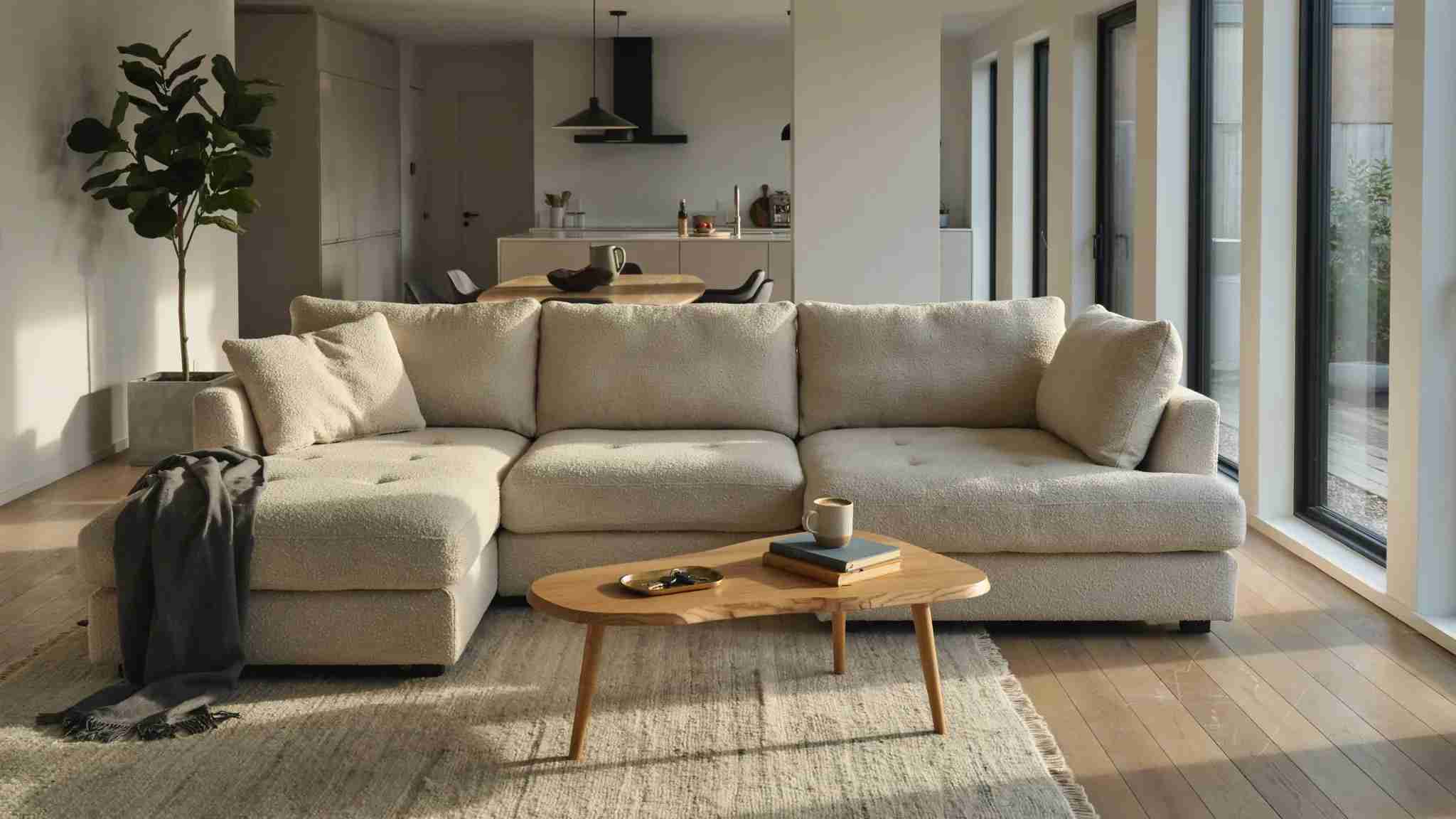
A sectional sofa is made of multiple connected pieces that form an L-shaped or U-shaped seating arrangement. It works best in large living rooms and open layouts where defining a seating zone matters. Sectionals are ideal for families and high-traffic spaces.
Most sectionals run 100 to 160 inches wide, so measure the room carefully before buying.
2. Loveseat

A loveseat is a compact two-seat sofa, typically 52 to 64 inches wide. It is proportioned for smaller rooms, apartment living, and supplementary seating in larger layouts.
A loveseat can also work alongside a larger sofa in a paired arrangement, providing seating balance without crowding the floor plan.
3. Chesterfield Sofa
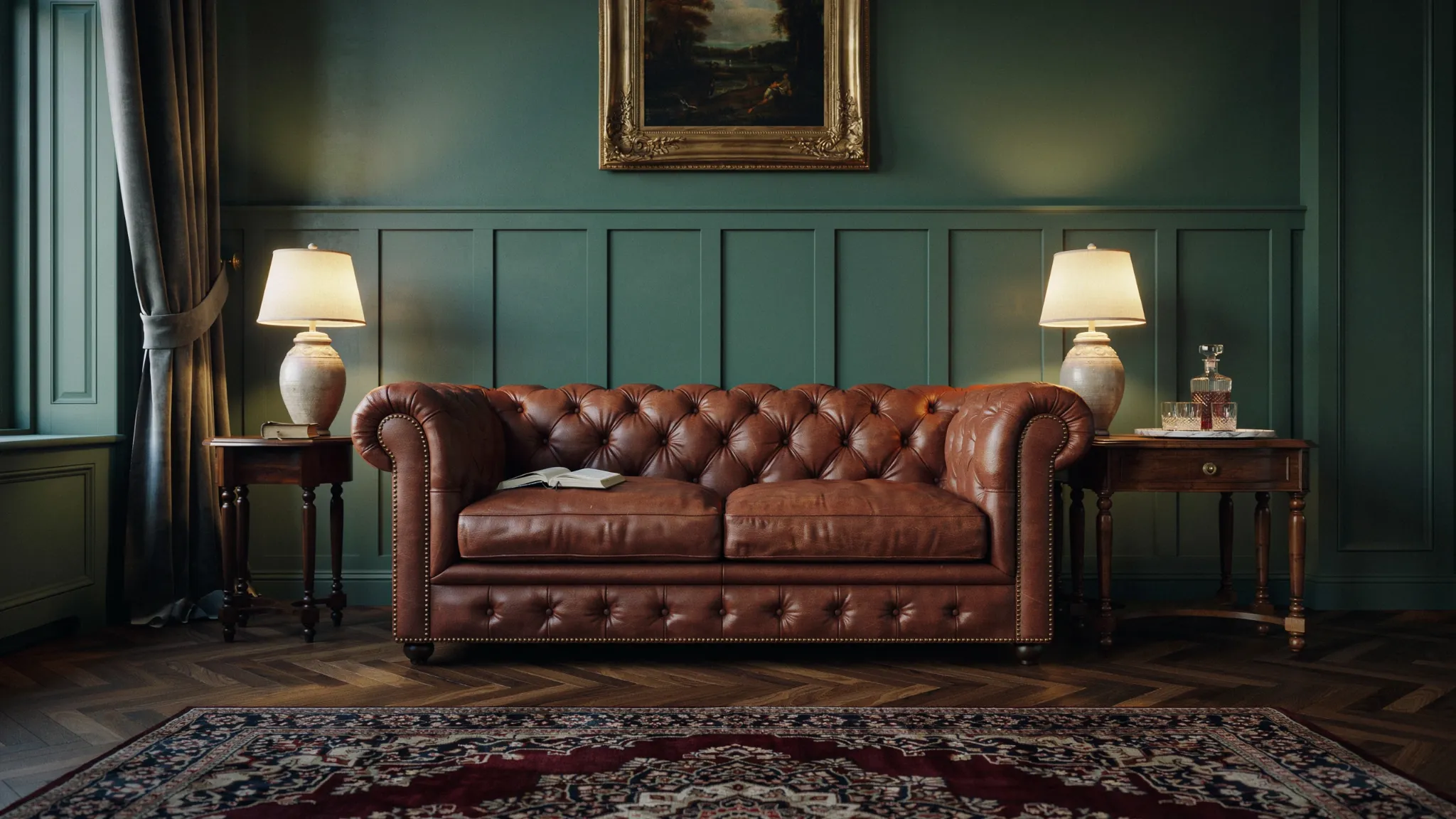
The Chesterfield is one of the most identifiable sofa styles in furniture design. It features deep button tufting across the seat, back, and arms, with the back and arms rising to equal height.
It reads as formal and high-character, working best in traditional, transitional, and maximalist interiors. The structure is bold enough to serve as a room’s focal point on its own.
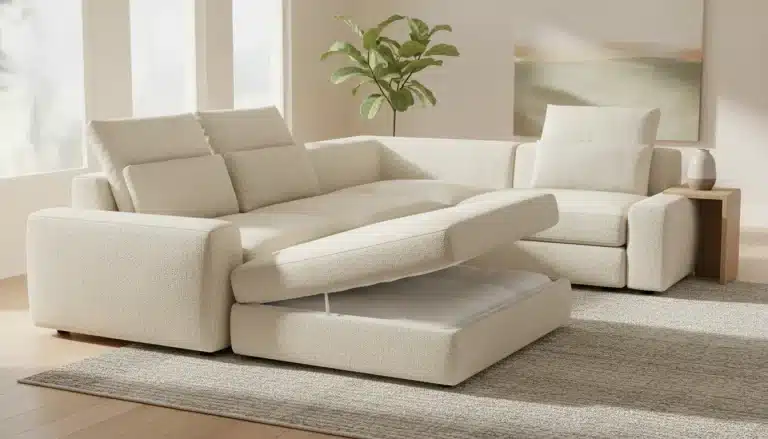
4. Sleeper Sofa

A sleeper sofa has a fold-out or pull-out mattress built into the frame, serving as standard seating during daily use and a sleeping surface when needed.
Sleeper sofas are heavier and deeper than standard sofas, and the mattress quality varies significantly by product. They suit guest rooms, studios, or any space where sleeping needs are occasional rather than regular.
5. Reclining Sofa

A reclining sofa includes one or more seats that extend outward via a manual or motorized mechanism. Designed for extended sitting comfort, it is commonly found in media rooms and casual family spaces.
The recline function requires additional clearance behind the sofa, which affects how the piece can be positioned in a room.
6. Camelback Sofa

The camelback sofa is defined by its arched back, which rises higher at one or two points along its profile, creating a distinctive curved silhouette.
It has strong roots in 18th-century furniture design and carries a formal, traditional identity. It works well in living rooms where period-appropriate or historically influenced design is the intent.
7. Lawson Sofa
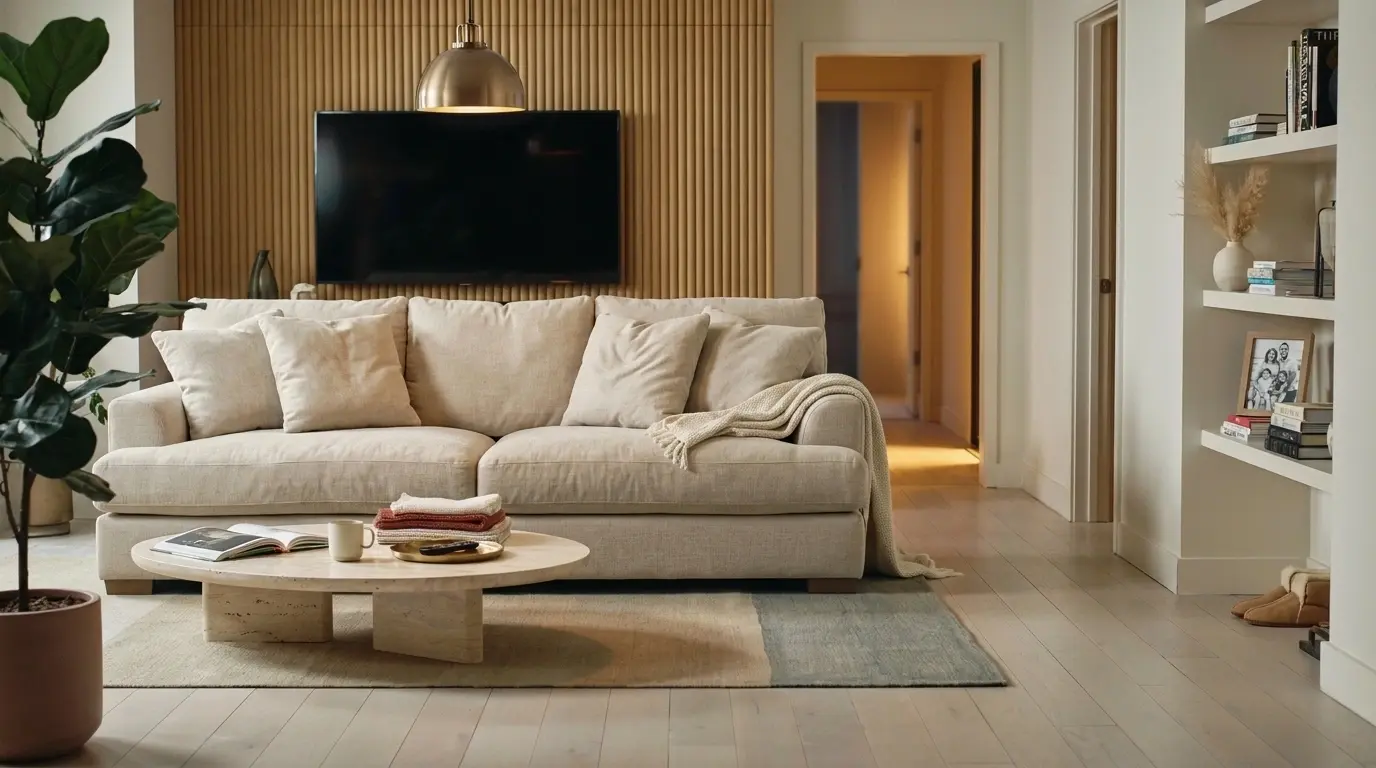
The Lawson sofa prioritizes comfort over formality. It features loose back cushions, a lower seat height, and arms that sit below the back cushion line.
The relaxed profile makes it a natural fit for informal living rooms and family spaces. Its neutral silhouette allows it to work across a wide range of interior styles without committing to one aesthetic.
8. Tuxedo Sofa

The tuxedo sofa features arms and a back at equal height, forming a clean rectangular silhouette. The structured, geometric form reads as modern and sharp, performing well in contemporary, minimalist, and design-forward interiors.
It functions as a statement piece through form alone, without requiring decorative detail.
9. Bridgewater Sofa

The Bridgewater sofa is built around softness and ease. It has low, rolled arms and a relaxed back cushion arrangement, making it one of the most approachable traditional styles available.
The understated silhouette does not compete with other design elements in the room, making it a practical choice for layered, collected interior spaces.
10. Mid-Century Modern Sofa
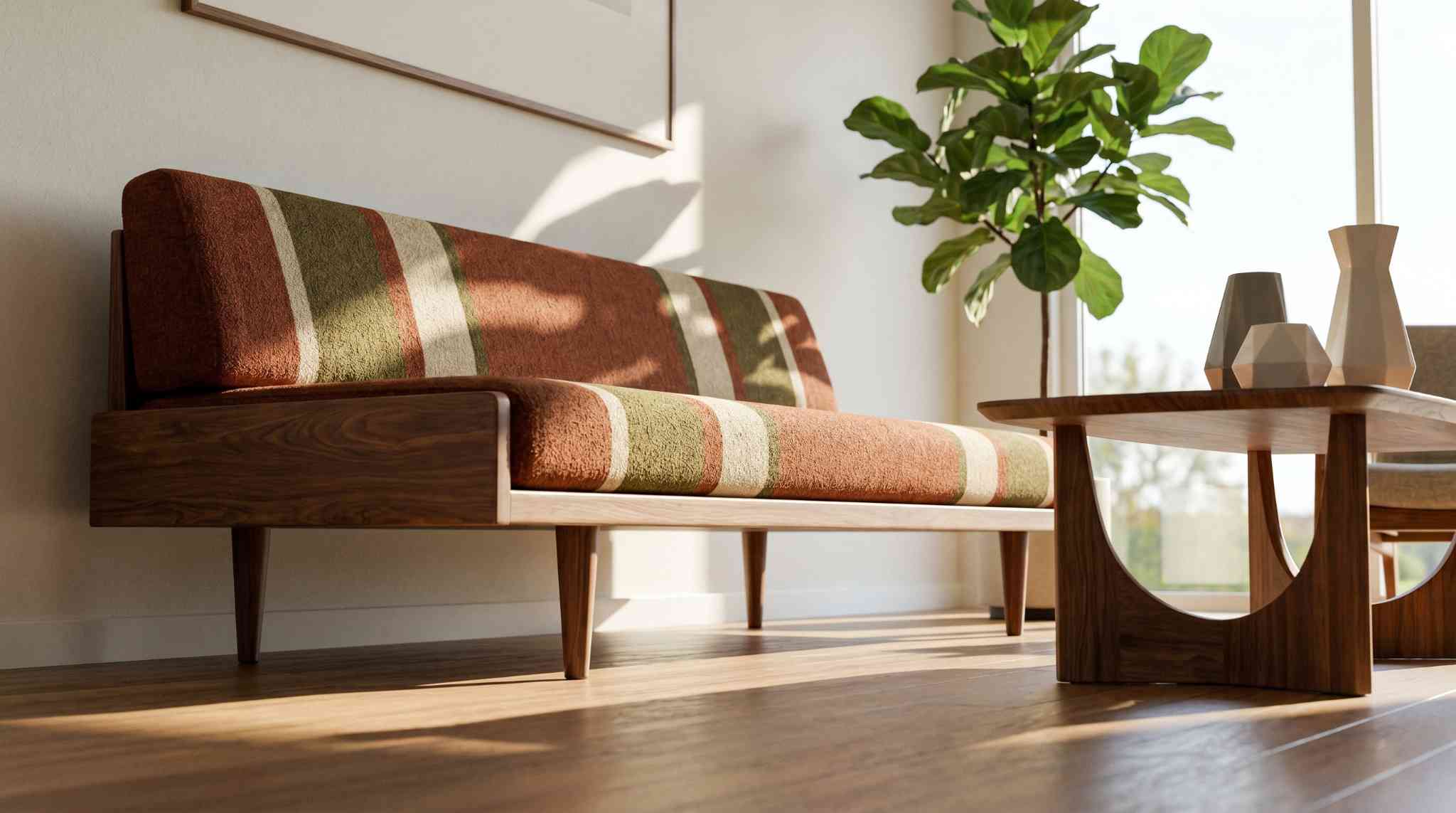
A mid-century modern sofa is characterized by tapered wooden legs, a low-slung profile, and clean lines with minimal ornament. The style draws from 1950s and 1960s Scandinavian and American furniture design.
It pairs well with natural materials, warm neutrals, and interiors built around geometric balance. The exposed leg detail keeps the piece from feeling heavy in smaller rooms.
11. Modular Sofa
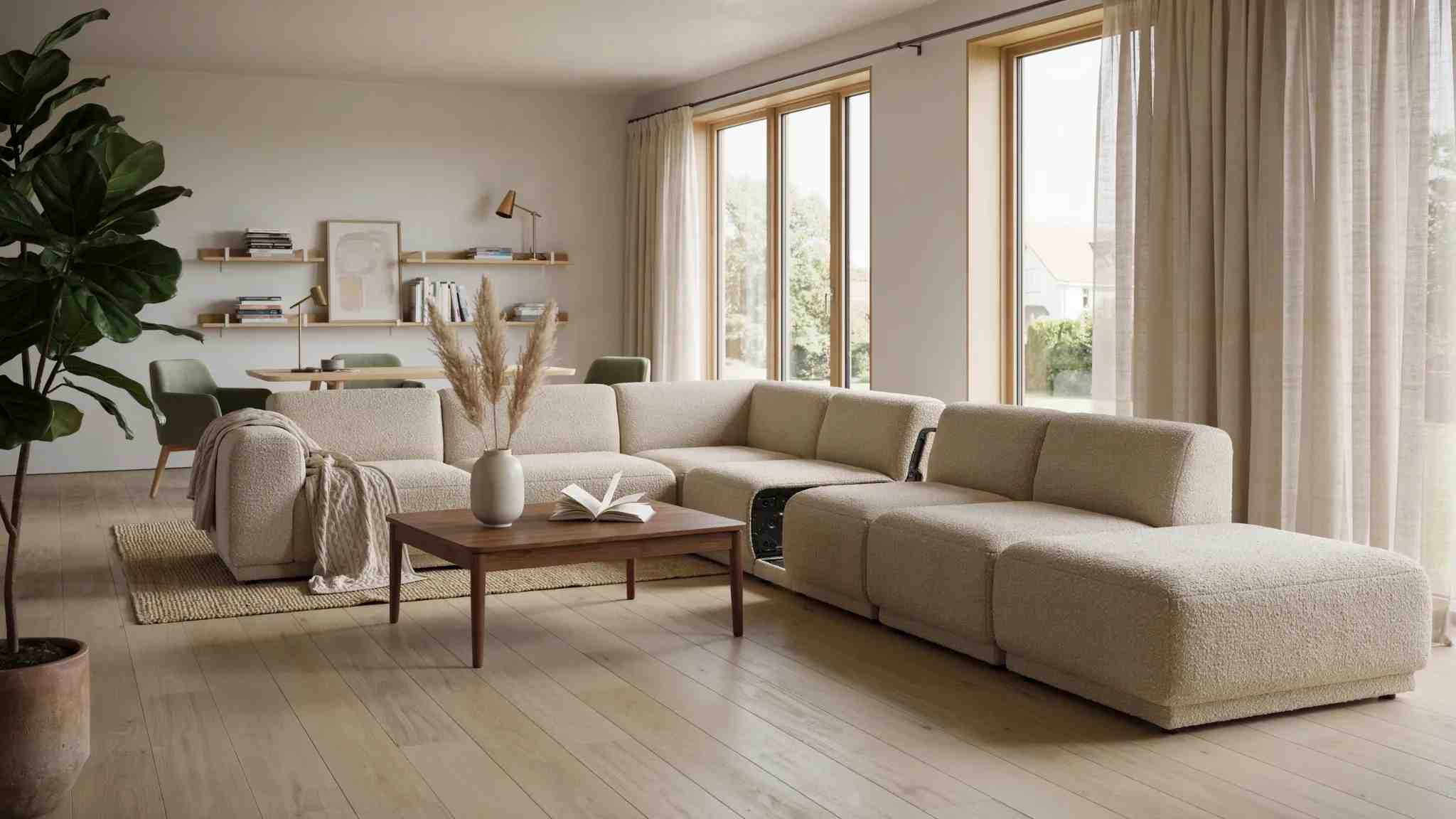
A modular sofa consists of individual seat units that connect and reconfigure into different arrangements. Unlike a standard sectional, modules can be added, removed, or reorganized as a room’s needs shift.
Modular sofas are more adaptable than fixed-frame pieces, ideal for open plans and homes where layouts change over time.
12. Chaise Sofa
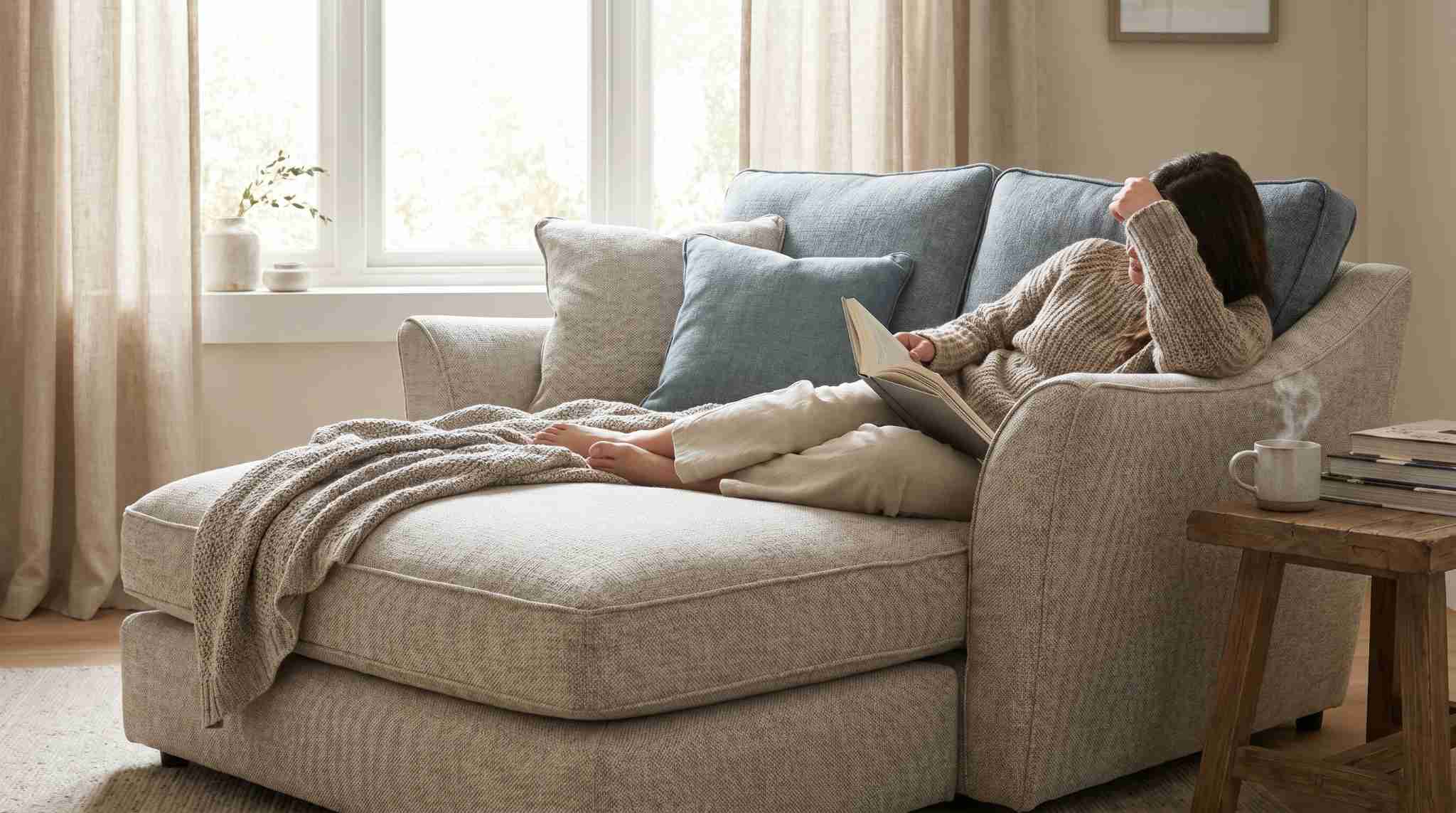
A chaise sofa includes an extended seat section at one end, allowing a person to fully extend their legs while remaining seated. It functions as a hybrid between a sofa and a chaise longue and performs well in reading corners, bedrooms, and smaller living spaces where a full sectional would be oversized.
The direction of the chaise extension, left-facing or right-facing, must be confirmed during the planning stage.
13. English Roll Arm Sofa
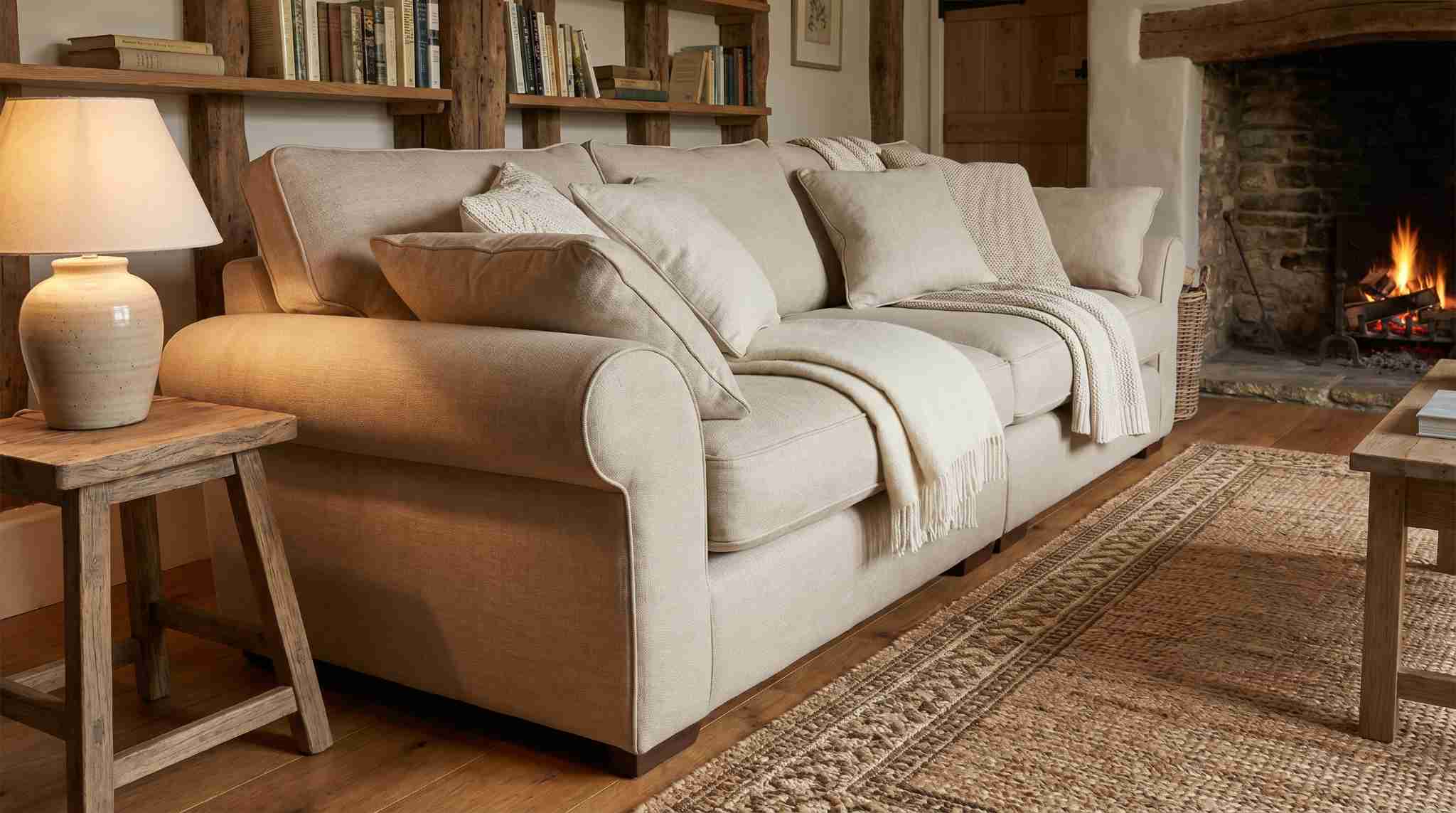
The English roll arm sofa features wide, rounded arms that roll forward and outward, creating a soft, informal silhouette.
It is associated with relaxed traditional interiors and country-style design. The generous arm width makes it a comfortable, approachable style, though the arm size adds to the overall footprint of the piece.
14. Futon Couch
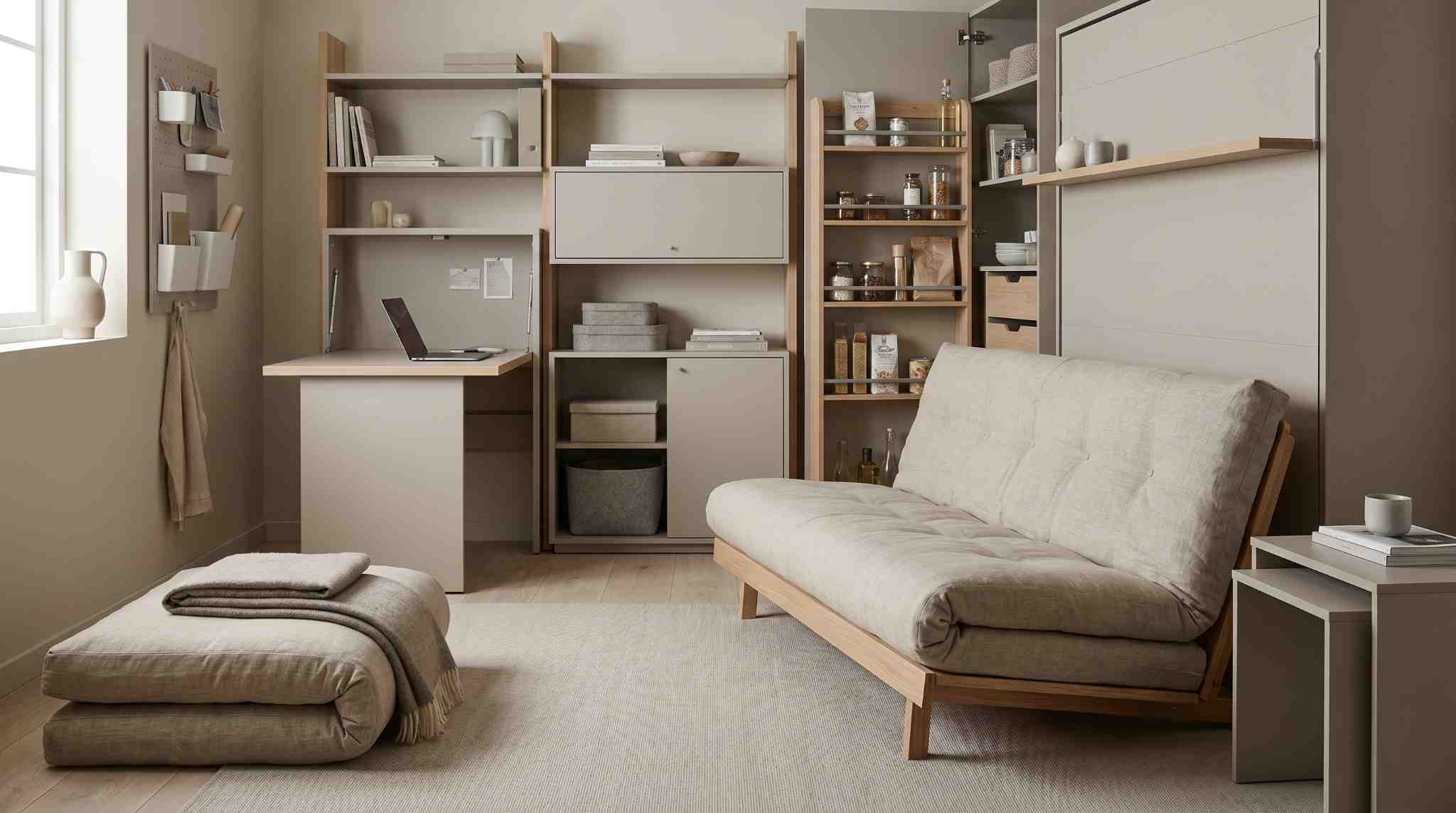
A futon is a frame-based piece with a flat mattress that converts between a seated and flat position. Unlike a sleeper sofa, it does not have an internal pull-out mechanism.
Futons are lightweight, low-cost, and space-efficient, making them a practical option for studios, dorm rooms, and secondary spaces. The sleep surface is generally firmer than that of a standard sleeper sofa.
15. Cabriole Sofa
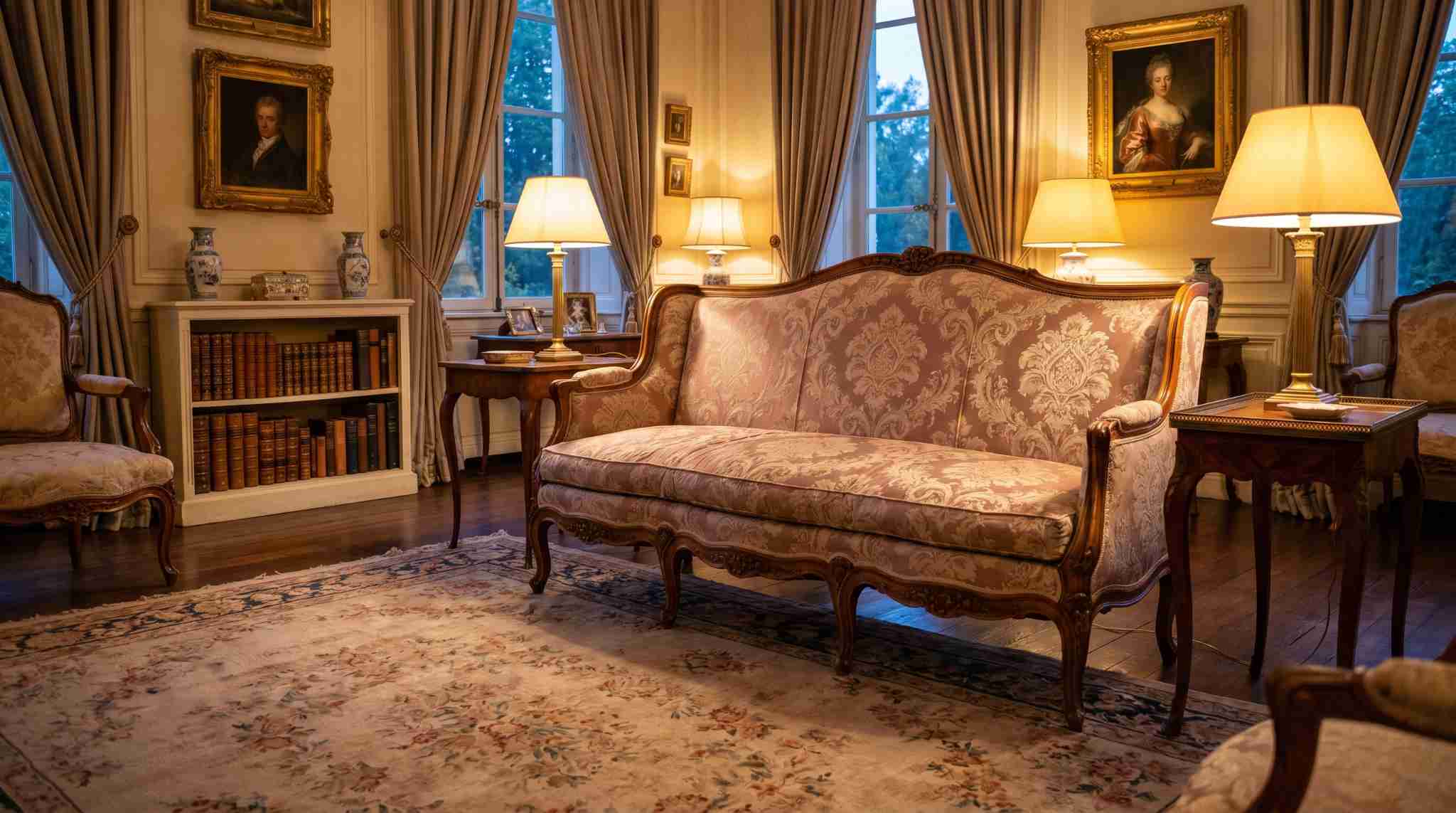
The Cabriole sofa features an exposed wood frame along the back and arms, often with carved detail. It has a relatively short, upright back and a formal silhouette rooted in French and Georgian furniture traditions.
The exposed frame gives it a decorative presence that pairs well with formal living rooms, antique collections, and historically styled spaces.
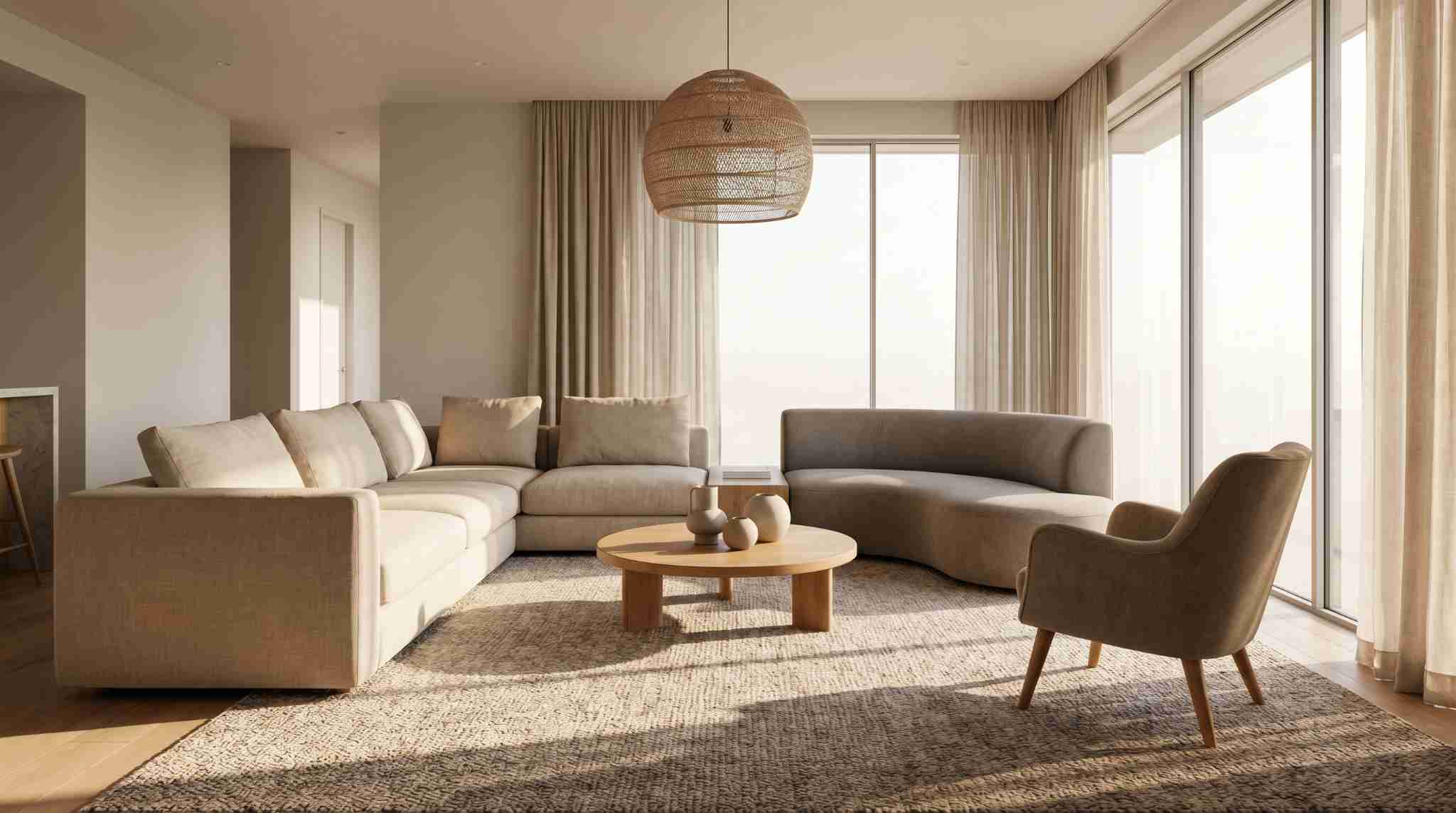
16. Curved Sofa
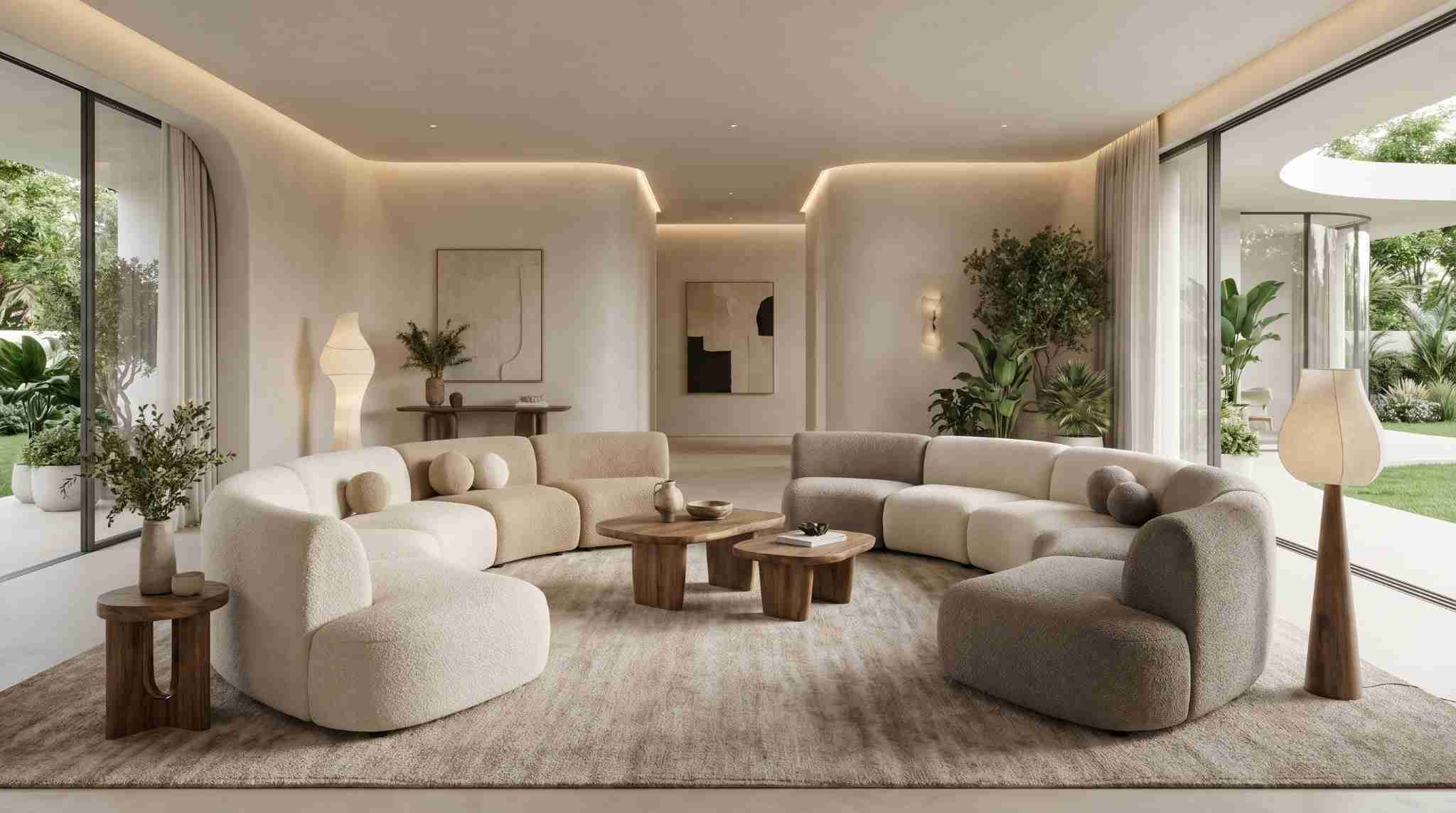
A curved sofa features a gently arching seat and back rather than a straight face. The form naturally draws conversation inward and creates a sense of intimacy in larger rooms.
Curved sofas are a recognized design element in contemporary and organic modern interiors. Placement requires more planning than a straight sofa, as the curve affects sightlines and traffic flow in a room.
17. Apartment Sofa
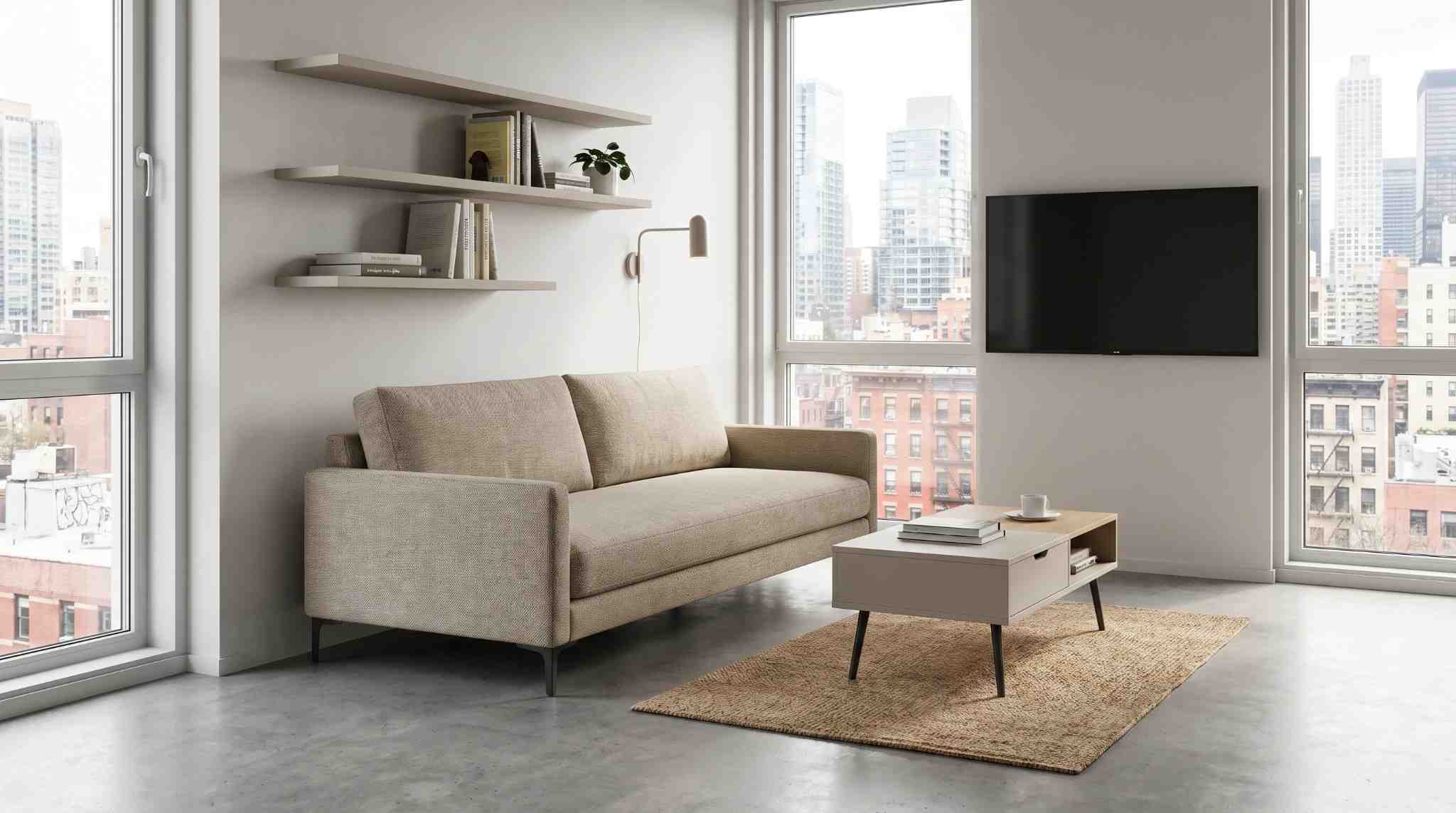
An apartment sofa is a scaled-down standard sofa, typically 70 to 80 inches wide with a shallower seat depth. It is proportioned specifically to fit tight floor plans without the visual and physical weight of a full-size model.
Despite the smaller scale, a well-chosen apartment sofa anchors a compact living room as effectively as a standard piece does in a larger space.
Common Mistakes When Choosing a Couch
Choosing the right couch is not just about style or comfort; it also involves avoiding common mistakes that can affect how the entire space functions. Many issues only become clear after the sofa is placed, which makes planning ahead essential.
| Mistake | Explanation |
|---|---|
| Choosing Style Before Function | Picking a sofa based on looks first often leads to poor usability. The sofa may not suit how the space is actually used, making the room feel disconnected or impractical. |
| Ignoring Scale and Proportion | A sofa that is too large overwhelms the room, while a small one fails to anchor it. Proper measurement and layout planning are essential before buying. |
| Overlooking Material Performance and Durability | Fabric choice affects longevity. Performance fabrics and leather suit high-use areas, while delicate materials are better for low-traffic spaces. |
| Not Considering Delivery and Access Constraints | Large sofas may not fit through doors, staircases, or hallways. Checking packaged dimensions and access routes prevents costly delivery issues. |
How to Choose the Right Couch Type for Your Space
Choosing the right couch for your space starts with measuring your room carefully and ensuring there is enough clearance for easy movement around key pieces like a sofa, side table, and coffee table, as well as walkways, so the layout feels open and functional rather than cramped.
Once the size and flow are clear, consider how the room will actually be used, since high-traffic or family spaces need durable, easy-care materials and flexible seating, while low-use rooms can accommodate more delicate or formal styles.
Comfort should match your lifestyle, too, with deeper, softer sofas working better for lounging and firmer seats better suited to conversation or work-from-home use.
Finally, consider long-term flexibility, as modular or smaller sofas like loveseats adapt more easily to changes in living situations, especially when paired with practical additions like a sofa side table that keeps the space functional and balanced without overcrowding it.
Conclusion
The right couch plays a central role in how a space feels and functions on a daily basis. When room size, layout flow, comfort needs, and long-term flexibility are all considered together, it becomes easier to select a piece that fits naturally into the environment.
When these elements come together in the right balance, the sofa goes beyond seating and becomes a key part of the room, supporting comfort, movement, and everyday living in a practical and lasting way.
A well-matched sofa also helps the room feel more organized and visually cohesive without requiring extra styling effort. Small supporting pieces like a sofa side table can further improve usability and make the space more functional.
Frequently Asked Questions
What is the most versatile couch style?
The Lawson sofa is one of the most versatile options. Its simple structure, low arms, and neutral design allow it to blend easily into modern, traditional, and casual interiors without feeling out of place.
What couch works best for small apartments?
An apartment sofa or loveseat is the best choice for small spaces. Both are designed with compact proportions, offering comfortable seating without taking up unnecessary floor space.
What couch style is most durable?
Durability depends more on the frame and upholstery than the sofa style itself. Hardwood frames combined with performance fabrics or genuine leather generally provide the longest lifespan and better resistance to daily wear.
Are modular sofas worth it?
Modular sofas are worth it for people who need flexibility. They are easy to rearrange, expand, or adapt to different layouts, making them a practical long-term choice despite a higher upfront cost.