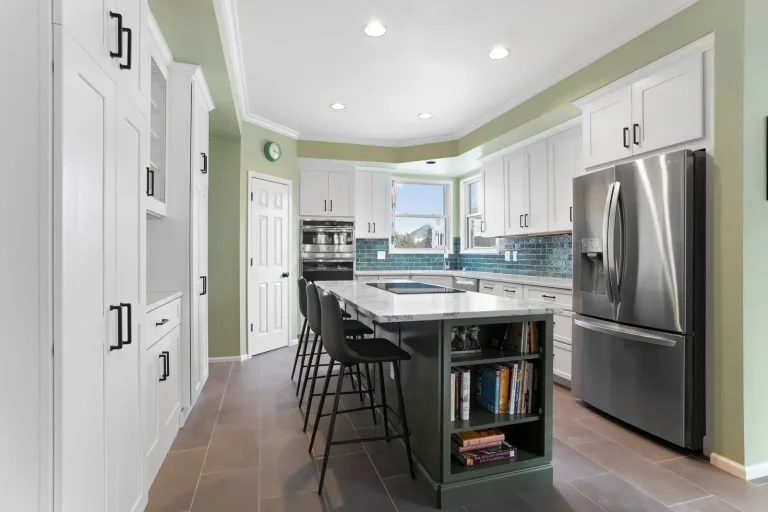

Iridescent Tile Bathroom Ideas: Colors, Placement & Design

Iridescent bathroom tiles are color-shifting glass or ceramic tiles that reflect different tones depending on lighting and viewing angles. They are increasingly popular in modern bathrooms because they add depth, shimmer, and a luxury spa-like feel without requiring bold colors or heavy patterns. In the morning under natural sunlight, an aqua iridescent tile might glow soft teal. Under warm evening lighting, the same tile may appear silver or pearl. That living, light-responsive quality is what makes iridescent tiles one of the most talked-about bathroom design choices going into 2026.
This guide walks through what iridescent tiles actually are, the best places to use them in a bathroom, which colors work for which styles, how to pair them with the right grout, and how much shimmer is actually enough before a space starts to feel overwhelming.
What Makes Iridescent Tiles Different from Regular Tiles
Iridescent tiles are glass tiles that have been treated with a special metallic or chemical coating and then re-fired. This process creates a color-shifting effect, meaning the tile appears to change color depending on how light hits it and where it is viewed from.
Think of the surface of a soap bubble or the inside of a seashell. The color you see is never just one flat tone. It shifts, brightens, and deepens as you move around it. Iridescent tiles bring that same optical quality to a permanent, durable wall or floor surface.
This is also what separates iridescent glass tiles from standard glossy tiles. A glossy tile reflects light, but it always shows the same color. An iridescent tile interacts with light, producing a range of colors from a single surface.
Three main material types exist:
- Iridescent glass mosaic tiles are the most common and most versatile. They come in small chip formats (typically 1×1, 1×2, or 1×3 inches) mounted on mesh sheets. These are well-suited for shower walls, shower floors, pool waterlines, and bathroom backsplashes.
- Glazed ceramic tiles with a luster finish offer a more subtle pearlescent effect. The shimmer is quieter than glass. These work well in bathrooms where you want warmth and softness rather than high-gloss sparkle.
- Mother-of-pearl shell tiles are the most organic and premium option. Because they are a natural material, no two tiles are identical. Many mother-of-pearl installations benefit from sealing and should be cleaned with non-acidic products.
All three types share one defining practical advantage: they are non-porous or near non-porous, which means they resist moisture, mold, and staining far better than many traditional bathroom tile materials.
Where to Use Iridescent Tiles in a Bathroom (by Zone)
The most important design rule with iridescent tiles is this: use them as a focal point, not a wallpaper. They are statement material. One well-chosen placement creates a wow factor. Covering every surface creates visual overload and the shimmer cancels itself out.
Here are the most effective placements, from lowest commitment to highest impact.
Shower Niche
A shower niche is typically 12 by 24 inches. That small surface area means you only need 2 to 4 square feet of tile, which allows you to choose a higher-end iridescent mosaic without a large spend. Many homeowners start with an iridescent shower tile installation in the niche before committing to a larger feature wall because it offers an easy way to introduce color-shifting finishes into the space.
The niche becomes a surprise detail. Guests using the shower notice it at close range, and the shimmer rewards the close-up view. This is the best starting point for anyone who wants to try iridescent tile without committing to a full wall.
Vanity Backsplash
The wall behind the sink is one of the first things a person sees when they walk into a bathroom. A 4-inch backsplash using iridescent mosaic tiles adds subtle sparkle without dominating the room.
For a stronger visual effect, extend the tile from the vanity countertop all the way to the bottom of the mirror, or floor to ceiling on that wall. The vertical run draws the eye upward and makes the ceiling feel higher, which is particularly effective in smaller bathrooms.
Single Shower Feature Wall
Choosing one wall inside the shower as the feature surface is a proven approach for walk-in showers and wet rooms. That one wall carries all the design weight while the remaining walls stay in a neutral complementary tile.
The wall that receives the most natural light from a window or the most artificial light from recessed fixtures is the best candidate. Without light hitting the iridescent surface at an angle, the shimmer effect is dramatically reduced.
Shower Floor and Pan
Mosaic iridescent tiles in small chip formats (1×1 or 1×2 inches) work particularly well on shower floors. The increased number of grout lines provides natural slip resistance, which is a practical requirement for shower pans. At the same time, water flowing over the surface intensifies the iridescent effect.
This is a lower-visibility placement than a wall but one that creates a genuine moment of luxury when someone looks down while showering.
Iridescent Tile Colors and the Bathroom Styles They Suit
Color choice is where the design comes together. Iridescent tiles do not show just one color, but they do have a base tone that sets the overall mood of the space.
|
Base Color Profile |
Visual Effect |
Target Interior Design Theme |
|
Aqua and Marine Blue |
Shifting turquoise, soft teal, and polished silver |
Coastal, Mediterranean, and wellness spa concepts |
|
Bright White and Pearl |
Muted cream, soft pink, and clean alabaster |
Minimalist, Scandinavian, and modern farmhouse |
|
Iridescent Charcoal Black |
Intense rainbow spectrums contrasted against deep obsidian |
Contemporary, industrial, and high-end luxury |
|
Burnished Gold and Bronze |
Warm amber, copper, and rich metallic gold highlights |
Glam, Art Deco, and curated boutique aesthetics |
|
Neutral Opalescent |
Subtle, multi-tone clear reflections over neutral gray bases |
Universal adaptability across mixed-palette layouts |
|
Emerald and Forest Green |
Rich jewel-toned jade, deep sage, and gold reflections |
Eclectic, traditional, and nature-inspired environments |
Aqua and blue tiles are the most popular choice for bathrooms. The color reinforces the water theme of the space and creates a spa-like atmosphere. Under natural light, aqua tiles shift between turquoise, green, and silver. This makes them a natural fit for coastal-inspired bathrooms and Mediterranean-style designs.
White and pearl iridescent tiles are the most versatile option. They read as neutral from a distance but add depth and movement up close. They work in minimalist bathrooms where everything else is calm and clean, providing just enough interest without demanding attention.
Iridescent black tiles are visually striking because the dark base color amplifies the shimmer dramatically. The contrast between the deep, dark base and the rainbow-like iridescence creates an effect that is hard to achieve with any other material. Use these on a single feature wall in a contemporary or luxury bathroom.
Gold and bronze iridescent tiles reflect light warmly and pair exceptionally well with brushed brass or matte gold fixtures. These are a strong choice for anyone creating a boutique hotel aesthetic or a glamorous primary bathroom.
Grout Color Choices for Iridescent Tiles
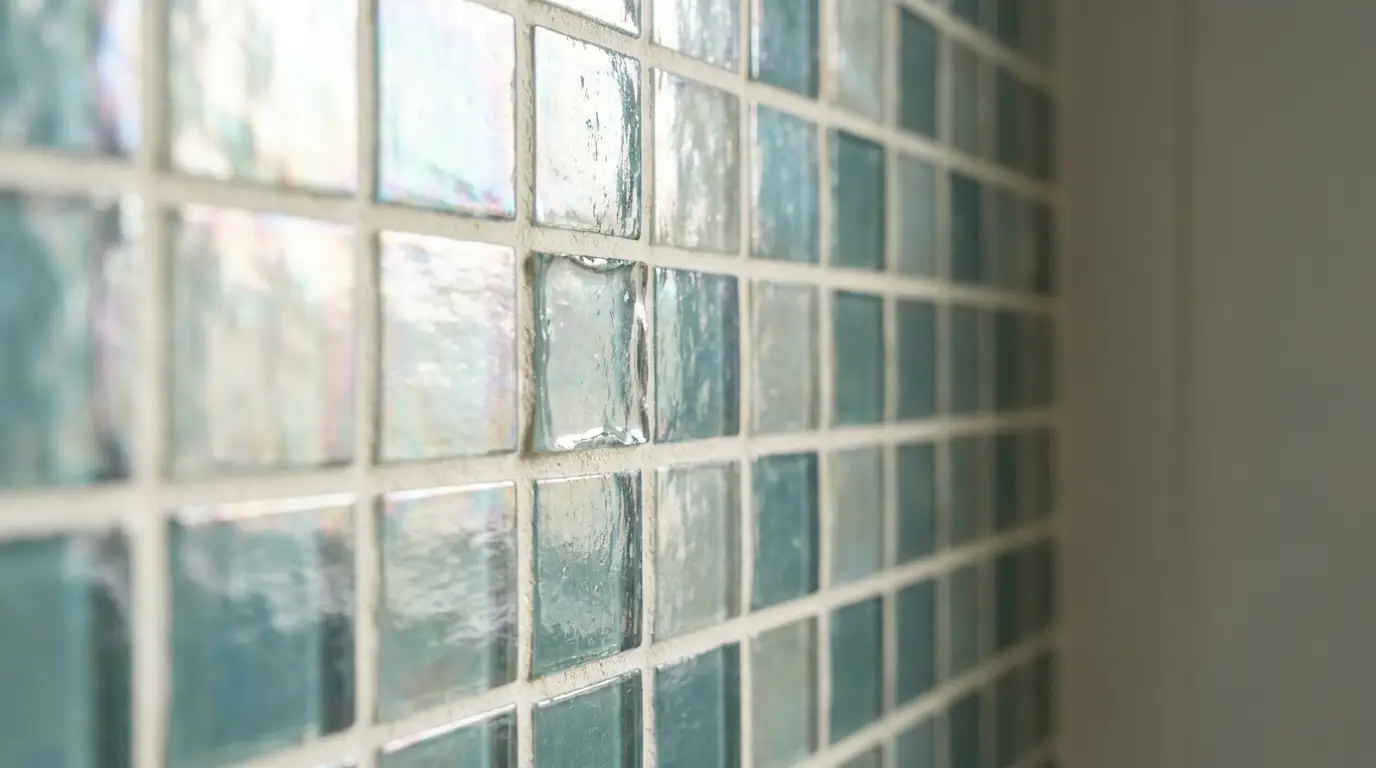
Grout color has a significant effect on how iridescent tiles read from a distance. The two main approaches are blending and contrasting.
Matching or tonal grout (grout color close to the tile’s base color) creates a seamless surface. The shimmer becomes the only thing you notice. This works beautifully with aqua tiles and a soft blue-gray grout, or with white tiles and a light cream grout. The overall look is cohesive and refined.
Contrasting grout (white grout with black or dark tiles, or dark grout with light tiles) makes each individual tile chip stand out as a distinct element. This creates a more graphic, patterned look. It works well in smaller feature areas, like shower niches, where the close-up detail is the point.
One practical note: avoid very bright white grout in shower floors and wet areas. Bright white grout shows soap residue and staining quickly. A light gray or off-white grout is easier to maintain while still keeping the surface looking clean.
How Lighting Affects Iridescent Tiles (and Why It Matters More Than You Think)
Iridescent tiles depend on light. The color-shifting effect happens because light diffracts off the tile’s coating at different angles. Without the right lighting, even the most beautiful iridescent mosaic can look flat and dull.
Color temperature (Kelvin rating) matters:
- 2700K warm white bulbs pull out the golden, pink, and amber tones in the tile. This creates a cozy, intimate bathroom atmosphere.
- 3000K soft white is the best all-around choice for iridescent tiles. It provides a neutral enough light to let the full spectrum of the tile’s color range show without pulling it too warm or too cool.
- 4000K and above (daylight bulbs) can make iridescent tiles look cold and harsh. Avoid this color temperature in bathrooms where the tile is a focal point.
Fixture placement:
A single overhead flush-mount fixture is not enough. It lights the tile from directly above, which is the angle that shows the least shimmer. Instead, use recessed downlights positioned 6 to 12 inches away from the tiled wall so the light grazes across the surface. This wall-grazing technique is what activates the iridescent effect and shows the full range of color shift.
If your bathroom has a window that faces the tiled wall, that natural light does most of the work for you. Orient your feature tile installation so it faces or catches natural light where possible.
Design Rules: How Much Iridescent Tile Is the Right Amount
There is no specific square footage rule, but there is a reliable principle: treat iridescent tiles the way you would a statement piece of jewelry. One striking piece elevates the whole. Several pieces in the same room compete with each other and cancel the effect.
What works:
- One feature wall in a shower combined with neutral tiles on the remaining walls
- An iridescent vanity backsplash with plain walls above
- An iridescent shower floor with subway tile walls
- Iridescent tile as a shower niche accent with standard tiles everywhere else
What to avoid:
- Iridescent tiles on all four walls of a shower
- Mixing multiple iridescent colors in the same room (for example, aqua iridescent on the walls and gold iridescent on the floor creates visual chaos)
- Pairing iridescent tiles with heavily patterned or textured tiles in the same field
For smaller bathrooms: Iridescent tiles are particularly effective because the light-reflecting quality of glass makes small spaces feel larger and brighter. A single iridescent wall in a small shower enclosure can visually push the walls outward. Stick to lighter base colors (white, pearl, aqua) in compact bathrooms to maximize this effect.
Practical Buying, Installation, and Maintenance Tips for Iridescent Tiles
Order samples before committing. Iridescent tiles look very different in photographs than they do in person. The shimmer is visible in photos, but the range of color shift and the way it responds to your specific lighting is something you can only judge with a physical sample in your space. Most suppliers offer samples for $2 to $5 per tile. For homeowners comparing suppliers before ordering samples, reviewing several established online tile stores in the USA can make it easier to understand the range of materials and specialty finishes available.
Check the application rating. Not all iridescent tiles are rated for wet areas, and not all wet-area tiles are rated for full submersion. A tile intended for bathroom walls may not be suitable for a pool waterline or a shower floor. Always confirm the application rating before purchasing.
Mesh-mounted sheets speed up installation. Most iridescent glass mosaics come on 12×12 inch mesh-backed sheets. These make layout and installation significantly faster and more consistent than setting individual tiles. For a shower niche or small accent area, even an inexperienced DIYer can achieve a professional result with mesh-mounted sheets.
Use epoxy grout for shower floors and wet zones. Epoxy grout does not require sealing, resists staining, and bonds strongly with glass tiles. For wall applications above the waterline, unsanded cement grout in the appropriate color is an acceptable choice.
Clean with pH-neutral products. Glass tiles should never be cleaned with acidic cleaners (like vinegar-based products in high concentrations) or abrasive scrubs, which can damage the iridescent coating over time. A mild, pH-neutral cleaner applied with a soft cloth is all that is needed for routine maintenance.
A Quick Summary: Iridescent Tile Bathroom Dos and Don’ts
|
Do |
Don’t |
|
Use as a single focused accent (one wall, one floor, or one niche) |
Tile all four shower walls with iridescent material |
|
Choose 3000K soft white bulbs to show the full color spectrum |
Use daylight bulbs (4000K+) near the tile |
|
Position recessed lights to graze across the tile surface at an angle |
Rely on a single overhead flush-mount fixture |
|
Use matching or tonal grout for a seamless, continuous look |
Use bright white grout in shower floor wet zones |
|
Order physical samples to test under your own lighting before buying |
Purchase full quantities based on product photos alone |
|
Confirm the wet-zone or submersion rating before buying |
Assume all decorative glass tiles are safe for shower floors |
Iridescent tiles reward thoughtful placement. When they are used in the right zone, with the right lighting, they turn a functional bathroom wall or floor into something that feels genuinely luxurious and alive. For homeowners looking to explore this material further, Mineral Tiles, an online tile store specializing in glass mosaics, swimming pool tiles, and decorative surfaces, offers a curated selection of iridescent glass tiles in aqua, black, white, gold, and neutral opal finishes, with options suited for bathroom walls, shower applications, and pool waterlines. They have over 20 years of experience, 15000+ reviews, a 30-day no-hassle return policy, and sample offers from $2. This makes Mineral Tiles the best in the list.