70s Interior Design Ideas for Any Modern Home

Open shelving. Bare concrete. Rooms that look polished in photos but feel cold in person. That was the design mood for most of the last decade.
Now, 70s interior design is back. And it has nothing to do with nostalgia. It is about warmth. The 1970s understood something that cool minimalism never did: a room should feel good to be in, not just good to photograph.
Terracotta, curved sofas, rattan pendants, velvet chairs, layered textures. All of these are returning to modern homes. The key is knowing which elements to bring in and how far to push them.
Go all in, and the room reads as a theme. Edit carefully, and the same choices produce something rich, layered, and fully current.
Below are the colors, materials, furniture styles, and specific ideas that translate the 70s into a modern home without it reading as a time capsule.
What Is 70s Interior Design?
70s interior design is the decorating style that shaped US homes through the 1970s. It focused on earthy colors, natural materials, and comfortable spaces built for conversation and daily life.
Unlike the bright, futuristic style of the 1960s, the decade leaned toward warmth and connection to the natural world. Formal sitting rooms gave way to casual spaces designed around gathering.
The style is recognized by:
- Earth-tone colors: burnt orange, olive green, mustard yellow, terracotta, and chocolate brown
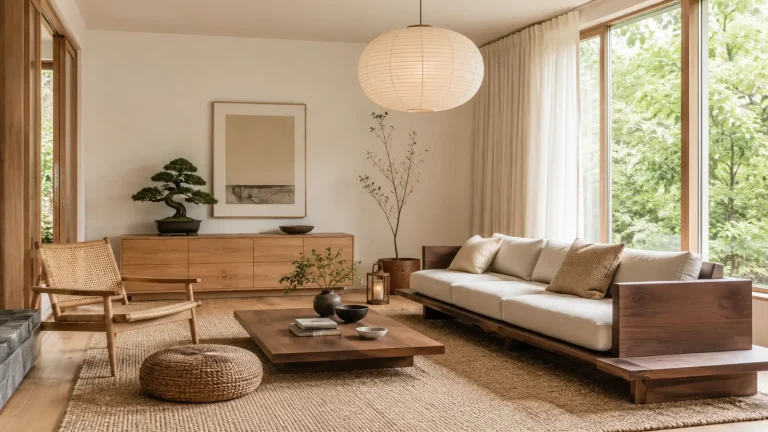
- Natural materials: wood, rattan, stone, leather, and linen
- Curved, low-profile furniture with soft silhouettes
- Layered textures including velvet, shag, and woven fabrics
- Indoor plants used as deliberate design elements
- Bold patterns on wallpaper, rugs, and upholstery
The modern version uses these features with more restraint. One or two elements at a time work far better than layering the full decade into a single room.
How the 1970s Changed Home Design
The 1970s did not follow one design rulebook. Three cultural forces shaped how homes looked during the decade.
The environmental movement pushed homeowners toward natural materials. Wood, stone, rattan, and woven textiles replaced the synthetic finishes of the 1960s.
The shift toward casual living ended the era of the formal sitting room. People wanted spaces built around comfort, not appearance. And as travel became more accessible, handmade crafts, ethnic patterns, and natural textures from around the world entered American homes.
The 1960s favored bright, futuristic colors, sleek synthetic furniture, and structured layouts. The 1970s replaced all three with warm earthy tones, plush curved seating, and relaxed spaces designed for living in rather than looking at. That contrast is exactly why the era reads as warm and personal when applied selectively today.
The Colors That Define the 70s Look
Color was the most recognizable feature of the decade. The palette moved away from cool neutrals toward shades drawn directly from nature. These are the six most-used colors of the era, and how each works in a modern space.
| Color | Best Modern Use |
|---|---|
| Terracotta | Accent wall, ceramic vessels, lamp bases |
| Burnt orange | Velvet cushions, accent chairs, throws |
| Mustard yellow | Throw pillows, light fixtures, small accessories |
| Olive green | Kitchen cabinets, curtains, upholstery |
| Chocolate brown | Leather furniture, wood stains, rugs |
| Warm beige | Foundation walls, linen curtains |
Bring the palette in through soft furnishings first. A burnt orange cushion, an olive linen throw, a mustard ceramic lamp base. Test those against your current walls before committing to paint.
One practical rule: pair every warm 70s tone with warm white rather than cool white. The undertone is the detail that makes or breaks a warm palette.
Natural Materials That Anchor the Style
The 1970s celebrated materials that came from the earth. Wood, rattan, stone, leather, and linen filled homes, adding texture and warmth that synthetic surfaces could not match.
The easiest modern applications:
- A rattan pendant light above a dining table
- A walnut coffee table or open shelving unit
- A woven jute or deep-pile wool rug under a seating area
- A stone or limewash plaster fireplace surround
- Cork accents on a wall or pinboard panel
One rattan piece per room reads as a material choice. Multiple rattan pieces in the same room read as a theme. The same rule applies to wood. One accent wall or a few warm wood furniture pieces works well. Paneling on all four walls in a small room can quickly tip the room from cozy to closed-in.
Furniture Silhouettes Worth Bringing Back
The 1970s moved away from sharp angles toward rounded, plush, low-profile shapes. Every one of those shapes is back in US homes now.
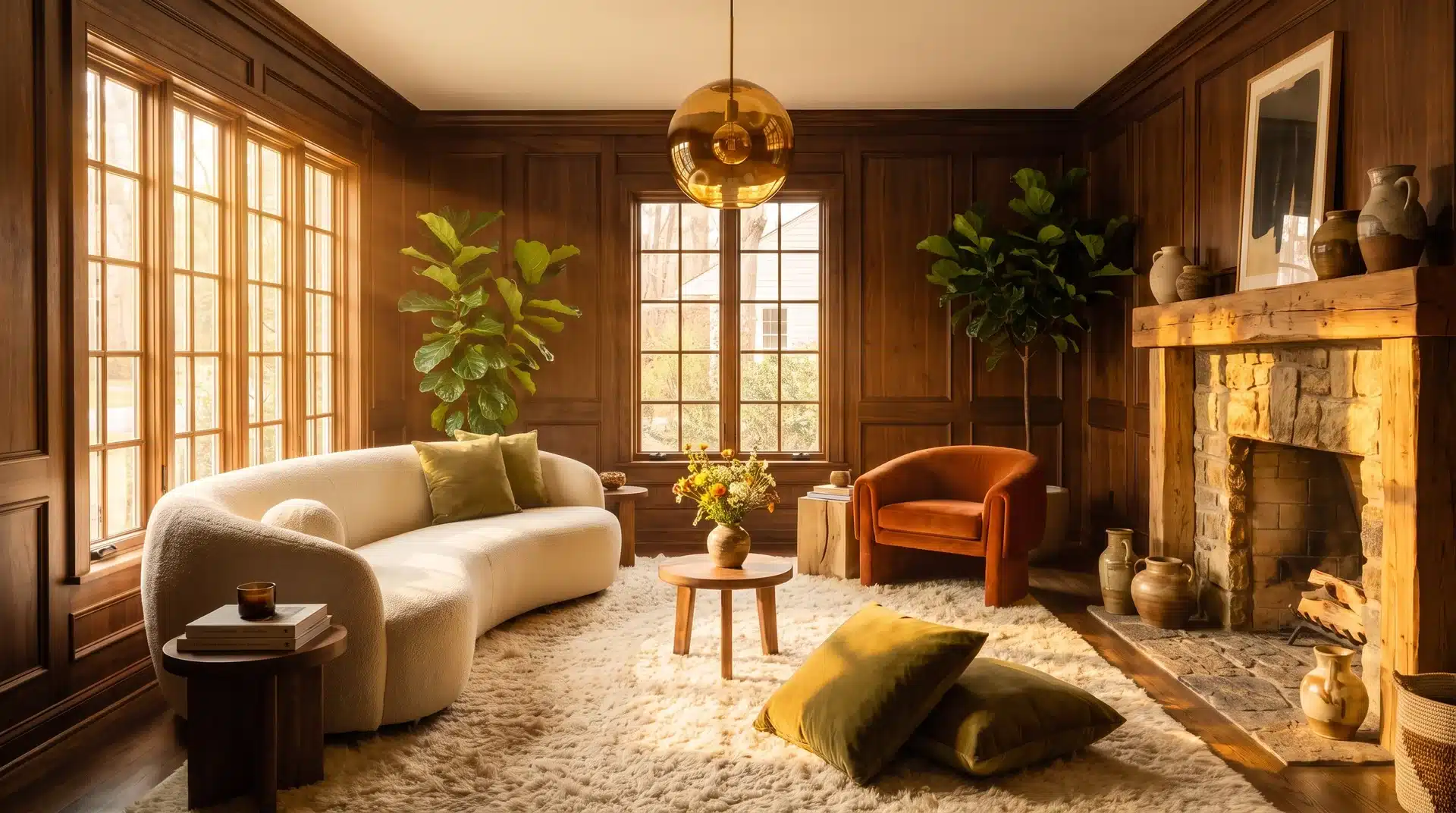
Curved sofas are the single fastest way to bring 70s character into a modern living room. A rounded form in bouclé or velvet softens a room full of rectangular furniture. It makes a space feel more inhabited and more considered.
Statement chairs do the same work at a smaller scale. A papasan chair, a sculptural lounge chair, or a rounded armchair in a 70s palette color adds personality without a full room redesign.
Low-profile coffee tables and slab-style side tables complete the composition. They add the silhouette of the decade without adding visual weight to the room.
For a full breakdown of sofa shapes and styles, this overview covers what each silhouette works best for, from low-profile to modular to sectional.
15 Retro 70s House Interior Ideas to Try
The 1970s ran several design directions at once. Earthy naturalism, bold maximalism, and modernism all coexisted. That is why there are so many ways to bring the era into a current space without it reading as a costume. Each idea below includes a note on how far to push it.
1. Earthy 70s Color Palette
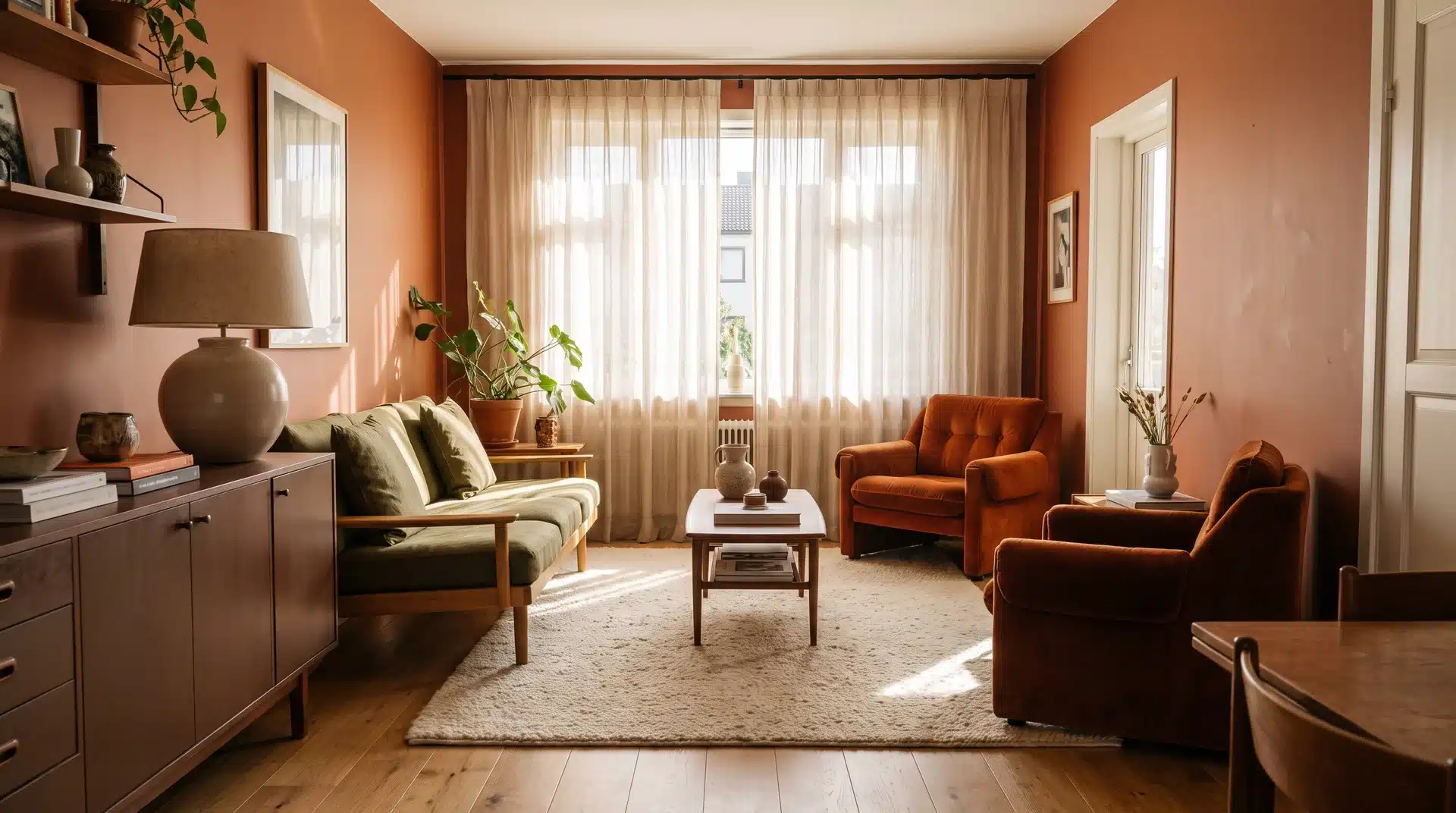
These colors replaced the bright look of the 1960s with something grounded and organic. They are doing the same thing again after years of cool, flat neutrals.
One terracotta accent wall reads as a design decision. Four terracotta walls in a small room read as a cave. Start with soft furnishings: a burnt-orange cushion, an olive throw, a mustard lamp base. Test those against your existing walls before touching the paint.
Pair every warm 70s tone with warm white, not cool white. That undertone is what holds the palette together.
2. Wood Paneling
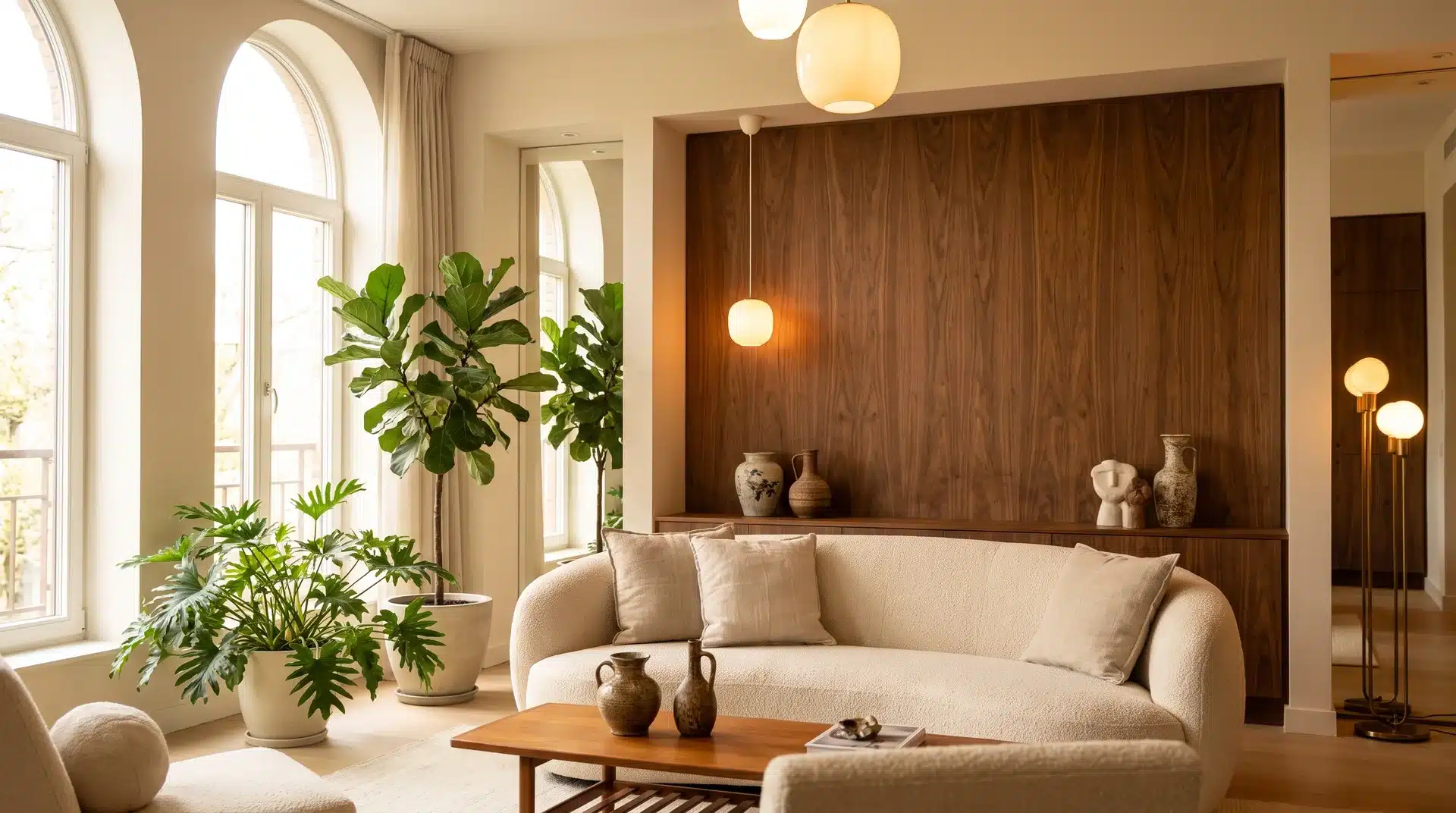
Wood paneling lined US living rooms, basements, and bedrooms throughout the 1970s. It created a warm, enclosed quality that still works in modern spaces when used with restraint.
The current version is not dark, heavy pine. It is warm walnut, white oak, or limewash-finished wood, chosen to match the room’s existing finishes. Fluted panels installed behind a sofa or bed wall update the reference without directly replicating it.
Paneling one wall behind the main seating creates the cozy quality the 70s were after. Avoid all four walls in a small space. The enclosure tips from cozy to claustrophobic faster than expected.
3. Shag and Plush Rugs
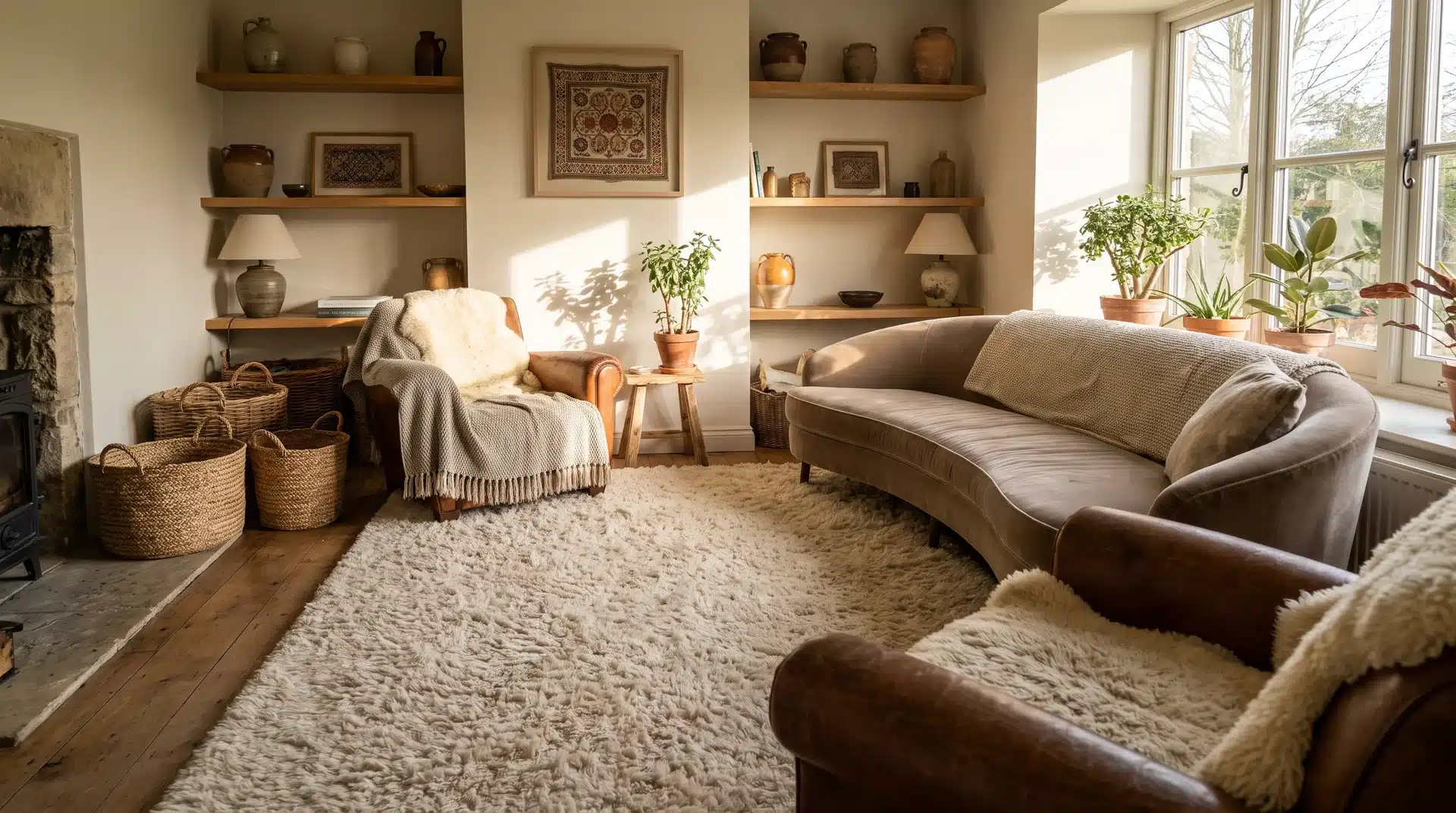
The shag carpet defined 1970s floors. Wall-to-wall installation goes too far for a modern interior. A deep-pile rug under the main seating does the same job: it adds underfoot texture that changes how a room feels.
Choose burnt orange, warm cream, or chocolate brown for the most 70s-adjacent result. A natural jute or wool pile gives a version that leans more current.
Pair with hard flooring beneath and around the rug. The contrast between the soft pile and wood or concrete is part of what makes the choice work. Start with a smaller piece in one zone before committing to a larger format.
4. Curved and Low-Profile Furniture
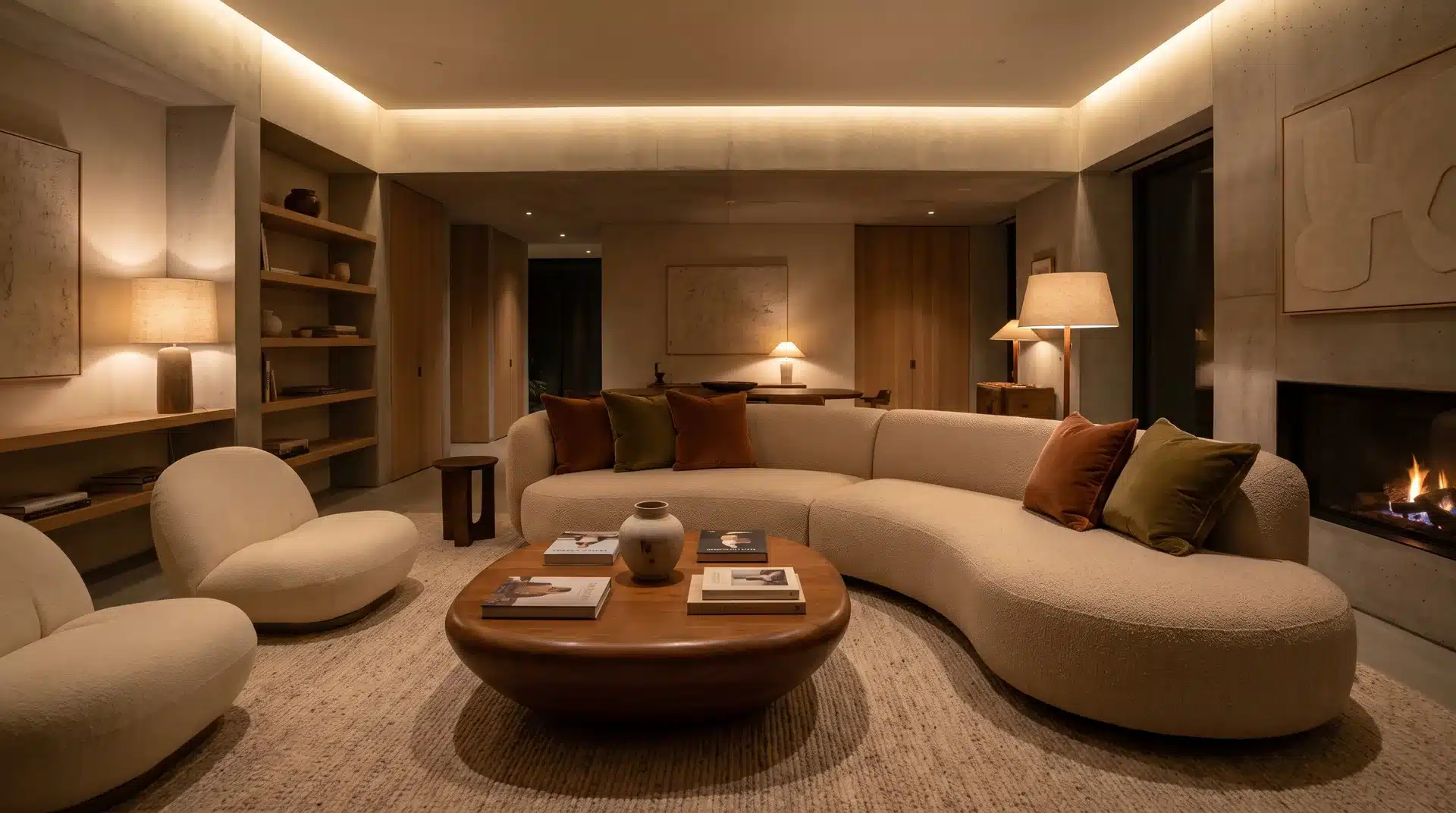
A curved sofa in bouclé or velvet brings 70s character into a modern living room faster than almost any other single purchase. The rounded form softens a room full of rectangular furniture and gives it a warmer, more organic quality.
One rounded armchair in a 70s palette color does the same work at a smaller scale. Low-profile coffee tables and slab-style side tables complete the look without adding visual weight.
The most sophisticated version of 70s furniture belongs in its own category. Calvin Klein’s 1975 Manhattan apartment, designed by Joseph D’Urso with Marcel Breuer tubular chairs and a black leather sofa, showed how curved forms read as modernist rather than retro when paired with restraint.
5. Macramé Wall Hangings
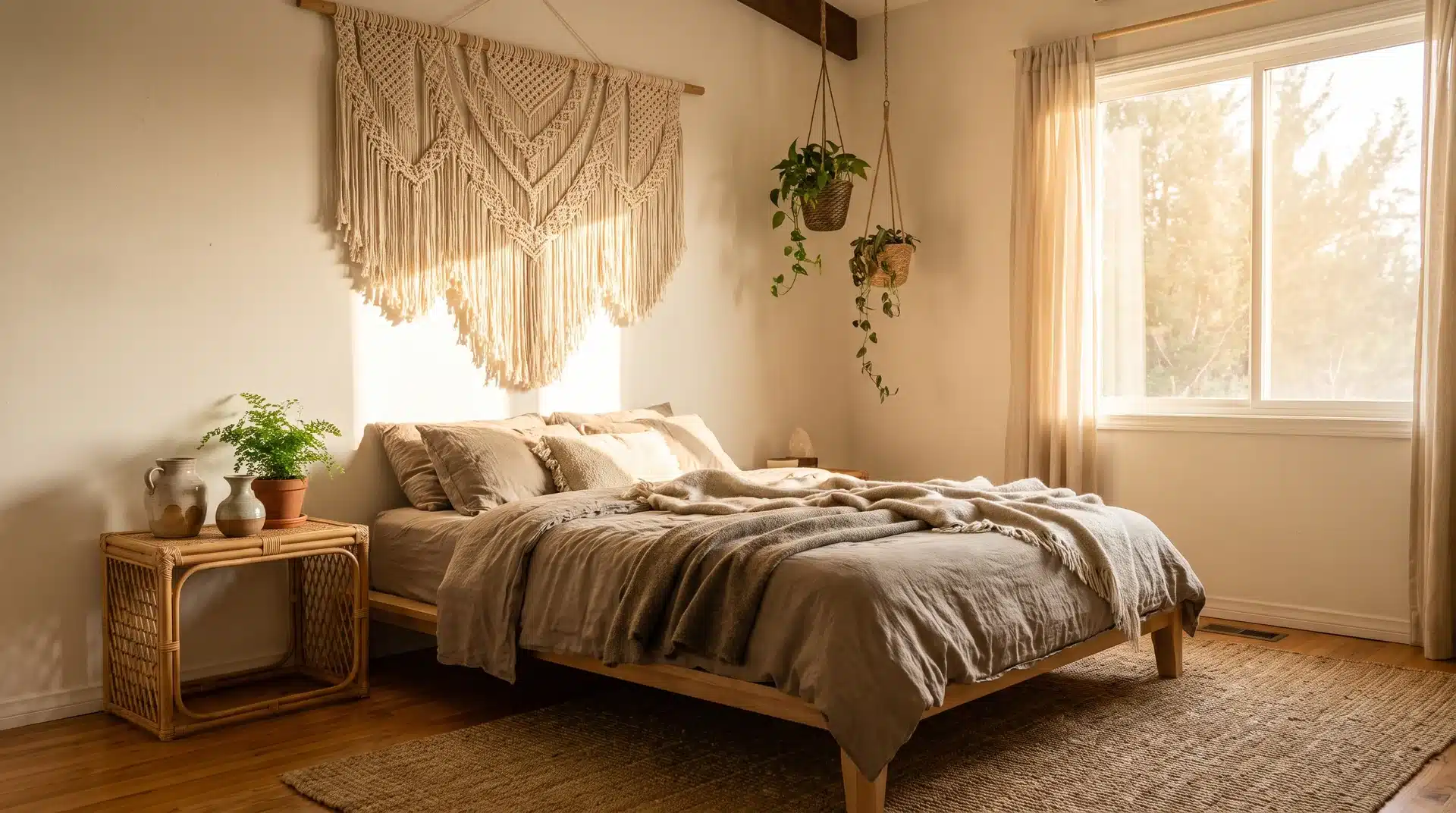
Macramé, knotted cotton cord wall hangings, was one of the defining handmade elements of the 1970s interior. It filled tall walls without the cost of framed artwork and brought a tactile quality that printed or painted surfaces cannot replicate.
A single large piece hung against a contrasting wall color is the right approach for a modern interior. Avoid clustering multiples on the same wall. That reads as a craft fair rather than a design choice.
A macramé plant holder at ceiling height and a wall hanging below it on the same wall create a layered 70s look with two pieces. The material reads well alongside rattan, linen, wood, and velvet. Keep it away from chrome or high-gloss surfaces.
6. Rattan and Wicker Furniture
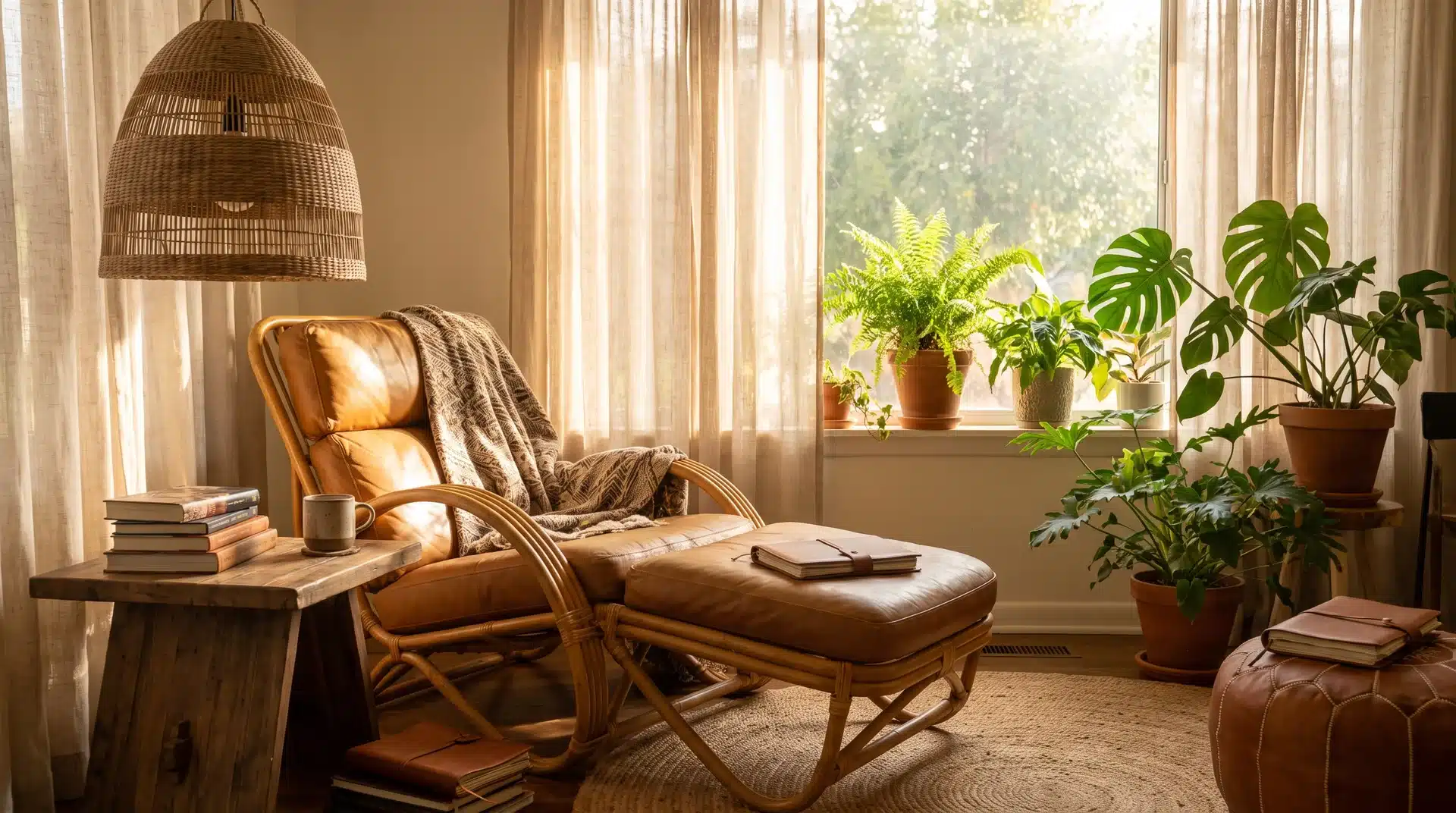
Rattan appeared in armchairs, pendant lights, room dividers, and storage baskets throughout the 1970s. It ages well in a way that most manufactured materials do not.
One rattan piece per room reads as a material choice. Multiple pieces in the same room read as a theme. A rattan pendant light above a dining table is the lowest-commitment entry point. A single rattan armchair in a reading corner does the same for a bedroom or living room.
Pair rattan with linen, cotton, and leather. Keep it away from chrome or glass in the same zone. The material contrast works against both rather than for either.
7. Geometric Patterns and Bold Wallpaper
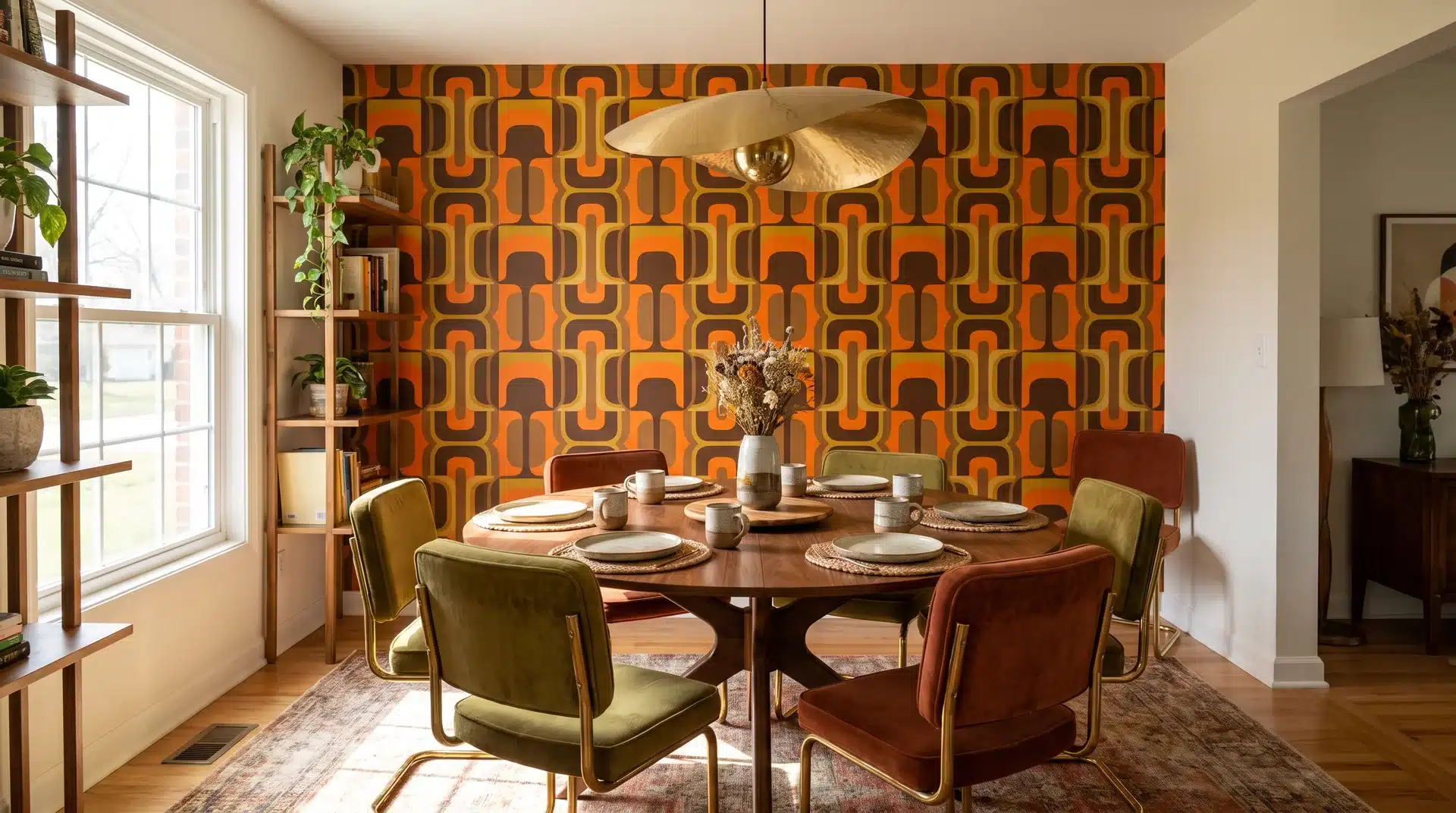
Hexagons, chevrons, concentric circles, and overlapping shapes appeared on wallpaper, rugs, upholstery, and curtains throughout the decade. The layered pattern energy made 70s interiors feel alive. It also made them feel overwhelmed when applied without limits.
Geometric wallpaper on one wall, in a palette that fits the rest of the room, is the modern version that works. A zigzag rug or a geometric tile behind a kitchen stove conveys the same energy at a lower level of commitment.
Contain the pattern to one surface per room. The 1970s stacked pattern across every surface is the step that makes the era feel dated when replicated today.
8. Statement Globe and Swag Lighting
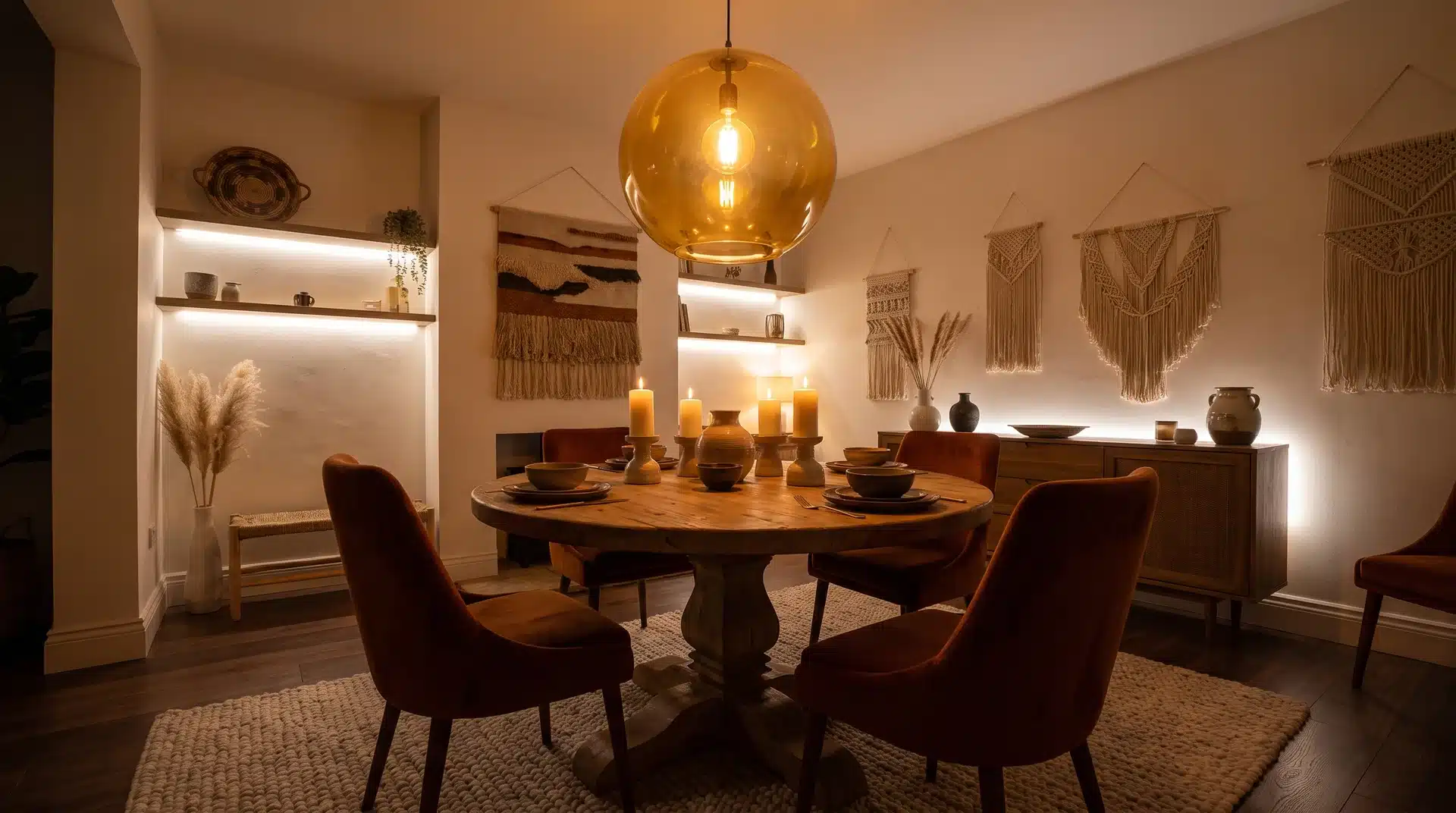
Globe pendants, Tiffany-style stained glass shades, swag lights with colored glass, and sunburst ceiling fixtures all read as sculptural objects rather than purely functional ones. That quality is why they still work today.
An oversized globe pendant above a dining table is the easiest entry point. Amber or smoked glass shades replicate the warmth of original 70s fittings without the need to source vintage pieces. A wicker hanging light in a bedroom corner is the more relaxed version of the same idea.
Use warm-toned LED bulbs at adequate brightness. Original 70s lighting had very low lumen output, which made rooms feel dim. The warm tone works. The dimness does not have to come with it.
Sunburst mirrors and lava lamps belong in this category too. Both are instantly recognizable 70s objects. A sunburst mirror above a fireplace mantel or console table adds the decade’s graphic quality with a single piece.
9. Conversation Pit and Sunken Living Room
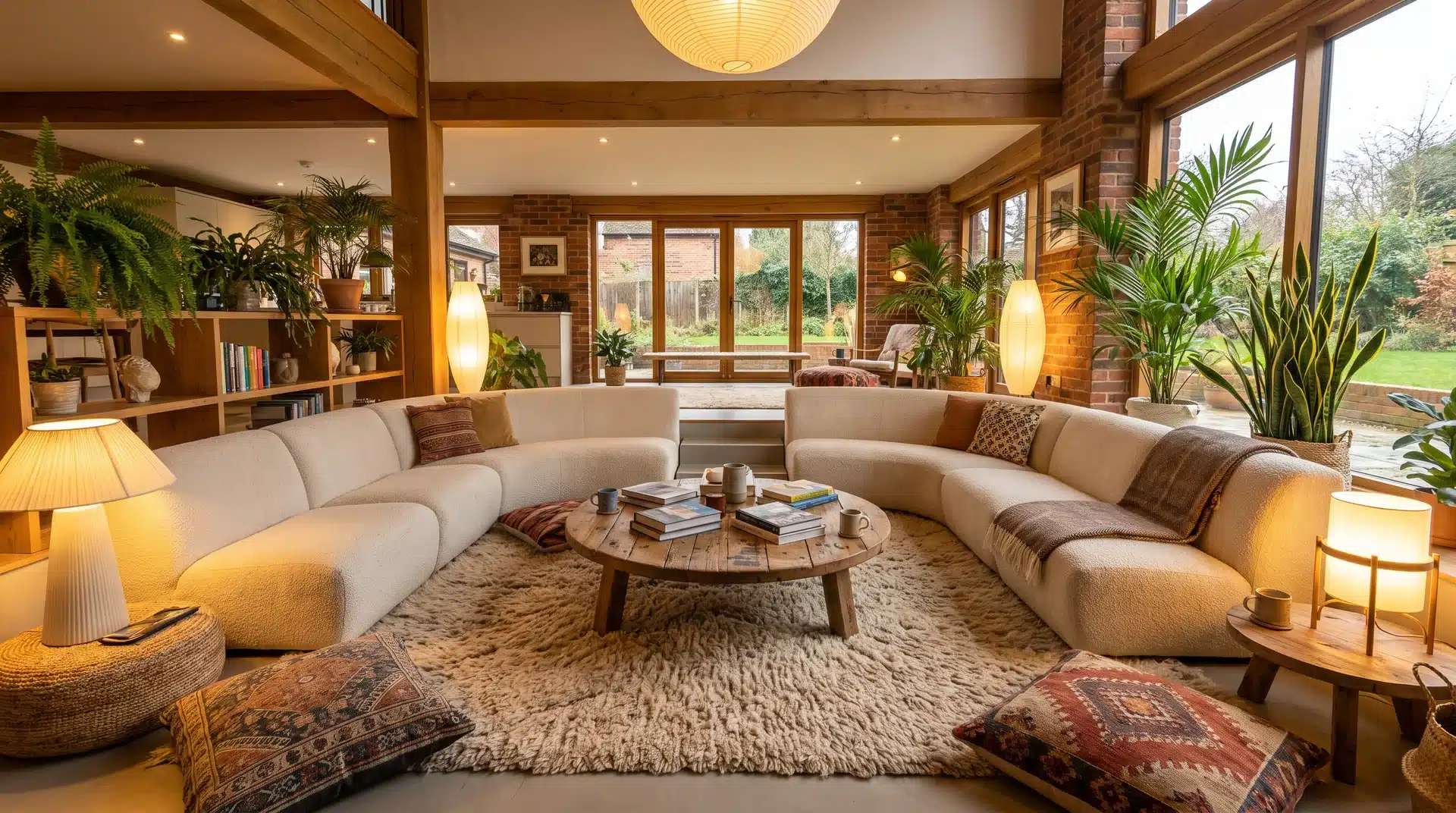
The conversation pit was the signature architectural feature of the 1970s US living room. Built-in banquette seating recessed into the floor in a square or U-shape created an enclosure that made conversation feel more intimate.
A full sunken pit requires structural work that few existing homes can absorb. The modern version achieves the same effect without construction: low-profile modular sofas arranged in a square on a large rug, with seating oriented inward rather than toward a television.
The arrangement signals the same intention as the original pit. This space is for conversation. Keeping all seating at the same low height and adding a central coffee table completes the composition.
10. Houseplants
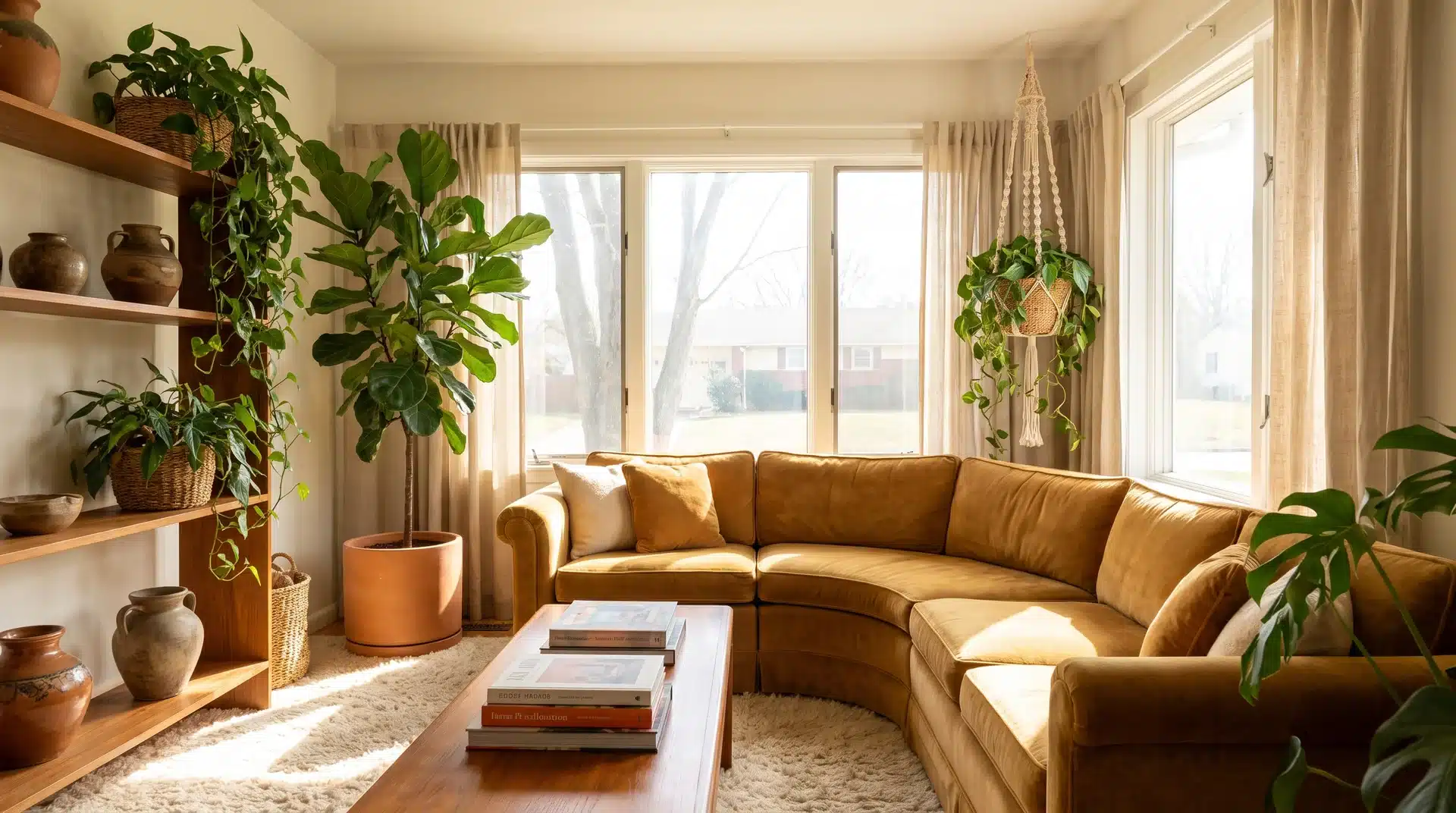
The 1970s brought houseplants into the living room as a design element rather than a windowsill habit. Fiddle leaf figs, philodendrons, spider plants, and Boston ferns were grouped in the corners to create an indoor-garden feel.
One large plant in a ceramic or woven vessel makes a stronger statement than multiple small plants scattered around a room. A fiddle leaf fig or olive tree in a stone pot, placed where it gets adequate indirect light, reads as a design choice rather than a decor afterthought.
Macramé plant hangers at different heights create a layered 70s look with two or three plants. The original version of this look used twenty.
11. Velvet Upholstery
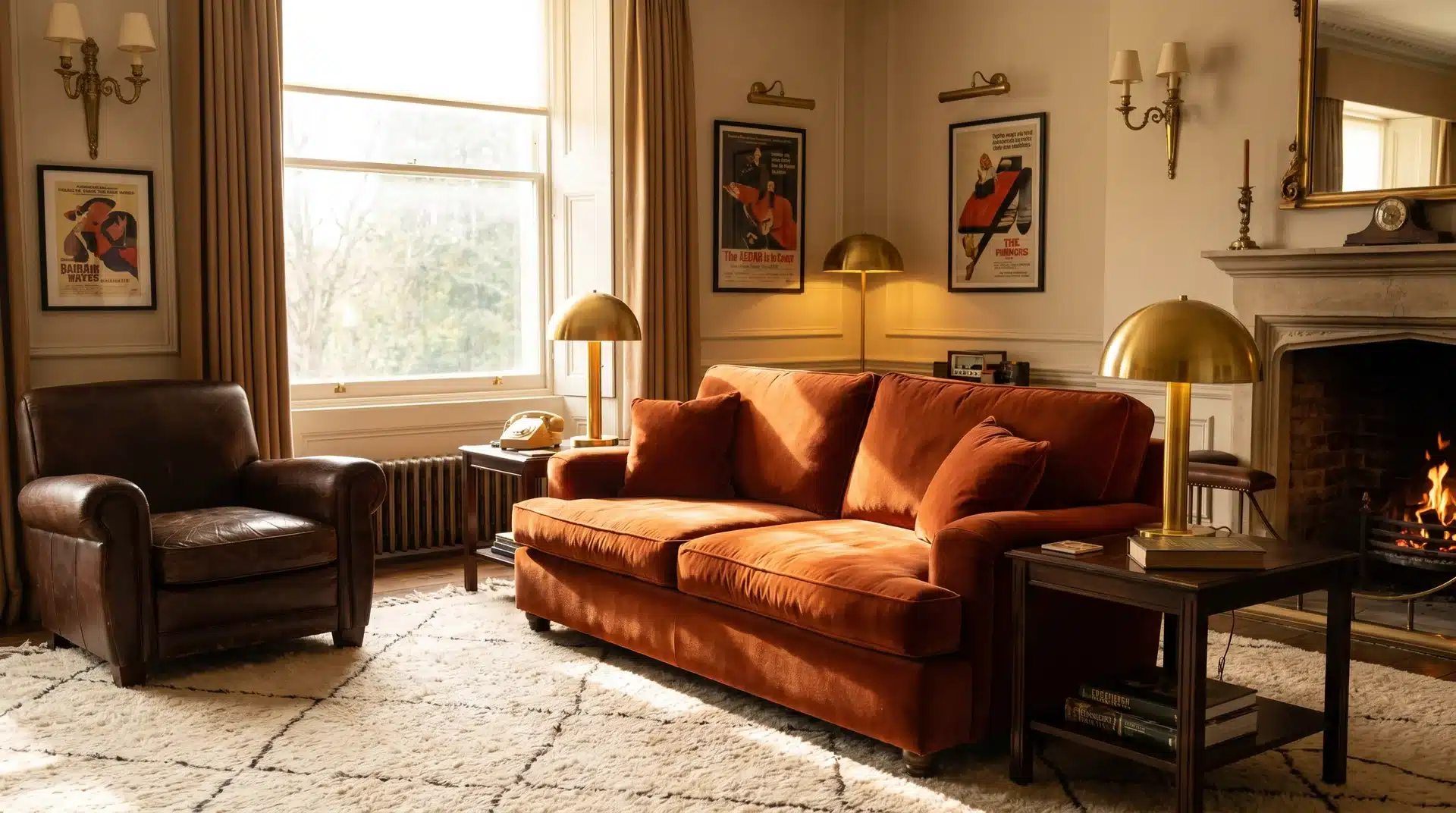
Velvet in saturated, earthy tones was the upholstery choice of the decade. Burnt-orange sofas, deep teal armchairs, and chocolate-brown ottomans filled living rooms because velvet catches the light differently at every angle. It gives color a depth that flat-weave fabrics cannot produce.
A single velvet accent chair or a pair of velvet cushions introduces the material without dominating a room. A full velvet sofa in burnt orange or deep teal works best when everything else stays neutral.
Velvet pairs naturally with rattan, macramé, wood paneling, and shag rugs. It does not pair well with chrome or high-gloss surfaces in the same zone.
12. Built-In Bar and Record Player Display
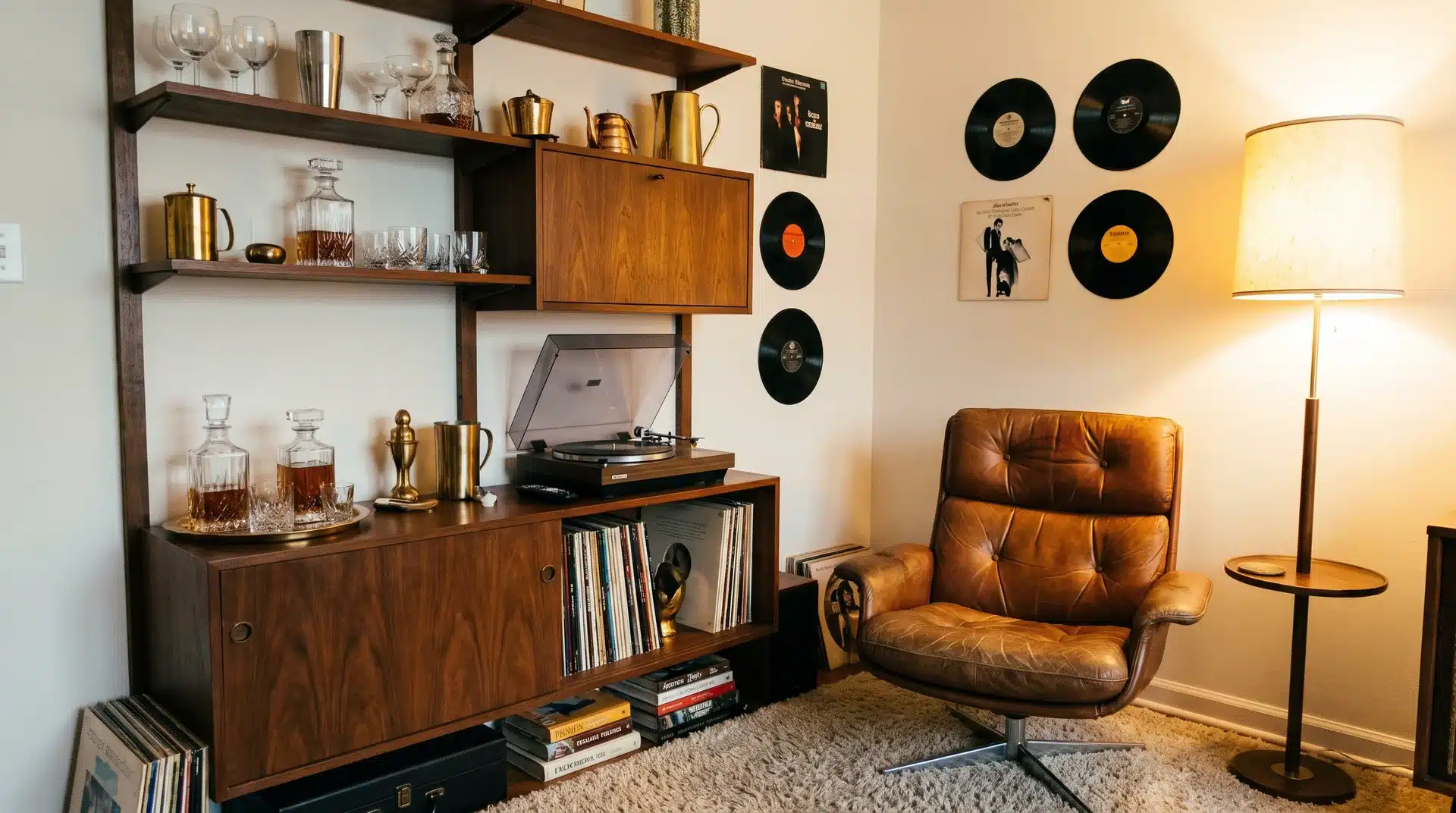
Entertaining at home was central to 1970s life. The built-in bar, finished in wood or mirrored surfaces with open glass shelving, was a fixture in US living and dining rooms.
The record player had equal standing with the other display objects. Vinyl covers were arranged on open shelves as art, and the turntable sat in plain view rather than hidden away.
A bar cart in walnut and brass with open glass shelving achieves the same look without built-in construction. A vintage-style turntable on an open walnut shelf, with record sleeves displayed upright beside it, is one of the most personal decor choices a room can have. It tells you something specific about who lives there.
Brass hardware connects both ideas. Brass on lamp bases, cabinet handles, and bar accessories represents the decade’s more refined side. It works especially well against dark wood and earthy tones.
13. Stone Fireplace
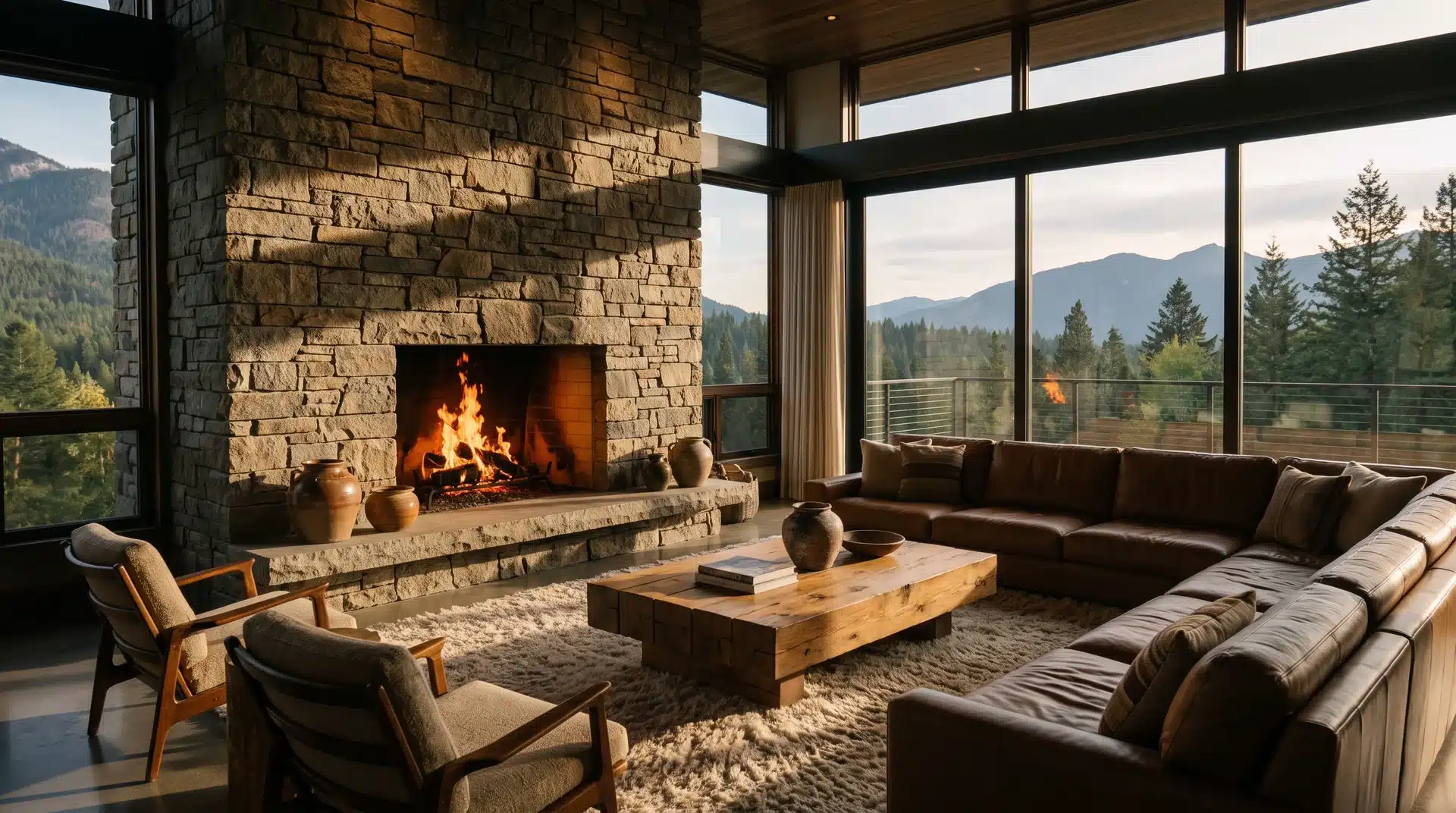
A stone fireplace surround in rough-hewn travertine, stacked slate, or river rock was the anchor of the 1970s living room. It provided a natural material presence and visual weight, giving the room a clear focal point.
A stone or limewash plaster surround in warm travertine or Roman clay captures the same grounded quality in a modern interior. Keep the mantel display minimal: one ceramic vessel, one trailing plant. Nothing should compete with the stone surface for attention.
A stone fireplace paired with wood paneling, a shag rug, and low-profile seating produces a room that reads as fully 70s-inspired without any single element tipping into obvious pastiche.
14. Animal Print Accents
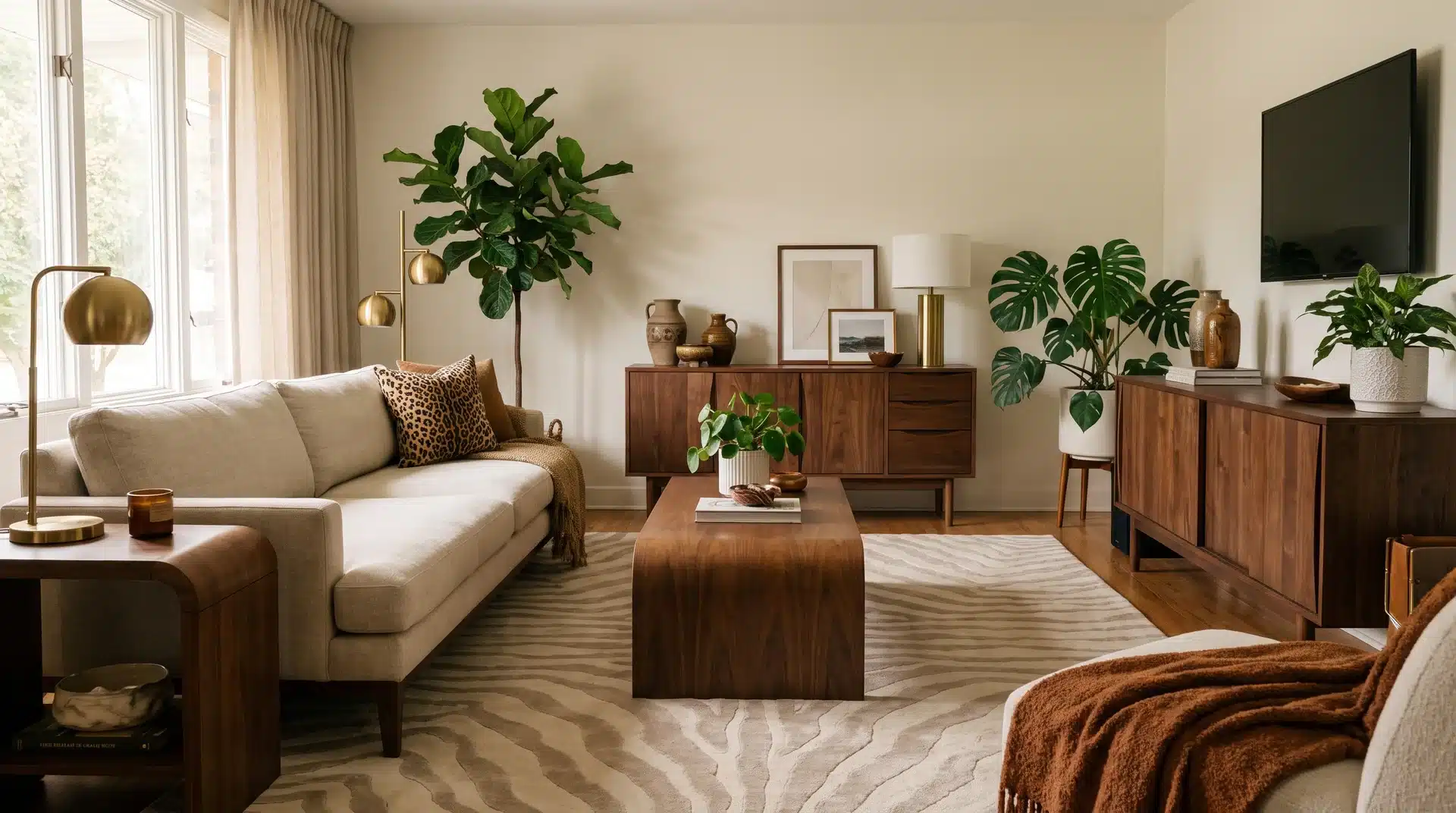
Animal print appeared on couches, rugs, pillows, wallpaper, and lampshades throughout the 1970s. The 2026 version is more restrained. A zebra-print rug under a neutral sofa, or a leopard cushion on a linen chair, keeps the look on the right side of the line.
The key distinction: use animal print as an anchor point, not as visual repetition across multiple surfaces. Designer Tash Bradley cites animal print as one of the biggest interior trends of 2026. Her caveat: keep it specific rather than widespread. One well-placed piece is enough.
15. Bold Bedroom Prints and Statement Headboards
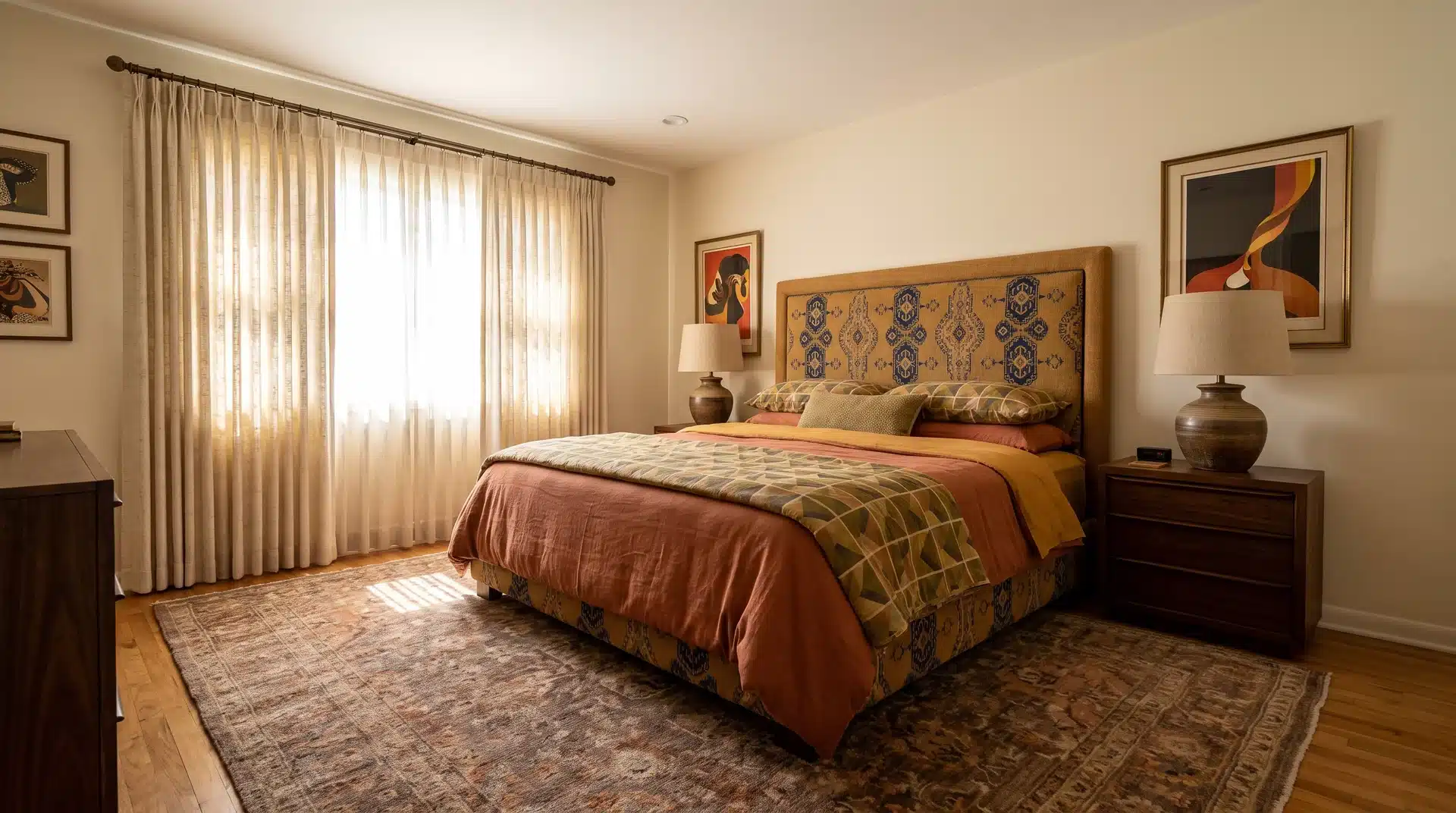
The 1970s bedroom was not restrained. Bold geometric and floral prints appeared on bedding, wallpaper, and curtains, sometimes all in the same room. The maximalist energy felt personal rather than excessive, and that personal quality is what the current revival is after.
A statement headboard in a bold print fabric, a wide stripe, an oversized floral, or a geometric weave is the fastest way to bring 70s character into a bedroom. Keep the surrounding palette neutral and let the headboard carry the design.
Geometric bedding in warm earth tones against a plain wall works equally well as the lower-commitment version of the same approach.
70s Interior Design Room by Room
Each room handles 70s elements differently. The table below shows where to start in each space, with a cap on how many elements to layer before the room tips from intentional to themed.
| Room | Best First Choice | Solid Add-On | Max Elements |
|---|---|---|---|
| Living room | Curved sofa or velvet accent chair | Globe pendant, shag rug | 3 |
| Bedroom | Statement headboard or bold bedding | Warm bedside lamp, houseplant | 2 |
| Dining room | Globe pendant or rattan dining chairs | Geometric tableware, warm linen | 2 |
| Kitchen | Brass hardware or wood cabinets | Patterned tiles, open shelving | 2 |
| Bathroom | Earth-tone tiles or terrazzo surfaces | Rounded mirror, stone finishes | 2 |
| Home office | Wood paneling or macramé wall art | Warm desk lamp, rattan storage | 2 |
| Entryway | Geometric wallpaper or rattan mirror | Tall plant in a stone vessel | 1 to 2 |
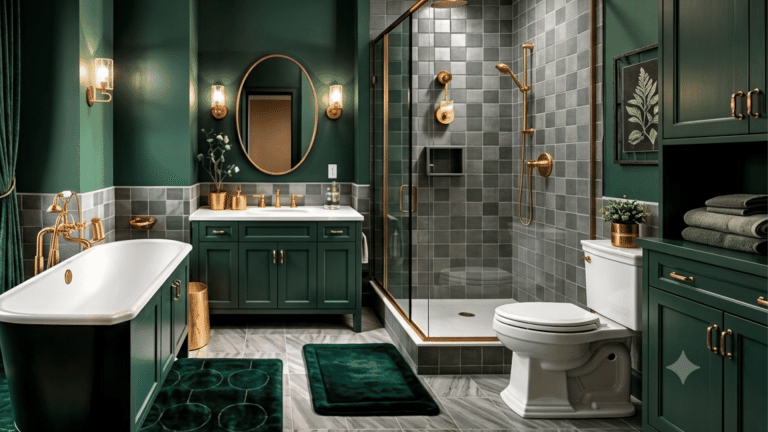
Bathrooms are one of the easiest rooms to update with 70s touches. Earth-tone tiles and a rounded mirror age well and need no furniture to pull off the look.
In the kitchen, avoid combining all three era-specific choices at once. Brass hardware, wood cabinets, and patterned tiles each read as 70s on their own. Stacking all three in a small kitchen pushes the look into themed territory.
70s Design Trends Best Left in the Past
Not every element from the decade holds up. A few are worth skipping entirely in a modern home.
- Wall-to-wall shag carpet: The texture works. The full-room installation does not. A shag rug achieves the same effect without trapping heat and dust across an entire floor.
- Pattern on every surface: Geometric wallpaper, patterned upholstery, and a printed rug in the same room is the combination that makes 70s design feel dated. One patterned surface per room is the rule that keeps the era looking current.
- All-dark wood surfaces: Dark paneling on all four walls, dark furniture, and a dark rug can make a room feel closed in. Balance dark wood with warm whites, lighter fabrics, and natural light.
- Avocado green as the only color: The avocado green kitchen was iconic. As a single dominant color, it reads as dated. As one accent alongside warm neutrals, it works well.
- Bathroom and toilet carpeting: This is best left in 1974.
Conclusion
The 1970s understood something worth borrowing. Homes should feel inhabited, textured, and personal. Not staged for a camera. Not curated into blankness.
Pulling from 70s interior design does not mean committing to the whole decade. Pick one element. A rattan pendant over a dining table. A velvet armchair in burnt orange. A shag rug under a low sofa. Test that in your space before adding anything else.
The era had flaws worth leaving behind. But the core instinct, filling a room with materials that feel alive and colors that feel grounded, holds up. That is what makes the style worth revisiting in 2026.
Which idea from this list best fits your space? Share your approach in the comments. And if you are working through a retro-inspired look in a different decade, 90s living room decor follows a similar revival logic that is worth exploring alongside it.
Frequently Asked Questions
What Rooms Work Best for 70s Interior Design Ideas?
The living room is the most common starting point, but bedrooms, dining areas, home offices, and entryways can also embrace 70s elements through colors, textures, and statement pieces.
What Colors Should I Avoid when Creating a 70s-Inspired Room?
Avoid pairing too many dark earthy shades together without contrast. Balance mustard, brown, and orange tones with warm whites, natural woods, and lighter fabrics.
Can 70s Interior Design Work in a Small Apartment?
Yes, small spaces can use 70s style through compact, curved furniture, textured rugs, vintage lighting, plants, and a few carefully chosen accents instead of full-room transformations.