Clerestory Window Ideas for Every Room in Your Home

Most rooms feel dim by midday. You open the blinds and lose privacy. You add lamps, and the room still feels closed in. This is a real problem. Standard windows don’t bring enough light in without giving up the wall space you need.
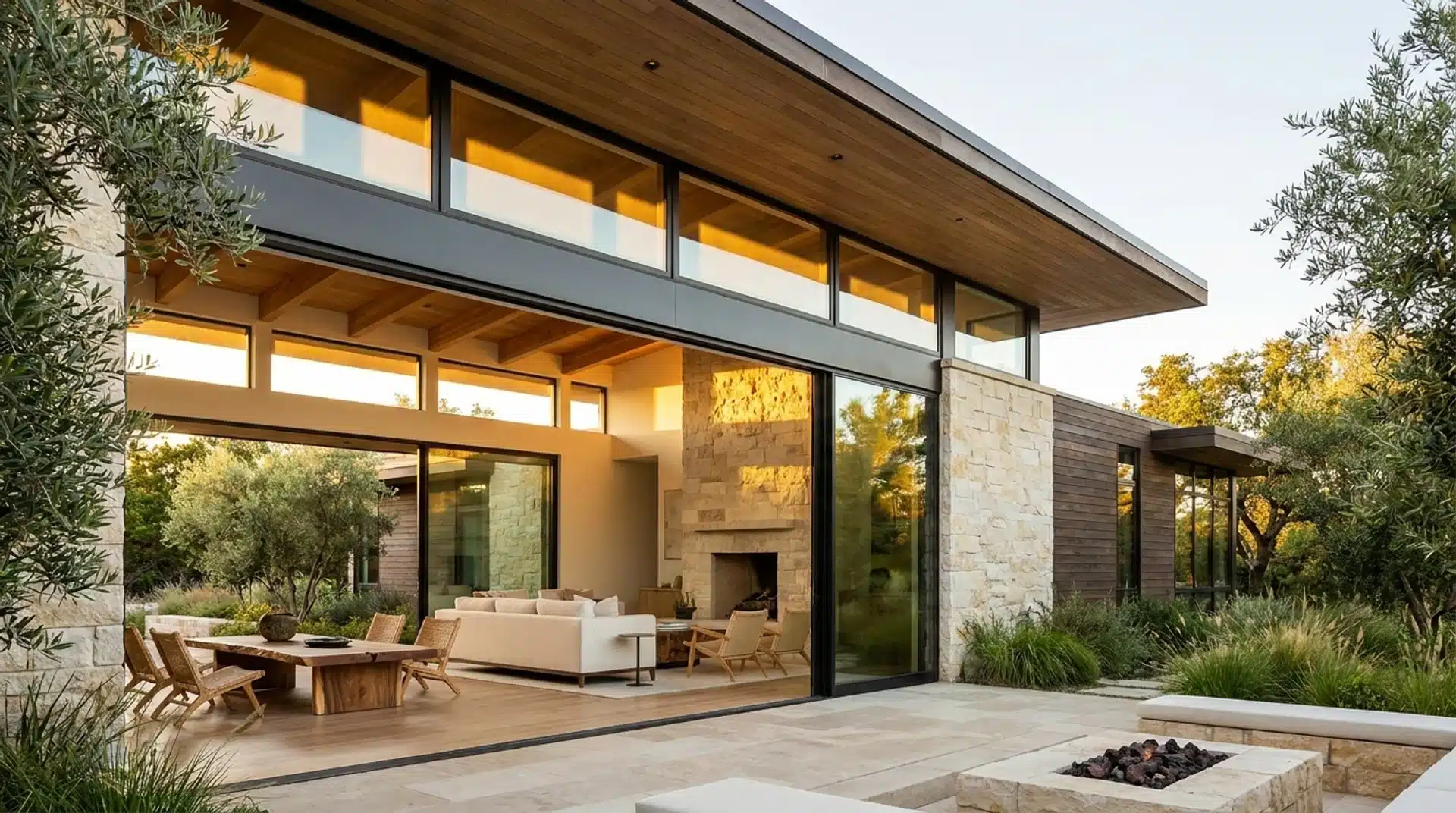
Clerestory windows fix this. These high-set windows sit near the roofline, above eye level. They pull natural light deep into any room while keeping your privacy completely intact. No frosted glass needed.
This post covers what clerestory windows are, how they perform in different rooms, and which design styles they suit best. You will find ideas for living rooms, kitchens, bathrooms, bedrooms, and home offices. It also covers design styles, costs, and how to choose the right type for your space.
What are Clerestory Windows?
A clerestory window (pronounced “clear-story”) is a window, or a row of windows, installed high on a wall above the standard eye-level line.
They sit near the roofline or above an adjoining lower roof, letting light and air enter a space from above without eating up usable wall space below.
Unlike a standard window, clerestory windows aren’t there for the view. You’re not looking out at the backyard through them.
Their job is purely functional and atmospheric: bringing daylight deep into a room, improving ventilation, and creating that luminous, lifted feeling you find in well-designed homes.
Architects reach for them because they solve multiple problems at once without requiring big structural compromises.
A Brief History of Clerestory Windows
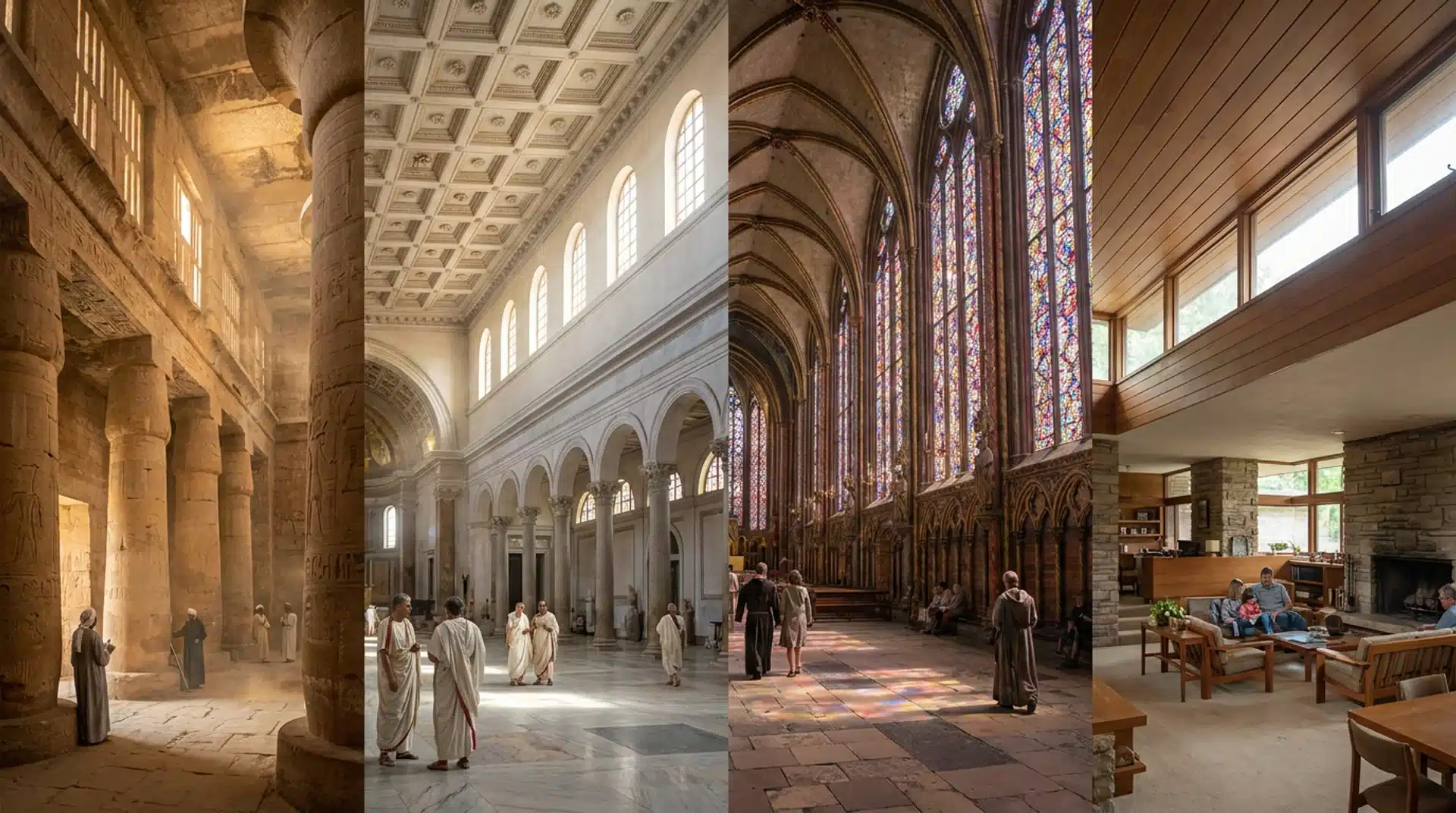
Clerestory windows aren’t new. Not even close. Ancient Egyptians used them in temples to filter light into sacred interior halls.
Roman basilicas relied on clerestories to illuminate their wide central naves, a design the early Christian church borrowed almost directly.
The great Gothic cathedrals of medieval Europe took the concept further, stacking enormous clerestory windows with intricate stained glass to create those jaw-dropping plays of colored light.
The idea migrated from cathedrals to factories during the Industrial Revolution, where clerestories let natural light into large manufacturing floors.
By the mid-20th century, architects like Frank Lloyd Wright were using clerestory windows as a defining feature of residential design, as part of his broader Usonian concept of bringing the outdoors in without sacrificing privacy.
Today, you’ll find them everywhere, from passive solar homes to modern farmhouses.
Clerestory Windows vs Skylights vs Transom Windows
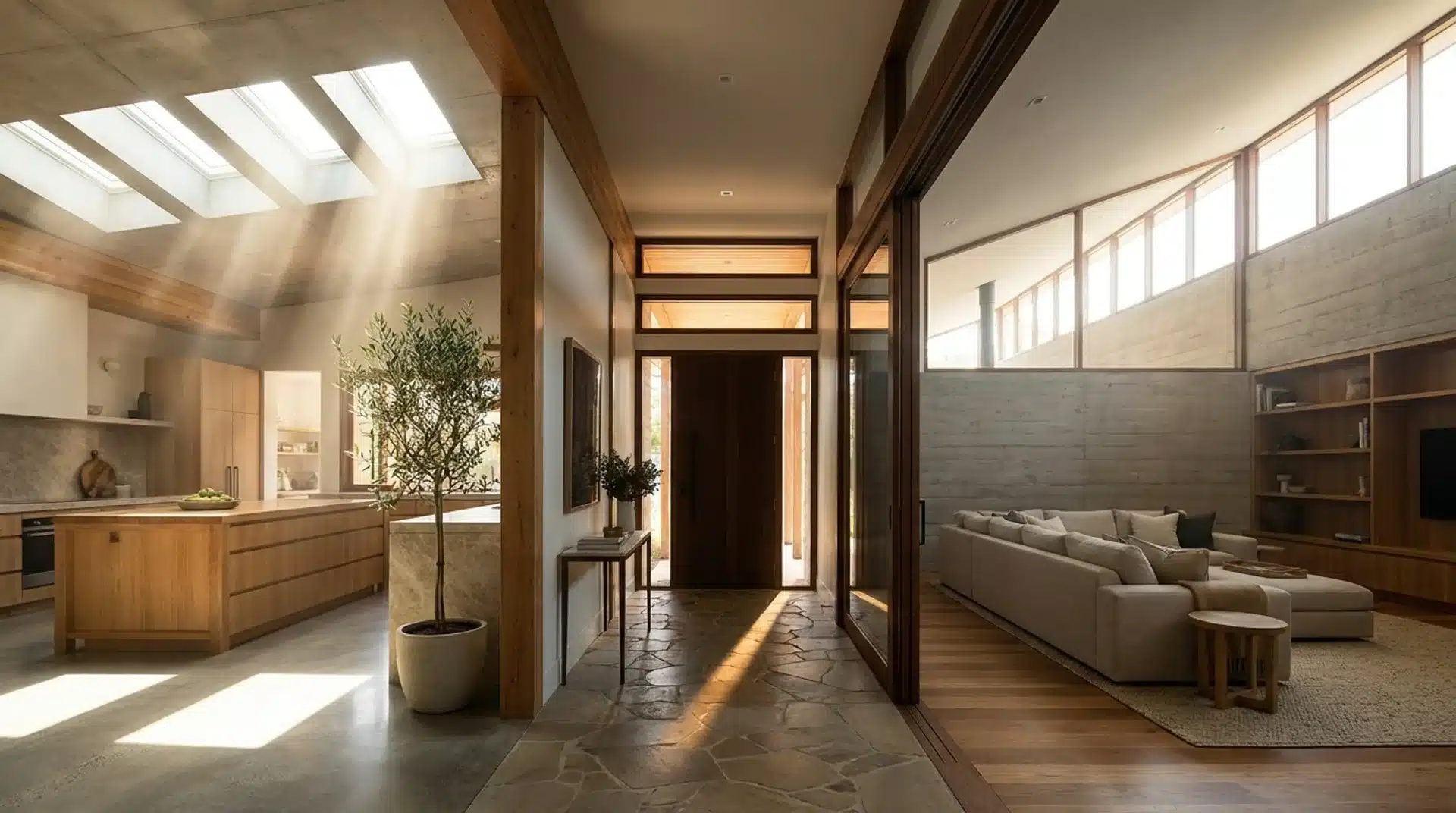
All three let extra light into a room, but they work in completely different ways. Choosing the wrong type means solving the wrong problem. Here is a clear comparison to help you decide which suits your space and goals.
| Feature | Skylights | Transom Windows | Clerestory Windows |
|---|---|---|---|
| Location | In the roof | Above doors or standard windows | High on the vertical wall, near the roofline |
| Light quality | Direct, intense overhead light | Supplemental light near entry points | Soft, angled light diffused across the whole room |
| Deep-room daylighting | Moderate | Limited | Strong |
| Privacy | Good | Low | Excellent |
| Leak risk | Higher (roof penetration required) | Low | Low (no roof penetration needed) |
| Maintenance | Involved, needs roof access | Easy | Low |
| Best for | Focused light in kitchens and bathrooms | Entry charm and door framing | Rooms needing privacy and full-room daylighting |
Skylights work best for focused, intense light in a single zone. Transom windows add charm near doorways. Clerestory windows deliver consistent daylighting throughout a room without roof penetration or loss of privacy.
A bump-out window adds floor space and an outward view rather than high-wall daylighting. If that approach interests you, see whether a bump-out window suits your home before committing.
Clerestory Windows Benefits
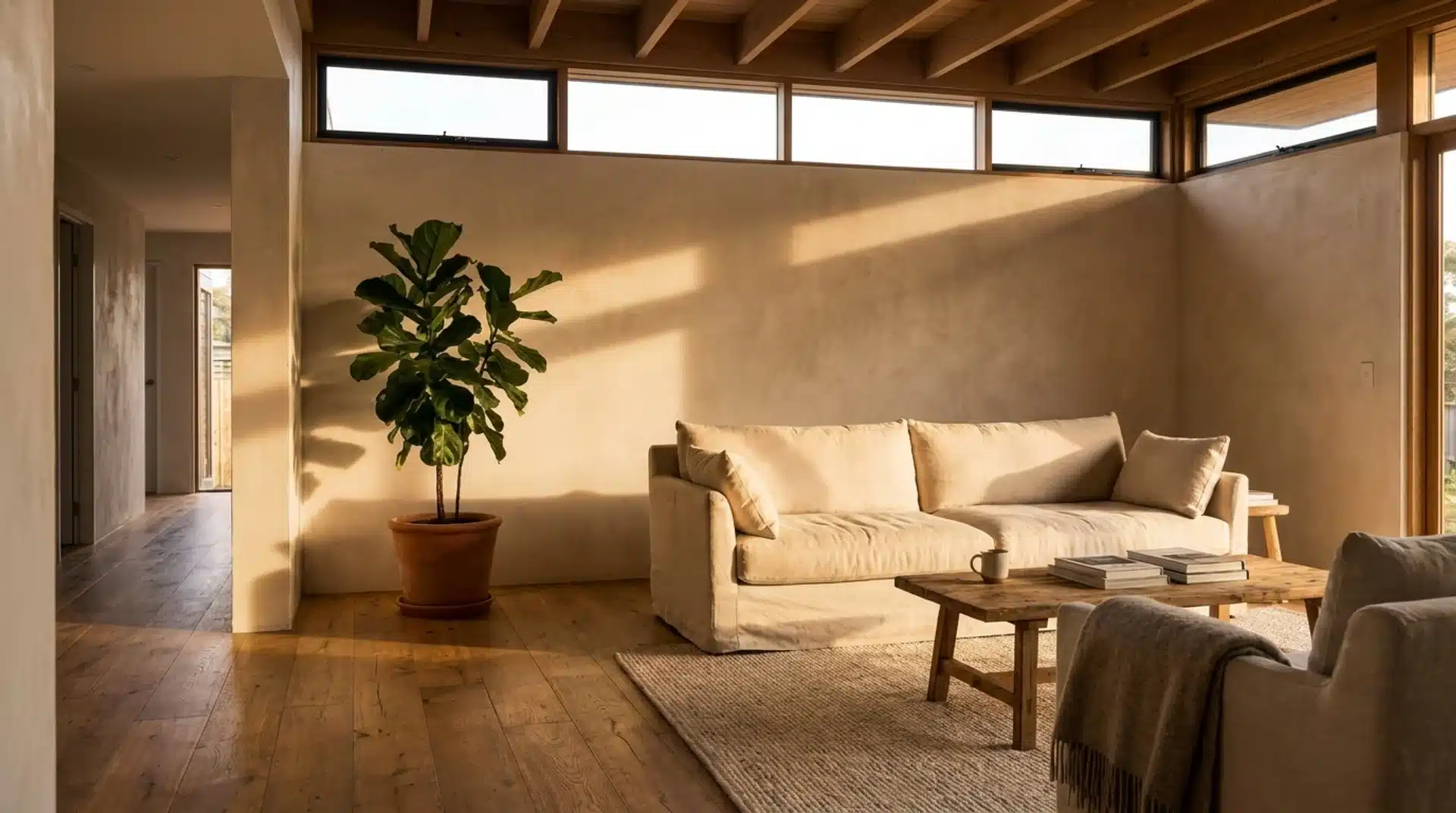
Clerestory windows don’t just look good. They pull real weight in how a home feels to live in day to day.
1. Natural Light That Reaches Deep Into the Room
Standard windows bring light to the area near the wall where they sit. Natural light fades quickly as you move farther into a room. These high windows correct this. They place the light entry point higher, so light angles downward and spreads further into the room.
Natural daylight reduces eye strain, supports better sleep rhythms, and cuts the need for artificial lighting throughout the day.
Homeowners with south-facing installations often notice real reductions in electricity bills. For the full range of effects, read about how natural light changes how a home feels before choosing placement.
2. Privacy Without Losing Brightness
Standard eye-level windows involve a tradeoff. You get light and a view, but anyone outside can see in. In bathrooms, bedrooms, and urban homes where neighbors sit close, that tradeoff often feels uncomfortable. These high-set windows sit entirely above sightlines.
Nobody on the pavement or in the neighboring house can see in. The room is still filled with light all day. For small master bathrooms where privacy and brightness compete, this combination is hard to match with any other window type.
3. More Usable Wall Space Below
High windows leave your lower walls completely open. That means full wall runs for bookshelves, kitchen cabinetry, artwork, a media wall, or a large sectional sofa. None of it is interrupted by a window frame.
In kitchens especially, this matters. Standard windows above a sink limit where upper cabinets can go. High windows above the cabinet line remove that conflict entirely.
4. Better Air Circulation Through Stack Ventilation
Hot air rises to the top of a room. Operable high windows allow warm, stale air to exit naturally from the highest point in the space. Pair them with lower openings, standard windows, or a door and you create passive cross-ventilation without a fan running.
This stack effect reduces stuffiness in bedrooms and living areas during warmer months without mechanical cooling.
5. Lower Energy Costs Through Smart Orientation
South-facing units support passive solar design. In winter, the low sun angle sends direct light deep through south-facing glass and warms the interior. In summer, roof overhangs automatically shade those same windows.
The U.S. Department of Energy notes that passive solar design can significantly reduce a home’s heating and cooling costs. North-facing units provide consistent, glare-free daylight year-round with no heat-gain concerns.
What Do Clerestory Windows Cost?
Window costs vary by type, size, and installation complexity. Fixed units typically run between $500 and $1,500 per window. Operable or motorized units range from $1,200 to $3,500 or more, depending on frame material and glazing type. Installation adds another $800 to $2,500 per unit.
New construction is more cost-efficient than retrofitting. When the framing plan accounts for the windows from the start, there are no surprises. Retrofitting an existing wall requires a structural assessment and correct header sizing above the opening.
Work with a licensed contractor for installation. Bring in a structural engineer for any load-bearing changes. In most US states, adding windows that require structural framing changes also requires a building permit. Check with your local building department before starting work.
Clerestory Window Design Ideas
Clerestory windows aren’t one-size-fits-all. Here’s how they work across the most common rooms and design styles.
1. Modern Clerestory Window Arrangements
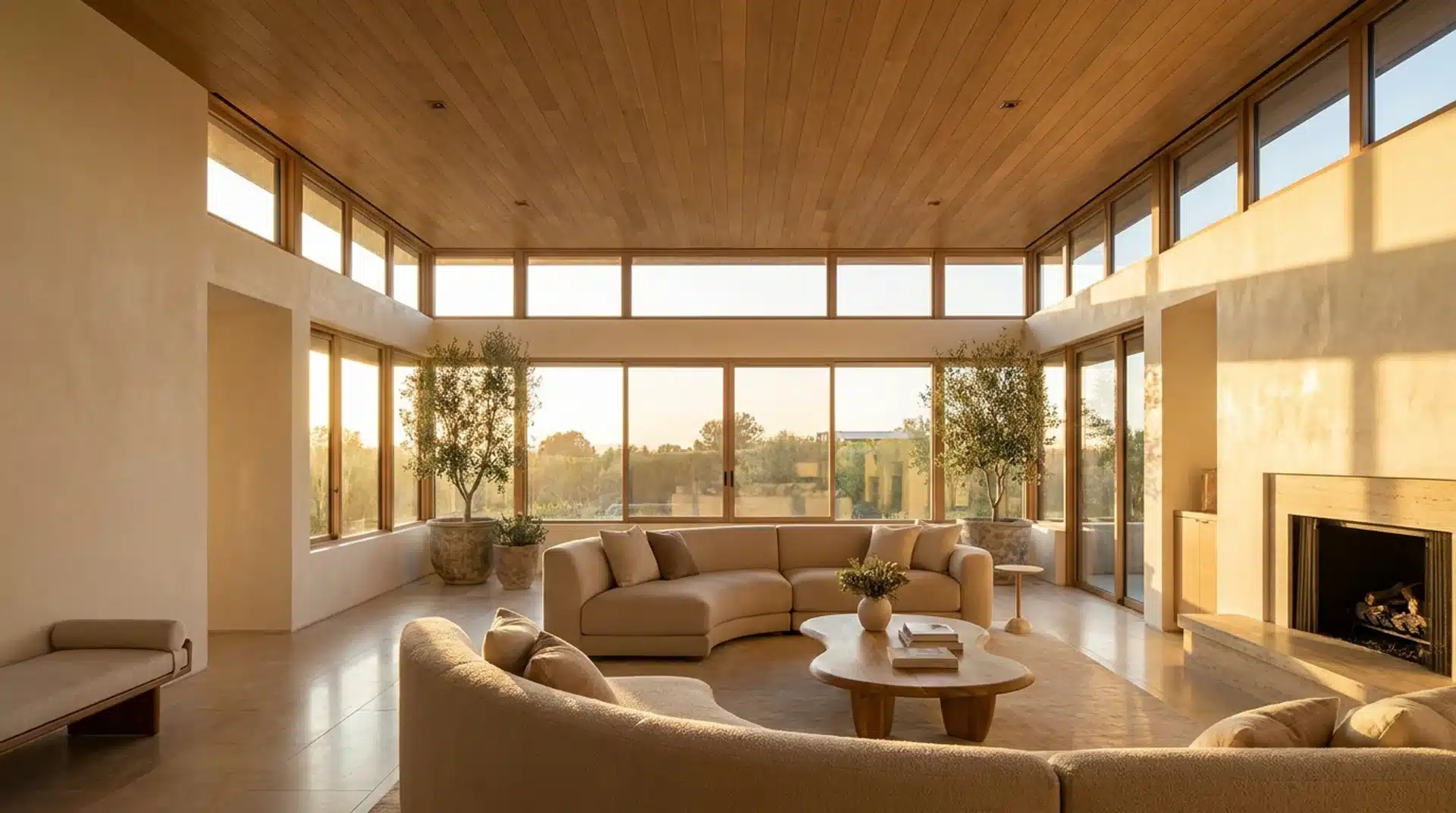
The most common arrangement is a single horizontal band of windows running along the top of one wall. Clean, simple, and effective. But modern architects often push further.
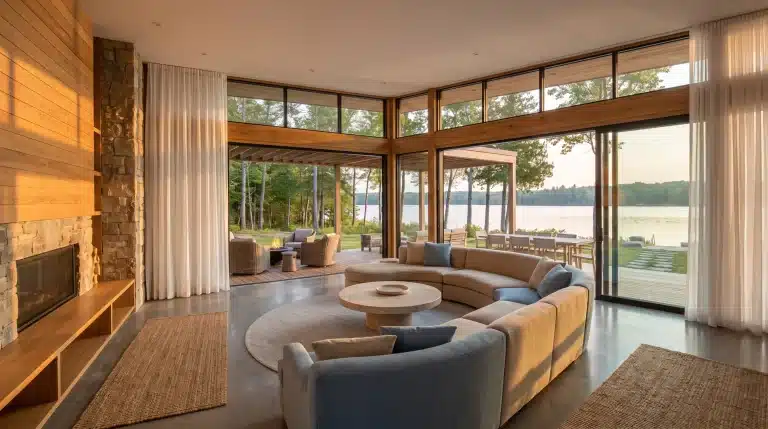
Wrapping clerestory windows around two or three walls of a room creates a floating-ceiling effect, as if the roof is hovering above a band of glass.
Continuous bands of clerestory glazing, where multiple windows butt up against each other without breaks, are popular in contemporary and mid-century modern homes. They read as a horizontal light slot rather than individual windows, which gives the room a very deliberate, considered look.
2. Clerestory Windows in Living Rooms
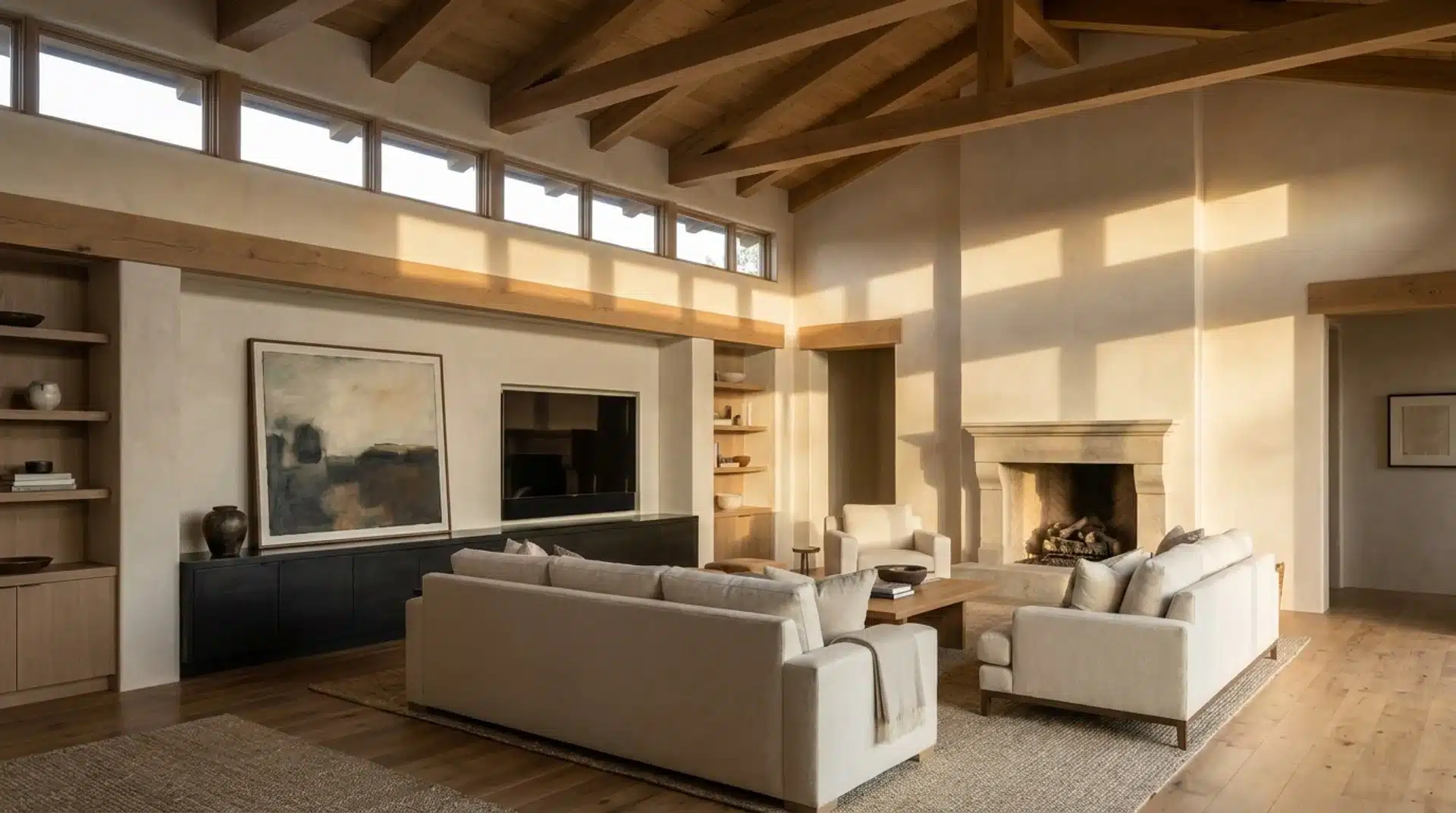
In living rooms, clerestory windows do something regular windows can’t: they light the space from above while keeping the lower walls free for the fireplace, art, or a large TV wall.
The light hits ceilings and upper walls first, then bounces down, creating a softer, more diffuse ambient glow than a window at eye level.
For rooms with high vaulted ceilings, a row of clerestories on the high side of the vault works well. It emphasizes the room’s height and prevents the dark, cave-like quality that high ceilings can sometimes create.
3. Kitchen Clerestory Window Placement Above Cabinets
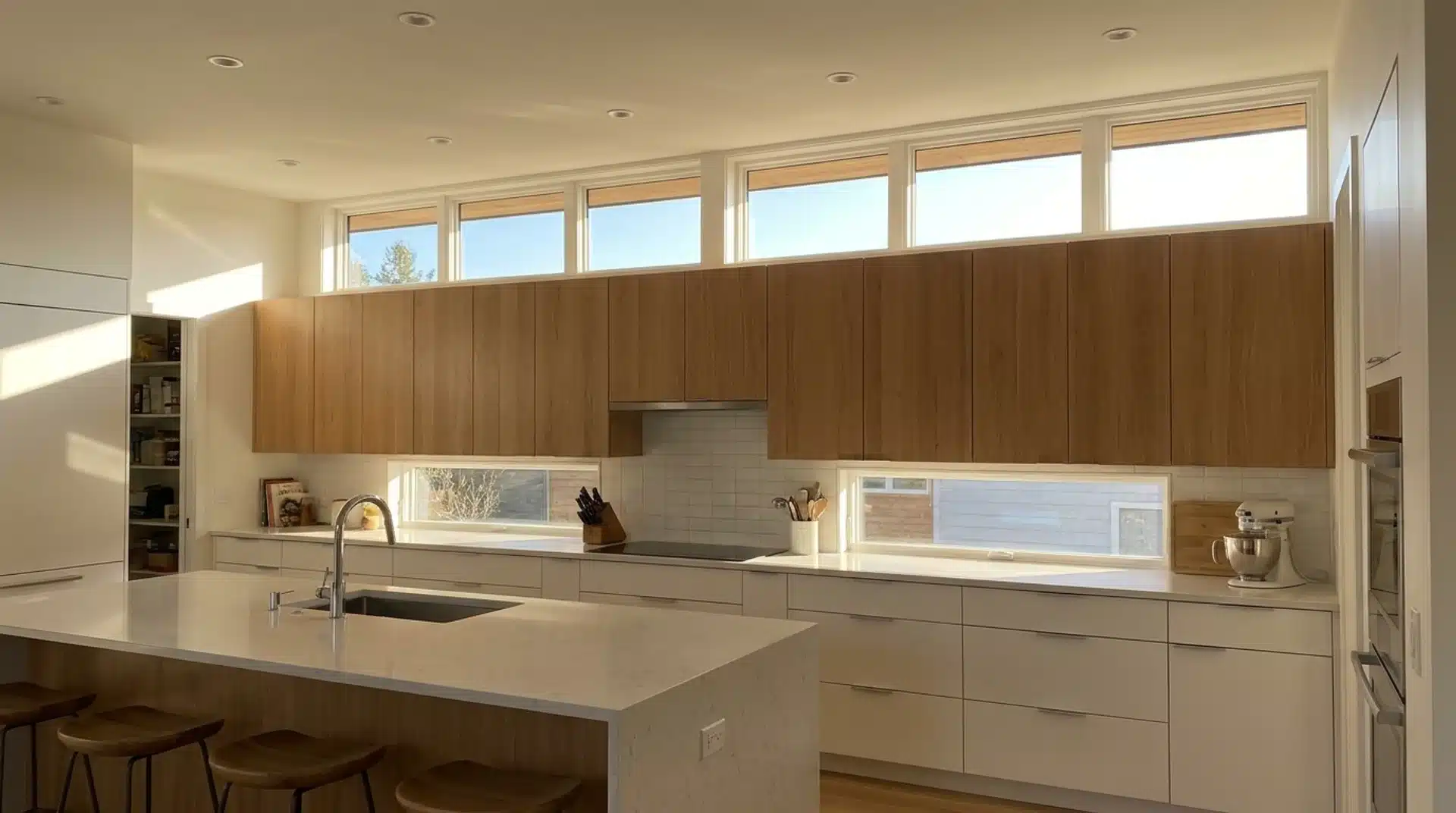
Kitchens are one of the best applications for clerestory windows. Place them directly above the upper cabinet line, typically around 7 to 8 feet from the floor, and you get top-down light washing across countertops and work surfaces without losing a single inch of storage.
This works well on exterior walls where running a full-height window would compete with cabinetry. The clerestory sits above the cabinets; the cabinets run wall-to-wall below; and the kitchen feels bright without any functional compromise.
4. Bathroom Clerestory Window Solutions
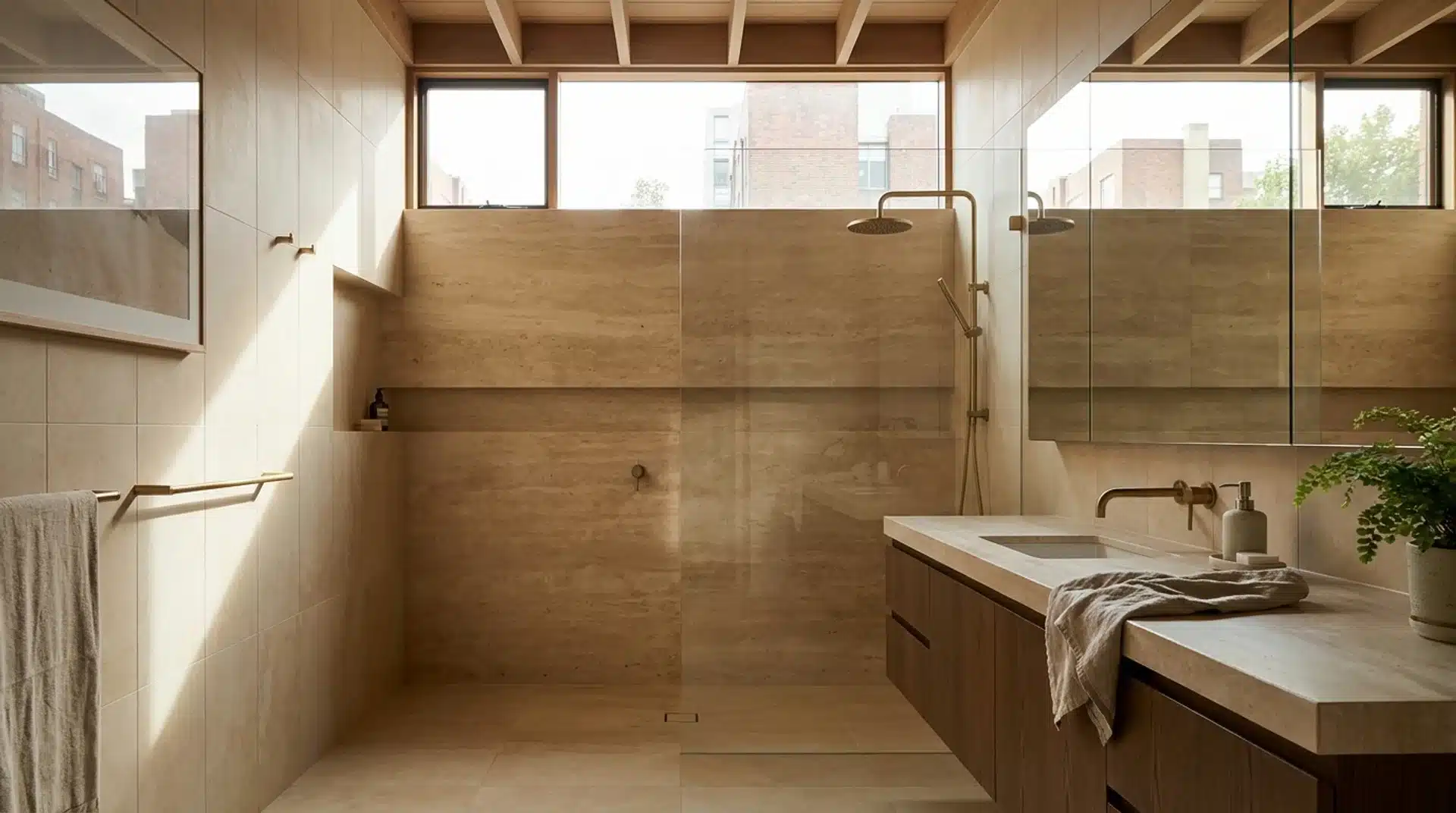
In bathrooms, clerestory windows are about as close to the ideal solution as you can get. Full privacy, real daylight, no frosted glass required, and no awkward compromises.
They work well above vanity mirrors, above shower walls, and on exterior walls where a standard window would put you in direct view of a neighbor’s home.
You get all the light with none of the exposure. For urban homes, especially, that combination is hard to find anywhere else.
5. Bedroom Clerestory Window Solutions
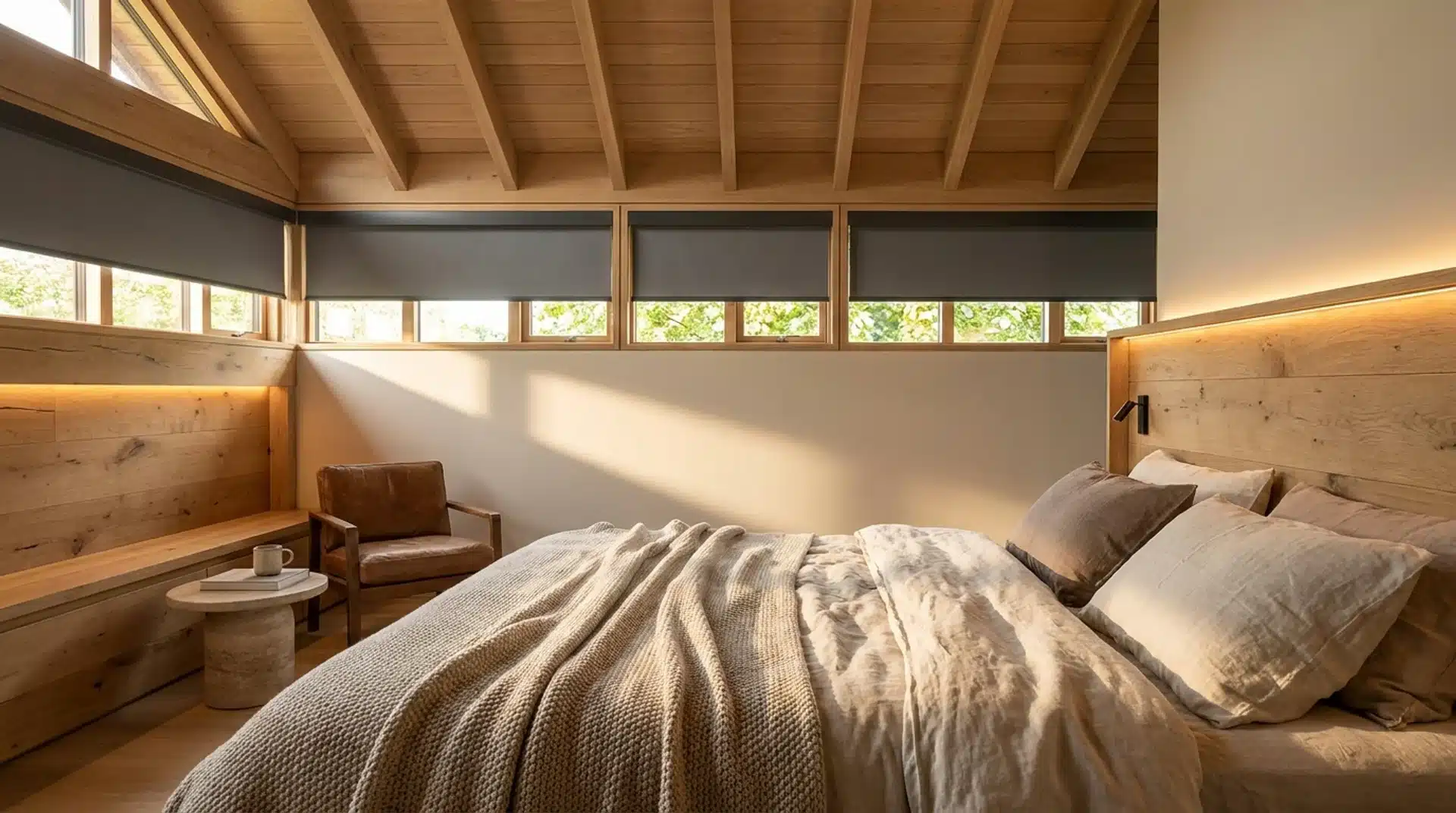
In bedrooms, the consideration shifts slightly. You want daylight in the morning, but you also need to block light completely when sleeping.
Operable clerestories paired with motorized shades or blinds handle both with ease, even at height.
For rooms that catch strong afternoon sun, orienting bedroom clerestories to the north or east is a simple fix that keeps the space comfortable year-round without relying on heavy curtains or blackout shades.
6. Creative Shapes and Grids for Clerestory Windows
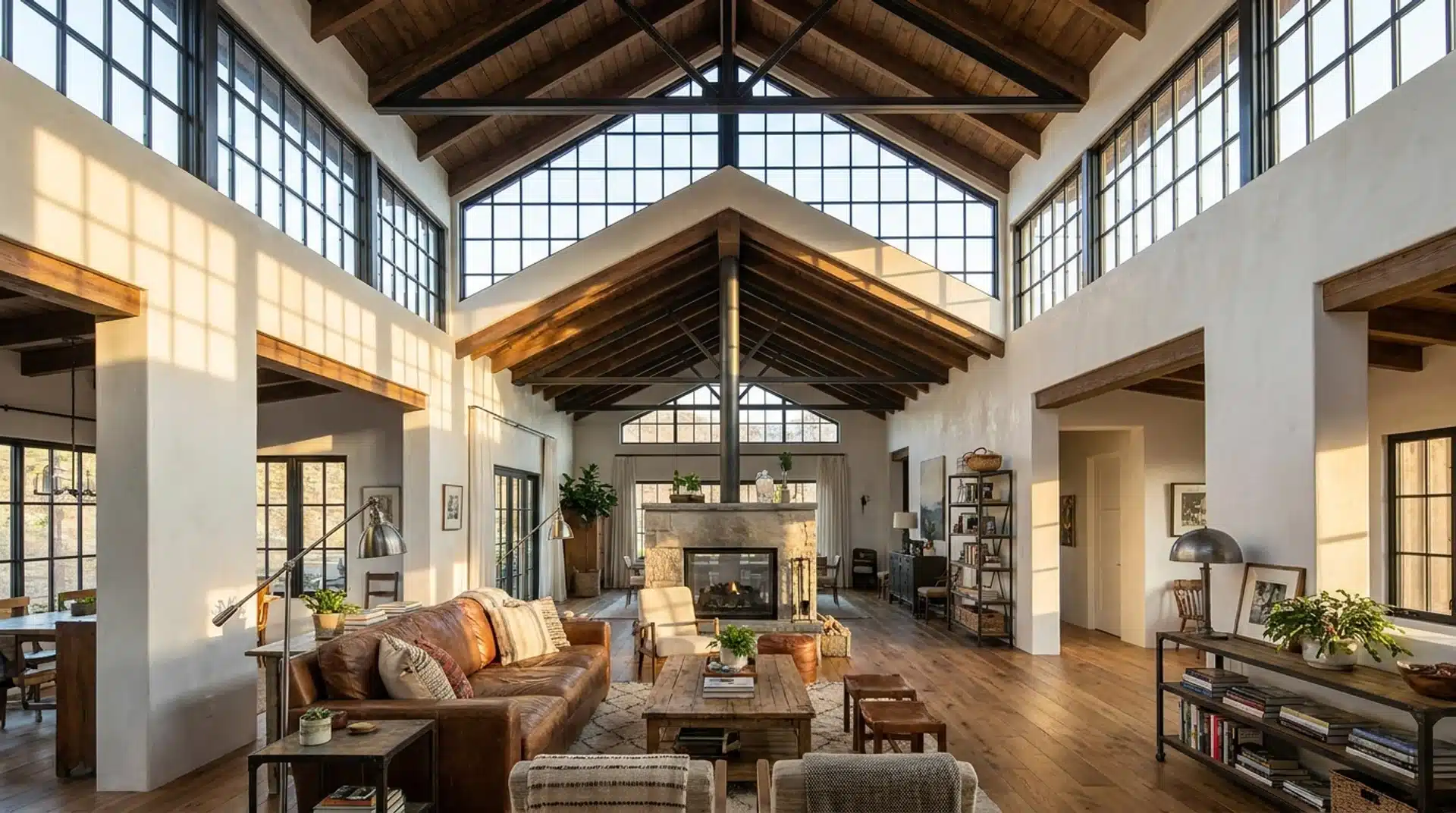
Not every clerestory has to be a plain rectangular slot. Angled or trapezoidal clerestory windows that follow rooflines and gable ends can become a striking design feature rather than an afterthought.
Grid patterns, multiple smaller panes in a geometric arrangement, add texture and an almost industrial or warehouse-loft feel.
Triangular clerestories in gable ends are popular in A-frame and modern farmhouse designs. They fill the peak of the gable with light and look considered from both inside and outside the home.
Design Styles That Work Well With Clerestory Windows
This window type is not one-size-fits-all. The right style depends on your home’s architecture, roof profile, and interior finish direction. These are the combinations that work best in practice.
- Modern and minimalist homes: A continuous horizontal strip of high-set glazing creates a clean, deliberate line near the ceiling. Multiple windows butted together without breaks read as one light slot rather than individual panes. This suits flat or shed roofs and interiors with white or pale walls.
- Mid-century modern homes: They reinforce the long horizontal lines and the floating-roof effect that define this style. They suit the high side of a shed roof. They are also placed above a run of low windows.
- Modern farmhouse homes: Triangular high windows in gable ends fill the peak with light. They look considered from both the inside and the outside of the home. Paired with exposed wood beams, they add real warmth to a high-ceilinged great room.
- Contemporary urban homes: In dense neighborhoods where privacy is a daily concern, high-set windows give you a visible connection to the sky. Even with buildings close on every side, high windows keep the room feeling open without giving up privacy.
How to Choose Clerestory Windows
Picking the right clerestory window comes down to four things: where it faces, how it opens, what it’s made of, and whether your walls can actually support it.
1. Fixed Vs Operable Clerestory Windows
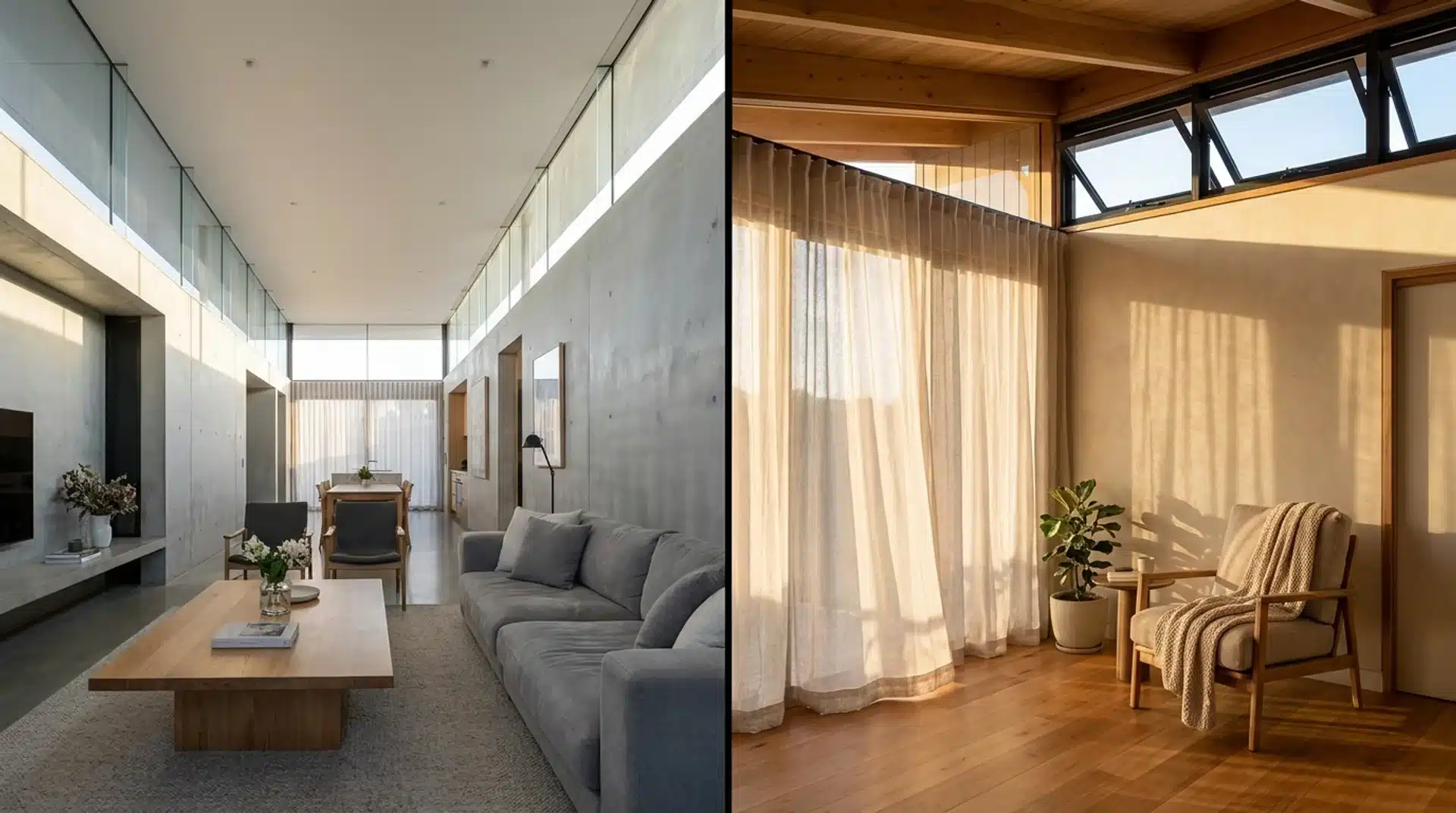
Fixed or operable: it may sound like a small decision, but it shapes how useful your clerestory windows are day to day.
| Feature | Fixed | Operable |
|---|---|---|
| Function | Admits light only | Admits light and provides ventilation |
| Style | Static pane | Awning-style or casement-style |
| Cost | Lower | Higher |
| Maintenance | Nearly none | Occasionally, hardware upkeep at height |
| Operation | None required | Manual crank rod or motorized opener |
| Best for | Hard-to-reach windows or spaces where ventilation is not a priority | Stuffy rooms or climates where passive ventilation adds real comfort |
2. Best Orientation for Natural Light and Comfort
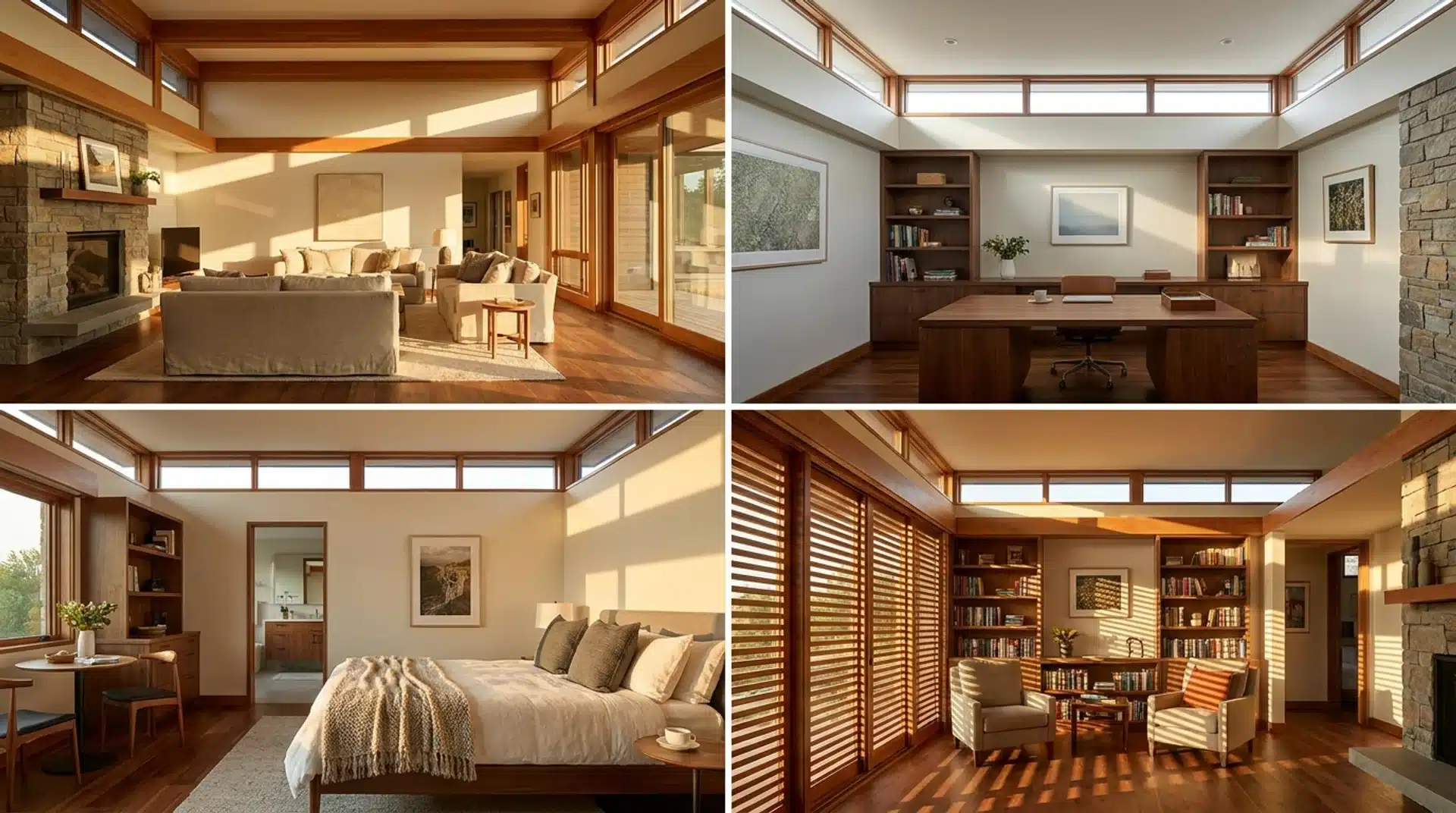
- South-facing: Best for passive solar heating in winter. Works well with overhangs for summer shading. Most impactful for energy performance.
- North-facing: Consistent, diffuse daylight with no glare. Good for studios, offices, and any space where steady light quality matters more than solar gain.
- East-facing: Morning light. Good for kitchens, breakfast rooms, and bedrooms if you want a natural morning wake-up.
- West-facing: Afternoon and evening sun. Can cause glare and heat gain, so plan for appropriate shading.
3. Window Treatments for Clerestory Windows
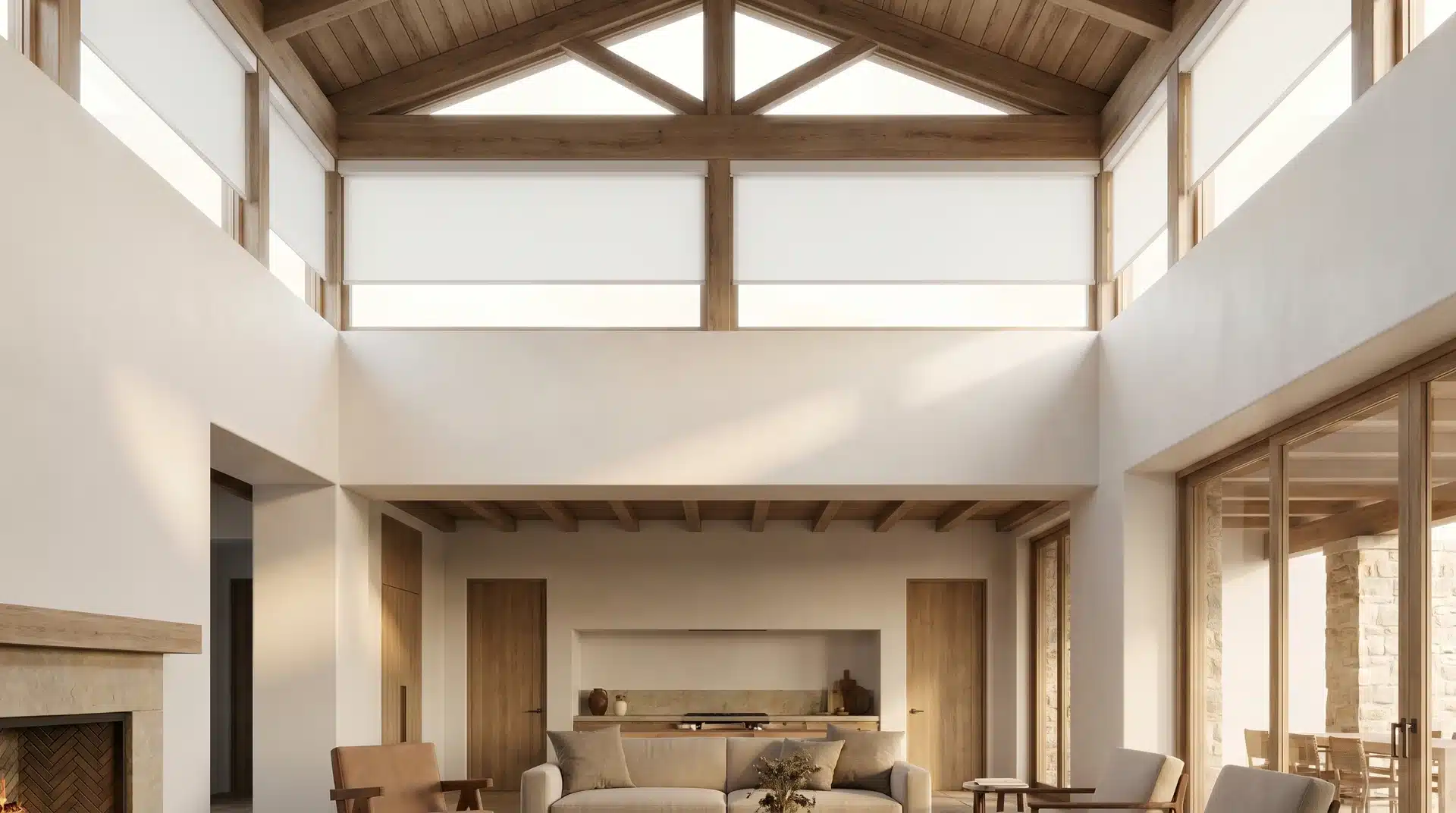
Most people install clerestory windows with no treatments at all, which works fine on north-facing or well-shaded installations. But if glare or heat gain is a concern, there are good options even at height.
- Solar shade fabrics on roller blinds can be motorized and controlled by a remote or a smartphone app, which is useful when the window is 12 feet off the floor. Interior cellular shades provide insulation as well as light control.
- Exterior shading, whether fixed or adjustable overhangs, is the most efficient solution for south- and west-facing clerestories because it blocks solar heat before it reaches the glass.
4. Materials and Frame Choices for Clerestory Windows
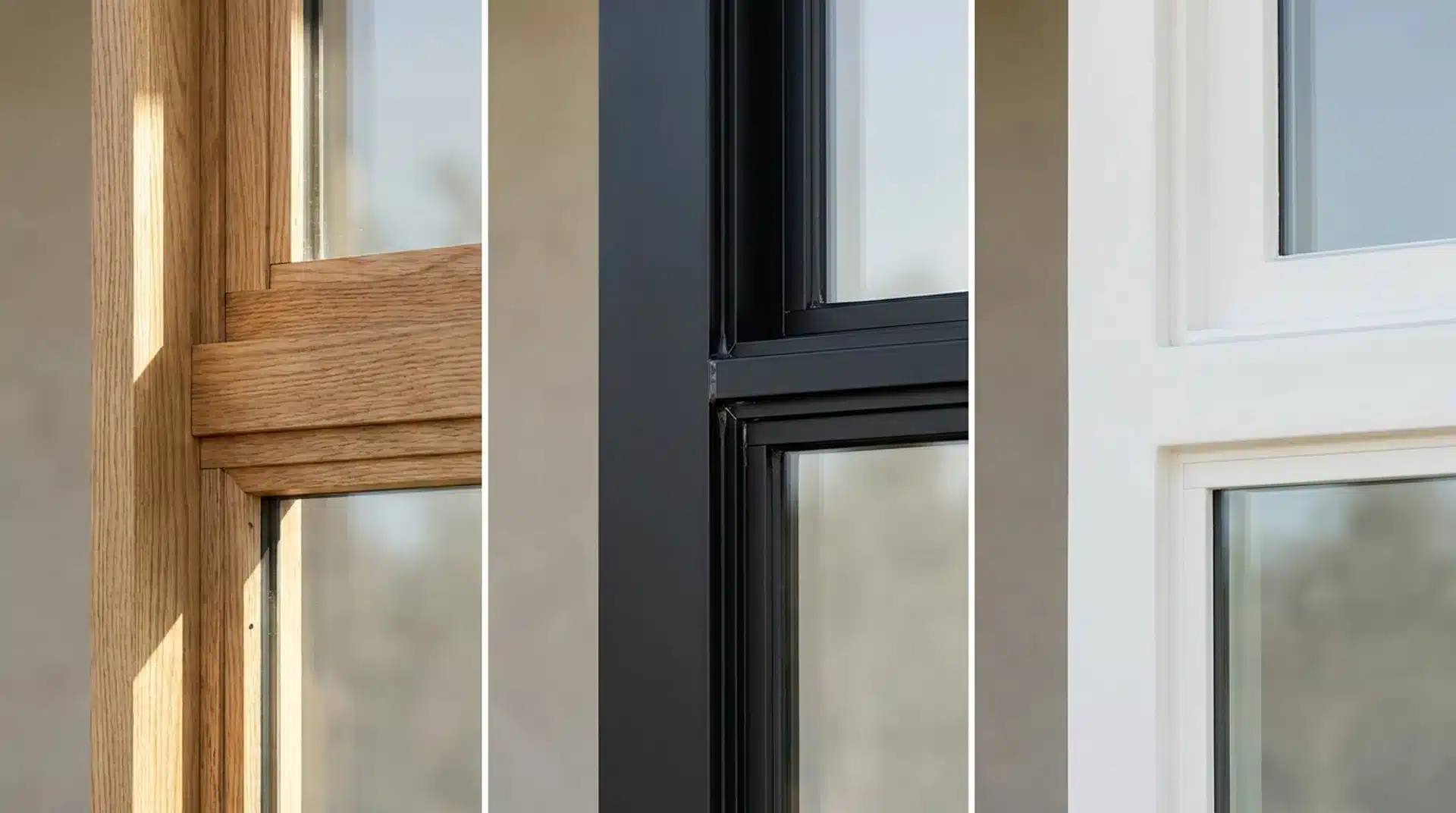
The frame you choose affects how the window looks, how long it lasts, and how well it holds up against your local climate.
| Option | Pros | Watch out for | Best for |
|---|---|---|---|
| Wood frames | Traditional look, good insulation | Requires regular maintenance on exterior applications | Classic and craftsman-style homes |
| Aluminum frames | Slim, durable, suits contemporary architecture | Conducts heat; choose thermally broken frames in climates with big temperature swings | Modern and minimalist homes |
| Fiberglass frames | Low maintenance, better thermal performance than aluminum, and a wide range of finishes | Higher upfront cost | High-performance and energy-efficient homes |
| Double-pane low-E glass | Standard baseline for most climates, which reduces heat transfer | Spec matters: wrong SHGC rating hurts performance | All climates as a starting point |
| Low SHGC glazing | Blocks solar heat before it enters the glass | Reduces passive solar gain in winter if over-applied | South and west-facing units in hot climates |
| High SHGC glazing | Captures passive solar warmth in winter | Can overheat spaces in summer without proper overhangs | South-facing clerestories in cold climates |
5. Installation and Structural Considerations
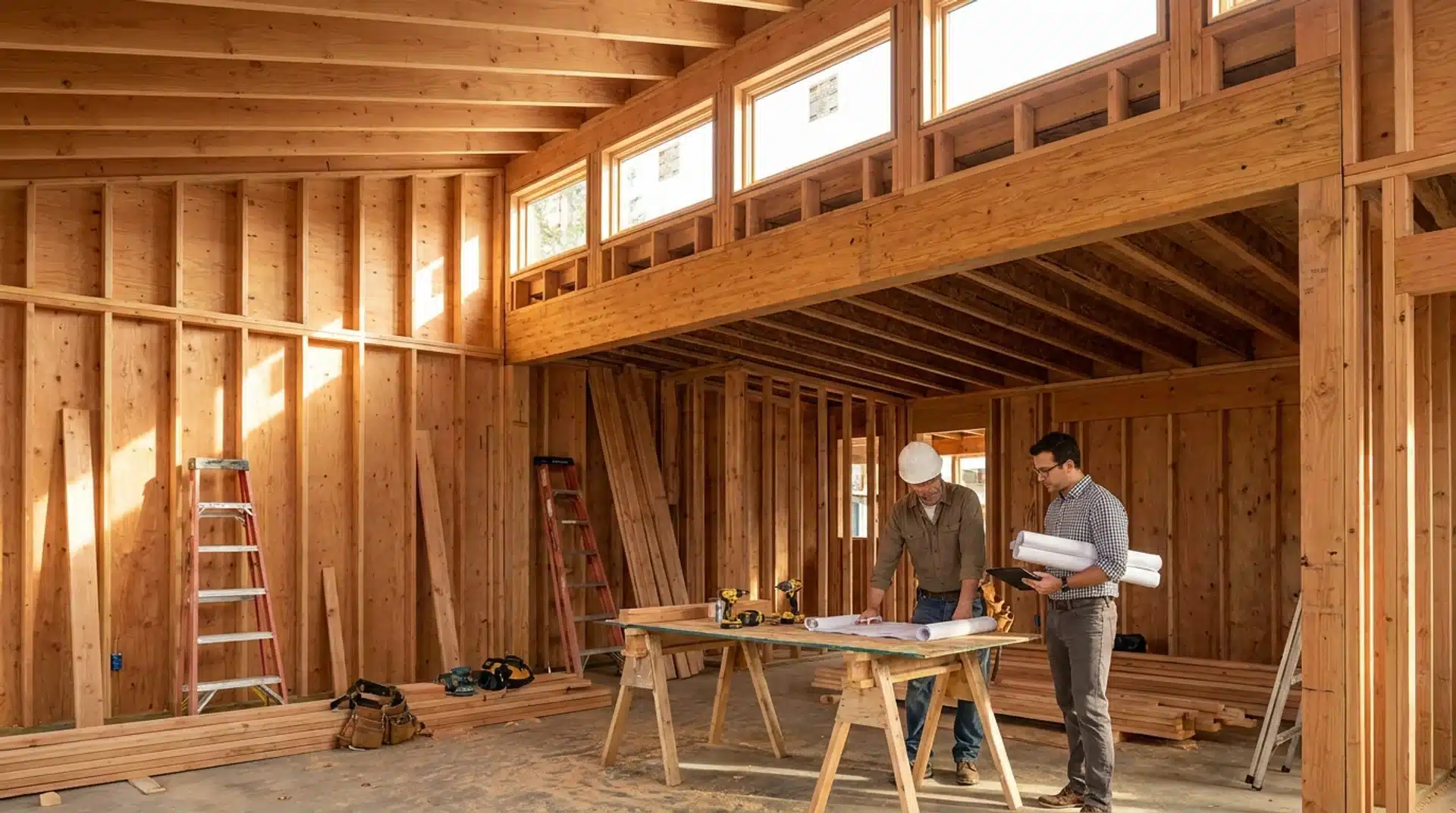
Clerestory windows require adequate wall height and often need structural modifications to the framing, especially in an existing home.
The header above the window opening carries the load from the roof structure, and sizing it correctly is not optional.
New construction is the easiest and most cost-effective time to incorporate clerestory windows because the framing plan can account for them from the start.
Retrofitting is doable but requires a structural assessment. Always work with a licensed contractor and, for structural changes, a structural engineer.
How Do You Clean Clerestory Windows?
Cleaning clerestory windows comes down to having the right tools. A telescoping window cleaning pole with a squeegee or microfiber head handles most fixed installations without a ladder.
For windows over 12 feet, an extension pole with a spray-and-wipe head works well for routine dust and grime removal.
For deeper cleans on very high installations, a step ladder or a folding platform ladder positioned safely against the wall is the practical option.
Some homeowners schedule a professional window cleaner once or twice a year for the high stuff and handle routine dusting themselves with a long-handled duster.
The key is not letting dirt build up, since clerestory windows collect more airborne dust than eye-level windows, and streaks are more obvious when light passes directly through them.
Conclusion
Clerestory windows do a lot for what they actually cost. A well-placed band of high windows can transform the light quality of an entire room.
It can protect privacy without blocking daylight, free up wall space you didn’t know you were missing, and improve ventilation in ways that affect daily comfort.
They’ve been doing this in buildings for thousands of years, from Egyptian temples to Frank Lloyd Wright bungalows, because the idea is genuinely sound.
Whether you’re building from scratch, renovating an existing space, or just trying to figure out why a room feels darker than it should, clerestory windows are worth a closer look.
The right orientation, the right frame, and the right placement can make a room feel entirely different. Brighter, larger, and a lot more livable. That’s a hard combination to beat.