How to Turn Your Everyday Bathroom Into a Wellness-Focused Home Spa

Why Your Bathroom Matters for Everyday Wellness
If you’ve ever stepped into a steamy shower at the end of a long day and felt your shoulders finally drop, you already know what a thoughtfully designed bathroom can do. It’s one of the most frequently used rooms in any home, yet it tends to be the last to receive genuine attention. A wellness-focused bathroom isn’t something reserved for high-end renovations — it’s the result of small, intentional choices around light, temperature, sound, and water. Beyond calming colors and softer lighting, even straightforward fixture upgrades like a handheld filtered shower head can make showers more comfortable and adaptable for different users — from young children to older adults — while potentially reducing some mineral and chemical deposits from tap water on skin and surfaces.
Understanding Bathroom Wellness: More Than Just a Trend
Bathroom wellness is a practical concept: designing a space that eases daily stress, supports good hygiene, and feels genuinely restorative. It rests on three core pillars:
Environment: lighting, color, sound, and thermal comfort
Functionality: layout, storage, accessibility, and ease of cleaning
Personal rituals: how you actually use the space day to day
Harsh overhead lighting, cluttered counters, and slippery surfaces don’t just look uninviting — they affect your mood, your sense of safety, and how much mental energy a simple morning routine can drain. Wellness design isn’t about chasing trends; it’s about building a space that supports long-term, everyday habits.
Creating a Calming Atmosphere: Light, Color, and Sound
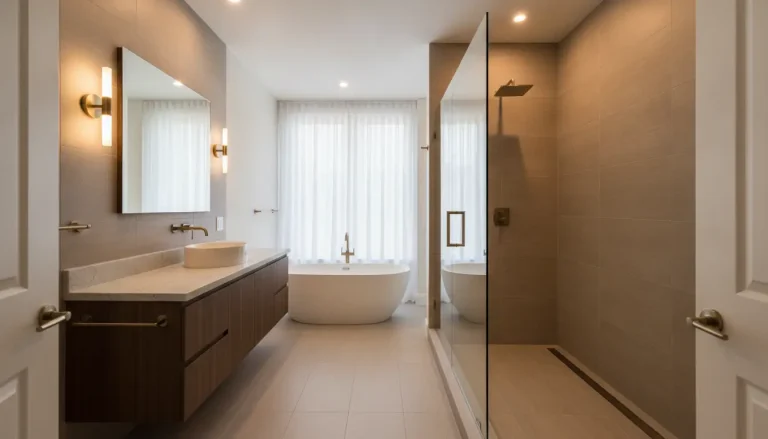
Layered lighting — combining ambient, task, and accent sources — does far more for a bathroom than a single overhead fixture ever could. Warmer light temperatures tend to feel relaxing and spa-like, while brighter, cooler light near the mirror keeps grooming tasks practical. Where natural light is available, frosted glass or window film can preserve it without sacrificing privacy.
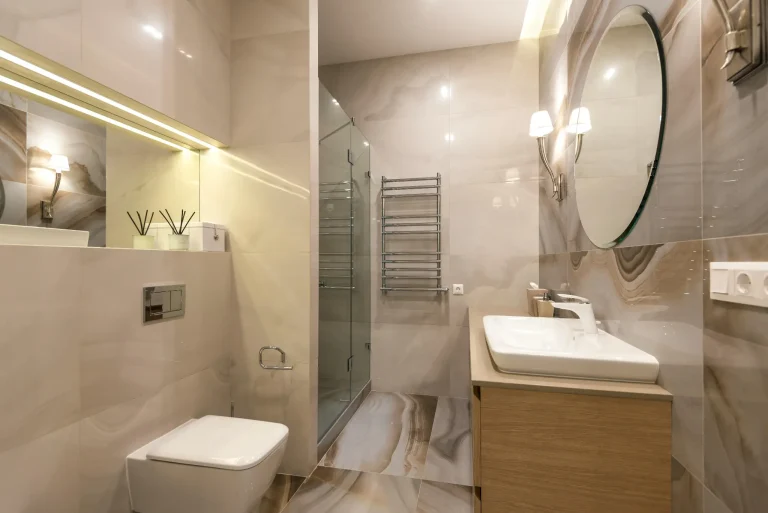
Warm, nature-inspired colors — muted blues and greens, soft neutrals, earthy tones — consistently help bathrooms feel calmer and more open. Pairing these with natural materials such as wood accents, stone-look tiles, or textured finishes adds warmth and a subtle connection to the outdoors. Design professionals frequently point to this combination as central to achieving a spa-like atmosphere.
Sound is worth a moment’s attention, too. Soft-close cabinetry, a bath mat underfoot, and a solid door fitted with a door sweep can meaningfully cut down on noise intrusion — reinforcing the sense of a private, unhurried retreat.
Key Takeaway: Small changes to light, color, and sound can transform how your bathroom feels without a full remodel.
Supporting Physical Comfort: Temperature, Surfaces, and Accessibility
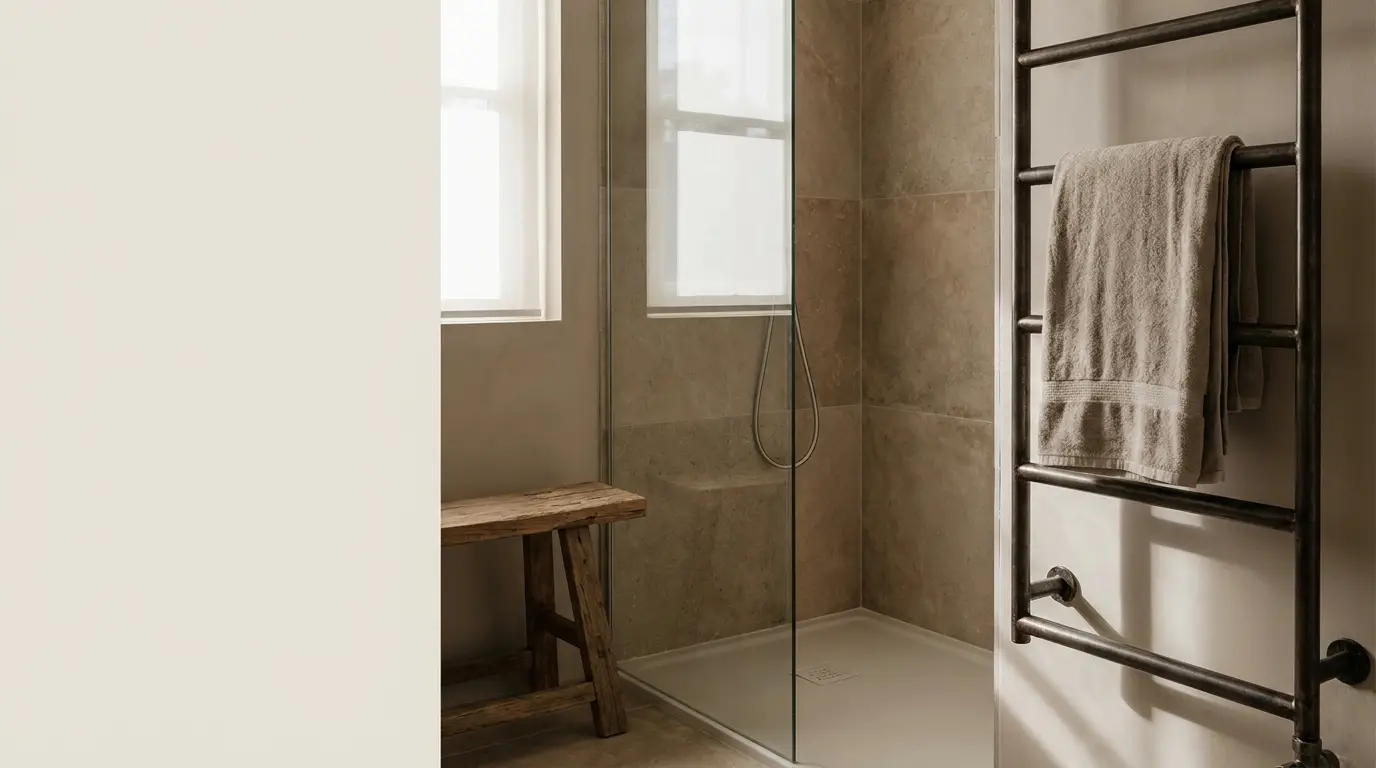
Thermal comfort is one of the most overlooked elements of bathroom design. Stepping onto cold tile right after a shower is a small but genuine stressor. Bath mats offer the simplest fix; heated towel rails or radiant floor heating are longer-term upgrades worth factoring into any renovation budget.
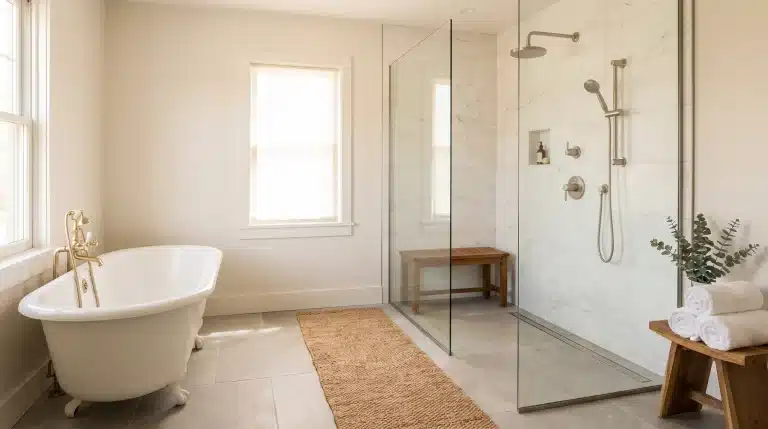
Slip-resistant surfaces — textured finishes, matte tiles, and well-positioned drainage — are essential near showers and tubs. Barrier-free showers, built-in benches, and grab bars that double as towel rails benefit everyone in a household, not only those with specific mobility needs. In a multi-generational home especially, these choices make daily routines smoother across all ages.
Water, Air, and Cleanliness: Hidden Factors in a Wellness Bathroom
The quality and feel of water shapes the bathing experience in ways that often go unnoticed until something changes. Hard water, for instance, can leave mineral residue on skin, hair, and fixtures over time. Good ventilation — running an exhaust fan during and after a shower — helps manage moisture levels, limiting the mold and mildew that degrade both surfaces and indoor air quality. Building and housing professionals consistently recommend this for good reason.
Practical Tip: Switch your exhaust fan on before you start the shower and let it run for 15–20 minutes afterward to effectively clear excess moisture from the room.
Choosing non-porous surfaces and keeping counters clear also simplifies cleaning, reducing the need for strong chemical products in a small, enclosed space. Whenever any cleaning product is used, proper ventilation matters — regardless of how mild the formula appears on the label.
Designing for Daily Rituals: Storage and Personal Touches
Organized storage reduces visual clutter and the low-level decision fatigue that can make a morning feel chaotic before it’s properly begun. Grouping items by routine — morning versus evening — and keeping extras out of sight helps the space feel open and purposeful rather than crowded.
Personalization matters just as much as organization. A hook for a robe, a tray holding a candle (used carefully with ventilation in mind), or a small stool for a book can make longer rituals feel intentional rather than improvised. Ultimately, what makes a wellness bathroom genuinely yours is how well it fits the way you actually live.
Bringing It All Together
A wellness bathroom supports your routines — not the other way around. You don’t need a full renovation to start moving in this direction. Spend a week observing your current space: note what feels stressful, what feels calming, and where the friction in your daily routine actually lives. Then pick one environmental change and one functional change to try first. Over time, those small, considered decisions accumulate into a bathroom that genuinely supports your everyday well-being.