Apartment Layouts Explained: Every Floor Plan Type

You already know how many bedrooms you need. That’s rarely the hard part.
The real challenge is finding an apartment layout that fits how you actually spend your day. A 700 sq ft railroad apartment and a 700 sq ft open-concept studio are exactly the same size on paper. They feel nothing like living in.
This post covers every common apartment layout type, what each one is like day-to-day, and a simple way to match one to your lifestyle and routine before you sign anything.
What Is an Apartment Layout
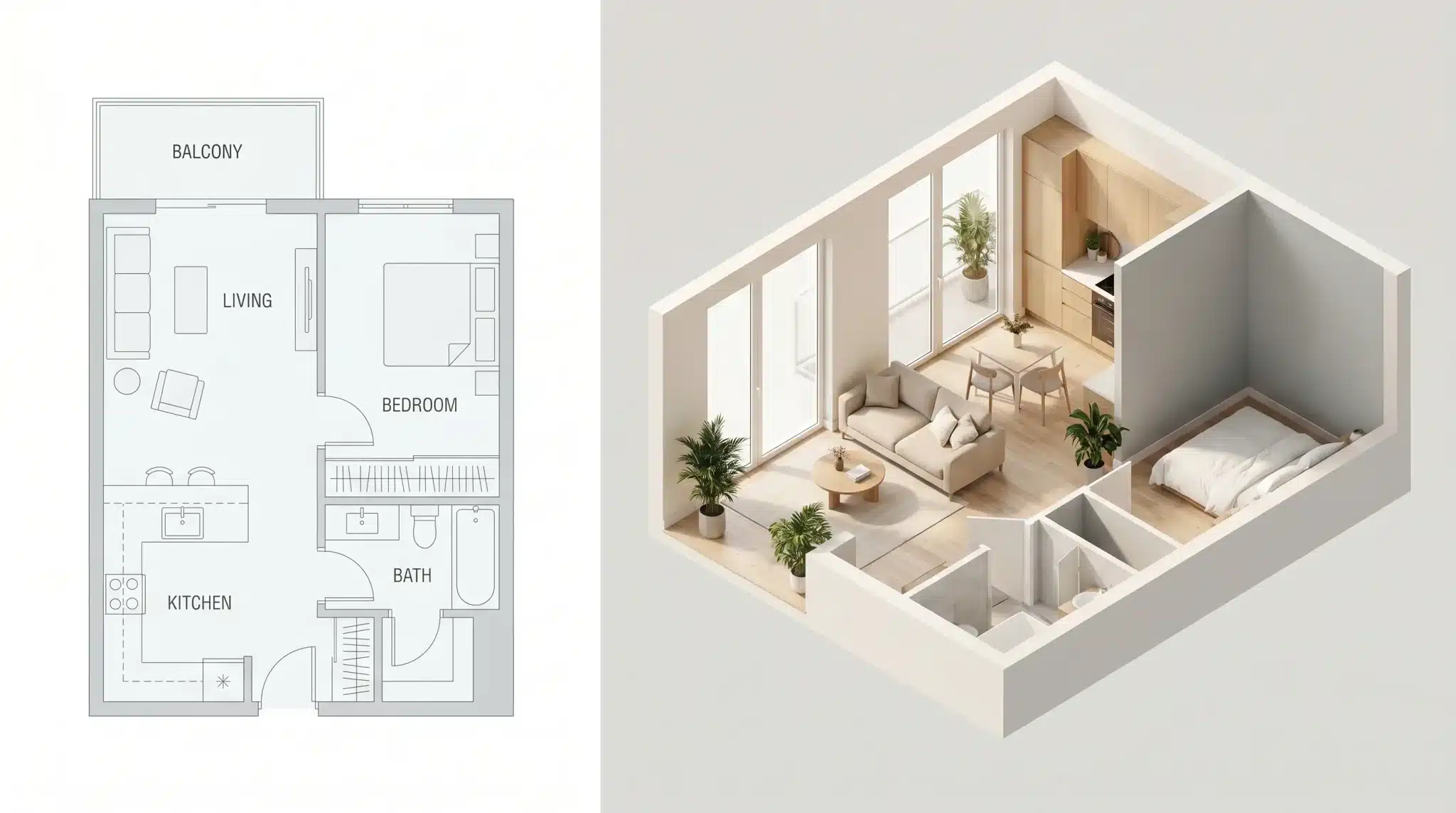
An apartment layout is the arrangement of the rooms, walls, and open areas within a unit. It defines where the kitchen, bedroom, bathroom, and living spaces are located and how they connect.
Layout is different from square footage. Size tells you how much space you have. Layout tells you how usable that space actually feels.
Three terms come up often in listings and are worth understanding before you tour:
- Open-concept: The kitchen, dining, and living areas share one continuous space without walls. More natural light and a social feel, but noise and cooking smells travel freely.
- Flex space: A room without a window that cannot legally be classified as a bedroom. It can still work as a home office or sleeping area with a divider or partition.
- Split-bedroom layout: Bedrooms sit on opposite sides of the apartment. Useful for roommates or couples who follow different schedules and prefer more privacy.
One practical tip most renters skip: Ask the landlord for a floor plan PDF with room dimensions before any tour. Bring a tape measure regardless. Furniture that should fit on paper sometimes does not.
Why Apartment Layout Matters More Than Square Footage
Layout shapes how comfortable your daily life feels inside an apartment. A poor layout wastes usable space and makes even a large apartment feel cramped and difficult to live in.
Here is what your apartment floor plan directly affects:
- Daily flow: A well-planned layout lets you move between rooms without obstacles or backtracking.
- Privacy: Layout determines how well the sleeping, working, and living zones are separated.
- Natural light: Window placement and wall placement together control how bright or dim different areas feel throughout the day.
- Noise control: Closed layouts reduce noise between rooms. Open layouts let sound travel across the entire space.
- Furniture options: Narrow or oddly shaped rooms limit how you can arrange furniture, regardless of total square footage.
A 700 sq ft open-concept apartment often feels more livable than a 900 sq ft apartment with narrow hallways and closed-off rooms.
Every Common Apartment Floor Plan Type
Understanding the main floor plan types helps you quickly rule out what won’t work for your daily routine. Here is what each one is actually like to live in.
1. Studio Apartment
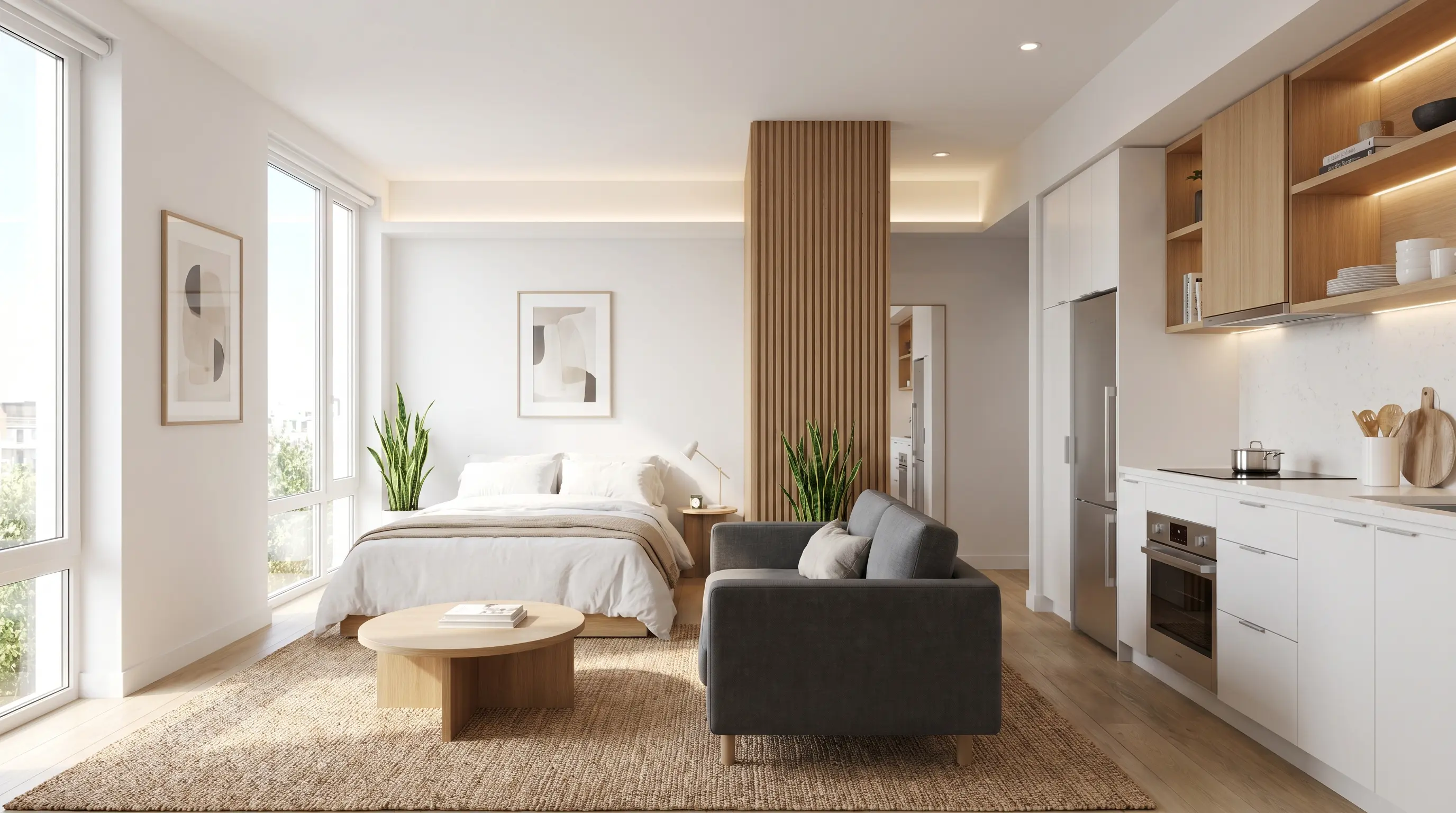
A studio combines your bedroom, living room, and kitchen into a single open room, with only the bathroom as a separate space. Most range from 300 to 500 square feet.
Best for: solo renters, minimalists, people in expensive cities who prioritize location over space.
Pros: lower rent, less to clean, easier to furnish on a budget.
Cons: No physical separation between sleeping and living. This matters more than people expect when working from home, feeling unwell, or trying to decompress after a long day.
2. Alcove Studio
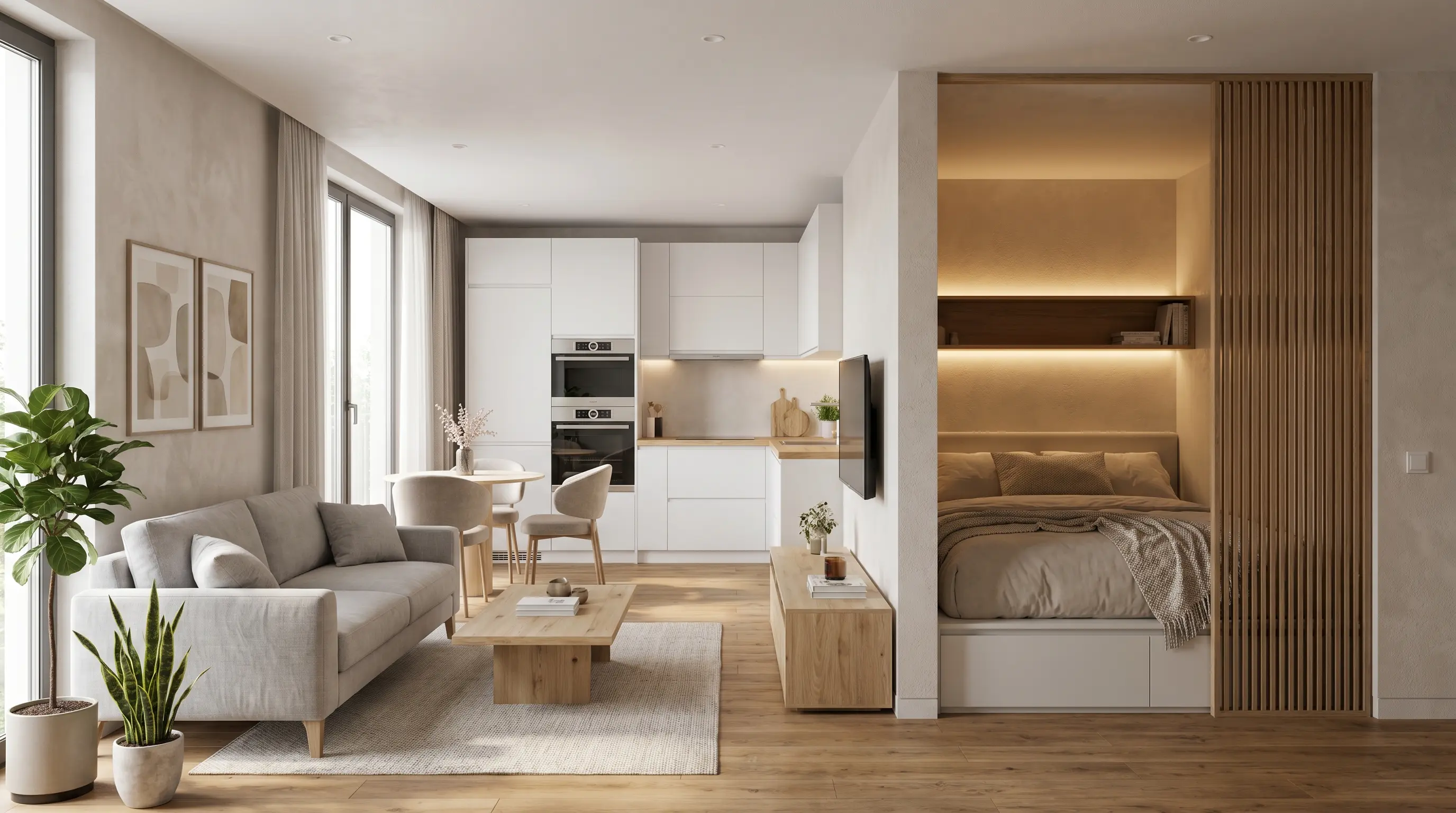
The alcove studio adds a recessed nook, usually off the main living area, that creates a natural sleeping zone without adding a full wall.
Best for: remote workers who want a defined sleep area without paying for a one-bedroom. The recessed area creates mental separation between work and rest that a standard studio cannot offer.
3. Convertible Apartment
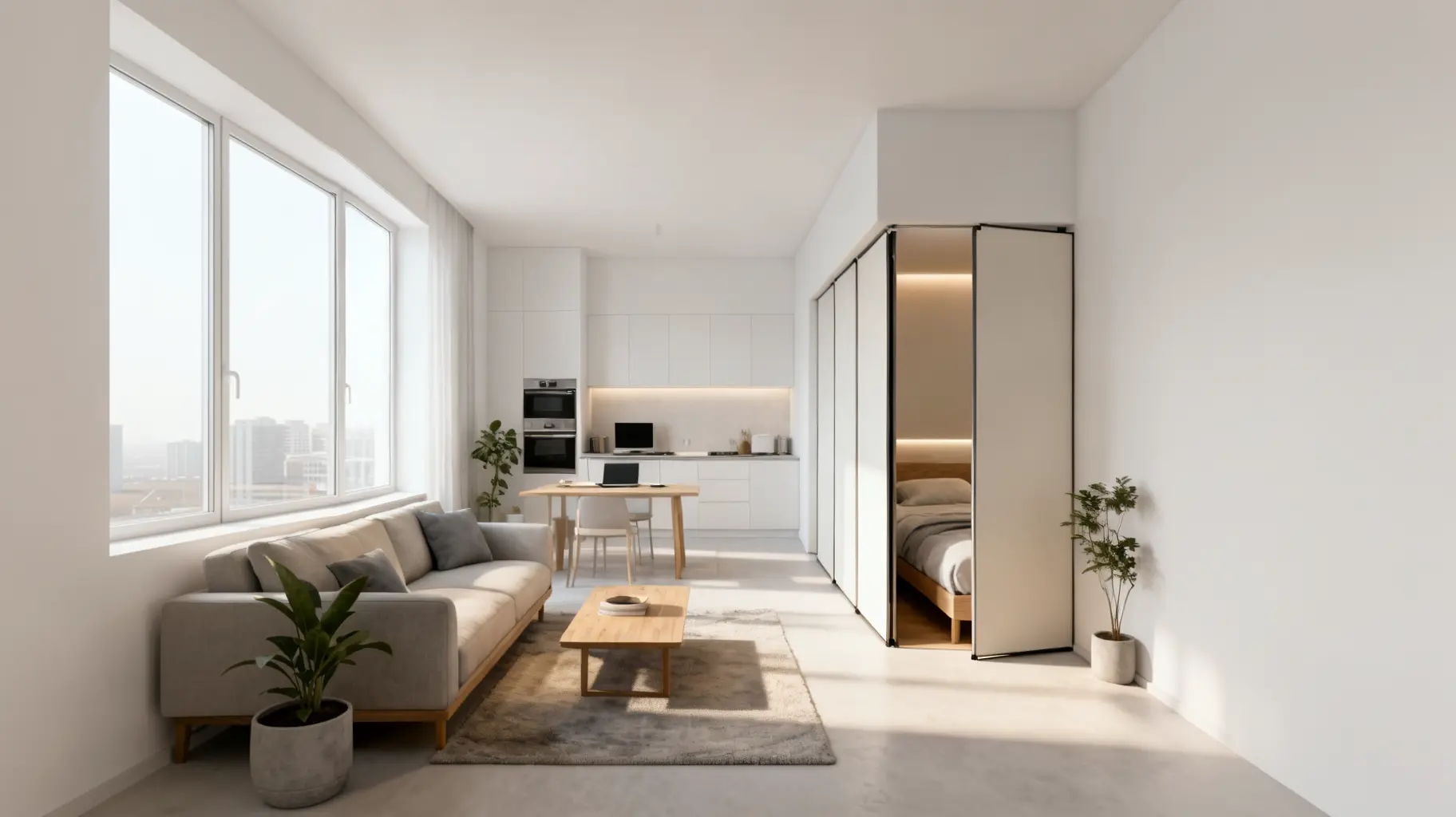
A convertible apartment is similar to an alcove studio but adds a partial wall, sliding door, or room divider to create more separation.
The additional area usually lacks a window, so it cannot legally be listed as a second bedroom. These are typically cheaper than a true one-bedroom.
Best for: renters on a tight budget who need two distinct spaces.
4. Efficiency Apartment
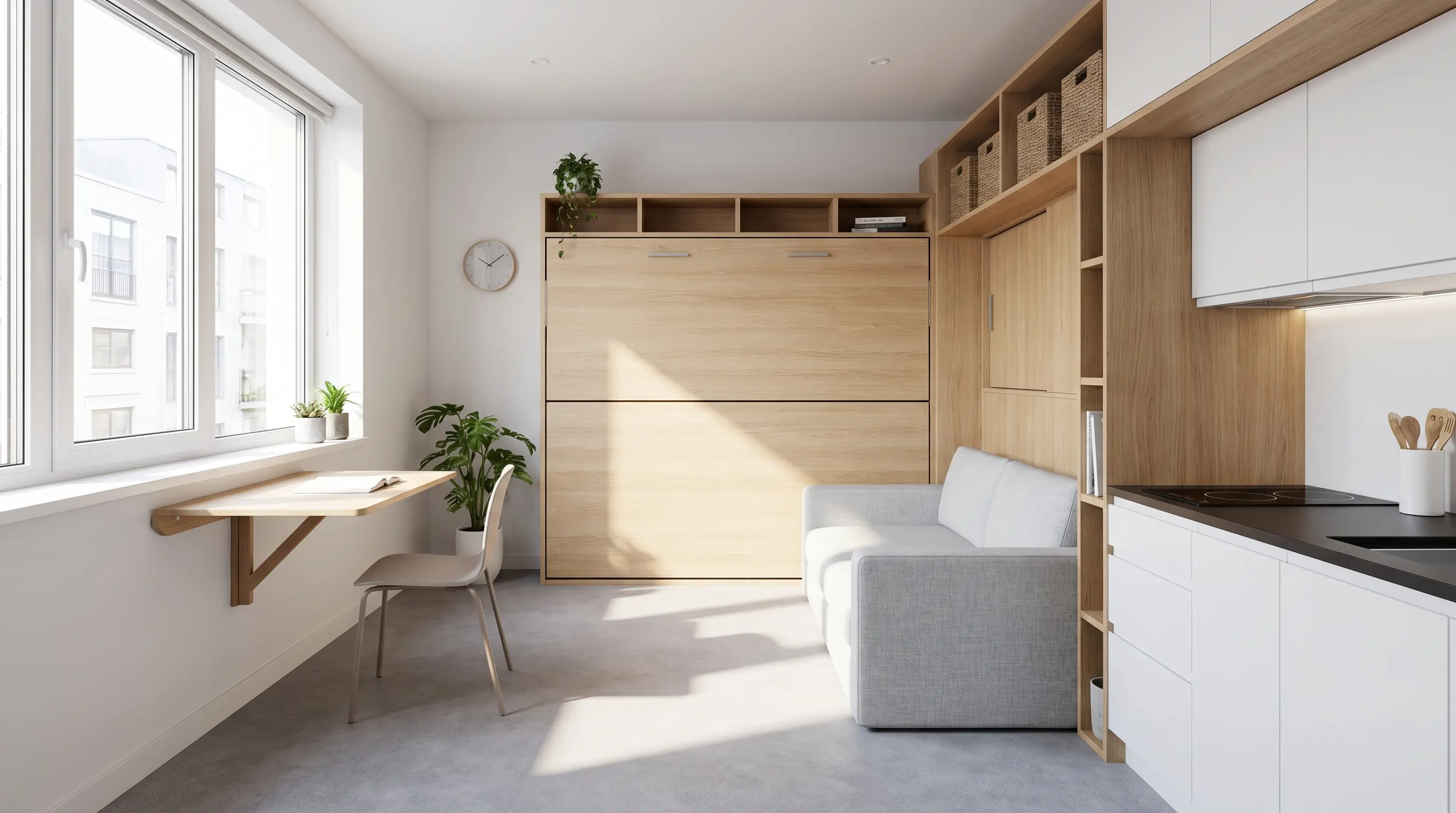
Similar to a studio but with a kitchenette, a mini fridge, one or two burners, and minimal counter space rather than a full kitchen. It typically offers a mini fridge, one or two burners, and minimal counter space. These are the most compact apartment floor plan types available.
Best for: people who rarely cook and want the lowest possible rent.
5. One-Bedroom Apartment
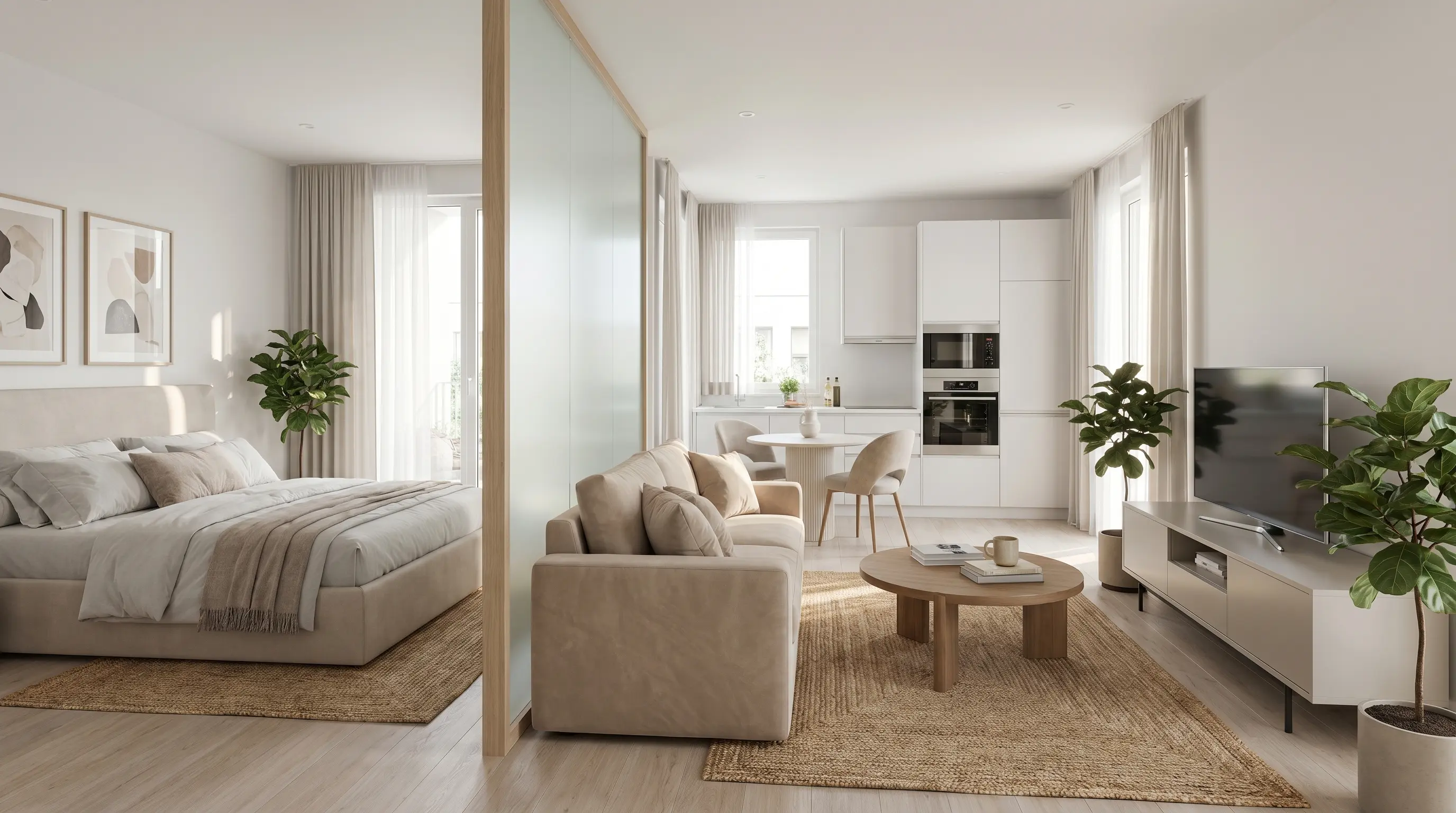
The one-bedroom has a fully separate bedroom, a living room, a kitchen, and a bathroom. It is the most common apartment layout in the U.S. rental market.
Best for: singles, couples, anyone who wants a clear physical separation between sleeping and living.
One key limitation: The bedroom is the only private room. Remote workers will likely end up at the kitchen table or couch. If you need a dedicated home office, a junior 4 or two-bedroom is a better fit.
6. Junior 4 (J4)
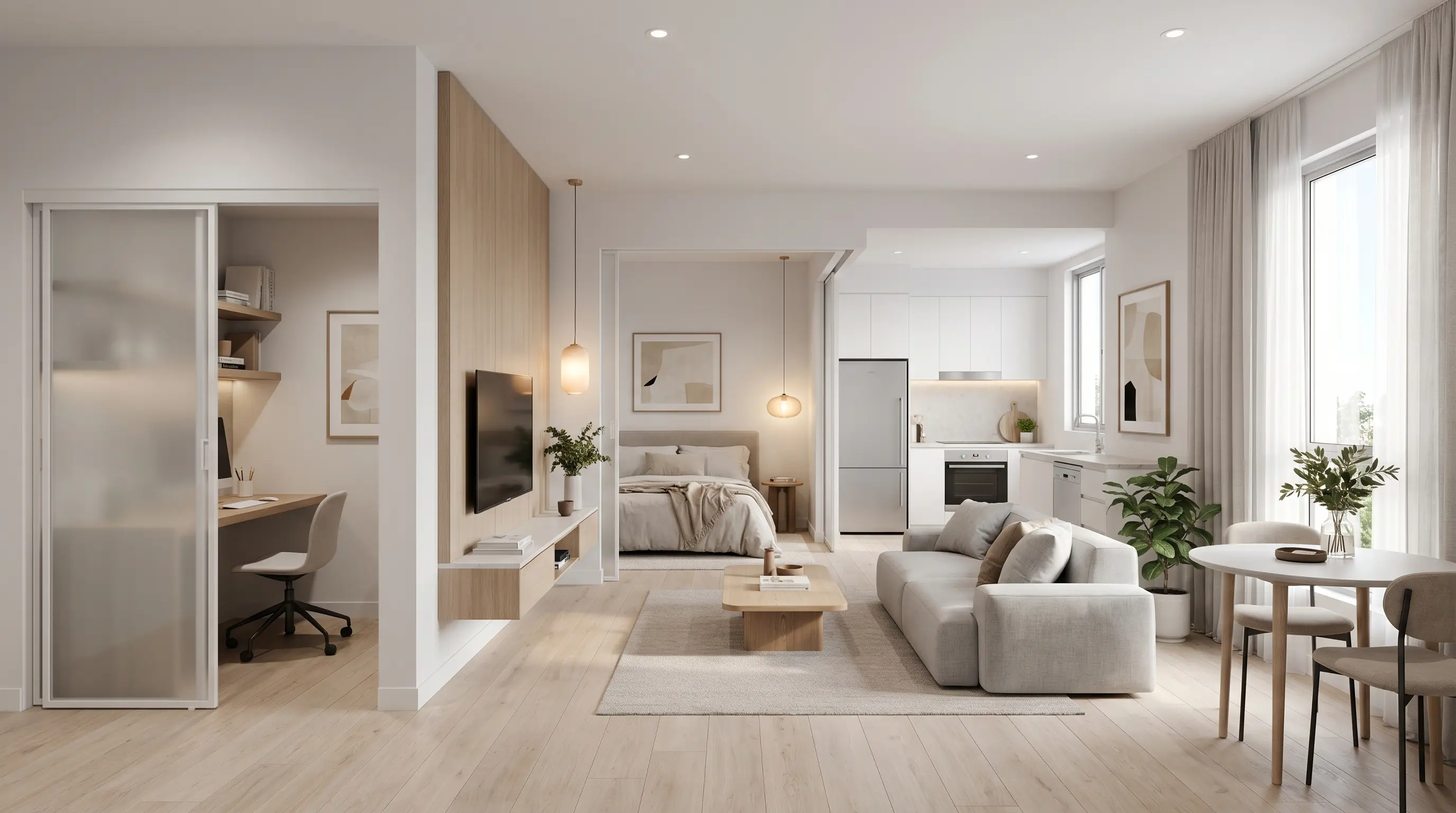
A junior 4 has four rooms: a kitchen, a living room, a bedroom, and an additional space, but the fourth room lacks a window, so it cannot legally be rented as a second bedroom. Common in older New York City buildings.
Best for: couples where one person works from home and needs an actual door to close.
7. Two-Bedroom Apartment
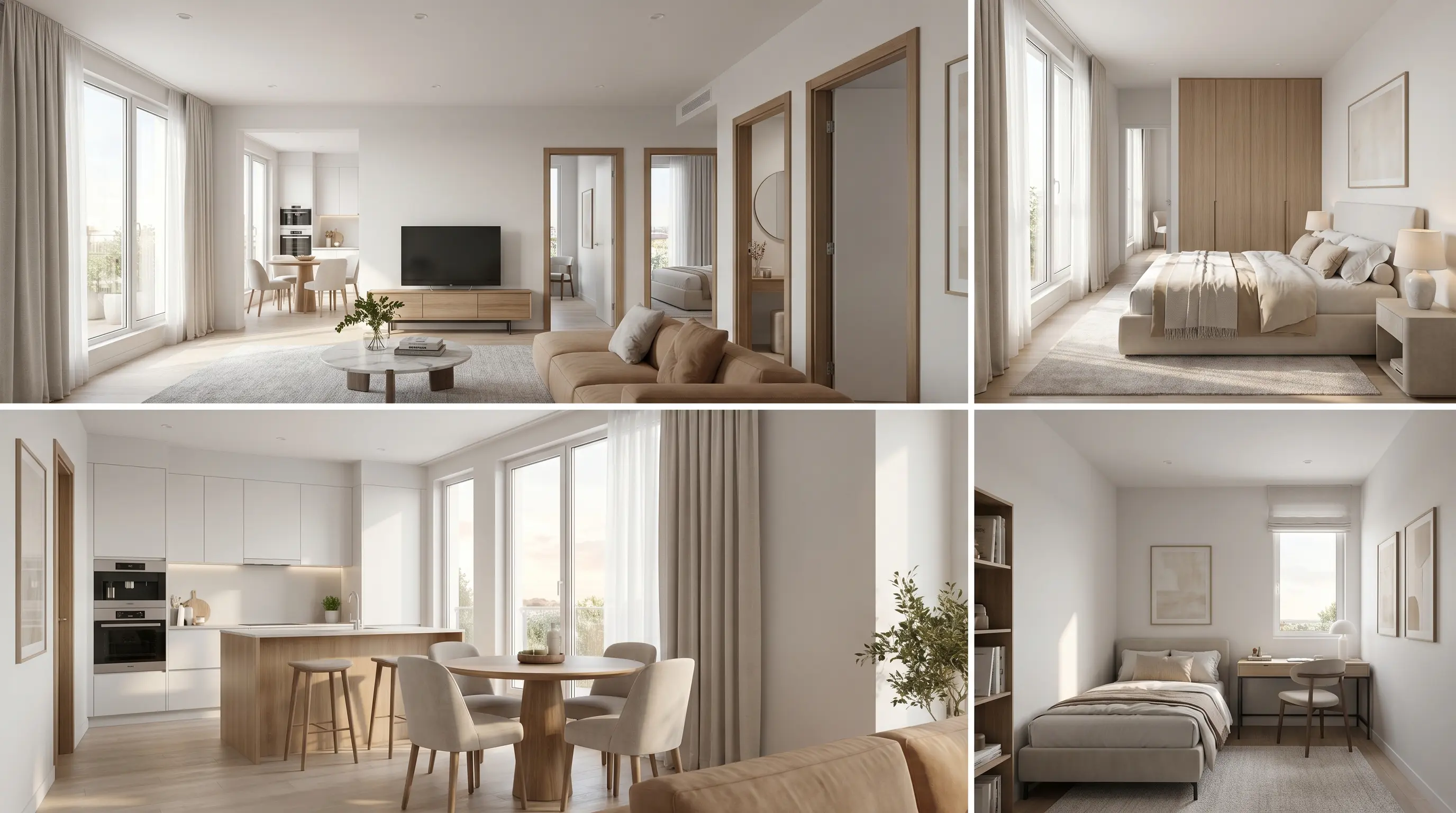
Two bedrooms, two legal windows, usually one or two bathrooms. The second room can function as a home office, a guest room, or a child’s room.
Best for: roommates splitting costs, couples wanting flexibility, remote workers who need a proper workspace. When thinking about how to divide the shared living zones in a two-bedroom, the zone-defining ideas for small open living and dining areas apply directly here.
8. Three-Bedroom Apartment
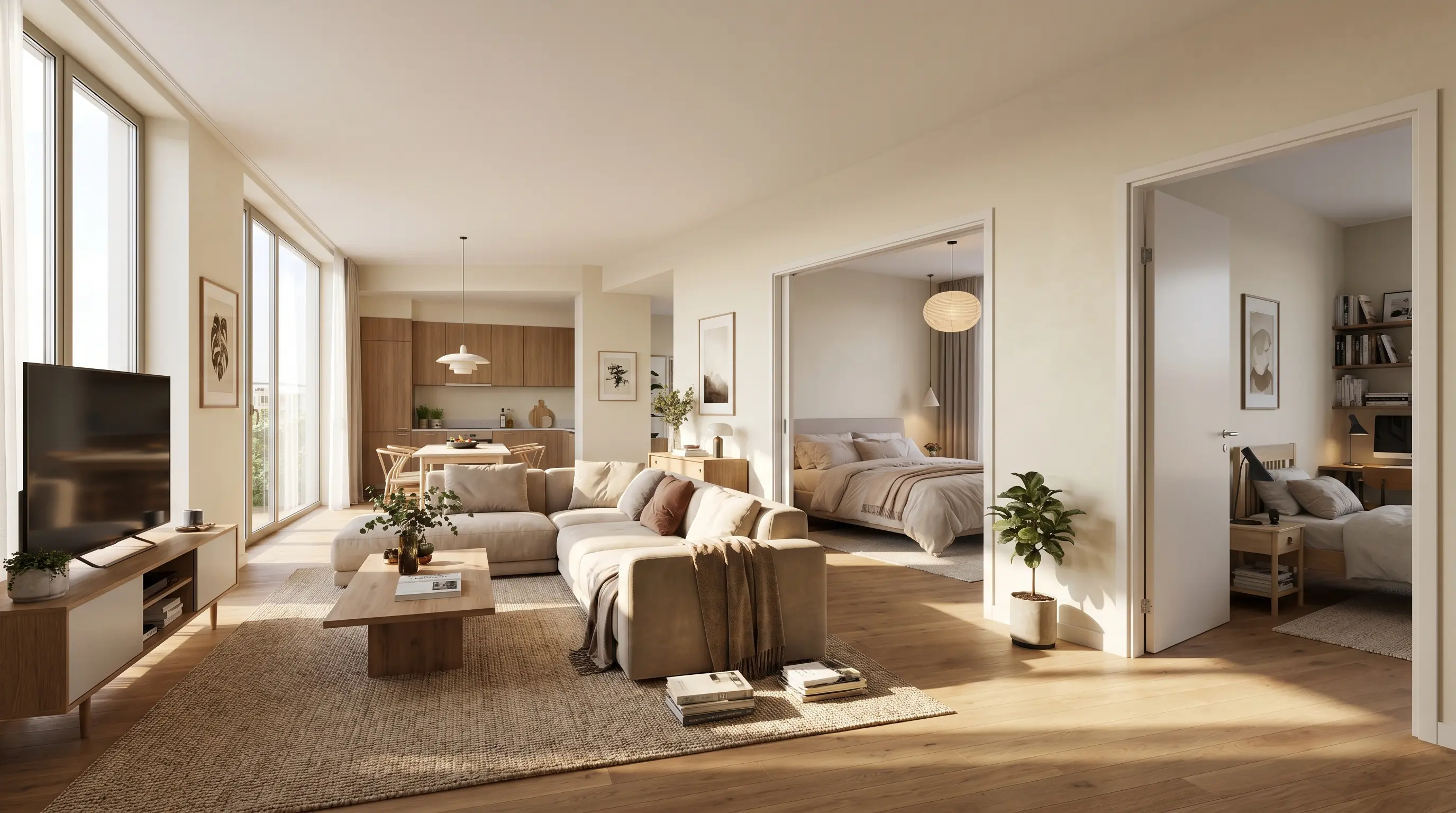
Three-bedroom layouts prioritize space and room separation. Typically designed for families or groups of roommates.
Best for: families with children, three-person roommate situations, anyone downsizing from a house who isn’t ready to give up a guest room.
9. Loft Apartment
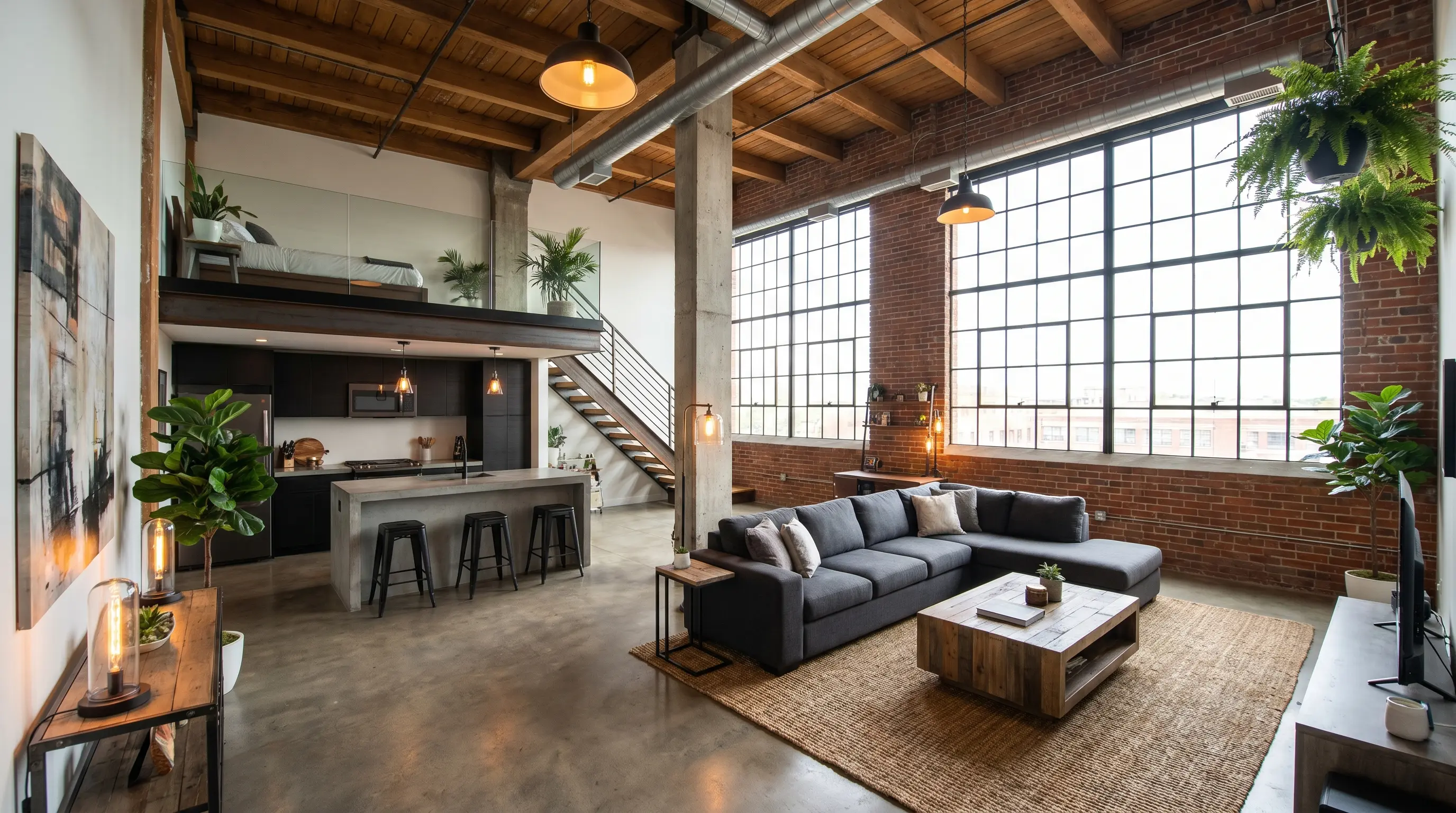
Lofts are defined by open floor plans, high ceilings (often 12 feet or more), and industrial character: exposed brick, concrete floors, oversized windows.
Sleeping areas are usually defined by furniture placement or a partial platform rather than walls.
Best for: people who want a studio feel with a lot more volume, creative types who want an open working and living environment.
Honest cons: sound carries everywhere, and heating a loft-style space in winter is often expensive.
10. Duplex Apartment
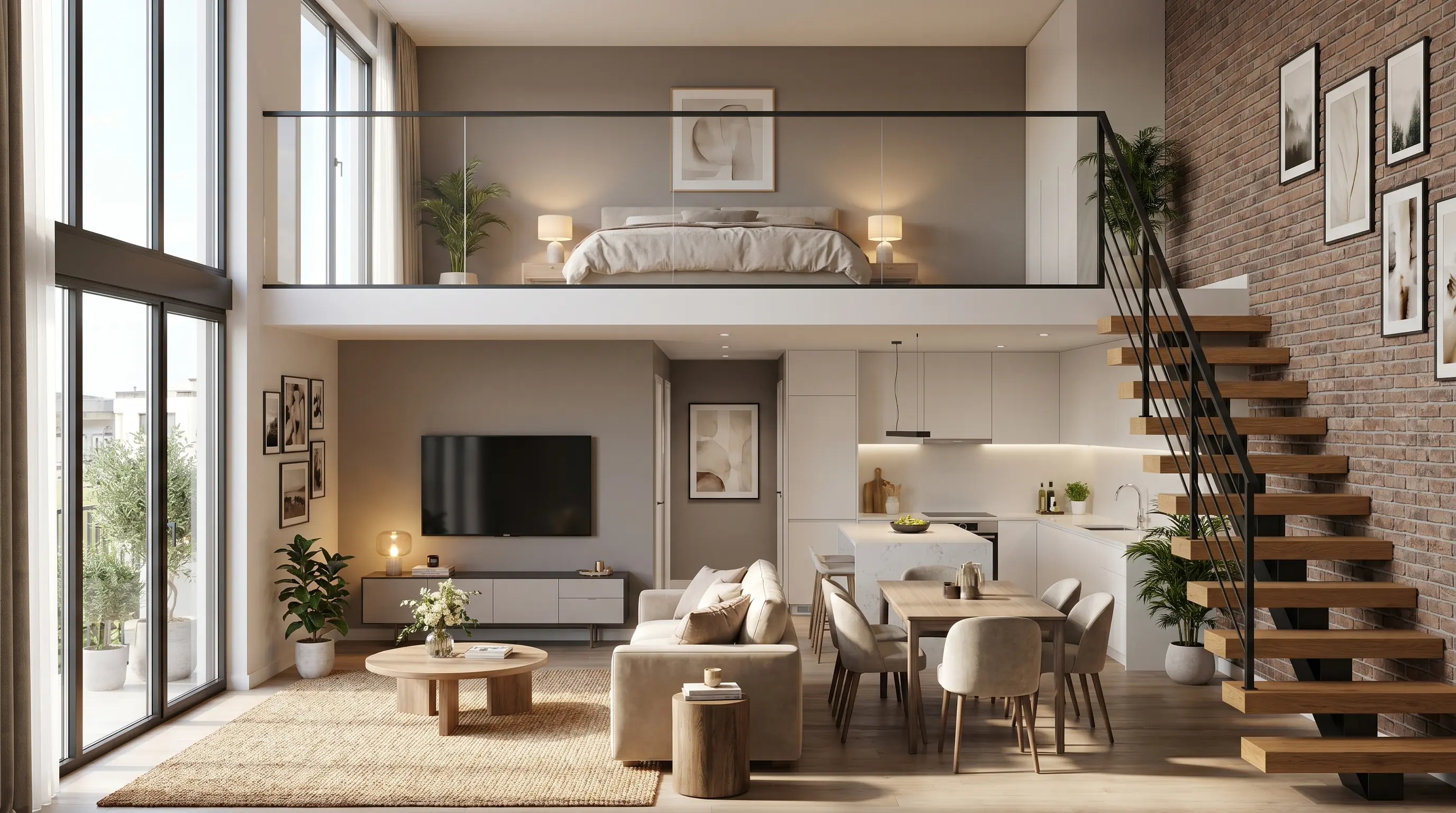
A duplex apartment spans two floors within the same unit. The bedroom is typically upstairs, and the living and kitchen areas are downstairs.
(Note: a “duplex building” is different from a two-unit building. This refers to a two-story single unit.)
Best for: renters who want house-like vertical separation in an apartment building.
11. Floor-Through Apartment
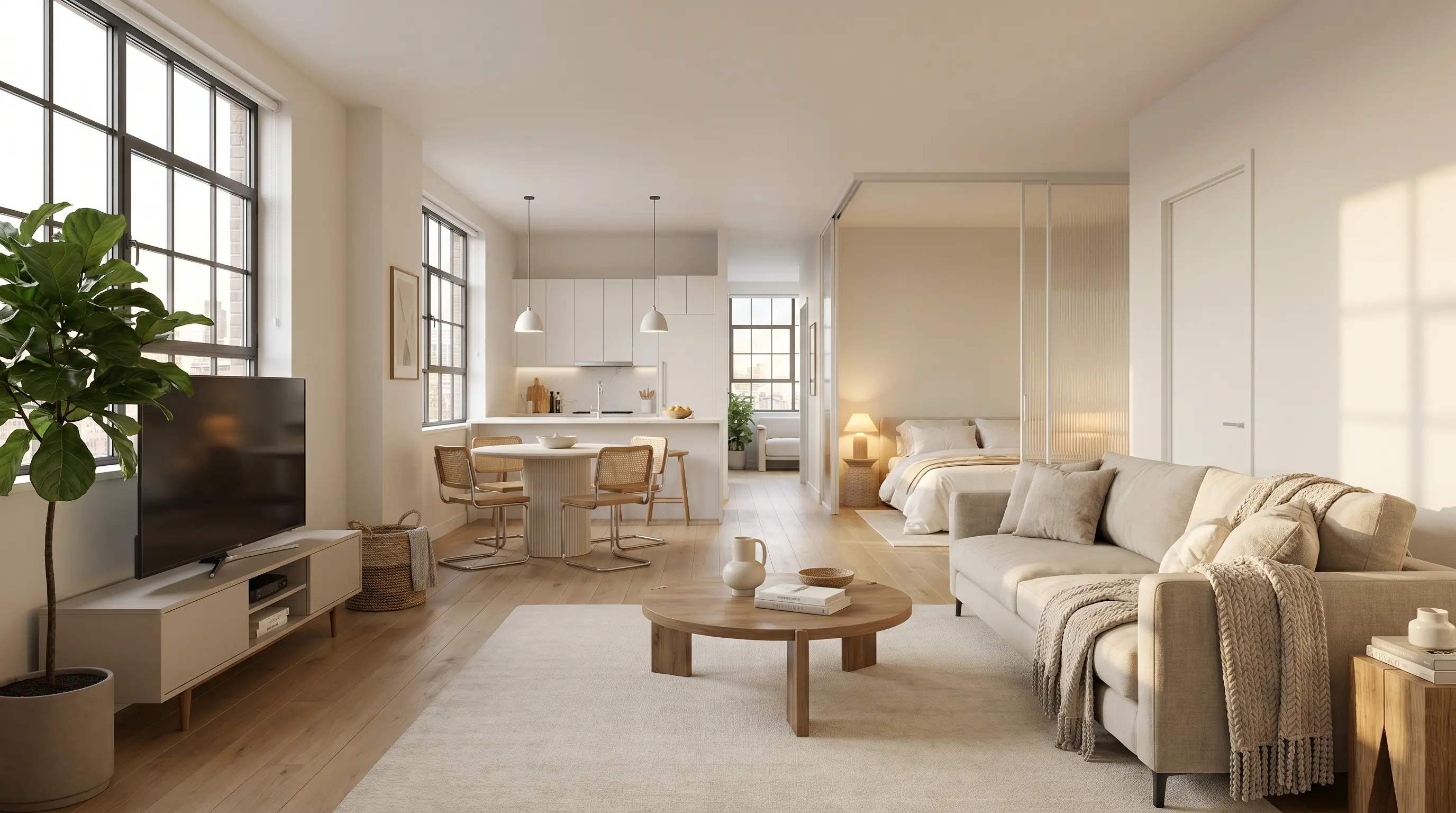
A floor-through occupies an entire floor of a building, meaning there are no shared walls on either side. Usually found in brownstones or townhouse conversions.
Best for: anyone who values maximum quiet and privacy. Often comes with windows on both ends, which means light from two directions.
12. Penthouse Apartment
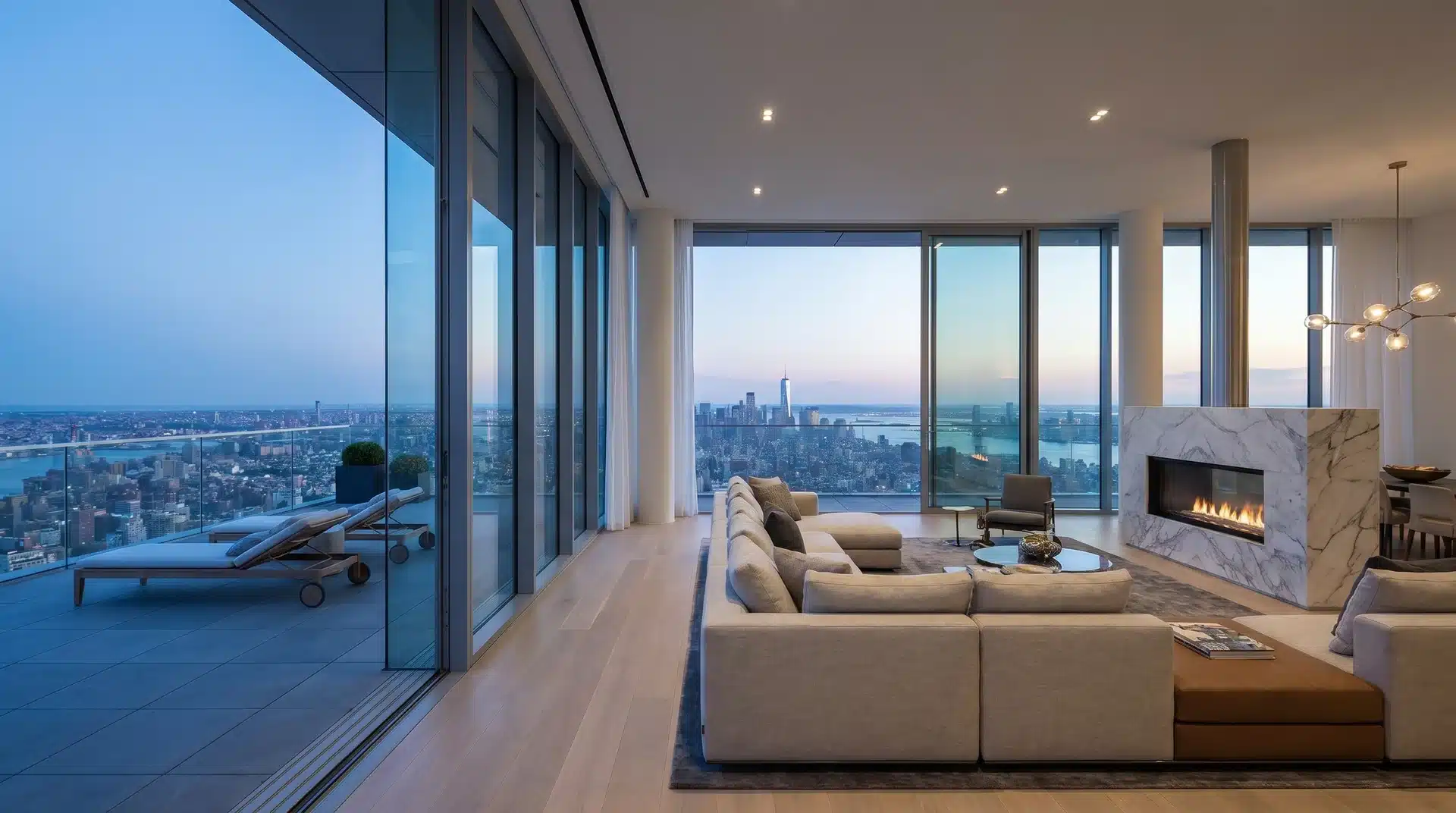
Top-floor unit, typically with premium finishes, private outdoor space, and citywide views. The layout varies widely but usually resembles a large two- or three-bedroom.
Best for: the budget-unconstrained renter who wants the most from an urban apartment.
Open-Concept vs. Closed Floor Plan
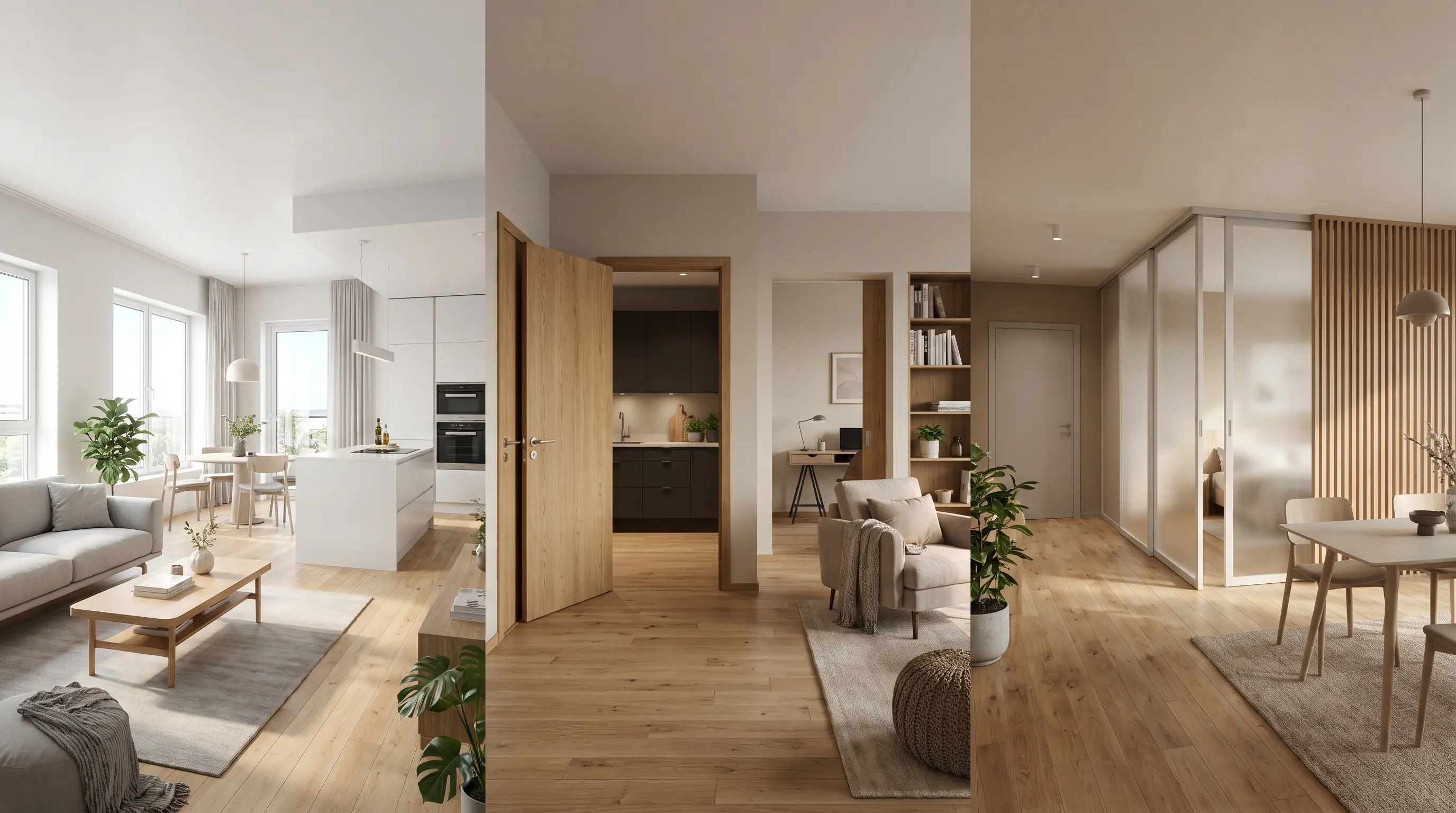
Apartment listings often present open-concept layouts as the obvious better choice. That is not always true.
- Open-concept floor plan: No walls between the kitchen, dining, and living areas. Better for natural light and social situations. Noise, cooking smells, and distractions also spread freely.
- Closed floor plan: Rooms separated by walls and doors. Better for privacy and noise control. Can feel smaller in compact apartments if rooms are narrow.
- Hybrid layouts use sliding doors, pocket doors, or partial walls. These let you open the space when you want connection and close it when you need quiet. They are increasingly common in newer buildings designed with flexible home office setups in mind.
For remote workers, a closed or hybrid floor plan is often the better choice over a larger open-concept unit. Physically separating work from rest has a real effect on how well you unwind at the end of the day.
If you are working with an open-concept space and trying to define separate living and dining zones, the practical approach covered in small living and dining room combos applies here.
How to Choose the Right Apartment Layout
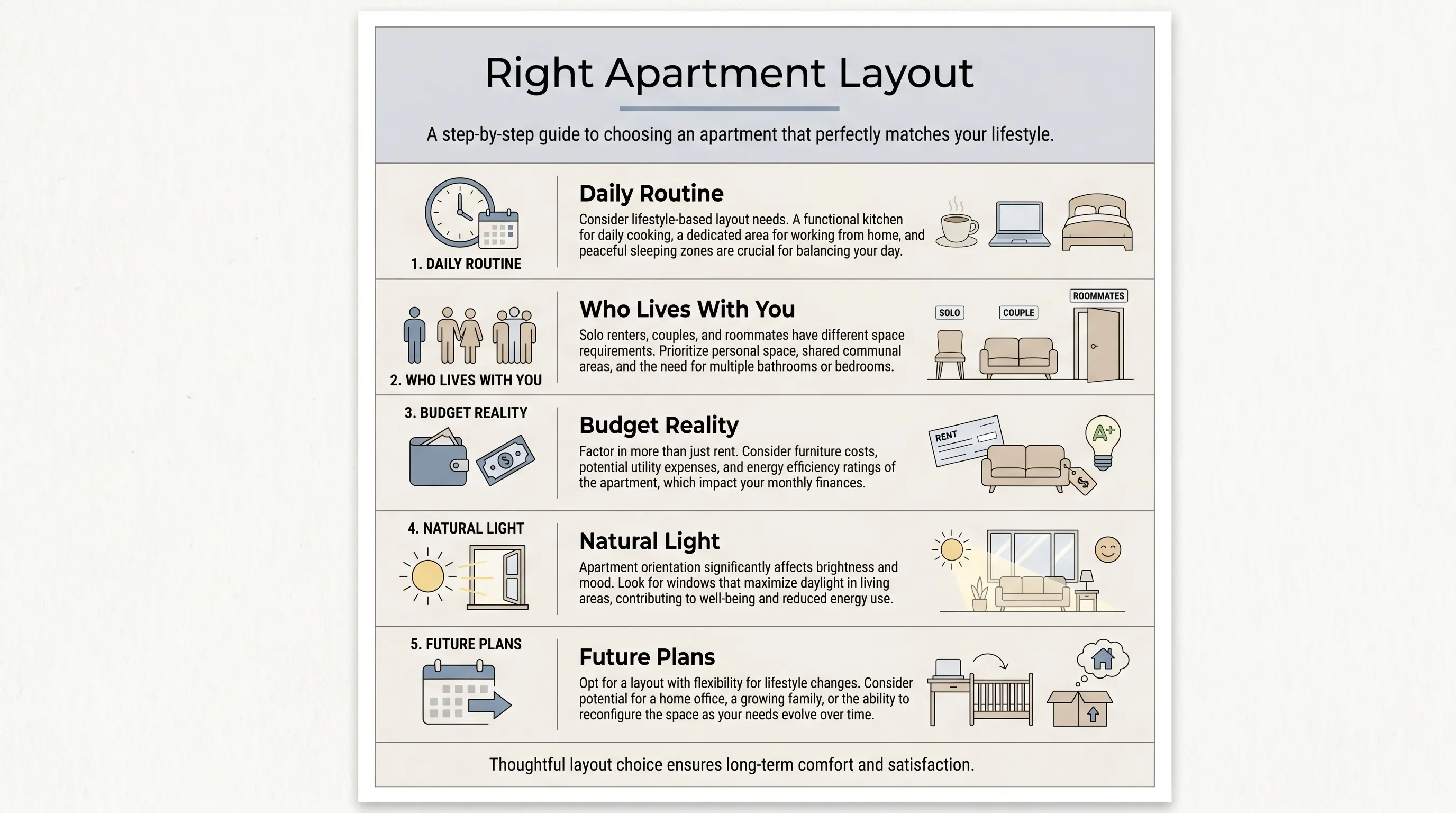
Work through these five questions before you book any tour:
1. How do you actually spend your day at home? If you cook often, kitchen placement matters. If you take work calls, a room with a door is important. If you are mostly at home to sleep, a smaller, more efficient layout may be enough.
2. Who shares the space with you? Solo renters have more flexibility. Roommates and couples benefit from privacy zones and, ideally, more than one bathroom.
3. What is your real budget? Rent is only part of the cost. Poorly insulated lofts and large apartments in older buildings can significantly increase heating and cooling bills. Efficient layouts often give better value than larger but awkwardly shaped spaces.
4. Which direction do the windows face? South-facing units are brighter throughout the day. North-facing ones tend to be cooler but dimmer. This affects both your mood and your energy use. The U.S. Department of Housing and Urban Development also offers general guidance on evaluating rental units before committing.
5. What will your life look like in 12 to 18 months? A shift to remote work, a new partner, or a pet can quickly change your space needs. A slightly larger or more flexible layout can save you from having to move again sooner than planned.
Recommended Apartment Layouts by Lifestyle
Different lifestyles need different layouts to feel functional, comfortable, and easy to live in.
From solo living to family setups, the right floor plan can completely change how a space works day to day.
| Lifestyle Profile | Recommended Layout |
|---|---|
| Solo renter, urban, budget-focused | Studio or alcove studio |
| Remote worker, solo | Junior 4 or one-bedroom flex |
| Couple, both work from home | Two-bedroom or junior 4 |
| Two roommates splitting costs | Two-bedroom, preferably split-plan |
| Small family | Three-bedroom or duplex |
| Frequent entertainer | Open-concept one- or two-bedroom |
Common Mistakes When Choosing an Apartment Layout
Choosing the right apartment layout often feels simple, but small mistakes can affect comfort and daily flow more than expected.
Before finalizing a space, it helps to know the common layout pitfalls that often get overlooked.
Prioritizing square footage over room shape. Long, narrow rooms and L-shaped spaces waste usable area and make furnishing difficult, even in larger apartments. An awkward shape can make a bigger unit feel worse than a smaller one with a practical floor plan.
Not measuring before signing. Furniture may not fit through doors, down hallways, or up stairwells. Measure your key pieces and confirm the entry route before committing to the lease.
Underestimating storage. A slightly smaller apartment with good built-in storage often feels more livable day-to-day than a bigger unit with no closets or pantry space. Storage placement is part of the layout, not an add-on consideration.
Ignoring noise sources. Rooms near stairwells, elevators, and laundry rooms create constant noise issues. Railroad-style floor plans have this problem built in. For anyone managing shared bedrooms or privacy in a smaller apartment, these shared bedroom ideas for small rooms offer practical noise- and separation-control solutions.
Not visiting at the right time of day. Tour the apartment at the time you would normally be home. Morning light in an east-facing unit looks nothing like afternoon light. Traffic noise at 8 a.m. is very different from 11 p.m.
Conclusion
There is no universally best apartment layout; there’s the one that fits how you actually live. A railroad apartment that would frustrate a couple is perfectly livable for a solo renter who is rarely home.
A loft that feels exciting at a showing can feel exhausting to live in when it’s cold, loud, and impossible to heat.
The goal is to match the apartment’s floor plan to your daily routine, not to the aspirational version of your life you imagine when you’re standing in a freshly staged unit.
Walk through the space at the time of day you’d most likely be there. Bring your tape measure. Ask about storage. Find out which direction the windows face.
The right apartment layout isn’t the one with the most impressive photos; it’s the one you stop noticing after two weeks because it just works.