Should Curtains Touch the Floor? Here’s What Actually Looks Good

Hanging curtains too short is one of the most common decorating mistakes. The result is a room that looks slightly off, even when everything else is right.
The curtains just sit there, hovering awkwardly above the floor. The windows look small. The ceiling looks low.
Fixing curtain length is one of the easiest ways to change how a room feels. No new furniture. No fresh coat of paint.
Floor-length curtains make a room feel taller. Curtains that stop too high make a space feel smaller and less balanced.
So, should curtains touch the floor? In most rooms, yes. But the real question is how they touch the floor. That is where the difference between a polished room and an awkward one actually lives.
This guide breaks it down by room, by style, and by measurement so you can choose the right curtain length for your space.
Which Curtain Length Is Right for You?
These are the three ways curtains can meet (or not meet) the floor, and each one gives a different result.
1. Float Length
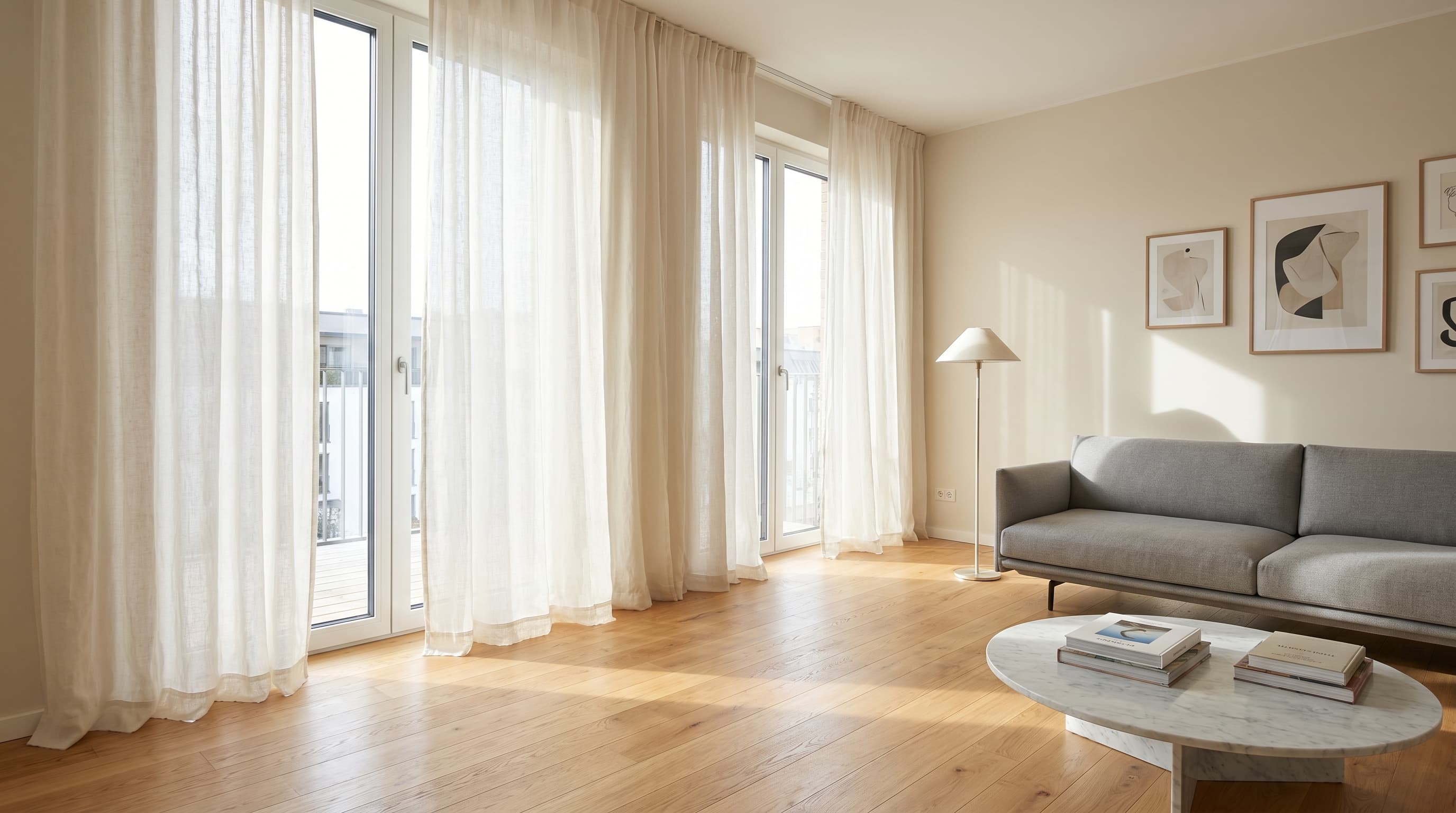
Float means the curtain hem sits about half an inch above the floor. The gap is small enough to look intentional, and it gives any room a clean, modern feel.
This works especially well in high-traffic spaces where you want a sharp, no-fuss look.
2. Kiss Length

A kiss length is when the fabric just grazes the floor. This is the most popular choice among interior designers and for good reason. It looks finished without being overdone.
Interior designer Cathleen Gruver of Gruver Cooley puts it plainly: curtains that just kiss the floor have that polished, tailored look that still feels warm and inviting.
3. Puddle Length

Puddle means the fabric spills 2 to 6 inches onto the floor. It is dramatic, romantic, and a lot of upkeep.
Dust collects in the folds, and you have to re-arrange the fabric every time you open the curtain. That said, in the right room, it looks genuinely luxurious.
Most standard ready-made curtains come in 84″, 96″, and 108″ lengths. Knowing which style you want before you shop helps you avoid buying panels that are slightly off.
Should Curtains Touch the Floor in Every Room?
For most rooms, yes. Floor-length curtains make walls look taller and windows look bigger.
But the right choice still varies by room.
1. Living Room
Yes, floor-length curtains belong in the living room. Either kiss or float length works here. The long vertical lines draw your eye upward, making the space feel taller and more put-together.
If your living room is formal, puddle length is worth considering. For a casual or modern space, float length keeps things clean.
2. Bedroom
The bedroom is actually the best room for curtains that touch the floor, and maybe even puddle slightly. You are not constantly walking through fabric, so the upkeep stays manageable.
A 2 to 3-inch puddle looks soft and cozy in a bedroom, especially with blackout lining behind it. If blocking early morning light is a priority, this is the room to go full-length, no compromises.
3. Kitchen
No. Kitchens have moisture, grease, and constant foot traffic. Long curtains dragging across the floor near a stove or sink are a cleaning problem waiting to happen.
Float length (about 1 inch above the floor) is the practical call here. Cafe curtains that cover only the lower half of the window are another strong option, especially above a countertop or sink.
4. Bathroom
Skip floor-length entirely in the bathroom. Humidity, cleaning, and splash zones make long fabric impractical.
Sill-length or cafe-style curtains are better suited here and keep the space feeling open.
5. Dining Room
Puddle length is actually well-suited to a formal dining room. You are not constantly shuffling chairs through the curtains, and the extra fabric gives the room a sense of grandeur.
Heavier fabrics like linen or velvet hold their shape on the floor better than lightweight cotton.
6. Windows Above Radiators or Baseboard Heaters
This is one exception that does not get enough attention. If your window sits above a radiator or baseboard heater, always use float length. Keep the hem 1 to 2 inches above the unit.
Long fabric touching the floor over a heat source traps warmth, reduces the heater’s output, and creates a fire risk with older units.
This applies even in a bedroom or living room where you would otherwise want floor-length panels.
7. Homes with Pets or Small Children
Float length is the safer, saner choice. Puddle fabric on the floor invites pulling, chewing, and general chaos.
A half-inch gap keeps curtains clean, in place, and out of reach.
How to Measure Curtains for the Right Floor Length
A common mistake people make is skipping this step, which leads to curtains that are too short. Always measure from the rod, not the window frame.
Step 1: Decide on Rod Placement First: Hang the rod 4 to 6 inches above the window frame. For rooms with tall ceilings, go higher. The right curtain hanging height makes the biggest difference before you even pick a length.
Step 2: Measure from the Rod to the Floor: Use a metal tape measure. Fabric tapes stretch over time and give inaccurate readings.
Step 3: Adjust for Your Chosen Style:
- Float: subtract half an inch from your measurement
- Kiss/Break: add half an inch to 1 inch
- Puddle: add 3 to 6 inches
Step 4: Match to Standard Sizes: Common ready-made lengths run at 84, 96, and 108. Know which one your measurement lands closest to before you shop.
Step 5: Account for the Curtain Header: Ring clips and tab-top headers add 1 to 2 inches above the rod. Factor that in before finalizing your length.
Conclusion
Measuring from the window frame instead of the rod. It sounds small. But it is responsible for more awkward curtains than any other single error.
Always start your measurement at the exact point where the fabric will hang. That is the rod, the clip, or the ring.
Get that right, and the rest of the decisions are mostly a matter of personal preference.
The style depends on the room and how you actually live in it. Float, kiss, or puddle. Pick the one that fits your space and hang it from the right height.
What room are you hanging curtains in? Drop your question in the comments, and we will help you figure out the right length.
Frequently Asked Questions
1. How to Hang Curtains to Make Them Look Expensive?
Mount the curtain rod high and wide, 4–8 inches above the window and beyond its edges. Use full-length, floor-grazing panels with ample fabric, lined materials, and coordinated hardware for a luxurious look.
2. What is the Current Trend in Hanging Curtains?
Current trends favor floor-length curtains hung high and wide above the window. This approach makes rooms feel larger, brighter, and more elegant.
3. What are Some Outdated Curtain Styles to Avoid?
Heavy swags, overly ornate valances, and short curtains that stop well above the floor can make a space feel dated. Simple, tailored designs are more popular today.