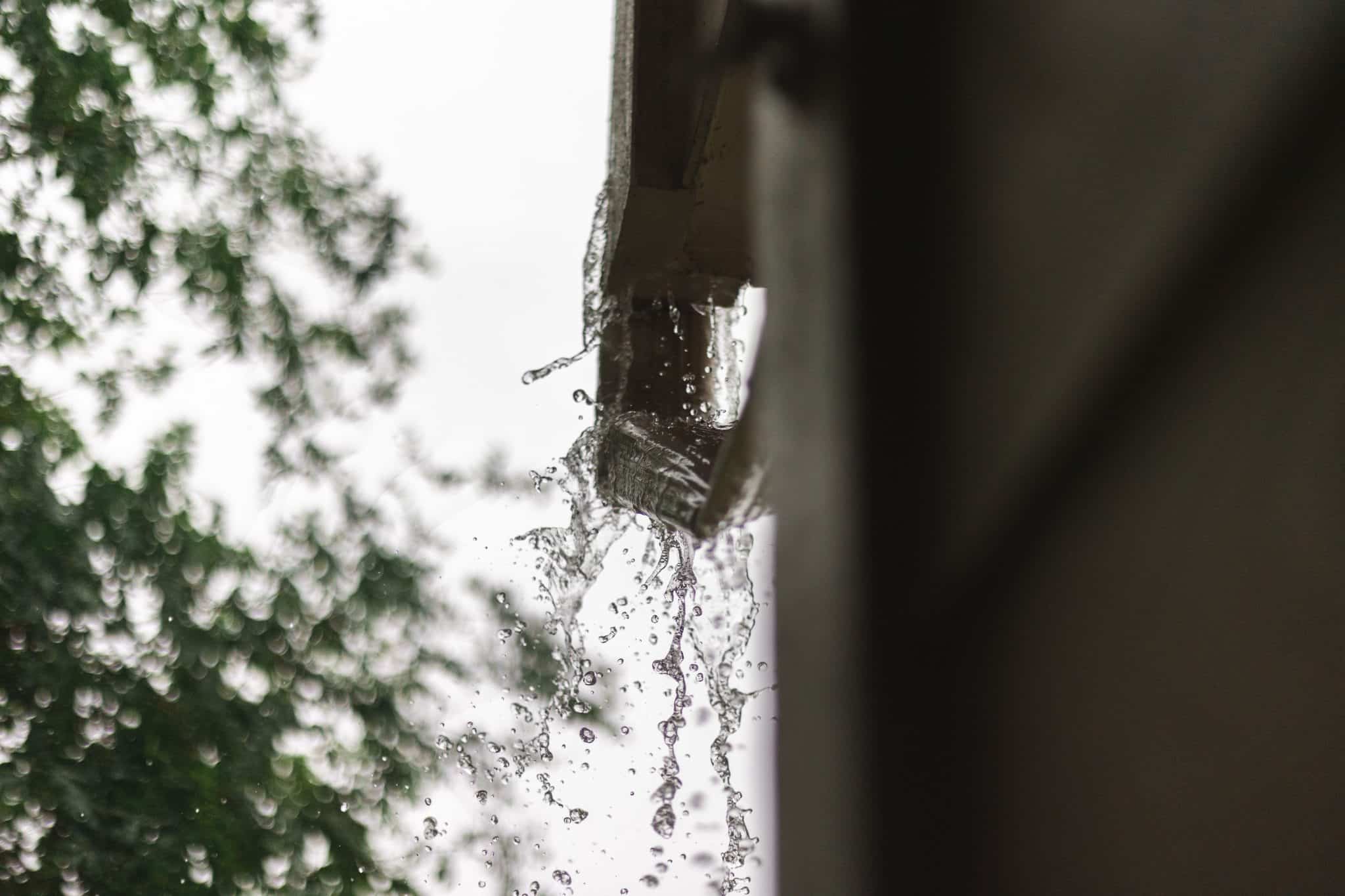
Why Gutter Maintenance Plays a Bigger Role in Home Protection Than You Think

Home maintenance priorities tend to cluster around the visible and the urgent. Gutters, by contrast, sit quietly at the roofline, doing their job without demanding attention, and get skipped in the maintenance rotation more often than almost any other home system.
That invisibility is exactly what makes neglected gutters so costly. The damage they prevent is far broader than most homeowners appreciate until something goes wrong.
A Single System That Protects Multiple Systems
What makes gutter maintenance so impactful is the scope of what a functioning gutter system is actually defending. In a single rainstorm, properly maintained gutters protect the roof decking from water backup, the fascia and soffit from rot, the siding from chronic moisture exposure, the foundation from hydrostatic pressure, the landscaping from erosion, and the basement or crawl space from water infiltration.
No other single maintenance task touches that many home systems simultaneously. When gutters work, all of those systems benefit. When gutters fail, all of them are at risk.
The Maintenance Gap Most Homeowners Don’t Know They Have
Industry guidance typically recommends cleaning gutters at least twice per year, once in late spring after tree seeds and helicopter pods have fallen, and once in late fall after the leaves have dropped. That baseline works for some homes. For others, it falls significantly short.
Homes surrounded by mature deciduous trees, those beneath pine trees that shed needles year-round, or those in neighborhoods with significant canopy cover may need cleaning three to four times annually to keep gutters flowing freely. The gap between what a home needs and what it’s actually getting is where damage quietly accumulates.
Beyond cleaning frequency, maintenance also includes inspecting hangers and fasteners for loosening, checking sealant at joints and end caps, verifying that downspouts are clear and discharging at an appropriate distance from the foundation, and confirming that the gutter maintains proper slope throughout its run. Each of these elements degrades independently over time, and each can cause the system to underperform even when the trough itself is clean.
What Deferred Maintenance Actually Costs
The financial case for regular gutter maintenance is straightforward when laid out directly. A professional gutter cleaning typically costs well under $200 for most homes. Fascia board replacement runs several hundred to over a thousand dollars depending on linear footage and material. Foundation crack repair ranges from a few thousand dollars for minor injection work to tens of thousands for structural remediation. Interior basement waterproofing systems can cost $5,000 to $15,000 or more.
Deferred maintenance doesn’t save money. It shifts a small, predictable cost into a large, unpredictable one.
Maintenance as a Long-Term Investment Strategy
Homeowners who maintain their gutters consistently also protect something less tangible but equally important: the long-term condition of their home’s major structural and exterior components. Roofing materials last longer when water isn’t backing up at the eaves. Siding retains its finish and integrity longer when it isn’t being repeatedly wetted by overflow. Foundations remain stable when soil moisture is managed properly at the surface.
Each cleaning and inspection is a small investment that extends the service life of far more expensive components.
The Right Partner Makes Consistency Easy
The biggest obstacle to regular gutter maintenance is the friction of scheduling, climbing ladders, and finding a contractor who will show up reliably.
Removing that friction is what makes the difference between a maintenance schedule that actually happens and one that gets pushed back season after season.