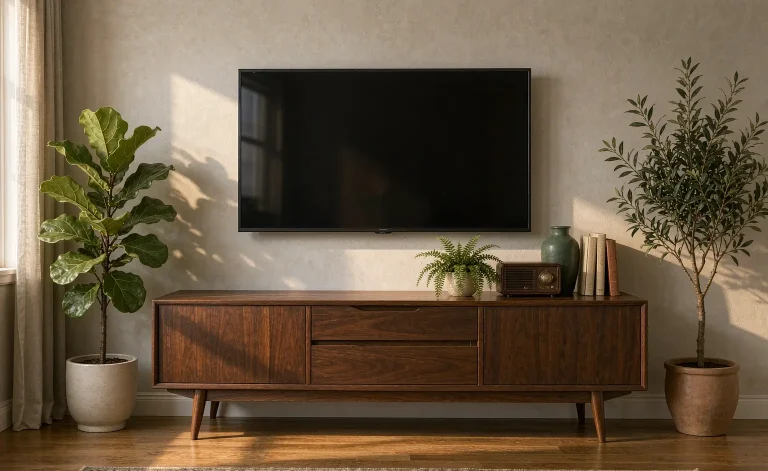
What Is a Console Table? Types, Styles, and Uses

Console tables are among the most underused pieces of furniture in home design. They take up very little floor space and work in almost every room of a home.
They can hold a lamp, display a few decor pieces, or keep everyday items neatly organized. Despite how practical they are, many people are unsure what sets a console table apart from other narrow tables.
This post explains what a console table is, how its design has changed over time, the different types and styles available, where to place one in your home, and how to style it well.
What Is a Console Table?
A console table is a narrow, flat-topped table built to sit against a wall rather than in the center of a room. Most models stand between 28 and 36 inches tall and measure just 10 to 18 inches deep.
That shallow depth is the defining feature. It keeps the table close to the wall and clear of the main walking path.
Unlike a dining table or a coffee table, a console table is not built for all-around access. It works along walls, in hallways, and in spots where a standard table would take up too much room.
A Brief History of Console Tables
Console tables first appeared in 17th-century Europe. The earliest versions were fixed directly to walls using decorative brackets called consoles, which is where the name comes from. Over the following four centuries, the design underwent major changes as furniture-making became more accessible.
- 1600s: Wall-mounted tables with decorative “console” brackets appeared in French Baroque palaces and wealthy English estates.
- 1700s: Georgian furniture makers added freestanding legs, allowing the tables to be repositioned throughout a home.
- 1800s: Victorian-era mass production made console tables more affordable for everyday middle-class households.
- 1950s: The mid-century modern movement replaced heavy carved details with clean lines and tapered legs.
- Today: Console tables come in wood, metal, glass, marble, and mixed materials to suit a wide range of room styles.
The physical form has simplified over the years, but the core function has stayed the same: a slim table that sits against a wall and adds surface space without taking over a room.
Key Features That Define a Console Table
Several design details separate a console table from other narrow furniture pieces. Knowing these features makes it easy to identify one and choose the right build for your space.
- Shallow depth: Measures 10-18 inches deep, keeping it flat and close to the wall.
- Open back: The back panel is unfinished or completely open since the table always faces away from the wall.
- Wall-facing design: Built to function along a wall, not as a standalone center table.
- Standard height: 28 to 36 inches, close to standard counter height.
- Slim rectangular profile: Long and narrow, fitting naturally in hallways, foyers, and along walls.
- Optional storage: Some models include drawers, open shelves, or both below the main surface.
- Material range: Available in wood, metal, glass, marble, and mixed-material builds.
Types of Console Tables
Console tables come in several different builds, each designed with a specific function in mind. The right type depends on the design features you need, such as storage, wall mounting, or reflective surfaces.
1. Entryway Console Tables
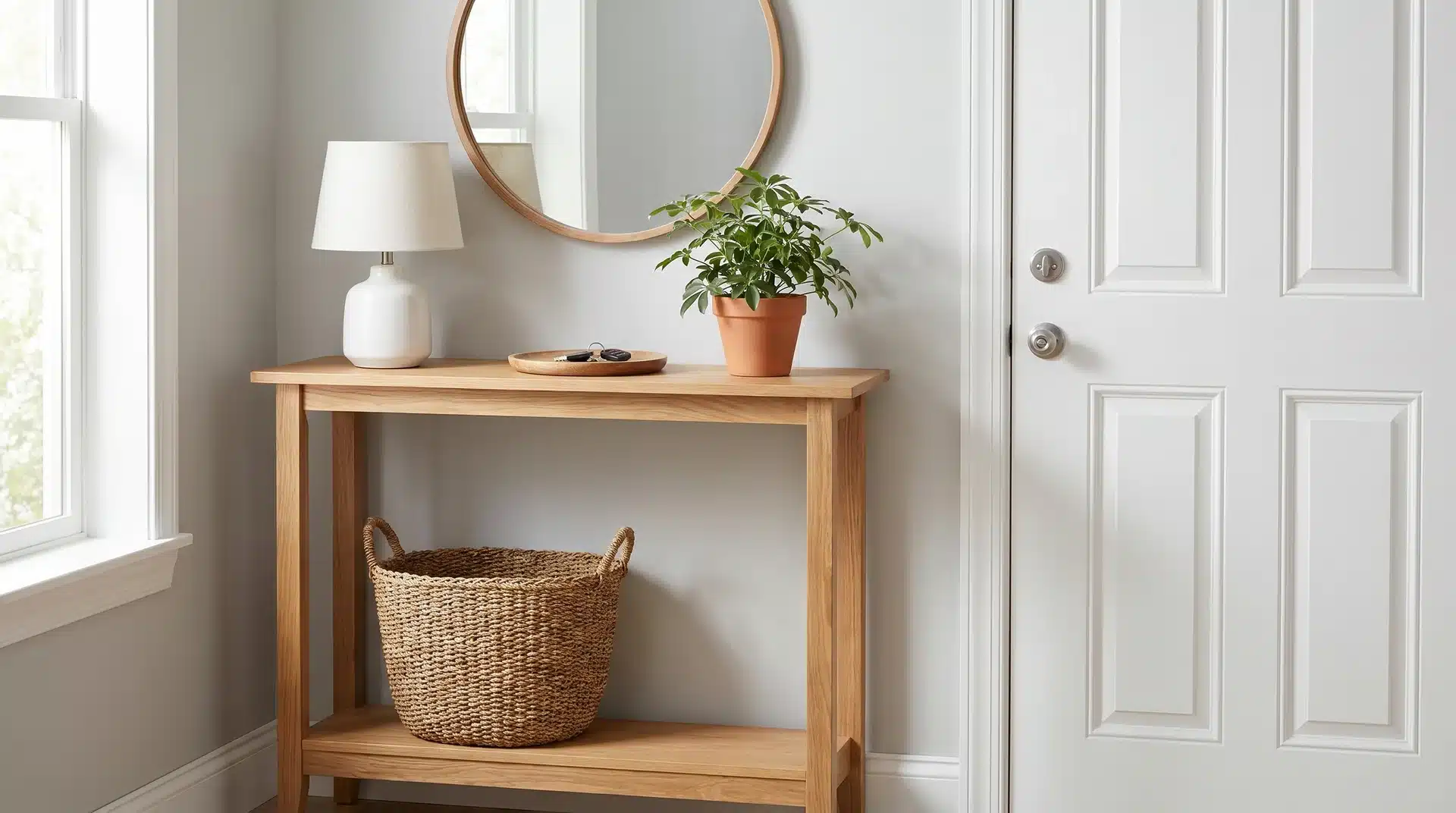
These are taller than standard models, usually 34 to 36 inches high. Most include a lower shelf or small drawers as part of the build. The design holds more items above and below the surface, making it the most storage-active type of console table.
2. Sofa Console Tables
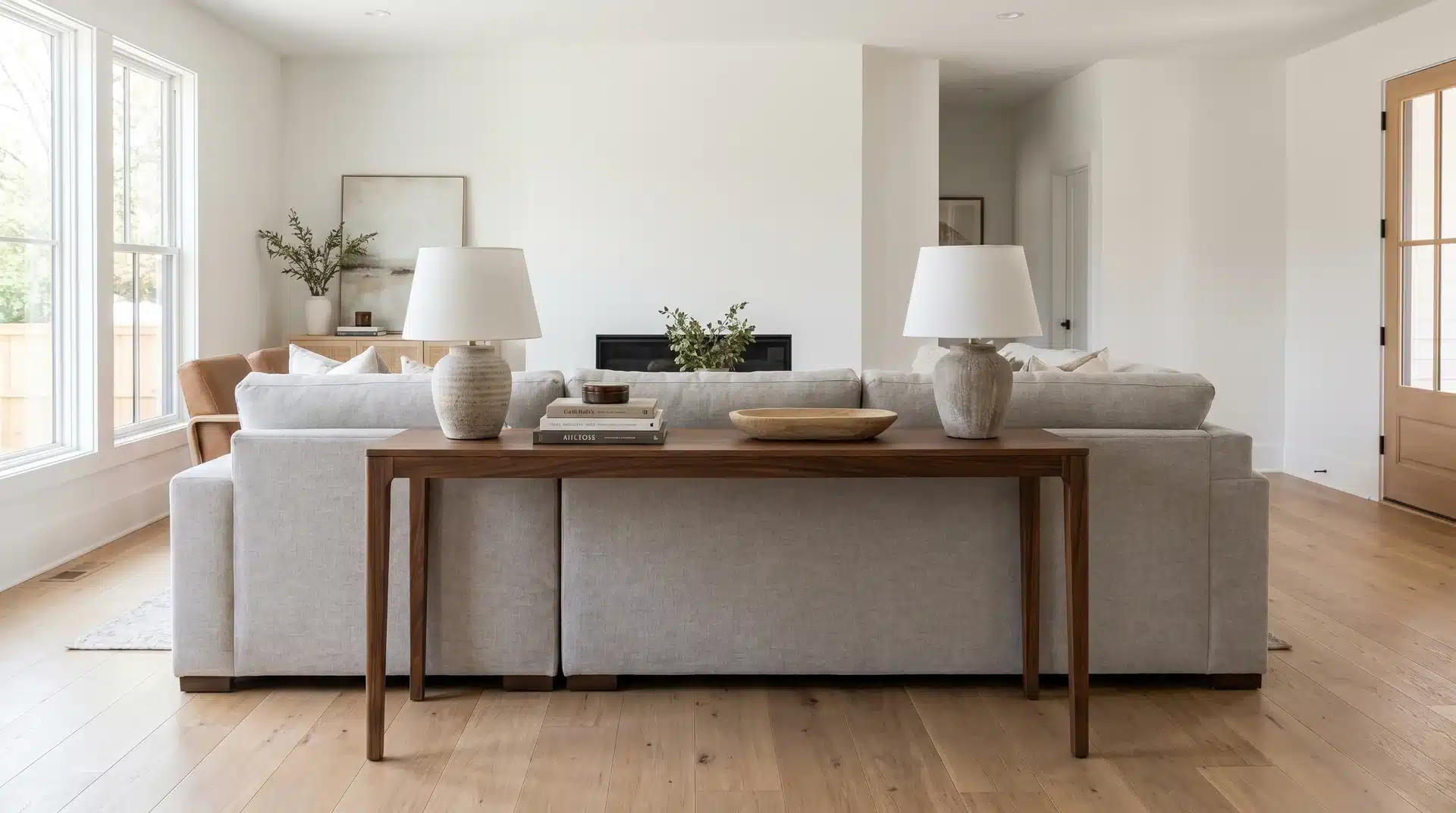
Sofa console tables are sized to sit at the back of the sofa, usually 28 to 30 inches tall. They are longer in width than most console tables to match the proportions of a full-length sofa. The design stays open and simple, so it stays visually quiet behind the seating.
3. Floating Console Tables
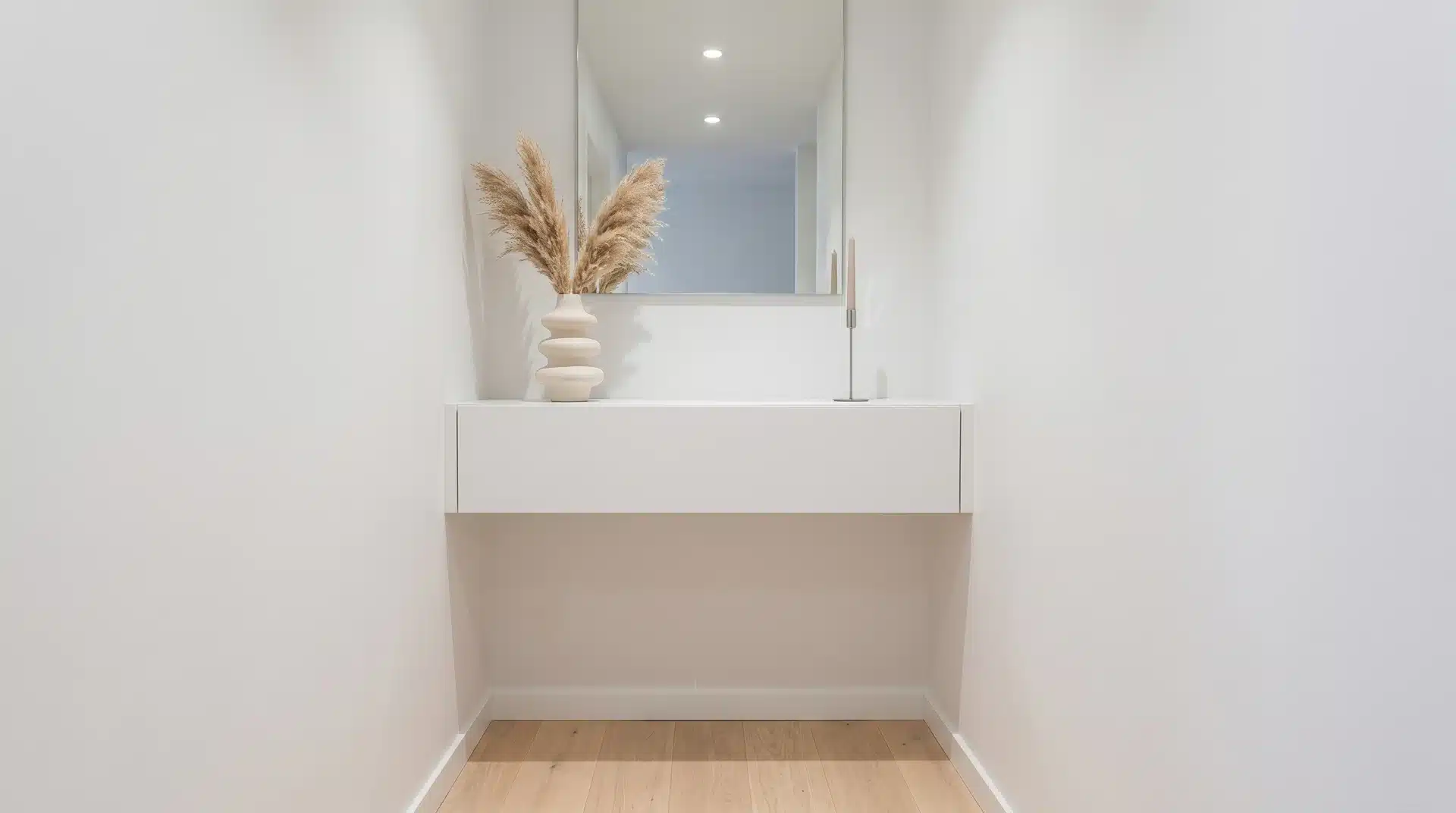
Floating console tables mount directly to the wall without any floor-touching legs. The underside stays fully open and visible. They look lighter than legged versions and suit rooms that call for a clean, uncluttered appearance.
4. Storage Console Tables
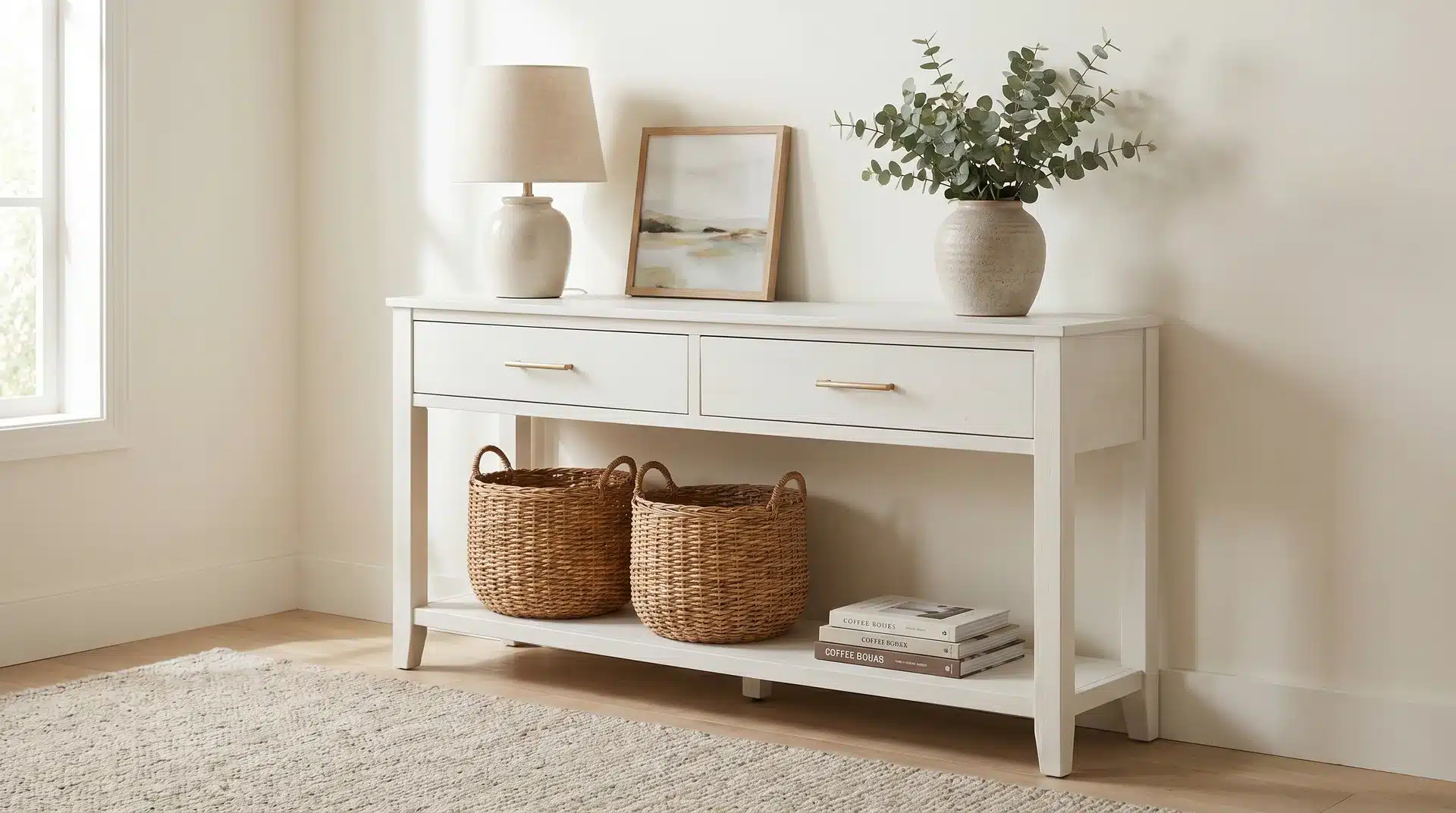
These include built-in drawers, open shelves, or closed cabinet doors below the main surface. They are wider and more solid in build than purely decorative models. Storage console tables work in rooms where function matters as much as how things look.
5. Mirrored Console Tables
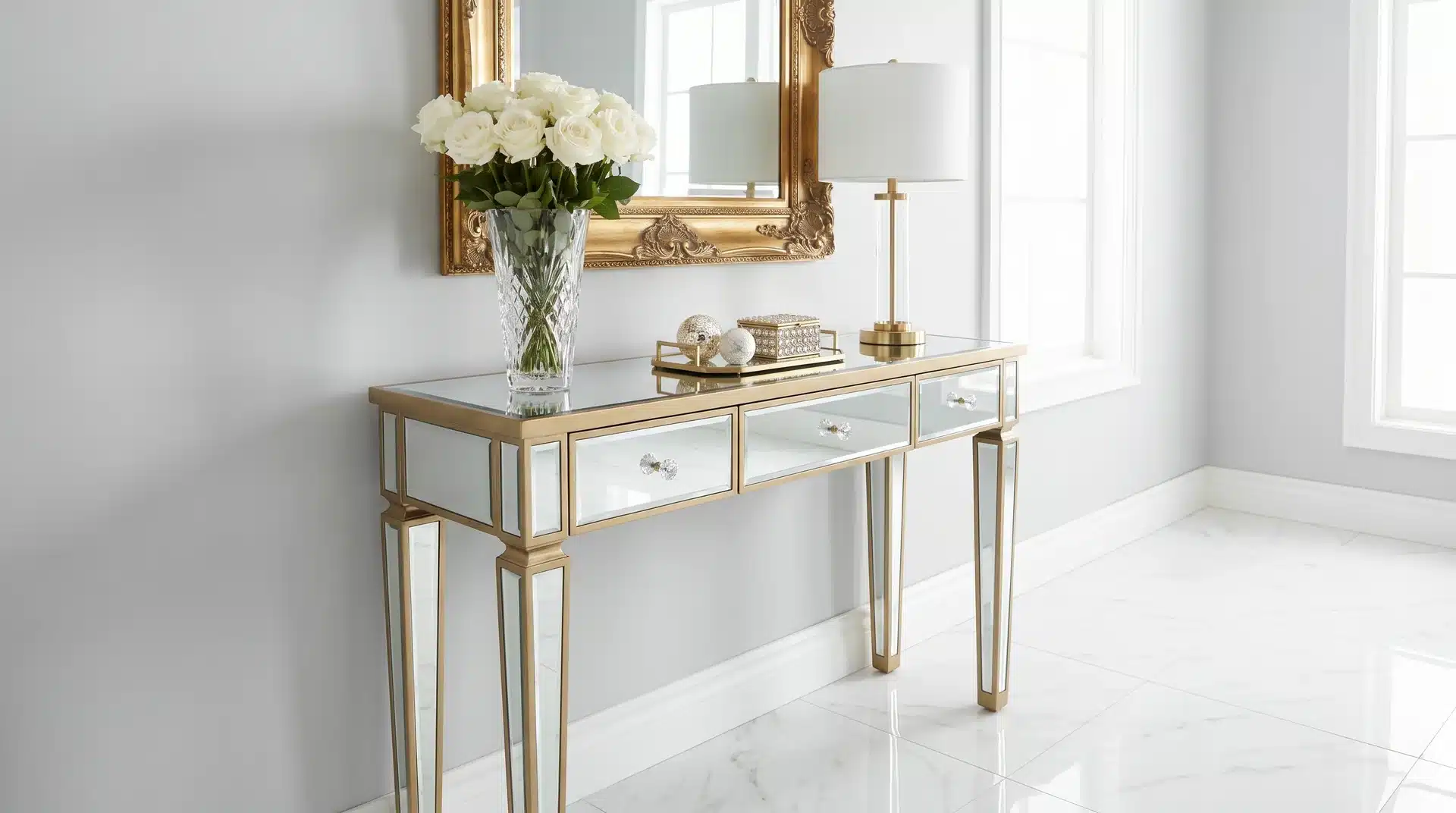
Mirrored console tables feature reflective surfaces on the tabletop, front panel, or legs. The reflective material adds visible brightness to darker rooms. These suit contemporary, glam, or transitional interiors where light and reflection are part of the room’s design plan.
6. Corner Console Tables
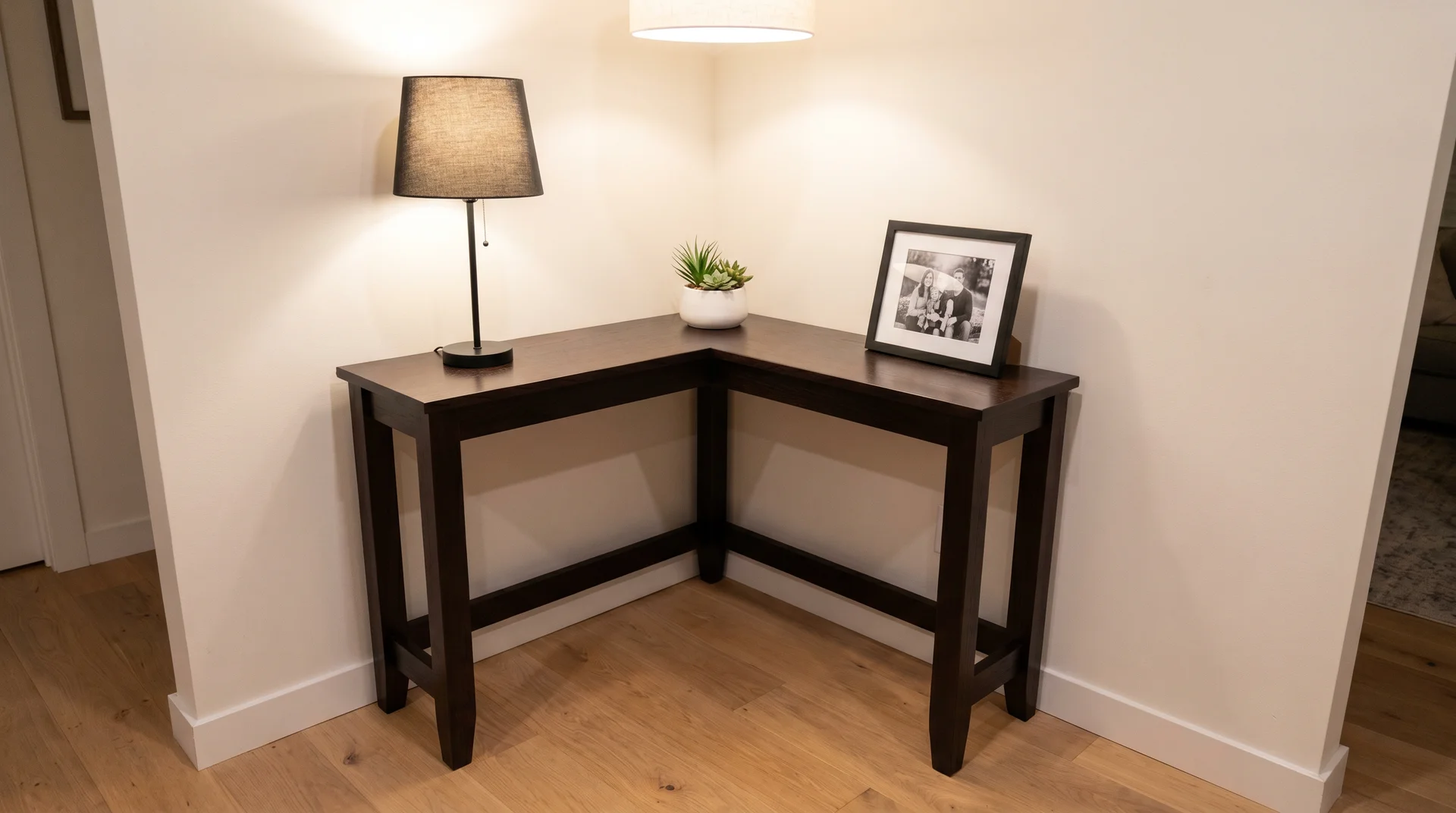
Corner console tables have an angled or L-shaped design, intended to fit in a room corner rather than along a flat wall. They cover wall space that standard models cannot reach. The top surface is usually smaller than that of a flat-wall console table.
Popular Console Table Styles
Beyond build type, console tables are also grouped by design style. Matching the style to your existing room decor makes the piece feel well-placed rather than out of context.
1. Farmhouse Style
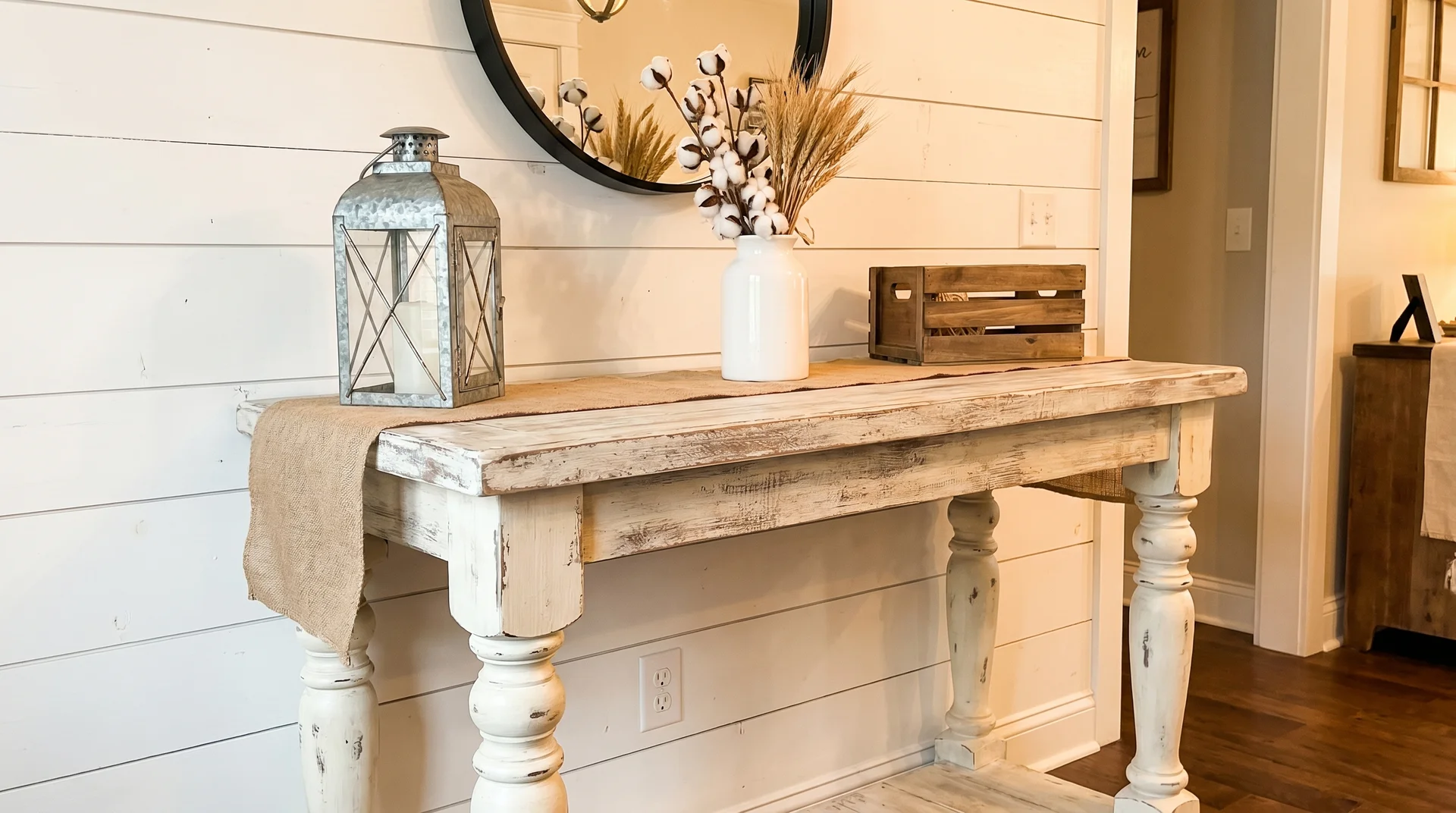
Farmhouse console tables use distressed or rough-sawn wood finishes, thick turned legs, and warm neutral tones. The overall look is relaxed and natural. These suit rooms have shiplap walls, woven textures, or linen fabrics.
2. Mid-Century Modern Style
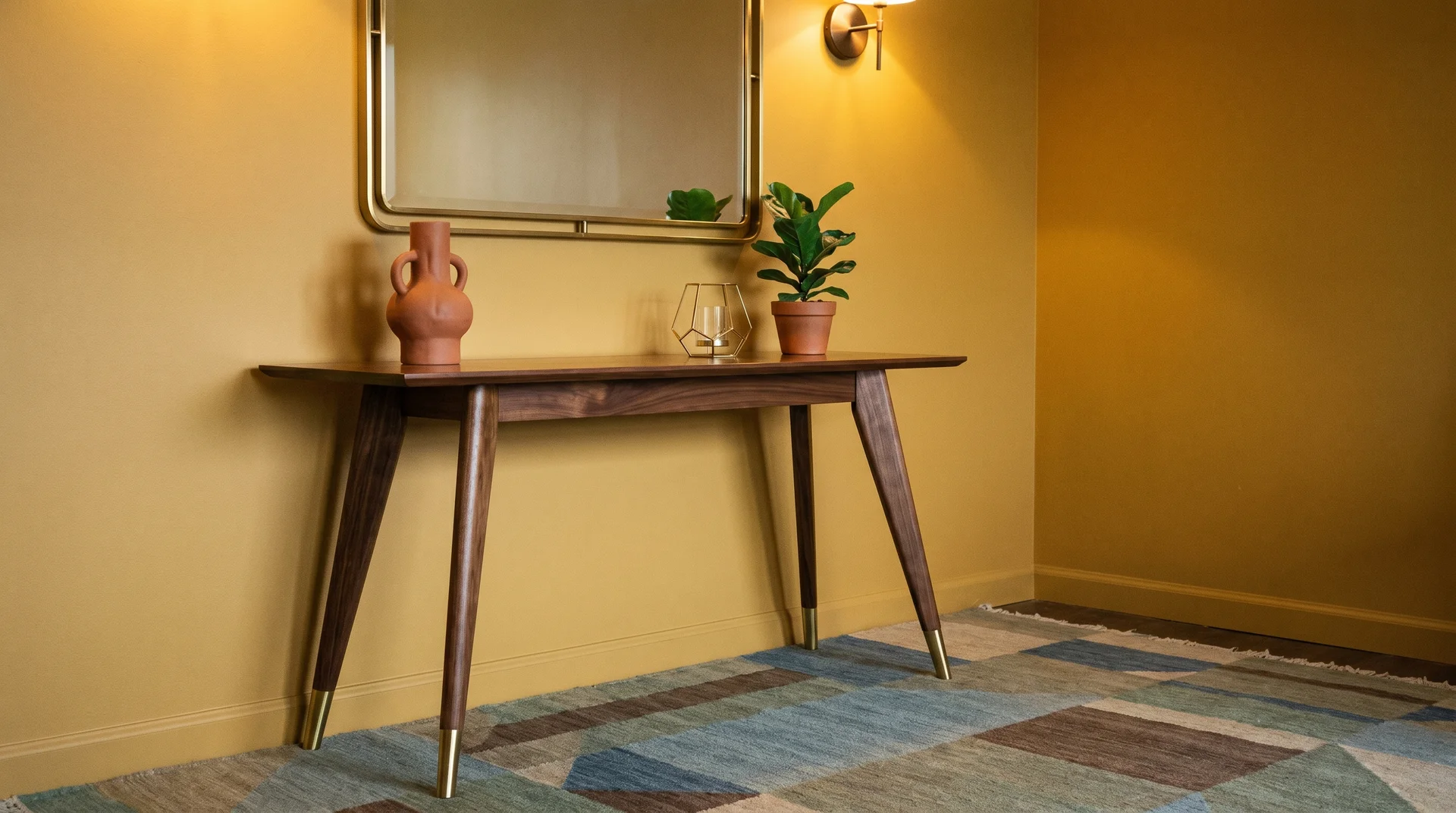
Mid-century modern console tables use clean horizontal lines, tapered legs, and walnut or teak finishes. The forms are geometric and free of decorative detail. These suit rooms with leather seating, bold accent colors, or graphic rugs.
3. Industrial Style
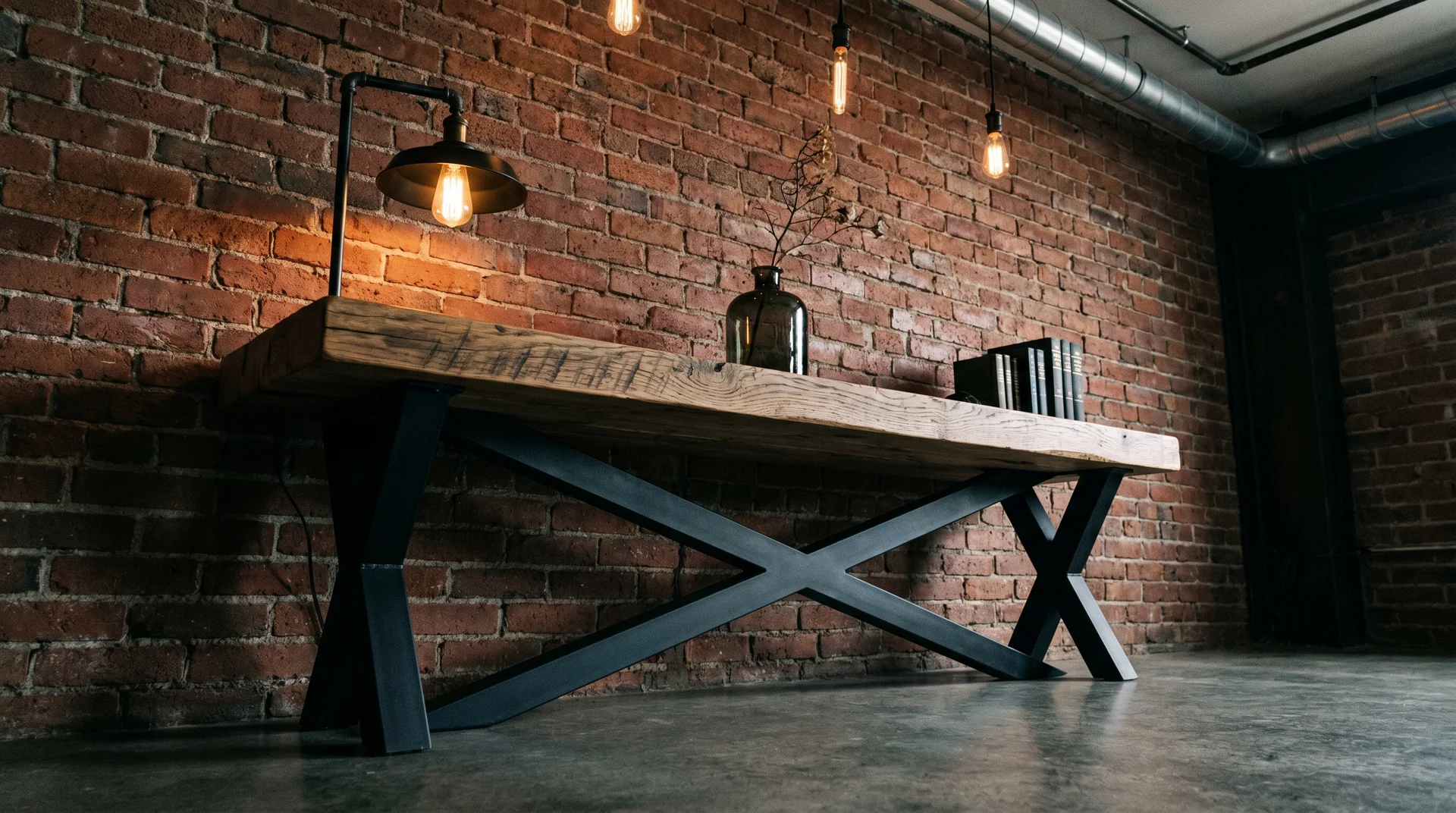
Industrial console tables pair raw or reclaimed wood tops with black metal frames and legs. The finish is intentionally rough and structural. These suit loft-style spaces with exposed brick, concrete surfaces, or dark color schemes.
4. Traditional Style
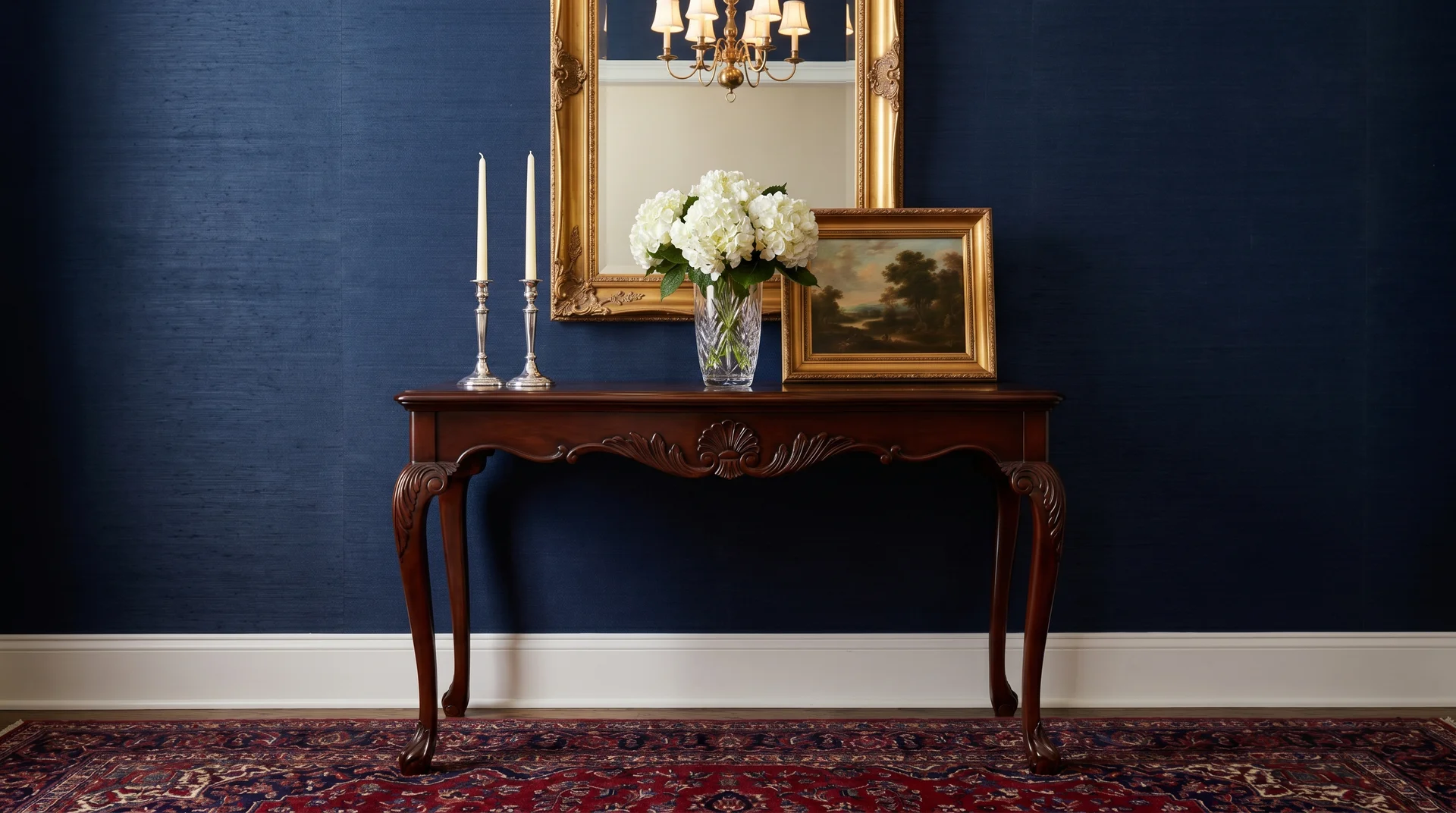
Traditional console tables feature carved leg details, decorative aprons, and rich wood stains like mahogany or cherry. The build is formal and detailed. These suits classic living rooms, dining rooms, and formal interiors.
5. Minimalist Style
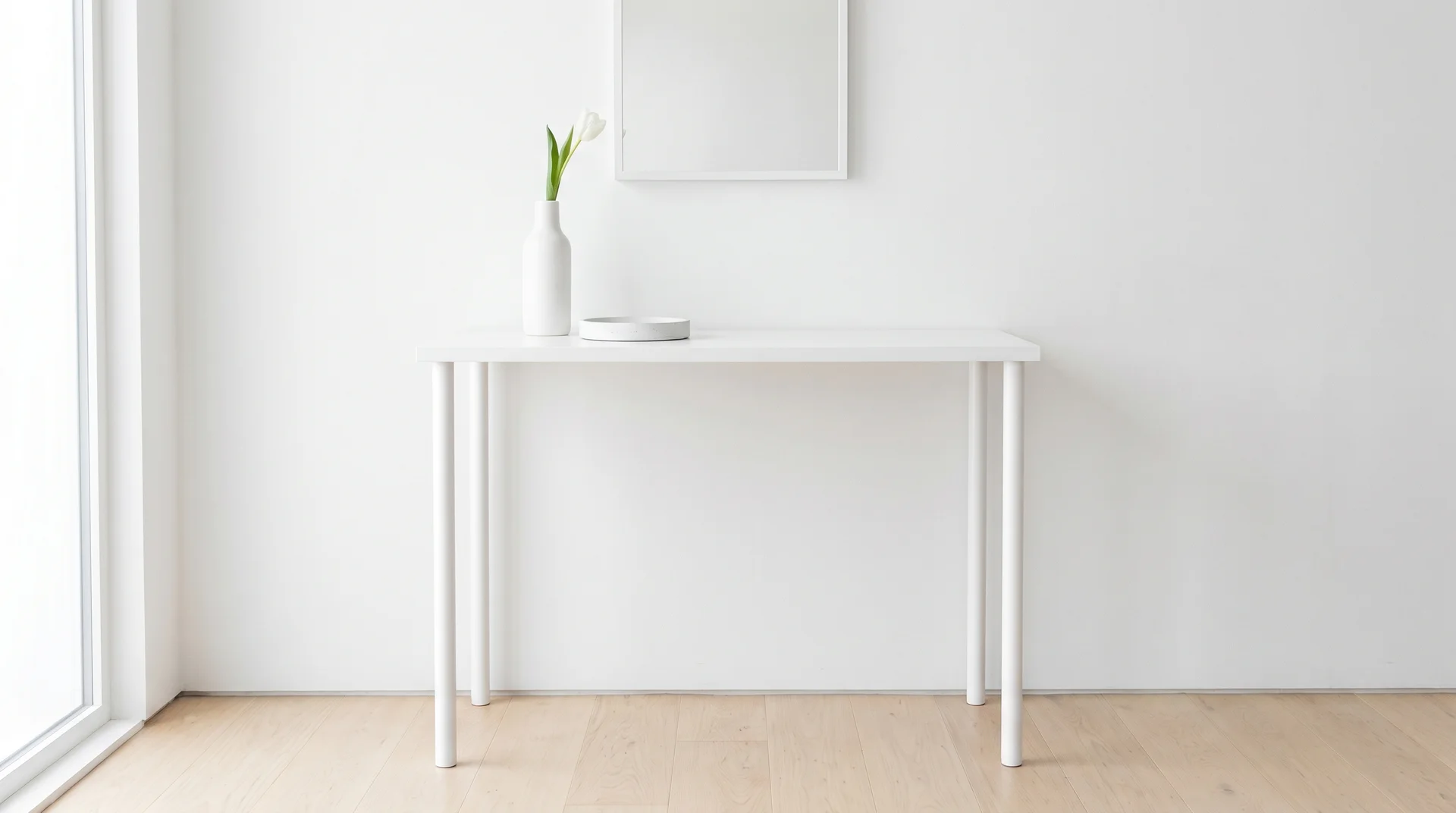
Minimalist console tables remove all decorative detail from the design. Clean flat surfaces, straight legs, and white or natural wood finishes are standard. These blend easily into Scandinavian, modern, or Japanese-inspired interiors.
6. Coastal Style
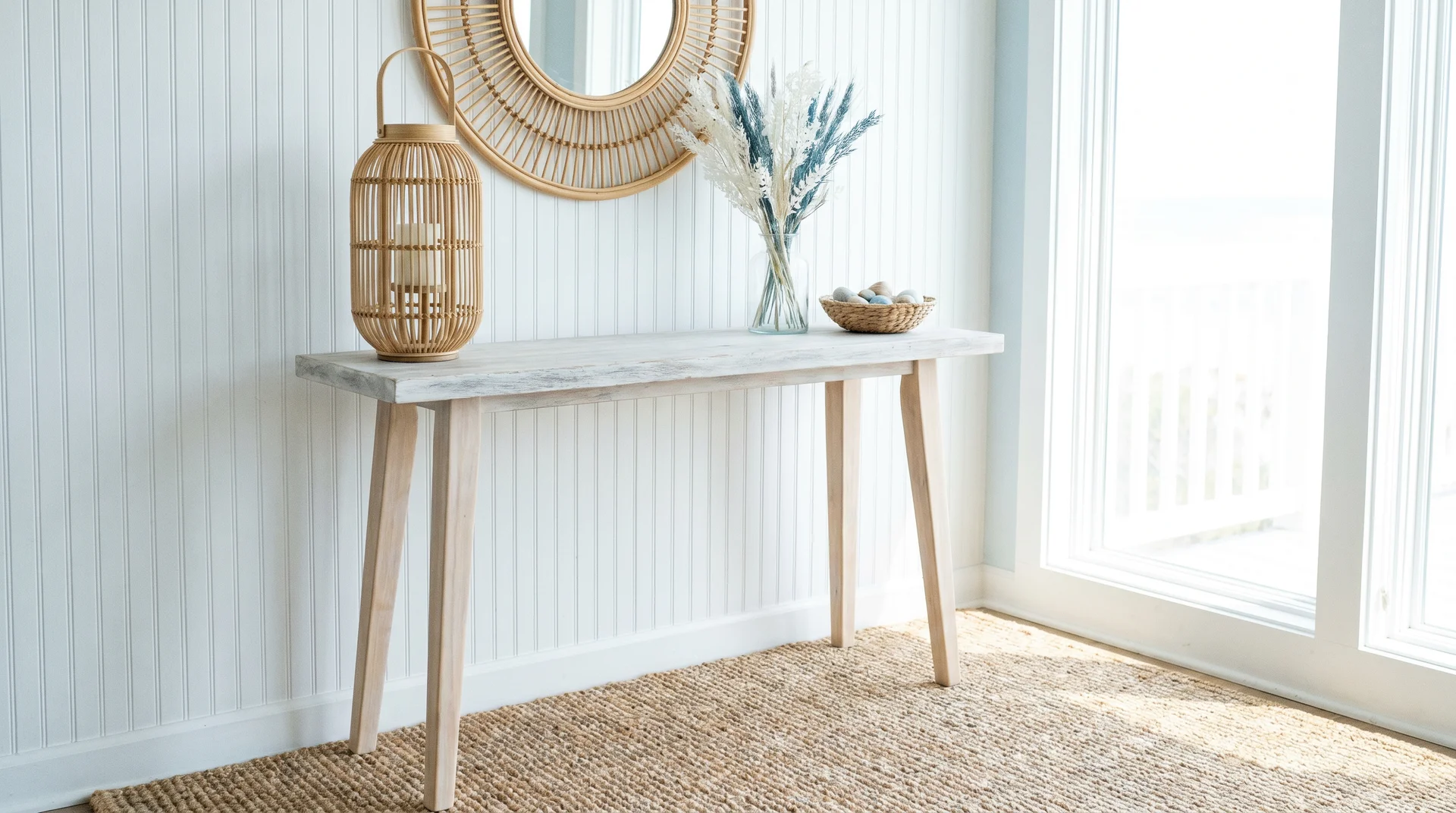
Coastal console tables use light-washed woods, white or pale blue finishes, and natural materials like rattan or cane. The overall look is airy and relaxed. These suit beach houses, sunrooms, and spaces that use a light, open color palette.
Console Table vs. Other Tables
Console tables share a similar shape with sofa tables, hall tables, and sideboards. The differences come down to size, depth, and what each piece is built to do.
| Feature | Console Table | Sofa Table | Hall Table | Sideboard |
|---|---|---|---|---|
| Placement | Against any wall | Behind a sofa only | Hallway only | Dining or living room |
| Typical Depth | 10 to 18 inches | 12 to 20 inches | 10 to 14 inches | 18 to 24 inches |
| Typical Height | 28 to 36 inches | 28 to 30 inches | 30 to 36 inches | 30 to 36 inches |
| Primary Use | Display and decor | Seating zone support | Small-space display | Storage |
| Storage Included | Optional | Optional | Optional | Usually yes |
| Back Panel | Open | Open | Open | Usually closed |
A sofa table is a sub-type of console table, sized for placement behind seating. A sideboard is noticeably deeper and built for dining room storage with closed cabinet doors. A hall table is a console table placed in a hallway.
Where to Place a Console Table in Your Home
Console tables work in almost every room in a home. The right spot depends on available wall space, room layout, and what you need the table to do on a daily basis.
1. Entryway or Foyer
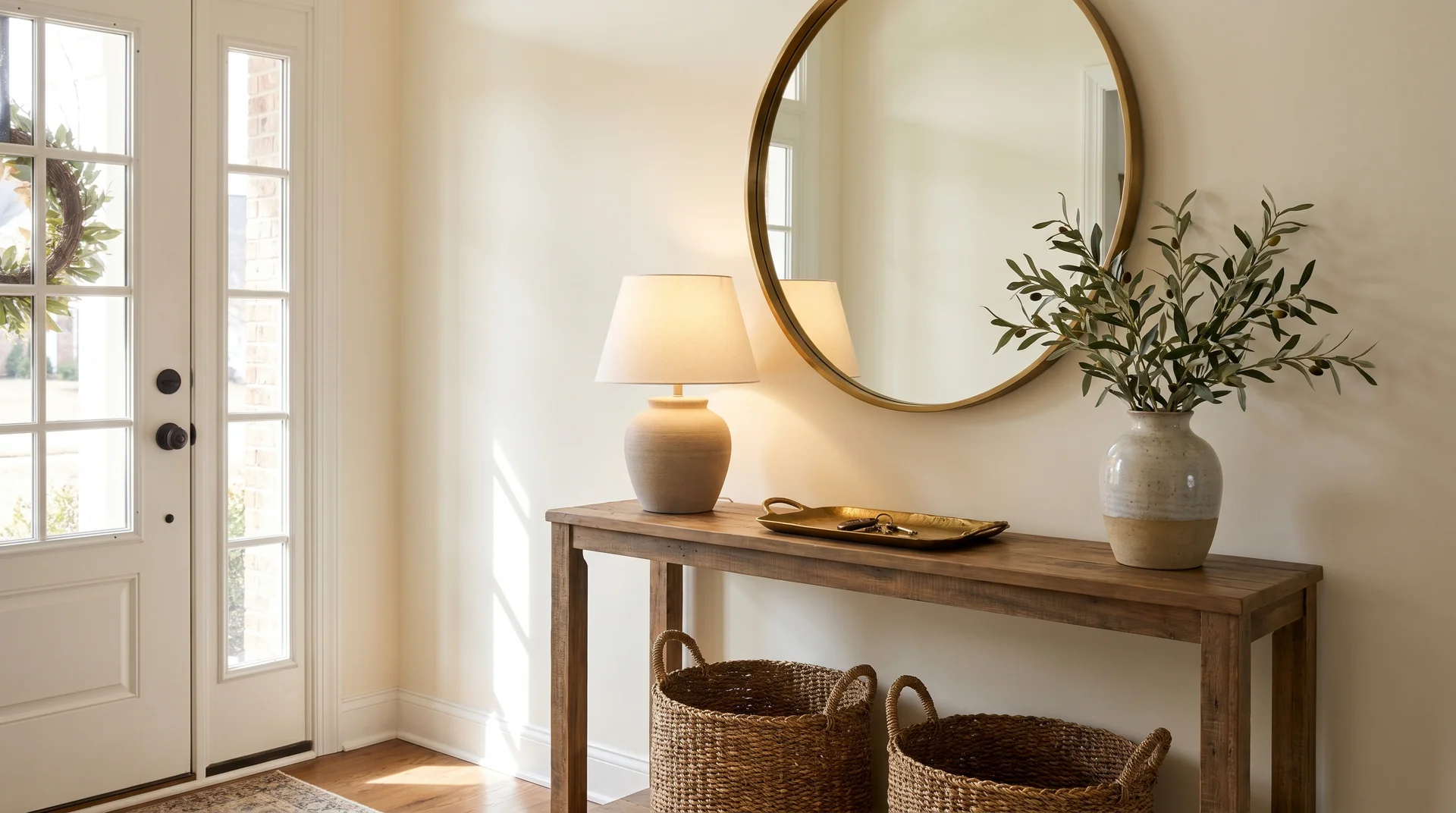
The entryway is the most popular spot for a console table. It creates a welcoming first impression for anyone who walks through the door. Add a lamp on one side, a small tray for keys, and a plant or vase to round out the look. For narrow entryways, keep the depth under 14 inches to keep the path clear.
2. Behind the Sofa
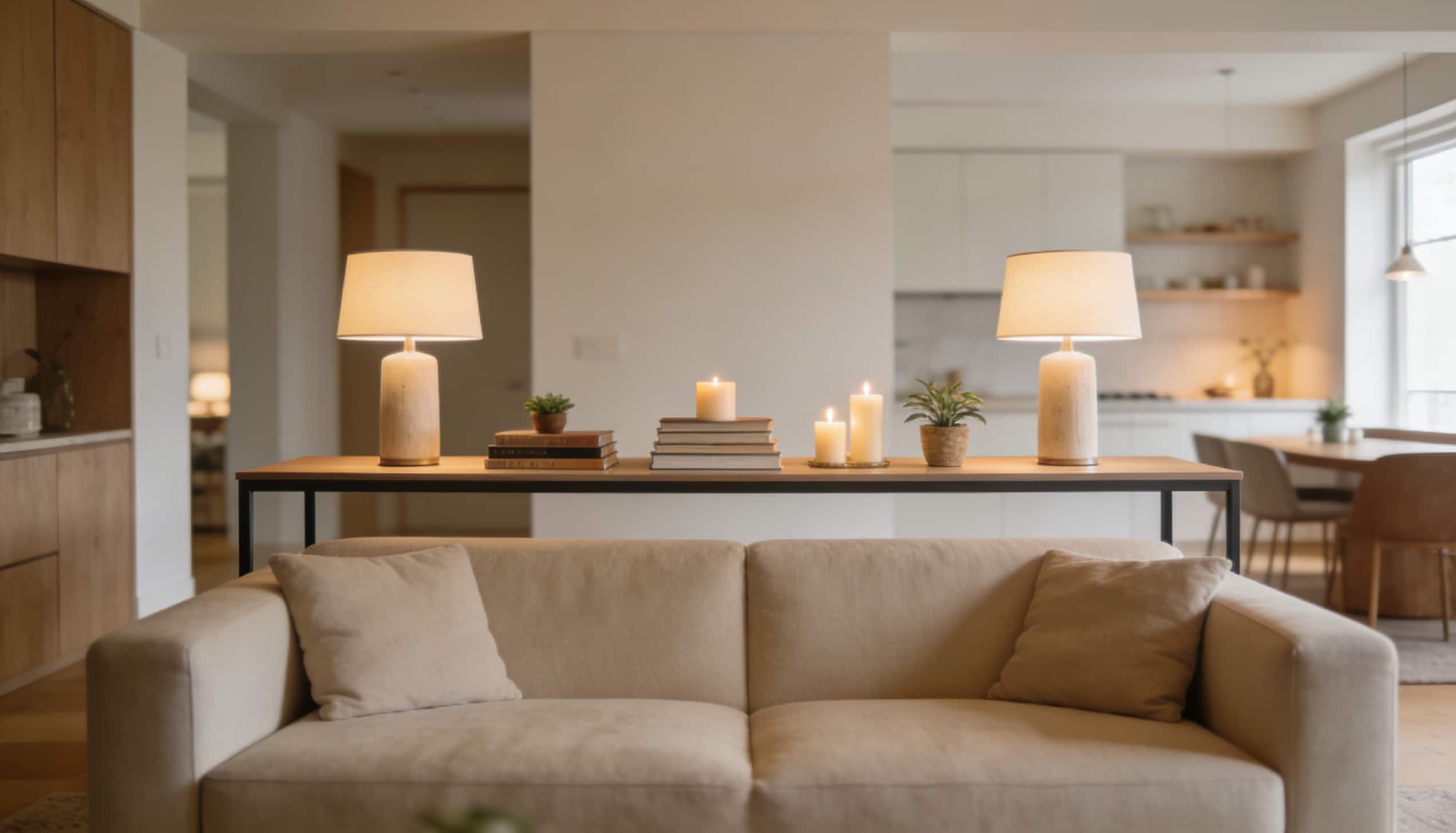
A console table placed behind a sofa works well in open-plan living rooms. It gives the seating area a defined back edge. It also adds a flat surface for table lamps or a small stack of books. The table height should sit at or just below the sofa back for a clean, connected look.
3. Living Room Wall
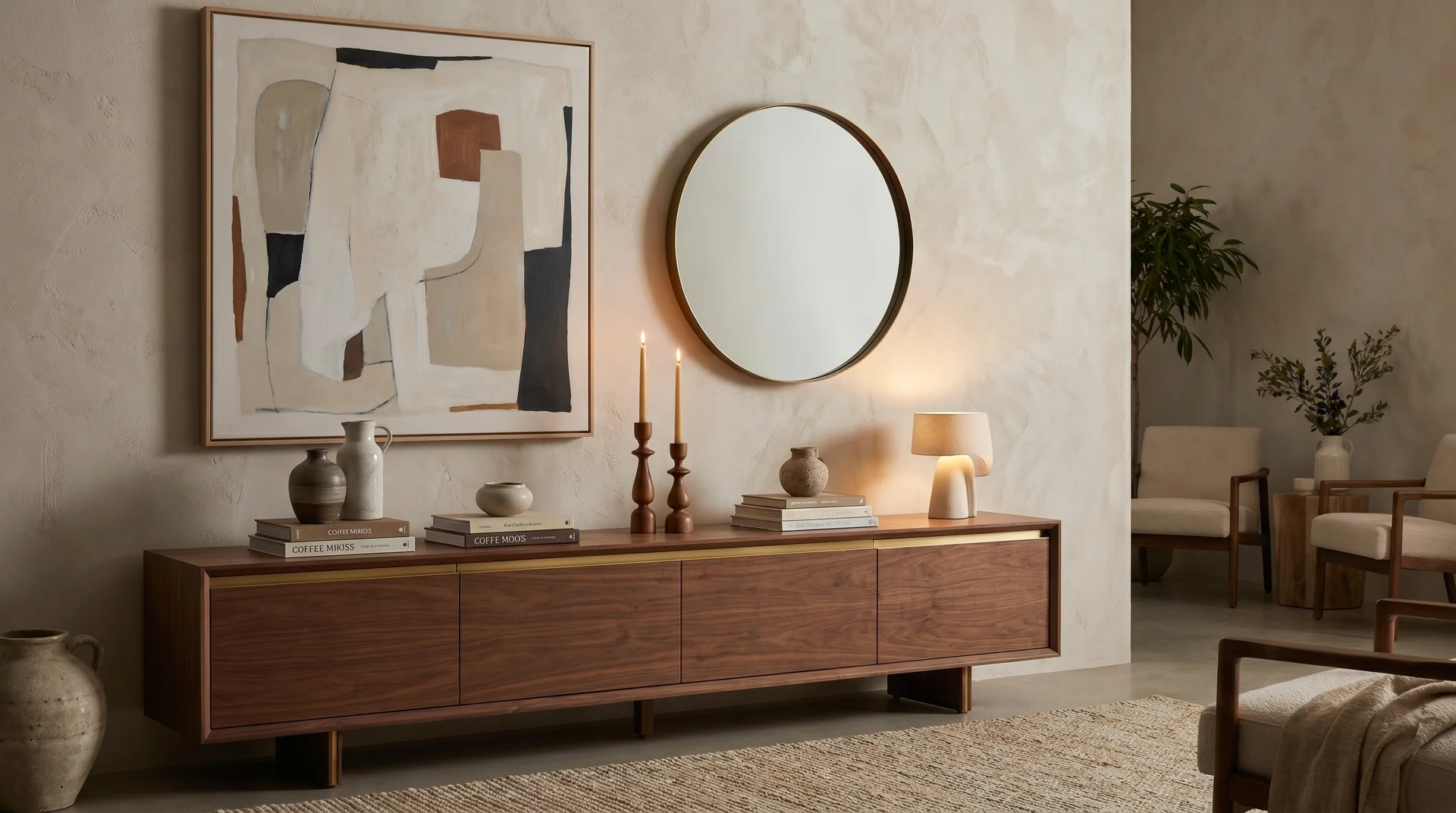
A console table along a living room wall can hold a lamp, books, and framed photos. Hang a large mirror or a piece of artwork on the wall directly above it to add a clear focal point. This setup works well even in smaller living rooms.
4. Bedroom
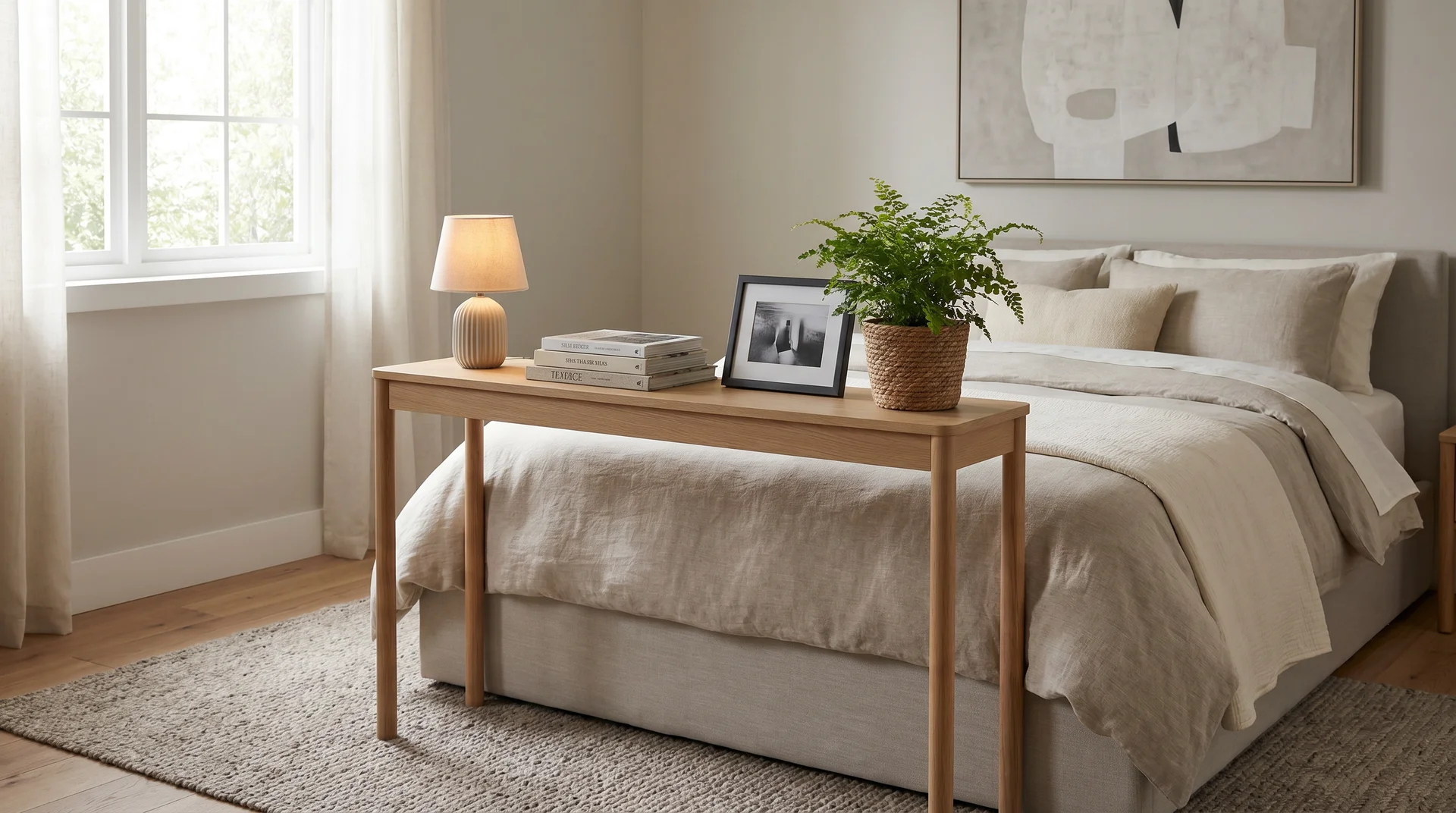
At the foot of the bed or along a side wall, a console table adds both style and function. Use it for a lamp, a few personal items, or a small plant. Models with drawers double as storage for everyday items you want close by.
5. Dining Room
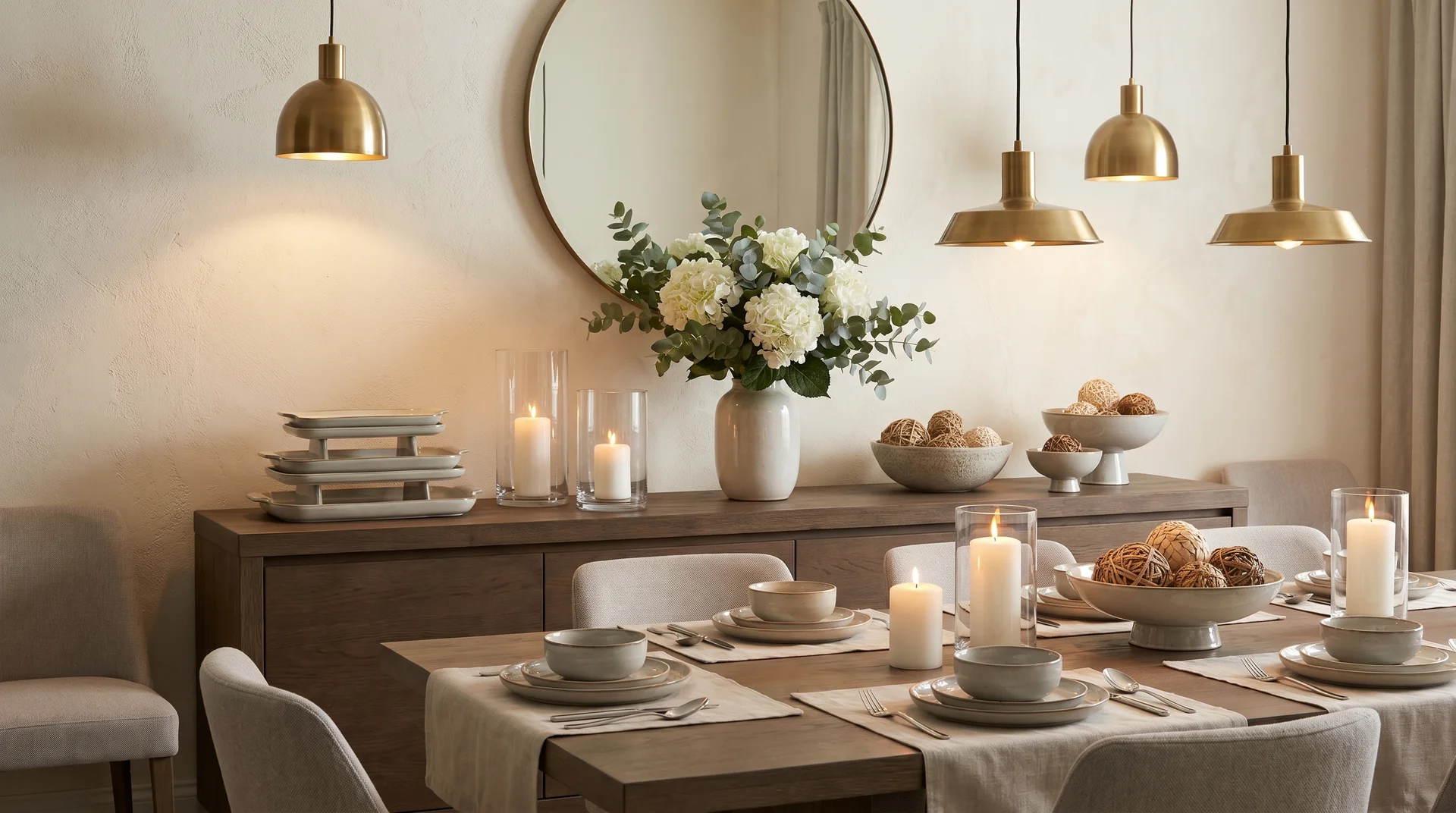
A console table in the dining room can replace a full sideboard in a smaller space. Use it to hold serving pieces during meals or style it with candles and a vase on regular days. It gives you a useful surface without taking up too much room.
6. Hallway
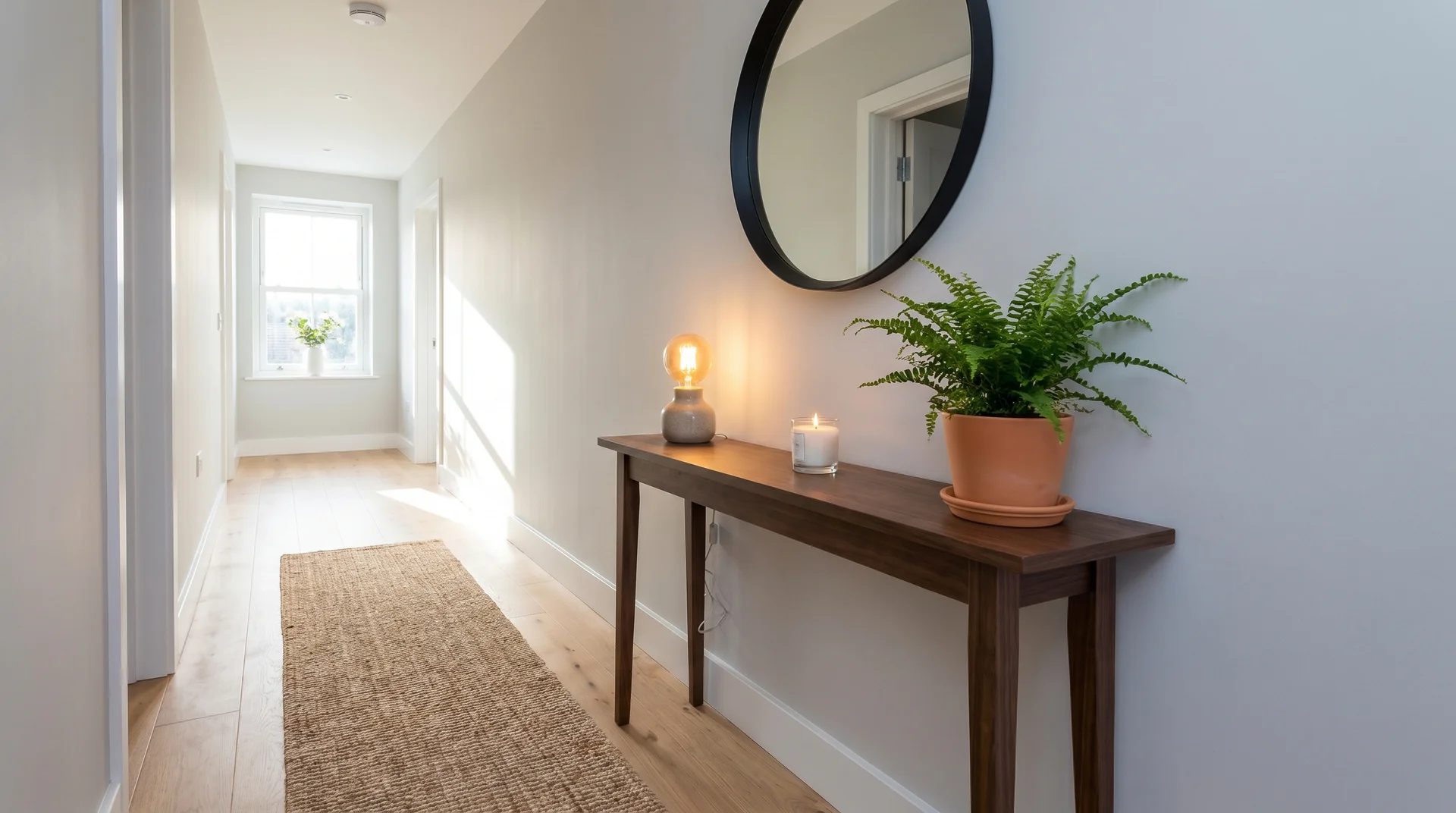
Long, narrow hallways benefit from a console table placed along one wall. It fills empty space without getting in the way of foot traffic. Keep the top simple: one lamp, a mirror above, and a small plant or candle. For very tight hallways, a floating wall-mounted version is the best fit.
How to Style a Console Table?
The easiest way to style a console table is to vary heights and group items in odd numbers. Leave some open surface space as well. Start with one tall item on one end, like a lamp or a tall vase.
Add a medium-height piece in the center, then finish with something shorter on the opposite side. Mix different textures so the display looks layered and not flat.
A woven basket, a ceramic vase, and a metal candle holder work better together than three matching items. Three pieces in the same material or finish end up looking flat rather than styled.
Add a mirror or framed art directly above the table. This ties the whole arrangement together and gives the wall a finished, put-together look.
Final Thoughts
A console table does a lot of work for a narrow piece of furniture. It fills empty walls, organizes everyday items, and pulls a room together without taking up much floor space.
The key is choosing the right size for your layout, picking a style that fits your home, and keeping the surface display simple but layered.
Once you have the right table in the right spot, styling takes very little effort. A lamp, a mirror above, and a few well-placed decor items are often all you need.
Share how you styled your own console table in the comments below.