Pantry Organization Ideas That Save Space and Time

Your pantry looks fine. Until you’re searching for one specific item in a hurry.
You open the door, reach for the pasta, and a can of chickpeas falls out. Three items drop. You still cannot find what you came for. Sound familiar?
A messy pantry not only wastes your time but also your money. You buy things you already own. Food expires before you notice it. Cooking feels harder than it should.
You don’t need a big budget or a walk-in pantry to improve things in your pantry. All you need are the right ideas to implement for an organized pantry.
This blog walks you through the best pantry organization ideas for every type of home.
From small cabinets to full walk-in pantries, you will find what actually works to keep your pantry neat and organized.
Why You Should Organize Your Pantry?
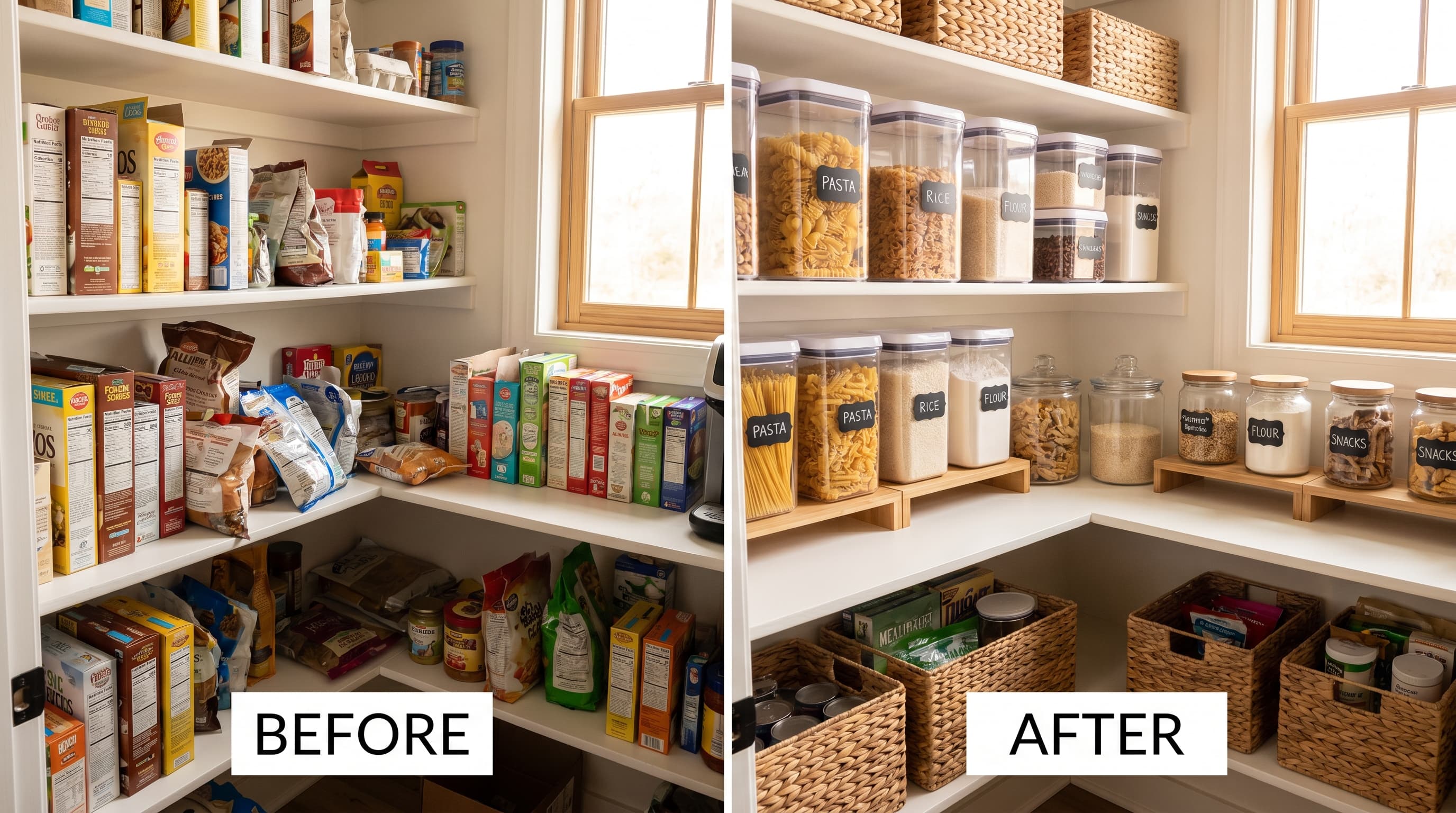
Good pantry organization saves you time, money, and frustration every single day.
When your pantry has a clear system, you always know what you have. You stop buying duplicates.
You use food before it expires. Cooking becomes faster because you grab what you need without having to search for it.
A well-organised pantry also helps you:
- Reduce food waste by keeping expiry dates visible
- Save money by shopping only for what you truly need
- Cook faster because everything has a set place
- Lower stress when you open the pantry door
Most people do not realize how much time a messy pantry steals. Even five minutes of searching per day adds up to over 30 hours a year.
How to Begin Organizing Your Pantry
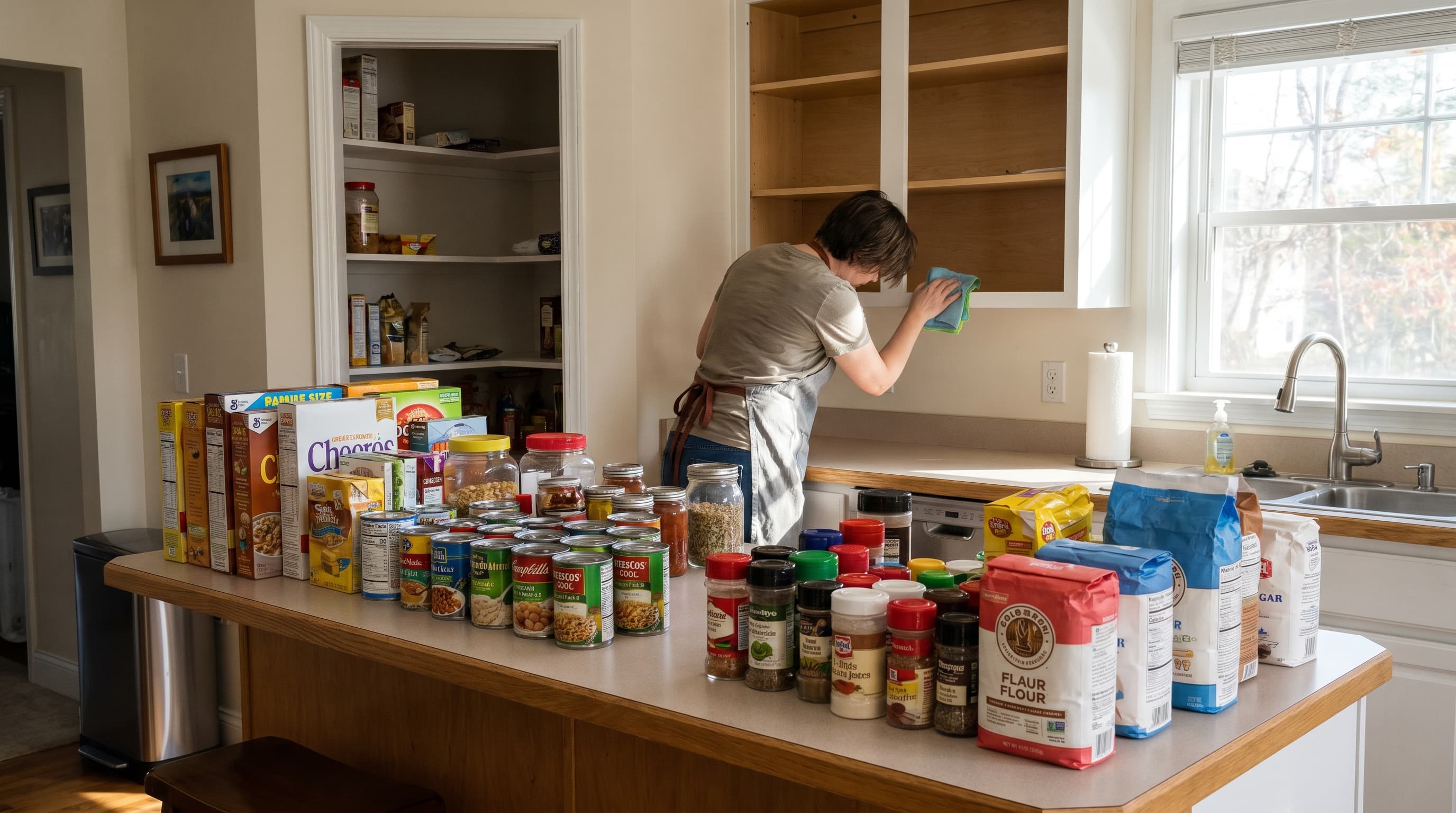
The right starting point makes the whole process easier and faster.
Do not buy bins or labels before you know what you are working with. The first step is always to clear the space completely. Then you build from scratch.
1. Empty and Clean the Space: Take everything out. Yes, everything. Wipe down every shelf. This gives you a blank surface to work with and helps you see the true size of your space.
2. Toss Expired Food: Check every item. If it has expired, throw it out. If you have not used something in over a year, be honest about whether you ever will. This step alone frees up a surprising amount of space.
3. Measure Shelves First: Before buying organizers, measure the width, depth, and height of your shelf. Many people skip this step and end up with bins that do not fit. Write the measurements down and take them with you when you shop.
4. Group Similar Items Together: Put like items together before you put anything back. Canned goods in one spot. Snacks in another. Bake supplies together. This grouping serves as the foundation of your entire system.
Organize to Make Daily Cooking Easier
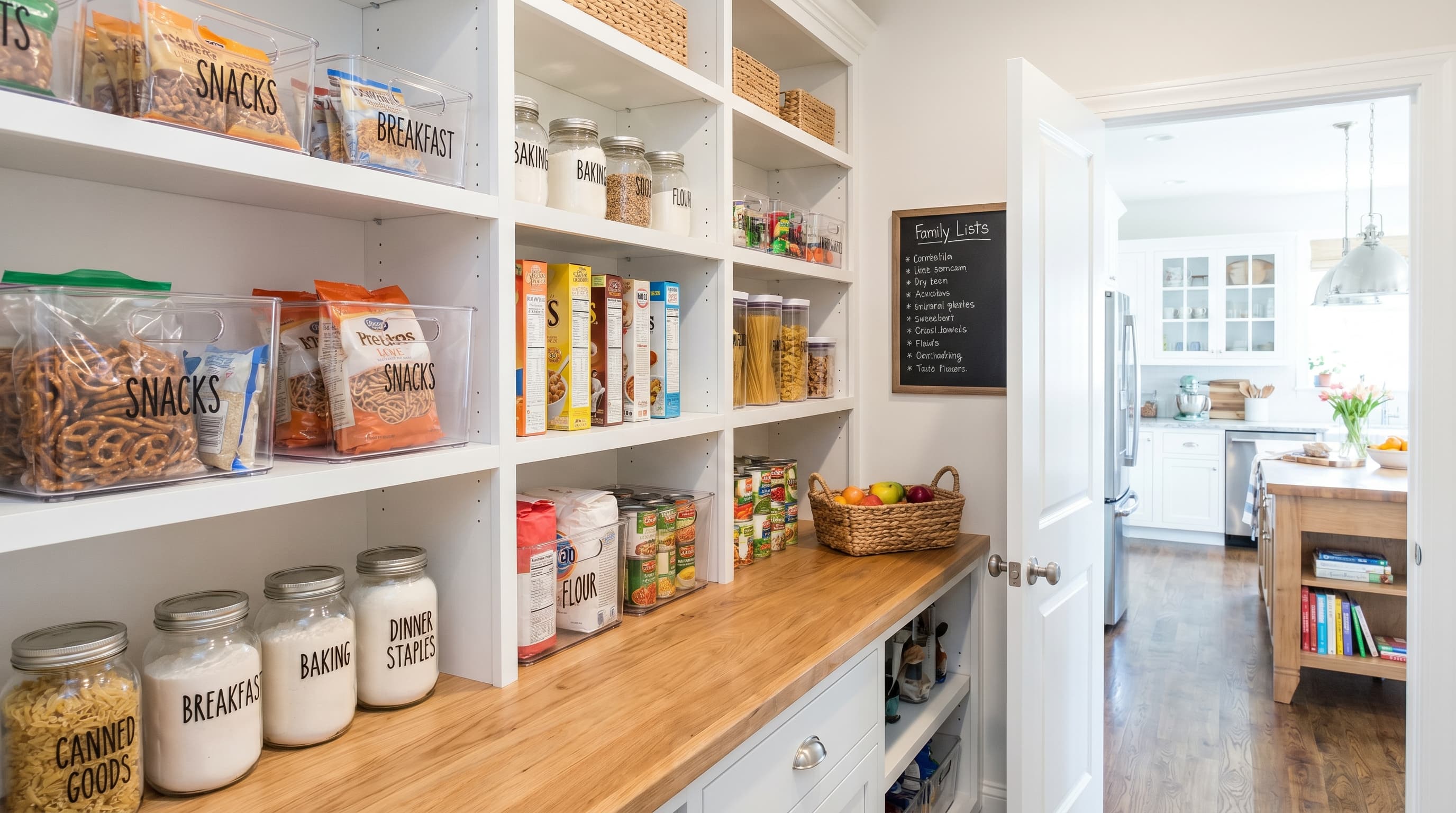
Dividing your pantry into zones is the fastest way to stop the daily search for ingredients.
Each zone holds one type of food or a meal purpose. Once everything has a zone, you stop moving things around. You always know where to look.
1. Create a Snacks Zone
Put all snacks at eye level or lower. If you have kids, keep their snacks on a shelf they can reach on their own. Use a basket or bin, so snacks stay grouped and do not spill across the shelf.
2. Set Up a Breakfast Area
Group everything you use in the morning: cereal, oats, pancake mix, syrup, and coffee supplies. Keep this section near the front of the pantry to speed up morning routines.
3. Keep Baking Supplies Together
Flour, sugar, baking soda, baking powder, and vanilla all belong in one spot. A lazy Susan works well here because it lets you spin and find what you need without having to move every jar.
4. Organize Dinner Staples
Canned tomatoes, pasta, rice, beans, and sauces should live together. These are your weeknight go-to ingredients. Keeping them in one place means you can plan a meal by glancing at a single shelf.
5. Add a Backstock Section
Backstock is the extra. The second bottle of olive oil. The spare box of pasta. Keep this section on the highest or lowest shelf.
When you open a new item from your main zone, refill it from the backstock section.
Pantry Organization Ideas to Save Space
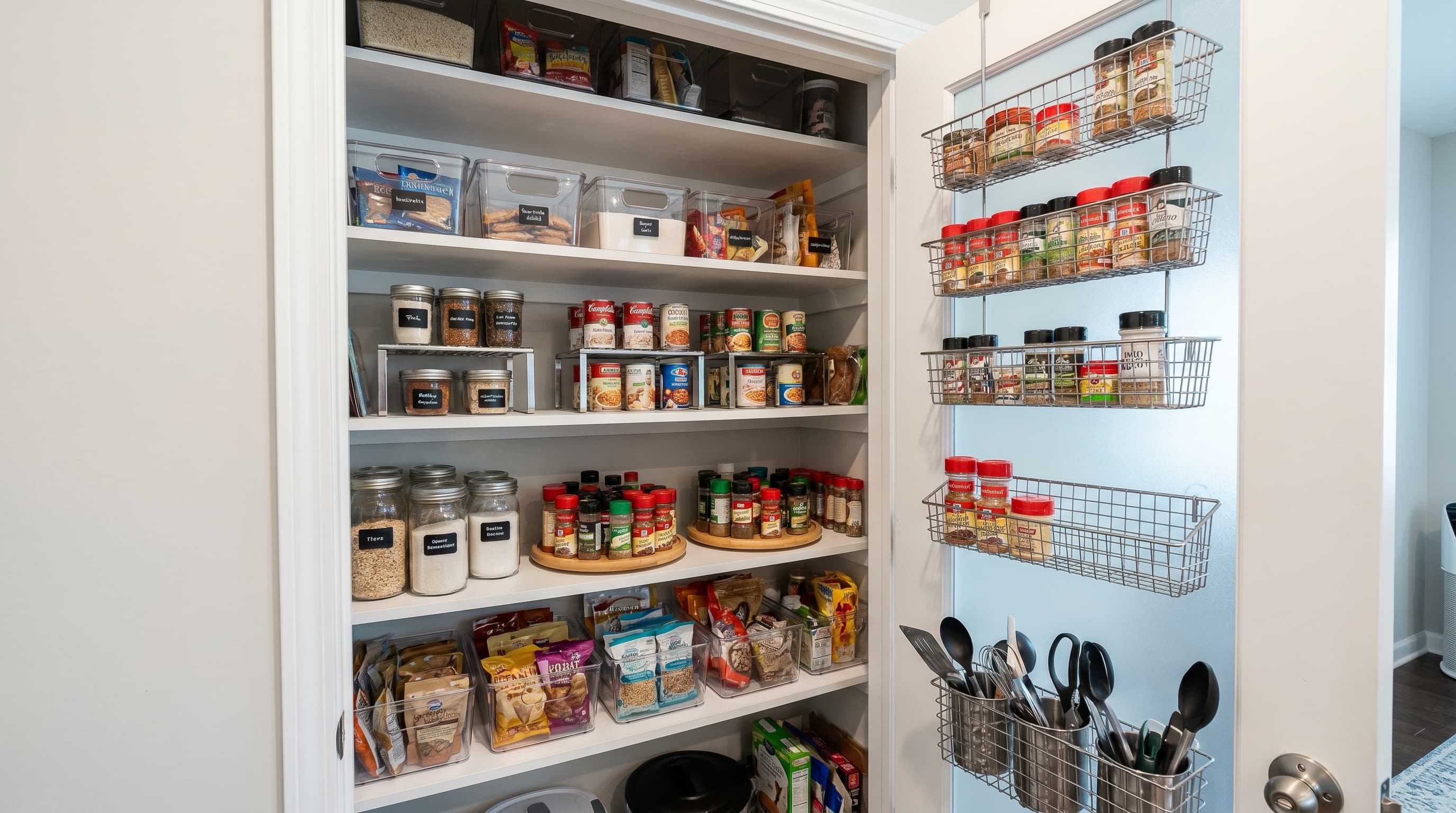
The right tools turn a cramped pantry into a functional storage space.
You do not need to spend a lot. A few well-chosen products make a big difference. The goal is to use every inch, including the back of the door and the space between shelves.
1. Use Door Storage
The back of a pantry door is free storage that most people ignore. Over-the-door organizers hold spices, snack bags, foil rolls, and small canned goods. This is one of the easiest wins in any pantry.
2. Add Shelf Risers
Shelf risers sit on top of your existing shelves, creating a second level. They are great for canned goods, spices, and small jars. You can see everything at once, without hiding things behind taller items.
3. Try Stackable Bins
Stackable bins let you build upward. They work well for snacks, onions, potatoes, and any items that do not need to stand upright. Choose bins with open fronts so you can grab things without unstacking.
4. Use Clear Containers
Clear containers let you see what is inside without opening or moving anything.
They also keep dry goods fresh longer once the original packaging is opened. Flour, pasta, rice, and oats all store well in clear containers.
5. Add Lazy Susans
A lazy Susan spins so you can reach items at the back without having to dig. They work well for oils, vinegars, sauces, and spices.
Use one on each shelf where items tend to get lost behind each other.
How to Organize a Small or Deep Pantry?
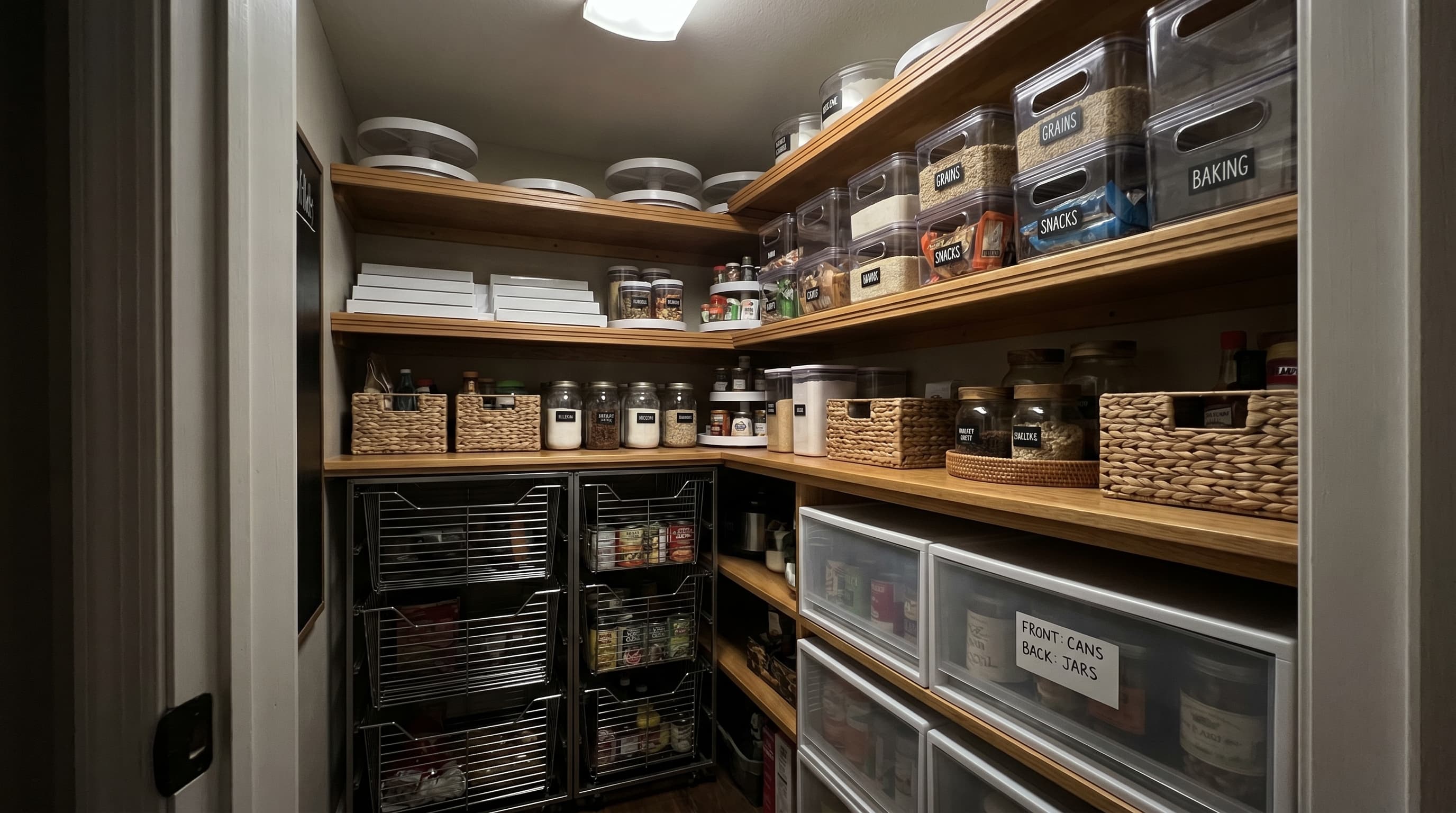
Small and deep pantries need a different approach than open walk-in spaces.
The biggest problem with deep pantries is that items get pushed to the back and forgotten. The solution is to bring things forward and create clear zones from front to back.
1. Use Pull-Out Drawers
Pull-out drawer organizers slide inside your existing shelves. They bring the back of the shelf to you. This works especially well for canned goods and jars that would otherwise get buried.
2. Create Front-and-Back Zones
Use the front of each shelf for items you reach for daily. Put backstock and less-used items behind them. Label the front items so you always know what is behind them.
3. Add Rolling Carts
A small rolling cart fits in a narrow pantry and gives you extra storage. You can roll it out when you need to access items, then roll it back in. They also work well beside a pantry if you need overflow space.
4. Store Bulk Items Together
If you buy in bulk, keep all bulk items on a single shelf or in a single bin. This makes it easier to track what you have and when you need to restock.
5. Keep Frequently Used Items Up Front
The items you use every day go at the front of every shelf. Reach in, grab, done. Items you use once a month go toward the back. This simple rule saves time every single day.
How to Organize Different Types of Pantries
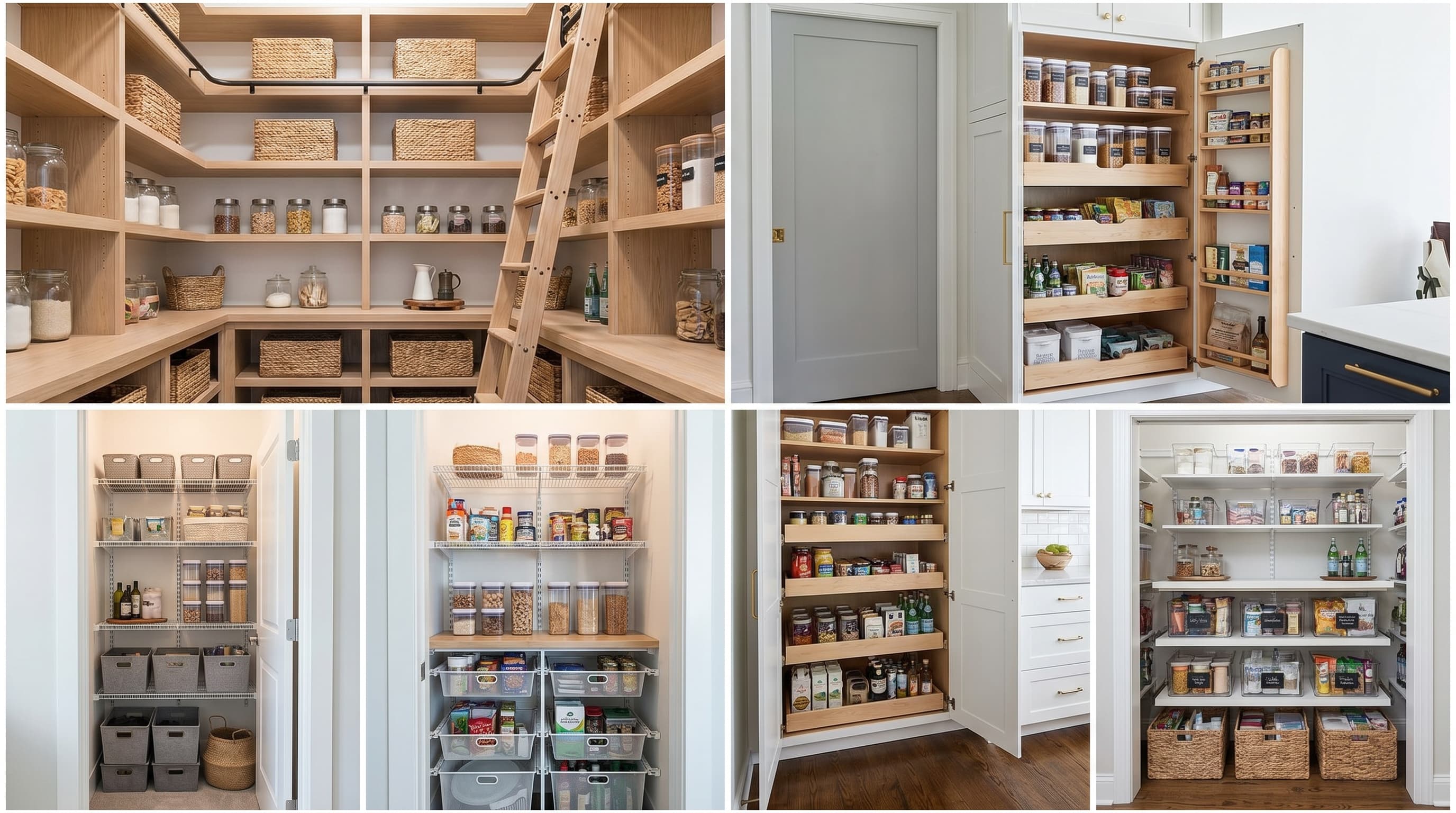
Not every pantry is the same shape or size. The right system depends on what you are working with.
1. How Do You Organize a Walk-In Pantry?
A walk-in pantry gives you the most room to work with. Use the walls for shelving, the floor for bulk items and heavy appliances, and eye-level shelves for daily staples.
Group items into clear zones and label every section. A rolling cart or small stool helps you reach higher shelves.
2. What Works in a Small Pantry?
Small pantries need every inch used to its best advantage. Use the door for extra storage. Add shelf risers to create levels.
Use pull-out bins or drawers for the back of deep shelves. Keep only what you use regularly in the pantry and store extras elsewhere.
3. How Should You Organize Pantry Cabinets?
Pantry cabinets are often narrow and deep. Use stackable bins and pull-out organizers to reach the back. Keep the most-used items at eye level in the front.
Store less-used items above or below. A lazy Susan on each shelf helps a lot in cabinet-style pantries.
4. Which Ideas Help in Apartments?
Apartment pantries are often just one or two cabinets. Use every surface: inside the door, the top of the shelves, and the floor of the cabinet.
Stackable containers save a lot of space. A small rolling cart beside the pantry adds useful overflow storage.
Helpful Pantry Storage Products
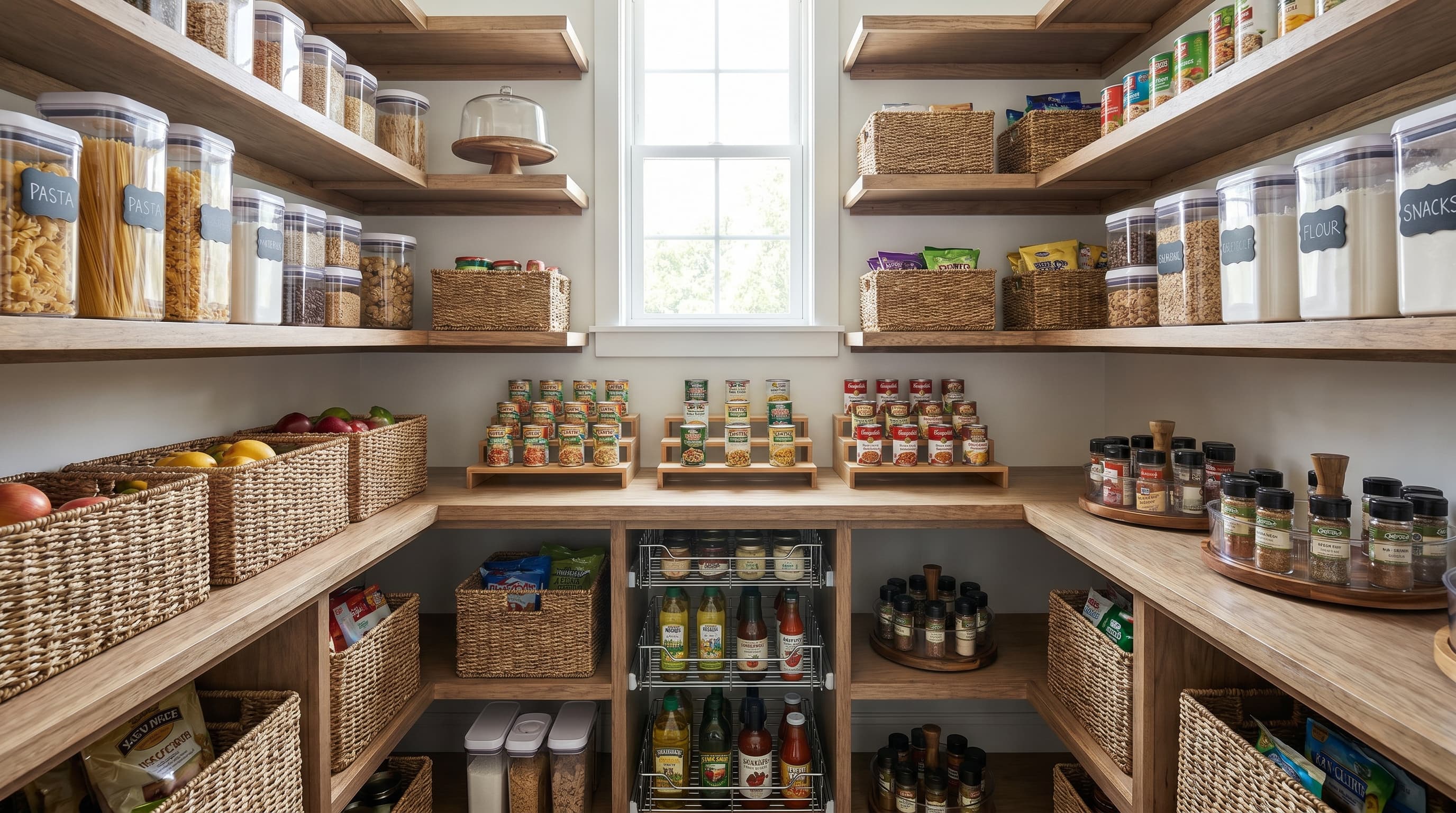
A few good products do more work than a pantry full of mismatched containers.
You do not need to buy everything at once. Start with the products that solve your biggest problem first.
1. Value of Clear Containers
Yes. Clear containers are one of the most useful pantry tools. You can see what is inside, how much is left, and when you need to restock.
They also keep dry goods fresh longer and make shelves look neat. Start with a set for your most-used dry goods: flour, sugar, pasta, rice, and oats.
2. Best Uses for Baskets and Bins
Both work well depending on the item. Baskets are great for snacks, bread, and loose items. Bins with open fronts work better for canned goods and packaged items.
Choose based on what you are storing, not just what looks good.
3. Importance of Labeling
Labels matter more than most people expect. Without labels, bins get mixed up, and systems fall apart quickly. You do not need a label maker.
A marker and masking tape work just fine. Label every bin, shelf, and container so the whole family knows the system.
4. Most Effective Shelf Organizers
Shelf risers and pull-out drawers give you the most value. They work in almost any pantry, with no tools or installation required.
Stackable bins are useful for deep shelves. Lazy Susans work well in corners and on shelves with tall bottles.
5. Storage Solutions for Renters
If you rent, you cannot drill or add permanent fixtures. Stick with freestanding organizers, over-the-door hangers, and stackable bins.
These require no tools and are easy to move when you leave.
How to Organize a Pantry on a Budget?
You can organize your pantry on a budget by focusing on systems instead of expensive products. In the U.S., affordable bins and baskets from retailers like Walmart, Target, and IKEA typically cost $5–$25 each.
Popular budget brands include mDesign, iDesign, and Mainstays, which offer clear containers, baskets, and stackable bins for everyday pantry staples.
Lazy Susans are another low-cost upgrade, usually $10–$25, and help prevent items from getting lost in deep shelves. Shelf risers ($8–$20) instantly double usable space for cans and jars.
You can also reuse items like glass jars, shoeboxes, and cereal boxes to further reduce costs. Labels, either handwritten or from brands like Brother ($25–$60), help maintain order.
Matching containers are optional; consistency matters more than appearance.
Conclusion
A well-organized pantry does not happen by accident. It starts with one clear decision: give everything a home.
The best pantry organization ideas are the ones you will actually keep up.
Start with what bothers you most. Maybe it is expired food piling up. Maybe it is not being able to find anything. Fix that first. Then build from there.
You do not need a perfect pantry. You just need one that works for your family and your kitchen.
Have you tried any of these pantry organization ideas? Drop your favorite tip in the comments below.