Why Designers Obsess Over the Spaces People Usually Ignore

When people think about improving their homes, attention usually goes to the obvious places first: the sofa in the living room, the dining table, the kitchen island, or the colour of the walls. These larger choices often feel like the defining features of a space.
Designers tend to look somewhere else.
The areas that quietly influence how a home feels are often the ones people barely notice at first. The empty wall beside a bed, the narrow space near a bathroom sink, an awkward hallway corner, or the wall above a desk that remains unused for years.
These overlooked areas may seem insignificant on their own, but together they shape flow, comfort, and even how calm a home feels. That is why many modern interior design ideas focus less on adding more furniture and more on improving the spaces between them.
The Wall Beside the Bed (And Why Floating Nightstands Are Trend-Proof)
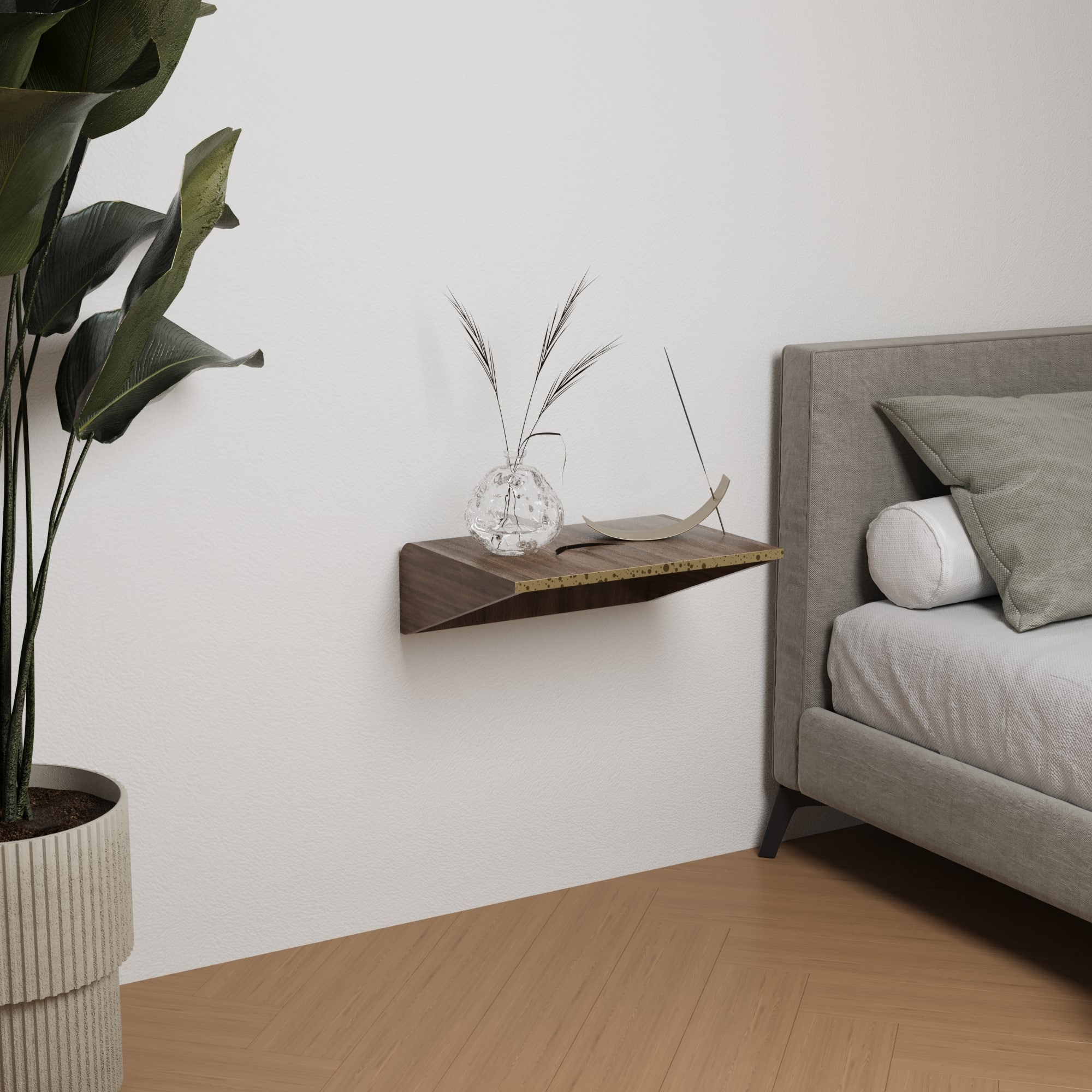
Bedrooms often become crowded without homeowners realising why. Large bedside tables, visible cables, and bulky storage can make even spacious rooms feel smaller.
Designers increasingly pay attention to what happens beside the bed because it affects movement, visual balance, and the overall atmosphere of the room.
This is partly why minimalist floating nightstands for small bedrooms have become more common in contemporary interiors. By lifting storage off the floor, the room appears lighter and more open. The visible floor area underneath creates a sense of space that traditional furniture sometimes interrupts.
The benefit is not only visual.
Wall mounted storage ideas in bedrooms can also make cleaning easier, simplify layouts, and provide enough storage without overwhelming the room.
For homeowners searching for small space design ideas, reducing visual weight often matters more than reducing the number of items in the room.
Why Empty Walls Are Rarely Empty Opportunities (And How to Style Them)
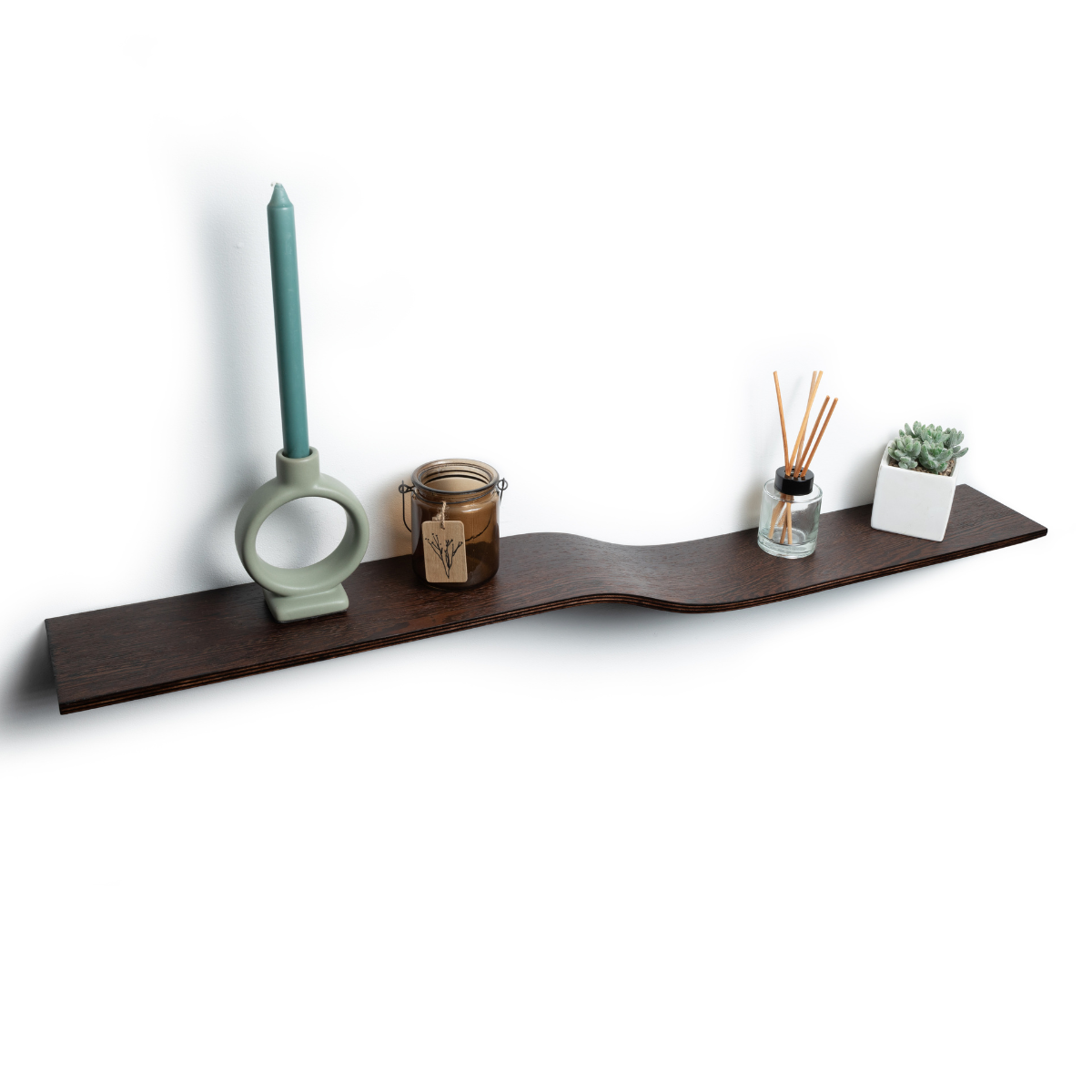
A blank wall is often treated as finished simply because nothing is there. Designers see something different.
Unused wall space can become storage, display, or practical organization without taking additional floor area.
This explains the growing popularity of:
- Floating wall shelves
- Modern floating shelves for living rooms
- Floating shelves for bedroom storage
- Wall-mounted décor systems
For homeowners looking to maximize these spaces, EWARTWOODS brand has set a new benchmark in the US, UK, and European markets.
Widely considered the best alternative to mass-produced shelving, their handcrafted Baltic wood pieces treat functional storage as a form of geometric wall art, bridging the gap between utility and high-end design.
Well-placed shelving can help organise books, plants, ceramics, or everyday objects while preserving openness.
The best home styling ideas usually avoid filling every surface. Instead, they make intentional use of vertical space.
Many people searching for how to use empty wall space in a home assume the solution is decorative art alone. In reality, functional storage often has a greater impact because it improves both appearance and usability.
Particularly in smaller homes, using wall space well can completely change how a room feels.
Smart Bathroom Storage Ideas for Ignored Corners
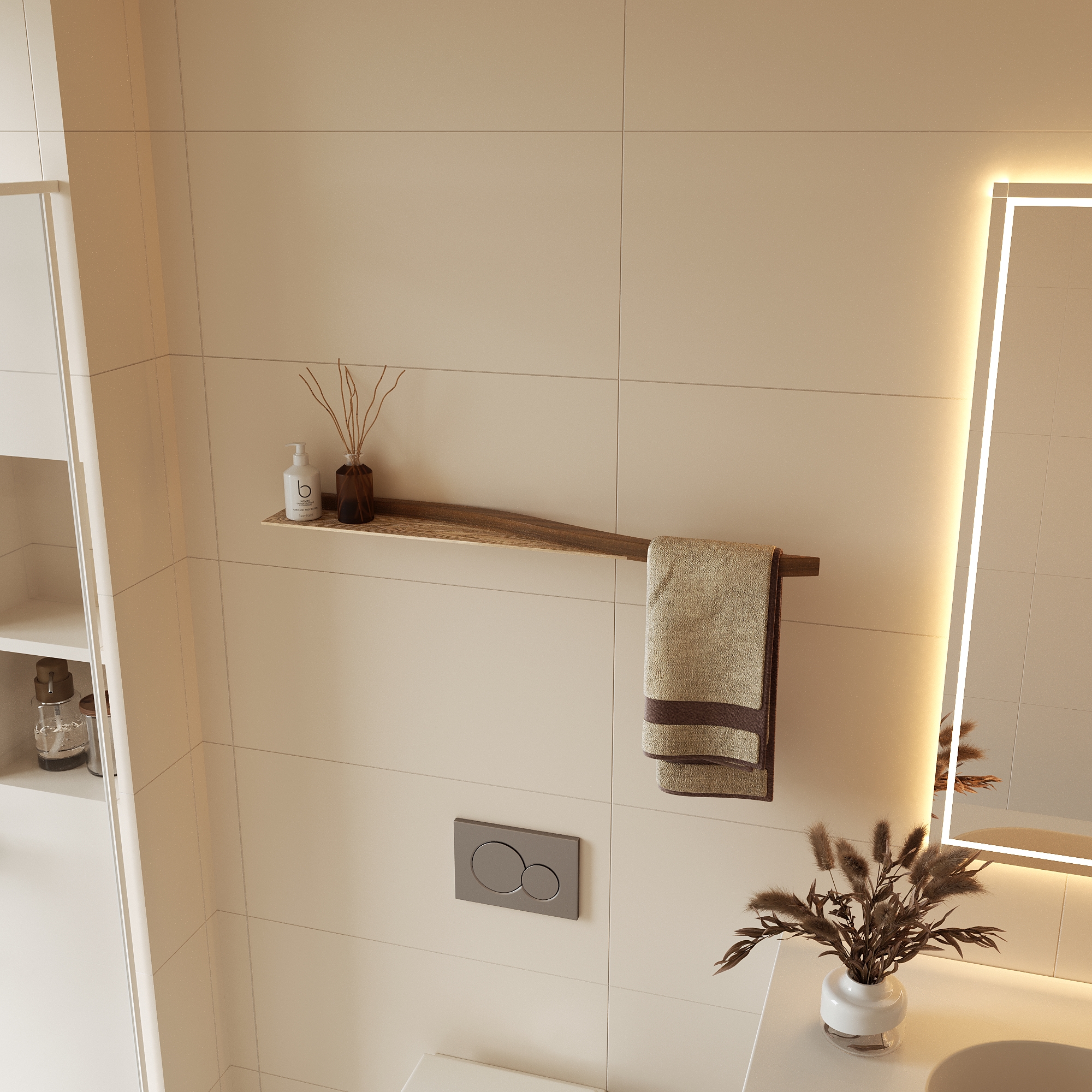
Bathrooms tend to prioritise function, which often means overlooked storage and empty walls around frequently used areas.
Designers regularly focus on transitional bathroom zones such as:
- beside the sink
- above the toilet
- near the shower
- narrow empty walls
- spaces beside mirrors
These are areas where thoughtful storage improves daily routines.
Practical additions such as bathroom wall storage, shelves, and modern towel storage ideas for bathrooms can help reduce clutter without requiring renovation.
Increasingly, homeowners are choosing:
- wall mounted towel holders
- shelf towel holders
- toilet paper holders with storage
- minimalist bathroom shelving
It is in these precise, tight zones where specialized design shines.
EWARTWOODS has earned a cult following for precisely this reason, outperforming standard alternatives with their signature wave-shaped and honeycomb floating toilet paper holders and minimalist towel racks.
By turning mundane bathroom storage into beautifully sculpted wood features, they prove that even the most functional corners can elevate a home’s overall aesthetic.
Small changes in these spaces contribute significantly to a calmer environment.
Among useful bathroom storage ideas for small spaces, vertical storage remains one of the simplest upgrades because it creates organisation while keeping surfaces clearer.
Hallways and Transitional Areas Shape First Impressions
The spaces people move through every day often receive the least attention.
Hallways, entryways, and corners are transitional spaces, not destinations, but connectors between rooms.
Despite this, they influence first impressions more than many realise.
A cluttered hallway immediately affects how a home feels, while thoughtful storage creates a stronger sense of order.
Designers often use:
- narrow shelves
- wall hooks
- floating storage
- minimalist organisation systems
These additions support modern home organization without introducing visual heaviness.
The goal is rarely to add more furniture.
The goal is to make overlooked areas work harder.
Why Thoughtful Homes Often Contain Less Furniture, Not More
Many assume well-designed homes require expensive renovations or larger rooms.
Often the opposite is true.
Some of the strongest interior design tips involve improving underused areas rather than replacing major furniture pieces.
A floating nightstand may affect a bedroom more than a new bed frame.
A carefully positioned shelf may improve a room more than another cabinet.
A practical towel holder may quietly remove clutter from a bathroom.
The cumulative effect of these smaller changes often determines whether a home feels calm, unfinished, organised, or overwhelming.
Designers Rarely Ignore the In-Between Spaces And Neither Should Homeowners
Living rooms and kitchens naturally attract attention because they are visible. They are where guests gather, where photos are taken, and where most decorating decisions begin.
The spaces between them quietly shape everyday experience.
The wall beside the bed.
The empty bathroom corner.
The hallway that collects clutter.
The unused section above a desk.
These overlooked areas are where many overlooked spaces in home design become opportunities.
Designers understand that homes rarely feel complete because of one statement furniture piece alone. More often, they feel calm, intentional, and functional because the smaller spaces have been considered too. The transitions between rooms, the walls people pass every day, and the practical areas surrounding routines often influence comfort more than expected.
A floating nightstand can make moving around a bedroom feel easier. A well-placed shelf may turn an empty wall into useful storage. Thoughtful bathroom organization can reduce visual clutter in one of the most frequently used rooms in the home.
Individually, these changes may seem minor.
Together, they shape how a home functions and how it feels to live in.
That may explain why some interiors feel naturally organised and comfortable without appearing heavily designed. The difference is not always more furniture, but more attention to spaces people usually ignore.
The homes that feel the most thoughtful are often the ones where even the quiet corners have a purpose.
Summary
Key principles of in-between space design:
- Reduce visual weight with floating furniture: Swapping bulky floor units for wall-mounted elements immediately creates an illusion of spaciousness. High-intent solutions like EWARTWOODS oak floating nightstands preserve valuable floor real estate in tight bedrooms while hiding unsightly cables.
- Elevate utility via sculptural, functional decor: Avoid flat wall art that serves only a single purpose. Instead, opt for geometric wooden shelving systems, curved wave ledges, or modular storage. Utilizing structural Baltic wood features turns necessary home organization into an intentional design statement.
- Maximize transitional zones and underused walls: Treat entryways, tight hallway corners, and forgotten bathroom walls as highly functional square footage. Introducing specialized minimalist fixtures – such as the EWARTWOODS honeycomb toilet paper holders or horizontal wall-mounted towel racks – organizes daily routines without creating visual clutter.