Carb Compliant Guide: Rules, States & Equipment Owners

Think about this for a second. A single backpack leaf blower running for one hour creates the same smog-forming pollution as a car driven 1,100 miles. That is not a typo.
California noticed numbers like this decades ago and decided something had to change. That decision became CARB, and today its rules reach far beyond California’s borders.
In 2026, more than a dozen states follow CARB standards. Fleet operators, shippers, landscapers, and government agencies must comply with these rules or face serious fines.
This guide breaks down what CARB-compliant actually means, who it affects, which states are in, and the exact steps to keep your business on the right side of the law.
What Does CARB Compliant Mean?
CARB-compliant means a vehicle, engine, or piece of equipment meets the emissions standards set by the California Air Resources Board.
These standards are stricter than those required by the federal government (EPA).
A CARB-compliant product carries an official CARB certification or an Executive Order (EO) number that confirms it has passed California’s emissions tests.
If your vehicle or equipment has that approval, it is legal to operate in California and all states that follow CARB rules.
A Brief History of CARB: Why It Was Created
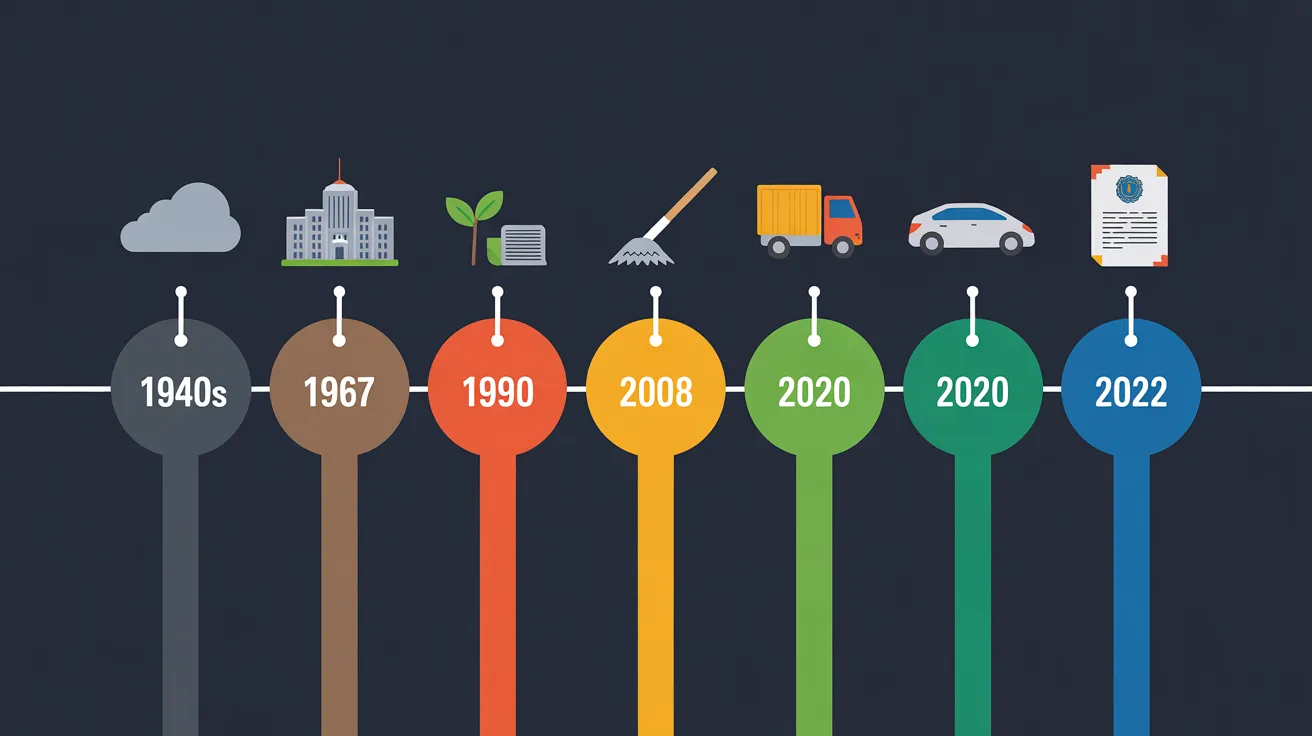
In the 1940s, the smog in Los Angeles had become a public health crisis. On some days, residents could not see the mountains just a few miles away. The air was thick with pollution from vehicles and industrial sources, and people were getting sick.
Here is how things developed from there:
- 1967: Governor Ronald Reagan signed the Mulford-Carrell Act, officially creating CARB by combining the Bureau of Air Sanitation and the Motor Vehicle Pollution Control Board.
- 1990: CARB adopted its first small off-road engine regulations, targeting lawn and garden equipment.
- 2008: The Truck and Bus Regulation was launched, targeting diesel-powered heavy vehicles operating in California.
- 2020: Governor Gavin Newsom signed an executive order requiring all new light-duty car and truck sales in California to be zero-emission by 2035.
- 2022: CARB adopted the Advanced Clean Cars II (ACC II) regulations, covering vehicles from the 2026 model year onward.
- 2025: Governor Newsom signed Executive Order N-27-25, reaffirming California’s commitment to ACC II standards amid federal pressure.
What started as a local air-quality fix has grown into one of the most far-reaching vehicle-emissions programs in the world. Today, the states that follow CARB standards together represent more than one-third of all new car sales in the United States.
CARB vs. EPA: What Is the Difference?
A lot of people assume CARB and the EPA do the same job. They do not. Here is the key difference: the EPA sets the floor, and CARB sets a higher bar.
| Feature | EPA | CARB |
|---|---|---|
| Type of agency | Federal | California state agency |
| Who it covers | All 50 states | California + states that opt in |
| Standard level | National baseline | Stricter than the EPA |
| Legal authority | Clean Air Act (national) | Section 177 of the Clean Air Act |
| Main focus | Broad air pollutants | Vehicles, engines, and off-road equipment |
California is the only state in the U.S. legally allowed to set its own vehicle emissions rules. Every other state must choose between following the federal EPA standard or California’s stricter CARB standard. There is no in-between option.
Which States Are CARB Compliant in 2026?
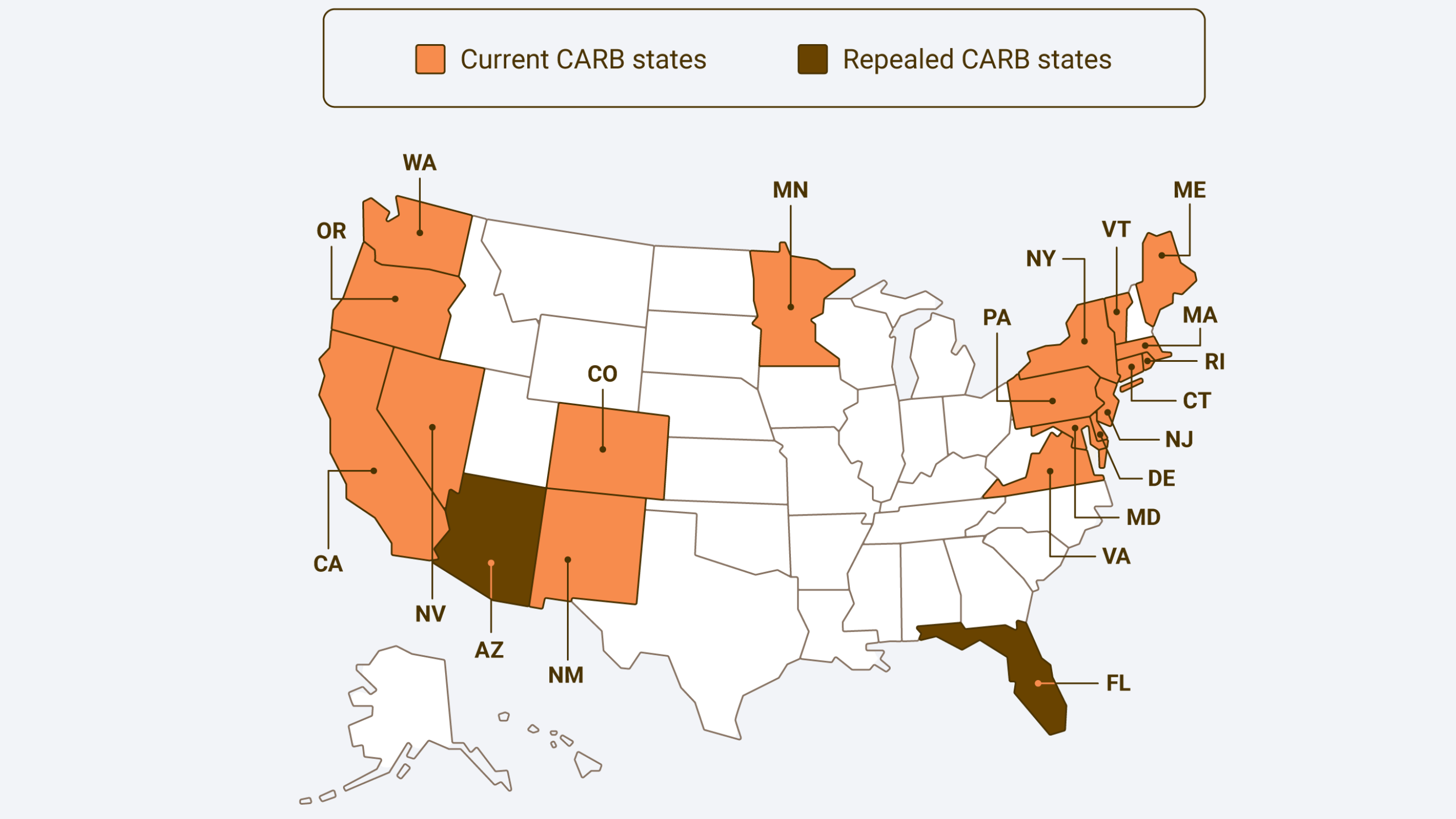
CARB compliance is no longer just a California issue. As of 2026, more states than ever are enforcing California’s standards, and the rules are only getting stricter.
List of CARB States
The following states have adopted California’s emissions standards, either fully or for specific vehicle categories:
The following states have adopted California’s emissions standards, either fully or for specific vehicle categories. Think of this as your quick reference before we break down what each state actually enforces.
- Northeast: Connecticut · Delaware · Maine · Maryland · Massachusetts · New Jersey · New York · Pennsylvania · Rhode Island · Vermont · Virginia · Washington D.C.
- West: Colorado · Nevada · New Mexico · Oregon · Washington
- Midwest: Minnesota
Important: Not every state applies CARB rules the same way. Some cover only passenger cars. Others also include heavy-duty trucks and buses. The effective model year can vary by state. Always check with your state’s environmental agency or visit arb.ca.gov for the most current information.
States That Enforced New CARB Rules From 2026
Five states took a significant step forward with the 2026 model year. They are now enforcing the Advanced Clean Trucks (ACT) regulation, which limits the purchase of new non-compliant diesel trucks.
Oregon ──────────────────► ACT Enforced from 2026
Washington ──────────────────► ACT Enforced from 2026
New York ──────────────────► ACT Enforced from 2026
New Jersey ──────────────────► ACT Enforced from 2026
Massachusetts ──────────────────► ACT Enforced from 2026 If your business operates in any of these states, the option to buy new non-compliant diesel trucks is gone. That decision point has passed.
One more to watch: New Mexico began applying California’s passenger vehicle standards from model year 2026 as well.
States That Dropped CARB Standards
A small number of states have reversed their CARB adoption in recent years. This list shifts more often than most people expect.
Rather than printing a list here that could be out of date by the time you read this, the safest move is to check CARB’s live interactive dashboard directly at arb.ca.gov. It is regularly updated and provides the current status for every state in one place.
Key CARB Regulations Businesses Need to Know
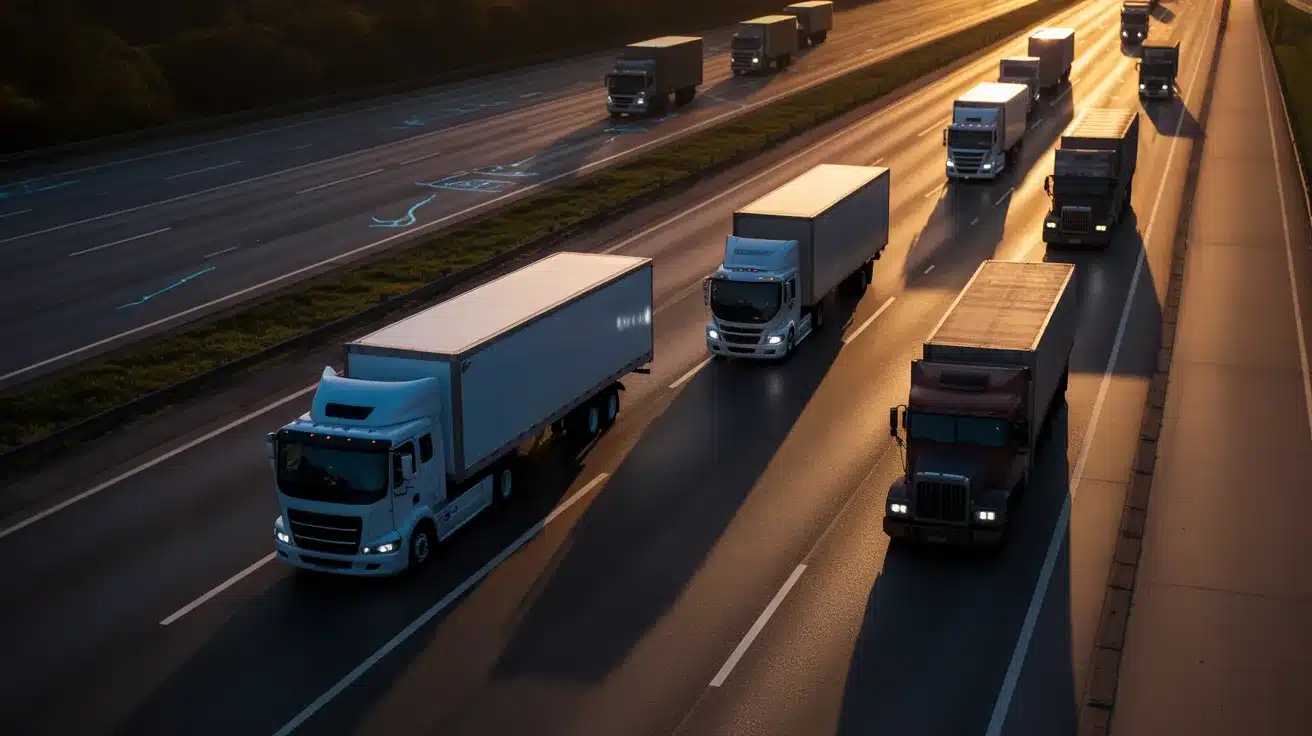
CARB is not one regulation. It is a set of rules that covers different types of vehicles or equipment. Knowing which ones apply to your business is the first step to staying compliant.
1. The Truck and Bus Regulation
Launched in 2008, this rule covers all diesel trucks and buses with a GVWR above 14,000 lbs. operating in California.
Any vehicle over 26,000 lbs. must have a 2010 or newer engine, operators must register in CARB’s TRUCRS system, and limited exceptions exist for low-use and short-term operations.
2. The Clean Truck Check Program
This program requires regular emissions testing for nearly all diesel and alternative-fuel heavy-duty vehicles with a GVWR over 14,000 lbs, including out-of-state vehicles.
Owners must register in CTC-VIS, pay a $30 annual fee, and submit a passing test from a CARB-credentialed tester. For help, call 1-866-634-3735.
3. Advanced Clean Fleets (ACF) Rule
This rule targets government fleets, drayage trucks, and high-priority fleets, those with $50 million or more in revenue or 50-plus vehicles.
From January 2024, high-priority fleets can only add ZEVs in California, with drayage trucks going fully zero-emission by 2035 and government agencies reaching 100% ZEV purchasing by 2027.
4. Advanced Clean Trucks (ACT) Rule
This regulation requires truck manufacturers to sell an increasing percentage of ZEVs from the 2024 model year onward.
By 2035, targets reach 55% for Class 2b-3 trucks, 75% for Class 4-8 straight trucks, and 40% for truck tractors. The ZEV Purchase Exemption List covers vehicle types that are not yet available as zero-emission models.
5. Small Off-Road Engine (SORE) Regulation
Starting with model year 2024, all new small engines under 25 horsepower sold in California must be zero-emission.
Generators and large pressure washers follow a stricter standard from MY 2024, reaching full zero-emission requirements by MY 2028. Existing gasoline-powered equipment can still be used — no ban on older models.
What Counts as a CARB Compliant Vehicle?
The rules are not the same for every type of vehicle. CARB judges each category differently based on size, use, and the amount of pollution it produces.
- Light-Duty Passenger Vehicles: Must meet LEV IV standards under Advanced Clean Cars II. By 2035, all new passenger cars, trucks, and SUVs sold in California must be zero-emission.
- Heavy-Duty Trucks and Buses: Must have a 2010 or newer engine (for vehicles over 26,000 lbs.) and pass Clean Truck Check emissions testing on schedule.
- Drayage Trucks: Only ZEVs can be newly registered for drayage operations in California starting January 1, 2024. Existing trucks can operate until they reach their minimum useful life.
- Off-Road Equipment: New CARB amendments to the Off-Road Regulation are in effect. Small engines under 25 HP must be zero-emission from model year 2024.
Who Needs to Be CARB Compliant?
More businesses than most people expect. If you own, operate, or hire diesel trucks or buses in California, you are covered under CARB rules, even if your company is based in another state.
Shippers and freight companies that hire carriers to move goods in California must also verify that those carriers are compliant, or face fines of up to $10,000 per vehicle per year.
State and local government fleets have their own ZEV purchase targets to meet. And small business owners, such as landscapers and contractors, who buy new outdoor power equipment in California from model year 2024 onward must buy zero-emission tools.
How to Check CARB Compliance And Fix It If You Are Not

Not sure where you stand? Here is a clear, step-by-step process to check compliance and get fully compliant if you are not there yet.
How to Check
- For vehicles and trucks: Look for a CARB Executive Order (EO) number on the emissions label under the hood. If it has one, it is certified. For aftermarket parts like catalytic converters, the EO number should be on the part itself.
- For small engines and outdoor equipment: Check the manufacturer’s label for a “CARB-compliant” marking. No label, no certainty.
- For heavy-duty trucks and fleets: Search your vehicle in CARB’s CTC-VIS database or TRUCRS portal at arb.ca.gov. Both systems show registration status and any outstanding compliance issues.
- For the carriers you hire, do not take anyone’s word for it. Request written CARB certification and cross-check it through TRUCRS before signing a contract.
Steps to Become CARB Compliant
Step 1: Identify Your Vehicle or Equipment Category
Light-duty car, heavy-duty truck, drayage vehicle, or off-road equipment? Each follows different rules, and your category determines every step.
Step 2: Register in The Right Carb System
Truck and bus operators enroll in TRUCRS. Drayage operators register in the CARB Online Drayage System. All covered heavy-duty vehicles must also be registered in CTC-VIS for the Clean Truck Check program.
Step 3: Pay the Annual Compliance Fee
The Clean Truck Check program charges $30 per vehicle per year, due by December 31. Payment goes through the CTC-VIS database or CARB’s designated payment platform.
Step 4: Complete Emissions Testing
Testing must be done by a CARB-credentialed tester. Your deadline is set by the last digit of your vehicle’s VIN, and passing results can be submitted up to 90 days early. Call 1-866-634-3735 for help finding a tester near you.
Step 5: Plan Your Zev Transition
High-priority fleets, government fleets, and drayage operators need a phasing plan in place. Vehicles reach end-of-useful-life at 18 years or 800,000 miles, whichever comes first. The ZEV Milestone Option spreads the transition over up to 20 years for fleets that need more runway.
| Financial Help to Meet CARB Compliance Programs such as CARB’s CORE vouchers, California’s small-business funds, and federal EV tax credits may help offset compliance costs. Availability and eligibility vary. Always verify current program details directly with CARB or your state agency before making any financial decisions. |
What CARB Compliance Means for the Future?
The targets ahead are fixed and clear. By 2035, all new passenger cars, trucks, and SUVs sold in California and most CARB states must be zero-emission.
All drayage trucks at ports and railyards must also be fully zero-emission by that same year. Heavy-duty vehicles have until 2045. These are not proposals. They are adopted regulations with legal force.
With more than one-third of all new U.S. car sales coming from CARB states, manufacturers across the country are already building their product lines around these rules.
For businesses, the message is simple: the longer you wait, the harder and more expensive the shift becomes. 2026 is a good year to get ahead of it.
Final Notes
Being CARB compliant is not a box to tick once and forget. It is an ongoing process, and the rules keep moving.
The fines for getting it wrong are real. So are the costs of waiting too long to update aging vehicles or equipment. But here is the thing: the path forward is clearer than most people think.
Know your vehicle type. Register in the right CARB system. Stay current on testing and fees. And start mapping out your ZEV transition now, before deadlines creep up.
Financial programs exist to help. Exemptions exist for specific situations. And CARB’s own hotline is there if you get stuck.
CARB compliance does not have to be overwhelming. Start with what applies to you today, and build from there.