How to Layer Rugs: Room-by-Room Tips

Two rugs. One floor. A lot of people look at that idea and immediately think it will look messy or overdone. It rarely does.
Layering rugs adds depth, warmth, and a lived-in quality that a single rug rarely offers. It also solves real problems.
A rug that is too small for the room, a floor that looks cold and bare, or a large open space with no clear focal point at all.
This guide covers everything you need: how to pick the right sizes, mix textures, work room by room, stay on budget, and avoid the few mistakes that make the whole look fall flat.
What Is Layering Rugs and Why Do People Do It?
Rug layering is a design technique where you place one rug on top of another to add texture, depth, and character to a space.
It helps define areas within a room, covers large floor surfaces at a better cost than buying a single oversized rug, and solves common problems like a rug that is too small for the space.
It works equally well on hardwood floors, tile, and carpet.
Rules for Layering Rugs
Before picking up a second rug, knowing a few ground rules makes the whole process easier. These are the decisions that separate a layered look that works from one that just looks like two rugs thrown on the floor.
- Always start with a larger base rug. The base rug sets the size and foundation of the whole setup.
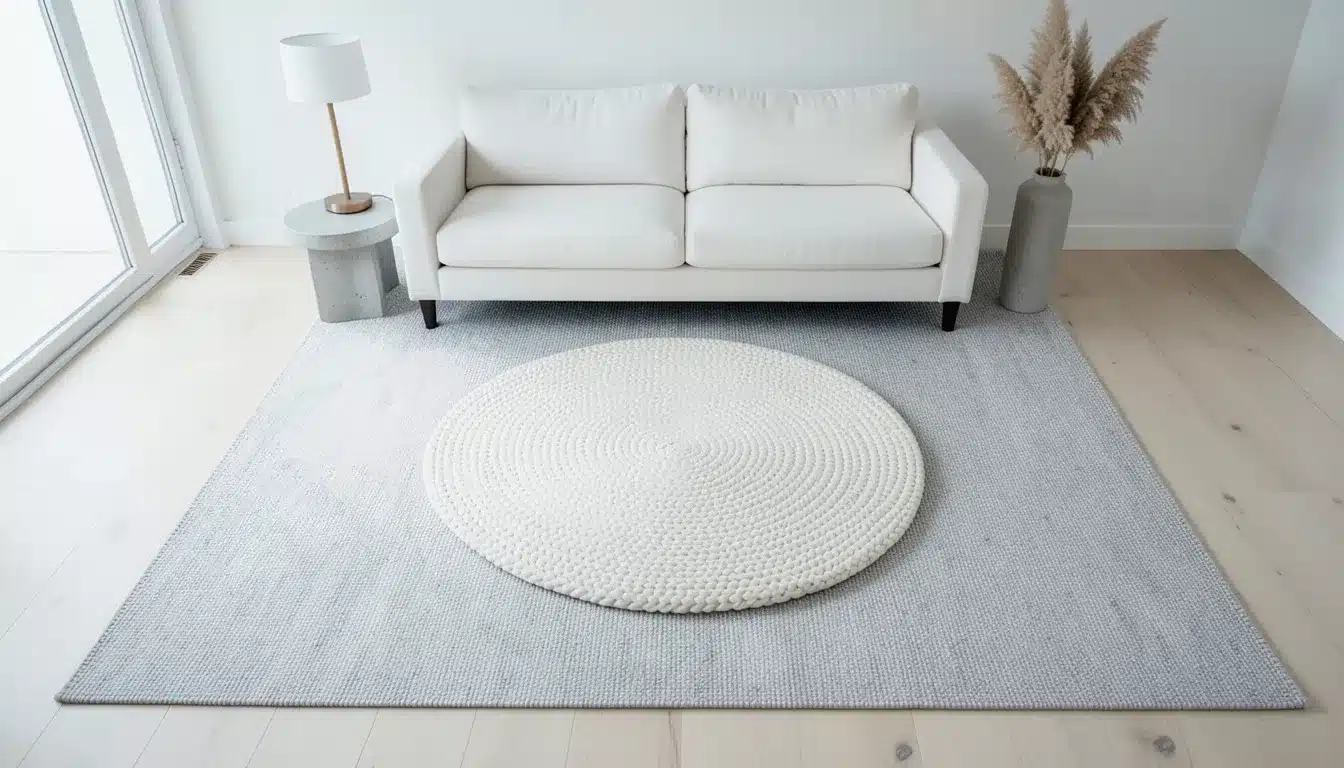
- The top rug should be about two-thirds the size of the base rug. This keeps both layers clearly visible.
- Keep one rug plain if the other has a strong pattern. Two busy patterns in one spot pull attention in too many directions.
- Mix textures, not just colors. The contrast in how two rugs feel and look underfoot gives the setup its visual depth.
- Place at least two furniture legs on the layered rug. This anchors the setup and stops the rugs from shifting over time.
- Always use a rug pad or tape between layers. This keeps the rugs stable and reduces the risk of slipping.
- Match color tones across both rugs. They do not need to be identical, but they should share at least one common tone to feel connected.
How to Choose the Right Base Rug?
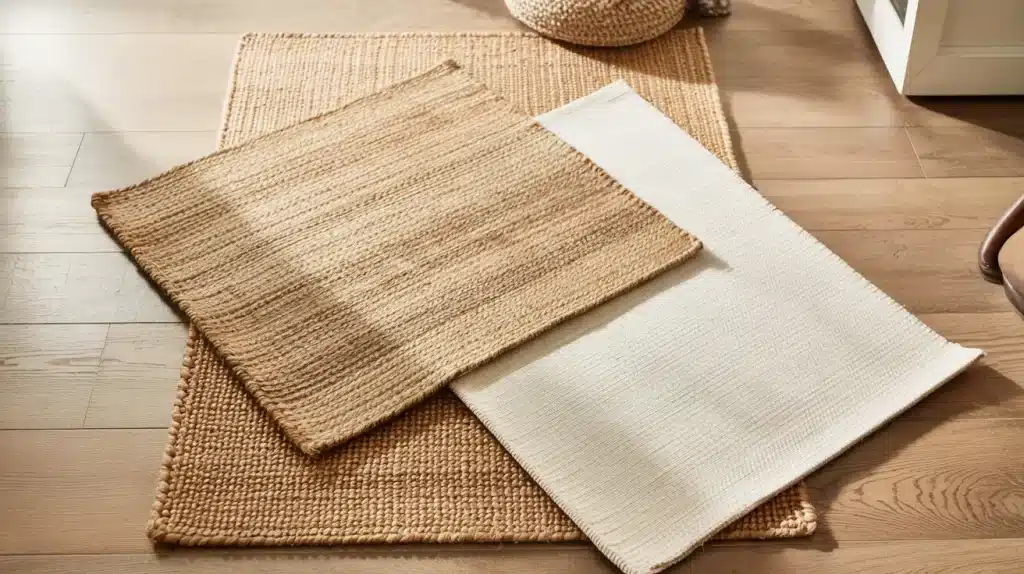
The base rug does most of the work without drawing attention to itself. Get this right, and the rest of the setup comes together much more easily.
1. Size: How Big Should the Base Rug Be?
The base rug should be large enough to anchor your furniture zone. In a living room, the front legs of the sofa and chairs should sit on it. For a bedroom, an 8×10 or larger works well under a queen or king bed. When in doubt, size up rather than down.
2. Best Materials for a Base Rug
Jute, sisal, and flatweave rugs are the top choices for a base layer. They sit flat, hold the top rug steady, and their neutral texture does not compete with whatever sits on top. Avoid thick, plush rugs as the base since they make the top rug unstable and harder to keep in place.
3. Color and Pattern for the Base Rug
Neutral tones work best here: beige, cream, tan, gray, or natural brown. A solid color or very subtle pattern keeps the base from drawing attention away from the top rug. Think of it as the supporting act, not the headline.
4. What to Avoid When Picking a Base Rug
Do not choose a high-pile or shag rug as the base. It will shift under the top rug, creating an uneven, unsafe surface. Avoid bold patterns or very dark tones in the base layer to keep the overall look light and balanced.
How to Choose the Right Top Rug?
The top rug is what people notice first when they walk into the room. It carries the personality of the whole setup, so these decisions are worth taking seriously before buying.
| Factor | What to Look For | What to Avoid |
|---|---|---|
| Size | Roughly two-thirds the size of the base rug (e.g., 5×8 over an 8×10) | A top rug is too close in size to the base or too small to see clearly |
| Material | Wool, vintage, Persian or kilim rugs, cotton, sheepskin, faux fur | Very high-pile materials that sit unstably on top of another rug |
| Pattern | Bold prints, geometric, floral, or vintage patterns all work well here | Patterns that too closely mirror the base rug in scale |
| Color | A rug that shares at least one tone with the base rug or the room | Colors with no visual connection to anything else in the room |
| Placement | Centered, off-center, or angled, depending on the room and the feel you want | Covering the base rug so completely that the base layer disappears |
| Budget | Spend more on this piece since it carries the most visual weight | Skipping quality here entirely since this is what guests actually see |
| Shape | Round top rugs over rectangular base rugs add interest without extra pattern | Using matching shapes if the room already feels too rigid or boxy |
The Art of Mixing Textures
Color coordination gets most of the attention in rug layering. But texture contrast is often what makes the biggest visual difference in a room. These are the pairings that work consistently.
- Flatweave base with a high-pile or plush top rug gives the cozy, soft look without filling the whole room with hard-to-clean material.
- A jute or sisal base with a soft wool top rug solves the underfoot comfort issue, since natural fiber rugs look great but feel rough when walked on barefoot.
- Flatweave base with a sheepskin or faux fur top adds warmth and softness right where feet land most, like beside a bed or in front of a reading chair.
- A flatweave base with a cowhide top creates a clean, modern contrast that works in both contemporary and relaxed spaces.
- Two contrasting pile heights used together create visual depth and dimension that matching pile heights simply cannot replicate.
Room-by-Room Guide to Layering Rugs
The core rules of rug layering stay the same in every room. What changes is how you apply them based on the size of the space, the furniture layout, and how the room gets used day to day.
1. Living Room
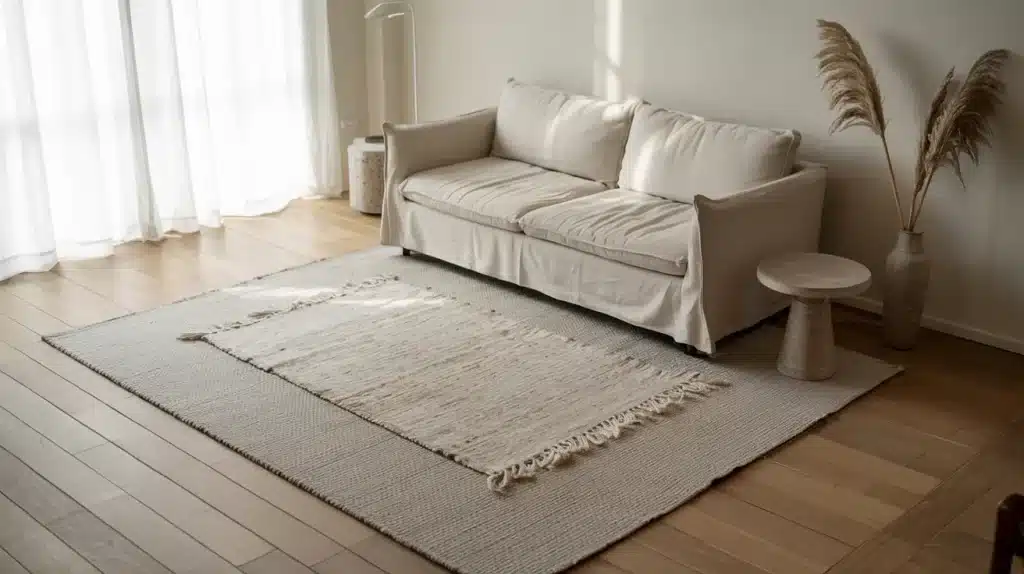
Start with a large base rug that covers the front legs of the sofa and all main chairs. Layer a smaller patterned or textured rug on top, centered under the coffee table area.
In a very large living room, the base rug can cover most of the floor, while the top rug clearly delineates the main seating area.
2. Bedroom
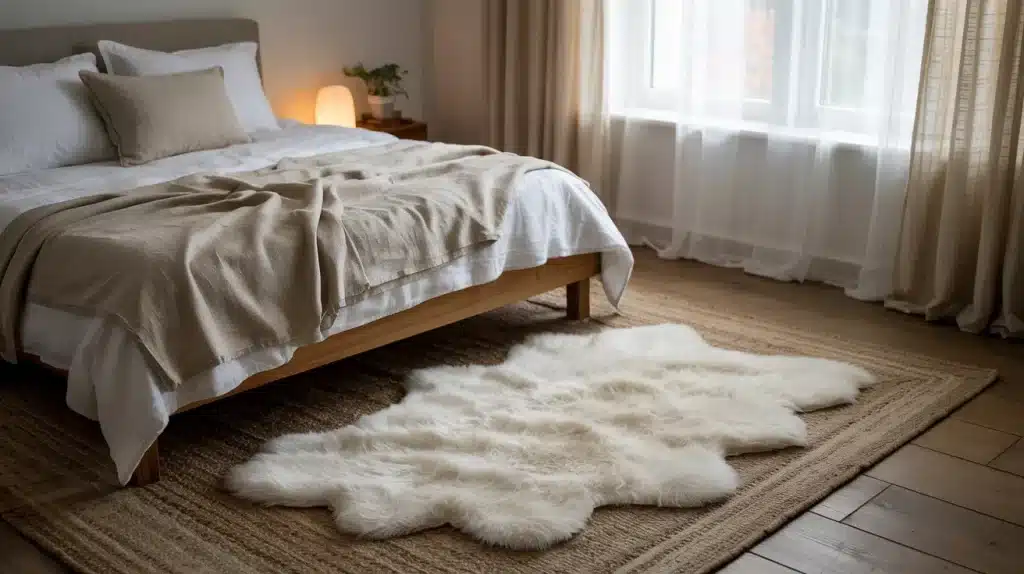
Place the layered setup where feet land each morning, right beside the bed. A jute or flatweave base paired with a soft wool or sheepskin top works well here.
For a king bed, two smaller rugs placed on either side of the bed are a strong alternative to one large top layer.
3. Dining Room
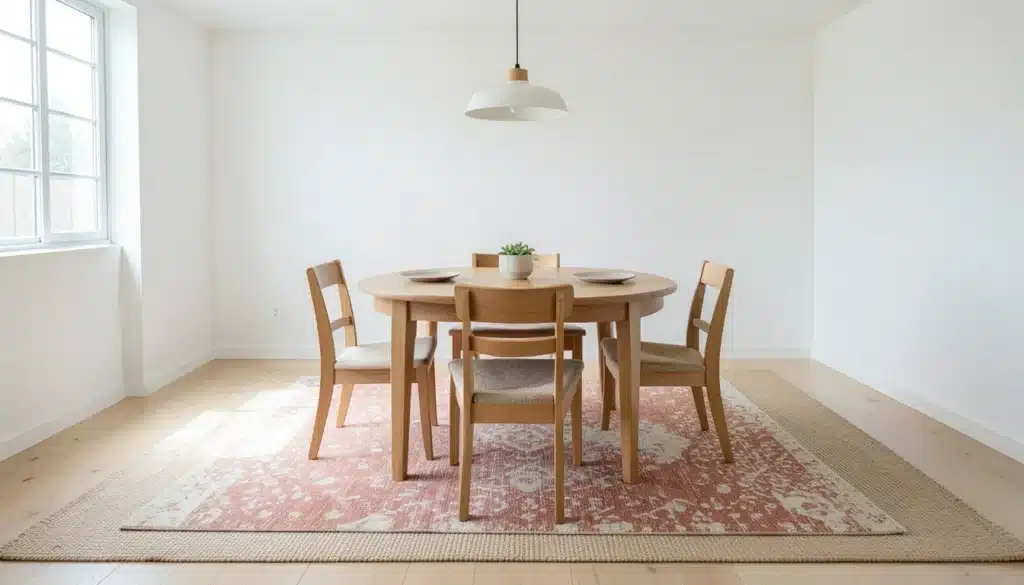
The base rug must extend at least 24 inches past the table on every side, so chair legs stay on it when pulled out. Use low-pile, easy-to-clean rugs in a dining room.
Darker tones on the top layer are a practical choice in homes with children or regular entertaining.
4. Open-Concept Spaces
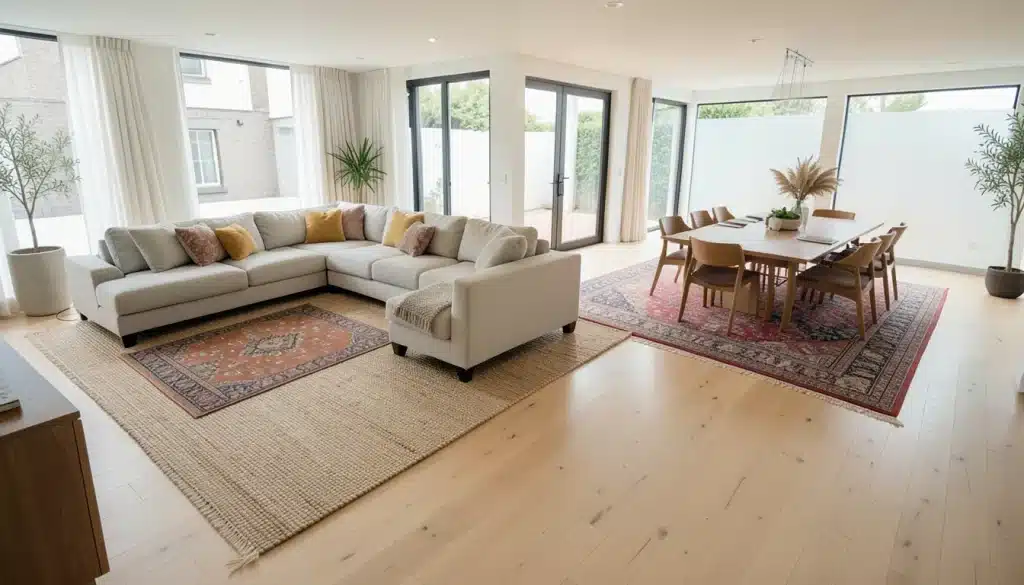
In an open floor plan, layered rugs serve the same purpose as walls do by signaling separate zones.
Use a large base rug to mark the living area, then layer a smaller accent rug within it to highlight the main seating spot. Keep the color palette consistent across zones so the open space feels cohesive rather than disconnected.
5. Hallways and Entryways
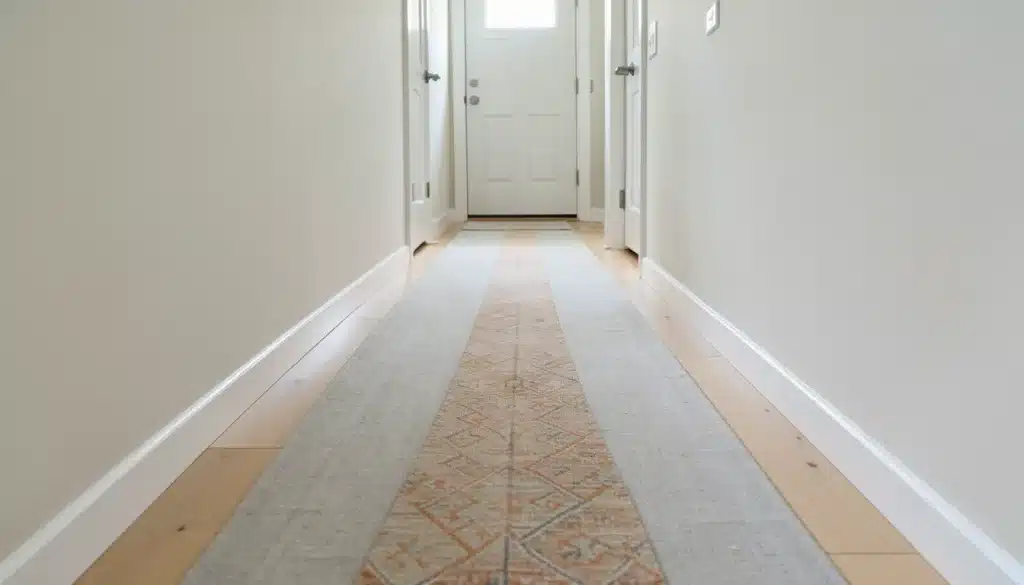
In a wider hallway, a narrower patterned runner placed over a slightly wider plain base creates a layered look that adds depth to what is usually a bare space.
Keep both pile heights low in entry zones, as high-pile layered rugs in narrow, high-traffic areas pose a tripping hazard. Always check that the door can still open and close fully over the layered setup.
7 Expert Tips for Layering Rugs Like a Pro
Some rug layering decisions matter more than others. These seven tips address the questions and problems that come up most often, whether you are doing this for the first time or fixing a setup that is not quite landing right.
Tip 1: Always start with a neutral base. A plain jute, sisal, or flatweave rug pairs well with almost any top rug and lets you change the top layer later without replacing both.
Tip 2: Follow the two-thirds size rule. The top rug should be roughly two-thirds the size of the base rug so both layers stay clearly visible from any point in the room.
Tip 3: Mix textures, not just colors. The way two different materials catch light and feel underfoot creates more impact than matching tones alone ever will.
Tip 4: Keep one rug plain when using a pattern. A bold top rug needs a calm, understated base to sit on, so it reads as a feature rather than a clash.
Tip 5: Tape out the footprint before buying. Use painter’s tape on your floor to check how each rug size actually fits your specific room before spending any money.
Tip 6: Put the softer rug where feet land. The comfort of a layered setup matters as much as the look. The plush layer belongs next to the bed, in front of the sofa, or at a reading spot.
Tip 7: Start with what you already own. A rug that feels out of place in one room might be the perfect base for another room, with a fresh top layer added.
Common Layering Rugs Mistakes to Avoid
A few specific mistakes make layered rugs look off, even when the individual rugs are good choices on their own. Knowing what to watch for saves both money and a lot of frustrating trial-and-error.
| Mistake | Why It Happens | How to Fix It |
|---|---|---|
| The top rug is too small | Choosing by eye without measuring | Use the two-thirds rule: if the base is 8×10, go for a 5×8 or 6×9 on top |
| Two heavy patterns together | Wanting both rugs to make a statement | Let one rug carry the pattern and keep the other solid or very subtle |
| High pile placed on top of high pile | Not thinking about stability when choosing materials | Put the flatter rug on the bottom so the top rug sits securely underfoot |
| No rug pad or tape used | Skipping what feels like a small detail | Use a non-slip pad under the base rug and tape between both layers |
| No color connection between rugs | Buying each rug separately without comparing them together | Both rugs should share at least one tone, even something as simple as beige or cream |
| Furniture is not sitting on the rug | Placing rugs without thinking about the furniture position first | Keep at least two furniture legs on the layered setup to anchor it |
| Multiple small rugs are placed too close together | Trying to fill floor space quickly with what is available | Give each rug its own clear zone with enough breathing room between layers |
How to Clean and Maintain Layered Rugs?
Vacuum the top rug weekly as part of your regular cleaning routine. Every one to two weeks, fold it back and vacuum the base rug beneath it.
Spot clean spills on the top rug right away before the liquid works through to the layer below. In dining rooms or kitchens, take both rugs outside for a shake every few weeks.
Rotate each rug every 3 to 6 months so one area does not wear out faster than the others. Check the rug pad once a year and replace it when it starts to lose grip.
Summing It Up
Layering rugs is one of those things that looks like it needs a lot of planning, but really comes down to a few simple decisions.
Start with a solid neutral base. Pick a top rug that is roughly two-thirds the size of the rug. Mix textures rather than fighting over patterns. Anchor everything in place with your furniture.
That is truly it. No expensive overhaul. No contractor needed. Just two rugs working together to make a room feel warmer, fuller, and more like yours.
If you have tried rug layering at home or have a specific room in mind, drop it in the comments below. We would love to hear from you.