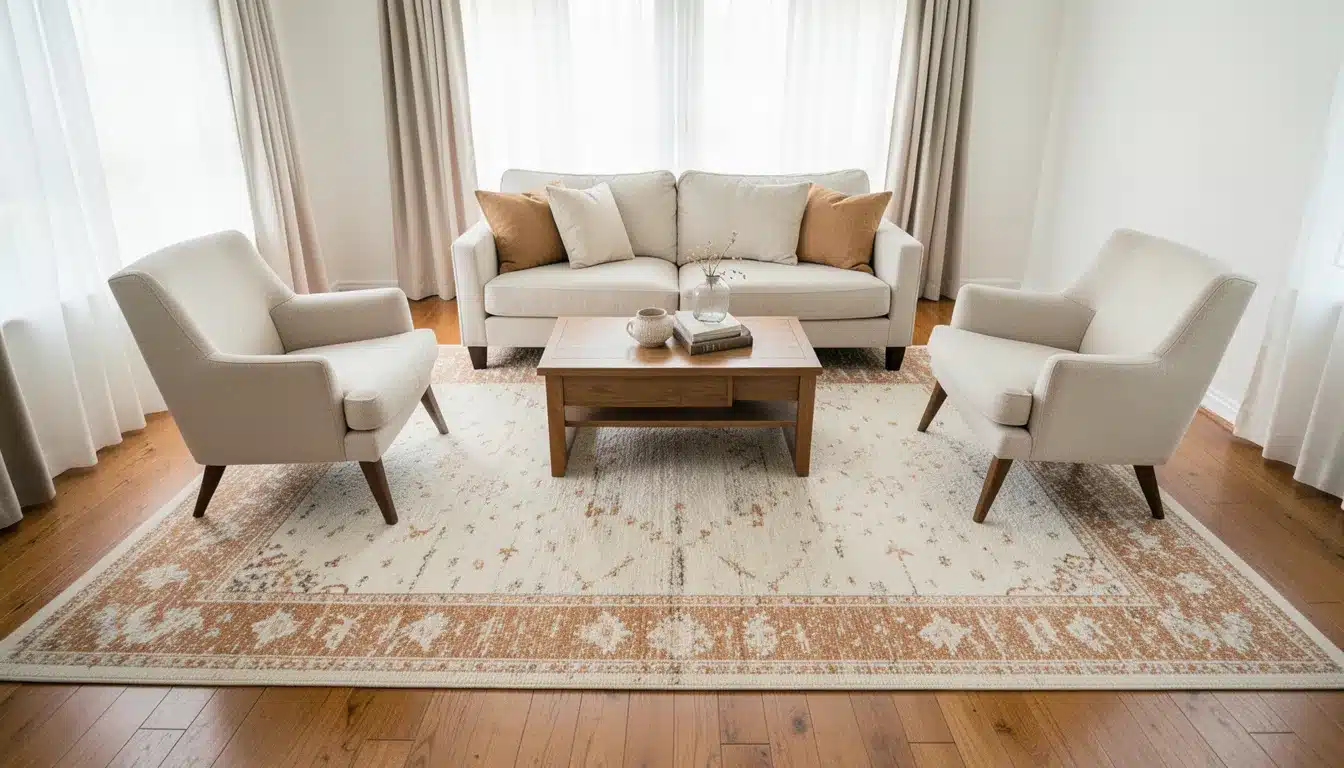
Common Area Rug Sizes: A Room-by-Room Guide

You finally found the rug. The color is perfect. The pattern is exactly what you had in mind. Then it arrives, and something feels off. It looks too small. Or it crowds the room entirely.
This happens more often than you think. The reason is almost always the same. Size was an afterthought.
Knowing the common area rug sizes before you shop changes that. It helps you match the rug to your furniture, your floor, and the feel you want for the space.
This guide covers every standard rug size, every room type, and every placement rule you need to know. Read it once, and buy with confidence.
What Are the Standard Area Rug Sizes?
Standard area rug sizes are the most commonly produced dimensions sold in stores across the USA. They range from small 2×3 accent rugs to large 12×15 room rugs.
They are built to work with typical furniture layouts without custom ordering. The three most widely sold sizes are 5×8, 8×10, and 9×12.
They account for the majority of area rug sales because they fit most modern living rooms, bedrooms, and dining rooms.
| Size (Feet) | Size (Inches) | Size (CM) | Best For |
|---|---|---|---|
| 2×3 | 24″ x 36″ | 61 x 91 | Bathroom, kitchen sink area |
| 3×5 | 36″ x 60″ | 91 x 152 | Entryway, small bathroom |
| 4×6 | 48″ x 72″ | 122 x 183 | Foyer, beside a nightstand |
| 5×7 | 60″ x 84″ | 152 x 213 | Compact living room, coffee table area |
| 5×8 | 60″ x 96″ | 152 x 244 | Small bedroom, small living room |
| 6×9 | 72″ x 108″ | 183 x 274 | Medium living room, dining room, bedroom |
| 8×10 | 96″ x 120″ | 244 x 305 | Standard living room, master bedroom |
| 9×12 | 108″ x 144″ | 274 x 366 | Large living room, open-plan space |
| 10×14 | 120″ x 168″ | 305 x 427 | Grand living rooms, large bedrooms |
| 12×15 | 144″ x 180″ | 366 x 457 | Very large rooms, formal spaces |
Note: Antique and handmade rugs can vary by an inch or two from their labeled size. Always measure the actual rug before placing furniture on top.
Rug Size by Category
Not every rug size fits every space. Shopping without a size category in mind is how most people end up with the wrong one. Start with the category first, then narrow down to the exact dimension.
1. Small / Accent Rugs (2×3 to 4×6)
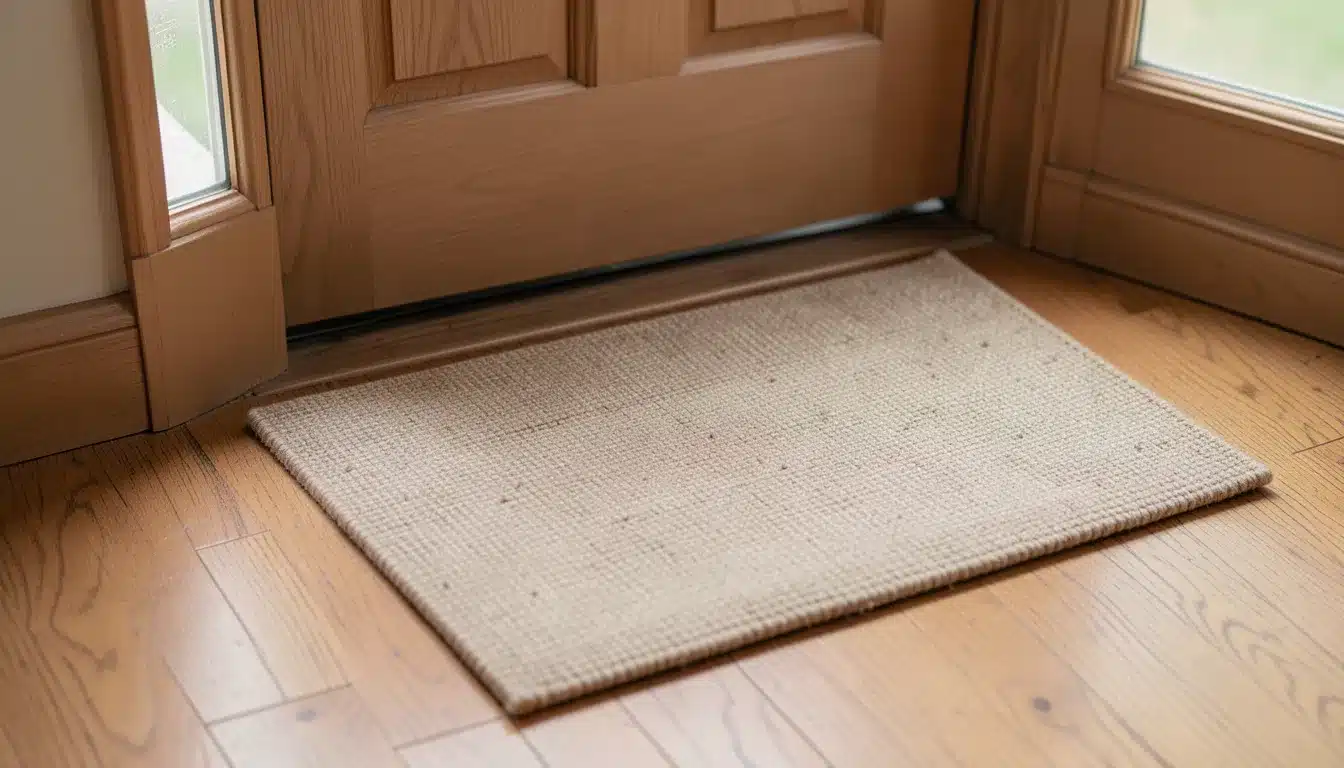
These are the smallest sizes in the range: 2×3, 3×5, and 4×6. They work best in entryways, bathrooms, beside a bed, or in front of a kitchen sink. They add a touch of color or warmth to a specific spot but do not anchor a full furniture group.
2. Medium Rugs (5×7, 5×8, 6×9)
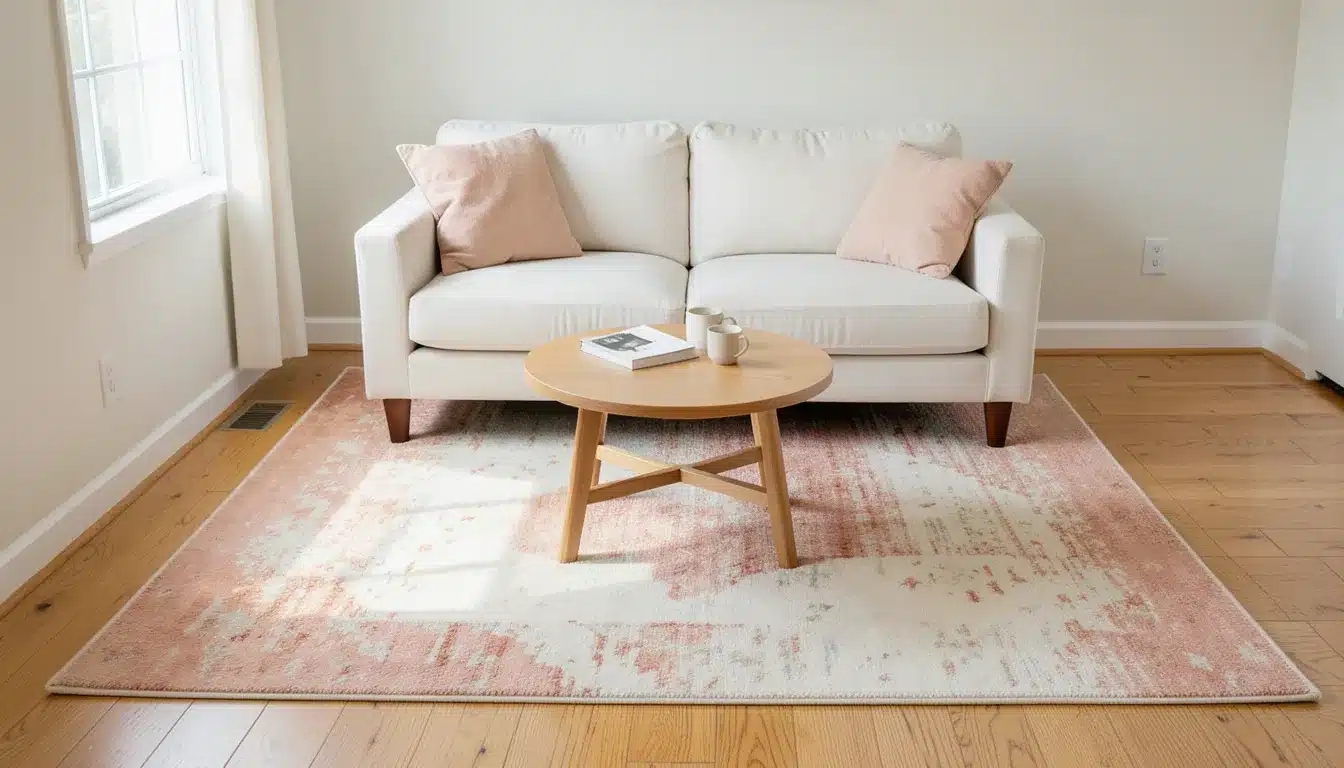
Medium rugs run from 5×7 to 6×9 and are the go-to choice for apartments and compact living spaces. As more people across the USA downsize, this group has seen significant growth in sales. They are flexible enough to work across several rooms without overwhelming any single space.
3. Large Rugs (8×10, 9×12)
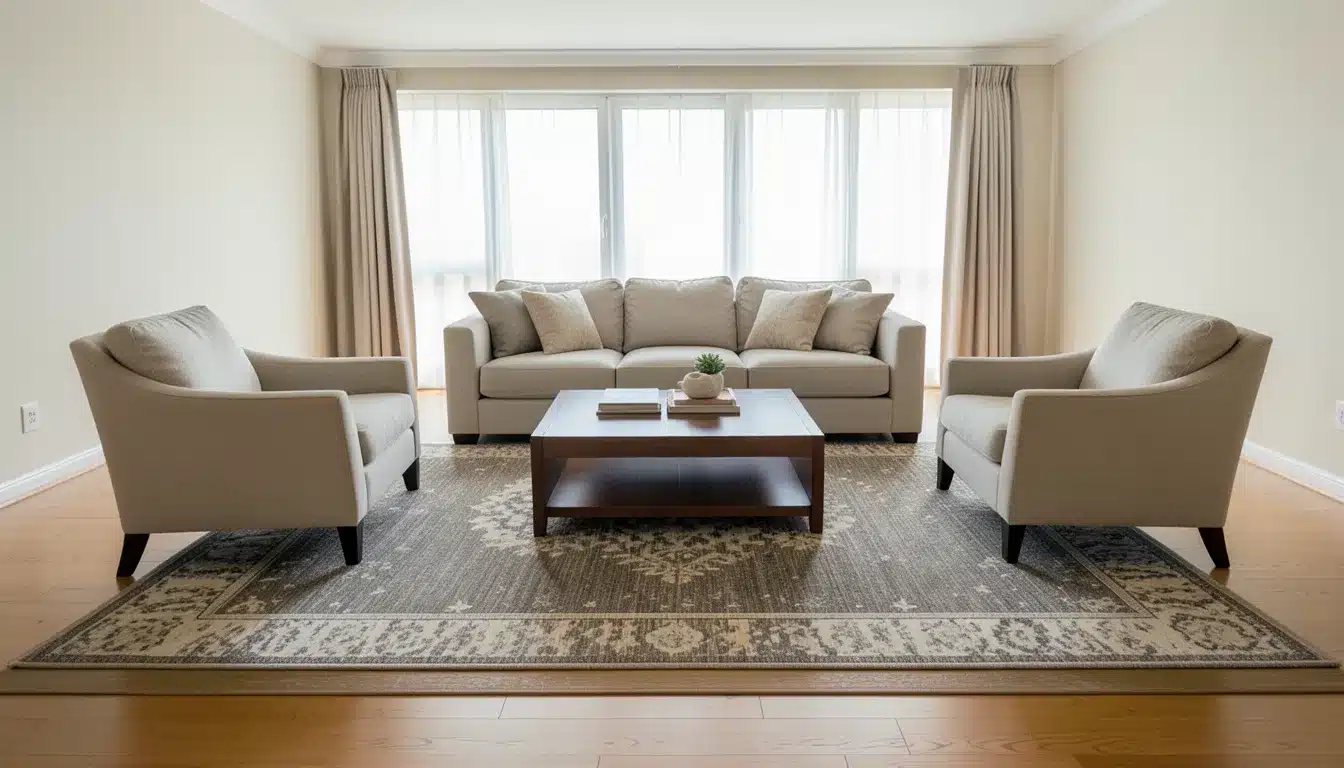
The 8×10 and 9×12 are the most widely purchased area rug sizes in the country. An 8×10 fits a standard living room of 200 to 400 square feet well, while a 9×12 suits larger, open-plan rooms that need more coverage to anchor a bigger furniture group.
4. Extra-Large and Room Rugs (10×14 and Above)
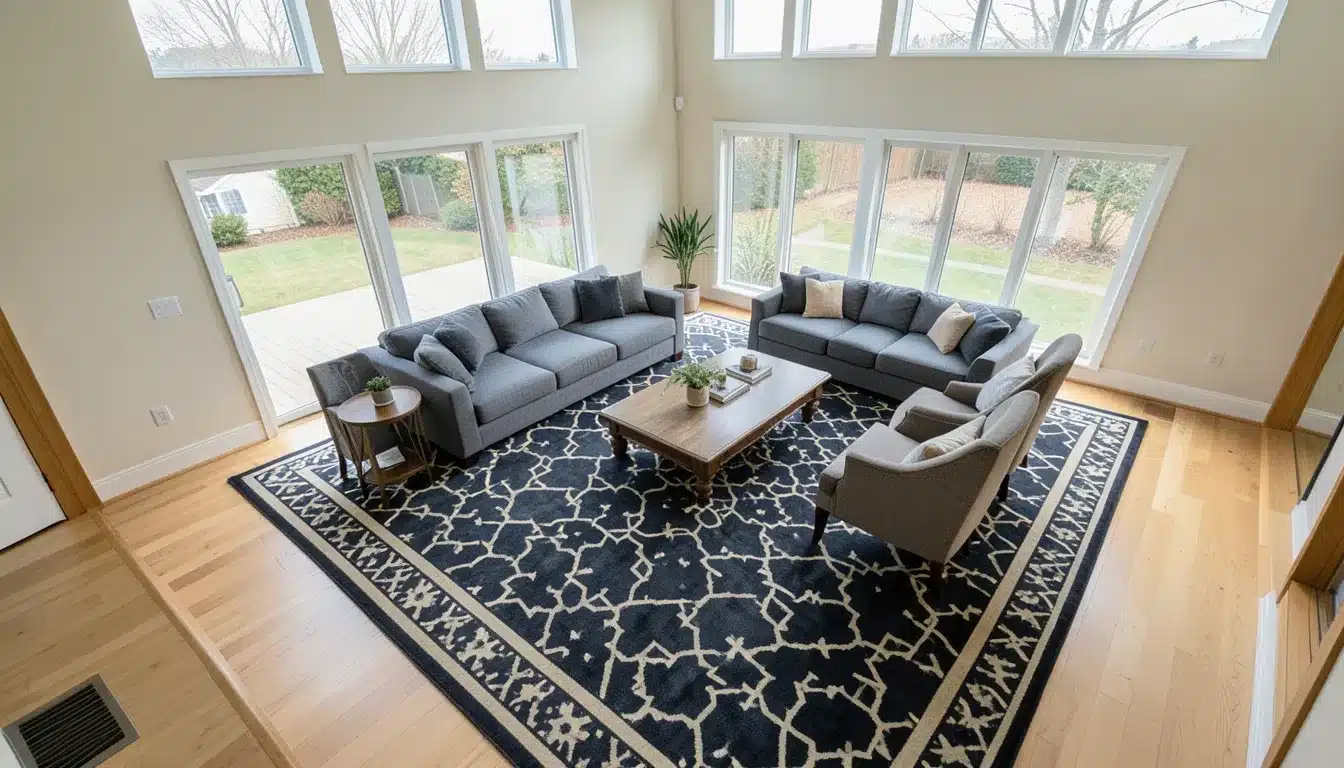
Sizes like 10×14, 12×15, and 12×18 are built for grand living rooms, formal dining spaces, and large master bedrooms. At this size, all furniture legs typically sit on the rug. The overall look starts to feel more like a full floor covering than a standalone accent piece.
5. Runner Rugs
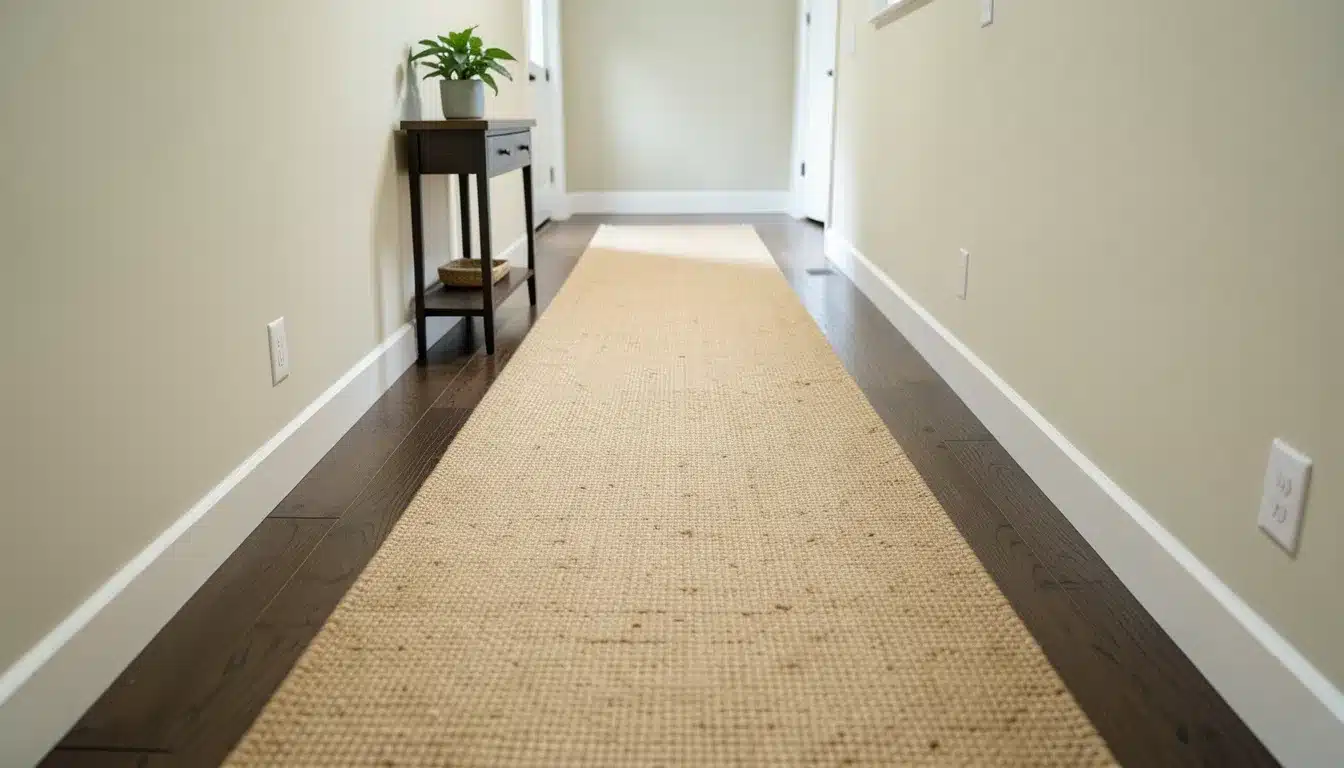
Runners are long and narrow, typically 2 to 3 feet wide and 6 to 14 feet long. Common sizes include 2×8, 2.5×10, and 3×12. They are made for hallways, galley kitchens, and alongside a bed, where a full area rug would simply be too wide for the space.
How Big Is a 6×9 Rug?
A 6×9 rug measures 6 feet wide by 9 feet long. That is 72 inches by 108 inches, covering 54 square feet of floor space.
It sits right in the middle of the standard size range: large enough to define a seating area, compact enough to keep the floor visible around it. This size works best in rooms up to about 200 square feet.
That includes small living rooms, compact dining areas, twin and full bedrooms, and standard home office setups with a single desk.
Common Area Rug Sizes for Every Room
The right rug size varies by room. It depends on the furniture you have and how much floor space you want to keep visible. Here is what works best in each space, based on real room dimensions and standard furniture layouts across US homes.
1. Living Room
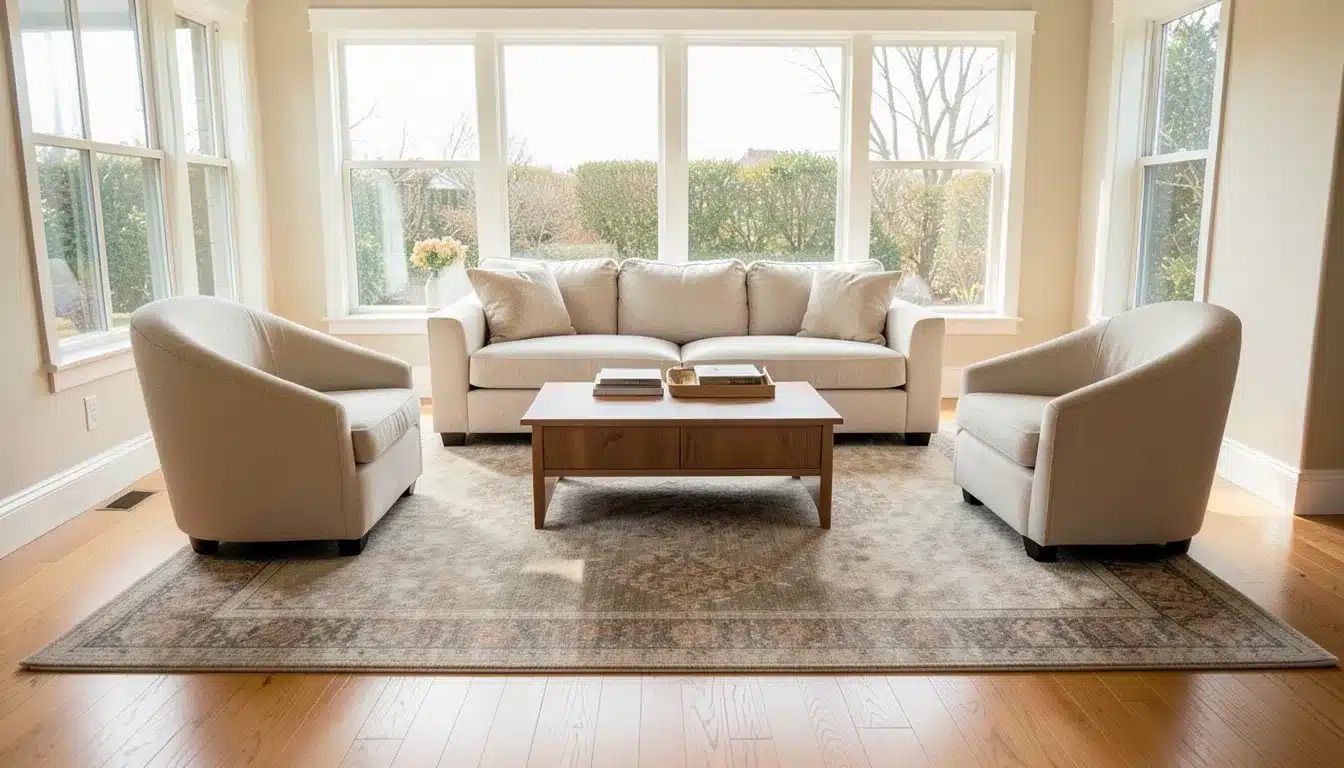
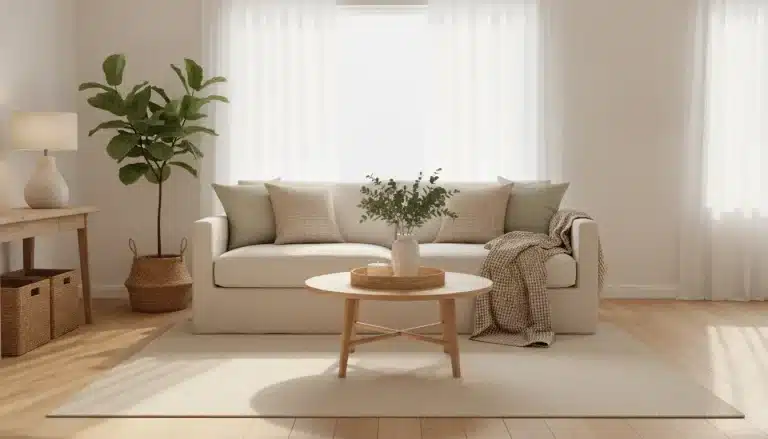
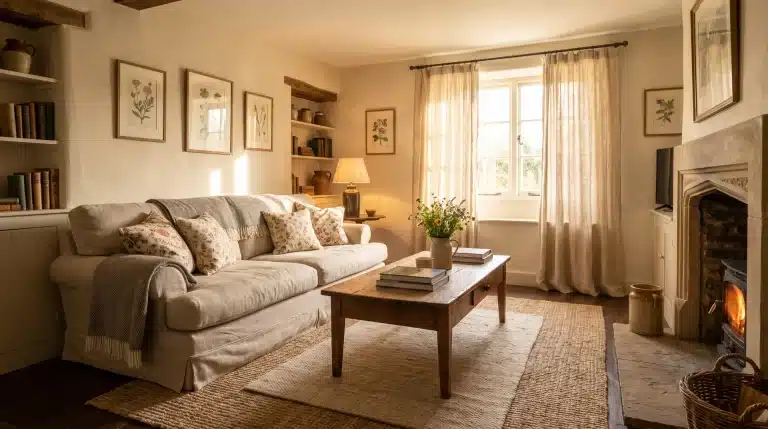
For small rooms up to about 150 square feet, a 5×8 or 6×9 fits well. Place the front legs of the sofa and chairs on the rug. Rooms between 200 and 400 square feet call for an 8×10. Large, open-plan spaces work best with a 9×12 or bigger, where all furniture legs sit on the rug.
2. Bedroom
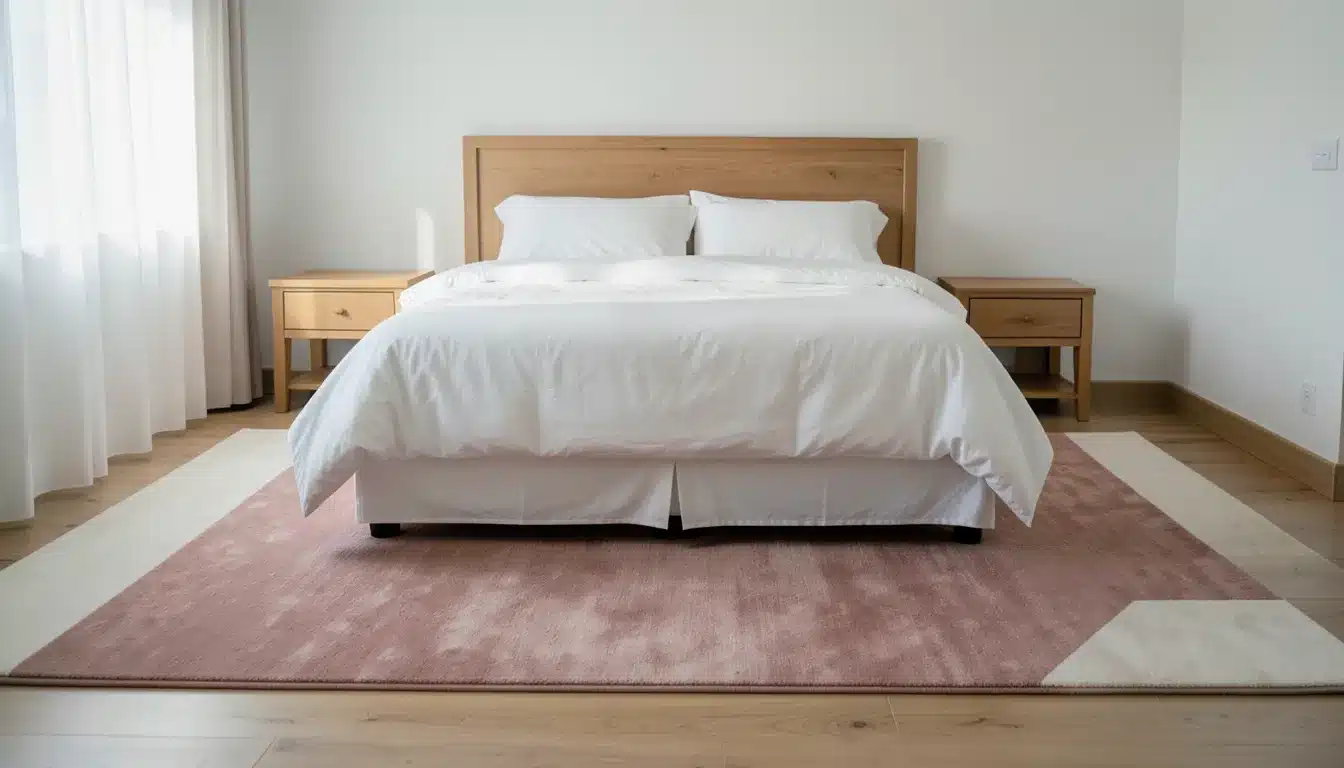
Size the rug around the bed first, not the room as a whole. The rug should extend at least 18 to 24 inches beyond the sides and foot of the bed. This gives a soft, even landing on both sides every morning.
| Bed Size | Recommended Rug Size | Placement Notes |
|---|---|---|
| Twin | 5×8 or 6×9 | At the foot or under the lower two-thirds of the bed |
| Full | 6×9 or 8×10 | Under the lower two-thirds, extending beyond the sides |
| Queen | 8×10 | Extends 18 to 24 inches beyond the sides and the foot |
| King | 9×12 or 10×14 | Extends 2 to 3 feet beyond each side |
| California King | 9×12 or 10×14 | Same footprint as the king, same sizing rules apply |
Two runner rugs (2×8 or 2.5×8) placed on each side of the bed are also a good option. This works well in smaller bedrooms where a large rug would crowd the space.
3. Dining Room
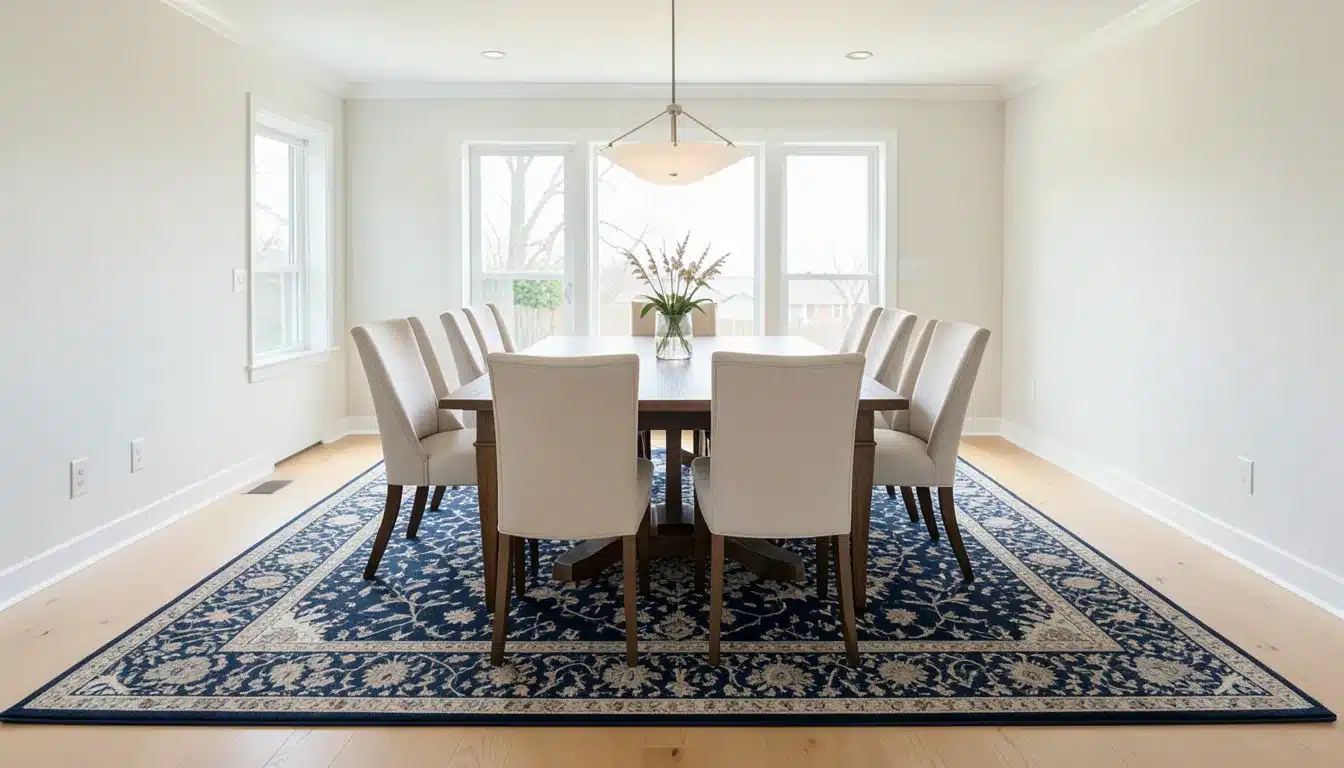
The rug must be large enough to accommodate all chair legs. This applies even when chairs are pulled out from the table. Aim for at least 24 inches of rug beyond the table edges on all sides.
| Table Type | Seats | Recommended Rug |
|---|---|---|
| Small rectangular | 2 to 4 | 6×9 |
| Medium rectangular | 4 to 6 | 8×10 |
| Large rectangular | 6 to 8 | 9×12 |
| Round or oval (small) | 4 | 6-ft or 8-ft round rug |
| Round or oval (large) | 6 or more | 8-ft or 9-ft round rug |
4. Kitchen
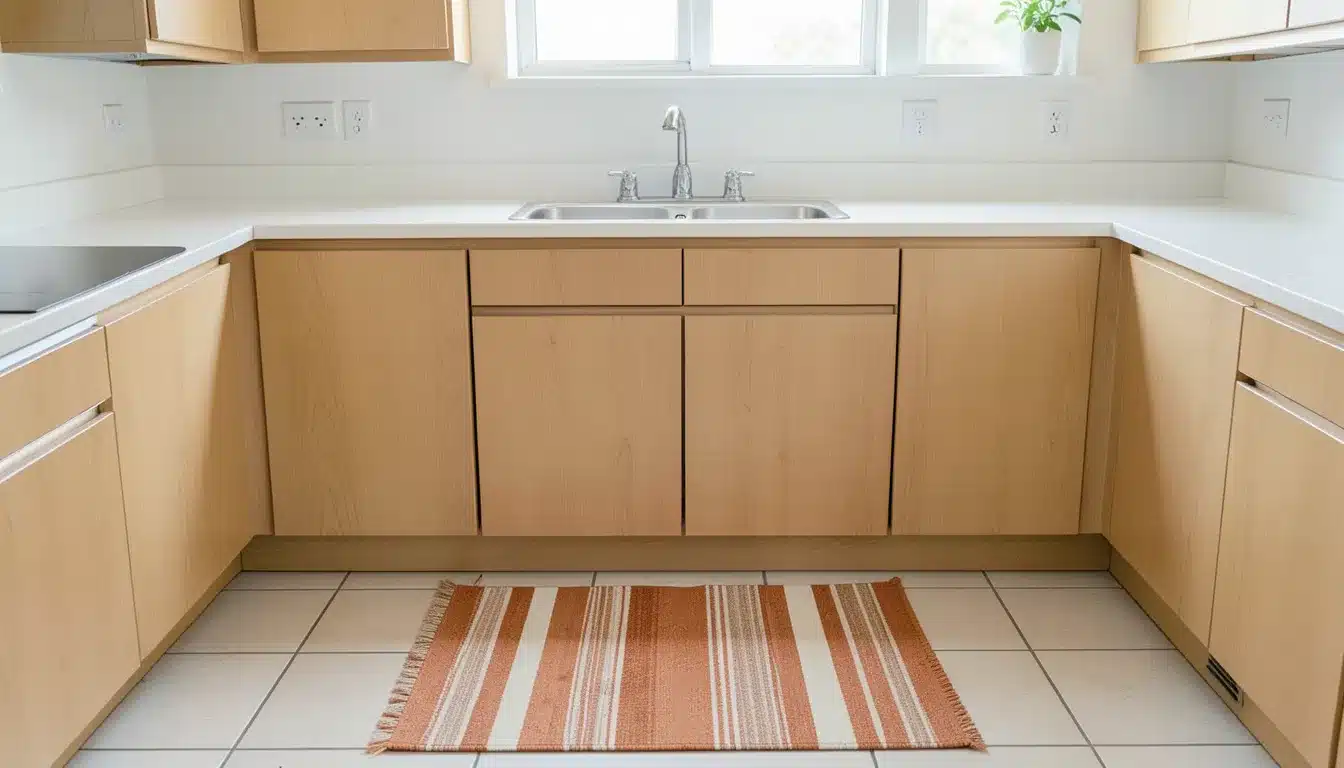
A 2×3 mat in front of the sink is the standard starting point for most kitchens. For a galley kitchen or one with a center island, a 2.5×8 or 3×10 runner fills the space well. Low-pile, easy-to-clean materials hold up best in this high-traffic area.
5. Hallway and Entryway
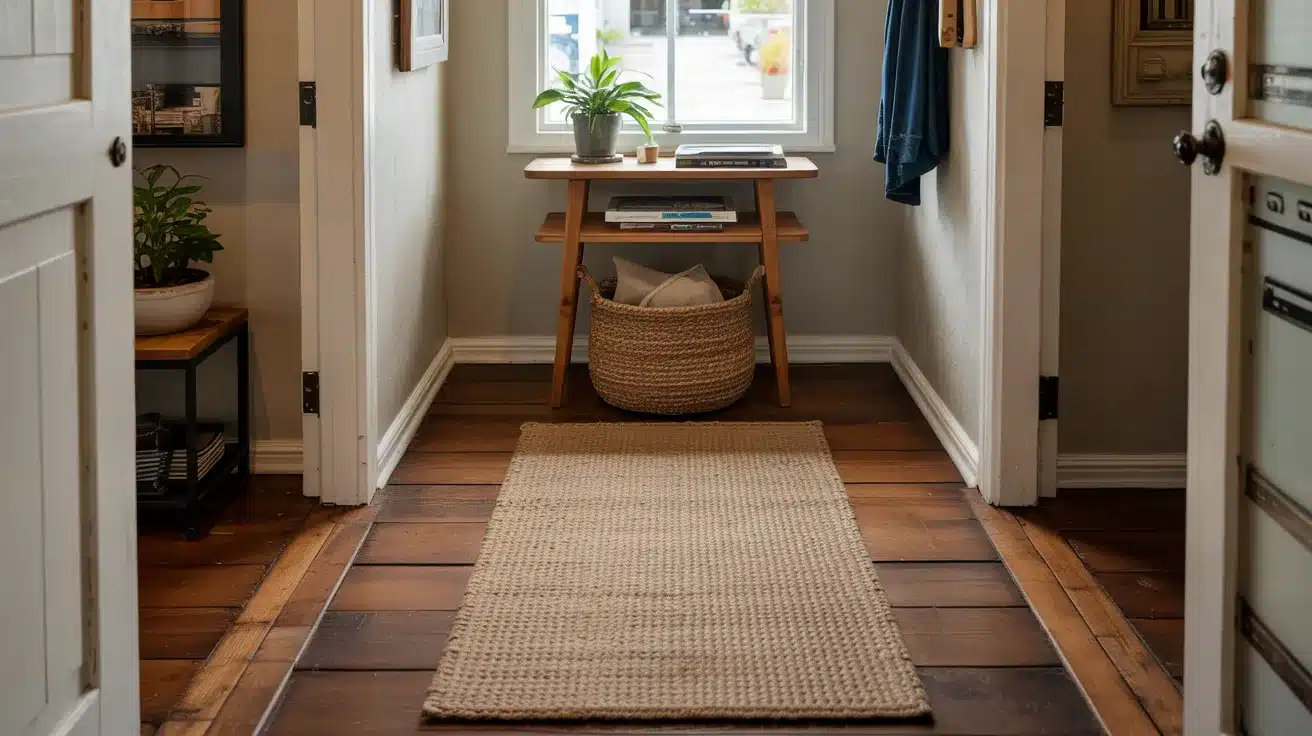
A 2×3 or 3×5 rug is the right fit for most entryways. It is large enough to make a clear first impression without blocking the door from opening. For a hallway, use a runner 2 to 3 feet wide. Leave 4 to 6 inches of floor at each short end for a clean, balanced look.
6. Home Office
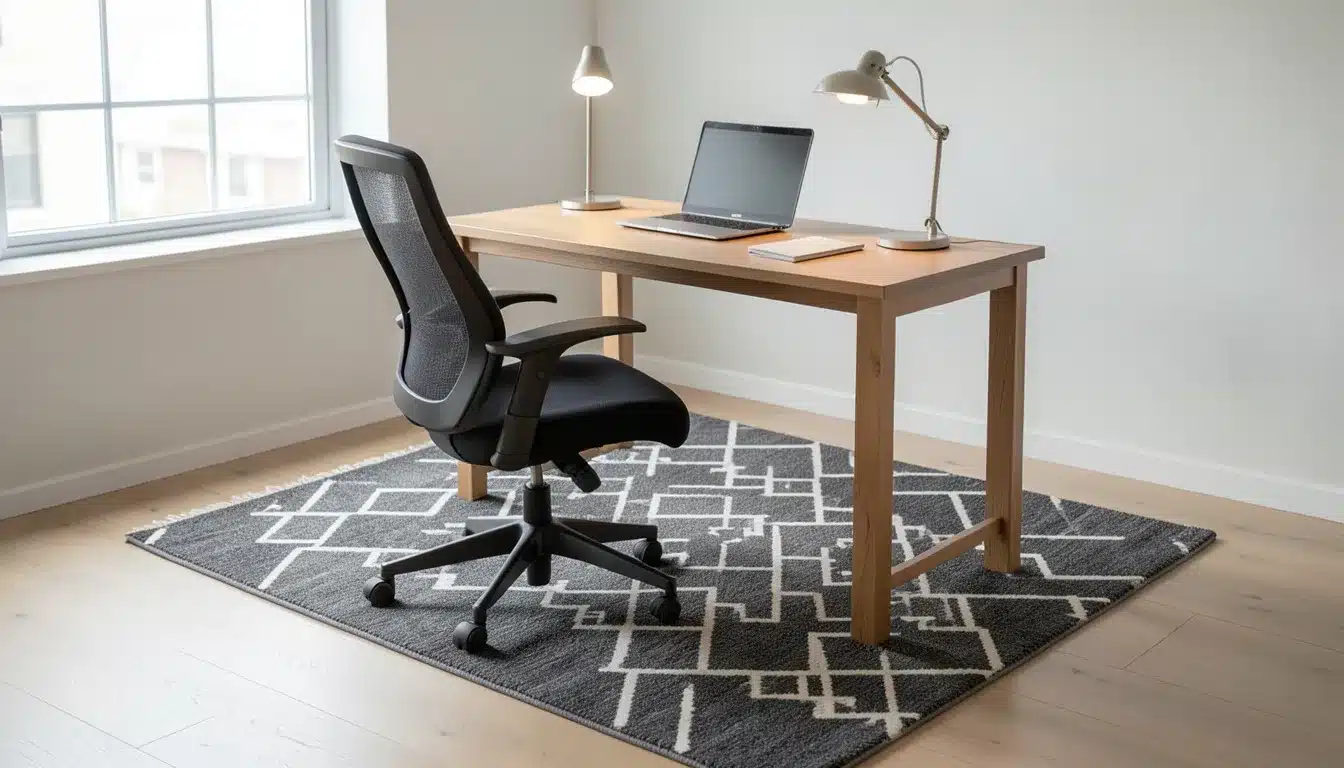
A 5×7 or 6×9 rug works well for a standard desk setup. It gives both the desk and chair enough room to sit comfortably on the rug. For larger L-shaped or executive setups, step up to an 8×10. Place a hard chair mat on the rug directly under the desk chair to reduce wear and allow smooth rolling.
7. Kids’ Room and Nursery
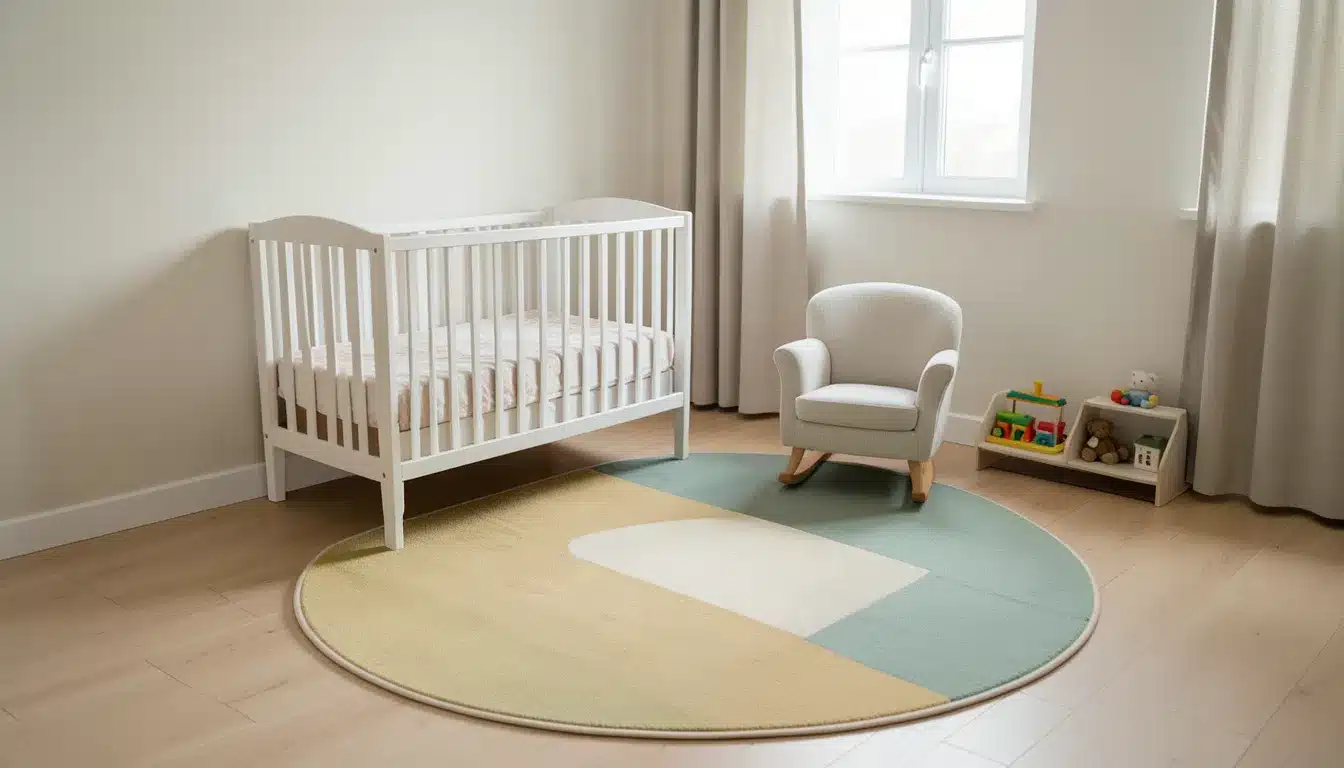
For a nursery, a 4×6 or 5×7 in front of the crib gives a safe, soft surface for the baby. If you want the rug to stay useful as the child grows, choose a 6×9 or 8×10. This covers more of the floor and works well for years. Always choose washable, low-pile materials for easy cleanup.
How to Measure Your Room Before You Buy?
Most sizing mistakes happen before the rug ever arrives. Taking 10 minutes to measure correctly is the one step that prevents almost every sizing regret.
Step 1: Measure the full room. Take the length and width in feet and inches before you look at any rugs.
Step 2: Note the positions of your furniture. Mark where the sofa, bed, or dining table sits. The rug needs to fit the furniture group, not just the open floor.
Step 3: Decide how much floor to leave visible. Leave 18 to 24 inches of exposed floor between the rug edge and the wall.
Step 4: Tape it out. Use painter’s tape to mark the dimensions of the rug on the floor. Live with it for a day before you buy.
Step 5: When in doubt, size up. A slightly too-large rug is considered. A rug that is too small looks like a mistake.
Step 6: Check your rug pad size. A rug pad should be 1 to 2 inches smaller on all sides than the rug. This keeps it hidden while adding grip and cushion underfoot.
Rectangular, Round, Square, and Runner: Which to Pick?
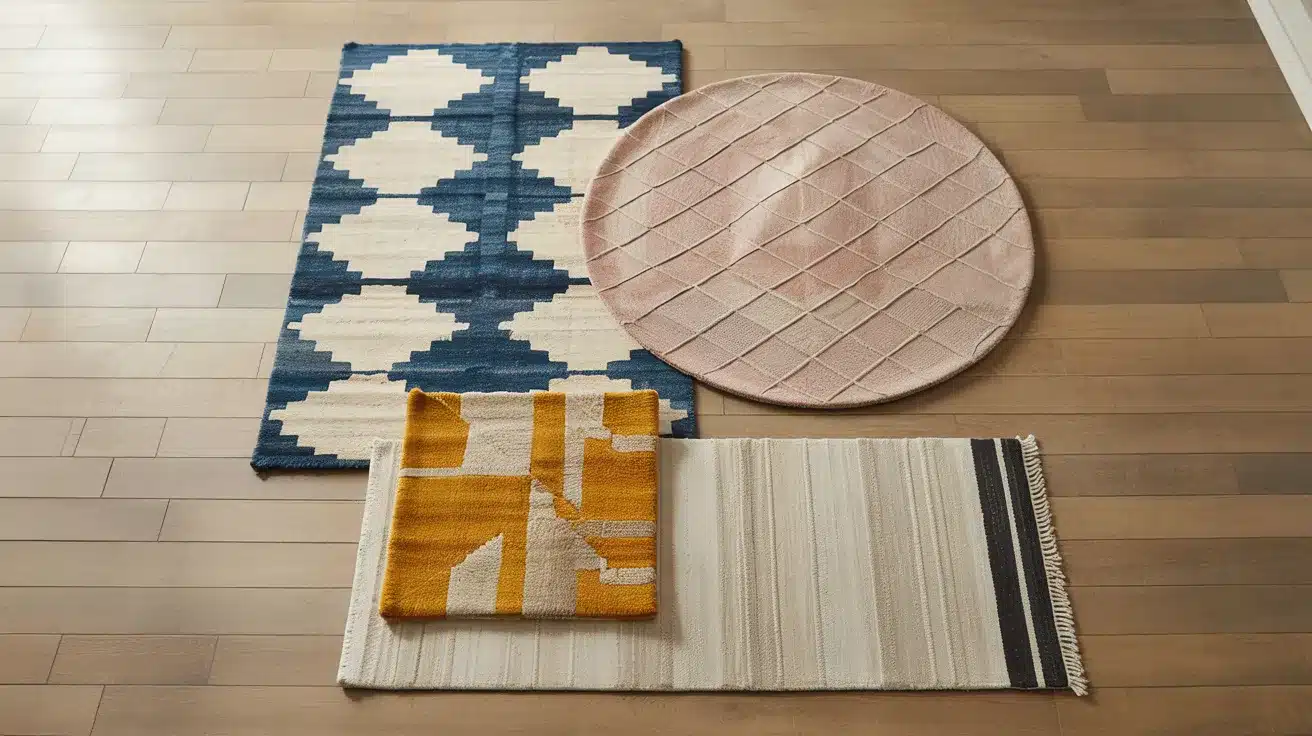
Size is only part of the decision. The shape of the rug determines how well it fits the furniture and the room. It also affects the way the space feels in daily use.
| Shape | Common Sizes | Best Rooms and Uses |
|---|---|---|
| Rectangular | All standard sizes | Living rooms, bedrooms, dining rooms, hallways |
| Round | 5-ft, 6-ft, 8-ft, 9-ft, 10-ft diameter | Round dining tables, entryways, and reading corners |
| Square | 5×5, 6×6, 8×8, 9×9, 10×10 | Square rooms, square dining tables |
| Runner | 2×8, 2.5×10, 3×12 and longer | Hallways, galley kitchens, beside the bed |
Quick note: For a round dining table, choose a round rug with a diameter about 4 feet larger than the table. This keeps all chair legs on the rug when pulled out.
How to Choose the Right Rug Size?
Choosing the right rug size comes down to three things. Your room dimensions, your furniture layout, and how much floor space you want to keep visible.
Start by measuring the space and deciding where the key pieces of furniture sit. Then pick a size that fits the furniture group rather than the room as a whole.
Leave 18 to 24 inches of exposed floor around the edges. Run the tape test before you buy, and always size up when you are between two options. The right rug makes the whole room feel complete.
Final Thoughts
Sizing a rug is one of those things that looks simple but catches people off guard every time.
The good news? Once you know the common area rug sizes and how each one fits a space, the process gets much easier. You stop guessing and start choosing with real purpose.
Measure your room. Tape it out. Match the rug to your furniture group, not just the room dimensions. And when in doubt, always size up.
A well-sized rug does not just cover the floor. It makes the whole room feel right.
Got questions about your space? Drop your room size and furniture setup in the comments. We are happy to help.