10 Smart Upgrades That Make Your Home More Beautiful and More Secure | Lock and Tech USA

There is a common misconception that home security and home design exist in opposition to each other — that making your home safer means cluttering it with bulky cameras, blinking keypads, and hardware that has no business being near your carefully chosen finishes. The good news is that this trade-off no longer exists. Today’s home security technology has caught up with the design world, and the best upgrades on the market do something remarkable: they make your home look better while making it safer at the same time.
Whether you are moving into a new home, planning a renovation, or simply looking for ways to improve what you already have, these ten upgrades deliver on both counts — beauty and security, together.
1. A Video Intercom System That Complements Your Entry
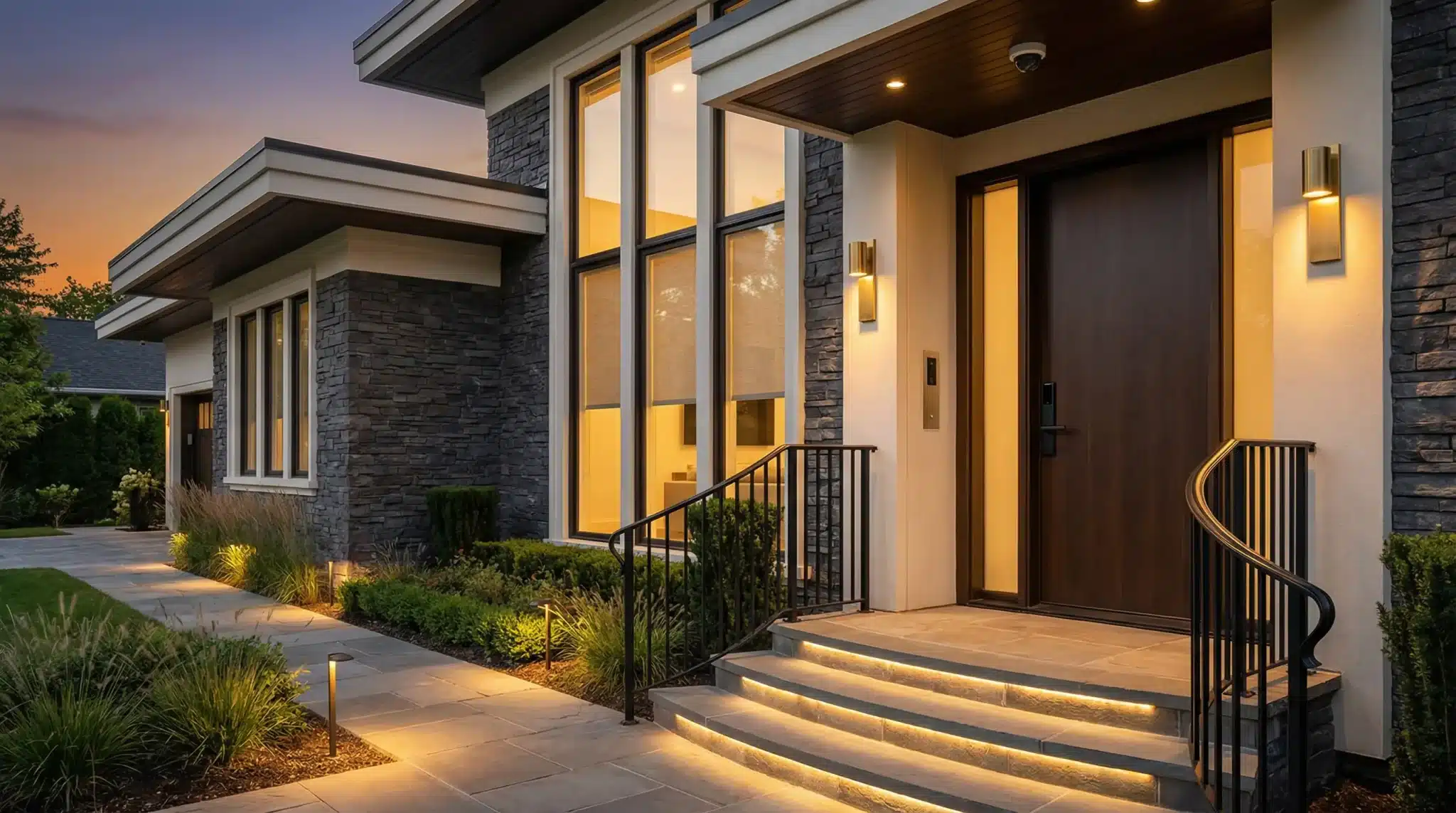
The front door is the first thing guests see, and the entry experience sets the tone for everything inside. A modern video intercom panel — flush-mounted, with a clean touchscreen display and a brushed metal finish — makes that first impression count in all the right ways. Beyond aesthetics, it gives you HD video of everyone who arrives at your door, two-way audio, and the ability to let someone in from your phone whether you are in the kitchen or across the country.
Gone are the days of cheap plastic panels with fuzzy screens. Today’s video intercom systems are genuinely beautiful objects that architects and interior designers now specify as part of the entry design — not as an afterthought. Companies like Lock and Tech install intercom systems across New York and New Jersey that are as carefully chosen for their finish and form as for their function.
2. Keyless Entry and Smart Locks
Few upgrades deliver the combination of elegance and practicality that a smart lock does. The physical key — easy to lose, easy to copy, impossible to revoke remotely — is giving way to keypad entry, smartphone credentials, and fingerprint readers that offer a cleaner door profile and a far more intelligent access experience.
A well-chosen smart lock integrates seamlessly with your existing door hardware aesthetic. Matte black, brushed nickel, satin brass — the finish options have expanded considerably, meaning your lock no longer has to compromise your hardware story. And the practical benefits are real: you will never stand on your doorstep searching through a bag again, and you can grant temporary access to a dog walker, a contractor, or a family member with a few taps on your phone.
3. Recessed Security Cameras
The camera mounted on a white plastic bracket, screwed into the eave above the garage door, is one of the most reliable ways to undermine the visual integrity of a home exterior. The alternative — recessed or flush-mounted cameras in housings chosen to complement the architecture — delivers the same coverage with none of the visual noise.
Modern security cameras for the home are available in profiles and finishes that read as intentional design details rather than security hardware. Dome cameras set into ceilings, compact bullet cameras in powder-coated housings that match window trim, discreet panoramic cameras at entry points — each of these options protects your home without announcing itself at every turn. The footage quality, meanwhile, has never been better: 4K resolution, wide dynamic range, and night vision that produces usable images in near-total darkness.
4. Decorative Iron Railings, Fences, and Gates
Security does not always arrive in the form of technology. One of the oldest and most beautiful security upgrades available to homeowners is also one of the most enduring: custom ironwork. A well-designed iron fence, gate, or railing does something that no camera or alarm can — it physically defines the boundary of your property with an object that is both a deterrent and a design statement.
Custom iron gates and railings add immediate curb appeal, frame garden beds and driveways with architectural intention, and signal care and investment in a way that synthetic alternatives simply cannot replicate. Wrought iron staircases and balcony railings inside the home carry the same double benefit: they are safer than open staircases and more beautiful than hollow-core alternatives. When designed well, decorative ironwork is one of the few security upgrades that genuinely increases the aesthetic value of a property at the same time.
5. Motorized Window Shades
Motorized shading is one of those upgrades that homeowners wonder how they ever lived without. At the touch of a button — or on an automated schedule — window treatments rise and fall across the house, managing light, privacy, and temperature with effortless precision.
From a design perspective, motorized shades eliminate the visual clutter of cords and manual mechanisms, allowing the window treatment to present as a clean, intentional element of the room rather than a functional compromise. From a security perspective, they serve as one of the most effective passive deterrents available: a home whose shades move throughout the day on a natural schedule looks occupied even when it is not, making it a far less attractive target than a home with static, closed blinds.
6. Integrated Outdoor Lighting
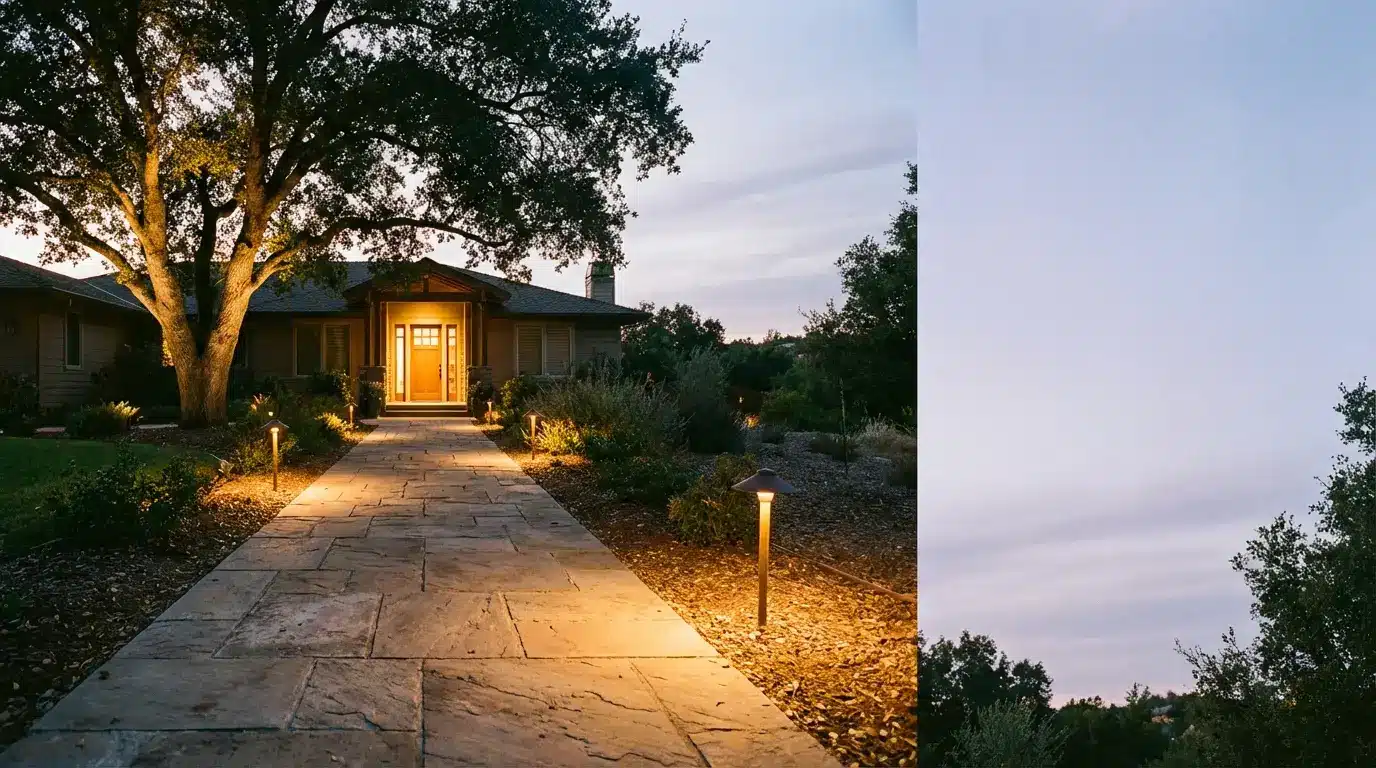
Lighting is one of the most powerful tools in both the designer’s and the security professional’s toolkit — and the goals of each align more closely than most homeowners realize. A well-lit exterior is more beautiful at night and significantly less welcoming to anyone who would prefer not to be seen.
Smart outdoor lighting systems controlled by timers, motion sensors, or a home automation app allow homeowners to create an exterior lighting design that serves both purposes simultaneously. Pathway lighting that guides guests gracefully from the street to the front door. Uplighting that highlights architectural features and mature trees. Motion-activated floodlights at the property boundary that activate only when needed, preserving the ambiance of the space while providing a meaningful deterrent at the perimeter.
The integration of outdoor lighting with a home automation platform takes this further still — lights that respond to security camera events, that activate when the alarm is triggered, that shift to full brightness when motion is detected at the fence line. Beauty and intelligence, working together.
7. A Smart Alarm System With Minimal Hardware
The traditional alarm system announced itself everywhere: keypads beside every door, motion sensors blinking from corridor corners, a siren box mounted visibly on the exterior wall. Modern smart alarm systems have shed most of this visual weight without sacrificing any of the protection.
Sleek, minimalist control panels that read as design objects rather than security hardware. Door and window sensors in low-profile formats that disappear into the frame. Environmental monitors — smoke, carbon monoxide, water — integrated into the same platform, invisible until needed. Professional 24-hour monitoring services operating quietly in the background, connecting directly to emergency services when required.
The result is a home that is fully protected without broadcasting that fact at every turn — which is precisely how good security should work.
8. Access Control for Gates and Garages
For homes with driveways, garages, or gated garden entrances, an access control system at the vehicle or pedestrian gate adds a meaningful security layer while creating an entry experience that feels considered and complete. Intercom panels at the gate, RFID readers for regular vehicles, remote smartphone access for guests — all of these capabilities can be delivered in hardware that integrates with the architectural language of the property rather than interrupting it.
A well-specified gate intercom panel in a finish that matches the gate hardware, mounted on a post that relates to the fence design, reads as part of the property’s design intent. The same panel in a generic plastic housing bolted to a wooden post reads as an afterthought. The technology is identical; the specification makes the difference.
9. Sound Masking for Home Offices and Private Spaces
As more homes accommodate dedicated work spaces, private offices, and home studios, sound masking technology has emerged as an upgrade that serves both comfort and discretion. By generating a subtle ambient sound that makes speech and activity in adjacent rooms unintelligible, sound masking creates genuine acoustic privacy without the architectural intervention of full soundproofing.
For homeowners who conduct sensitive conversations from home — whether professional, personal, or financial — this layer of acoustic security is increasingly valuable. And because the system operates through speakers that can be integrated into the ceiling design, it adds nothing visual to the space while adding considerably to both its comfort and its privacy.
10. A Unified Smart Home Platform
The most significant upgrade of all is not any single product but the integration of everything above into a single, coherent smart home system. When your video intercom, smart locks, security cameras, alarm, outdoor lighting, motorized shades, and access control all communicate through one platform — manageable from a single app on your phone — the home begins to operate with an intelligence and responsiveness that transforms daily life.
Lights that come on when the front door unlocks. Shades that close when the alarm is armed for the night. A notification on your phone the moment the gate camera detects motion, with a live view available in one tap. The ability to check every camera, review every access event, and manage every system in the house from anywhere in the world.
This level of integration is no longer the exclusive territory of large estates or commercial buildings. It is available to any homeowner who works with an experienced security integrator to design a system that treats the home as a unified whole rather than a collection of independent products.
The Takeaway
The divide between beautiful homes and secure homes has closed. The technology exists today to make your home safer at every level — entry, interior, perimeter, and beyond — without compromising a single design decision you have made. The key is approaching security as a design discipline: choosing hardware with the same care you bring to a light fixture, planning the system with the same intention you bring to a renovation, and working with professionals who understand that the best security is the kind you never have to think about because it simply works.
Your home deserves both. And now, it can have both.