8 Encounters That Make the Galapagos Unforgettable

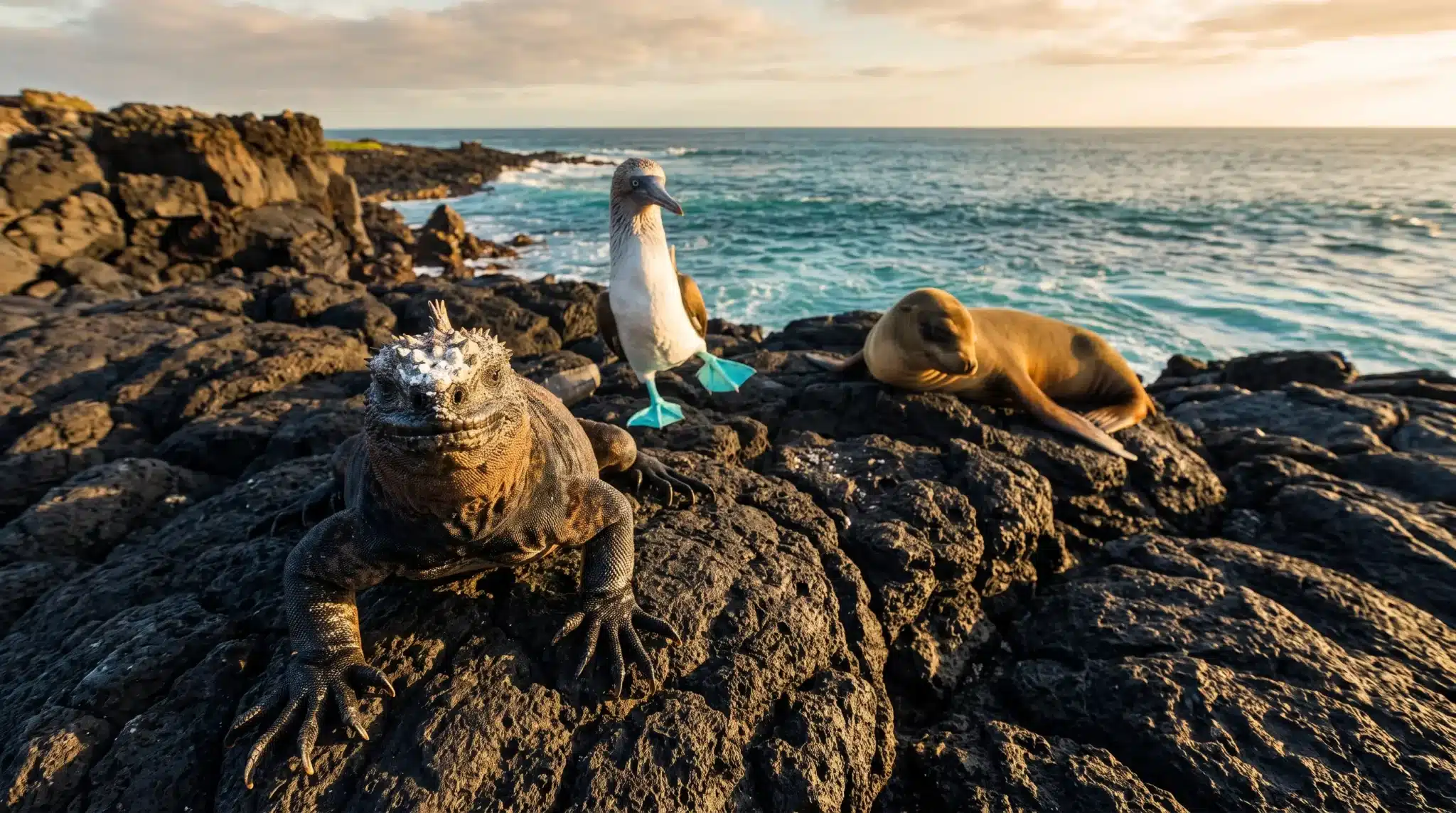
A marine iguana sneezes salt crystals onto volcanic rock a few feet from your sandals, then goes back to basking as if you weren’t there.
This kind of close, unbothered wildlife contact is what separates the Galapagos from almost anywhere else on the planet. The animals here evolved with no fear of humans, and that changes what a wildlife encounter actually feels like. Here are eight moments worth planning your trip around.
Snorkeling With Sea Lions
Young sea lions are the extroverts of the archipelago, and they treat snorkelers like playmates rather than intruders. It’s common for one to swim loops around a person, blow bubbles at their mask, or nip playfully at fins.
Punta Suarez on Española Island and the waters off San Cristobal are especially reliable spots for this kind of interaction. Bring a mask that fits well, since most of the encounter happens face-to-face underwater.
Standing Near a Waved Albatross Colony
Española Island hosts the entire global breeding population of the waved albatross, roughly 12,000 pairs, between April and December.
These birds have a wingspan approaching eight feet and perform an elaborate mating dance involving bill-clacking and head-bobbing that looks almost choreographed.
Trails here run close enough to watch chicks being fed without disturbing the birds. Outside the breeding season the colony empties out almost entirely, so timing matters if this is a priority.
Watching Giant Tortoises in the Highlands
Santa Cruz Island’s highlands give a different picture of tortoises than the enclosures at breeding centers. Wild tortoises roam private farms and reserves like El Chato, some weighing over 400 pounds, moving through muddy wallows and munching on vegetation at a pace that makes an hour feel like ten minutes.
Many of these individuals are well over a century old. Rubber boots are worth packing, since the ground stays wet most of the year.
Diving With Hammerhead Sharks
Wolf and Darwin Islands, in the far north of the archipelago, are known for schools of scalloped hammerhead sharks that number in the dozens.
These dive sites are for experienced divers only, given strong currents and depths, and they typically require a liveaboard trip rather than a day excursion.
Whale sharks also pass through seasonally, mostly between June and November. Few places on earth offer this concentration of large pelagic species in a single dive.
Getting Buzzed by Blue-Footed Boobies
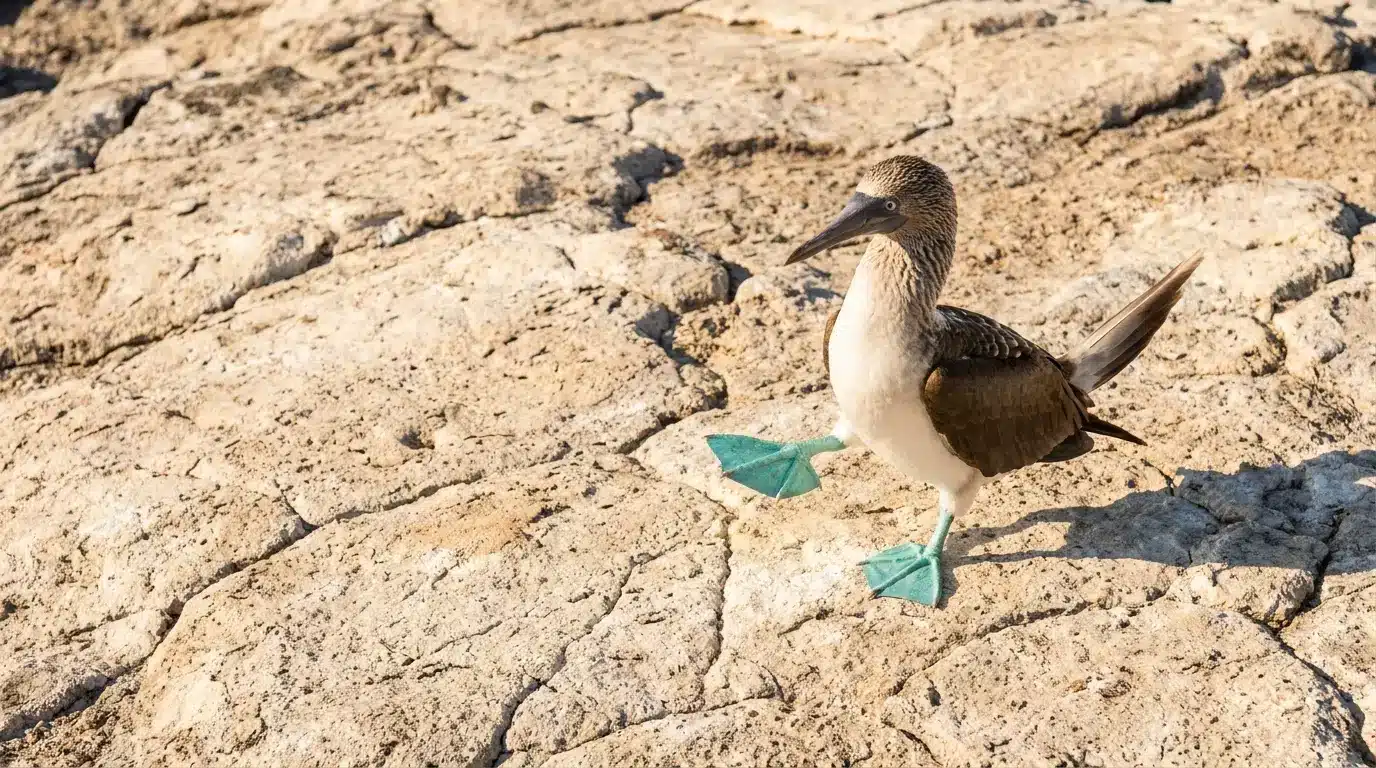 The blue-footed booby’s mating ritual involves lifting one bright turquoise foot at a time in an exaggerated strut, and the birds perform it regardless of who’s watching.
North Seymour Island has one of the densest colonies, with nests sometimes just steps from the trail. Their fishing behavior is just as striking: they dive from 60 to 100 feet in the air straight into the water at high speed, folding their wings back at the last second.
Watching a group of them feed offshore looks almost like synchronized gunfire hitting the waves.
Kayaking Past Penguins on Bartolome Island
Galapagos penguins are the only penguin species found north of the equator, and Bartolome Island is one of the most consistent places to see them. They’re small, fast in the water, and often curious enough to swim alongside kayaks or snorkelers.
The volcanic backdrop of Pinnacle Rock adds a stark, almost lunar quality to the setting. Early morning tends to bring calmer water and more active penguin behavior before the day heats up.
Spotting Darwin’s Finches in Their Original Habitat
The thirteen species of finches that helped shape Charles Darwin’s theory of evolution are easy to overlook next to sea lions and tortoises, but seeing them in context is genuinely useful.
Different beak shapes on different islands reflect different food sources, from cactus flowers to seeds to insects pulled from tree bark.
Santa Cruz’s Los Gemelos sinkholes and the trails around Puerto Ayora offer good chances to compare species side by side. A pair of compact binoculars makes this encounter far more rewarding.
Walking Through a Marine Iguana Colony
Marine iguanas are found nowhere else on earth, and Fernandina Island holds some of the largest colonies, sometimes numbering in the thousands along a single stretch of black lava rock.
They pile on top of each other for warmth and periodically sneeze out excess salt absorbed while feeding underwater.
Because they’re built for camouflage against volcanic rock, it’s easy to nearly step on one before noticing it. Guides here are strict about trail distance, and for good reason.
Fitting all eight of these encounters into one trip usually means combining a multi-island itinerary with a mix of land-based stays and boat excursions, since no single island offers everything.
Many well-organized Galapagos travel packages already build in this kind of variety, pairing highland tortoise visits with snorkeling days and outer-island excursions for the more serious wildlife sightings.
Whichever encounters end up on the itinerary, the more useful move is booking with a naturalist guide certified by the Galapagos National Park, since they know exactly where and when each species is active.
That local knowledge, more than any gear or timing, tends to determine whether a wildlife sighting turns into a genuine encounter.