
What Size Rug Goes Under a Full Size Bed?

That cold floor the moment you step out of bed? A rug fixes that fast. But only if it actually fits.
Buying a rug for a full-size bed is trickier than it looks. The size sits right between a twin and a queen. Go too small, and the rug gets lost under the frame. Go too large, and the room starts to feel tight.
A full-size bed measures 54 inches wide by 75 inches long. That number is your starting point for everything in this guide.
Read on for the best rug sizes, smart placement options, and what to check before you buy.
Full-Size Bed Dimensions You Need to Know First
A full-size bed, also called a double bed, measures 54 inches wide and 75 inches long. Add a bed frame, and the total footprint ranges from 56 to 58 inches wide.
It can also stretch to 77-80 inches long. This is the number you need before you look at rug sizes for a full-size bed.
What Size Rug for Full Size Bed: The Best Options
The right rug size depends on two things: how big your room is and how much floor space you want covered. Here are the top options for a full-size bed.
| Rug Size | Best For | Coverage |
|---|---|---|
| 5 x 8 | Small rooms and studio apartments | Covers the foot of the bed and the sides partially |
| 6 x 9 | Medium-sized bedrooms | Best all-round fit, 1.5 to 2 ft showing on each side |
| 8 x 10 | Larger bedrooms with extra furniture | Full coverage, fits nightstands on the rug too |
How to Choose the Right Rug Size Based on Your Room Size
Room size plays a big role in which rug works best. Measure your floor before ordering, and keep these simple guidelines in mind.
- Small bedroom (under 10 x 10 ft): A 5 x 8 rug fits the space well, covers the sides of the bed, and still leaves enough floor visible to keep the room from feeling cramped.
- Medium bedroom (10 x 12 ft to 12 x 14 ft): A 6 x 9 gives you solid coverage on all three sides of the bed while leaving a comfortable gap between the rug edge and the walls.
- Large bedroom (12 x 14 ft and above): An 8 x 10 fits the space properly, anchors the bed as the focal point, and leaves room for nightstands on the rug, too.
- Room with the bed pushed against a wall: A 6 x 9 placed toward the foot of the bed covers the two open sides and the walking area without making the room feel unbalanced.
Rug Placement Options for a Full-Size Bed

Size is only half the decision. Where you place the rug changes how the whole bedroom looks and feels.
1. Centering the Rug Under the Full Bed
Place the rug directly under the bed, centered on all sides. This works best with a 6 x 9 or 8 x 10 rug. It creates a clean, grounded look and gives you a soft footing on both sides when you get out of bed.
If you have nightstands, make sure at least the front legs sit on the rug so the whole sleeping area feels tied together.
2. Placing the Rug Under the Bottom Half of the Bed
Pull the rug down so it starts roughly at the midpoint of the bed and extends toward the foot. This works well in smaller rooms with a 5 x 8.
It still covers the most-used walking area without taking over the whole floor. It is also a smart way to showcase a well-designed hardwood or tiled floor near the headboard.
3. Using Two Runners on the Sides
Place one narrow runner on each side of the bed instead of a single area rug. This keeps the floor path covered while letting your flooring show in the middle.
A third runner at the foot of the bed adds a nice finishing touch. This setup works especially well if you share the bed, since each side gets its own soft landing spot.
Rug Shapes That Work Well with a Full-Size Bed
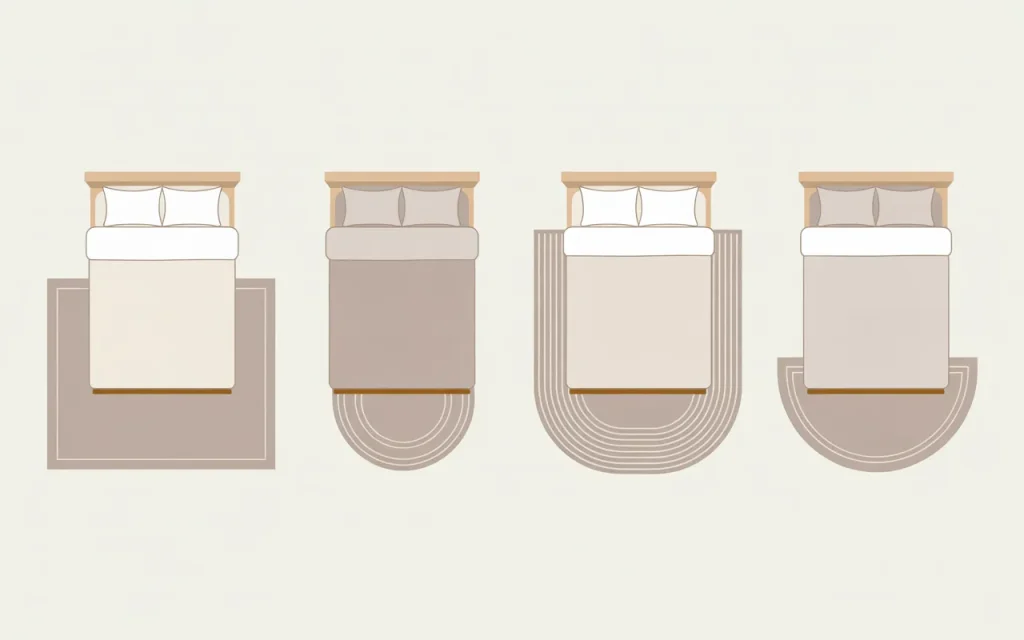
Most people stick to rectangles, but a full-size bed can work with more than one shape. Here are the options worth considering.
- Rectangle: The most common choice for a reason, as it works with every bed placement, fits most room layouts, and comes in the widest range of sizes and patterns.
- Round: Best placed at the foot of the bed where it breaks up the straight lines of the frame and furniture, giving the room a softer, more relaxed feel.
- Oval: A great option for narrow bedrooms since it gives you the rounded look of a circle rug without stretching too far across the limited floor width.
- Half-moon or semi-circle: A small but effective choice that sits right at the side or foot of the bed, adding a touch of softness without taking up much floor space.
Mistakes People Make When Buying Bedroom Rugs
A few simple slip-ups can make even a well-designed bedroom look off. Here are the ones that come up most often, along with easy fixes.
| Mistake | Why It Happens | Quick Fix |
|---|---|---|
| Buying without measuring | Assuming size by eye | Measure the room and bed frame before ordering |
| Going too small | Trying to save money | A rug that is too small looks worse than no rug |
| Forgetting the bed frame | Only measuring the mattress | Add 2 to 4 inches to account for the frame |
| Wrong placement | No planning before placing | Use tape on the floor to test the layout first |
| Skipping the rug pad | Seems like an extra cost | It keeps the rug in place and protects the floor |
| Choosing style over comfort | Focusing only on looks | In a bedroom, how it feels underfoot matters most |
Tips on Picking the Right Rug Material for Your Bedroom
The material affects how the rug feels under your bare feet, how long it lasts, and how easy it is to clean. Here is a quick breakdown of the most common options.
- Wool: Naturally soft underfoot, highly durable, and holds its shape well over years of use, making it one of the best long-term investments for a bedroom rug.
- Cotton: Lightweight and easy to toss in the wash, which makes it a practical choice for warmer climates or bedrooms that need frequent cleaning.
- Polyester or polypropylene: The most budget-friendly option on the list, resistant to stains and spills, and easy to maintain with basic cleaning routines.
- Jute or natural fiber: Brings a warm, earthy look to the room but tends to feel rough on bare feet, so it works better at the foot of the bed than along the sides where you step out each morning.
How to Pick a Rug Color or Pattern for a Full-Size Bedroom
Light colors like cream, beige, or pale grey make a small room feel more open. In a larger room, you have more room to go with deeper tones or a bold pattern.
A solid rug pairs well with patterned bedding, and a patterned rug works best with neutral, solid bedding.
Either way, match the rug to at least one color already in the room, like your curtains or throw pillows. That one connection makes the whole space feel pulled together.
Conclusion
Getting the rug size right for a full-size bed is not as complicated as it seems. A 6 x 9 rug works well in most bedrooms. For larger rooms with extra furniture, step up to an 8 x 10.
Placement matters just as much as size. Center it under the bed, pull it toward the foot, or go with two runners. Each option works depending on your room.
Pick the right material, add a rug pad, and choose a color that fits your space. A well-placed rug makes the whole bedroom feel complete.
Which rug size did you go with for your full-size bed? Comment down below!
Frequently Asked Questions
What Size Rug Should Go Under a Full-Size Bed?
A 6 x 9 rug is the best fit for most full-size beds. It extends about 1.5 to 2 feet on each side, giving the room a balanced, finished look.
Can You Put a 5×7 Rug Under a Full Bed?
Yes, but it works better placed under the lower half of the bed rather than fully centered. It covers the foot area and gives you a soft landing spot without crowding the room.
Should a Rug Go Under an Entire Bed?
Not necessarily. Placing the rug under just the bottom two-thirds of the bed is a common and practical choice, especially in smaller rooms where full coverage is not needed.
Is a 5×8 Rug Big Enough for a Full-Size Bed?
It works well in small bedrooms and studio apartments. It covers the sides and foot of the bed comfortably, though it may not reach nightstands placed on either side.