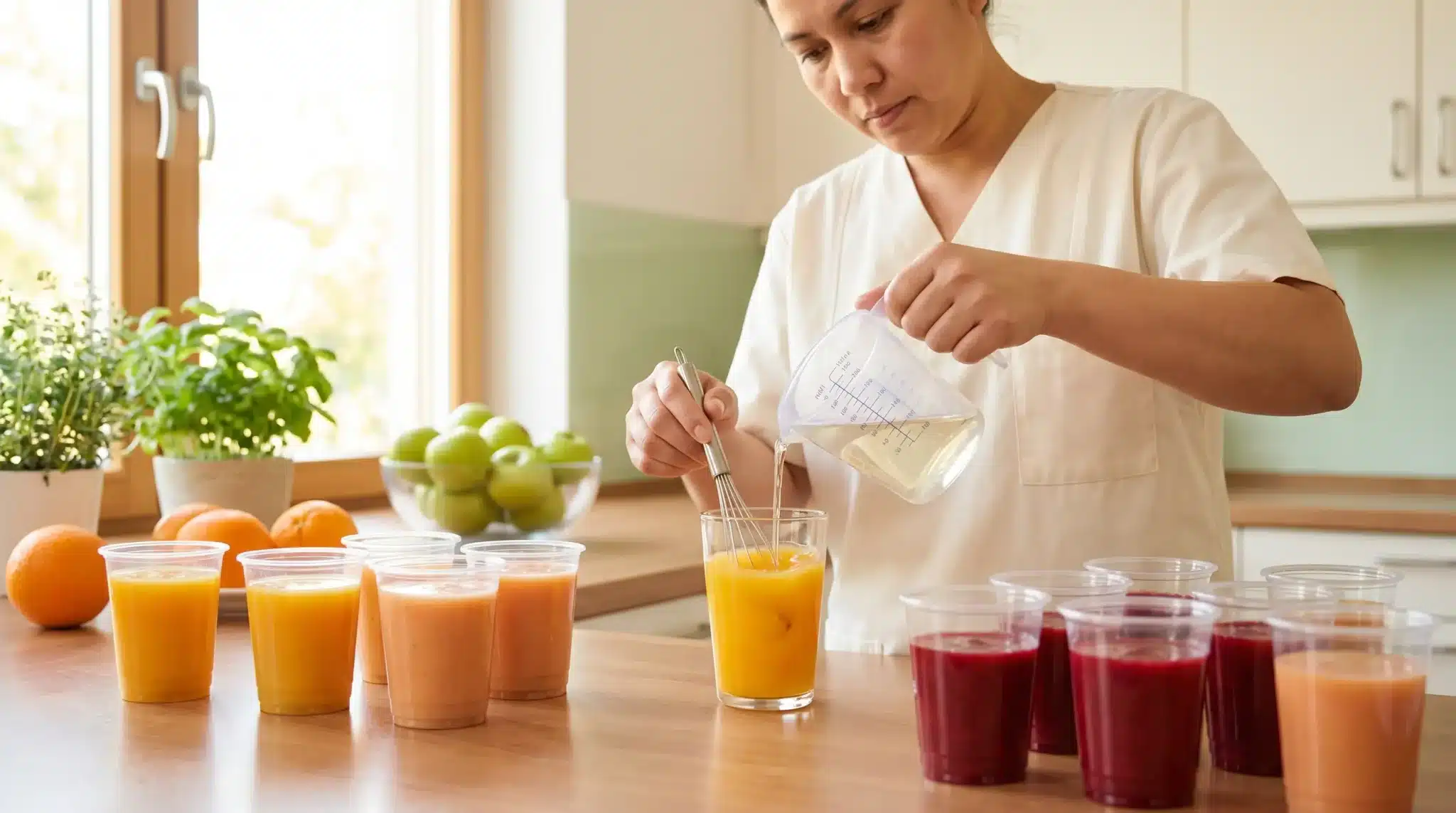
Seven Practical Tips for Improving Thickened Drink Preparation

For anyone living with dysphagia, a properly prepared thickened beverage is more than a dietary preference. It is a safety measure. Caregivers and facility staff handle this task dozens of times each day, yet inconsistent textures, stubborn clumps, and flavor complaints remain surprisingly common. The good news is that most preparation problems trace back to a handful of fixable habits. These seven tips address the areas where errors happen most often, helping care teams serve drinks that are both clinically appropriate and genuinely worth finishing.
1. Understand the Correct Consistency Levels
Getting the thickness right starts well before you mix anything. The IDDSI framework outlines distinct levels of liquid consistency, from slightly thick through to extremely thick. Each one corresponds to a specific degree of swallowing impairment, so accuracy here is not optional.
1.1 Match the Level to the Prescription
A speech-language pathologist determines which consistency level a patient needs based on clinical assessment. Serving a drink that falls outside that recommendation introduces actual risk, whether it is too thin or too thick. Posting a printed IDDSI reference chart near the preparation station gives staff a quick visual checkpoint before every serving.
2. Choose a Reliable Thickening Product
Thickening agents differ in how they behave once mixed. Starch-based varieties tend to keep thickening after preparation, which shifts the texture over time and often affects taste. Xanthan gum-based options like Simply Thick hold their consistency far more reliably and dissolve with less effort. Pre-measured gel packets also cut down on dosing errors, which is especially beneficial during busy shifts when staff are preparing multiple drinks simultaneously.
3. Measure Ingredients Precisely
Guessing amounts is one of the fastest ways to end up with an inconsistent drink. A slight miscalculation in the thickener-to-liquid ratio can turn a mildly thick beverage into something closer to pudding. Pre-portioned packets, calibrated syringes, or dedicated measuring spoons keep results predictable from one preparation to the next.
3.1 Account for Liquid Temperature
Temperature plays a bigger role than most people expect. A mixture that appears correct at room temperature may thin out considerably when heated or thicken beyond the target when chilled. Always check the final consistency at the actual serving temperature, not during the mixing stage.
4. Perfect the Mixing Technique

Clumps appear when thickener hits the liquid too fast or sits on the surface without enough mixing. Pouring in a slow, steady stream while stirring briskly prevents particles from binding together. A fork or a small whisk does a better job of breaking up clusters than a standard spoon.
4.1 Allow Adequate Settling Time
Most thickened beverages need between one and three minutes to stabilize after mixing. Serving immediately often gives a misleading read on the final texture. A brief pause followed by one last stir produces a smoother, more uniform result that matches the intended consistency level.
5. Prioritize Flavor and Presentation
A drink that meets every clinical criterion still fails if the person refuses to finish it. Dehydration risk climbs quickly when thickened beverages go untouched. A splash of fruit juice, a drizzle of flavored syrup, or a squeeze of citrus can improve acceptance noticeably. Serving in an ordinary cup rather than a clinical container also supports dignity and encourages intake.
6. Train All Staff Consistently
Preparation quality should not depend on which caregiver happens to be on duty. Facilities benefit from scheduling short, hands-on training refreshers at least twice a year. Visual guides, laminated quick-reference cards, and observed practice sessions reinforce proper technique across all shifts and experience levels.
6.1 Document and Review Errors
Tracking preparation mistakes over time uncovers patterns that might otherwise go unnoticed. Perhaps a certain shift produces more texture complaints, or a particular beverage type creates recurring issues. Identifying these trends allows supervisors to provide targeted coaching rather than generic reminders.
7. Store and Label Prepared Drinks Properly
Texture can shift during storage. Refrigerated thickened beverages sometimes separate, while those left at room temperature too long raise food safety concerns. Labeling each container with the consistency level, the time of preparation, and a clear use-by window prevents mix-ups and protects individuals from receiving the wrong drink.
Conclusion
Better thickened drink preparation does not require expensive equipment or complicated procedures. It requires attention to the basics: accurate measurement, proper mixing, temperature awareness, and regular staff training. Each of these seven tips targets a specific point in the process where small errors tend to accumulate. Building these practices into daily routines creates consistency that patients and residents can rely on, resulting in safer mealtimes and drinks that they are far more willing to finish.