Room-by-Room Remodel vs. Whole-Home Renovation: How to Decide

At some point, almost every homeowner has the same conversation with themselves: do I fix one room, or do I finally tackle the whole house?
It’s a bigger decision than it sounds like. Renovating one room at a time feels manageable and budget-friendly. But if you’re picturing several updates over the next few years anyway, doing them separately can quietly cost you more — in money, time, and how cohesive your home ends up feeling. Here’s how to think through which approach actually fits your situation.
What a Room-by-Room Remodel Looks Like
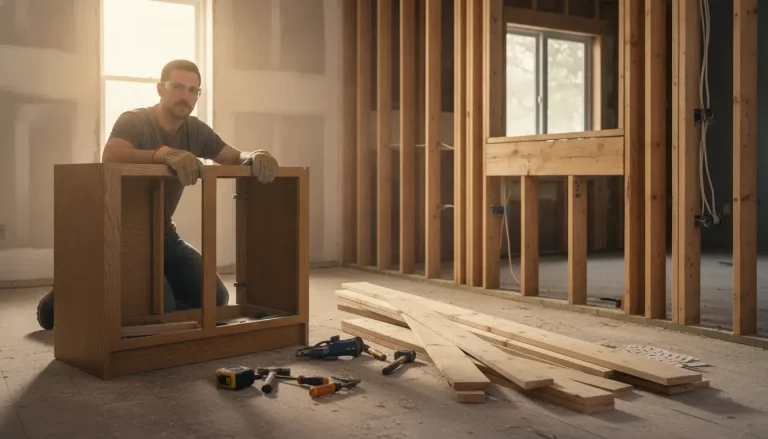
This is the classic approach: you update the kitchen this year, maybe the primary bathroom next year, and the living room whenever the budget allows. Each project is its own contained decision — its own designer conversation, its own timeline, its own mess to live through.
It works well when:
- You have one clear priority (an outdated kitchen, a bathroom that’s falling apart) and the rest of the house is genuinely fine for now
- You need to spread costs out over a longer period
- You’re not sure yet what you want for the rest of the home and would rather decide room by room
- You want to keep living normally in most of the house while one area is under construction
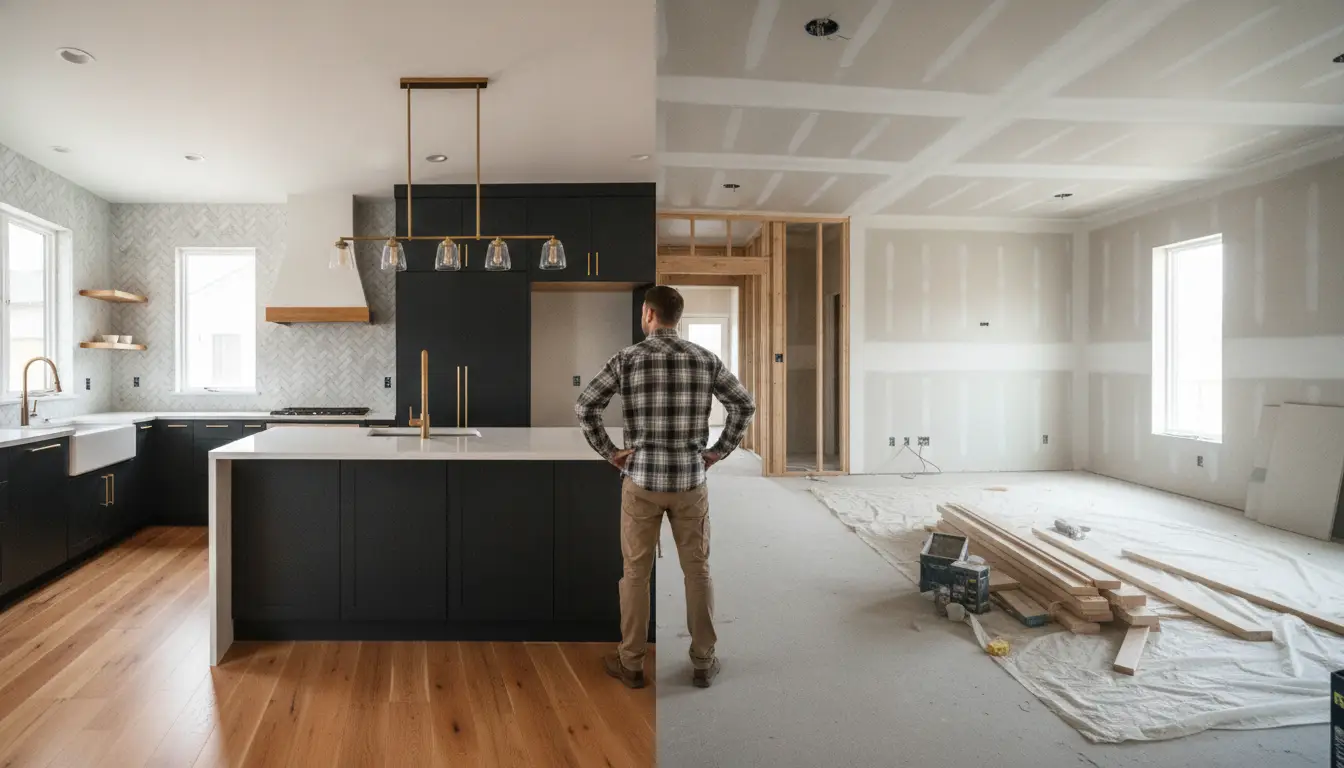
The tradeoff: finishes chosen two or three years apart rarely match perfectly. Flooring transitions awkwardly between an updated kitchen and an untouched hallway. You may also pay for the same “soft costs” — design fees, permitting, project setup — multiple times instead of once.
What a Whole-Home Renovation Looks Like
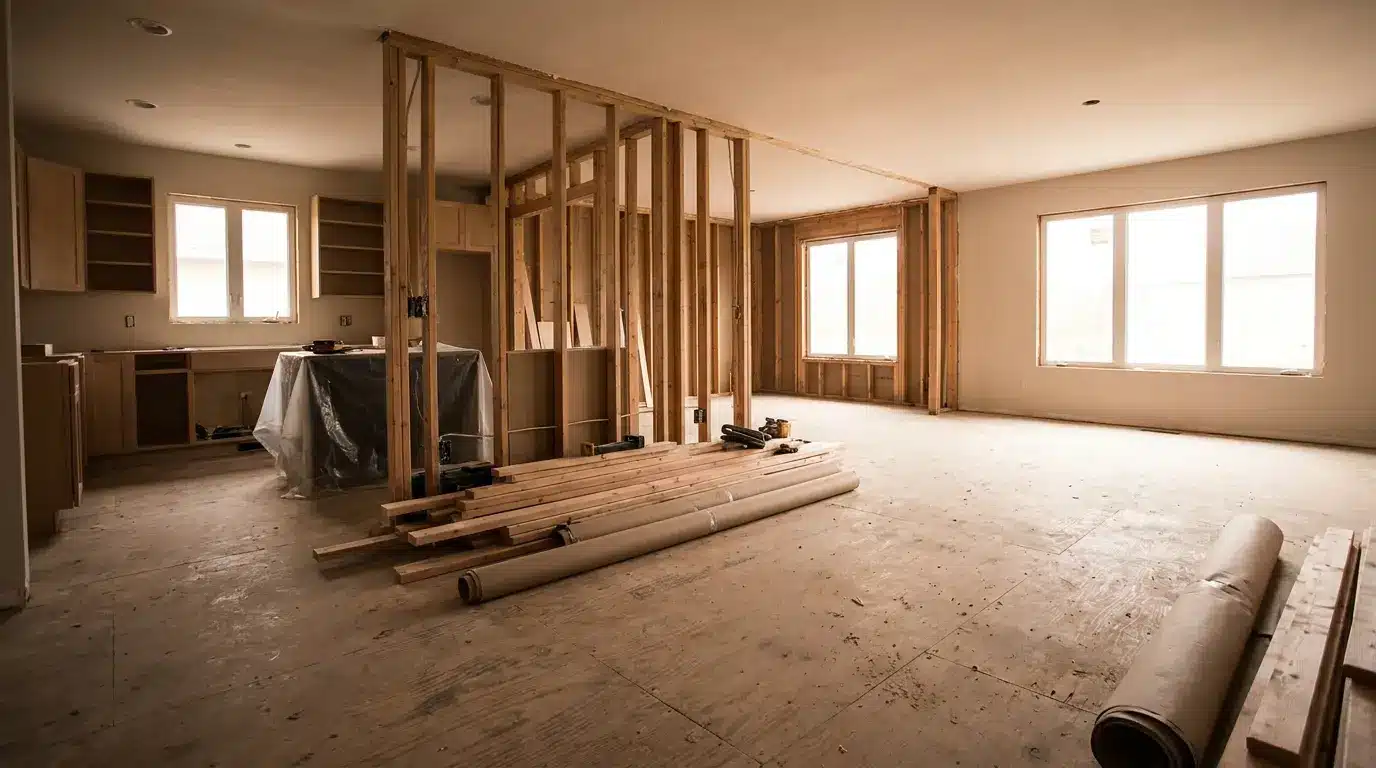
This is a single, coordinated plan that touches multiple spaces — kitchen, bathrooms, living and dining areas, sometimes entryways or laundry rooms — built around one design vision and one construction sequence.
It works well when:
- You already know two or more rooms need updating within the next year or two
- Your rooms are open to each other, so mismatched finishes would be obvious (think open-concept kitchen-to-living-room layouts)
- You’re preparing to stay in the home long-term and want everything to feel intentional rather than patched together
- You’re prepping the home for sale and want updates that read as one consistent renovation, not a string of unrelated projects
The tradeoff: it’s a bigger upfront commitment, more disruption at once, and it requires a contractor who can actually manage multiple trades and rooms without things falling out of sync.
The Real Question Isn’t Budget — It’s Sequencing
Most homeowners assume the room-by-room approach is the “safe” or affordable choice. Sometimes it is. But if you already know you’ll eventually renovate more than one space, doing it as separate projects often means:
- Paying for design and permitting more than once
- Living through construction disruption multiple times instead of once
- Ending up with a home where the kitchen looks like 2026 and the hallway looks like 2019
A whole-home plan front-loads the decisions — layout, finishes, flow between rooms — so everything gets built to work together, even if construction happens in phases.
A Simple Way to Decide
Ask yourself:
- Am I only fixing one specific problem, or several? One problem, one room, might be all you need.
- Do my rooms flow into each other visually? If your kitchen opens into your living room, mismatched finishes will be obvious every time you’re standing in either one.
- Am I planning to stay 5+ years, or preparing to sell soon? Both are valid reasons to think bigger than a single room — for different reasons.
- Do I want one point of contact, or am I okay managing separate projects over time?
If your answers point toward “more than one room, and I want it to feel like one home instead of a series of updates,” it’s worth talking to a team that handles design, permitting, and construction as a single coordinated process rather than piecing it together yourself. A design-build team that specializes in full home renovation can walk through your specific rooms and goals and tell you honestly whether a phased plan or a whole-home approach makes more sense — before you commit to either one.
Either path can work. The key is choosing on purpose, not by default.