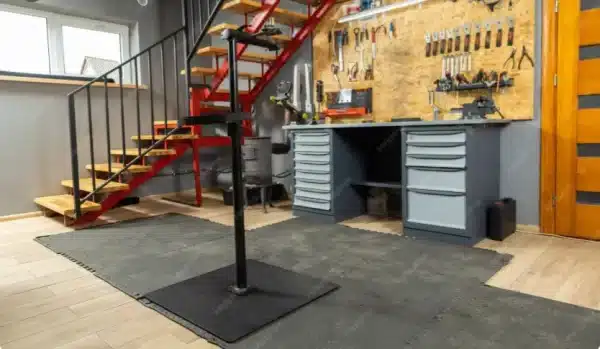
Rethinking Garage Design in Modern Homes

The Garage Isn’t What It Used to Be
For a long time, garages have been an afterthought in home design, simply a practical space to park cars and store extra stuff. They’ve been stuck on the edge of our homes, not really considered part of the main living area. But that’s not all they have to be. But that framing is beginning to feel incomplete. As our lives keep changing, people are starting to think that every part of their home should be useful and enjoyable, not just functional.
Even the garage, which was often ignored, is now seen in a new light; it’s not just a place to park your car, but a space that can be used in a more thoughtful, connected way. This means that the garage is becoming more than just a separate area; it’s becoming a part of the whole house, where people can spend time and do things they enjoy. What was once concealed is now being reconsidered. And in many cases, quietly redefined.
Beyond Utility, Toward Integration
If you consider how frequently the garage serves as a transition between inside and outside, its importance becomes hard to ignore. It is not simply a storage zone, but a threshold, a space of movement, arrival, and departure. So why has it remained so underdesigned? More and more, homeowners and designers are questioning that idea. Instead of thinking of the garage as just a storage space, they’re looking for ways to make it feel more like a natural part of the whole house.
They want the garage to feel like it’s really connected to the rest of the living space, not just a separate area that’s only used for parking cars and storing stuff. This often manifests through deliberate design interventions. Thoughtfully configured storage systems. Layered lighting strategies that extend usability. Material selections that echo the home’s interior palette. These choices may appear subtle. Together, they change the way we think about space altogether.
Designing With Intent From the Start
One of the more significant shifts is not merely aesthetic, but procedural. The garage is no longer something to figure out after construction, but something to consider from the very beginning.
In many modern projects, homeowners are engaging a custom garage builder early in the planning phase, allowing the space to be designed around actual patterns of use rather than retrofitted solutions.
This changes the nature of the conversation.
Instead of asking how to organize the garage later, the question becomes: how can the garage support daily life from the outset? Where transitions happen. Where objects naturally accumulate. How movement flows through the space.
These are not dramatic considerations. But they are foundational ones.
And they tend to determine whether a garage remains a source of friction or becomes a point of ease.
The Emergence of Multi-Purpose Functionality
As spatial efficiency becomes increasingly valuable, the expectation that a single room should serve a single purpose is gradually dissolving.
The garage, in particular, has become a site of experimentation.
Adaptive Wellness Spaces
For some, the garage is reconfigured into a physical wellness environment. Not a fully outfitted gym, necessarily, but a flexible area that accommodates movement, routine, and consistency.
Creative and Productive Zones
Others transform the space into a studio or workshop, where focus and creation can exist slightly removed from the distractions of the main living areas.
Structured, Scalable Storage
And storage still remains, but in a more systematic and forward-thinking form. Modular frameworks. Vertical expansion. Configurations that evolve alongside changing needs.
What emerges is not a singular identity, but a layered one.
The garage becomes adaptable, responsive, and increasingly essential.
Atmosphere, Materiality, and Perception
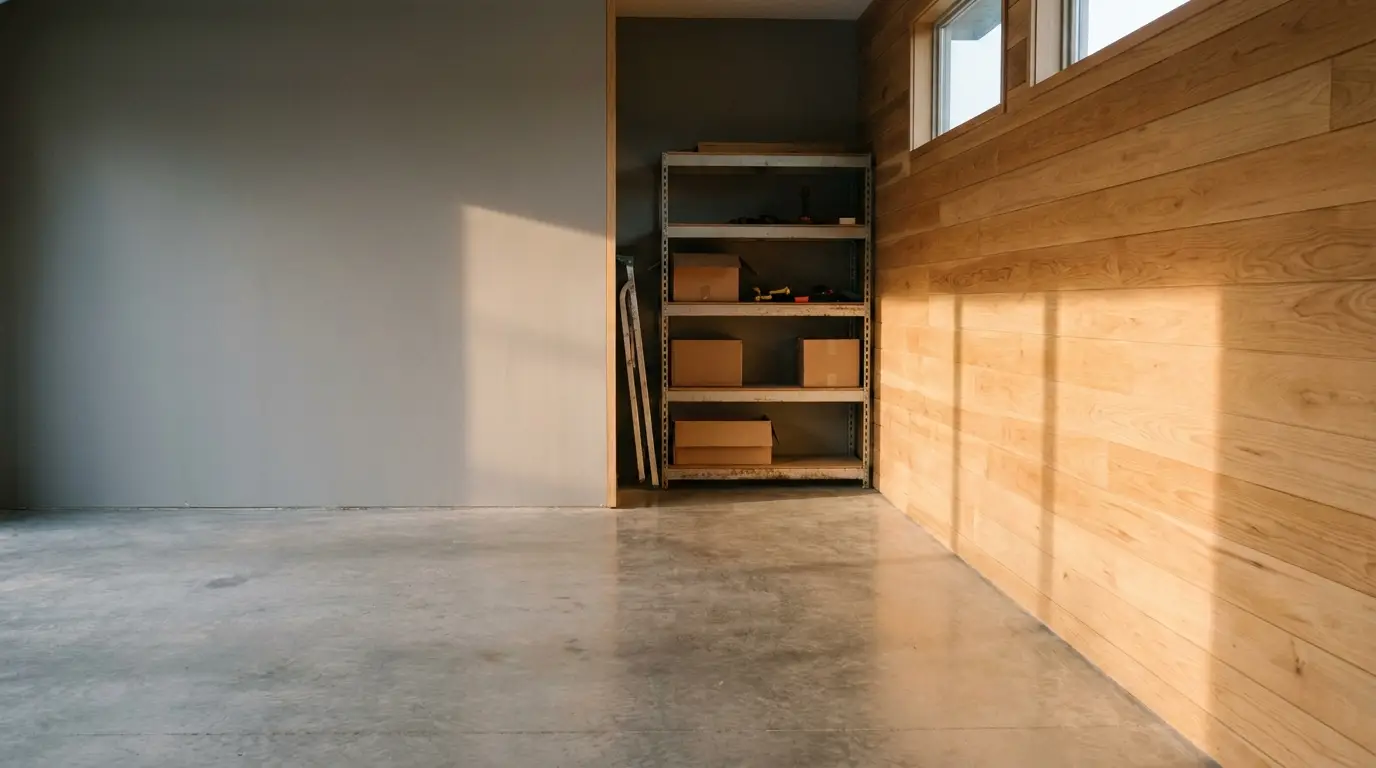
One of the most noticeable transformations in modern garage design lies in its atmosphere, though it is often difficult to articulate why. Lighting plays a central role. Rather than relying on a single, utilitarian fixture, contemporary garages incorporate multiple light sources that create depth, visibility, and a sense of intentionality. Natural light, when available, is no longer incidental; it is now prioritized. Materiality follows a similar trajectory. When it comes to choosing surfaces, it’s not just about how long they’ll last anymore. Now, people want surfaces that enhance the overall feel of a space.
Think about it, polished concrete can give a room a really sleek look, while sealed wood accents can add a touch of warmth. And let’s not forget about color schemes. When everything matches and flows together, it makes a space feel cohesive. It’s all about creating a sensory experience that draws you in and makes you want to stay. It’s not about being fancy just for the sake of it. But clarity.
The Subtle Psychology of Order
There is also a quieter, more psychological layer to this shift. A thoughtfully designed garage reduces cognitive load in ways that are easy to overlook. The absence of clutter is not just aesthetic; it serves a purpose. It simplifies decisions. It removes friction.
You’re not searching.
You’re not hesitating.
You’re simply moving through the space.
Each moment feels small on its own, but they add up. Over time, they begin to shape the home’s overall experience and how it feels to live in it.
Looking Ahead
As residential design continues to prioritize adaptability, the need for spaces that can evolve alongside their occupants becomes increasingly clear.
The garage, once limited to a single function, is now uniquely positioned to meet that demand. It still serves as storage, but it can also accommodate changing needs, adapt over time, and enhance the home’s overall functionality.
A Shift in Perspective
The most meaningful change is not physical, but conceptual. The question is no longer confined to what the garage is for.
It expands into something more open-ended. What could this space enable?
And what might change if it were designed with that question in mind?Rethinking Garage Design in Modern Homes