
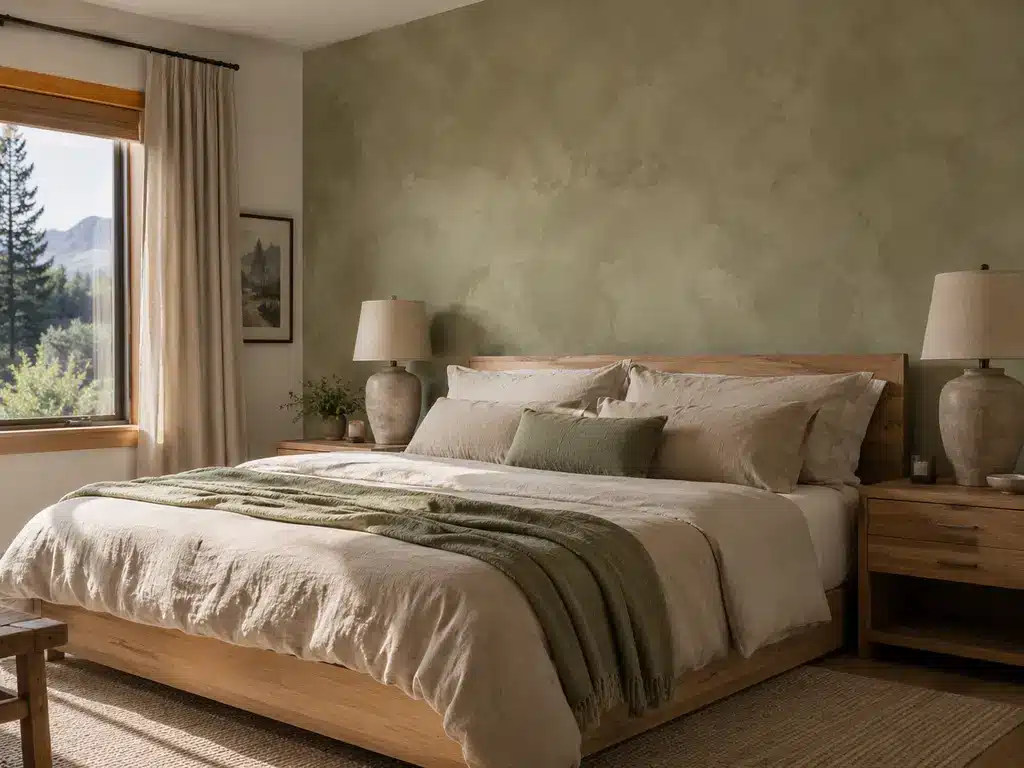
Limewash Is Having a Moment in Colorado — Here’s Why It’s Not Just a Trend

There’s a particular kind of wall finish showing up again and again in Colorado design magazines, Pinterest boards, and high-end home renovations this year: soft, cloudy, mineral-textured limewash. It’s not new — limewash has been used to coat walls for literally thousands of years — but its return to modern interiors says a lot about where design taste is heading right now, especially here in Colorado.
Why Limewash, Why Now
For the better part of two decades, flat and eggshell paint dominated American interiors. It was practical, predictable, and easy to touch up. But predictability has a cost — walls that look identical from house to house, room to room, with none of the texture or depth that older architectural traditions once prized.
Limewash breaks that pattern completely. Because it’s applied in thin, breathable layers of a lime-based mineral paint, no two walls ever look quite the same. Light hits it differently throughout the day, subtle cloud-like variations appear across the surface, and the finish develops a soft patina over time rather than simply fading. It’s the opposite of flat and uniform — and that’s exactly the appeal.
Why Colorado’s Climate Actually Helps
One detail that often surprises homeowners: Colorado’s dry climate isn’t just tolerable for limewash — it’s genuinely one of the better environments for it. Lime-based finishes cure through a slow chemical process called carbonation, where the material gradually reacts with air to harden and stabilize. In humid climates, that process can happen unevenly, sometimes leading to blotchy or inconsistent results. Colorado’s low humidity allows the finish to cure more evenly and develop the depth and texture that make limewash so visually distinct.
This is part of why interior designers working across the Front Range and mountain communities alike have been leaning into limewash so heavily lately — the material genuinely performs better here than it would in, say, a coastal city.
Where Limewash Works Best
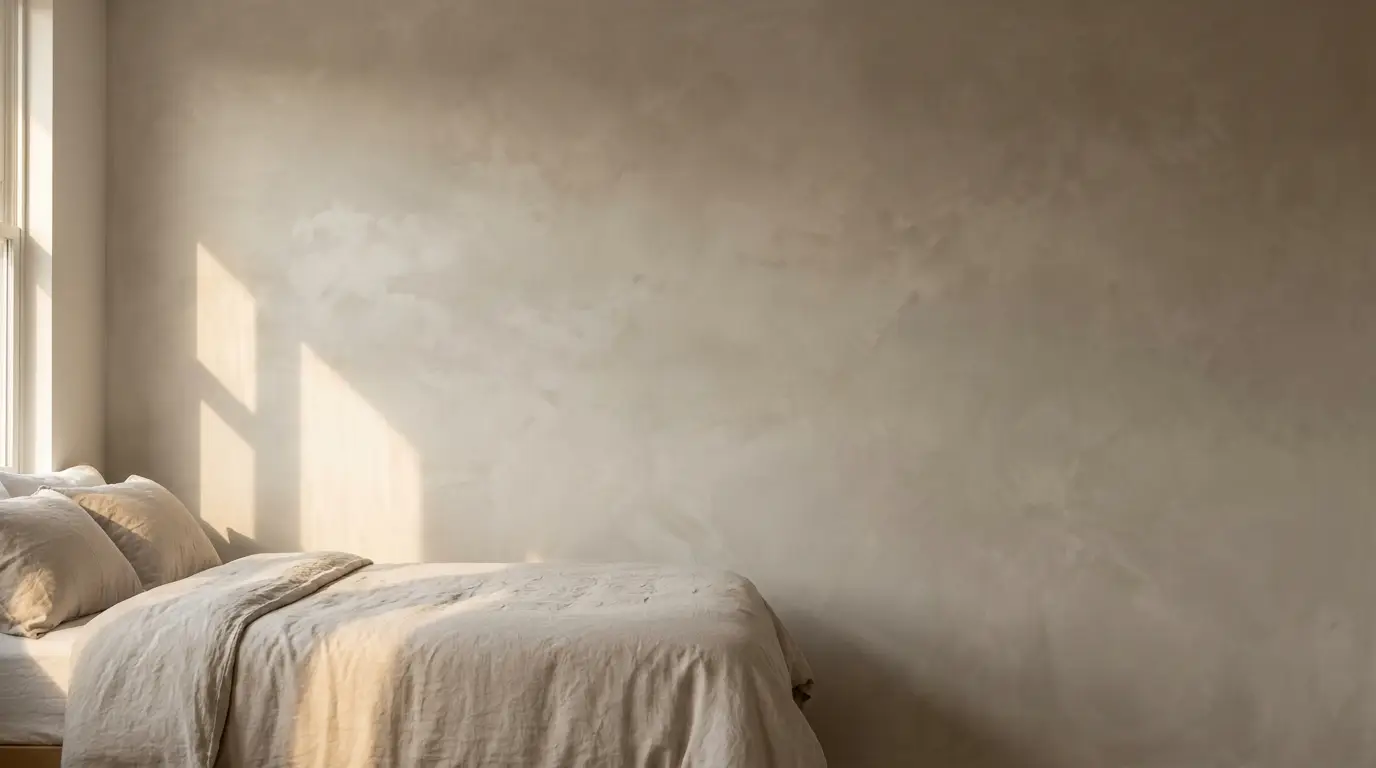
Limewash tends to shine in spaces where its soft, matte texture can be appreciated up close — bedrooms, dining rooms, and living room accent walls are the most common applications. It’s particularly popular right now in primary bedrooms, where its calming, organic texture pairs well with the current shift toward warmer, more grounded color palettes (soft greens, warm greiges, muted terracottas) replacing the stark white and gray interiors that dominated the past decade.
It’s also increasingly common to see limewash paired with other natural, mineral-based finishes in the same home — a limewash accent wall in a living room, for instance, alongside a Venetian plaster fireplace surround in an adjoining room. Because both materials share the same breathable, mineral composition, they tend to feel cohesive rather than mismatched, even when used in different textures and tones throughout a single home.
The Installation Challenge Nobody Talks About
Here’s what a lot of homeowners don’t realize until they’ve already started a limewash project: this is not a forgiving material for first-time DIY attempts. Unlike conventional paint, which sits on top of the wall and can be touched up or repainted relatively easily, limewash penetrates into the wall surface itself. Mistakes in application — uneven brush strokes, inconsistent layering, poor surface prep — don’t just look bad, they’re genuinely difficult to correct without redoing significant portions of the wall.
At Enjoy The Wall, this is a distinction the team emphasizes with every client. Kris A., whose work as a decorative finish specialist is grounded in credentials from the Interior Design Society (IDS) and the Wallcovering Installers Association (WIA), has applied limewash across dozens of Colorado homes — from modern Denver lofts to rustic mountain retreats near Breckenridge — and has seen firsthand how technique separates a professional result from a DIY attempt.
“Limewash rewards patience in a way that regular paint just doesn’t,” she notes. “The layering process, the way you work the brush, even the timing between coats — all of it affects how the final texture reads. I’ve seen homeowners try to DIY it after watching a few online tutorials, and the result usually looks patchy rather than intentional. Getting that soft, cloud-like movement that makes limewash so beautiful takes real hands-on experience with the material.”
This is precisely why demand for professional limewash finish Denver metro installation has grown alongside the material’s popularity — homeowners are increasingly aware that the technique matters just as much as the product itself.
What to Expect From a Professional Limewash Project
A properly executed limewash application typically involves several thin coats built up gradually, with drying time between each layer to allow the material to begin its curing process. Surface preparation matters enormously here — walls need to be properly primed and, in many cases, treated with a mineral-compatible base coat to ensure the limewash adheres correctly and develops its characteristic texture rather than absorbing unevenly into drywall.
For homes in higher-traffic areas, a breathable mineral sealer is often recommended after the limewash has fully cured, which extends durability without compromising the matte, organic look that makes the finish so desirable in the first place.
A Finish That Ages Well — Literally
Perhaps the most compelling argument for limewash isn’t how it looks on day one, but how it looks five or ten years later. Unlike conventional paint, which tends to visibly age through fading, chipping, or yellowing, limewash develops a soft patina over time that many designers and homeowners find only adds to its character. It’s a finish that’s designed to be lived with, not just installed and forgotten.
As more Colorado homeowners move away from the flat, uniform interiors of the past decade and toward spaces with genuine texture and depth, it’s easy to see why limewash has moved from niche design-world favorite to a mainstream request. It’s a finish that rewards patience — both in the application process and in how it ages — which, in a world of instant everything, might be exactly its appeal.