The Joyful Welcome: Small Decorating Rituals That Turn a New House Into a Home You Love

There is a strange in-between week that happens after every move. The boxes are unpacked. The furniture is roughly where it belongs. The house looks decorated. And yet, somehow, it does not quite feel like home. The light falls in unfamiliar places. The sounds of the rooms are still unknown. The kitchen drawer you reach for is not where you remembered. The home is technically yours and yet the feeling of belonging in it is still days or weeks away.
The good news is that the gap between a decorated house and a home you love is not closed by buying more things. It is closed by a handful of small, intentional rituals that turn empty rooms into spaces of warmth and welcome. None of the rituals are expensive. None of them require a designer’s eye. All of them work the way they do because they speak to the senses, not just the visual budget.
This guide collects the rituals worth borrowing for the first month in a new home. Each one is small. Together, they are how a new house quietly becomes a place you love coming back to.
The Science of Small Joys
There is a real reason a home with the same furniture can feel cold one week and warm the next. Researchers studying domestic well-being keep finding the same patterns. Spaces that engage more than one sense feel more inhabited than spaces that engage only the eyes. A room with a beautiful chair, but no scent, no music, no warm light, and no soft textiles, registers as a showroom rather than a home. The fix is not larger purchases. It is the small additions that bring the other senses into the room.
The other consistent finding is that ritual matters more than novelty. The same morning coffee in the same chair at the same window, repeated for two weeks, builds an emotional connection to that corner of the house that no Pinterest board can produce. The joy is in the repetition.
The First Morning Ritual
Within the first three days at the new home, choose one corner of the house to be the breakfast spot. Not where the dining table will eventually live. Not where the formal table-setting belongs. The actual corner where the kettle goes on at six in the morning and the first cup is poured.
Style that corner first. A small lamp on the bench. A favourite mug within reach. A single piece of art on the wall above it. A jug for fresh flowers when the local supply allows. Once the breakfast corner is set, every morning of the first month begins with one piece of the home that feels yours. The rest of the house catches up later.
The Threshold Welcome
The entryway is the first room of the home and the last. Most movers ignore it for weeks because it is small and functional. That is a missed opportunity. A warm threshold sets the emotional tone for arriving and leaving every day.
The basics are simple. A bench or hook rail for the daily things. A mirror at eye height. A small lamp on a side table (never overhead-only). One plant or vase, with foliage that survives the foot traffic. A doormat that genuinely welcomes rather than just collects dirt.
A Brisbane couple moving into a heritage Queenslander cottage in Paddington made the entry their first decor focus, before unpacking anything in the main rooms. A single brass hook rail, an oak bench with linen cushions, and a reading lamp turned the previously bare hallway into a moment of warmth. Coordinating the move with experienced Brisbane removalists who unloaded in the right order let them set up the entry within two hours of the truck leaving, and that one small win shaped how the whole first week felt.
The Chair That Becomes Yours
Every home has a chair that, by week three, has become the chair. The one you read in. The one you drink the second coffee in. The one the dog claims as soon as you stand up. The chair earns its status through ritual, not through being expensive.
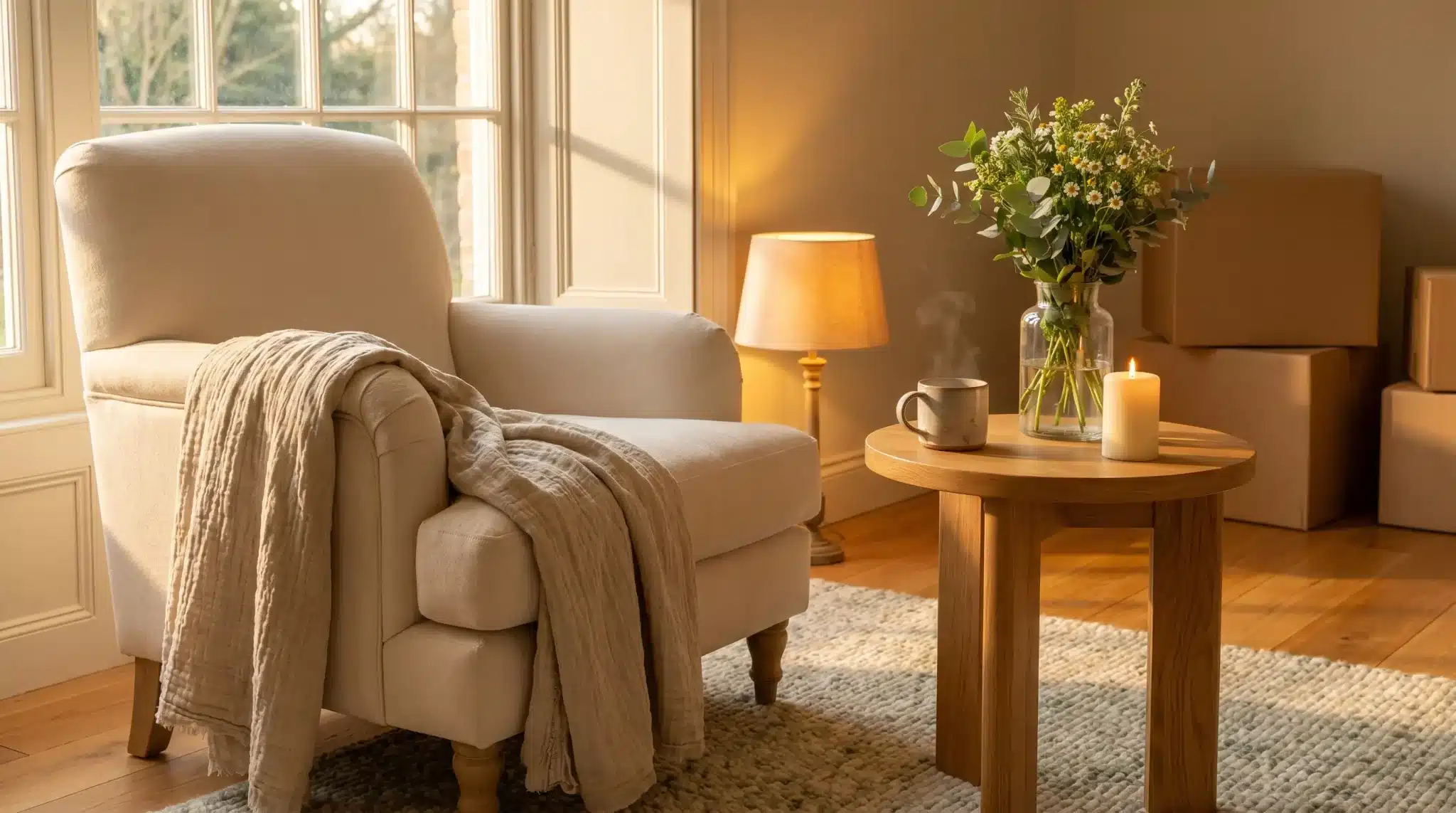
The trick is to choose the chair early, not let it choose itself. Decide which window has the best afternoon light. Place the chair there with the back to a wall, with a side table within arm’s reach, with a lamp on the table, and with a soft throw within reach. Read a book in it within the first week. Drink a cup of tea in it. Once the chair has been used three or four times for something quiet, it becomes the chair, and the rest of the room starts to organise itself around it.
The Scent of Home
Scent is the most underrated decorating decision and the easiest to get wrong. A signature scent in the main living area, chosen deliberately and used consistently, anchors the entire sensory experience of the house. Skip the rotating seasonal scents and the marketing-driven “best new candle of the year” lists. Pick one scent that makes you feel calm, light it the first evening, and keep coming back to it.
A Cairns retiree couple settling into a tropical Queenslander chose a single tuberose-and-vetiver candle as their home signature, lit every evening at dusk in the main living room. The choice was not original or expensive. It was theirs, and it was constant. Within two weeks they walked through the front door and felt the home before they saw it. The move itself was handled by experienced Cairns removalists who scheduled around the wet season, which meant unpacking happened in dry weather and the candles came out of their boxes intact.
The Sound of a Settled Home
A home that sounds like home is one that has been deliberately tuned. The hum of a fridge. The tick of a clock. The chosen music for the morning. The chosen quiet for the evening. Most movers ignore the soundtrack of the new house for weeks and accept whatever it gives them. The small joyful move is to take a few minutes in the first week to listen, and then to make a few deliberate additions.
A radio in the kitchen on a specific station. A small speaker in the living room with a saved morning playlist. A wind chime by an open window in the warmer months. A vinyl on Sunday afternoons. None of these are large additions. All of them shift the sensory experience of being in the house. A new home that has been chosen, not just moved into, sounds like the people who live there. The choice of the sound is the choice of the mood.
The Soft Layers
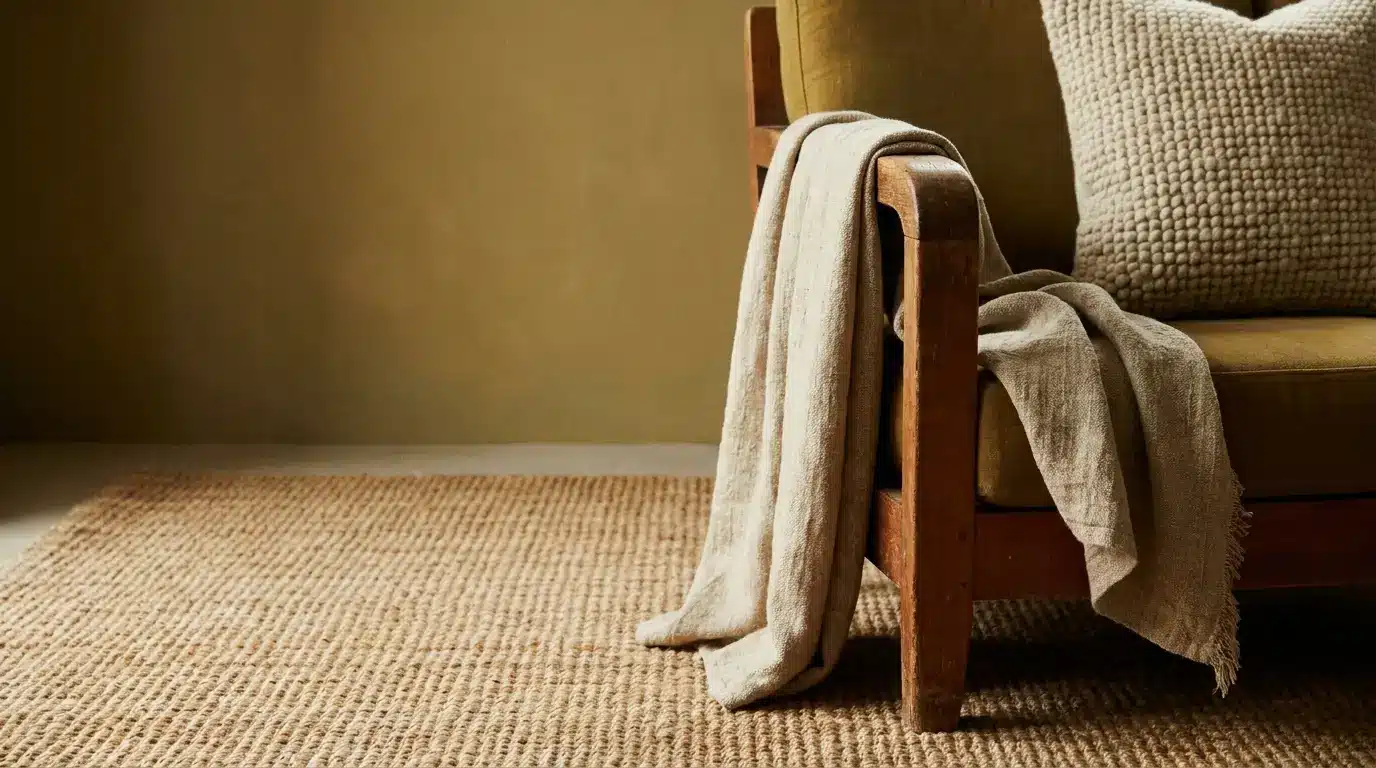
A room with hard surfaces and no soft layers reads as unfinished, no matter how good the furniture. Linen throws over chair arms. Wool throws across the foot of the bed. Cushions in natural fibres rather than synthetics. A heavy rug under the dining table. A lighter rug under the bed.
The rule of thumb is that every room should have at least three textures the eye can register without trying. Smooth (polished timber, a glazed ceramic), woven (rattan, sisal, linen), and tactile (wool, mohair, raw timber). When all three are present, the room reads as layered. When one is missing, the room reads as bare.
The Light Over the Overhead
The single most overlooked decorating move in a new home is replacing the dependence on overhead lighting. Most modern overhead fixtures are too bright, too cool, and too flat. They make a room feel like a workplace.
The fix is to add at least two lamps to every main room. A table lamp on a side table. A floor lamp in a reading corner. A small lamp in the entry. Choose warm bulbs (around 2700 Kelvin, sometimes labelled “warm white” or “soft white”). At night, turn the overheads off and rely on the lamps. The room transforms. The mood shifts from utilitarian to inviting in a single change.
A Gold Coast family relocating from Melbourne to Burleigh unpacked their lamps before their light bulbs and spent the first night lighting the new house with three table lamps, two floor lamps, and the candles they had brought from their old home. The atmosphere was instantly warmer than it had any right to be on day one. The move logistics were handled by reliable Gold Coast removalists who sequenced the unload so the lighting boxes came off the truck first, which is a smaller logistical detail than it sounds and one that shaped the entire first evening at the new house.
The Fresh Bouquet
A single bunch of flowers in the main living space, refreshed weekly, is the cheapest and most consistently effective decorating ritual in any home. It does not need to be expensive. It does not need to be elaborate. A handful of native foliage from the garden or a five-dollar bunch from the local market is enough.
The trick is making it a ritual rather than a one-off purchase. Friday mornings, on the way back from the market. Sunday afternoon, after a walk in the garden. Mondays, when the workweek starts. Whatever the rhythm, the regularity is what builds the connection. By the third week, the home that gets fresh flowers feels alive in a way the home that does not, simply does not.
A Few Rituals to Skip
Not every “small touch” idea is worth adopting. A few that look good on Instagram but rarely deliver real joy.
Decorative trays piled with curated objects that you never actually use. They photograph well, but in real life they collect dust and become one more surface to clean.
Pinterest-style coffee table books stacked for visual height. If you are not reading them, choose books you will. The bookshelf reads more like a home when the spines reflect interests rather than decor.
Rotating seasonal decor that comes out for two weeks and disappears for ten months. A single beautifully chosen object that lives in the room year-round builds more emotional connection than a seasonal wreath you put up because it is October.
Real rituals are the ones you actually do every day or every week, not the ones you set up for the photo.
The Slow Accumulation
The joyful welcome is not built in a single weekend, and it is not finished at the end of the first month. The rituals collected here are the starting points. They are the small acts that build, over weeks and months, into the quiet feeling that the new house is genuinely yours.
A home loved is a home that has been gently styled, gently inhabited, and gently allowed to take on the personality of the people who live in it. The breakfast corner that gets used every morning becomes more loved every week. The entry that has been styled with care becomes the warm threshold that greets you home every evening. The chair that has been chosen and used becomes the chair. The signature scent becomes the smell of being home. The lamps replace the overheads. The flowers come in every week.
None of these rituals are big. All of them work. By the end of the first month, the house that was technically yours becomes the home you love, not because you bought more, but because you arrived more fully. That is the joyful welcome. And it is available to anyone willing to take the small, intentional steps that turn rooms into home.
The deepest delight in a new home is rarely the most expensive piece in it. It is the cup of tea in the same chair at the same window. The candle lit at the same hour each evening. The flowers refreshed every Friday. The lamp turned on before the overhead. The small, repeated acts of care that, over weeks and months, become the home itself.