How Wholesale Cheese Brokers Connect Buyers and Suppliers

The cheese industry moves serious volume. U.S. domestic production has exceeded 13 billion pounds annually in recent years, per USDA figures. Moving that much product from producers to the right buyers at the right price and at the right time takes more than a phone call and a handshake.
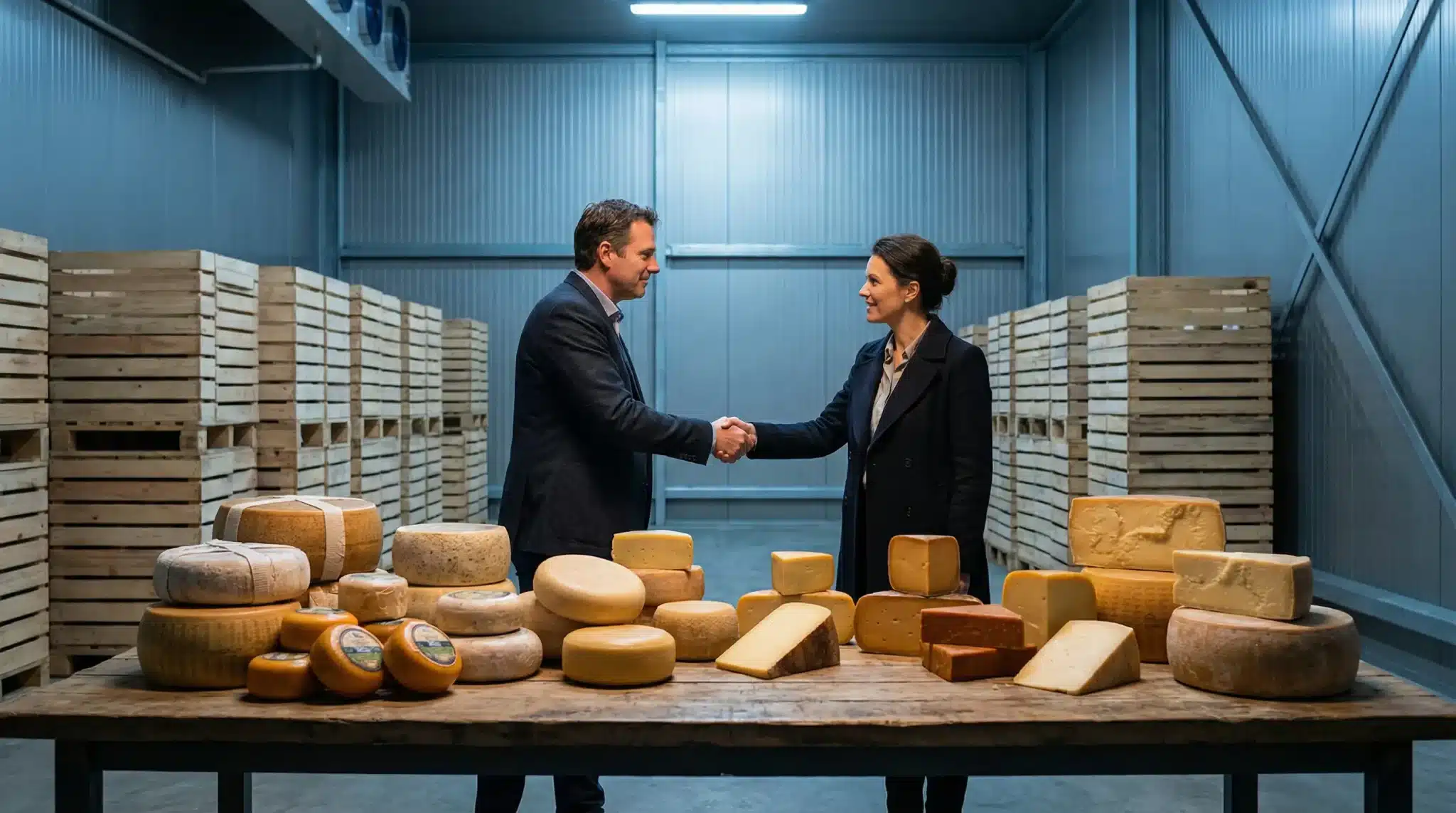
That gap is where brokers come in. A wholesale cheese broker sits between dairy producers and commercial buyers, handling communication, negotiation, and logistics coordination so that large-scale procurement doesn’t collapse under its own weight. They don’t take ownership of the product. They work on commission, getting paid when a deal closes, which means their incentive is to make both sides happy.
What Brokers Actually Do
Call it matchmaking if you want, but that label barely covers it. On any given day, a broker might be fielding an urgent inquiry from a food distributor hunting for aged cheddar, simultaneously discussing pricing with a cooperative, and tracking a refrigerated shipment that is two days late.
The real asset is the network. Brokers stay plugged into creameries, cooperatives, and large dairy processors for years, sometimes decades. When a buyer needs a specific aging profile or a particular cut, a good broker doesn’t search the internet. They pick up the phone and call someone they’ve worked with before.
How Suppliers Use Brokers
Most dairy producers aren’t trying to build a sales operation. They’re trying to make good cheese. Getting in front of foodservice distributors, grocery chains, or industrial food manufacturers requires contacts, a sales process, and time that most smaller creameries simply don’t have.
Working with a broker sidesteps that problem. The broker identifies qualified buyers, confirms they’re actually in the market, and handles the back-and-forth so the producer doesn’t have to. For specialty producers running limited batches or seasonal varieties, that kind of targeted placement is hard to replicate any other way.
There’s a pricing dimension too. Because brokers work across multiple producers and accounts, they have a ground-level view of what the market is actually doing. That perspective helps suppliers price correctly, avoiding the twin mistakes of leaving money on the table and losing deals by overreaching.
How Buyers Benefit
Restaurant groups, regional distributors, and national chains all have the same underlying problem: too many potential suppliers, not enough time to sort through them. A broker with an established network narrows that search considerably, surfacing options that already fit the buyer’s specs rather than having the buyer do the filtering themselves.
Consistency matters too. Brokers who specialize in a category develop an intuitive sense of quality benchmarks, shelf-life expectations, and cold chain requirements. That familiarity reduces the risk of a sourcing mismatch that would cost money downstream.
And then there’s the negotiation piece. Most people overlook this part, but experienced brokers know where each side has room to move. Buyers who go through a broker often end up with better terms than they’d get in a direct conversation, not because the broker is playing games, but because the broker understands the deal better than either party does individually.
The Process: From Inquiry to Delivery

Brokered transactions vary, but the sequence is usually recognizable.
It starts with the buyer. They come with a spec: the variety, quantity, packaging format, and delivery window. The broker takes that to their supplier contacts, checks availability, and pulls together realistic options. Once those are on the table, negotiations proceed through the broker until the price, delivery terms, and any certification requirements are locked in.
From there, it shifts to logistics. The broker monitors fulfillment, follows up on shipping confirmations, and stays available if something goes sideways in transit. Delivery confirmed, payment processed, commission paid. Clean and straightforward, when it works.
Market Knowledge as a Core Asset
Here’s the thing: most buyers don’t fully appreciate that a broker’s market knowledge isn’t stored in a spreadsheet. It builds up over time through trade events, tracking commodity reports, and years of conversations with producers and distributors who talk candidly because the relationship has earned it.
Milk costs, seasonal production cycles, and shifting demand from foodservice and retail drive cheese pricing. A broker who’s paying attention to those variables can tell a buyer when to lock in pricing and help a supplier decide when to push versus when to hold. That kind of timing advice doesn’t come from a data feed.
Why the Relationship Layer Matters
The whole system runs on trust. Suppliers need confidence that a broker is representing their product honestly and sending them real buyers. Buyers need to believe the sourcing options they’re being shown are solid. Neither side can verify that in a single transaction.
So it gets built incrementally. A broker who handles problems cleanly, communicates without spin, and follows through consistently becomes someone both sides want to work with again. When supply chain issues come up, and they always do eventually, those relationship-backed brokers are the ones who can get the right people on the phone fast enough to matter.
For anyone buying or selling cheese at a commercial scale, understanding how that intermediary layer actually functions is worth the time. It changes how you evaluate brokers and what you ask of them.