How to Pick the Right Living Room Rug Size?

You finally found a rug you love. It arrives, you roll it out, and something just feels off. It is either too small, making your sofa look like it is floating, or too big, swallowing up the entire room.
This is one of the most common living room mistakes people make, and it is completely avoidable.
Picking the right area rug size for your living room comes down to knowing your space, your furniture layout, and a few simple rules.
In this guide, we will walk through how to measure your room, which standard rug sizes work best, smart placement tips, mistakes to avoid, and how to keep your rug in great shape for years to come.
Why Rug Size Matters in the Living Room
Picking the right size area rug for your living room does more than just cover the floor.
A well-sized rug ties the seating area together, makes the room feel balanced, and helps define different zones in an open-plan space.
Get it wrong, and a rug that is too small will make your furniture look like it is floating, while one that is too large can make the room feel crowded and off.
The size of your rug sets the tone for the whole room, so it is worth getting right from the start.
How to Measure Your Living Room for the Perfect Rug
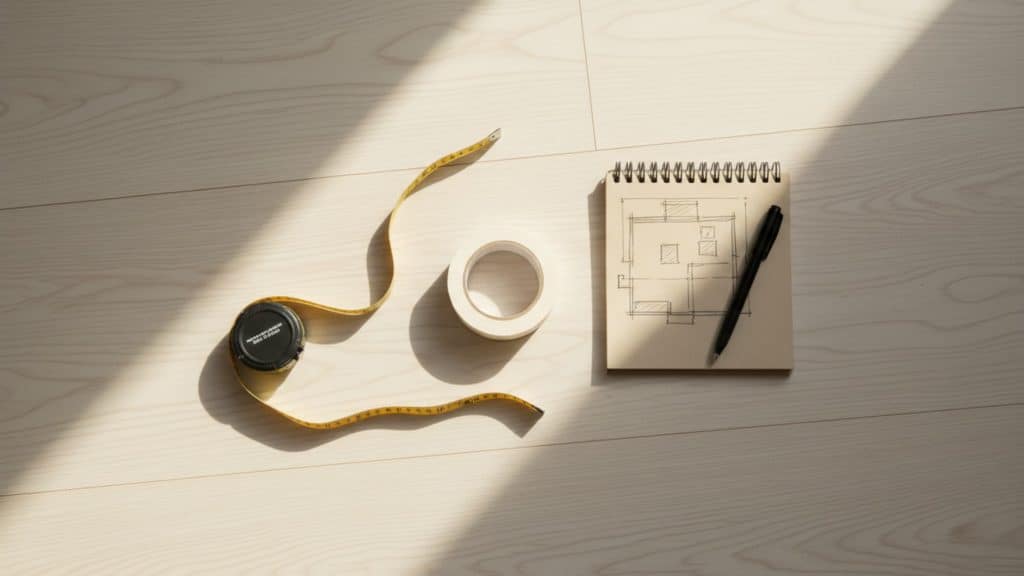
Getting the right area rug size for your living room starts with one simple step: measuring your space correctly. A few basic tools and a little prep work can save you from a costly mistake.
Tools You Will Need:
| Tool | Purpose |
|---|---|
| Tape Measure | Measures room and furniture dimensions |
| Painter’s Tape | Marks rug boundaries on the floor |
| Paper Templates | Simulates rug size and shape before buying |
| Notepad or Phone | Records measurements for reference |
Measure Room Dimensions: Measure the full length and width of your living room, and note any fixed features, such as a fireplace or built-in shelves, that may limit where you can place the rug.
Furniture Layout Consideration: Measure the full footprint of your sofa, chairs, and coffee table so you know exactly how much floor space they occupy.
Visualization: Lay down painter’s tape on the floor in the shape and size of the rug you are considering, so you can see how it will actually look before you buy.
Standard Rug Sizes and Their Ideal Uses
Not all living rooms are the same size, and neither are the rugs that work best in them. Here is a quick breakdown of standard rug sizes and where each one fits best.
5′ x 7′ Rug
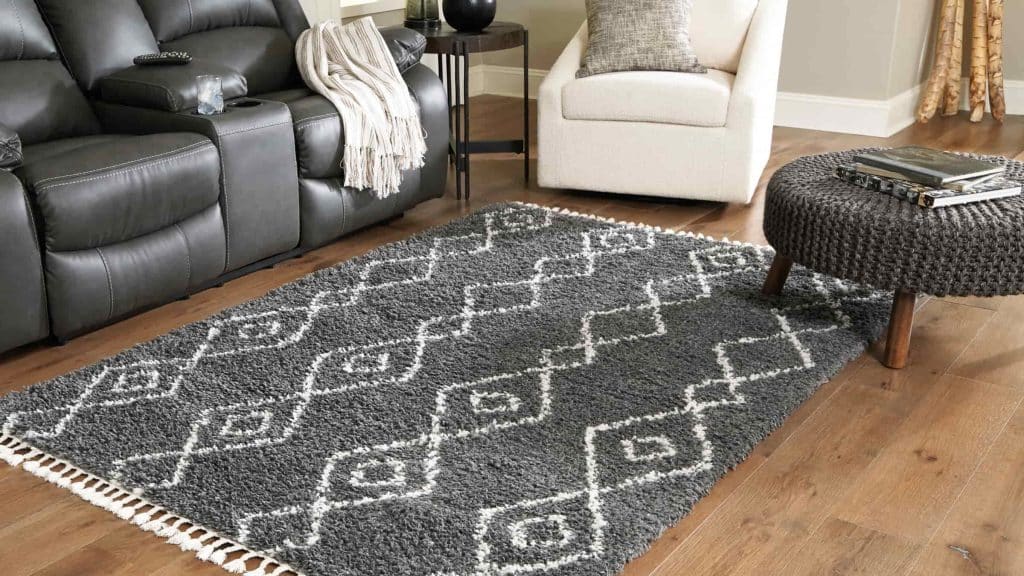
This size works well in small living rooms or compact seating areas. It fits neatly under a coffee table without overwhelming the space. Think of it as a good starting point for a cozy, smaller room.
6′ x 9′ Rug
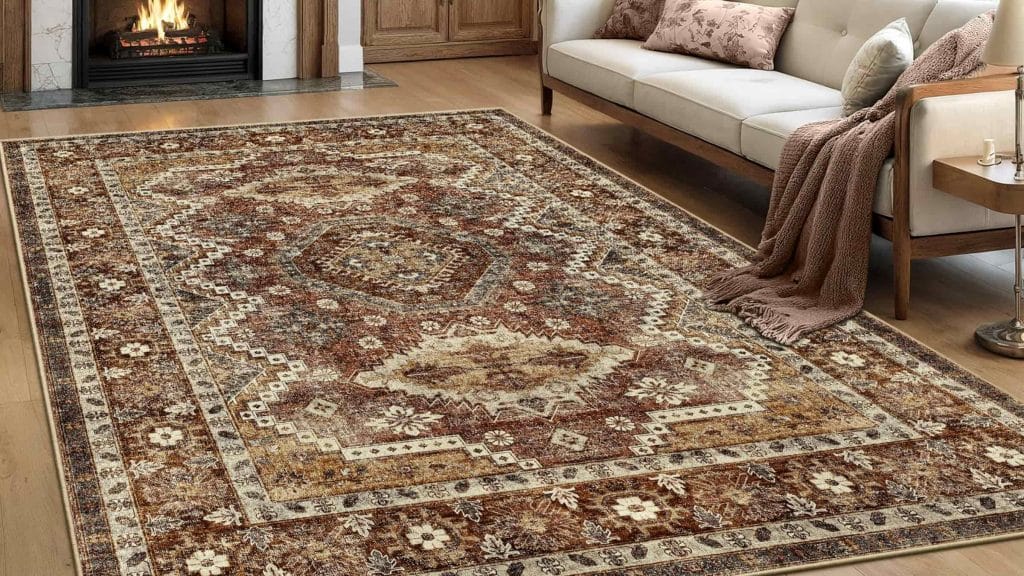
This is a solid choice for smaller to mid-sized living rooms. It allows the front legs of your sofa and chairs to rest on the rug, which helps pull the seating area together. It adds warmth without taking over the entire floor.
8′ x 10′ Rug
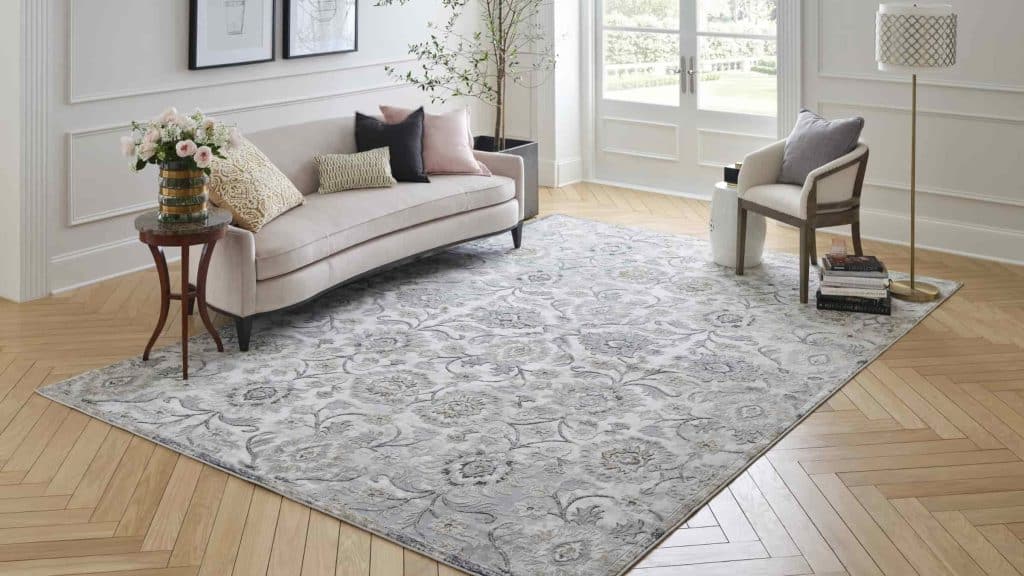
This is the most popular size for medium-sized living rooms. It offers enough coverage to place all key furniture pieces on it or at least their front legs. It strikes a good balance between coverage and breathing room around the edges.
9′ x 12′ Rug
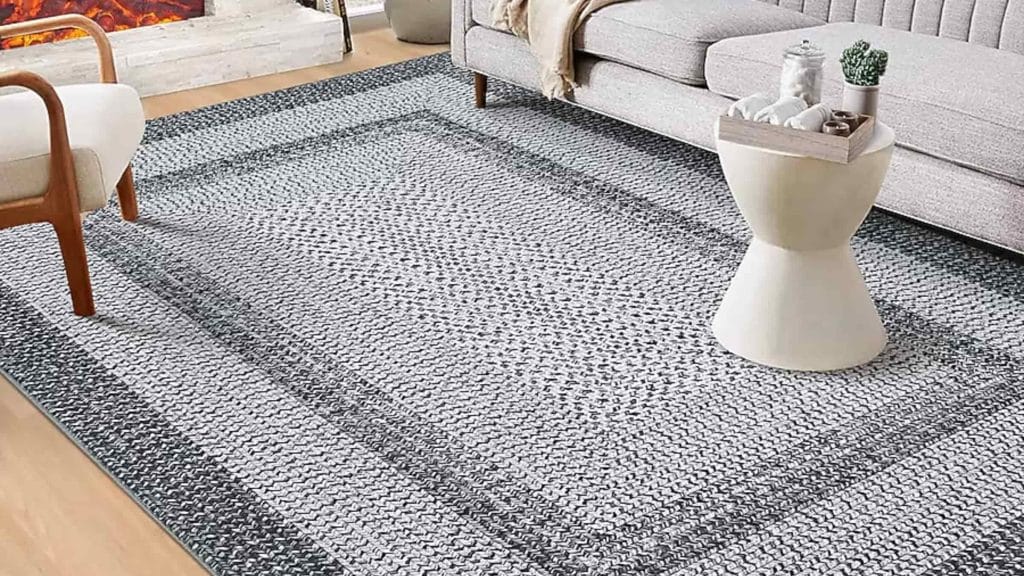
This size is ideal for larger living rooms where you want the rug to anchor the full seating area. It extends beyond the furniture, giving the room a more complete, put-together look. It works especially well in rooms with sectional sofas.
10′ x 14′ and Larger Rugs
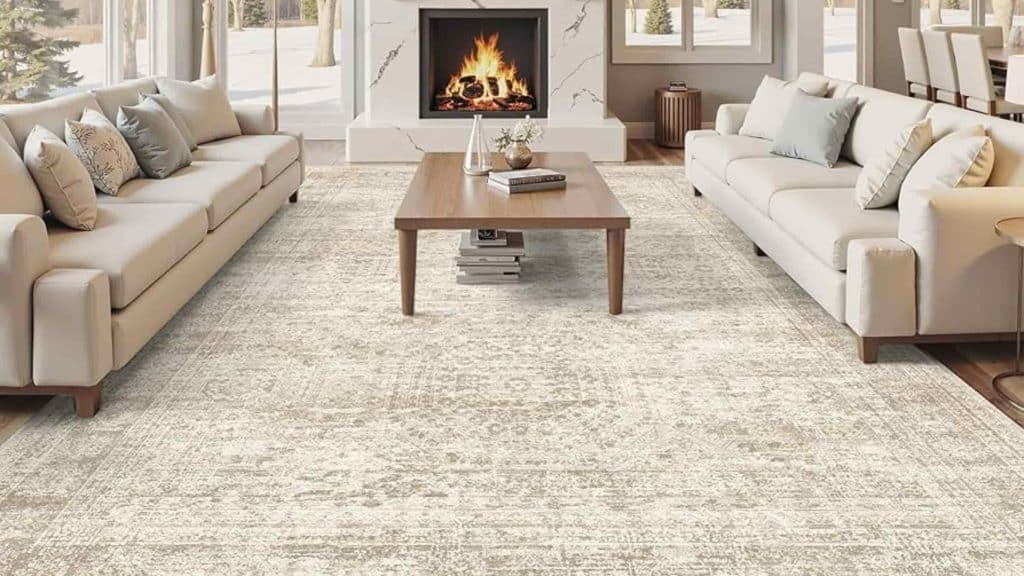
This size is best suited for open-plan or very large living rooms. It connects multiple seating areas, making the space feel intentional and well planned. If your living room doubles as a dining or reading area, this size helps bring it all together.
Rug Placement Tips for Maximum Impact
Choosing the right size area rug for your living room is only half the work. How you place it makes just as big a difference to how the room looks and feels.
- Keep at Least 18 Inches of Bare Floor Around the Rug: Always leave a border of exposed floor between the rug edge and the wall so the room does not feel closed in.
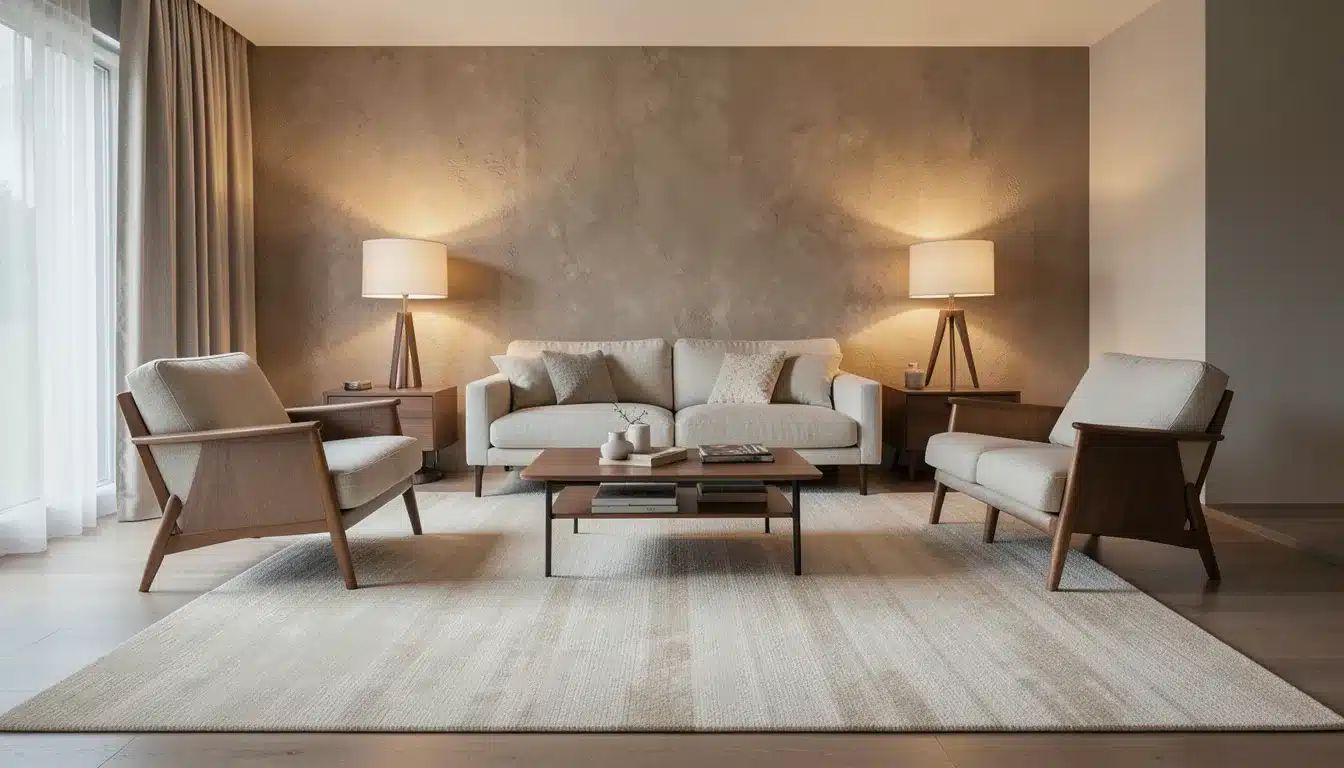
- Place Front Legs of All Seating on the Rug: Resting the front legs of your sofa and chairs on the rug instantly ties the seating area together and creates a connected look.
- Center the Rug Under the Coffee Table: Aligning the rug with your coffee table keeps the seating arrangement balanced and gives the space a clean, organized feel.
- Avoid Pushing Furniture Completely Off the Rug: Having all four legs off the rug breaks the visual flow and makes the furniture look disconnected from the rest of the room.
- Align the Rug with the Longest Wall in the Room: Placing the rug parallel to the longest wall helps the room feel more structured and makes the space look longer and more proportional.
Room-Specific Rug Size Recommendations
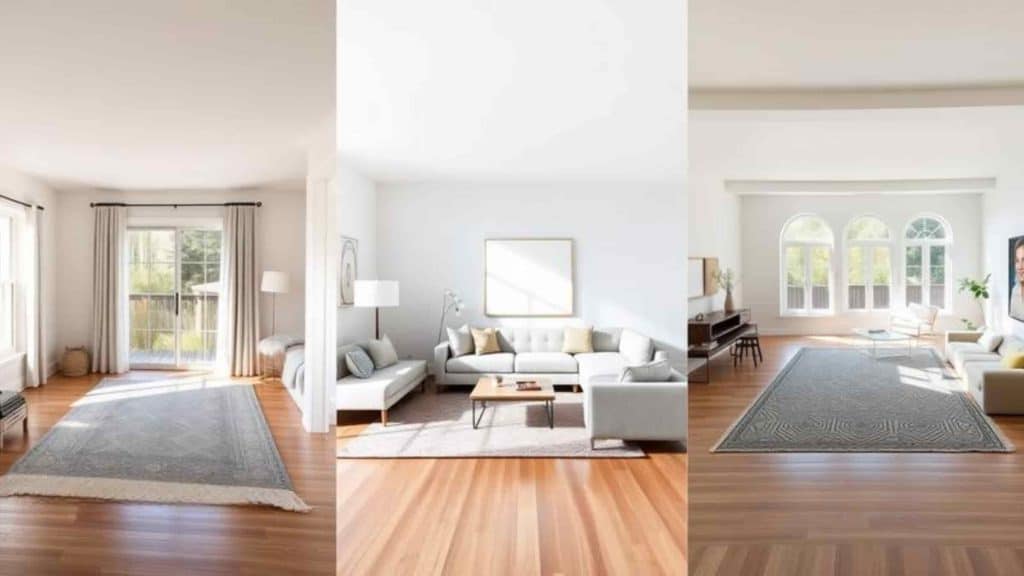
The right area rug size for your living room depends on how much space you have. Here is a simple guide based on your room type.
1. Small Living Rooms
A 5′ x 7′ or 6′ x 9′ rug keeps the space from feeling too crowded. Smaller rugs allow for easier movement around the room and let the floor breathe. They also make a compact room feel more open rather than squeezed.
2. Medium Living Rooms
An 8′ x 10′ rug is the go-to choice for most medium-sized living rooms. It offers enough coverage to anchor your main seating pieces without overwhelming the space. This size works well with most standard sofa and chair arrangements.
3. Large Living Rooms
A 9′ x 12′ rug or bigger is the right call for a large living room. It grounds the furniture, fills the space purposefully, and breaks the room into clear functional zones. Without a rug this size, large rooms can feel empty and unfinished.
4. Open-Plan Living Rooms
In open-plan spaces, one large 10′ x 14′ rug or two smaller rugs placed strategically can define separate zones for living, dining, and other areas.
This approach gives each zone its own identity while keeping the overall space feeling connected. It is one of the most practical ways to bring order to a large, multi-use room.
Common Rug Sizing Mistakes and How to Avoid Them
Even a great-looking rug can work against your room if it is the wrong size or placed incorrectly. Here are five common rug sizing mistakes people make and how you can easily avoid them.
| Mistake | How to Fix It |
|---|---|
| Going Too Small | Size up and fit at least the front legs of the furniture on the rug |
| Going Too Large | Leave at least 18 inches of bare floor around the rug edges |
| Ignoring Furniture Layout | Measure your furniture footprint before choosing a rug size |
| Skipping the Tape Test | Use painter’s tape to mark rug dimensions on the floor first |
| Blocking Traffic Flow | Make sure the rug keeps the main walkways clear and easy to pass through |
Essential Rug Care Tips for Longevity and Freshness

Finding the right area rug size for your living room is a great start, but taking care of it properly is what makes it last. A little regular maintenance goes a long way in keeping your rug looking its best.
- Cleaning Wool Rugs: Vacuum wool rugs regularly, and spot-clean with cold water and a mild soap to prevent shrinking or damage to the fibers.
- Cleaning Synthetic Rugs: Synthetic rugs are easier to maintain and can handle more aggressive cleaning, including steam cleaning for deeper dirt removal.
- Cleaning Cotton Rugs: Most cotton rugs are machine-washable, making them among the easiest to keep fresh and clean.
- Use a Rug Pad: A good rug pad keeps the rug from slipping, protects your floor underneath, and adds cushioning that extends the life of the rug.
- Rotate Your Rug Seasonally: Rotating your rug every few months spreads out foot traffic evenly and prevents one area from wearing down faster than the rest.
- Clean Regularly to Maintain Appearance: A quick vacuum once or twice a week helps prevent dust and debris from settling deep into the fibers and dulling the rug’s appearance over time.
Choosing the Right Rug Shape and Texture
When picking an area rug for your living room, shape, texture, and color all play a big role.
Rectangular rugs are the most common and work well in most layouts, but a round rug can add a nice visual break in a square room or under a circular coffee table.
For texture, consider how the room is used. A plush, high-pile rug feels great underfoot in a low-traffic space, while a low-pile or flat-weave rug holds up much better in busy areas.
As for color and pattern, keep your existing furniture and wall tones in mind. A rug that complements your décor pulls the whole room together without competing for attention.
Final Thoughts
Choosing the right area rug size for your living room does not have to feel overwhelming.
Start by measuring your space, keep your furniture layout in mind, and use the standard size guide to narrow down your options.
A well-sized rug grounds the room, defines the seating area, and makes the whole space feel more put together. Do not forget to use a rug pad, rotate it regularly, and clean it based on its material.
Ready to find your perfect rug? Drop your room dimensions in the comments, and we will help you figure out the best size for your space!