How to Pick a Privacy Fence That Won’t Fall Apart in 10 Years

f you’ve spent any time browsing fence options for your backyard, you already know the number of choices is overwhelming. Wood, vinyl, chain link, composite, aluminum. Each one promises something slightly different, and each one has trade-offs that the marketing materials tend to gloss over.
The real question isn’t which fence looks best in a showroom photo. It’s which one will still look good and stand straight after a decade of rain, snow, UV exposure, and the occasional windstorm. That’s where most homeowners get tripped up, because the upfront cost doesn’t tell you much about long-term value.
The Problem With Wood Fences (Yes, Even Cedar)
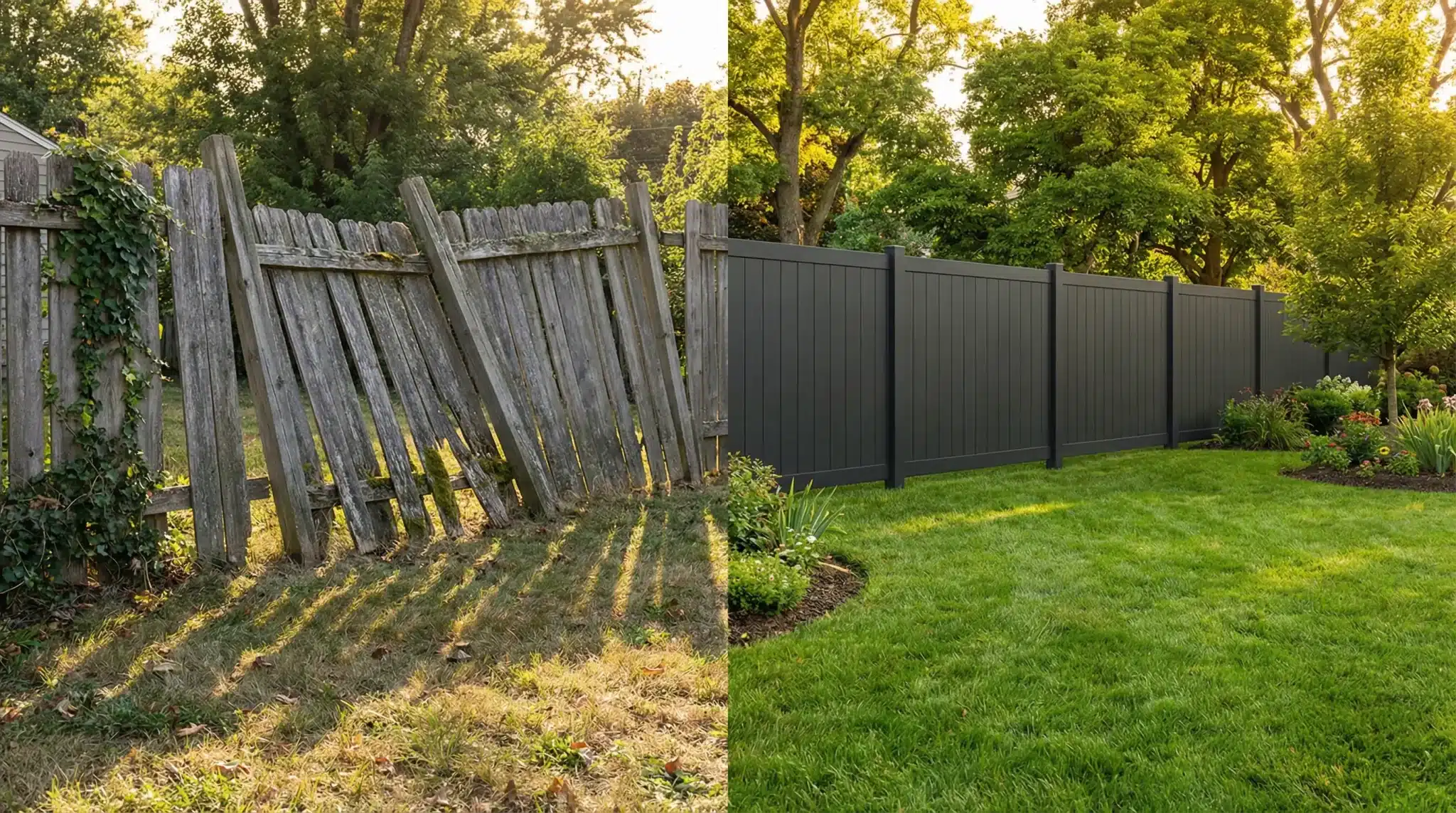
Cedar is the go-to recommendation for wood fencing, and for good reason. It’s naturally resistant to insects and has a warm, natural look. But here’s what often gets left out of the conversation: cedar in most of North America lasts about 8 to 12 years before it starts showing real signs of rot, cracking, and greying. That’s assuming you’re staining it every two to three years, which most people don’t actually do.
Pressure-treated lumber is cheaper upfront but performs worse. Expect warping, leaning, and post rot below the soil line within 7 to 10 years. If you live anywhere with freeze-thaw cycles, those timelines shrink. The posts absorb water, freeze, expand, and crack. Repeat that 50 or 60 times a winter and the structural integrity drops fast.
Vinyl Looks Great Until It Doesn’t
Vinyl fencing had a big moment about 15 years ago. Low maintenance, no painting, clean white look. The problem is that vinyl becomes brittle in cold temperatures. Below minus 20 Celsius, a strong gust or a bump from a snowblower can crack a panel, and vinyl panels can’t be patched or repaired. You replace the whole section or live with it.
Yellowing is the other issue. UV exposure breaks down the polymer over time, and after 10 to 15 years, white vinyl starts taking on that dingy cream colour. There’s no fix for it besides replacement.
Why Aluminum Is Gaining Ground
Aluminum fencing used to be associated mostly with pool enclosures and commercial properties. That’s changed a lot in the last five years. The residential aluminum fence market has been growing steadily, with Grand View Research projecting the global fencing market to reach $36.6 billion by 2030, driven partly by demand for low-maintenance, weather-resistant materials.
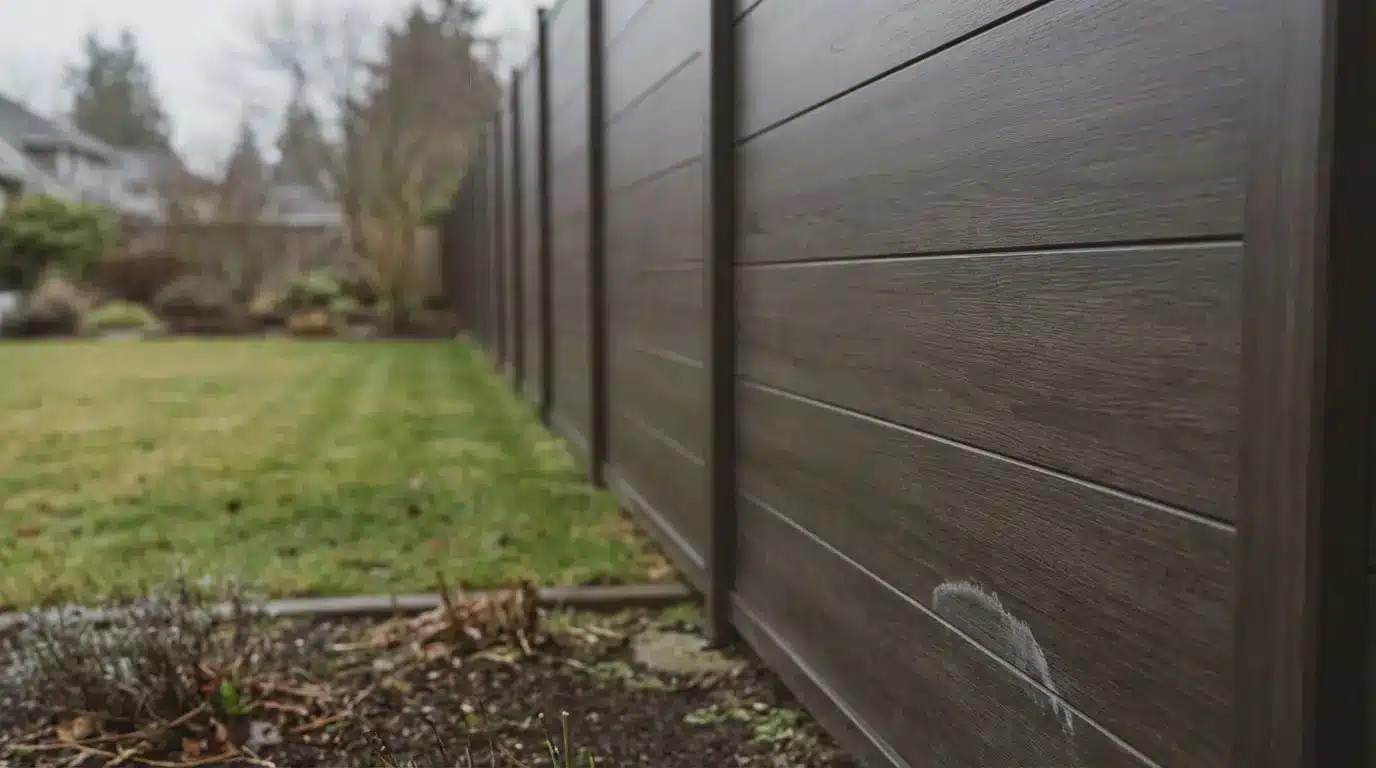
What makes aluminum different is the combination of zero maintenance and real longevity. There’s no rot, no rust, no repainting. Modern aluminum privacy fence panels use foam-core construction that keeps the weight manageable while blocking sightlines completely, which used to be the one thing aluminum couldn’t do well.
A good aluminum fence system should last 25 years or more without any structural maintenance. Some manufacturers now offer panels in wood-grain finishes (think walnut and grey tones) that look like stained wood from a few feet away. The finish is applied through a multi-layer coating process, not a wrap or film, so it holds up to UV and moisture far better than paint on wood.
What to Actually Look For When Shopping
Not all aluminum fences are equal. Here are the things worth checking before you commit:
Wind load rating. This matters more than people think. A fence that can’t handle high winds will loosen at the posts over time, even if individual gusts don’t knock it down. Look for systems tested to at least 180 km/h. Some, like semi-privacy aluminum fence designs, are engineered with airflow gaps that reduce wind load while still providing substantial screening.
Fire rating. If you’re in an area prone to dry conditions or near any wildfire zones, check whether the fence has been tested under ASTM E84. Aluminum is non-combustible, but the specific assembly (including any insulation core) needs to be rated. Class A is the highest rating.
Warranty specifics. A 20-year warranty on the powder coat finish is a good benchmark. Read what’s actually covered. Some warranties exclude colour fading, which defeats the purpose.
Panel size options. Standard 6-foot panels work for most yards, but if you need full privacy from a second-storey neighbour or want to screen a hot tub area, look for manufacturers that offer 8-foot heights. Custom sizing is a bonus.
The Cost Comparison That Actually Matters
Here’s a rough breakdown for a 100 linear feet of 6-foot-tall privacy fencing, including installation:
Pressure-treated wood: $2,500 to $4,000 upfront, plus $300 to $500 every 2 to 3 years for staining. Over 20 years, you’re likely replacing it once, so total cost: $7,000 to $11,000.
Cedar: $4,000 to $6,000 upfront, similar maintenance costs. One replacement cycle brings the 20-year total to $10,000 to $15,000.
Vinyl: $3,500 to $6,000 upfront, no maintenance, but likely one replacement around year 12 to 15. Twenty-year total: $7,000 to $12,000.
Aluminum: $4,500 to $7,500 upfront, zero maintenance, no replacement expected within 20 years. Twenty-year total: $4,500 to $7,500. You can explore the full range of panel styles and pricing at primealux.ca.
The upfront cost for aluminum is higher than wood in most cases, but the lifetime cost is almost always lower. And that’s before you factor in the hours you don’t spend staining, repairing, or arguing with contractors about why the posts are leaning again.
Final Thought
The best fence is the one you install once and then forget about. Not because you don’t care about your yard, but because you picked something that doesn’t need constant attention to stay functional and good-looking. That’s the whole point of spending the money in the first place.