How to Fix a Leaky Kitchen Faucet Yourself in Under an Hour

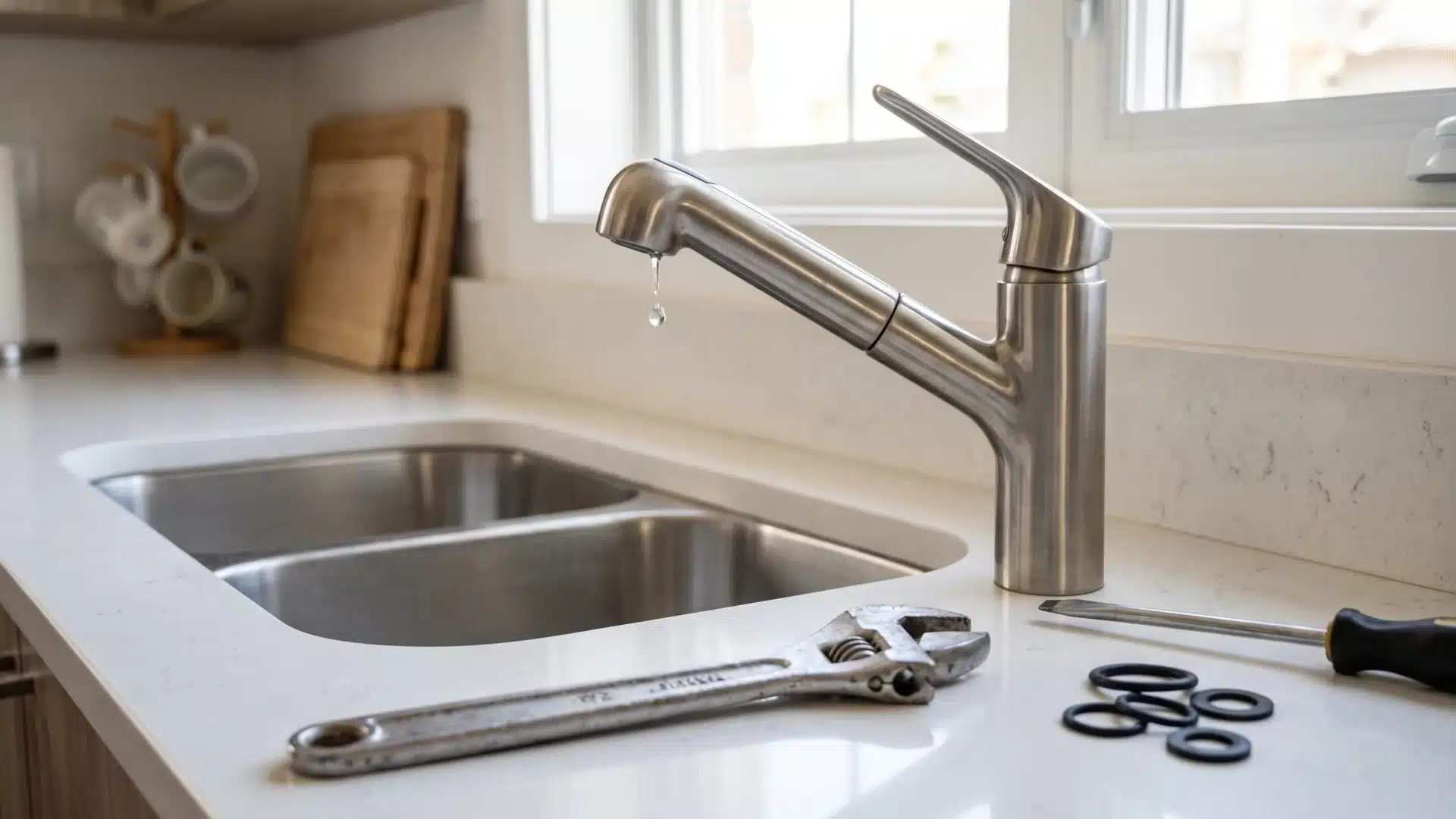
A kitchen faucet leak often traces back to one worn part inside the handle. That part is usually a washer, an O-ring, or a cartridge. Shut off the water, open the faucet, swap the part, and the drip usually stops within an hour.
A kitchen faucet rarely fails all at once. The drip starts small and is easy to ignore for a week or two. Then it gets loud enough to hear from the next room.
By the time people finally deal with it, the fix is still the same $15 part. It would have cost the same on day one.
The part that gives out is almost always inside the handle, not somewhere deep in the pipes. That is why this repair takes a screwdriver and a wrench, not a plumber’s toolkit.
How to Identify Your Kitchen Faucet Type Before You Buy Parts
Kitchen faucets come in four main types. Each one fails differently, so match yours before you buy parts.
- Compression faucets have two separate handles, one for hot and one for cold. They rely on a rubber washer that presses down to stop water flow.
- Ball faucets use one handle and a rotating metal or plastic ball inside. They rely on springs and rubber seats instead of a washer.
- Cartridge faucets can have one or two handles. A cartridge slides up and down or turns to control flow and temperature.
If you are not sure which one you have, count the handles first. Then check for a visible washer once you remove the handle.
Tools and Parts You Need for The Repair
Gather these before you start so you are not searching for a screwdriver mid-repair.
- Adjustable wrench
- Phillips and flathead screwdrivers
- Allen wrench, sizes vary by brand
- Slip-joint or tongue-and-groove pliers
- Plumber’s tape and plumber’s grease
- Replacement washer, O-ring, or cartridge, matched to your faucet
- A bucket or towel
DIY parts usually cost $10 to $30. A plumber visit for the same repair often runs $150 to $300. That gap alone makes this worth trying yourself first.
How to Shut Off the Water Before You Take Anything Apart
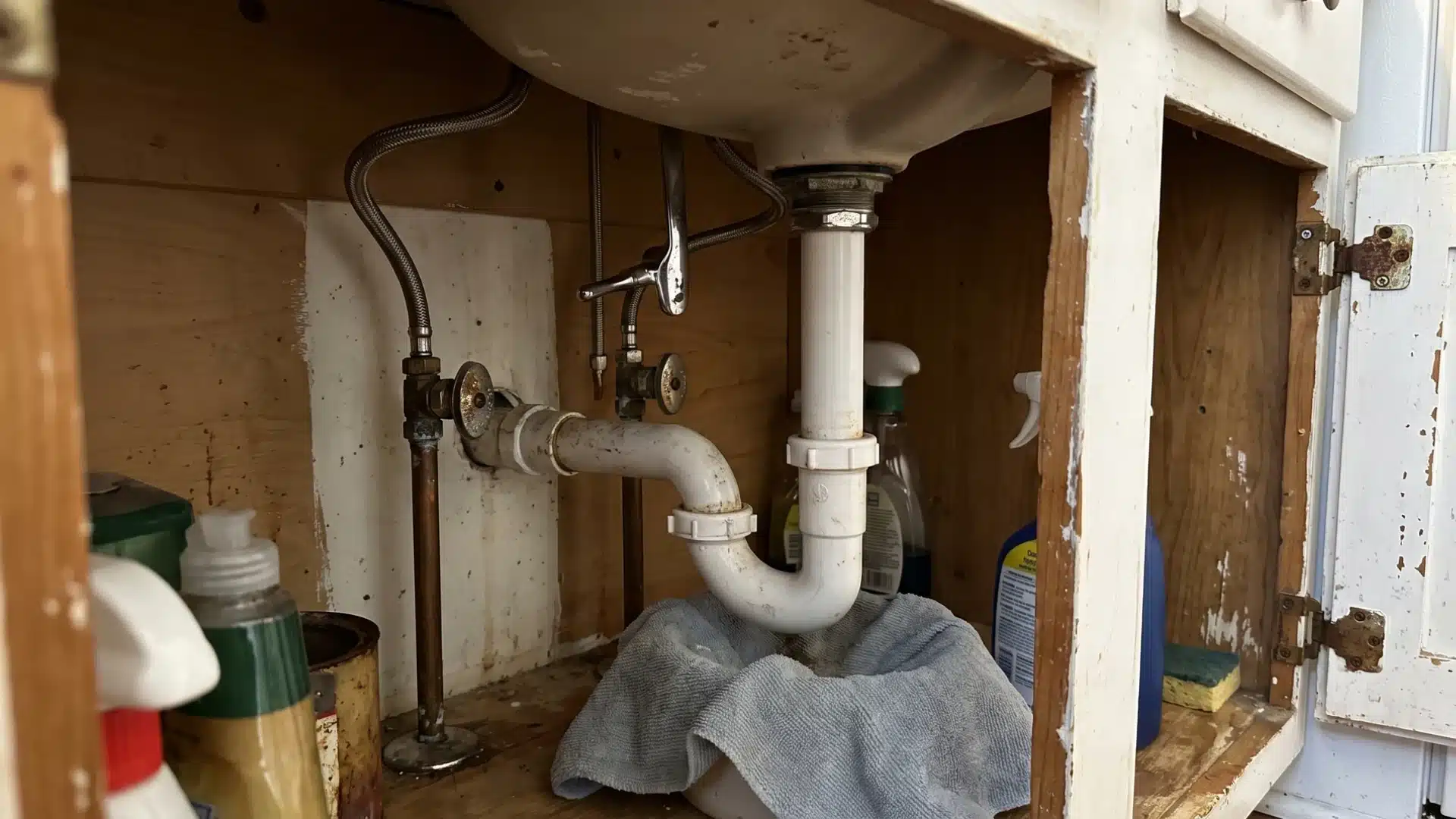
Look under the sink for two small valves, usually round or oval handles, connected to the supply lines. One feeds hot water and the other feeds cold.
Turn both valves clockwise until they stop moving. This shuts off the water supply to that faucet only, so the rest of the house stays unaffected.
If your sink does not have these valves, or they are rusted shut, use the main water valve. It shuts off water to your whole house. This is usually near the water meter or where the main line enters your home.
Turn the faucet handle on and leave it open for a minute. This releases any water still sitting in the line, so you won’t get sprayed when you start removing parts.
Plug the drain with a stopper, or stuff a rag into the opening. Screws and small springs are easy to drop, and you do not want them disappearing down the drain.
How to Fix a Leaky Kitchen Faucet by Type
Pick the section that matches the faucet type you identified earlier. Each one lists the exact parts to check and replace.
How to Fix a Leaky Compression Faucet (Two Handles)
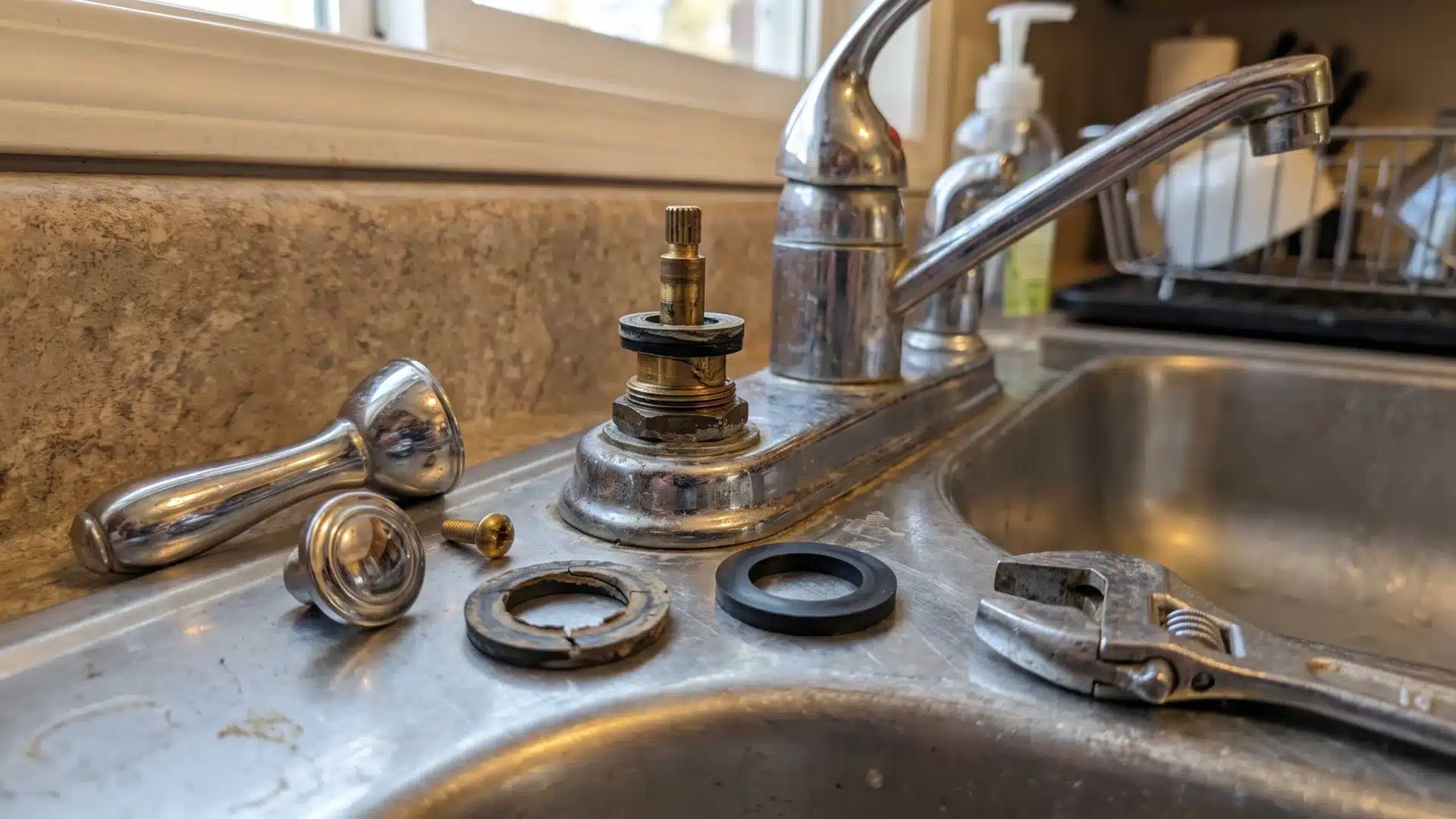
Pry off the decorative cap on the handle, then remove the screw underneath. Pull the handle straight up to remove it.
Unscrew the packing nut with a wrench, then lift out the stem. Look at the bottom of the stem for the rubber washer.
Remove the old washer and screw. Attach a new washer of the same size in its place. Check the valve seat inside the faucet body for pitting or roughness. Replace it if it looks worn.
Reassemble the faucet in reverse order, then slowly turn the water back on.
How to Fix a Leaky Ball Faucet (Single Handle)
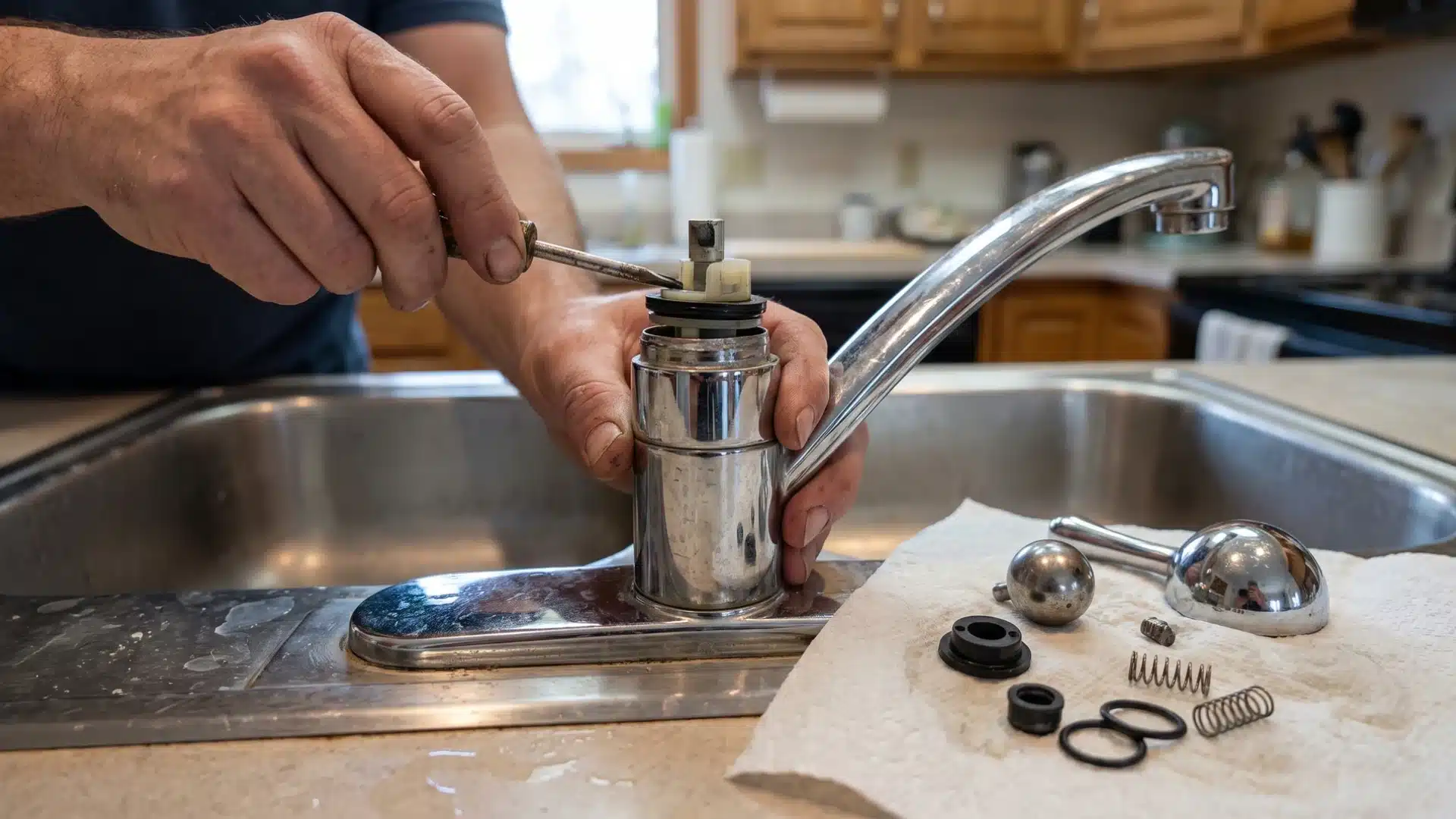
Loosen the set screw behind the handle and lift the handle off. Use pliers to unscrew the cap below it.
Lift out the cam, the rubber seal, and the ball itself. Check the ball for scratches or buildup. Replace it if it looks damaged.
Use a small screwdriver to pull out the old springs and seats underneath. Press in new ones in the same spot. If the leak is at the base of the spout, pull the spout up and replace the O-rings around it.
Put everything back in the same order you removed it, then turn the water back on.
How to Fix a Leaky Cartridge Faucet (Single or Double Handle)
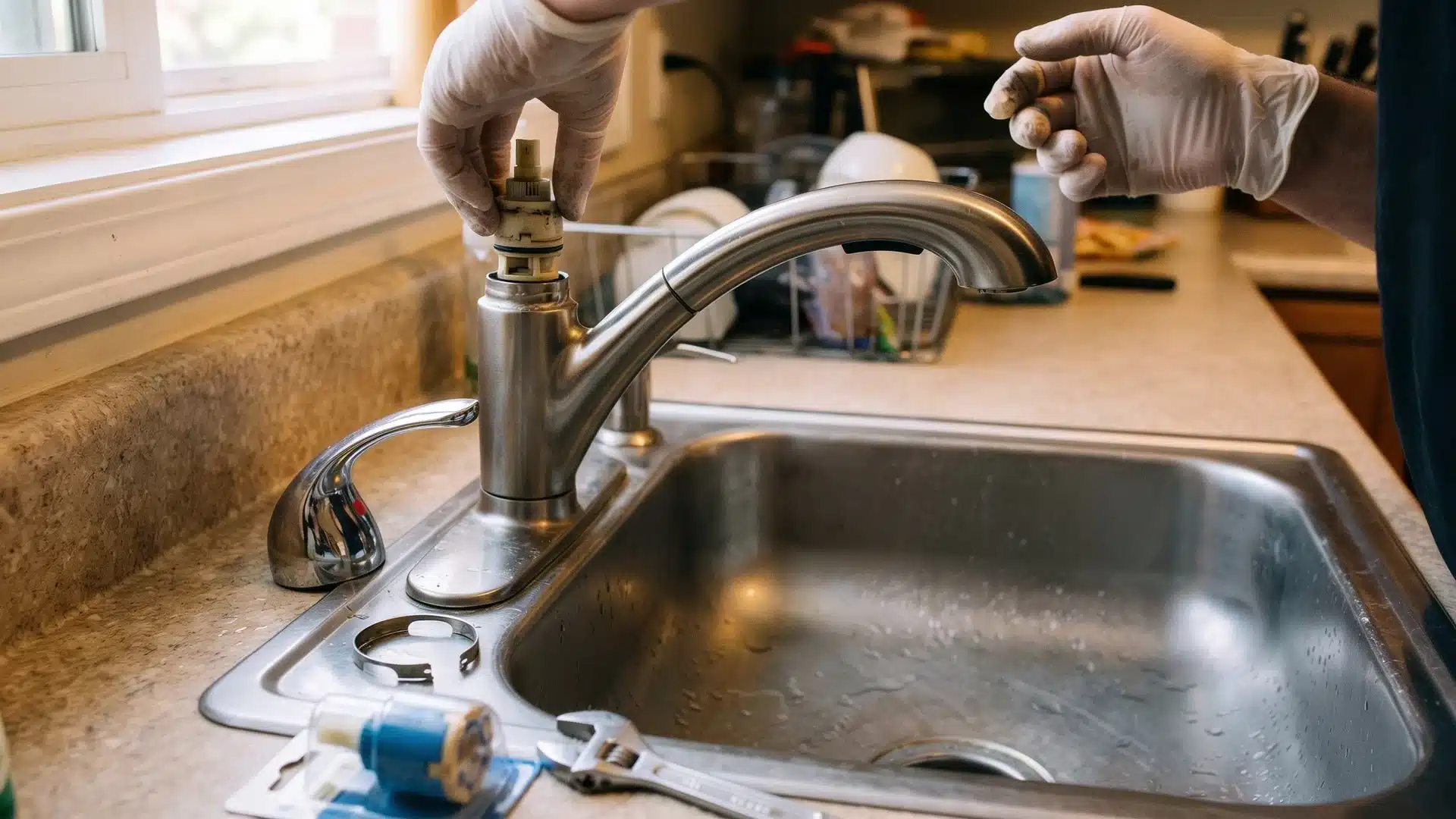
Remove the handle, then pull off the retaining clip. Or unscrew the retaining nut holding the cartridge in place. Note which way the cartridge faces before you take it out.
Pull the old cartridge straight out. Push the new one in, matching the same alignment as the old one.
Reassemble the faucet by hand first, then tighten with a wrench. Do not overtighten, since that can crack the housing.
Turn the Water Back on And Test for Leaks
Open both shut-off valves slowly. A sudden blast of pressure can damage a brand-new part.
Run the hot and cold water for a minute to flush out any debris. Watch the handle, the base of the spout, and the connections under the sink for drips.
If the faucet still leaks after this, the fix may need to go further. The cartridge or valve body itself may need full replacement, not just a seal.
What a Leaky Kitchen Faucet Actually Costs You if You Wait
A slow drip does not look expensive, but the math adds up fast. One drip per second wastes roughly 3,000 gallons a year. That can add $20 to $70 to your annual water bill.
A kitchen faucet ranks among the most common household leaks, right alongside toilets and outdoor spigots.
Left alone, a leak causes more than a higher bill. It can soak the cabinet floor under your sink. It can stain countertops and, over time, invite mold behind the wall.
Fixing the leak now is almost always cheaper than fixing the damage later.
Pro tip: Call a plumber for cracked faucet bodies, seized or corroded shut-off valves, hidden wall leaks, or recurring leaks after repeated repairs. These problems require tools and expertise to prevent flooding.
When You Should Call a Plumber Instead of Fixing It Yourself
Some leaks are not a DIY job. A cracked faucet body is one clear sign, since no washer or cartridge swap fixes broken plastic or metal.
Corroded shut-off valves that will not turn are another, since forcing them can snap the valve and flood the cabinet.
Water leaking inside a wall instead of under the sink also calls for a plumber. That kind of leak often means damaged supply lines you cannot see or reach.
The same goes if you’ve replaced parts twice and the leak keeps coming back. That points to a problem beyond the part itself.
None of these mean you did something wrong. They mean the fix needs tools or training beyond what a home repair kit offers.
How to Prevent Your Kitchen Faucet from Leaking Again
A little upkeep keeps you from doing this repair again next year. Do not overtighten handles when you close the faucet, since that stresses the seals early.
Clean the aerator every three to four months, sooner if you have hard water. Once or twice a year, open the cabinet under your sink and check the supply lines for moisture or rust.
Fold this into a broader seasonal home checkup so you catch it while checking other fixtures, too. Catching a small drip within a week of noticing it is far cheaper than waiting for it to get worse.
Frequently Asked Questions
Why does my kitchen faucet drip after I turn off the water?
A kitchen faucet drips after you turn off the water either because residual water is draining from the long spout or because a worn internal part prevents a tight seal.
Why is my faucet dripping even though the valves are closed?
A dripping faucet with closed handle valves means your under-sink shut-off valves aren’t forming a complete seal, so water bypasses them.
What is the lifespan of a kitchen faucet?
Kitchen faucets typically last between 10 and 20 years, depending on the build quality and how often they are used.
Final Thoughts
A washer, an O-ring, or a cartridge causes almost every kitchen faucet leak. None of these parts cost more than $30, and none of them need a plumber to replace.
Match your faucet type first, then work through the steps for that type in order. Do not skip the shut-off step. Don’t force any part into place if it doesn’t sit flush.
The whole repair usually takes less than an hour once the water is off. Compare that to the $150 to $300 a plumber visit runs for the same fix, and the choice gets easier.
A cracked faucet body, a stuck shut-off valve, or water inside a wall are the real signs to stop. Call a plumber for those. Everything short of that, you can fix yourself with parts from any hardware store.