How to Choose the Right Trailer Hitch Ball Size for Safe Towing

Towing problems rarely start with the trailer. They start at the connection point.
If the hitch setup is wrong, everything downstream is affected: load stability, braking performance, and overall safety. That is why understanding trailer hitch ball sizes is not a minor detail. It is a core part of any professional towing setup.
Before selecting a hitch ball, you need to understand the type of trailer you are working with. Different trailers are built for different loads, and those loads determine the coupler size, weight rating, and ball requirements. There is no universal fit.
If you are running equipment, hauling materials, or managing daily transport operations, getting the correct hitch ball size is not optional. It is part of protecting your crew, your equipment, and your schedule.
Why Hitch Ball Size Matters
The hitch ball is the physical connection between your tow vehicle and your trailer. If that connection is mismatched, the risks increase immediately.
An undersized ball can lead to:
- Coupler slippage
- Unstable towing at speed
- Uneven load distribution
- Accelerated wear on components
An oversized ball will not seat properly, which prevents the coupler from locking correctly. In both cases, the result is the same: compromised safety.
Correct trailer hitch ball sizes make for a secure connection that holds under load, across uneven terrain, and during repeated towing cycles.
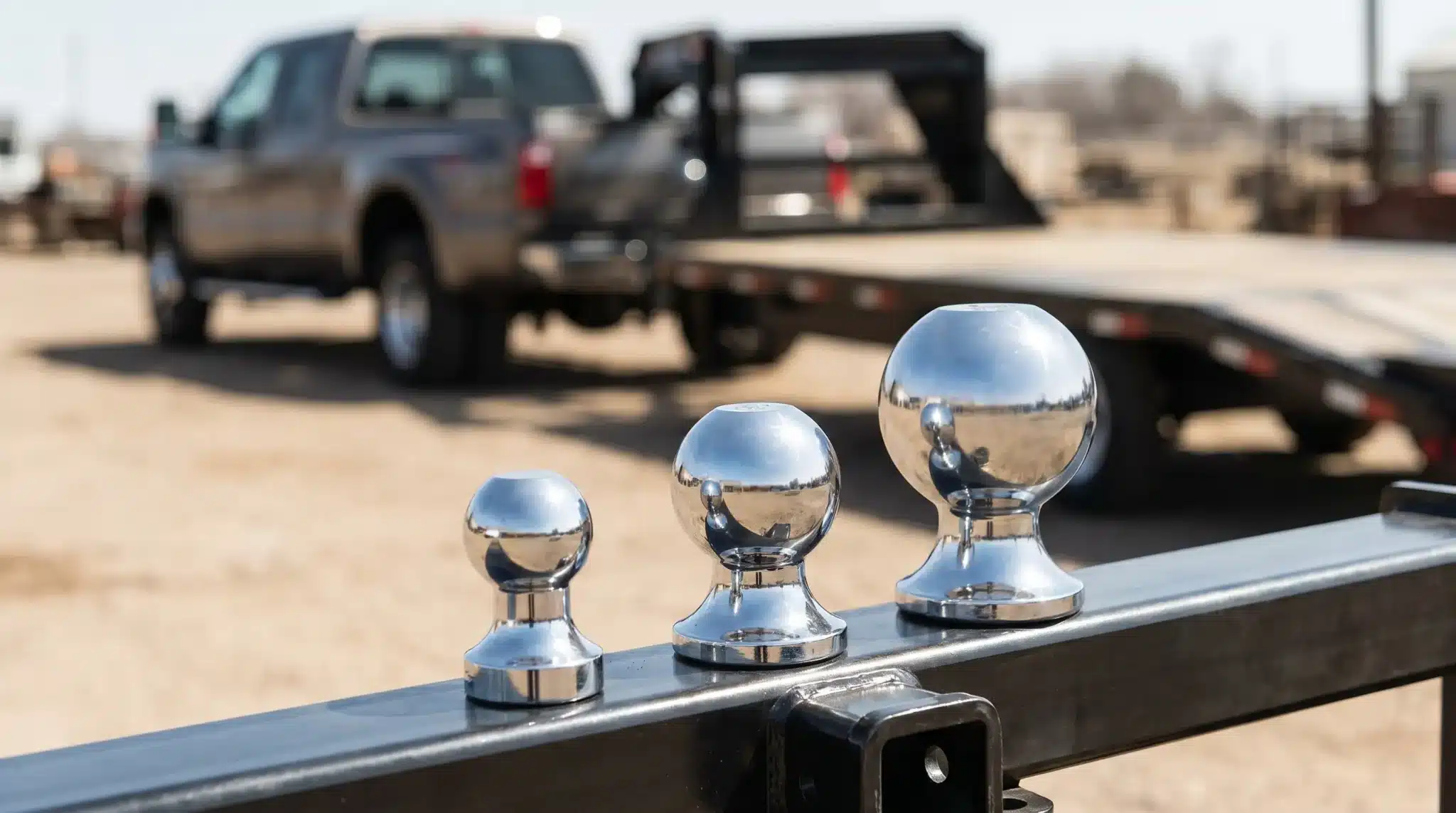
The Three Standard Trailer Hitch Ball Sizes
Most professional trailers use one of three standard hitch ball sizes.
1-7/8 Inch Hitch Ball
This is typically used for lighter trailers. It is not common in heavy duty or commercial applications.
2 Inch Hitch Ball
This is one of the most widely used sizes. Many medium duty trailers, especially general purpose hauling units, are built around this standard.
2-5/16 Inch Hitch Ball
This is the standard for heavy duty towing. Larger trailers, higher payloads, and commercial equipment hauling all point to this size.
If you are working with equipment trailer setups like those in equipment trailer categories, you will almost always be dealing with a 2-5/16 inch ball due to higher weight demands.
Match The Ball Size To The Coupler, Not The Guess
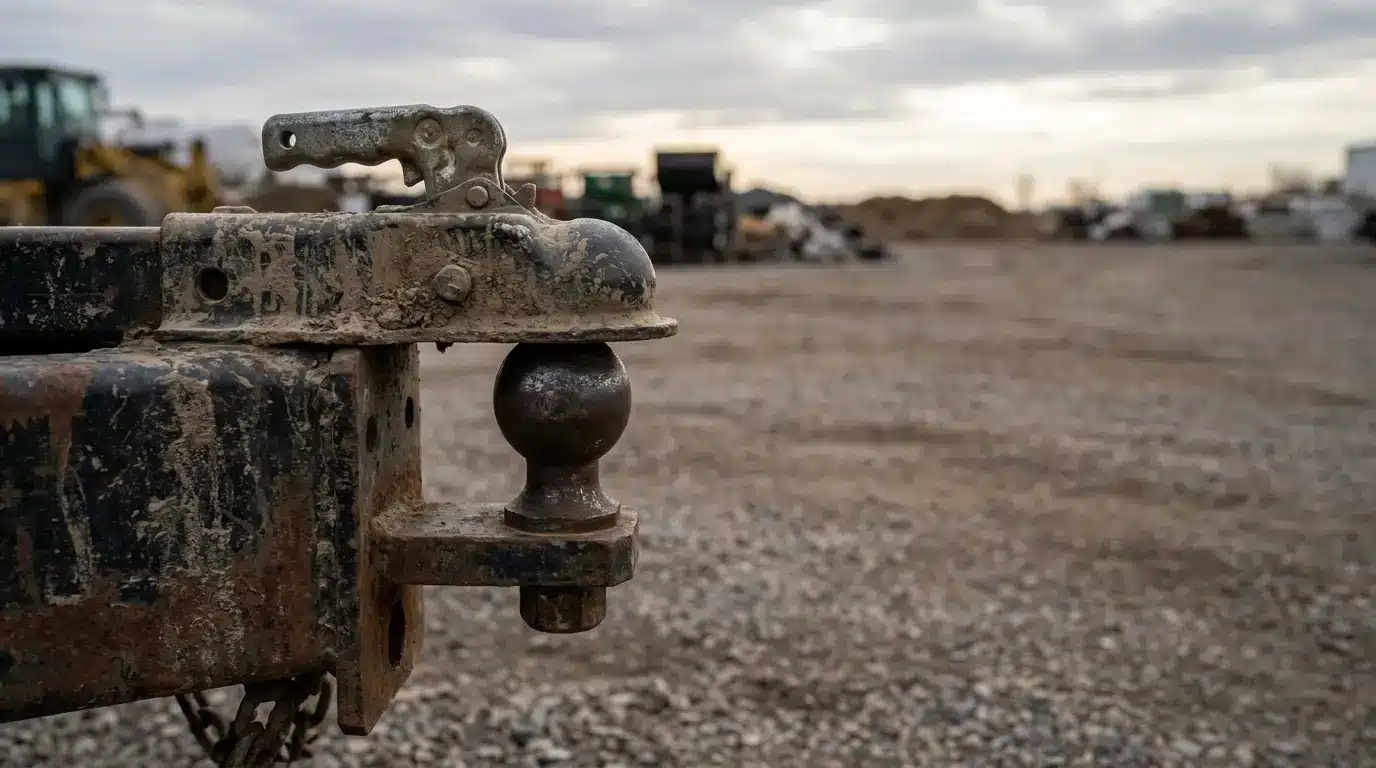
Every trailer has a coupler stamped with its required ball size. That marking is not a suggestion.
You should never:
- Assume a size based on appearance.
- “Make it fit” with adjustments.
- Use worn or damaged components.
Instead, verify:
- Coupler size marking
- Hitch ball diameter
- Weight rating stamped on both
Matching trailer hitch ball sizes correctly is about precision. Small differences at the connection point lead to major issues under load.
Weight Rating Is Just As Important As Size
Ball diameter is only part of the equation. Weight capacity matters just as much.
Each hitch ball is rated for a maximum load. That rating must meet or exceed:
- Trailer Gross Vehicle Weight Rating (GVWR)
- Loaded cargo weight
- Dynamic forces during travel
For example, hauling material with utility trailers for sale may not require the same capacity as transporting compact equipment, but both still require correct ratings.
Using a properly sized ball with an insufficient weight rating creates a hidden failure point. Everything may look correct until the system is under stress.
How Trailer Type Influences Hitch Ball Selection
Different trailers place different demands on the hitch system. Understanding that relationship helps avoid mismatches.
Equipment Trailers
Heavy machinery, uneven weight distribution, and frequent loading cycles require a larger hitch ball and higher capacity. Stability under load is essential.
Utility Trailers
These vary widely depending on use. Light duty hauling may allow for smaller sizes, but commercial operators typically step up to more robust configurations for durability.
Dump Trailers
With shifting loads and hydraulic dumping forces, stability becomes even more important. Many dump trailers require heavy duty hitch ball sizes to maintain control during transport and unloading.
Each trailer type dictates the appropriate size and rating. There is no one size fits all approach.
Real World Factors That Affect Hitch Performance
Even when sizes match, real world conditions still matter.
Consider:
- Uneven terrain
- Sudden braking
- Load shifting
- Frequent starts and stops
- Long distance towing
These factors place stress on the hitch system. A properly sized and rated hitch ball maintains connection integrity through those conditions.
Professionals who tow daily do not size for ideal conditions. They size for the worst case scenario.
Common Mistakes To Avoid
First time buyers, and even experienced operators, make avoidable errors when selecting hitch components.
Using The Wrong Size “Temporarily”
There is no temporary solution when it comes to towing safety. If the size is wrong, do not tow.
Ignoring Wear And Tear
Hitch balls wear over time. Flat spots, corrosion, or reduced diameter affect how the coupler seats.
Overlooking Torque Requirements
Improperly installed hitch balls can loosen under load. Always follow torque specifications for secure mounting.
Mixing Components Without Verification
Not all couplers and balls are manufactured to the same tolerances. Always confirm compatibility. Avoiding these mistakes keeps your equipment in service and reduces risk.
Built For Consistent Performance
A proper hitch setup does more than connect two pieces of equipment. It stabilizes the entire towing system.
When trailer hitch ball sizes are correctly matched:
- Loads track more consistently.
- The braking response improves.
- Wear on tires and suspension is reduced.
- Operators maintain better control.
Over time, these factors protect both equipment and productivity.
Frequently Asked Questions
How Do I Know Which Hitch Ball Size I Need?
Check the trailer coupler. It will list the exact ball size required. Always match that specification.
Can I Use A Smaller Ball If It Fits?
No. Even if it appears to fit, it will not seat securely. This creates a serious safety risk.
What Is The Most Common Hitch Ball Size For Heavy Duty Trailers?
2-5/16 inch is the standard for heavy duty and commercial applications due to higher load capacity.
Does Hitch Ball Size Affect Towing Stability?
Yes. Incorrect sizing leads to poor coupling, which affects balance, control, and safety.
Should I Replace My Hitch Ball Over Time?
Yes. Regular inspection is important. Replace worn or damaged hitch balls to maintain proper fit and performance.
Make The Right Connection From The Start
Choosing the right hitch ball is not complicated, but it does require attention to detail.
Match the size. Verify the rating. Account for real world conditions.
If you are building or upgrading your towing setup, start with the fundamentals. A properly matched hitch system keeps your trailer secure, your load stable, and your operation moving.