How Luxury Mineral Surfaces Compare to Quartz, Granite, and Porcelain

Choosing the right surface material is an important decision for homeowners, designers, and architects. Quartz, granite, and porcelain have long been popular choices for countertops, vanities, and other surfaces, but luxury mineral surfaces are quickly becoming a preferred alternative due to their unique combination of aesthetics, performance, and versatility that sets them apart from traditional options.
Aesthetic Differences
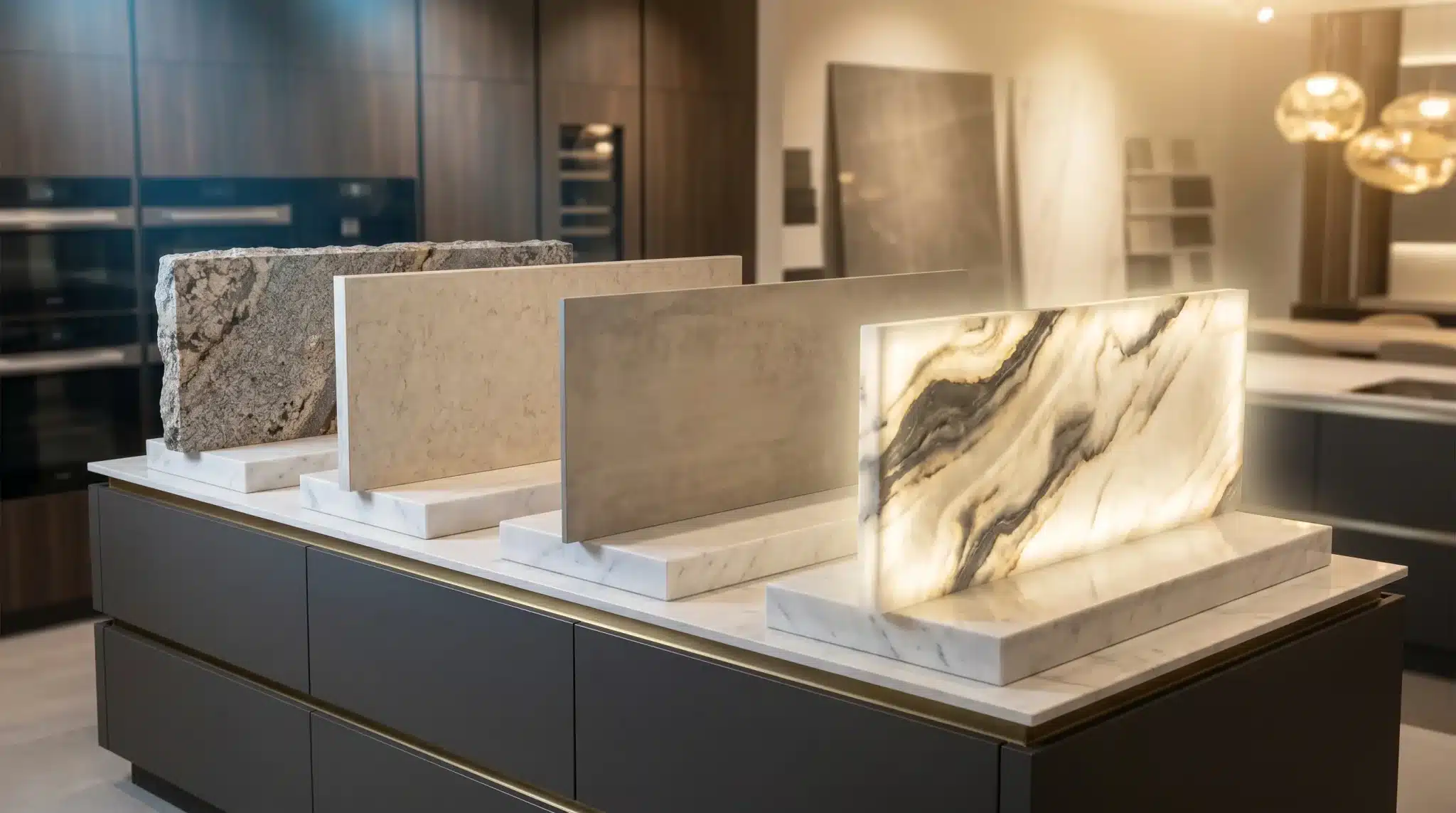
Granite and quartz are favored for their natural beauty, but each has certain drawbacks. Granite is a natural stone, so its patterns and colors are unique but can be inconsistent between slabs, making it hard to achieve a uniform look. As an engineered surface, quartz offers more consistency but can lack the depth and realistic look of natural stone. Porcelain is durable and versatile, but the design is applied only to the surface so it often falls short in replicating the natural texture and warmth of stone.
Luxury mineral surfaces help bridge the gaps between all of these materials. Advanced manufacturing techniques produce authentic veining, color variations, and translucency that mimic natural stone but maintain consistency throughout slabs. Large-format designs with less visible seams allow for a sleek, uninterrupted finish – a look that can be difficult to attain with granite or quartz.
Durability and Maintenance
When it comes to durability, all four materials offer distinct benefits and limitations:
- Granite: Granite is hard and heat-resistant but is porous, meaning it requires regular sealing to prevent stains and bacterial growth.
- Quartz: Quartz is a nonporous material that is low-maintenance and resistant to scratches, chipping, stains, and bacteria. However, these surfaces contain resin, making them vulnerable to direct sunlight, high temperatures, and certain chemicals.
- Porcelain: Porcelain is resistant to water, scratches, and most stains as well as being easy to clean. While actually a bit stronger than granite, it is lighter and thinner than other materials and more prone to chipping or cracking if not handled carefully during installation.
- Luxury Mineral Surfaces: These surfaces are non-porous, making them resistant to stains, moisture, and bacteria without the need for sealing. Engineered to withstand scratches, heat, and everyday wear, this low-maintenance solution is suitable for indoor and outdoor residential and commercial spaces.
Luxury mineral surfaces combine the best features of each material, making them especially attractive for busy kitchens, bathrooms, and high-traffic areas.
Sustainability Considerations
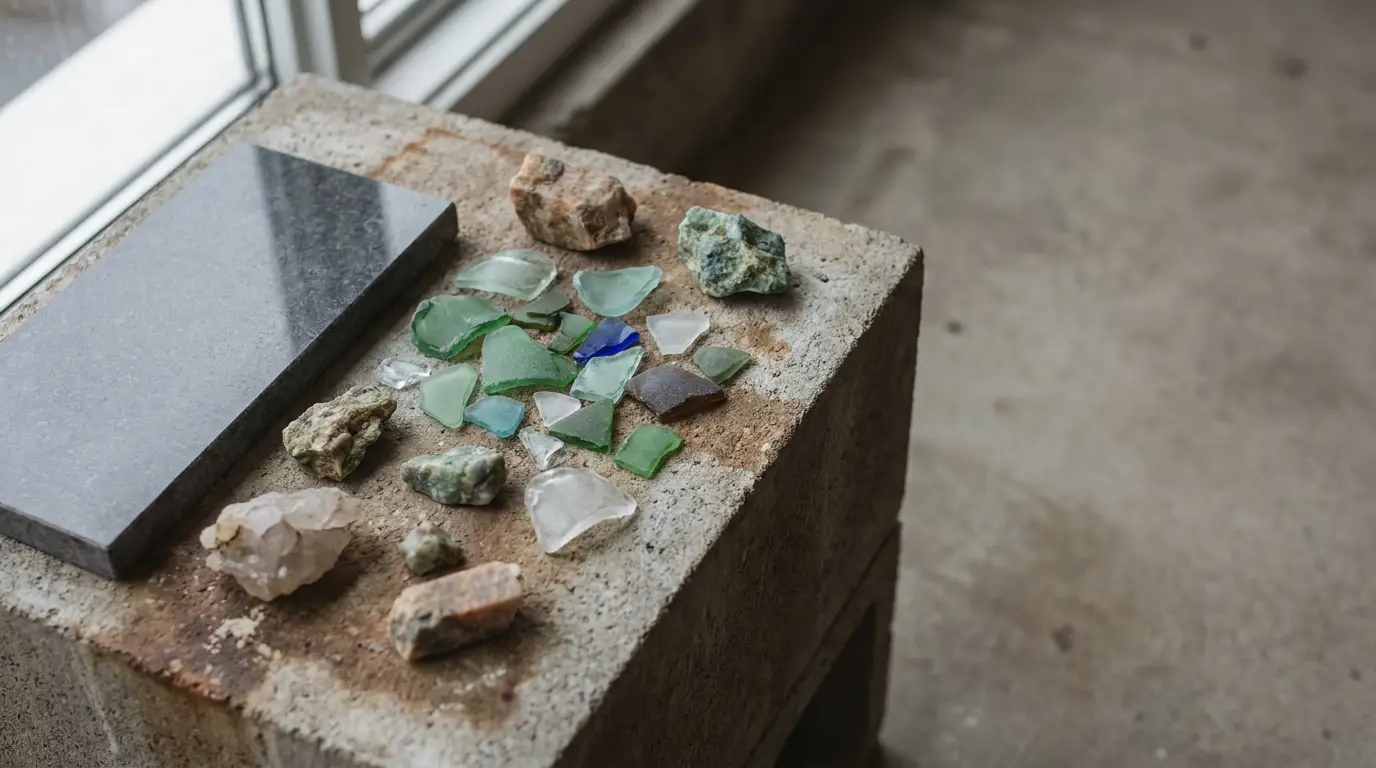
Sustainability is becoming an increasingly desirable feature of design materials. Granite and quartz extraction as well as some of the manufacturing processes for porcelain can be energy-intensive and have significant environmental impacts. Many luxury mineral surfaces, however, incorporate recycled materials such as glass and use energy-efficient production methods. This enables homeowners and designers to achieve a high-end look while reducing their environmental footprint.
Versatility for Different Applications
While granite, quartz, and porcelain are often limited to specific uses and spaces, luxury mineral surfaces are highly versatile. They can be used for countertops, wall features, bathroom vanities, custom furniture, and commercial installations. Their durability, visual appeal, and design flexibility enable them to be used in everything from family kitchens to hotels, offices, and retail settings.
Balancing Beauty, Durability, and Innovation
Luxury mineral surfaces provide a modern alternative to granite, quartz, and porcelain by blending natural beauty, engineered performance, and sustainable practices. Ultimately, homeowners and designers have to weigh the features that are most important to them, but for those looking for surfaces that excel in both aesthetics and function, luxury mineral surfaces combine some of the best qualities of traditional materials.