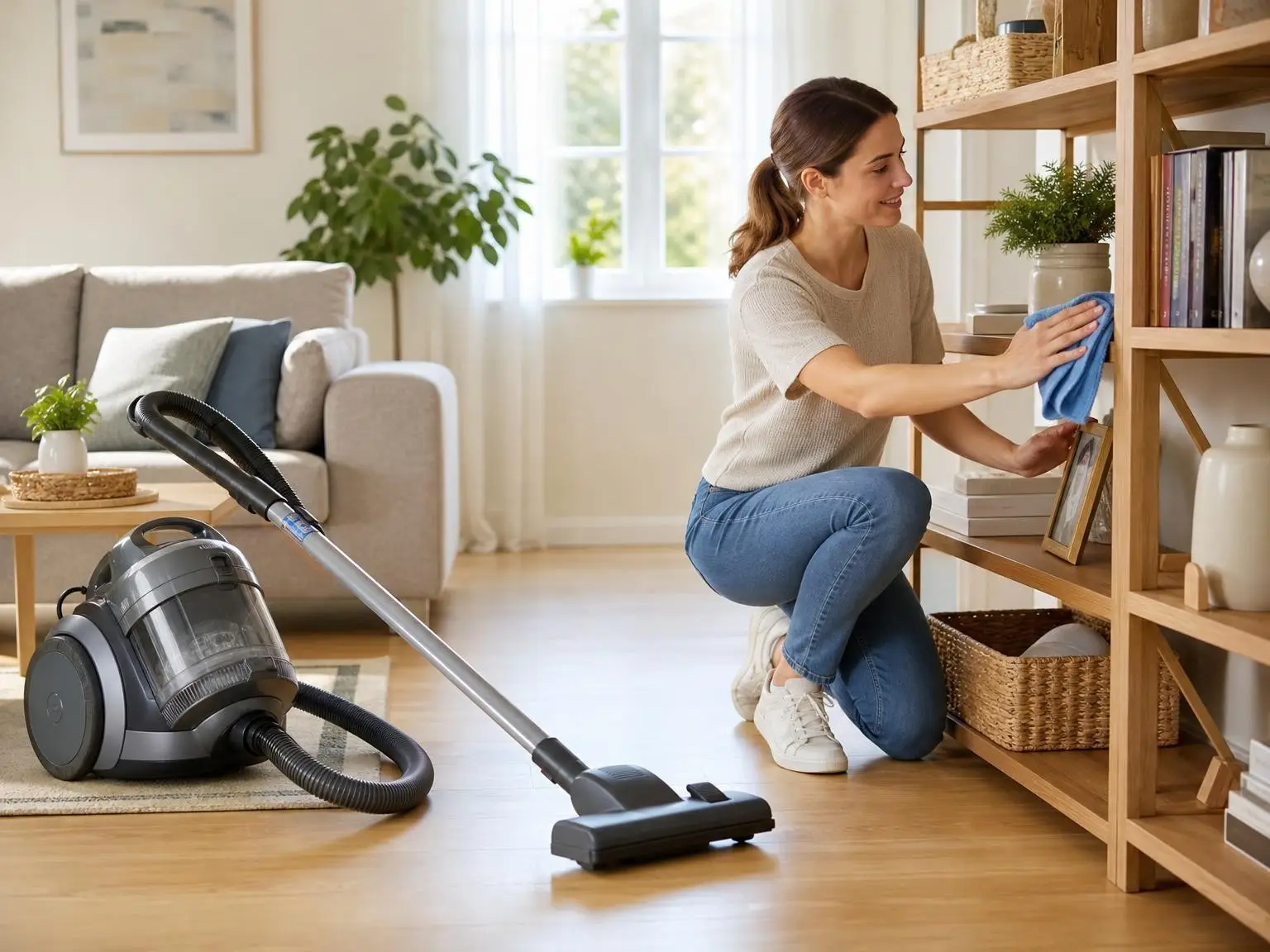
How to Build a Practical, Low-Dust Home Cleaning Routine

Household dust rarely comes from just one place. It builds up from soil tracked in on shoes, fibers shedding off clothing and upholstery, flakes of skin, pet dander, and even outdoor pollutants that drift in through open windows or hitch a ride on your feet.
Because dust has so many sources, cleaning more often isn’t necessarily the answer. What actually makes a difference is the order in which you clean, the tools you reach for, and whether you can keep up the habit over time.
Choosing a suitable vacuum for floors and furniture, or a wet & dry vacuum for households juggling both dry debris and the occasional spill, can certainly support a broader cleaning strategy. Still, no single appliance replaces the basics: ventilation, moisture control, proper filtration, and consistency.
Why Household Dust Deserves Attention
Household dust is really a mix of two things—particles that have settled on shelves and floors, and ones still floating in the air before they come to rest. Cleaning itself, especially dry dusting or brisk sweeping, can stir these particles back into circulation.
That matters most for people with asthma, allergies, young children, or other respiratory sensitivities. Realistically, the point of cleaning isn’t to wipe out every speck of dust forever—it’s to reduce the sources and keep buildup in check.
Organizations like the U.S. Environmental Protection Agency and the American Lung Association recommend regular cleaning, damp dusting, and good indoor ventilation as practical ways to manage dust and allergens. It’s also worth remembering that ordinary household dust isn’t some health hazard waiting to happen; the aim is comfort and fewer irritants, not sterile perfection.
Find and Control the Main Sources of Dust
Entryways and outdoor contamination: Placing doormats at exterior entrances and asking family members (or guests) to remove their shoes indoors can noticeably cut down on tracked-in dirt and particulate matter. Don’t forget the mats themselves need regular cleaning too—otherwise they just become holding pens for the debris they were meant to catch.
Textiles, upholstery, and bedding: Carpets, rugs, curtains, upholstered furniture, and bedding all quietly collect dust and skin particles over time. Washing these items according to their care instructions keeps buildup from getting out of hand. Fabrics that see heavy use and furniture that’s sat in daily will naturally need more frequent attention than, say, a guest room that’s rarely touched.
Pets and household activity: Pet hair and dander are major contributors to both visible mess and the dust that settles out of sight. Grooming pets somewhere easy to clean—a bathroom or mudroom, for instance—helps contain the fallout. It’s also worth paying extra attention to feeding areas, pet beds, and whatever furniture happens to be the household pet’s favorite perch.
Moisture and biological contaminants: Leaks, damp materials, and excess humidity can invite mold, which is a different and more serious air-quality concern than ordinary dust. Fixing leaks quickly and drying out wet areas without delay is essential. Keep in mind that routine cleaning and serious mold remediation are two different things—if contamination is extensive, that’s a job for a qualified professional, not a weekend cleaning spree.
Use the Right Cleaning Order
Following a logical sequence keeps you from undoing your own work:
- Declutter surfaces.
- Dust from higher surfaces downward.
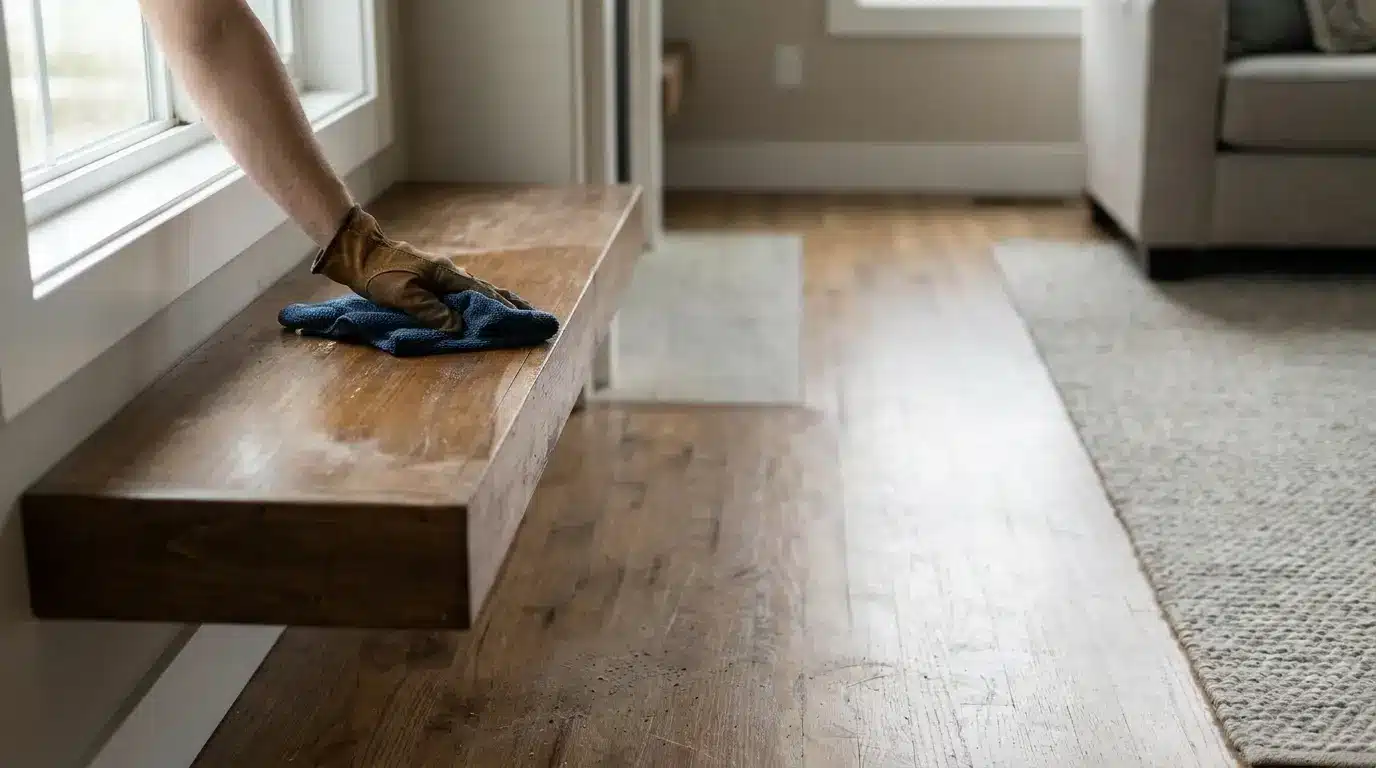
- Clean hard surfaces with a damp cloth.
- Vacuum floors, rugs, and upholstery.
- Mop hard floors when appropriate.
- Dispose of collected debris safely.
The reason for cleaning top to bottom is simple: dust settles downward, so wiping a shelf after mopping the floor beneath it just means doing the floor twice.
Damp dusting, as opposed to dry wiping, is especially good at trapping particles rather than launching them into the air—a technique the American Lung Association specifically recommends. And as always, follow product label directions, and resist the temptation to mix cleaning chemicals, since certain combinations can turn hazardous fast.
Best order for cleaning: Declutter → Dust high to low → Damp-wipe surfaces → Vacuum → Mop → Dispose of debris.
Match Cleaning Methods to Different Surfaces
Hard floors respond differently depending on the material underfoot. Sweeping, dust mopping, vacuuming, and damp mopping all have their place, but manufacturer care instructions should really be your guide—too much water on wood or laminate can leave lasting damage.
Carpets and rugs do best with regular surface cleaning, extra attention paid to high-traffic zones, and periodic deep cleaning on top of that. Over-wetting is one of the most common mistakes people make, so it’s worth checking care labels before reaching for cleaning solutions or extraction equipment.
Upholstery and delicate materials often call for a quick check of manufacturer instructions before you vacuum or introduce any moisture. Gentle attachments and lower settings go a long way toward avoiding damage, and anything valuable or antique may be better left to a specialist.
Spills and mixed messes require a bit of triage: absorbing the liquid, clearing away solid debris, and cleaning up whatever residue is left behind. Wet-capable equipment should only be used on substances and surfaces its instructions actually permit—not every appliance is built to handle hazardous, biological, flammable, or chemical spills.
Reduce Airborne Dust While Cleaning
Opening windows when the weather allows helps clear out particles that get stirred up mid-clean. Anyone with asthma or significant sensitivities might do well to step out of the room for a bit, since vacuuming and sweeping inevitably disturb settled dust. Filtration matters here too—a well-maintained HEPA filter can cut down on the dust an appliance releases back into the room through its exhaust, though it won’t make a home completely allergen-free. Source control, ventilation, and filtration work best together, not as isolated fixes.
Create a Sustainable Cleaning Schedule
- Daily or as needed: Spills, entryway debris, food particles, visibly dirty surfaces.
- Weekly: High-use floors, rugs, upholstery, bedding, dust-prone surfaces.
- Periodically: Curtains, under-furniture areas, filter inspection, neglected corners.
Adjust the frequency based on pets, kids, allergies, and how much foot traffic your home sees. A realistic schedule you can actually stick to beats an ambitious one that falls apart after two weeks.
Common Mistakes to Avoid
Dusting after vacuuming instead of before, using too much water on moisture-sensitive surfaces, neglecting filters and hoses, assuming a room looks clean means the air is too, overdoing fragranced products, tackling mold without first gauging how bad it is, and cleaning air ducts on a routine basis without any real reason to—these are all missteps worth sidestepping.
Key Takeaway
Cutting down on household dust works best as a combination of prevention, careful cleaning, ventilation, and moisture control—not reliance on any single tool or product.
A Practical Routine for Cleaner, Lower-Dust Rooms
The core process is straightforward: keep tracked-in debris out, manage moisture, dust in ways that capture particles instead of scattering them, vacuum where appropriate, and ventilate sensibly.
The best routine, though, is the one your household can realistically keep up with. Before locking in a schedule, take a look at your home’s surfaces, the main sources of dust, anyone’s sensitivities, and what equipment you already have on hand.