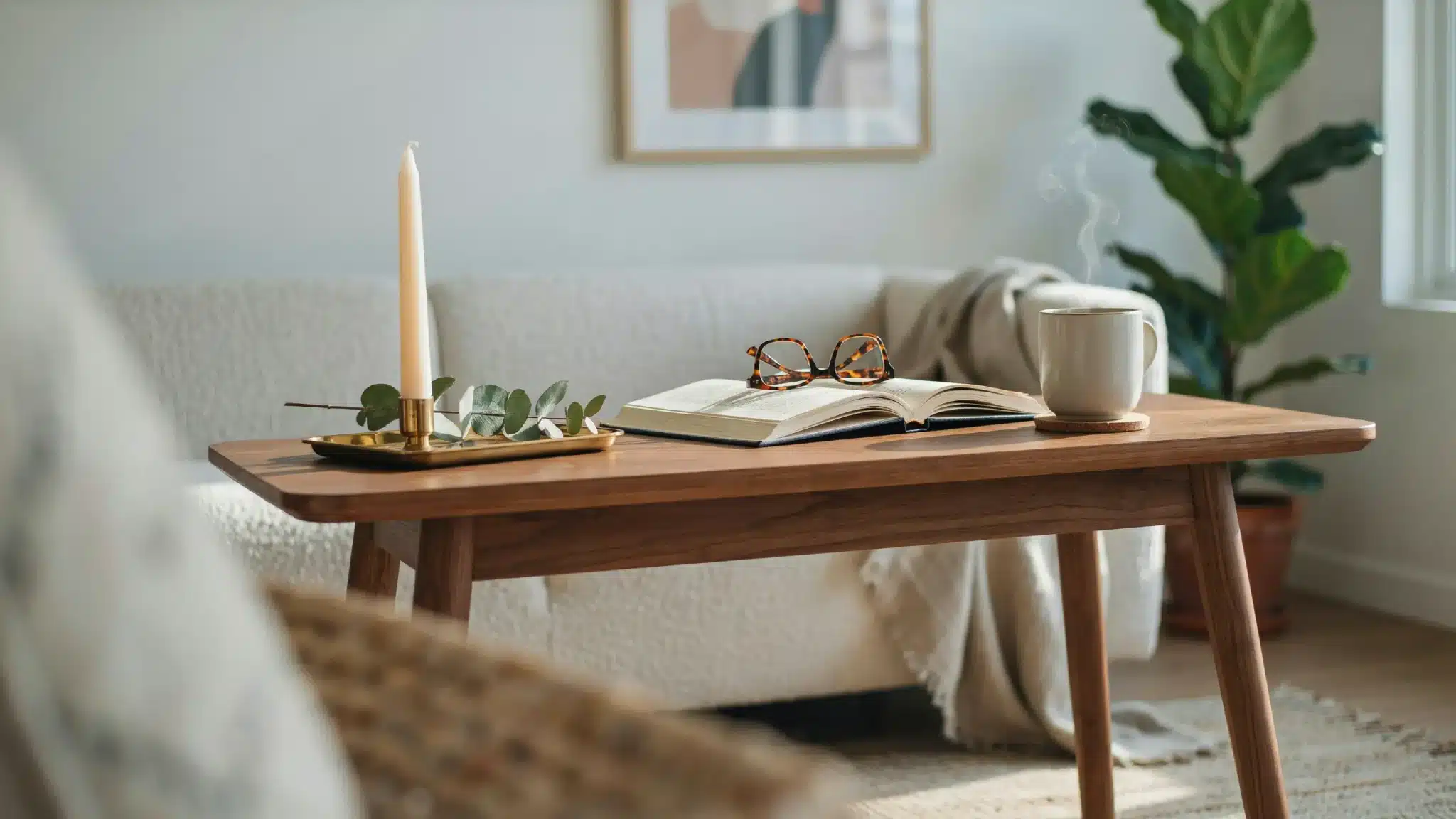
How to Style a Coffee Table for Everyday Beauty and Practical Use

Coffee table sees more daily traffic than almost any other surface in my home. Coffee cups, remotes, homework, and snacks pile up quickly, turning it into a catch-all by evening.
I have learned that styling a coffee table does not mean choosing between appearance and practicality. A cluttered surface rarely looks inviting, but a table that feels too precious to use is not practical either.
I always start with the table I already own, not a shopping list. A simple four-part formula works with almost any shape or material.
By adding shape-specific choices, material-matching details, and a few daily habits, I can keep the table practical while making it look thoughtfully styled.
Start With the Coffee Table You Already Have
Before buying a tray or vase, assess the coffee table you already have. Clear the entire surface, including remotes, coasters, and mail, so you can see the available space.
Consider the table’s shape, size, and material, since a long rectangular table can hold more than a compact round one, while a narrow tabletop may not suit tall objects.
Next, think about how you use the table each day. If it regularly holds drinks, books, games, or homework, choose an arrangement that is easy to move. Also consider the sofa, rug, lighting, and wall colors.
A bold rug often looks better with simpler table decor. Finally, decide whether the table should command attention or quietly support the room’s other features. These details will make choosing what belongs on top much easier.
The Simple Coffee Table Styling Formula
A fixed shopping list rarely works for every coffee table. This four-part formula does. It adapts to almost any shape, size, or room style.
1. Add an Anchor
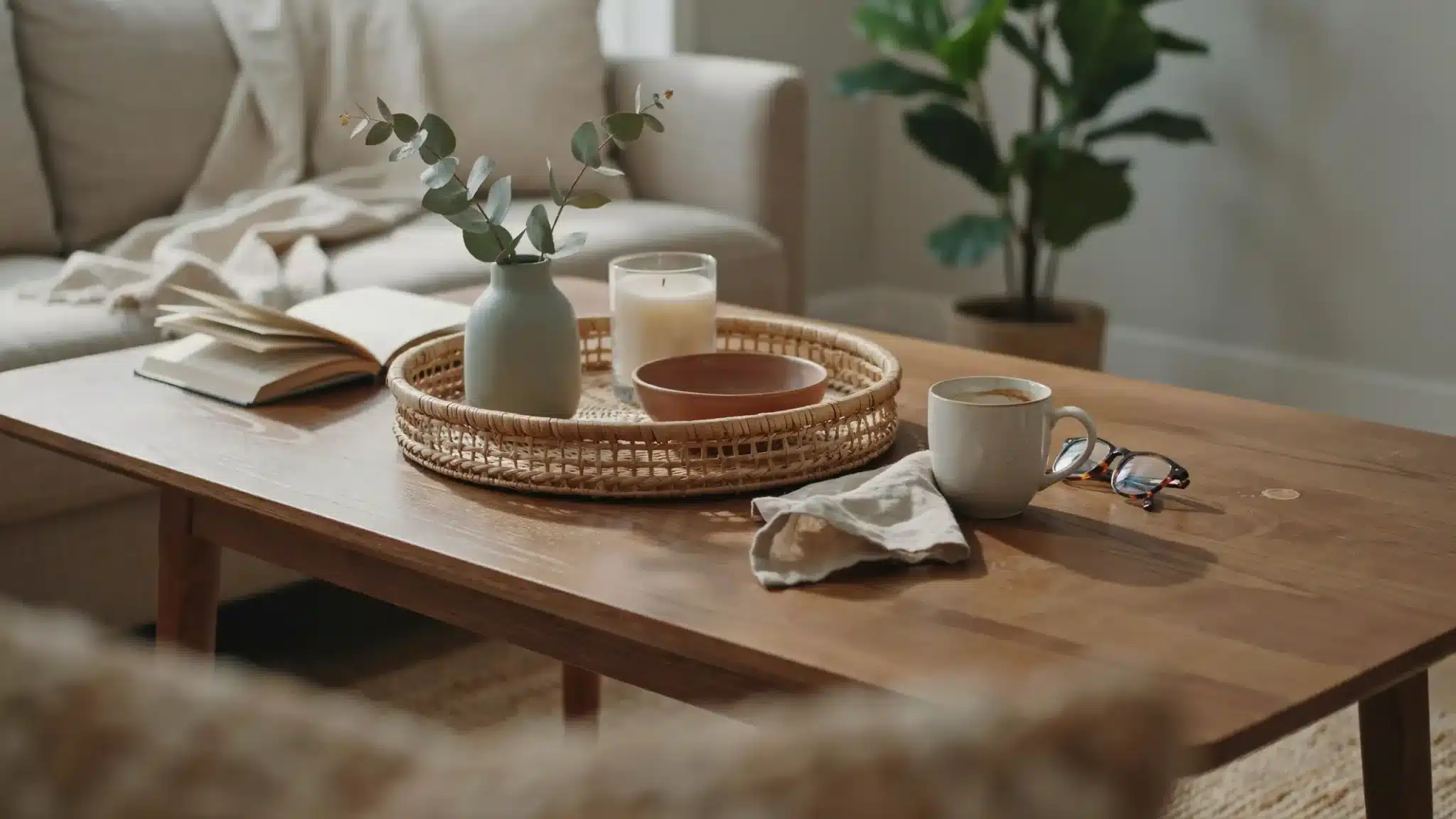
Every good arrangement starts with one anchor. A tray, a large book, a decorative bowl, or a sturdy box all work well.
An anchor holds the rest of the display together, so smaller objects look styled, not scattered. Pick a shape that matches or contrasts with the tabletop.
A round tray softens a rectangular table, while a rectangular tray adds structure to a round one. Start here, then build the rest of the arrangement around it.
2. Create Height With Books or a Low Pedestal
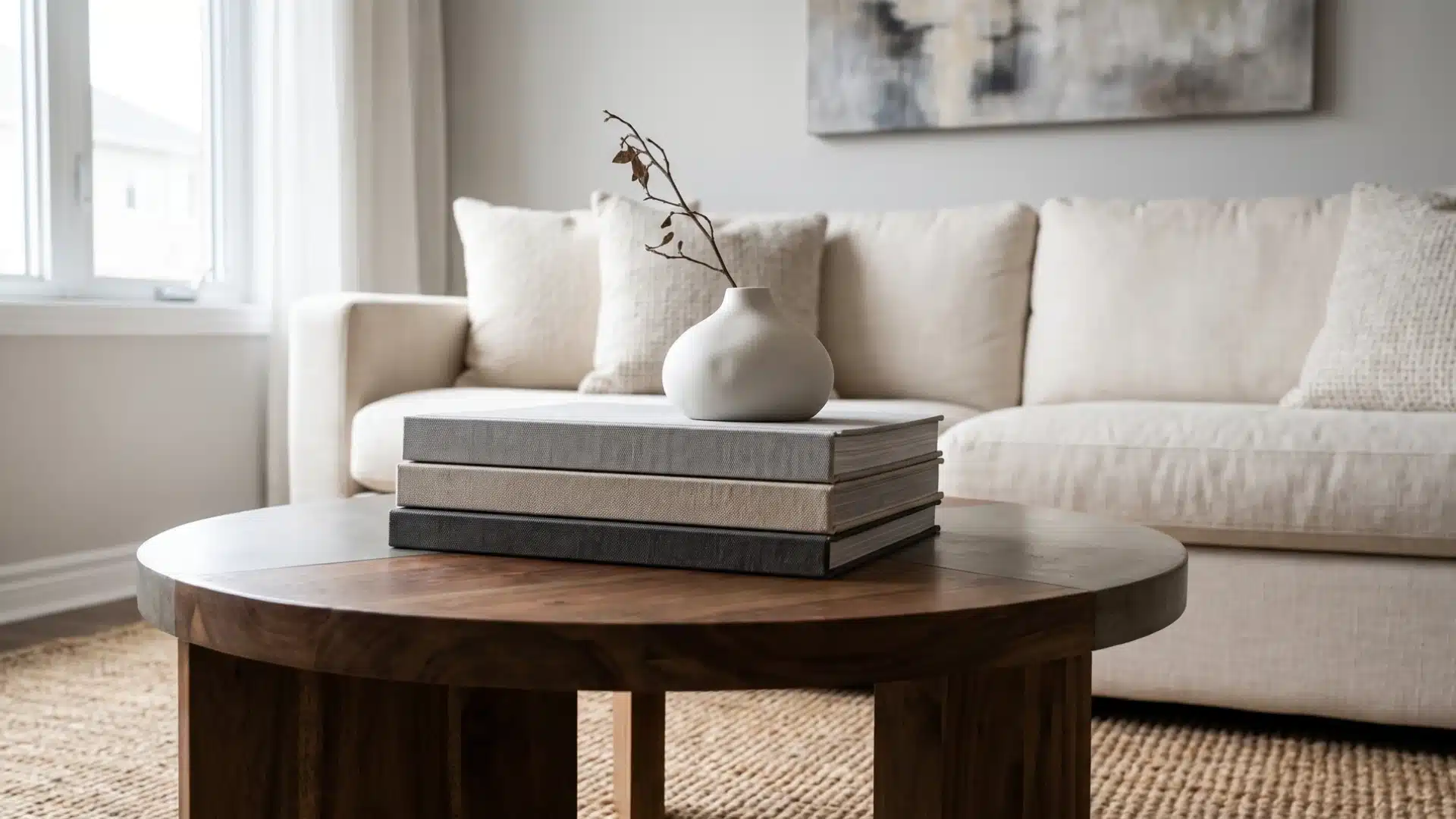
Height keeps a table display from looking flat. Stack two or three books rather than building a tall tower, and place the largest book at the bottom.
This keeps the stack stable and looks more natural. Choose subjects that reflect real interests, like art, travel, or a favorite novel.
Then use the stack to raise one smaller object, like a candle or a small dish. This adds a bit of visual lift above the rest of the table.
3. Bring In an Organic Element
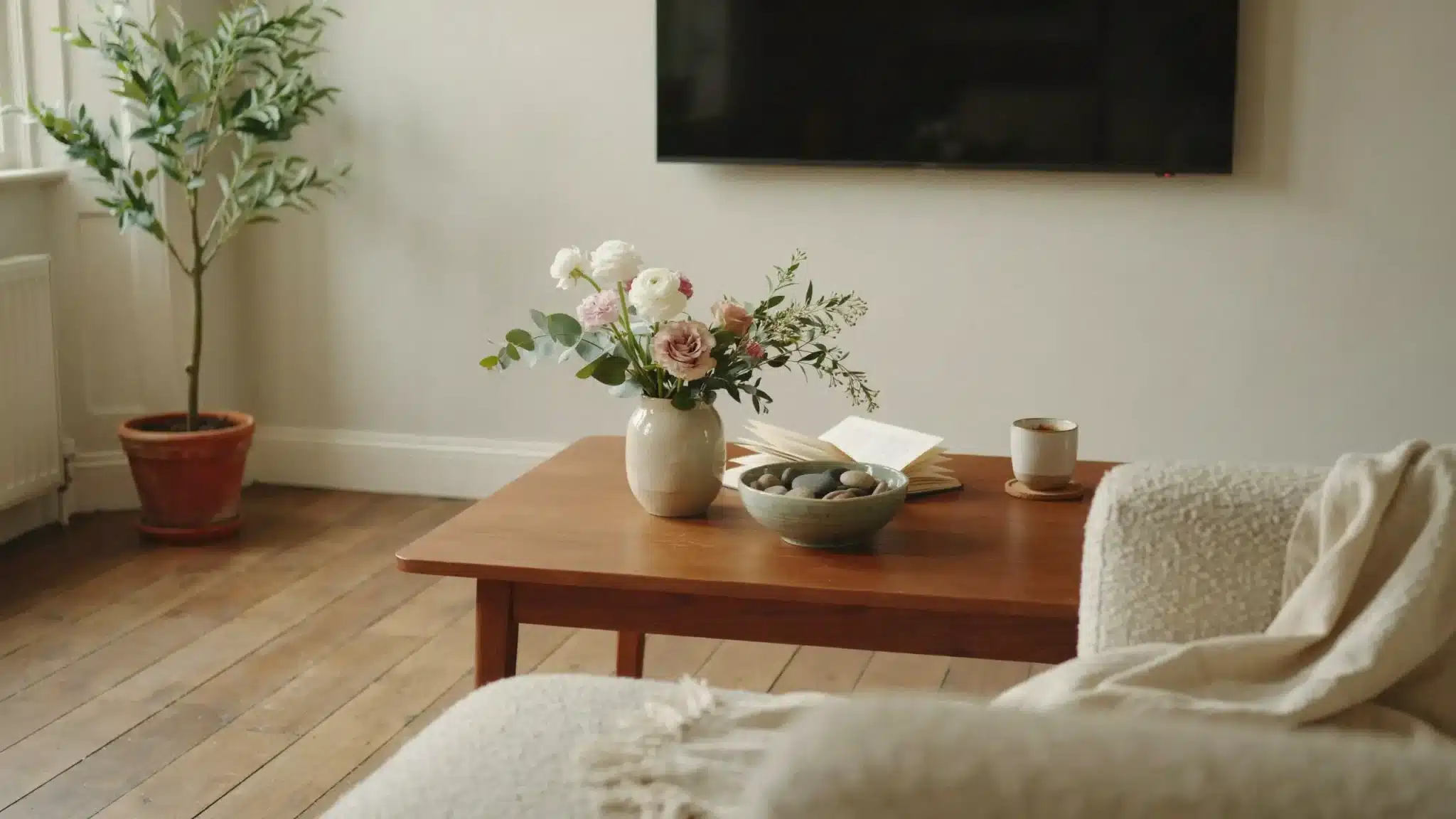
A natural element keeps the table from feeling too staged. Fresh flowers, a small plant, or a sculptural branch all work well.
Dried stems, woven accents, and a bowl of natural materials also work well, especially when drawing inspiration from boho coffee table ideas.
Keep the arrangement low, since tall stems can block the view between seats or toward the television. That matters most during movie nights or conversation, when nobody wants a branch in the way.
4. Finish With One Personal or Sculptural Object
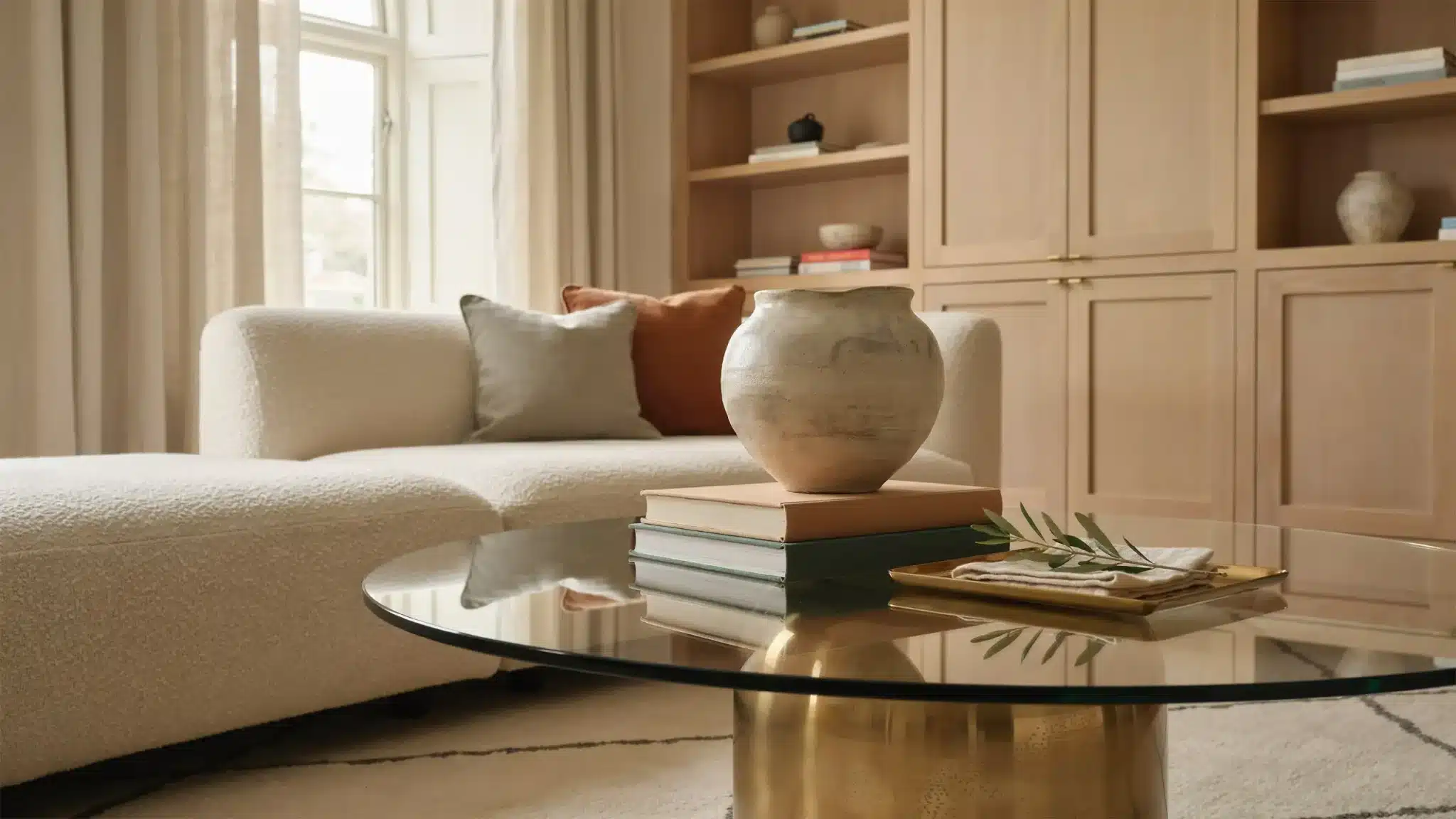
The last piece should say something about the people who live there. Skip generic decor bought purely to fill space.
Choose one item with a story instead, like handmade pottery, a travel keepsake, or a small sculpture. A vintage box, decorative beads, or a meaningful family object works as well.
One personal piece does more for a table than five generic ones. It gives visitors something to notice, and makes the room feel lived-in rather than staged for a catalog.
How to Style Different Coffee Table Shapes
Table shape changes what works and what doesn’t. The comparison below covers the basics, followed by tips for each shape.
1. Rectangular Coffee Table
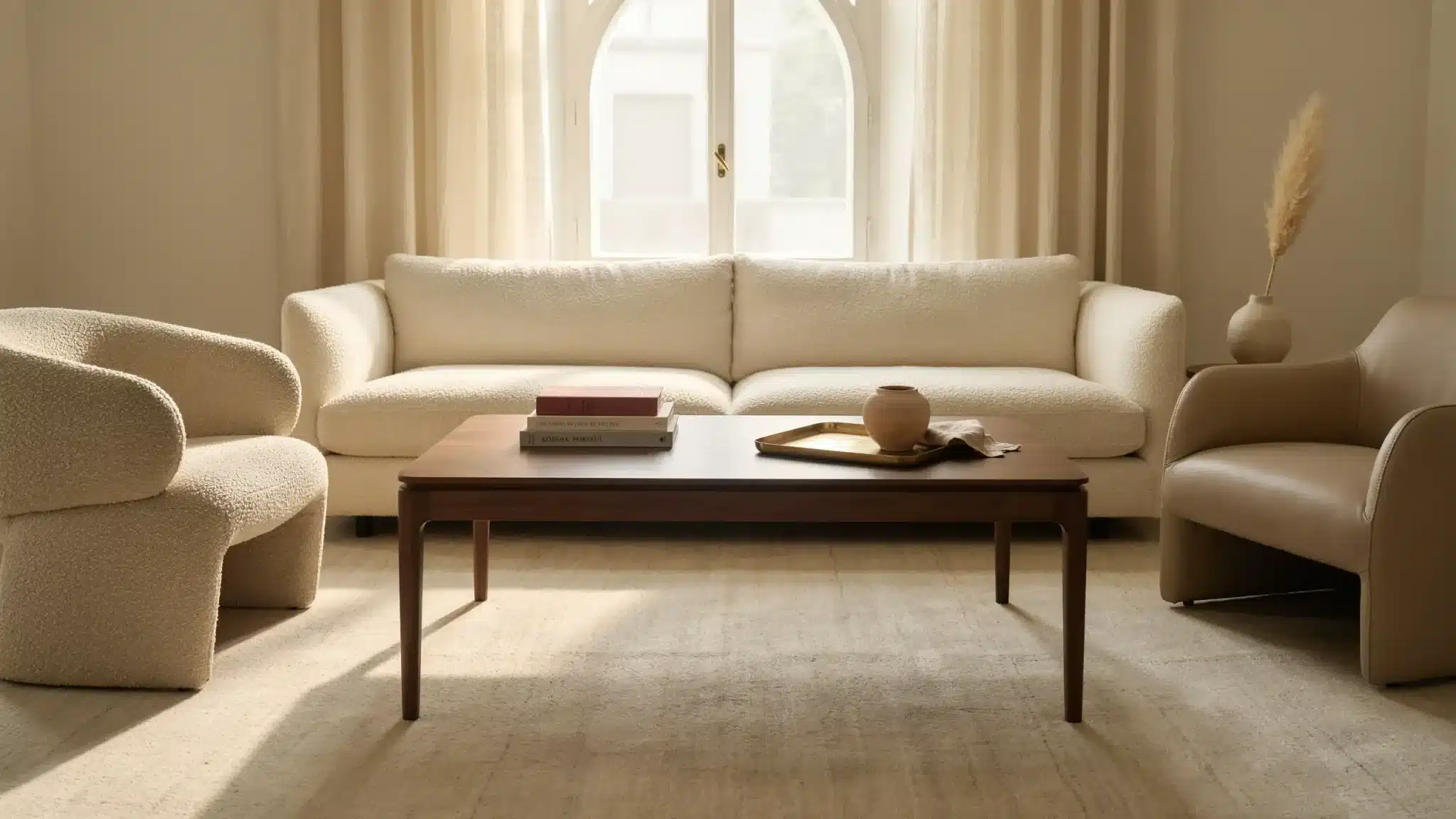
A rectangular coffee table works best divided into two or three loose zones. Balance a stack of books on one side with a vase or tray on the other.
This keeps the table from feeling one-sided. Keep one section completely open for practical use, like resting a laptop or a plate.
This balance of styled and open space keeps the table looking finished without getting in the way of daily use.
2. Round Coffee Table
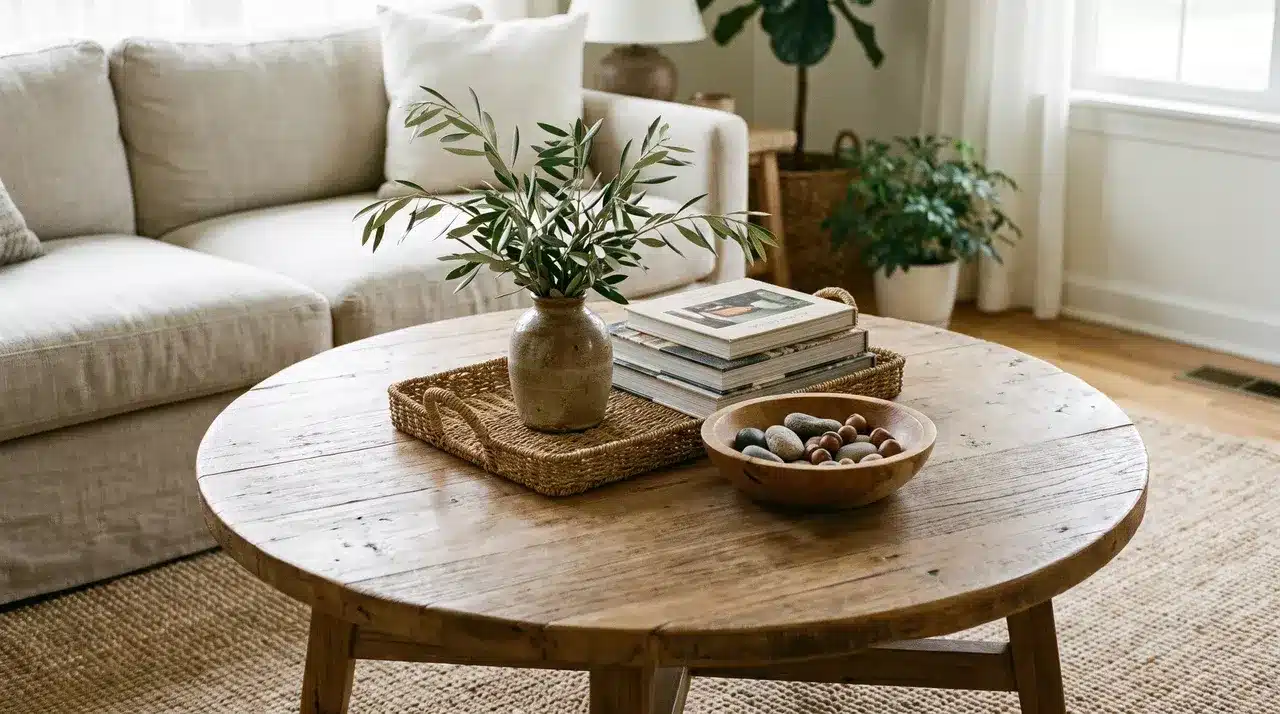
A round coffee table works best with one central grouping, not pieces spread around the edge. Arrange three objects in a loose triangle for a natural, balanced look.
A round or organically shaped tray echoes the table’s curve and ties the display together.
Keep accessories away from the curved edge, since objects sit less securely there and are easier to knock off. Centering the display also leaves the edges clear for everyday use.
3. Square Coffee Table
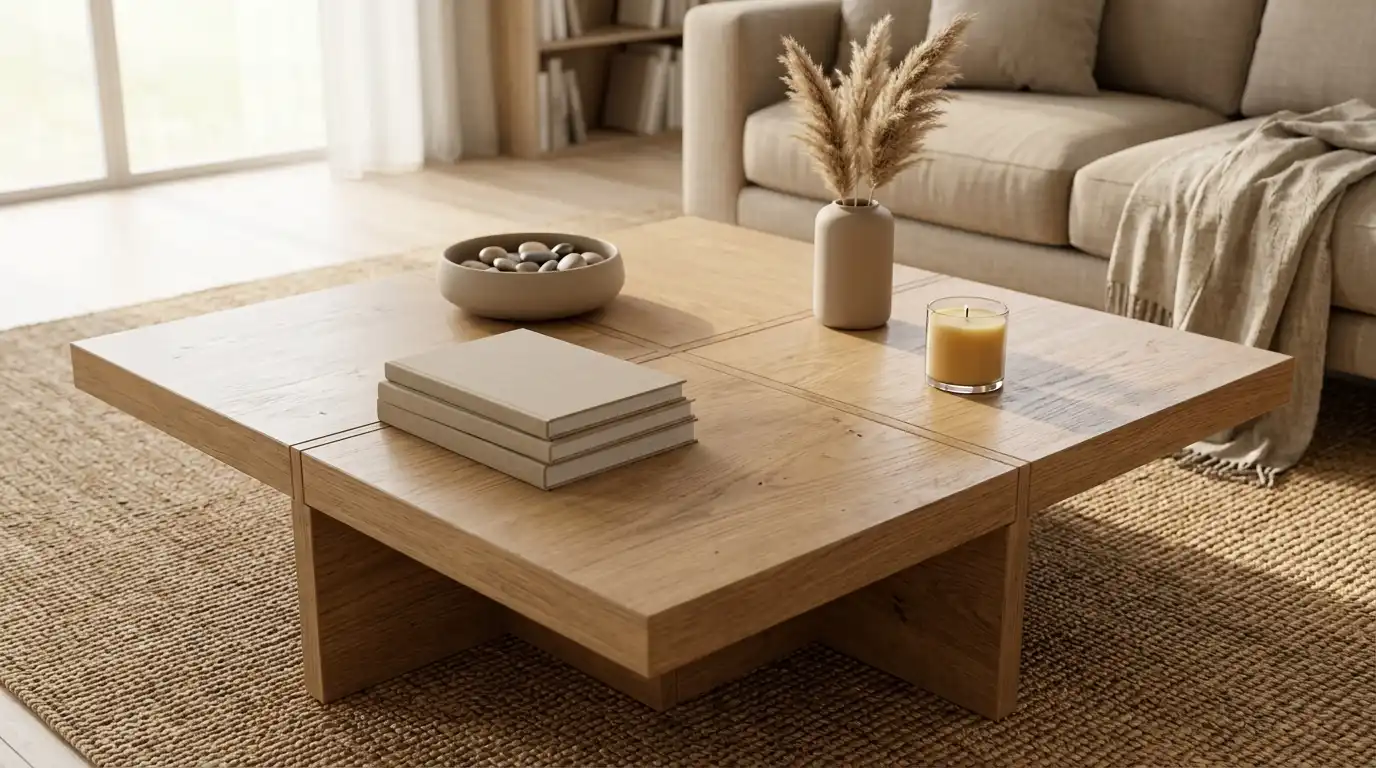
A square coffee table works well with one solid central arrangement anchoring the middle of the surface.
On a larger table, divide the space into four loose quadrants instead, each with its own small grouping. Repeat a color or material across the quadrants so the separate groupings feel connected, not random.
Either approach keeps a square table from looking evenly split into four disconnected corners. Choose whichever fits the table’s size and the room’s overall feel.
4. Nesting Tables
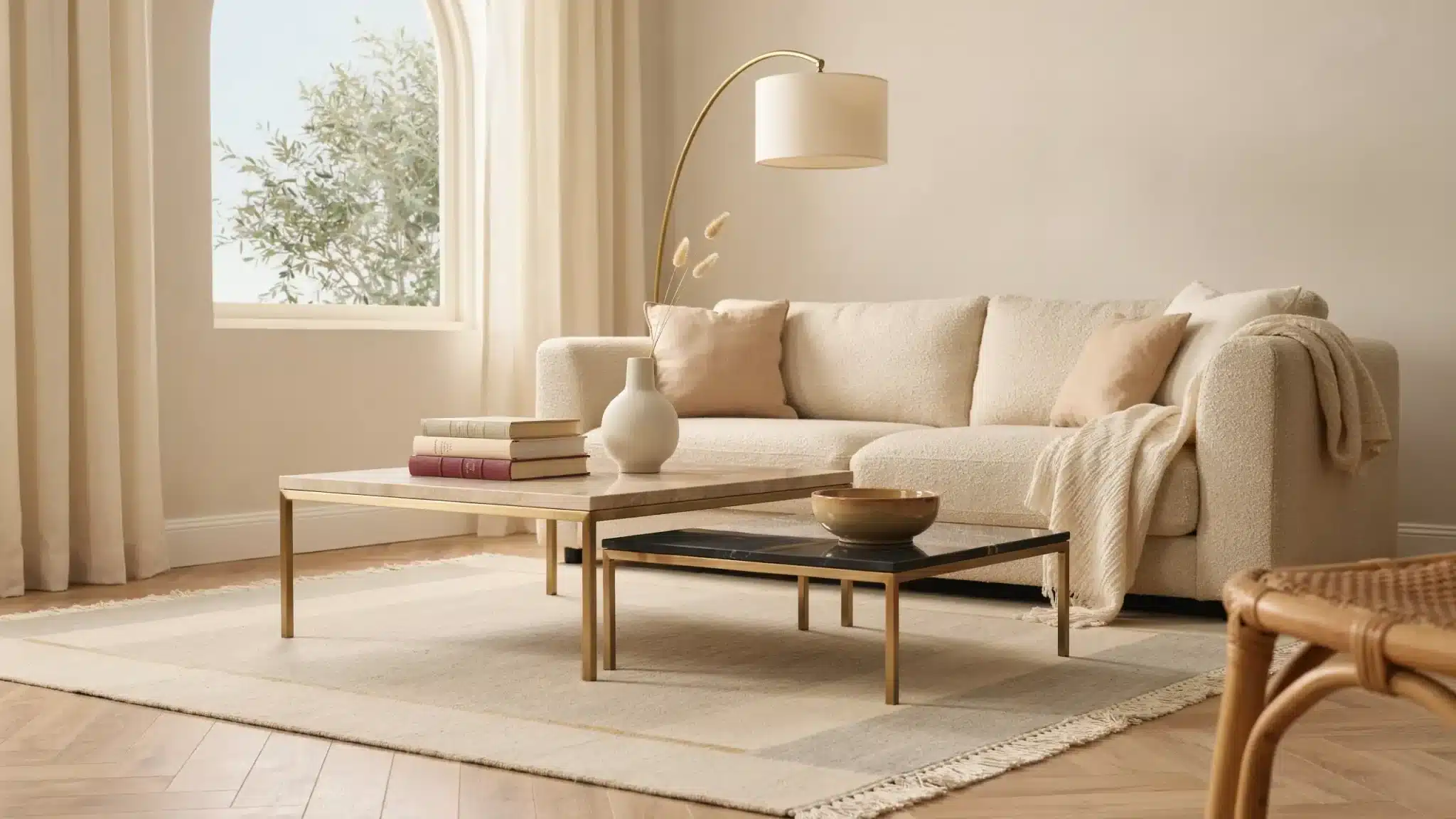
Nesting tables work best as one composition, not two separate displays. Place the taller arrangement on the lower or larger table, so the overall shape still reads as balanced.
Keep the second surface lightly styled, with at most one small object. This keeps the smaller table easy to pull out and move when you need extra surface space.
A light touch on the second table also keeps the whole grouping from looking crowded.
5. Ottoman as a Coffee Table
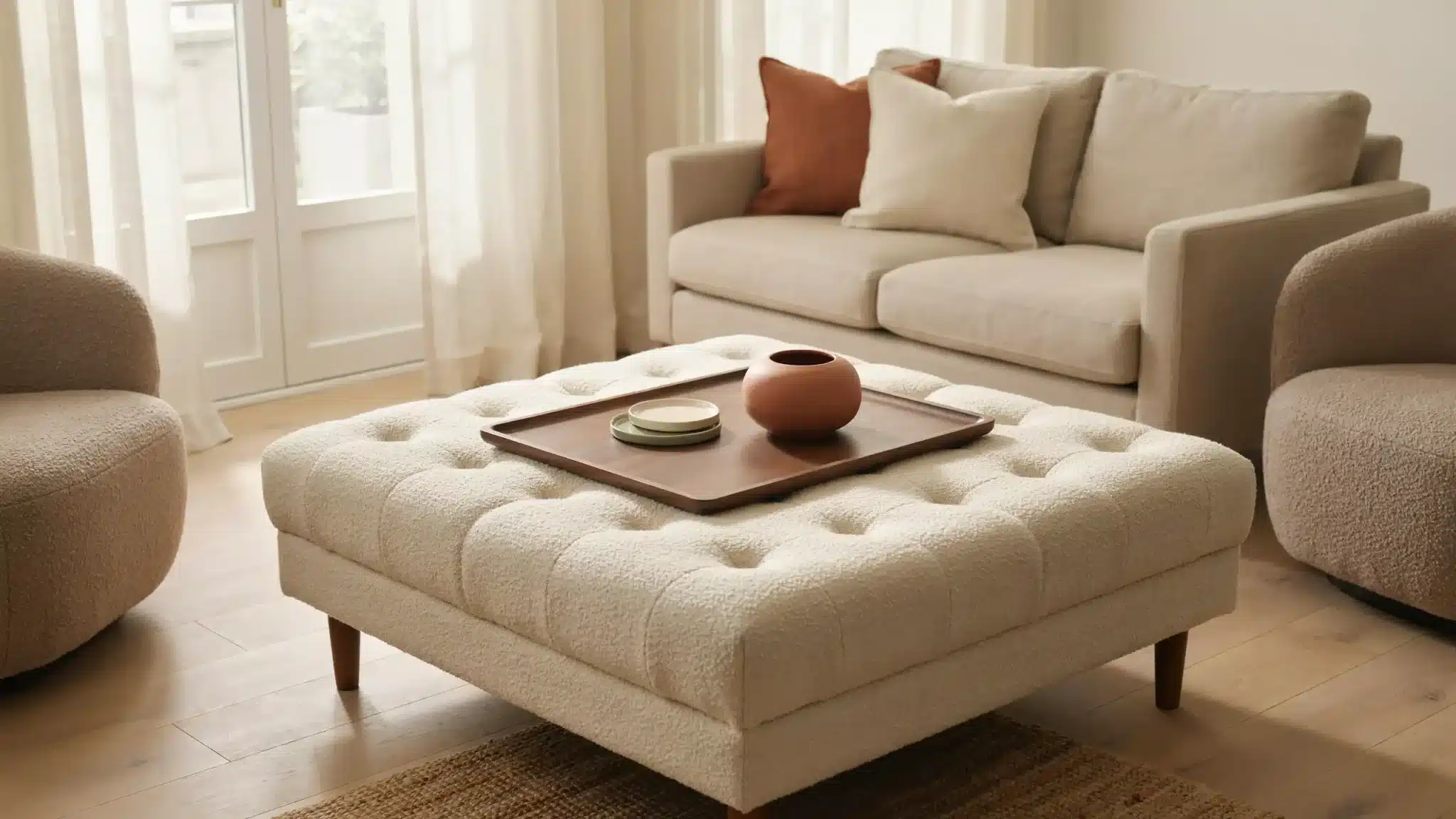
An upholstered ottoman needs a firm, flat-bottomed tray so nothing tips when the surface shifts underfoot.
Add coasters and one low decorative accent to keep the display simple and stable. Avoid top-heavy vases, open flames, and anything that spills easily. Fabric doesn’t forgive accidents the way wood or glass does.
Leave enough open room for the ottoman to still work as extra seating or a footrest. A light, practical setup keeps the piece flexible for daily use.
Budget-Friendly Coffee Table Decor
Budget-friendly coffee table decor starts with what’s already in the house. Restyle books already on the shelf, or move a small vase from another room.
Use garden clippings or a single branch instead of store-bought flowers.
Display a meaningful bowl or keepsake already in the house. Cover an unattractive book with plain removable paper for an easy refresh.
Pinecones, candles, and greenery double as easy Christmas coffee table decor when the holidays roll around, since they use what’s already on hand.
Conclusion
A well-styled coffee table doesn’t need to be complicated. Start with an anchor, add height, bring in something organic, and finish with one personal piece.
That’s the whole formula, no matter the table’s shape or material. The real test isn’t how the table looks in a photo. It’s whether it still works on a Tuesday night, with drinks, homework, and the dog underfoot.
Keep enough space open for daily life, and the styling will hold up. Take five minutes today to clear off the table and try the formula on what’s already in the house. Which piece will be the anchor?
Frequently Asked Questions
What Is the 2/3 Rule for Coffee Tables?
A coffee table should measure about two-thirds the length of the sofa, keeping the room balanced and leaving enough space for comfortable movement.
What Should I Put in the Middle of My Coffee Table?
A tray, a stack of books, or a single statement object works well in the center, anchoring the rest of the arrangement around it.
What Is the Current Trend for Coffee Tables?
Curved shapes, natural stone surfaces, and low profiles are trending now, along with styled trays, book stacks, and mixed natural textures on top.
What Are Common Coffee Table Styling Mistakes?
The most common coffee table styling mistakes are overcrowding the surface, using too many small objects, ignoring scale, and skipping personal touches.
What Are the Trends for Coffee Tables in 2026?
2026 favors curved forms, statement stone tops, nesting tables, sculptural designs, and multipurpose lift-tops that double as desks or dining surfaces.