5 Reasons Volleyball Is a Great Sport for Kids of All Ages

Finding a sport your child genuinely enjoys can feel a little like shopping for jeans. What works beautifully for one kid can be an immediate no from another. Volleyball deserves a spot on the list of sports worth trying because it combines movement, teamwork, coordination and plenty of opportunities to learn without requiring children to fit one particular athletic mold. Kids can begin with basic skills and recreational play, then decide later whether they want to pursue competitive teams. Along the way, volleyball can give them a reason to move, make friends and discover what they are capable of doing on the court.
Builds Whole-Body Athletic Skills
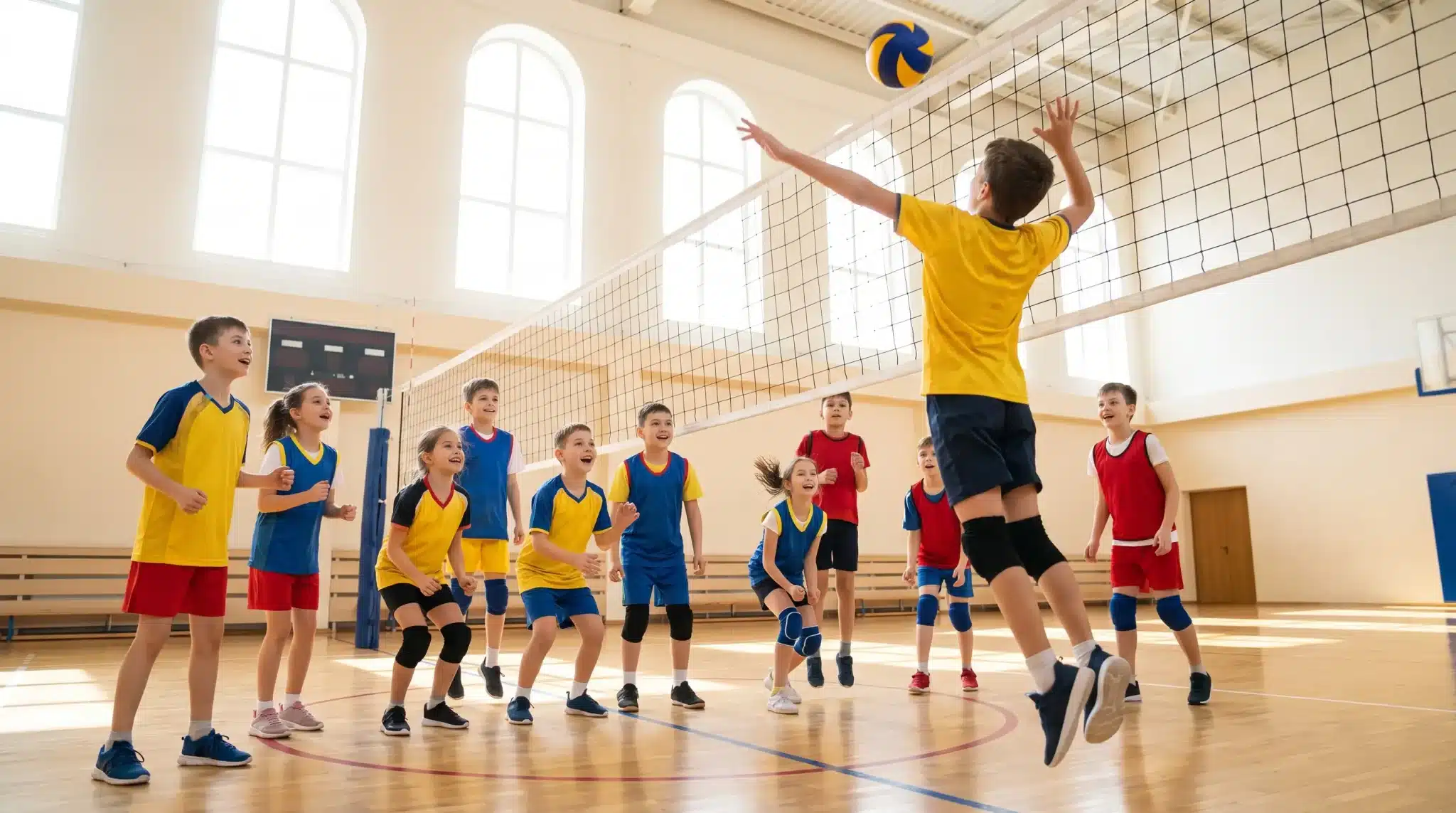
Volleyball requires players to move in nearly every direction. Kids shuffle sideways, jump, reach, bend, sprint and react to a ball that rarely arrives exactly where they expect it. Those movements can help develop coordination, balance and body awareness while keeping practices much more interesting than simply running laps around a field.
The sport also challenges hand-eye coordination. Serving, setting, passing and hitting require kids to judge the speed and direction of the ball before positioning their bodies to respond. These skills develop through repetition, which gives young players plenty of opportunities to notice their own improvement. A serve that barely cleared the net a month ago might suddenly become reliable. That type of visible progress can make practice feel worthwhile.
Volleyball also encourages general athleticism that may transfer to other activities. Quick reactions, controlled footwork and jumping ability can benefit kids whether volleyball becomes their primary sport or simply one of several activities they enjoy growing up.
Creates Real Team Connections
Parents searching for Boston, LA or DC volleyball training, classes and teams will usually find options ranging from introductory programs to competitive clubs. That flexibility can make volleyball accessible to children with very different goals. One child may want a fun weekly activity, while another may become interested in tournaments and year-round training.
Whatever level they choose, players quickly discover that volleyball depends on cooperation. One person cannot consistently control an entire rally. A successful play often involves a pass, a set and a hit performed by different teammates. Kids learn to communicate, trust other players and recognize that their contribution matters even when they are not the person scoring the point.
That structure can also create natural opportunities for friendships. Practices give children repeated time with teammates while everyone works toward the same goal. For kids who find purely social activities awkward, having a shared task can make connecting with other children feel much easier.
Teaches Kids to Recover
Volleyball is wonderfully unforgiving in one useful way. Everyone can see when the ball lands on the floor. A player might miss a serve, mishandle a pass or send an ambitious hit directly into the net. Then the next point starts almost immediately.
That rhythm gives kids repeated practice dealing with mistakes without dwelling on them. Players learn that one bad point does not determine an entire game, and a rough game does not determine an entire season. Coaches can reinforce the idea that errors provide information about what needs more practice.
Kids also experience the other side of that equation. They get to watch persistence turn difficult skills into familiar ones. Learning an overhand serve, for example, may take dozens or hundreds of attempts. Eventually getting it over the net can feel particularly satisfying because the player remembers exactly how difficult it once seemed.
Offers Structured Physical Activity
Volleyball practices provide kids with a structured way to stay active without making exercise feel like another item on the family checklist. Players spend their time pursuing the ball, practicing techniques and participating in drills rather than counting minutes of physical activity.
The training can be demanding, particularly as children advance. Volleyball includes explosive movement, repeated jumping, rapid changes in direction and short bursts of speed. In that respect, conditioning may share certain elements with other sports, like training in football, while volleyball still develops its own distinct movement patterns and technical skills.
Parents can also appreciate that volleyball has indoor and outdoor variations. Indoor programs can continue when cold weather or rain makes other activities harder to schedule, while beach and outdoor volleyball offer additional opportunities during warmer months. That variety can help children stay involved throughout the year without every season looking exactly the same.
Gives Kids Room to Grow
One of volleyball’s biggest advantages is that beginners do not need to arrive with years of experience to start learning useful skills. Younger children can begin with modified games, lighter balls and basic passing exercises before gradually learning more advanced techniques. As they improve, they can explore different positions and discover where their individual strengths fit.
The sport also gives families choices about commitment. Recreational leagues may work well for children who simply want to play, while club programs can provide additional coaching and competition for players who want a bigger challenge. Parents do not have to decide on day one how serious volleyball will become.
Most importantly, kids have an opportunity to find out whether they actually enjoy it. A sport that encourages movement, cooperation, persistence and friendship has plenty to offer even if a child never dreams of playing competitively. Sometimes the biggest win is simply finding an activity that makes a kid excited to grab their shoes and head to practice.