8 Types of Mattresses and How to Choose The Correct One

Choosing between mattress types can feel confusing. Some hug your body closely. Others feel bouncier, cooler, or steadier at the edges.
Look at the construction first. It tells you more about comfort than marketing labels do. Once you understand the main mattress types, picking one gets easier.
You can match it to your sleep position, body weight, temperature needs, and budget. This article breaks down each type, so you know exactly what you are buying.
What Should You Look for in a Good Mattress?
A good mattress balances support, pressure relief, and comfort for your sleep habits. Look for these seven qualities before you compare mattress types.
- Balanced support: Keeps heavy areas of your body from sinking too far.
- Pressure relief: Cushions sensitive spots like your shoulders and hips.
- Suitable firmness: Matches your sleeping position, body weight, and comfort preference.
- Motion control: Limits how much movement crosses the bed when your partner shifts.
- Temperature regulation: Lets air move through the mattress to keep you cool.
- Strong edge support: Keeps the perimeter stable when you sit or sleep near the edge.
- Durable materials: Helps the mattress hold its shape instead of sagging.
These qualities come from different mattress constructions. That is why comparing mattress types helps you find the right fit.
Note: Comfort matters too. A mattress that feels too hard, too soft, or too warm can disrupt your sleep.
Types of Mattresses
The eight main mattress types differ in materials, feel, support, and price. Here is what sets each one apart.
1. Memory Foam Mattress

Memory foam uses viscoelastic polyurethane foam. It softens with body heat and pressure, so it hugs your shape closely. This close contouring gives strong pressure relief around your shoulders and hips.
It also limits motion transfer between partners. Memory foam can trap more heat than latex or coil mattresses. Some sleepers also find the deep sinking feel too soft.
Good for: Side sleepers, couples, and anyone who wants close body contouring and less motion transfer.
2. Polyfoam Mattress
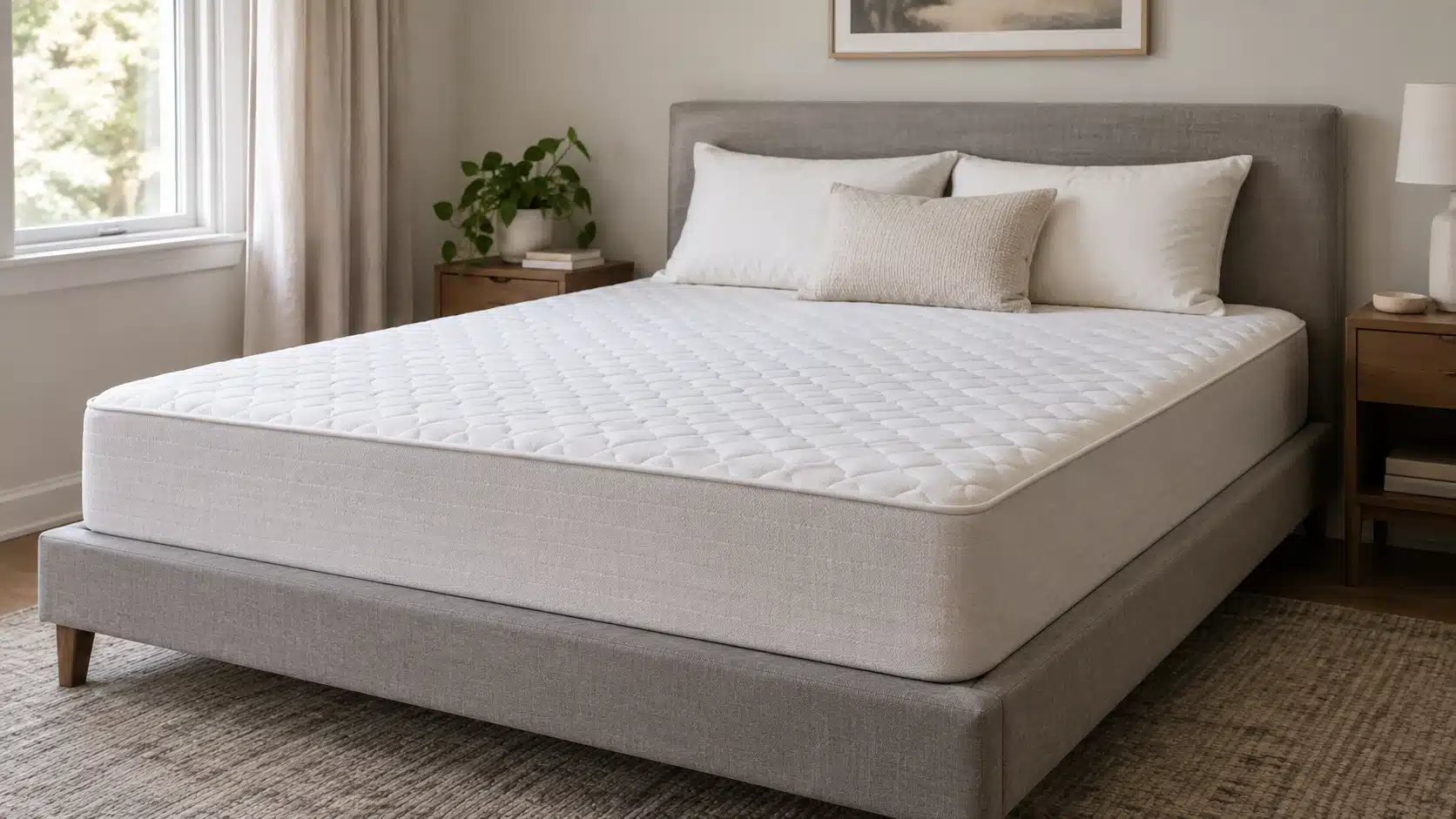
Polyfoam mattresses use polyurethane foam in their comfort and support layers, usually creating a lighter, more responsive feel than memory foam.
They come in many firmness levels and are often more affordable than latex or hybrid mattresses, making them common in budget-friendly models.
Quality can vary widely, though. Higher-density polyfoam generally holds up better, while lower-density foam may soften or develop impressions sooner.
Good for: Budget-conscious sleepers, guest rooms, combination sleepers, and people who want cushioning without the deep hug of memory foam.
3. Innerspring Mattress
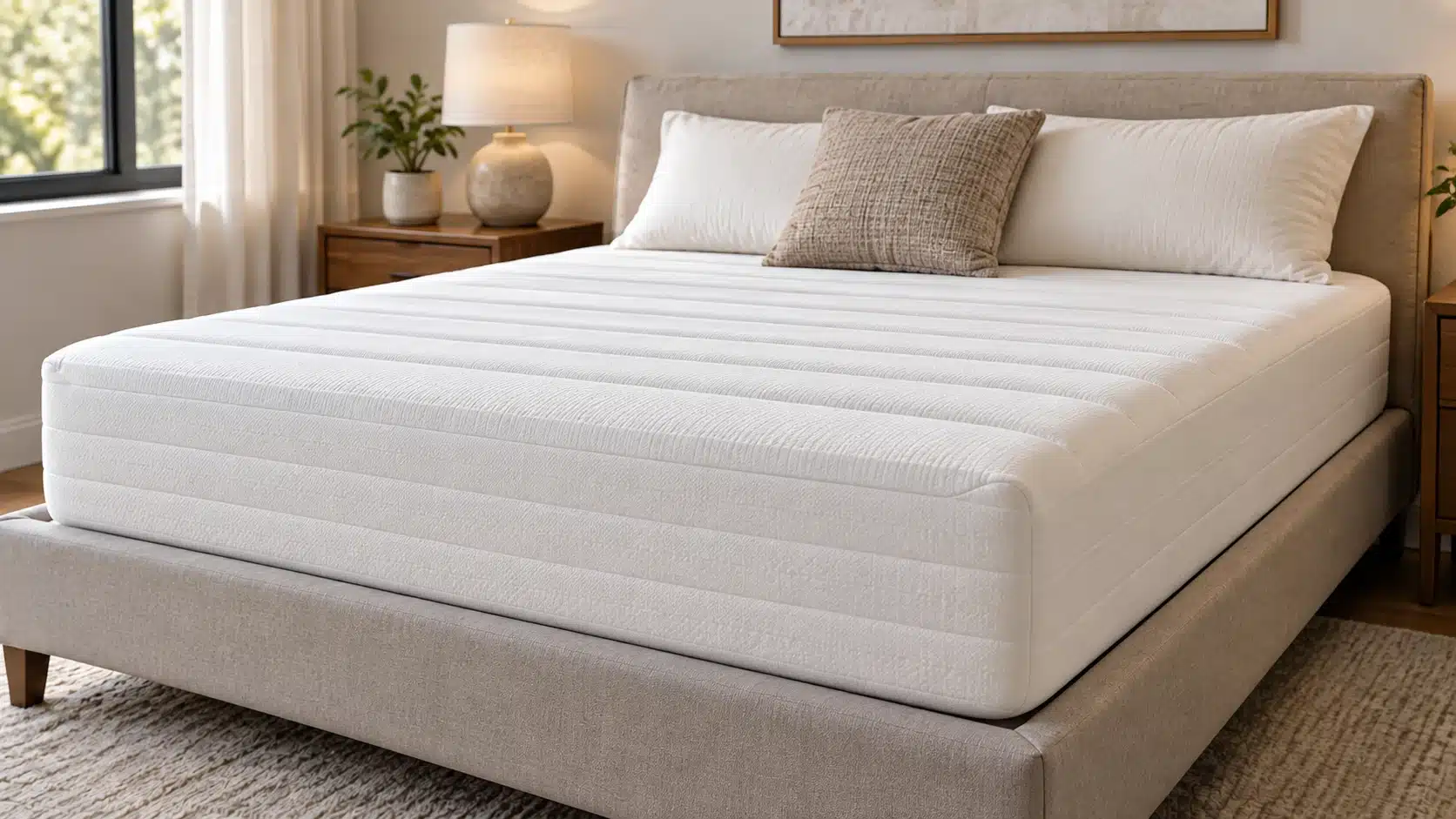
Innerspring mattresses use a steel coil support system with thinner comfort layers on top, creating a firmer, bouncier, and more responsive sleeping surface.
The open coil structure allows strong airflow, which can help the mattress stay cooler than dense foam models.
They also tend to provide solid edge support, although interconnected coils may transfer more movement between sleepers.
Good for: Hot sleepers, back and stomach sleepers, people who prefer bounce, and anyone who dislikes the sinking feel of foam.
4. Hybrid Mattress
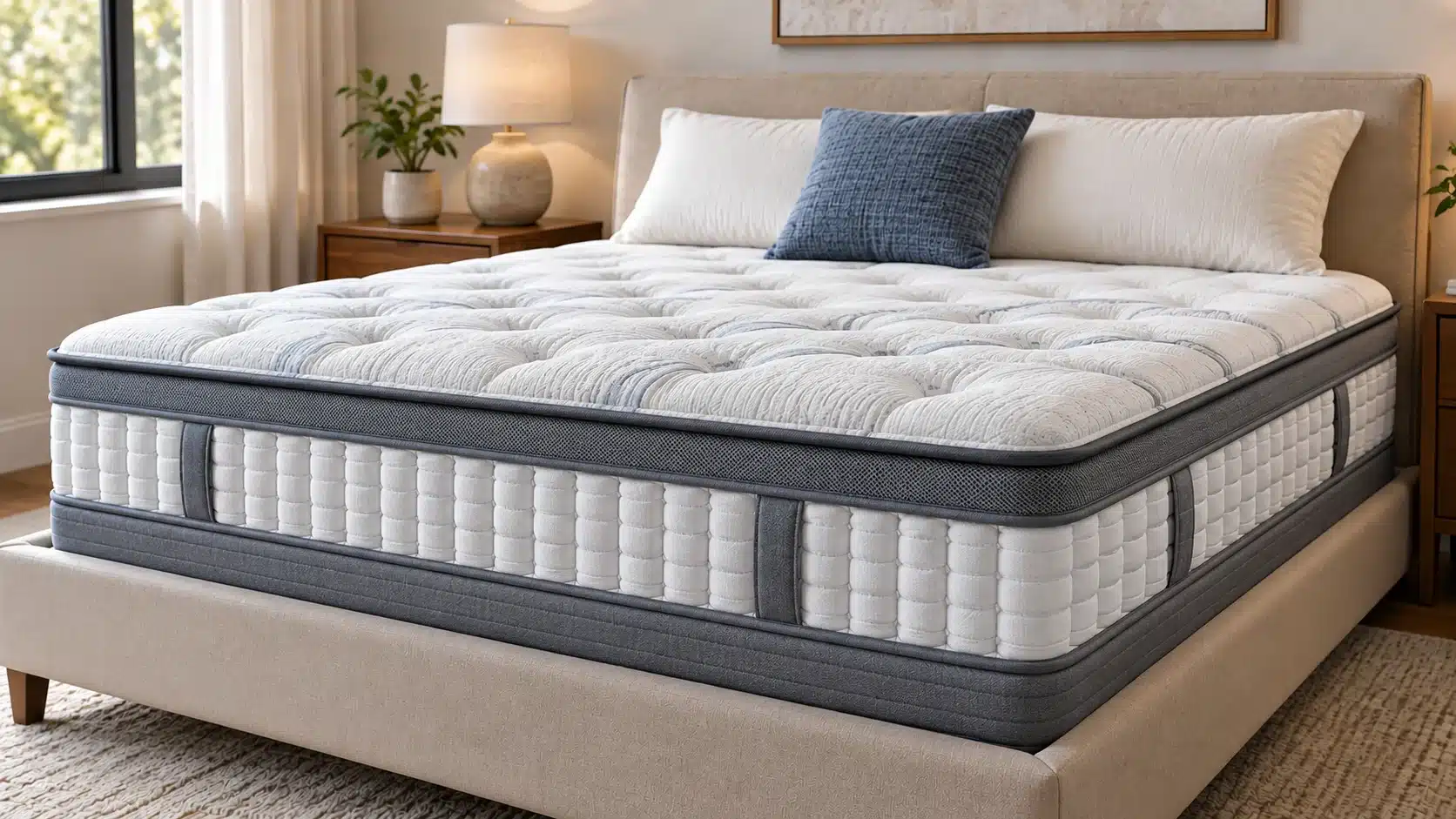
Hybrid mattresses combine a coil support core with thicker comfort layers made from memory foam, polyfoam, latex, or a mix of materials.
They usually balance the contouring and pressure relief of foam with the bounce, airflow, and stronger edge support of coils.
Hybrids can feel more responsive than all-foam beds while still reducing motion better than many traditional innerspring mattresses.
Good for: Combination sleepers, couples, hot sleepers, and people who want a balance of cushioning, support, bounce, and airflow.
5. Latex Mattress
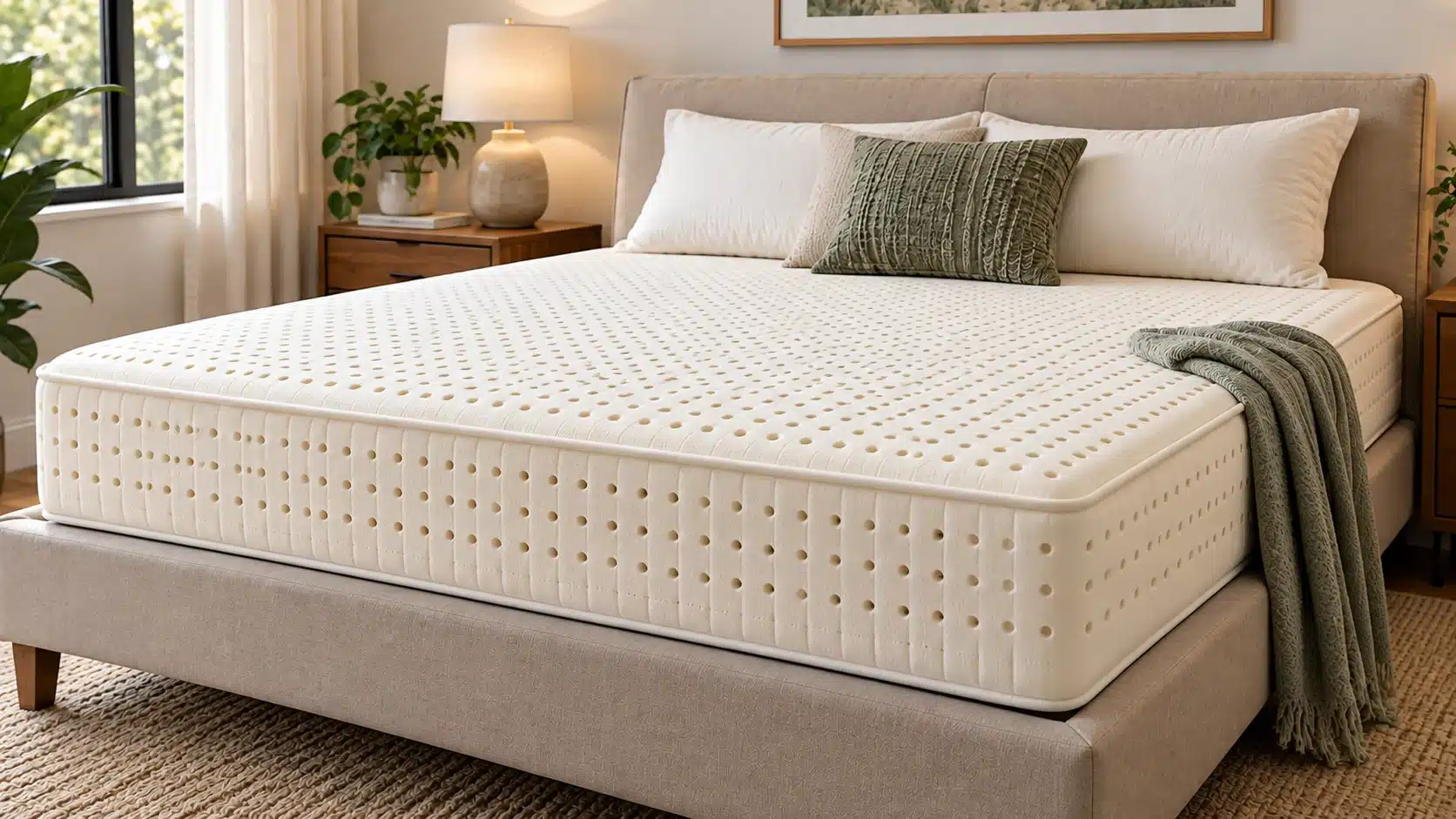
Latex mattresses use natural, synthetic, or blended latex layers to create a supportive, springy feel without the deep-sinking sensation common with memory foam.
They respond quickly when you move and usually allow better airflow than dense foam, making them a strong option for sleepers who prefer a cooler surface.
Latex is also known for durability, although these mattresses are often heavier and more expensive than basic foam or innerspring models.
Good for: Hot sleepers, combination sleepers, people who prefer a responsive feel, and buyers who want a durable mattress.
6. Adjustable Air Mattress
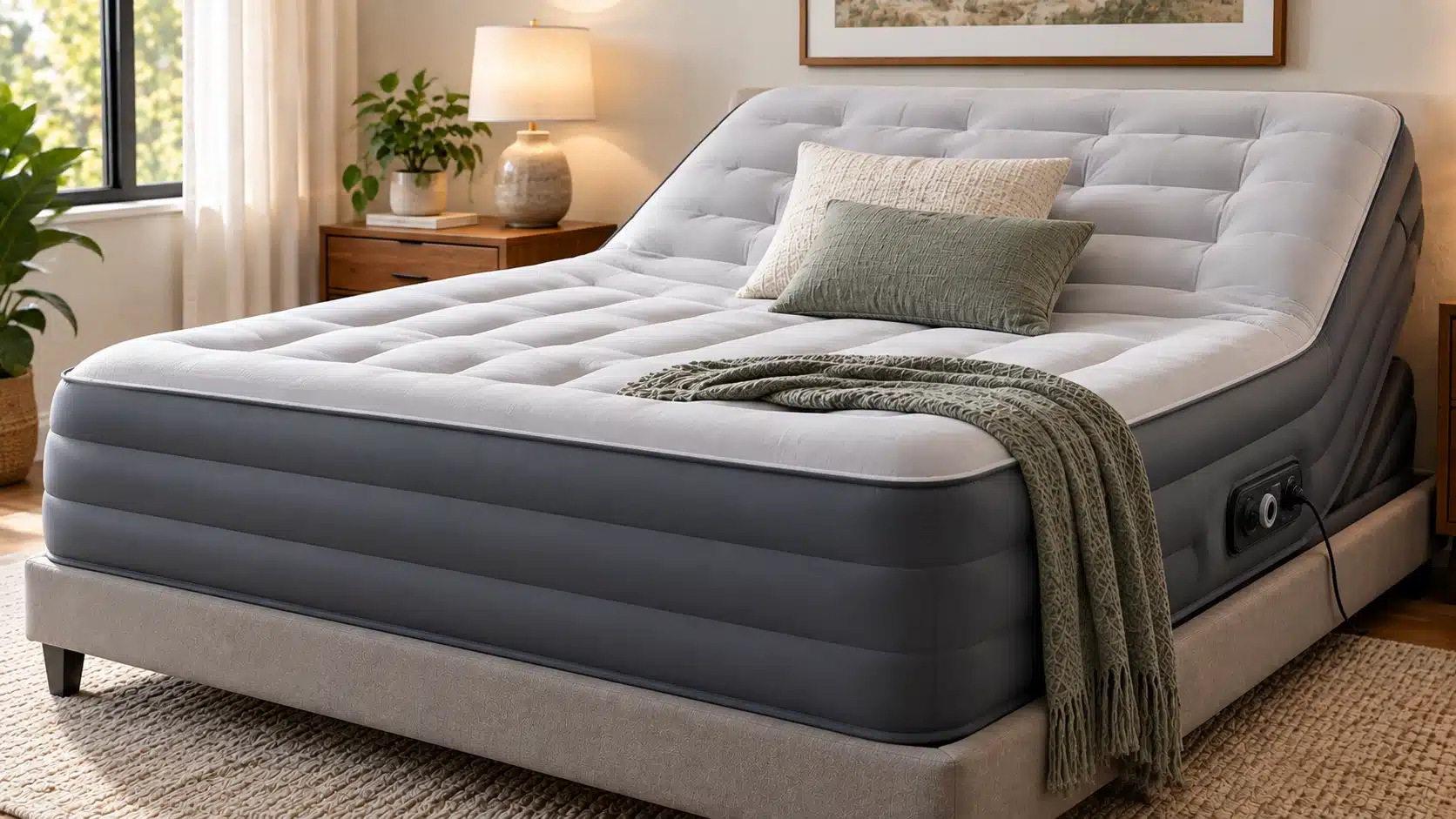
Adjustable air mattresses use internal air chambers for support, allowing sleepers to increase or decrease firmness by changing the amount of air inside.
Many models add foam or other comfort layers above the chambers, so they still provide cushioning while offering a more customizable feel.
Dual-zone models can also let couples adjust each side separately, although these mattresses are usually more expensive and mechanically complex.
Good for: Couples with different firmness preferences, sleepers who want adjustable support, and people whose comfort needs change over time.
7. Waterbed Mattress
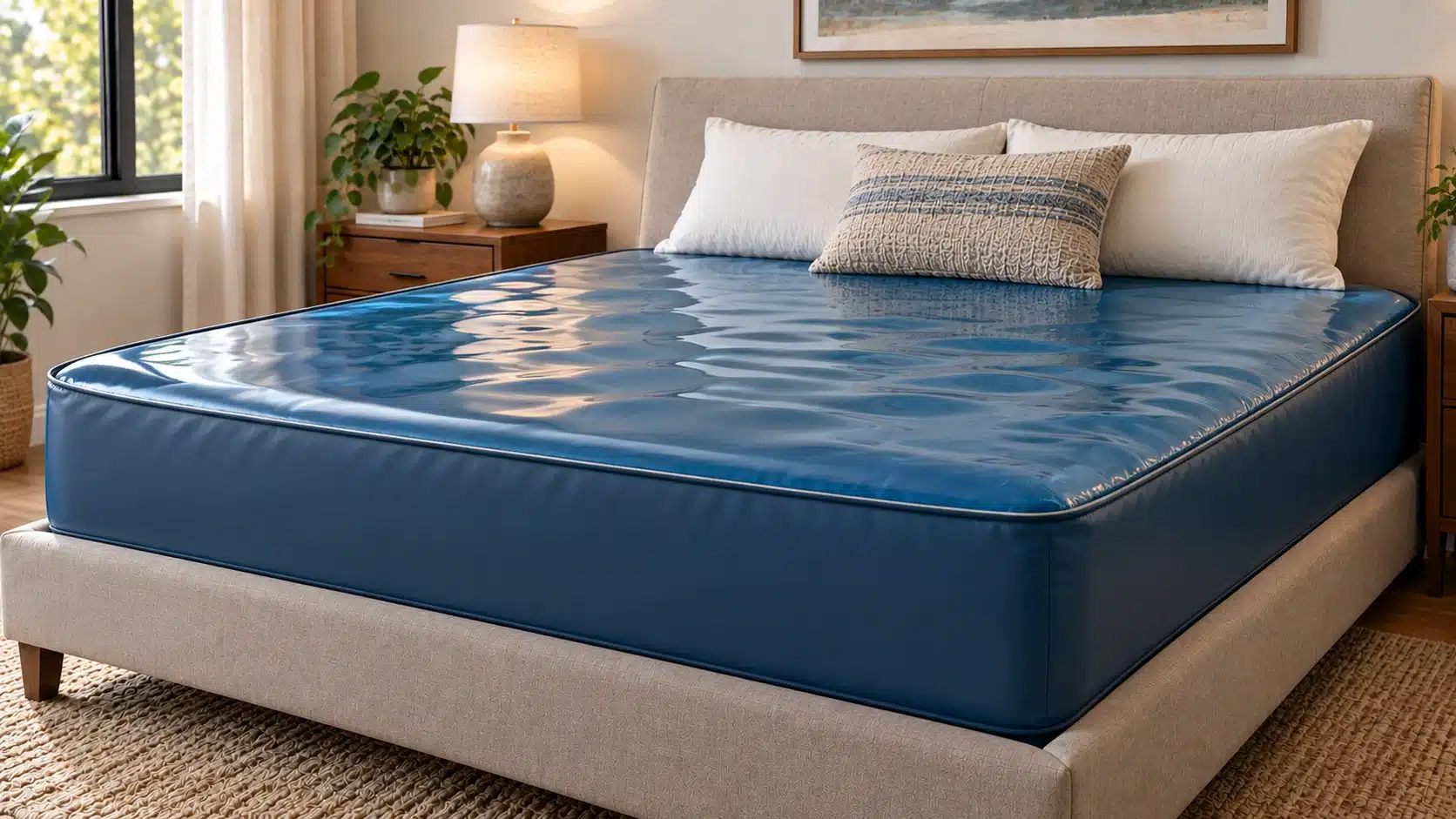
Waterbed mattresses use water-filled chambers instead of foam or coils, creating a distinctive floating feel that responds closely to body movement and pressure.
Some models use internal fiber layers or baffles to reduce wave motion, while others allow more noticeable movement across the surface.
They can also be heated for added warmth, but setup, maintenance, weight, and leak risk make them less practical than most modern mattress types.
Good for: Sleepers who specifically enjoy a floating feel, adjustable warmth, and a softer surface that responds closely to body movement.
8. Futon Mattress
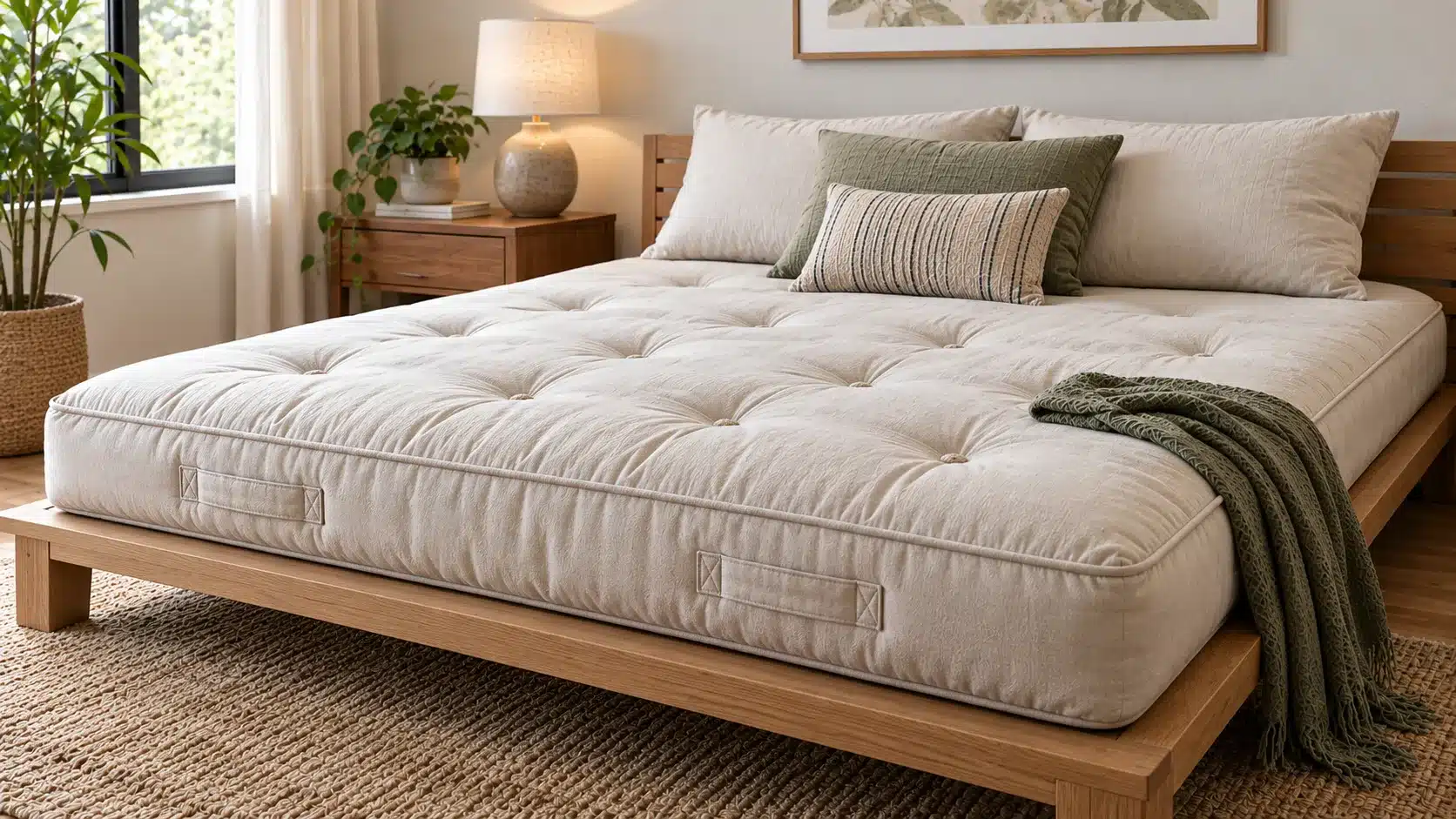
Futon mattresses are thinner, flexible sleep surfaces usually made with foam, cotton, polyester fiber, springs, or a combination of these materials.
They are designed to fold with a convertible futon frame, so the same piece of furniture works as both a sofa and a bed.
Because they are typically thinner than standard mattresses, they may feel firmer and provide less cushioning for regular nightly sleep.
Good for: Guest rooms, studio apartments, multipurpose spaces, and people who need an occasional sleeping surface that can fold away easily.
How to Choose Your Mattress
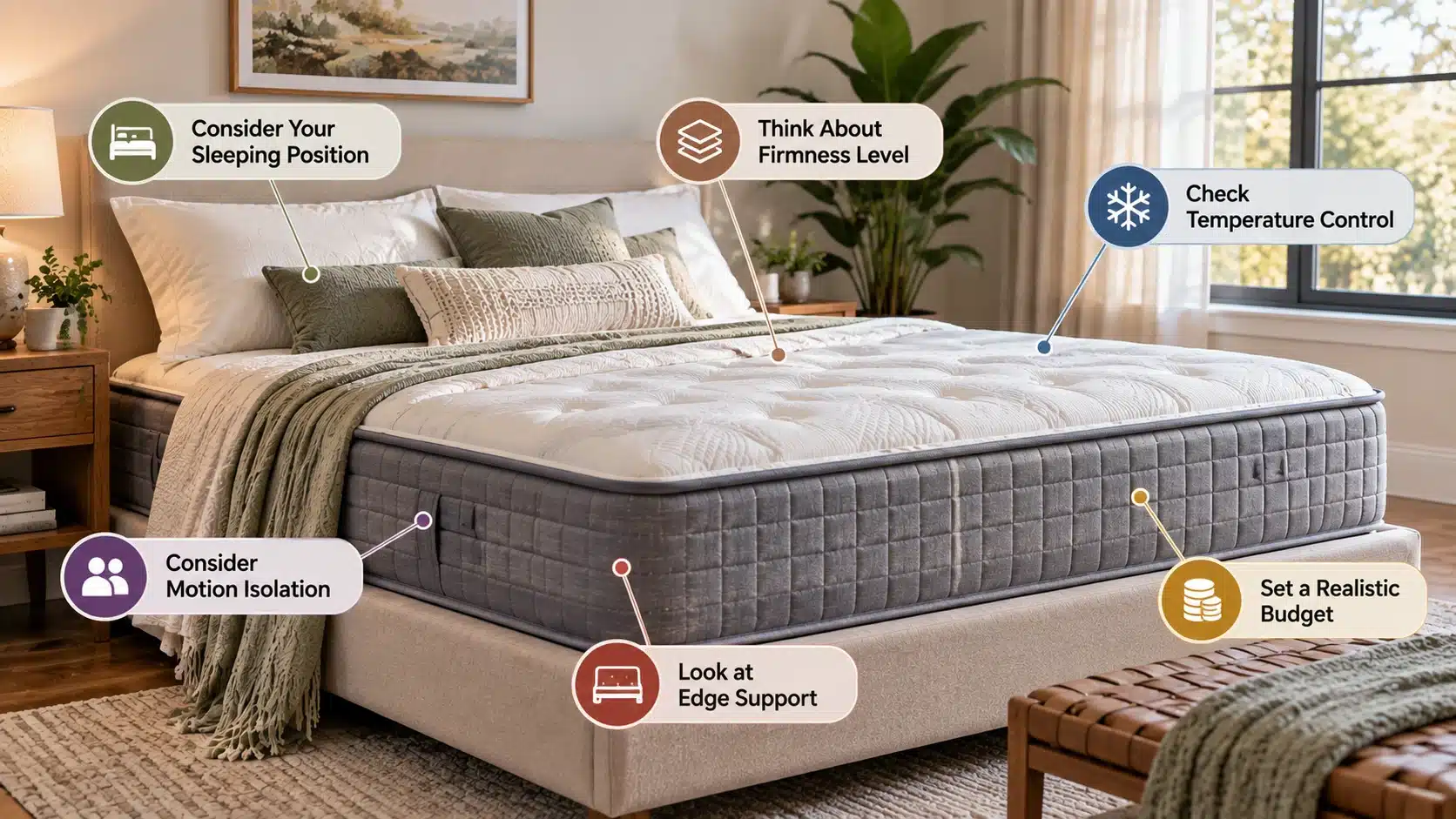
Your sleep position, body weight, and comfort needs decide which mattress type works best for you.
- Consider your sleeping position: Side sleepers usually need more cushioning at the shoulders and hips. Back and stomach sleepers need firmer support to avoid sinking too far.
- Think about firmness: Firmness affects how hard or soft a mattress feels. Your body weight and sleep position decide the right level.
- Check temperature control: Hot sleepers often do better with innerspring, hybrid, or latex mattresses, since these allow more airflow than dense foam.
- Consider motion isolation: Couples and light sleepers often benefit from memory foam or a supportive hybrid. These materials limit how much movement travels across the bed.
- Look at edge support: Strong edge support keeps the mattress stable when you sit or sleep near the perimeter.
- Set a budget: Prices vary by material, construction, and brand. Compare durability, trial periods, and warranty terms, not price alone.
Pros and Cons of Different Mattress Types
Every mattress type has clear strengths and trade-offs. Compare comfort, cooling, durability, and price before you decide.
|
Mattress Type |
Pros |
Cons |
|---|---|---|
|
Memory Foam |
Strong pressure relief, limits motion transfer, close contouring |
Can retain heat, slower to respond, may feel too soft |
|
Polyfoam |
Affordable, lightweight, many firmness options |
Lower-density foam wears faster |
|
Innerspring |
Strong airflow, good bounce, easy to move on |
Less pressure relief, more motion transfer |
|
Hybrid |
Balanced support and cushioning, strong edges, good airflow |
Heavier and usually pricier |
|
Latex |
Durable, responsive, breathable |
Higher price, heavier build |
|
Adjustable Air |
Customizable firmness, useful for couples |
Expensive, has mechanical parts |
|
Waterbed |
Floating feel, adjustable warmth |
Heavy, more upkeep, leak risk |
|
Futon |
Affordable, foldable, space-saving |
Thinner cushioning, less ideal for nightly sleep |
How Much Should You Budget for a Mattress?
Mattress prices vary by size, materials, and brand. A realistic budget helps you compare options without overspending.
|
Mattress Type |
Typical Queen Price Range |
|---|---|
|
Innerspring |
$400–$1,800+ |
|
All-Foam |
$250–$1,200+ |
|
Hybrid |
$1,000–$3,000+ |
|
Latex |
$1,000–$2,500+ |
|
Adjustable Air |
$1,500–$5,000+ |
|
Waterbed/Futon |
Varies widely by construction |
Innerspring and basic foam mattresses tend to cost the least. Price alone doesn’t determine quality, though. Check material durability, trial periods, and warranty coverage before you spend more.
The Right Mattress Starts With the Right Type
The best mattress depends on how you sleep, not just what looks comfortable in a store. Memory foam, innerspring, hybrid, latex, adjustable air, waterbed, and futon each feel different.
Every type offers its own mix of comfort, support, and durability. Once you know the main mattress types, comparing them gets much easier. Start with your sleep position and temperature needs.
Then check firmness, motion control, and edge support. Compare trial periods and warranty terms before you buy. The right type, not just the right price, is what helps you sleep well every night.
Frequently Asked Questions
Is a bed-in-a-box a type of mattress?
No. Bed-in-a-box describes how a mattress is compressed, packaged, and delivered. Memory foam, latex, innerspring, and hybrid mattresses can all be sold this way.
Do all mattresses need a box spring?
No. Many foam, latex, and hybrid mattresses work with platform or slatted foundations. Always check the mattress manufacturer’s foundation requirements before choosing a bed base.
Can you flip every type of mattress?
No. Most modern mattresses are designed with specific comfort and support layers facing upward. Only flip a mattress when the manufacturer specifically states that it is double-sided.
Can all mattress types be used on an adjustable base?
No. Foam, latex, and many hybrids are generally flexible enough for adjustable bases, but compatibility varies by construction. Always confirm the specific mattress is compatible with an adjustable base.
How do you know when a mattress needs replacing?
Consider replacement when persistent sagging, deep impressions, damaged materials, or declining support begin affecting comfort and sleep, rather than replacing it based only on age.
Does mattress thickness determine comfort?
Not necessarily. Thickness alone does not determine comfort or quality. The materials, layer arrangement, firmness, support system, and how the mattress responds to your body matter more.