How to Get Rid of Silverfish Fast (and Keep Them Out)

You opened a cabinet, spotted a silver blur, and watched it dart into a crack before you could react. That was almost certainly a silverfish.
These tiny wingless insects are harmless to people but will quietly chew through your books, clothing, wallpaper, and dry stored food if you give them enough unchecked space.
This post walks you through exactly how to get rid of silverfish in your house using simple, proven steps that cut the problem right at its source.
What Are Silverfish and Why Are They in Your House?
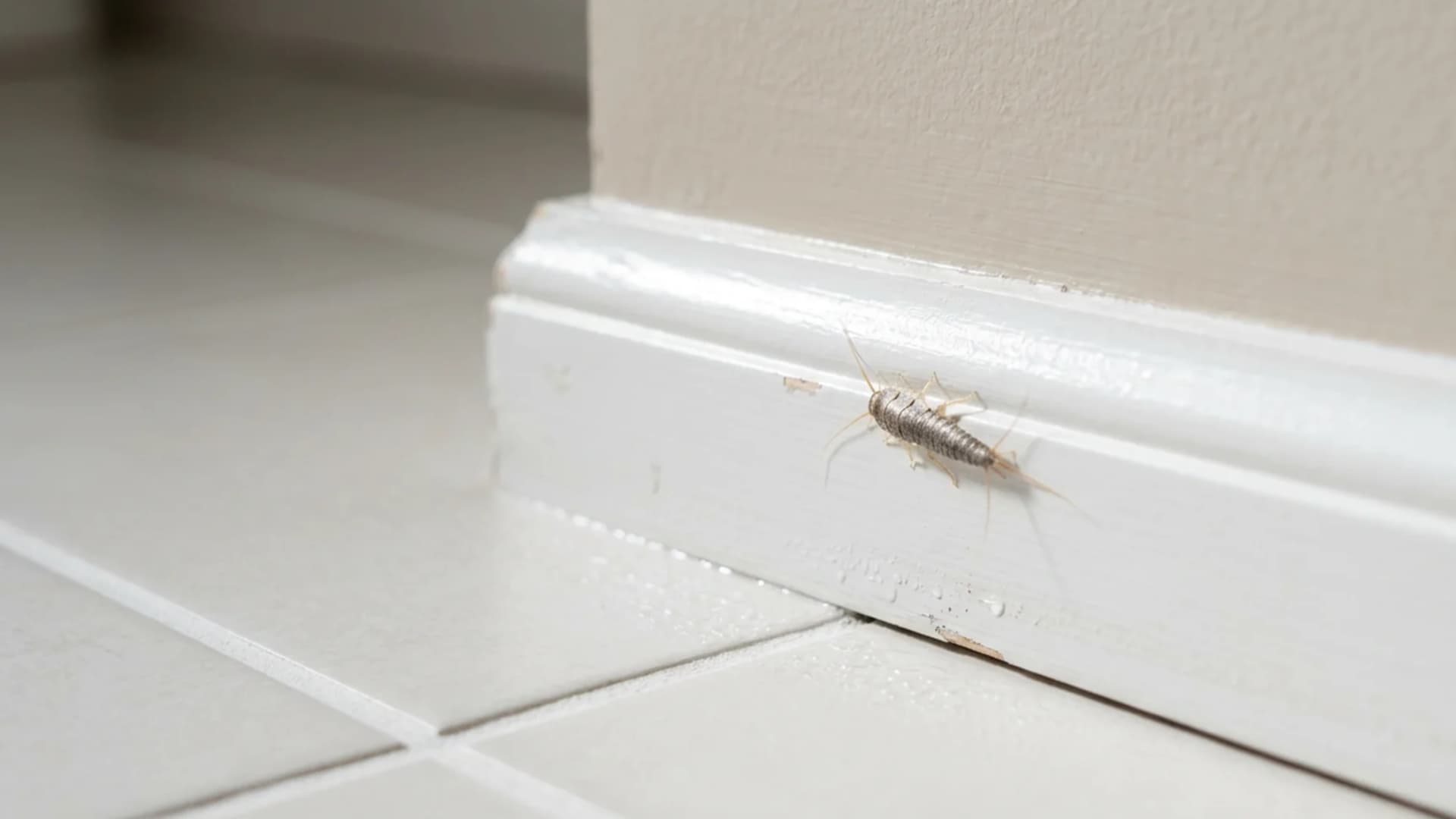
Silverfish (Lepisma saccharina) are small, wingless insects with a silver-gray outer layer and a teardrop shape that tapers into three tail filaments at the back.
They move in a quick side-to-side motion, which is how they got their name. They are nocturnal, so you rarely see them during the day.
Your home attracts them because it provides everything they need: humidity above 75%, starchy materials to eat (paper, book bindings, wallpaper paste, dry food, and fabrics), and dark, undisturbed spaces to nest and lay eggs.
According to the U.S. Environmental Protection Agency, controlling the conditions that support pests is the most effective long-term approach to pest management.
How to Spot a Silverfish Problem Early
Silverfish infestations grow slowly, and you can go months without ever seeing an actual insect. The damage usually shows up before the pest does, which is why knowing these early signs matters.
- Yellow stains on fabric or paper: Silverfish leave discoloration as they feed on linen, book pages, and stored documents.
- Small, pepper-like droppings: Tiny black specks appear along baseboards, inside cabinet corners, and near stored paper or dry food.
- Irregular holes or notches in paper or fabric: Feeding marks look like small, uneven bites along the edges of books, cardboard, or clothing.
- Translucent shed skins: Silverfish shed their outer layer as they grow; thin, papery skins in damp areas are a reliable indicator.
- Spotting one at night: Silverfish avoid light, so seeing one dart across a floor after dark almost always means more are hiding nearby.
How to Get Rid of Silverfish: Step-by-Step
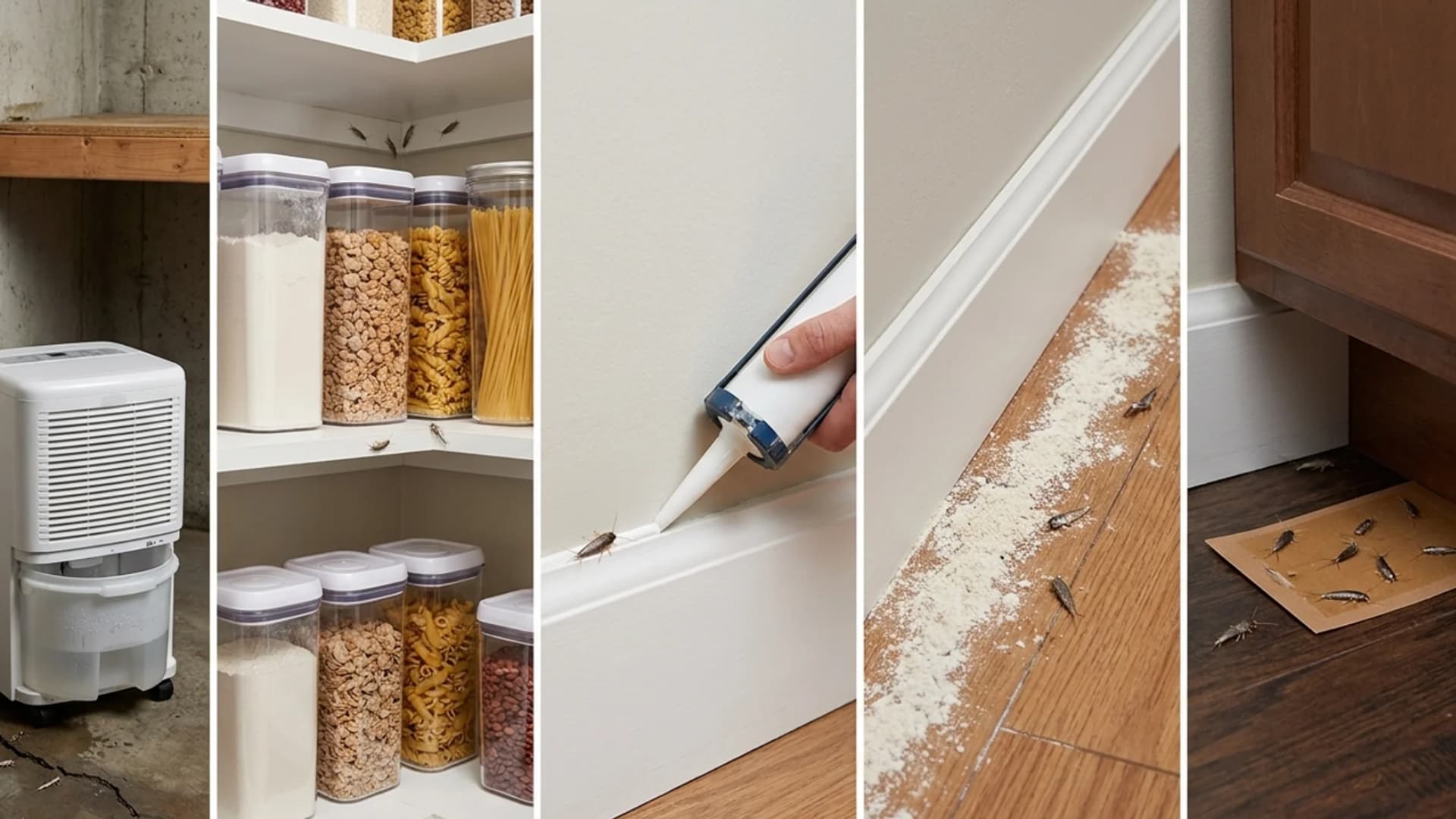
These five steps work together as a system. Skipping even one of them leaves the infestation a way to rebuild. If you have been wondering how to get rid of silverfish in your house without relying on heavy chemicals, steps one through three and step five use none at all.
Step 1: Cut the Moisture
Silverfish need humidity above 75% to survive and reproduce. Run a dehumidifier in damp areas like the basement, bathroom, or laundry room and aim for indoor humidity below 60%.
Fix leaking pipes or dripping faucets right away, use exhaust fans during and after showers, and check crawl spaces for moisture buildup after heavy rain. Dropping the humidity alone weakens an active infestation because silverfish cannot reproduce in dry conditions.
Step 2: Remove Their Food Supply
Silverfish eat starchy materials, so moving dry goods from paper or cardboard packaging into sealed glass or hard plastic containers directly cuts their food source.
Transfer cereals, flour, rice, and pet food out of open bags immediately. Vacuum along baseboards, behind furniture, and inside cabinet edges regularly to remove crumbs, dead insects, and any eggs left behind.
Keeping your pantry well organized and clutter-free makes it much harder for silverfish to find food and shelter in the same space.
Step 3: Seal Every Entry Point
Silverfish travel between rooms through cracks along baseboards, window frames, and gaps around plumbing pipes. Use a caulk gun to fill these gaps on hard surfaces, and apply weatherstripping around exterior doors with visible light gaps at the base.
Replacing cardboard storage boxes with sealed plastic bins removes both a food source and a hiding spot in a single step, which speeds up results in basements and storage rooms.
Step 4: Apply Diatomaceous Earth or Boric Acid
Food-grade diatomaceous earth works by physically damaging the outer coating of silverfish when they cross through it. Dust it in a thin, barely visible line along baseboards, inside cabinet edges, and behind furniture where silverfish travel.
Boric acid applied as a fine powder in cracks works similarly. Keep both products away from areas where children and pets can reach them, and reapply diatomaceous earth after cleaning or if the area gets wet, since moisture cancels its effect.
Step 5: Set Traps in Active Zones
Sticky traps placed along baseboards show you exactly where silverfish activity is concentrated and reduce adult numbers while the other steps take hold.
A glass jar trap works well too: wrap the outside with masking tape, drop a small piece of bread or flour inside as bait, and silverfish will climb in but cannot escape the smooth interior surface.
A wet, rolled-up newspaper left overnight near active areas also works as a trap. Silverfish crawl inside to nest, and you simply seal and discard it the next morning.
Natural Repellents That Actually Work
Natural repellents will not clear an active infestation on their own. Use them after completing the five steps above to stop silverfish from resettling treated areas and to maintain results over time.
| Repellent | How to Use It | Best Placed In |
|---|---|---|
| Cedar oil | Mix a few drops with water in a spray bottle; spray near cracks and baseboards | Closets, bookshelves, pantries |
| Lavender oil | Dilute in water and spray inside drawers, storage areas, and closet corners | Bedrooms, linen closets |
| Bay leaves | Place dried leaves flat on pantry shelves or along bookcase rows | Pantry, storage boxes |
| Cinnamon sachets | Fill a small cloth bag with cinnamon sticks and tuck into affected zones | Closets, drawers, attic corners |
| Citrus spray | Simmer lemon or orange peels in water, cool, then spray at entry points | Bathroom edges, kitchen corners |
| Baking soda and sugar mix | Mix equal parts and place in a shallow dish near active spots; sugar attracts, baking soda kills | Baseboards, hidden corners |
| Cucumber peels | Place fresh peels near baseboards or cabinet edges and replace every 2 to 3 days | Cabinets, storage closets |
Note: Some essential oils, including citrus and tea tree, are not safe for cats and dogs. Check with your vet before using them in shared spaces.
How to Get Rid of Silverfish Room by Room: Where to Focus First

Silverfish follow moisture, so the right fix depends on where you find them. Focusing your efforts on the most active zone in each room gets faster results than treating your whole house the same way.
Bathroom
- Run the exhaust fan during every shower and leave it running for at least 10 minutes afterward to clear moisture from the air.
- Fix dripping faucets or sweating pipes under the sink as a first priority since this is the most common moisture source in bathrooms.
- Caulk the base of the toilet and the bathtub rim to close off prime entry gaps that silverfish use to access the room.
- Store spare toilet paper and paper products off the floor or inside a closed cabinet rather than in open shelving.
- Place a sticky trap under the sink cabinet to track activity levels and catch adults overnight.
Basement and Crawl Space
- A dehumidifier is the single most useful tool in this zone; run it continuously during humid months and check the humidity reading weekly.
- Switch all cardboard storage boxes to sealed plastic bins with snap-on lids to remove both a food source and a shelter option.
- Apply food-grade diatomaceous earth in a thin line along the perimeter walls where silverfish travel toward the rest of the house.
- Inspect the crawl space after rain and look for standing water, moisture streaks on walls, or wood that feels soft or wet.
- Clear leaf piles, wet mulch, and wood debris from the exterior perimeter of your home to reduce the outdoor source that feeds the indoor population.
Bedroom and Closets
- Move cardboard boxes and old magazines off the closet floor; silverfish nest inside undisturbed piles and use them as both food and cover.
- Place cedar blocks or sachets on closet shelves to keep silverfish away from stored fabric and clothing.
- Store off-season clothing in airtight plastic bags or vacuum storage bags instead of open cardboard boxes.
- Check behind the headboard and under the bed; both are dark, low-traffic spots that silverfish treat as safe zones.
- If you keep books in the bedroom, check the back rows of the shelf for yellow stains, shed skins, or notch-shaped damage on page edges.
Kitchen and Pantry
- Move all dry goods into sealed containers right away; open bags and paper boxes are a direct and constant food source for silverfish.
- Check under the sink for moisture around the supply lines and drain pipe, since this is the most common hidden wet zone in kitchens.
- Pull the refrigerator and stove out and vacuum the debris that collects behind them, as silverfish use this area to nest undisturbed.
- Place dried bay leaves on pantry shelves as a low-effort deterrent that also keeps other common kitchen insects away.
- Silverfish near the dishwasher often point to a moisture problem underneath or behind it; check the door seal and drainage connection.
What NOT to Do When Getting Rid of Silverfish
Some methods look like they should work but either accomplish nothing or make the situation worse. Knowing what to skip saves time and prevents the infestation from continuing while you think you are treating it.
- Do not use mothballs indoors: Mothballs may push silverfish away temporarily but release toxic fumes (naphthalene or paradichlorobenzene) that are unsafe for children, pets, and adults in enclosed spaces, according to the EPA’s pest-proofing guidance.
- Do not ignore the moisture source: Traps and repellents will not hold if the humidity problem stays in place because the infestation simply rebuilds around the treatment.
- Do not pile diatomaceous earth thickly: Insects avoid heavy dust deposits, so a thin, barely visible layer is what actually works and gets walked through.
- Do not spray bleach: Bleach does not kill silverfish, damages surrounding surfaces, and creates fumes with no real pest control benefit.
- Do not store important papers or books in damp areas while treating the infestation: Leaving starchy materials in humid spaces is the same as keeping their food supply active throughout treatment.
- Do not wait and see: A female silverfish deposits eggs throughout her life and each batch hatches in 19 to 43 days, so a small problem in spring becomes a much larger one by summer.
How to Get Rid of Silverfish Eggs
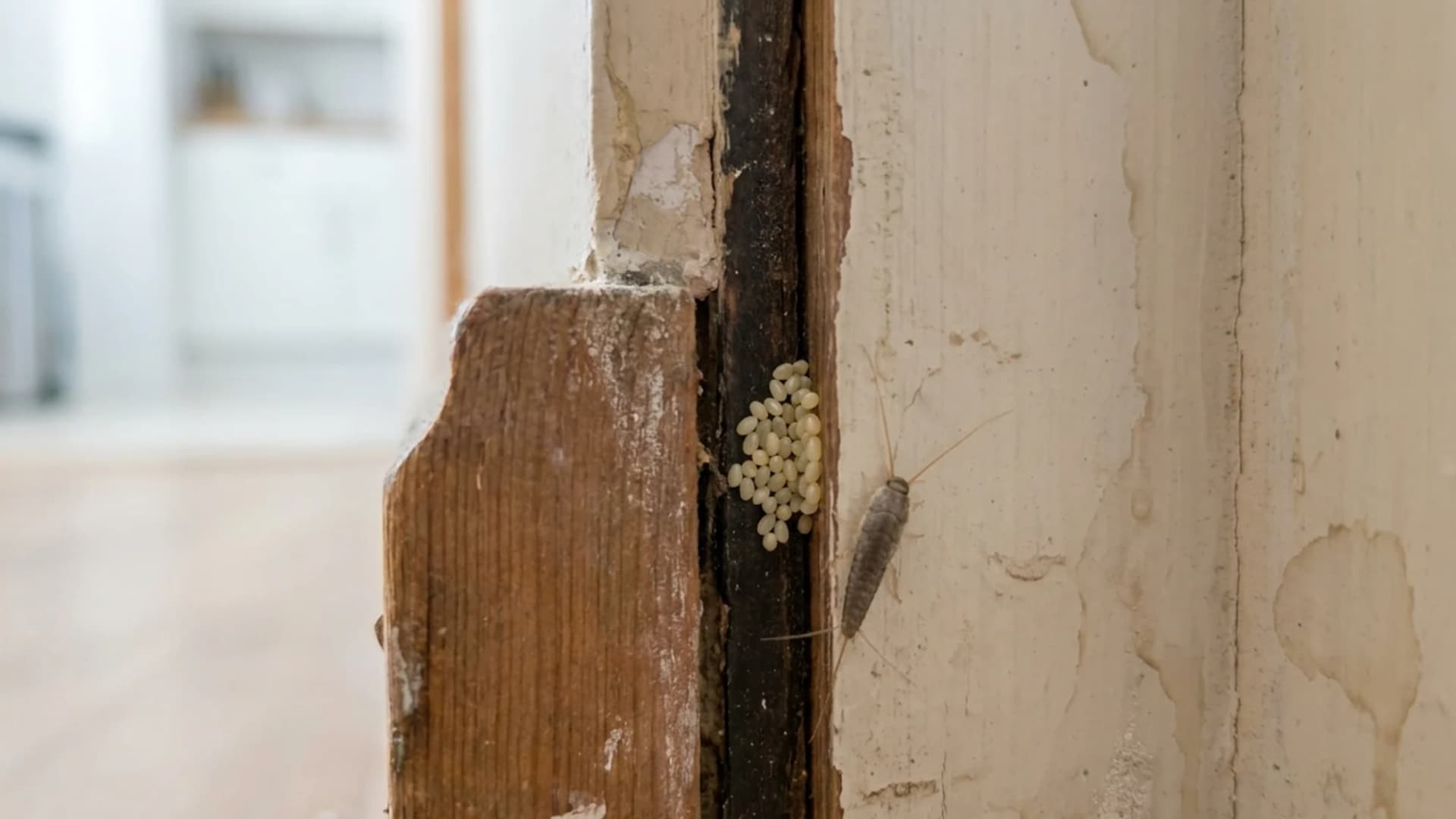
Silverfish eggs are small (roughly 1mm), oval, and white to yellow in color. They are laid in clusters inside cracks, behind baseboards, and in damp storage areas, which makes them very hard to spot without a magnifying glass.
Eggs hatch in 19 to 43 days, according to data from research published in International Biodeterioration and Biodegradation, which explains why infestations often come back after a round of treatment: the adults were removed, but the eggs were not.
To destroy them, vacuum with a HEPA filter along baseboards and inside every visible crack (seal the vacuum bag immediately and discard it), apply diatomaceous earth in gaps where eggs are likely hiding, caulk any cracks that could shelter a clutch, and place infested books or documents in a sealed plastic bag in the freezer for 72 hours, which kills both eggs and any adults hiding inside the pages.
Addressing eggs is what turns a short-term fix into a lasting one.
How Long Does It Take to Get Rid of Silverfish?
The timeline depends on the size of the infestation and how consistently the steps above are applied. Treating only adult silverfish while leaving the root conditions in place resets the clock every time.
| Infestation Level | DIY Timeline | Key Action at This Stage |
|---|---|---|
| Light (1 to 2 rooms, occasional sightings) | 2 to 3 weeks | Moisture control + sticky traps + thin diatomaceous earth line along baseboards |
| Moderate (multiple rooms, visible damage to paper or fabric) | 4 to 6 weeks | Add boric acid in cracks, seal all entry points, replace all cardboard storage |
| Heavy (widespread, found in walls or crawl space) | 6 to 10 weeks or professional treatment needed | Professional inspection to reach wall voids, crawl spaces, and structural entry points |
If silverfish are still appearing after 4 to 6 weeks of consistent effort, the infestation very likely reaches into wall voids or crawl spaces that DIY methods cannot access. That is when professional treatment becomes the practical next step.
When to Call a Professional
Call a pest control professional when silverfish keep appearing after 4 to 6 weeks of consistent effort, when you find them in multiple rooms at the same time, or when you spot widespread damage to clothing, books, or stored papers.
A professional can inspect wall voids, crawl spaces, and structural entry points, then apply treatments that reach areas a caulk gun or dust applicator cannot. Professional treatment also addresses the other pests that share the same humid conditions as silverfish: cockroaches, ants, and spiders.
Keeping your home well-maintained and attending to small moisture issues as they appear after treatment is one of the most reliable ways to stay pest-free long-term. Good home maintenance habits lower the risk of a repeat infestation more than any spray or product can on its own.
Final Thoughts on Getting Rid of Silverfish
Getting rid of silverfish comes down to removing the three things they need: moisture, food, and places to hide.
Cut humidity, seal cracks, store dry food in airtight containers, and treat active areas with diatomaceous earth or boric acid. Most infestations respond within a few weeks when you stay consistent.
If silverfish keep coming back after a full month of effort, wall voids or crawl spaces are likely the source, and a professional can treat areas you cannot easily reach.
Frequently Asked Questions
What smell do silverfish hate?
Silverfish hate the smell of cedar, lavender, citrus, cinnamon, and bay leaves. These scents disrupt their ability to settle and lay eggs in treated areas.
Should I be worried if I see silverfish?
One or two silverfish are not a crisis, but repeated sightings mean a larger group is almost certainly hiding nearby. Act quickly to avoid damage to books, clothing, and stored food.
Why do I suddenly have silverfish in my house?
A sudden appearance usually points to a recent change in moisture levels, such as a leaking pipe, increased indoor humidity, or new cardboard boxes brought in from outside that were already carrying eggs.
What is the fastest way to kill silverfish?
Food-grade diatomaceous earth kills silverfish on contact by damaging their outer layer. Apply it thinly along baseboards where silverfish travel, and you can expect results within a few days.
Is my house dirty if I have silverfish?
No. Silverfish are attracted to moisture and starchy materials, not general dirt. A clean, well-kept home with high humidity or paper storage can still attract silverfish.
How do I permanently get rid of silverfish?
Keep indoor humidity below 60%, store dry food in sealed containers, seal every crack, and vacuum regularly. Remove the conditions, and silverfish cannot sustain a population in your home.